
What it the Ha Giang Loop?
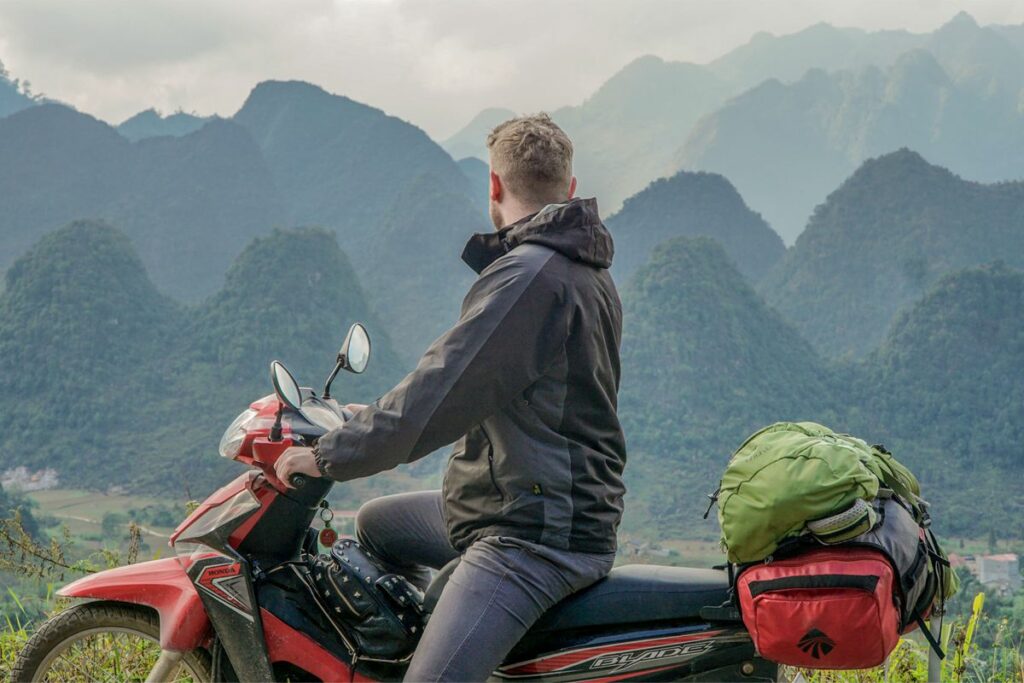
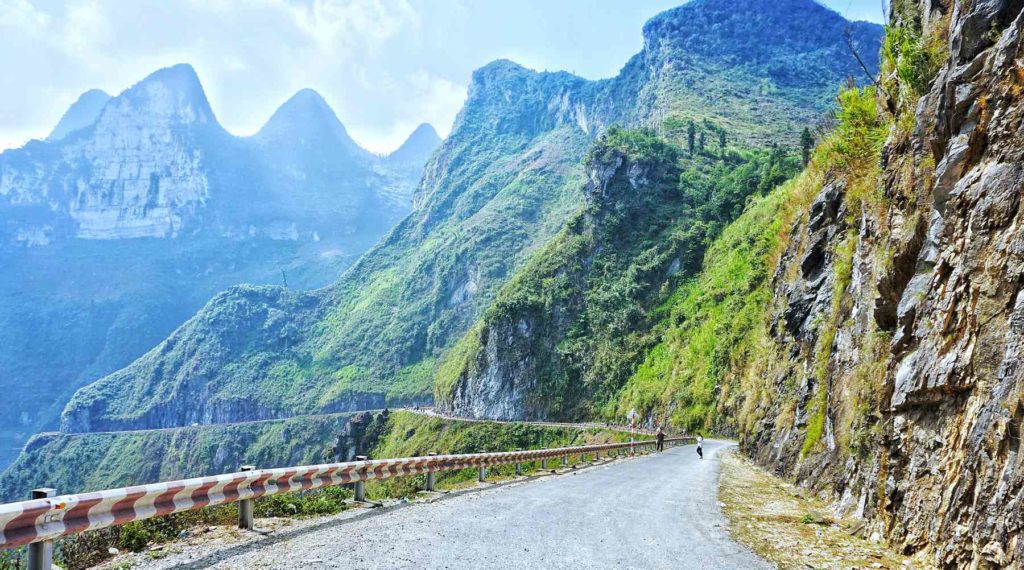
To understand the loop, you first need to understand Ha Giang. This is the far northern tip of Vietnam, a region of epic mountain scenery and some of the most unique ethnic minority cultures in the country, with colorful traditional clothing, vibrant markets, and villages that feel untouched by time.
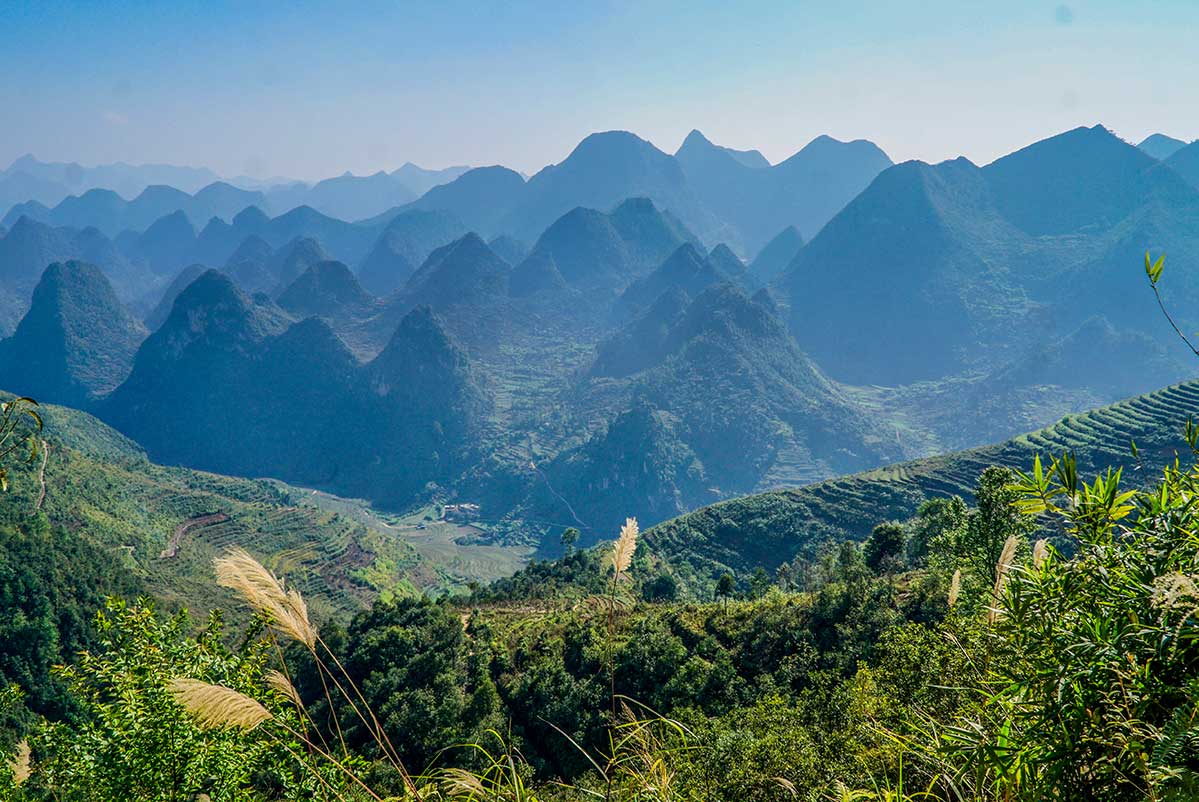
The Ha Giang Loop is the route that connects it all. Originally a motorbike route, it starts and ends in Ha Giang City and links together the area’s biggest highlights: the most insane mountain passes, the most striking villages, and the best local markets. String them together into one circular trip and you get what is now widely considered the best road trip in Vietnam, and arguably in all of Southeast Asia.
Not much has actually changed over the years, with one exception worth clearing up: after a nationwide reorganization in 2025, Ha Giang is no longer its own province. It was merged into neighboring Tuyen Quang. For you as a traveler this means nothing on the ground, the route, the name, and every pass and village are exactly the same, but you may now see “Tuyen Quang” on newer maps where it used to say Ha Giang.
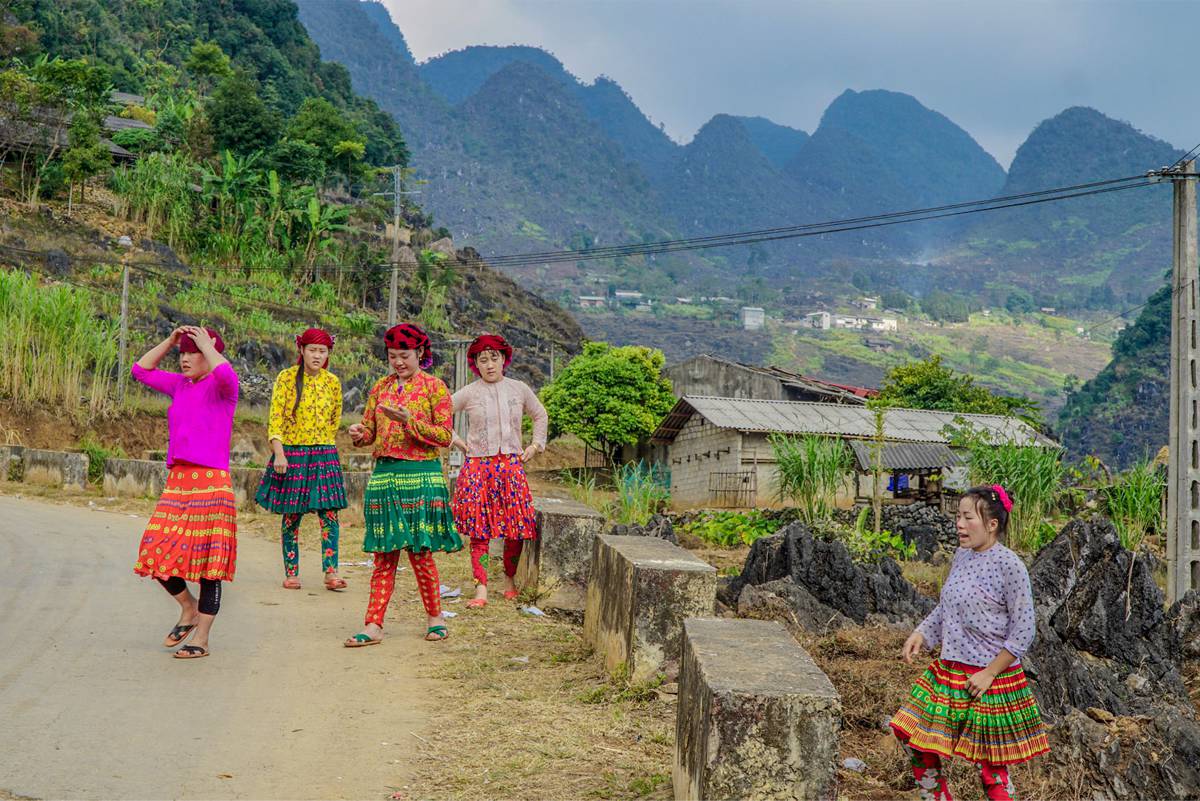
The one real change is the crowds. The loop is no longer the empty secret it once was, and honestly, that was always going to happen. You cannot keep Southeast Asia’s most epic road trip quiet forever. These days some of the famous viewpoints and passes get genuinely busy. But you do not have to work hard to escape it. Drive off the main route, or go with a company like Local Vietnam, and you will still find places that are untouched and barely see a tourist. That is where the real Ha Giang is.
How to get to Ha Giang
The Ha Giang Loop starts and ends in Ha Giang City, sitting deep in the mountains of northern Vietnam, close to the Chinese border. There is no airport and no train station here, so however you come, the last stretch is always by road.
Almost everyone arrives from Hanoi, around 300 km away and currently about six hours by road. A new expressway is being built between Hanoi’s direction and the region that will cut this travel time noticeably once it is fully open, though for now the journey still runs on the older mountain highway. You can also reach Ha Giang directly from Sapa. From most other places, like Ninh Binh, Mai Chau, or Halong Bay, there are through-buses, but they route via Hanoi anyway.
Option 1: Sleeper bus (night)
The sleeper bus is the most popular option with backpackers, and it makes sense: you travel and sleep at the same time, saving both a day and a night’s accommodation. The catch is that not everyone sleeps well on them. You can choose a standard sleeper or a more comfortable VIP bus with more space and legroom.
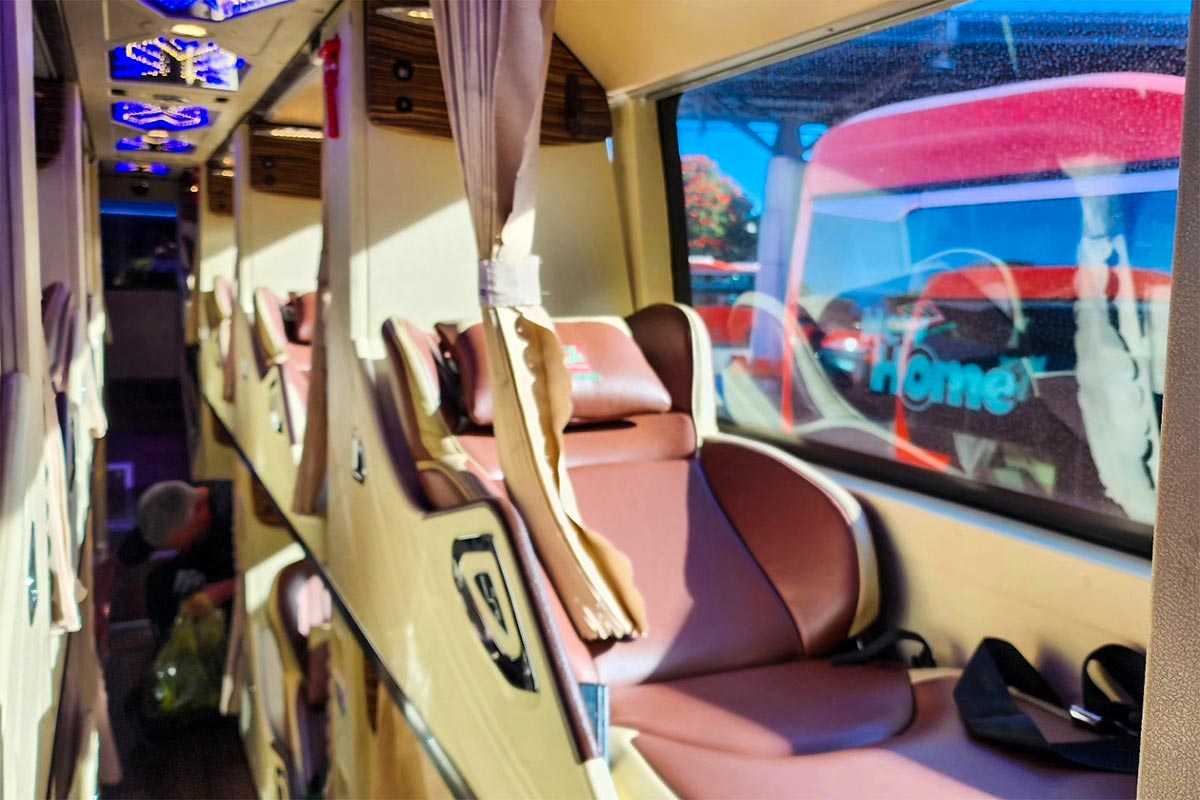
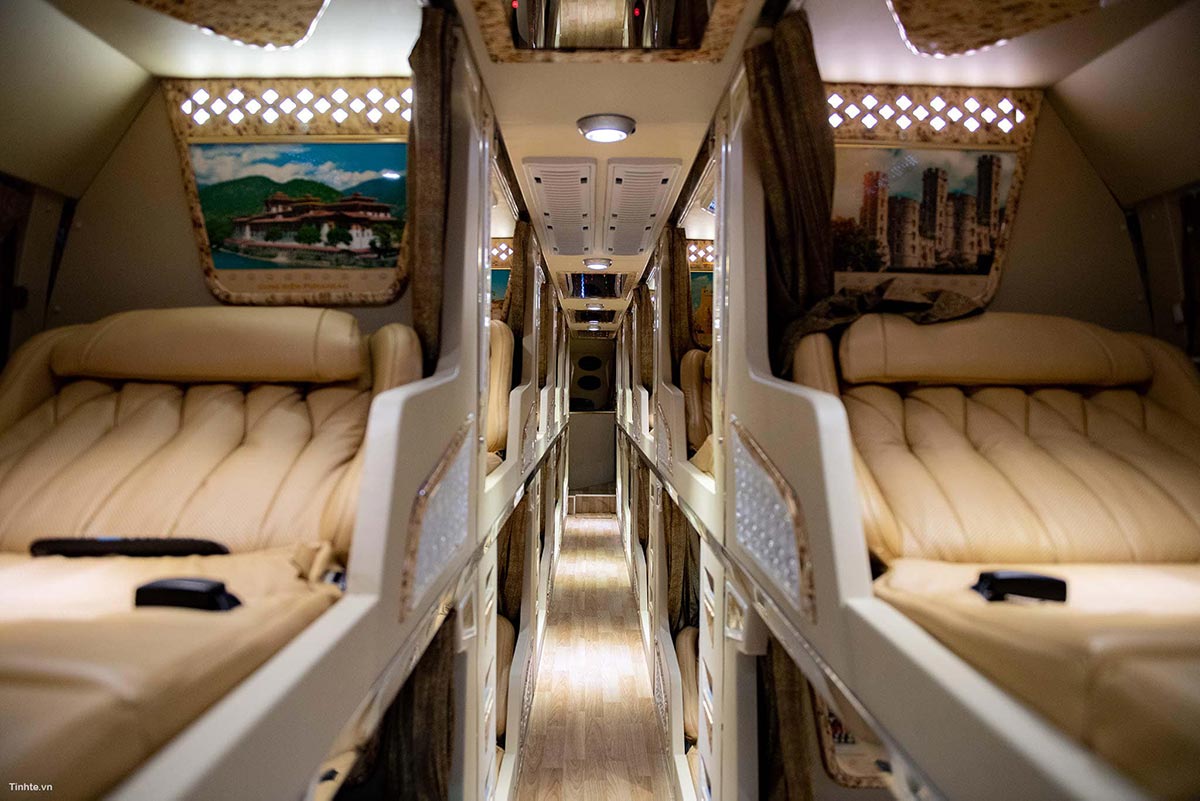
They leave Hanoi in the evening, usually between 8 PM and 11 PM, and arrive in Ha Giang very early, often around 3 AM to 5 AM. Some companies let you stay and sleep on the bus until sunrise. Some tour operators include a few extra hours of sleep at your arrival accommodation. If neither applies, you will need to book a room for those early morning hours, so you start the loop rested rather than wrecked. Companies running this route include Group Tour, Quang Giang, and Express Ha Giang.
Option 2: Limousine van (day)
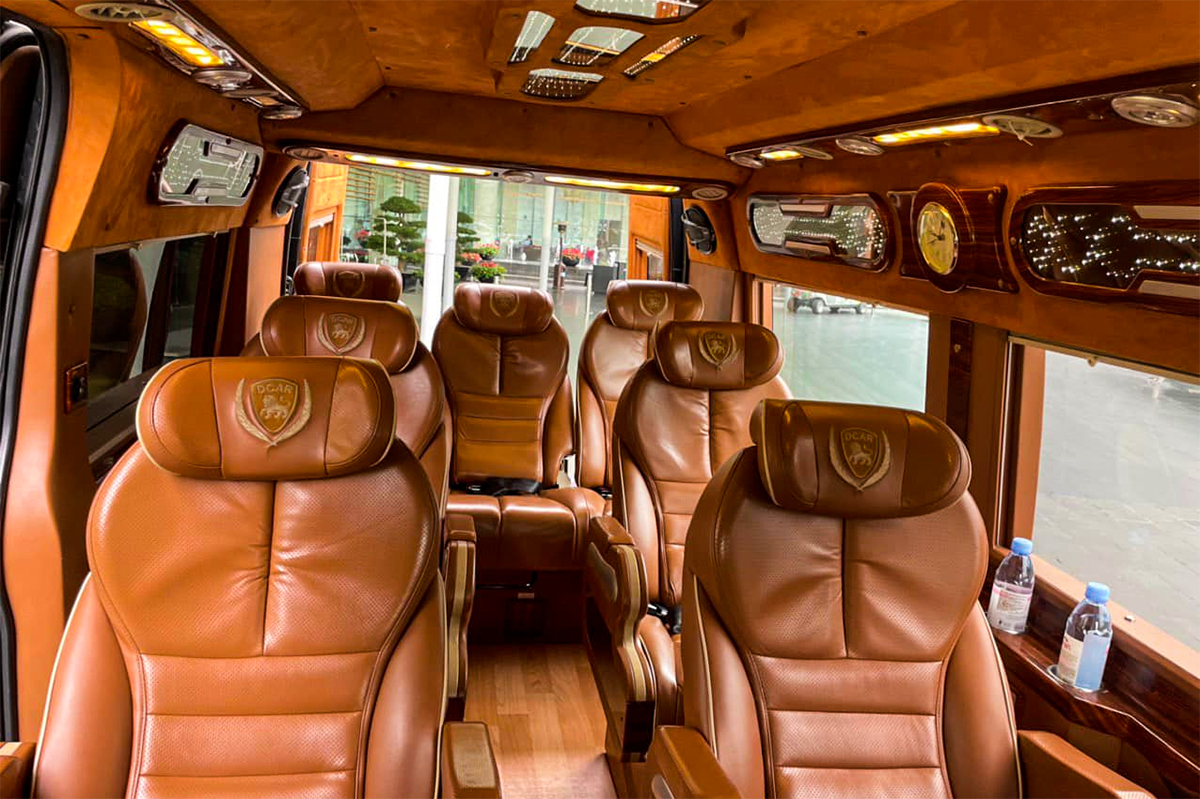
For a bit more money, a limousine van is a good alternative if sleeper buses are not for you. These have VIP-style seats and travel during the day. Leave Hanoi early and you arrive in Ha Giang around 1 PM, with time to settle into the city and relax before starting the loop the next morning. It is more comfortable and arguably safer, but it does cost you an extra day.
Other options
For more flexibility, you can also travel by private car with a driver. The full breakdown of every option is in our guide on getting from Hanoi to Ha Giang. If you are coming the other way, see our guide on getting from Sapa to Ha Giang.
Arranging your transfers to Ha Giang
Option 1: As part of your tour
Most people do not book buses themselves but get transfers included in a complete tour. Whether you do the loop by car, on the back of a motorbike with a guide, or self-driving in a group, the operator arranges everything, picking you up in Hanoi and dropping you at your starting point in Ha Giang.
Option 2: Booking a bus ticket
If you would rather handle it all independently, travel up, rent a motorbike, and ride the loop solo, you can book buses online.
Online Booking Sites:
Offline agents:
Any travel agent in Hanoi can book bus tickets from Hanoi to Ha Giang for you
Getting around Ha Giang
From Ha Giang City, the loop is yours to ride however you want. There are three ways to do it: drive a motorbike yourself, ride on the back with a local Easy Rider, or travel by car or jeep. They all follow the same route through the same mountains. What changes is the freedom you have, how safe you feel, and how deep you actually get into the place. So choose based on how you want to travel, not just what looks good on paper.
1. Driving a motorbike yourself
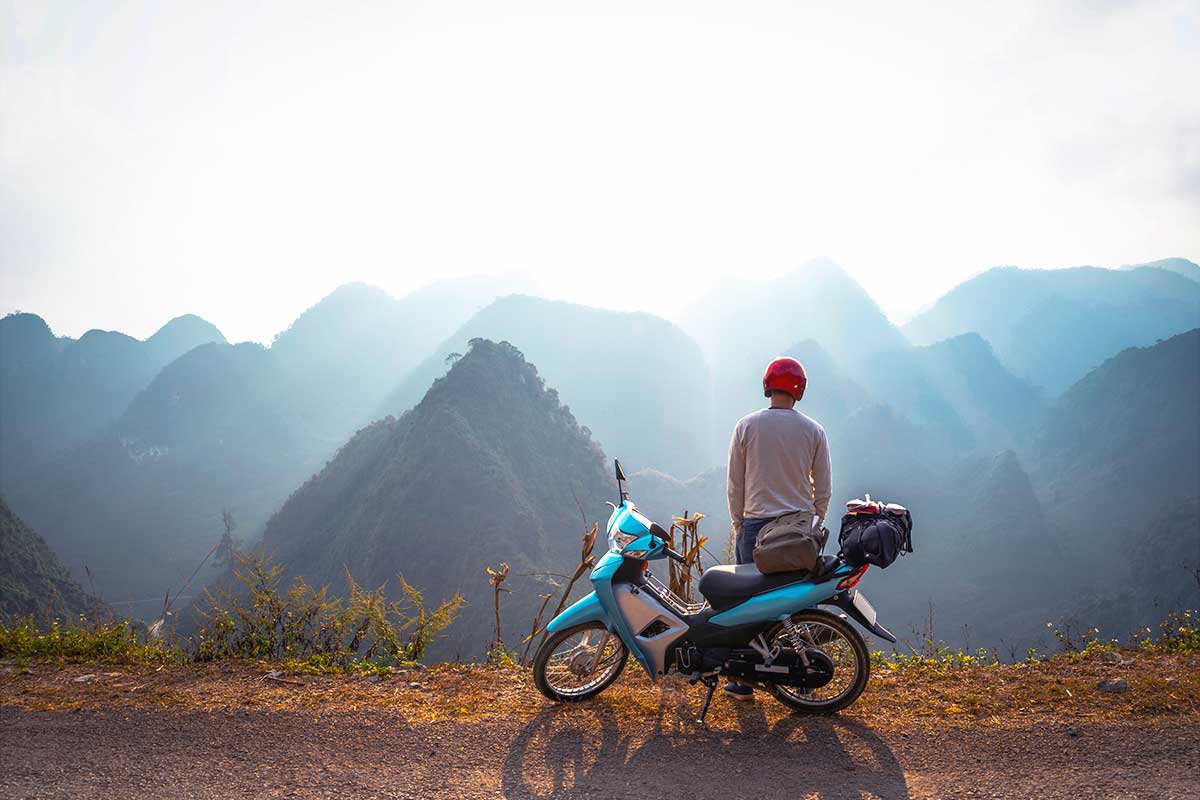
This is the most freeing way to do the loop. No schedule, no group, just you and the road. But be honest with yourself first: driving the Ha Giang Loop yourself means serious mountain roads with steep passes, sharp bends, and trucks that do not slow down for anyone. Ha Giang is not the place to learn to ride. This option is for confident riders with a valid motorbike license and an International Driving Permit, not someone who rented their first scooter last week. If you have the experience, it is one of the best rides of your life. If you do not, take an Easy Rider instead.
A semi-automatic bike to rent is the right choice for most riders, easy to handle and widely available. A manual or bigger bike gives more power on the steep passes, but it is not necessary for most people. You can also self-drive as part of a group tour, riding your own bike with a guide and group alongside, which is popular with backpackers for the social side, though you move at the group’s pace.
Pros
- Total freedom to go at your own pace and stop wherever you want.
- The most hands-on, adventurous way to feel the roads and the mountains.
Cons
- Demands real riding confidence, especially on steep, winding terrain.
- You are exposed to the weather and carry the safety risk yourself.
Options
- Self-drive with a group tour: ride your own bike with a guide and group, more social but less flexible.
- Self-drive solo: complete freedom, no group, no schedule.
2. On the back of a motorbike (Most recommended)
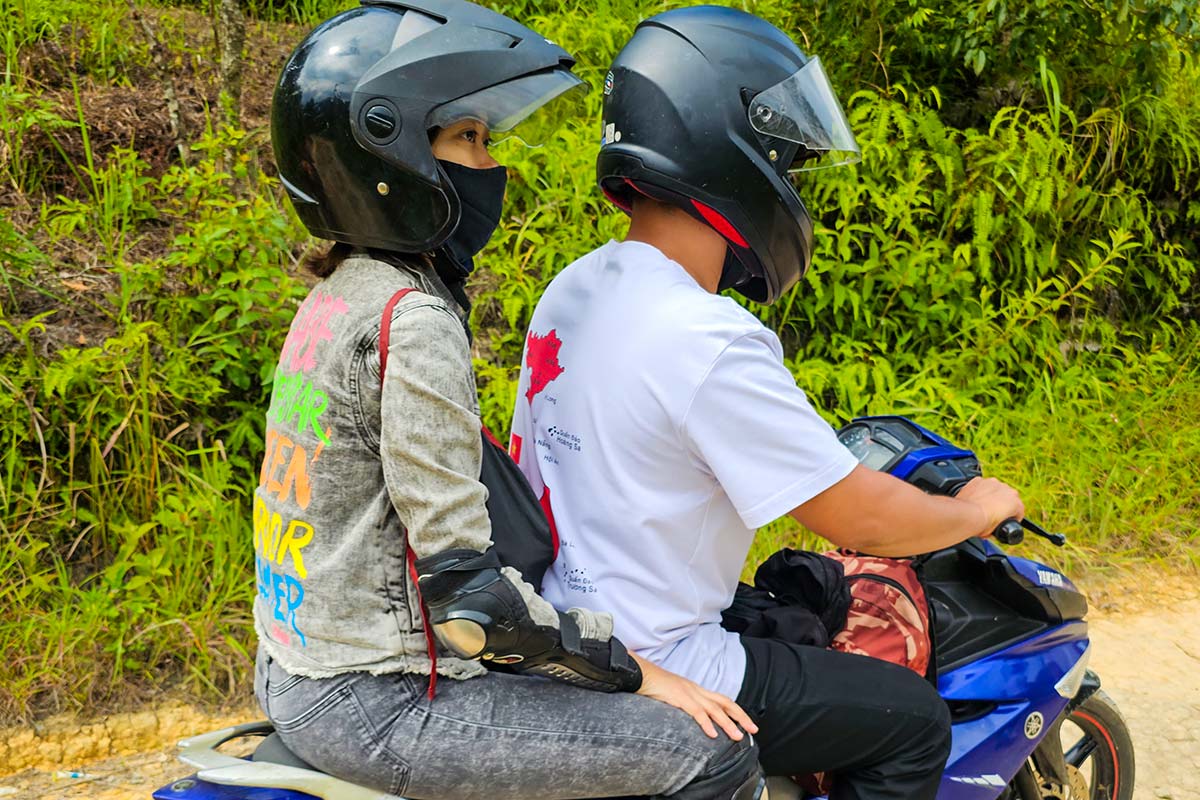
For most people, this is the best way to do the loop. You get all the freedom and adventure of the Ha Giang Loop by Easy Rider without having to ride it yourself, which makes it the obvious choice if you have no license or no real experience. Your Easy Rider is almost always a local who has driven these roads their whole life and knows every turn, every viewpoint, and the best places to stop that you would never find alone. They drive at a calm, safe pace, and because you are not concentrating on the road, you actually get to look at the scenery.
A private Easy Rider, just you and your guide, is the best version by far. You stop when you want, go at your pace, and genuinely connect with someone who knows the place inside out. A small group of two to four is still personal and flexible, and you will likely meet some good fellow travelers. A large group is the budget backpacker option, more social but less personal, moving on someone else’s schedule. Fine if the party vibe is what you want, but do not expect a deep local experience.
Pros
- The safety and local knowledge of an experienced rider.
- You enjoy the scenery without the stress of driving or navigating.
Cons
- Less personal freedom than driving yourself.
- Can cost more than renting and riding your own bike.
Options
- Large group: cheapest and most social, but less personal and less flexible.
- Small group (4 to 8): still personal and flexible, with some company.
- Private Easy Rider: just you and your guide, the best experience by far.
3. By car or jeep with driver
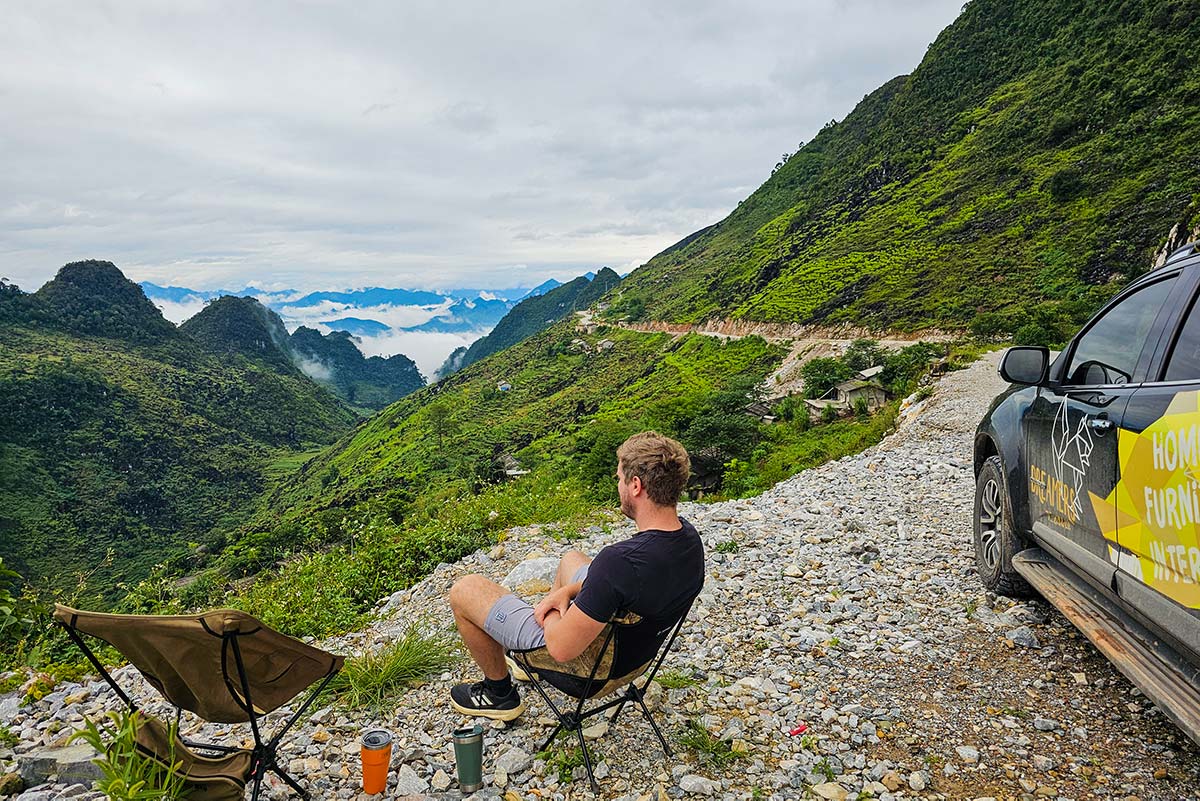
If you would rather skip the bike altogether, doing the Ha Giang Loop by car or jeep follows the exact same route in full comfort. You see the same scenery and stop at the same places, just with protection from rain, heat, and cold, and room for your luggage. It loses some of the raw adventure of a motorbike, but it is the right call for families, older travelers, or anyone who simply does not want to be on a bike. A standard car handles the whole loop without issues. A modern 4×4 jeep has more character and can take side roads and detours a regular car cannot, which makes it a great option for small groups. The old open-top Russian army jeeps you may have seen in photos are no longer permitted on the loop.
Pros
- Comfortable and safe, especially in bad weather.
- Ideal for those who would rather not ride, and for families or groups.
Cons
- Less adventurous, missing the full motorbike experience.
- Limited access to some of the narrow, offbeat paths a bike can reach.
Options
- Modern 4×4 jeep: more rugged, handles detours and side roads, great for small groups.
- Standard car: comfortable, practical, follows the full loop.
Best time to do the Ha Giang loop
Ha Giang looks good all year, but it does not feel the same all year. The best time to do the Ha Giang Loop is September, October, November, March, and April. These months give you the best mix of dry weather, clear views, and comfortable temperatures for being on the road. Rain and fog are the two things that can spoil the loop, and these months keep both to a minimum.
That said, every season has its own appeal, so here is what to expect through the year.
What to expect per season in Ha giang
Winter (December – February)
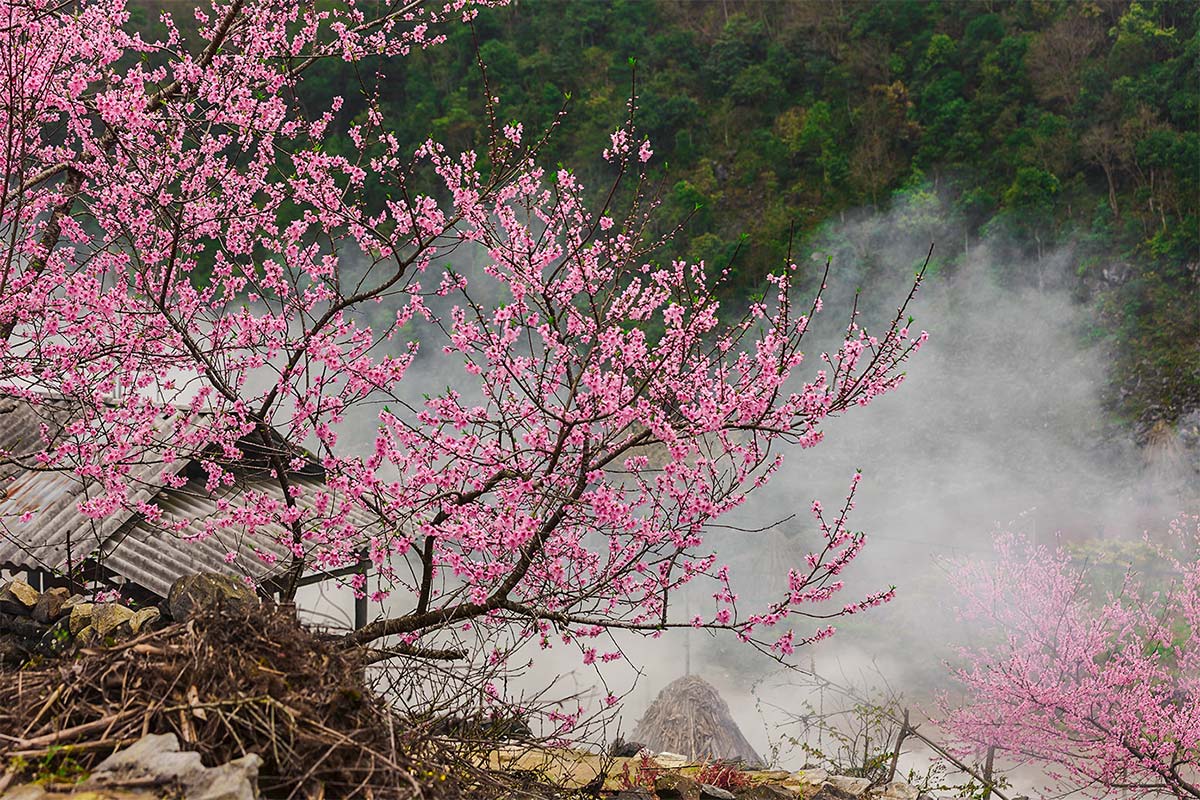
These months are dry, which is the big advantage, with very little rain. But it gets cold, often between 5°C and 15°C, and colder on the high passes. Fog is common and can either create moody, mystical views or block them completely. It is the quietest season on the loop, and a good time to see ethnic communities preparing for Tet and the first peach and plum blossoms. If you feel the cold, do the loop by car rather than bike, or come another time. Check the detail month by month: December, January, and February.
Spring (March – May)
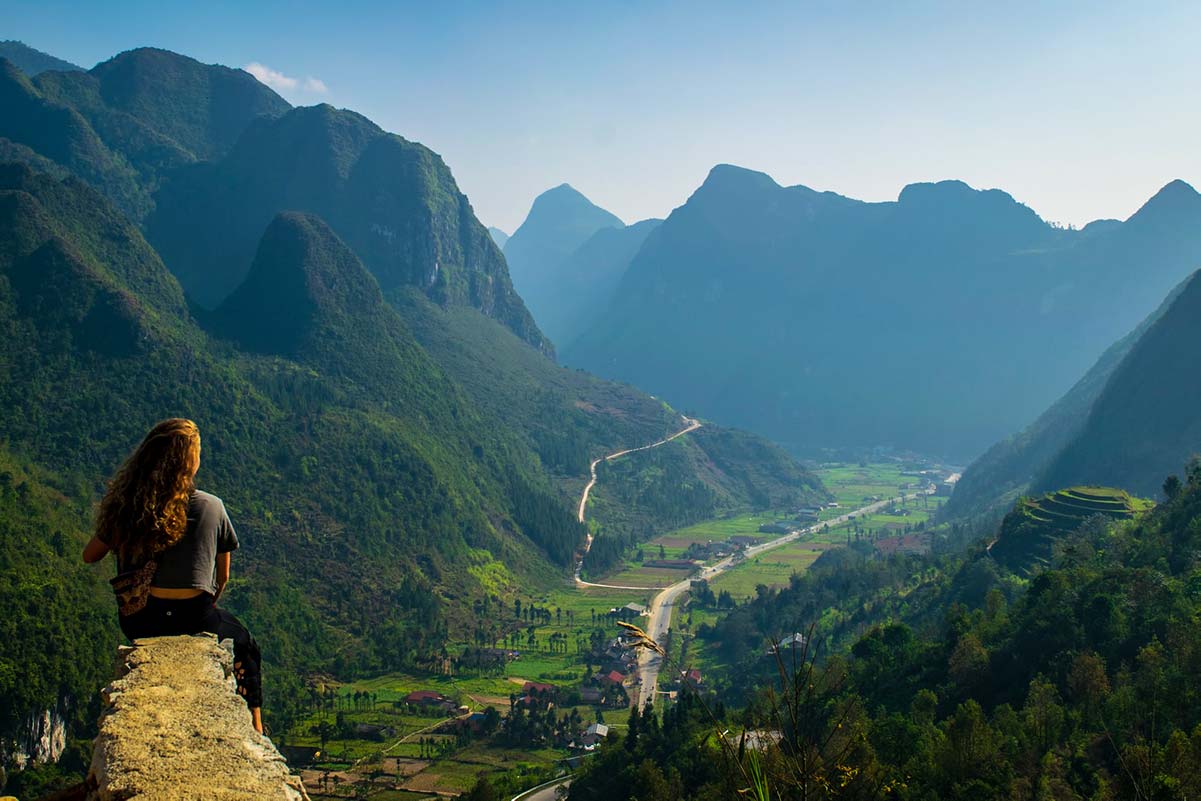
Spring is one of the best times to ride. The winter cold is gone, the summer heat has not arrived, and the days are warm with cool nights, ideal for riding and for campfires in the evening. Skies are clearer and rain is still low, though it picks up a little by May. See what to expect in March, April, and May.
Summer (June – August)
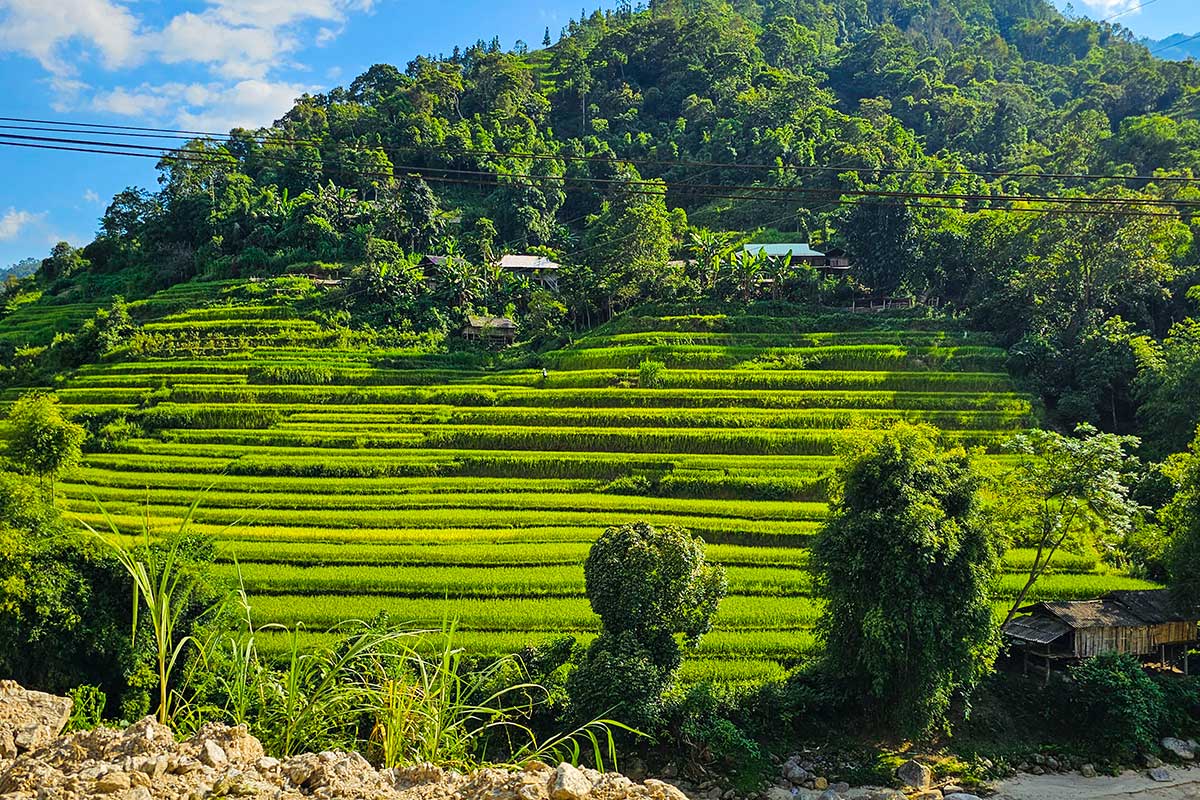
Summer is the rainy season, but it is also when Ha Giang is at its greenest, and the only time to see the rice terraces full and alive. There is still plenty of sunshine, often more than in the dry winter months. The catch is that when it rains, it pours, and heavy rain in the mountains can mean landslides. It is still safe to ride in summer, but go with local guides who know the area, and take shelter when the weather turns. Plan around the months with June, July, and August.
Autumn (September – November)
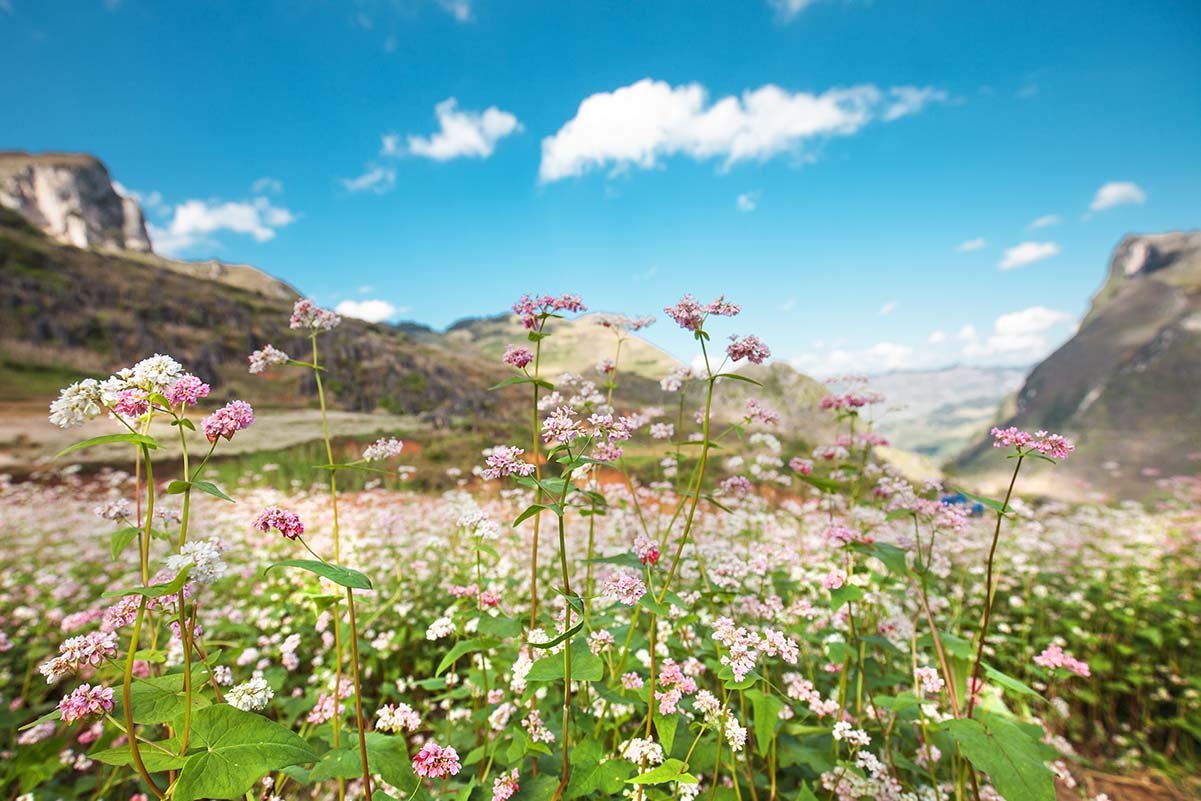
This is the other peak window, and for many the best of all. September still carries some rain, but the worst is over, and early in the month you might catch the golden rice harvest. October and November are close to perfect: little rain, mild temperatures, and clear air. This is also when the buckwheat flowers bloom across the slopes, one of the most beautiful sights of the year. Check the detail for September, October, and November.
Route & itinerary for the Ha Giang Loop
Distances on the Ha Giang Loop look short, but the mountains change everything. A 100 km stretch can easily take more than three hours without stopping, and you will want to stop constantly. Three days covers the core loop, but four or five is where it gets good, with time to slow down, trek, and reach the corners most people skip. Below are the standard 3, 4, and 5-day itineraries, plus two alternative ways to ride the Ha Giang Loop in three days.
The best way: 3-day Ha Giang Loop with Aya Lodge
This is the loop done differently. You still hit the big highlights, but you combine them with quieter roads and real villages, and base yourself for two nights at Ha Giang Aya Lodge, a Hmong mountain village halfway round. Less rushing between towns, more actually experiencing the place. The best choice if you want comfort and culture over racing the highlights.
- Day 1: Ha Giang City – Quan Ba Pass – Yen Minh – Aya Lodge
- Day 2: Aya Lodge – Meo Vac – Ma Pi Leng Pass – Dong Van – Aya Lodge
- Day 3: Aya Lodge – off-the-beaten-path roads – Lung Tam – Ha Giang City
The classic 3-day loop
The route most people do. All the big names, covered efficiently in three days. A solid first taste of the Ha Giang Loop, though the pace leaves little room to slow down.
- Day 1: Ha Giang City – Quan Ba Pass – Twin Mountains – Tham Ma Pass – Chin Khoanh Pass – Sung La Valley – Hmong Kings Palace – Dong Van Old Quarter – Dong Van (overnight)
- Day 2: Dong Van – Ma Le village – Lung Cu Flag Tower – Ma Pi Leng Pass – Nho Que river boat tour – Meo Vac (overnight)
- Day 3: Meo Vac – M-shape turn – Mau Due – Lung Ho – Ha Giang City
The Du Gia 3-day loop
Swaps Lung Cu for the southern side of the loop. You still get Ma Pi Leng and Dong Van, but the final day runs through Du Gia, which is quieter, greener, and has a waterfall worth swimming in. A good choice if you want a more relaxed end to the ride.
- Day 1: Ha Giang City – Tham Ma Pass – Yen Minh – Dong Van (overnight)
- Day 2: Dong Van – Ma Pi Leng Pass – Meo Vac – Du Gia (overnight)
- Day 3: Du Gia – Lung Tam – Ha Giang City
4-day Ha Giang Loop itinerary
The classic loop with a quieter, greener final stretch through Du Gia added on. Four days is the sweet spot for most people, enough to see the highlights without rushing.
- Day 1: Ha Giang City – Quan Ba Pass – Twin Mountains – Tham Ma Pass – Chin Khoanh Pass – Sung La Valley – Hmong Kings Palace – Dong Van Old Quarter – Dong Van (overnight)
- Day 2: Dong Van – Ma Le village – Lung Cu Flag Tower – Ma Pi Leng Pass – Nho Que river boat tour – Meo Vac (overnight)
- Day 3: Meo Vac – M-shape turn – Mau Due – Lung Ho – Du Gia waterfall (swimming) – Du Gia (overnight)
- Day 4: Du Gia – Du Gia rice fields – Ha Giang City
5-day Ha Giang Loop itinerary
The full experience, with time for a cave, a pine forest, trekking around Dong Van, and the Du Gia detour. The best option if you want to actually slow down and explore rather than tick off highlights.
- Day 1: Ha Giang City – Minh Tan Stream (swimming) – Quan Ba Pass – Lung Khuy Cave – Lung Tam Village – Yen Minh Pine Forest – Yen Minh (overnight)
- Day 2: Yen Minh – Tham Ma Pass – Chin Khoanh Pass – Sung La Valley – Hmong Kings Palace – Lo Lo Chai Village – Lung Cu Flag Tower – Ma Le village – Dong Van Old Quarter – Dong Van (overnight)
- Day 3: Dong Van – trekking around Dong Van – Ma Pi Leng Pass – Nho Que river boat tour – Meo Vac (overnight)
- Day 4: Meo Vac – M-shape turn – Mau Due – Lung Ho – Du Gia waterfall (swimming) – Du Gia (overnight)
- Day 5: Du Gia – Du Gia rice fields – Ha Giang City
30 Highlights of the Ha Giang loop
The Ha Giang Loop is filled with breathtaking highlights and must-see sights along the route. In this section, we have listed the best things to see from the start of the loop to the end, not by their importance but by their order along the journey. This way, you can follow this list and ensure you don’t miss out on anything as you travel. To fully experience all 30 highlights, it is recommended to take more than 3 days, ideally 4 to 5 days.
Sights and highlights between Ha Giang and Dong Van
1. Ha Giang City
Ha Giang City is the start and end of the Ha Giang Loop. It is not really a highlight itself, with little to see and not much atmosphere, but it is the gateway to everything ahead, and where you will sort your bike, your guide, and your bags before setting off.
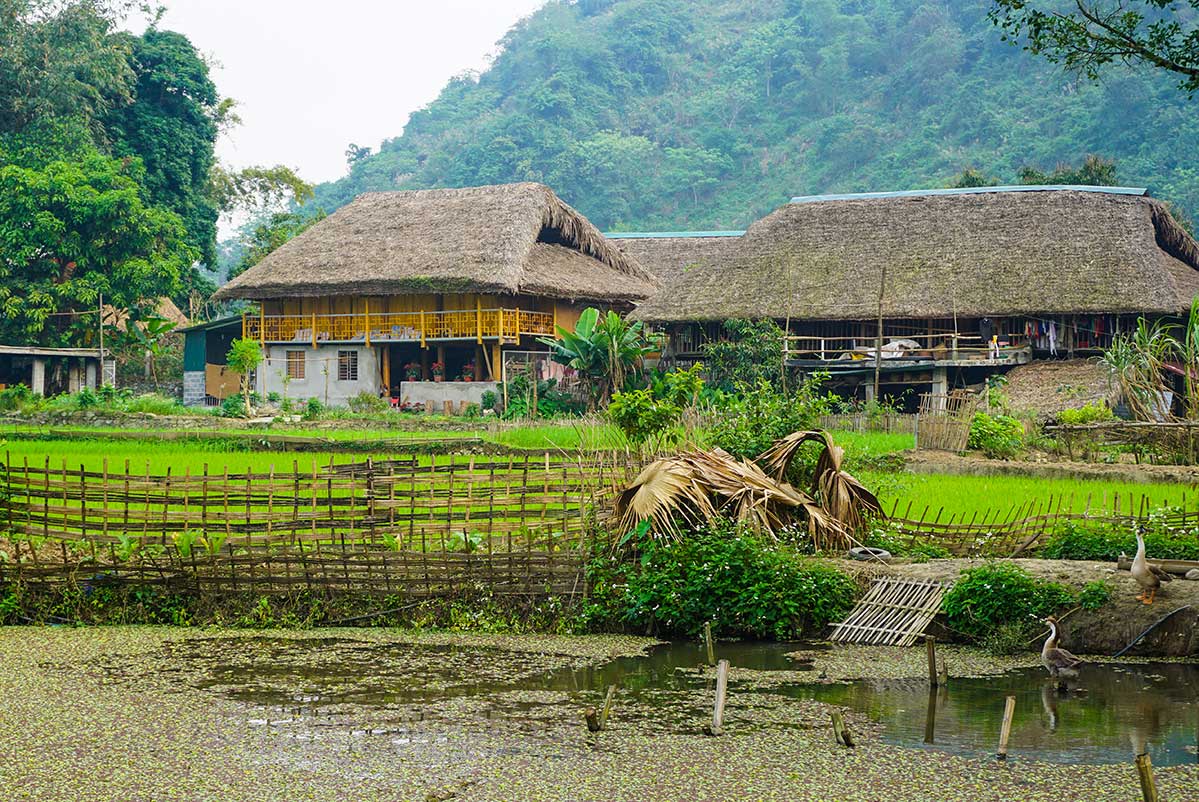
If you have time, the area just outside the city is worth a look. A 10 to 20 minute drive brings you to Thon Tha Village, where ethnic Tay people live among green rice fields, a quieter and more scenic place to stay than the city itself.
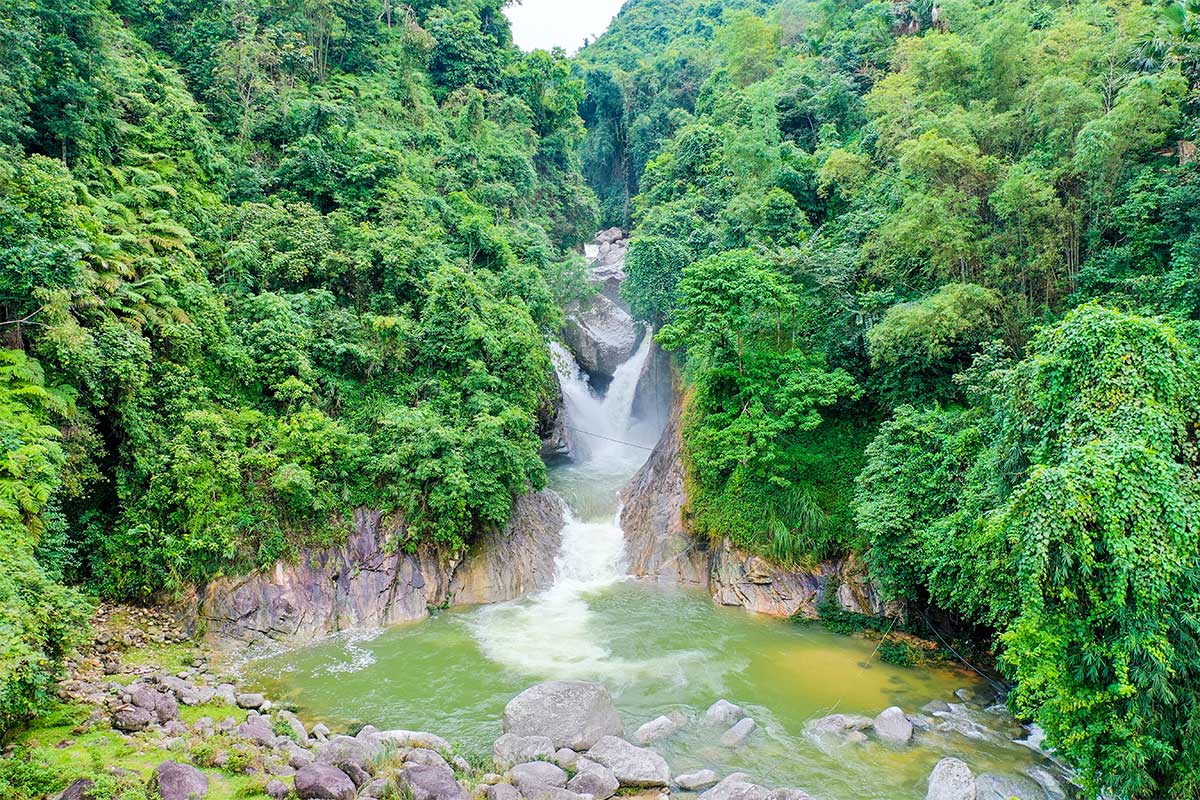
Just 6 km from the city is the Number 6 Waterfall, named simply after its distance from Ha Giang. It is an easy stop if you have an hour spare before or after the loop.
2. Minh Tan Stream
About 50 km from Ha Giang City on Highway 4C, Minh Tan Stream is a good spot to cool off on a hot day. Most people hit it near the end of the loop, just before rolling back into the city, so it makes a refreshing last stop.
3. Bac Sum Pass
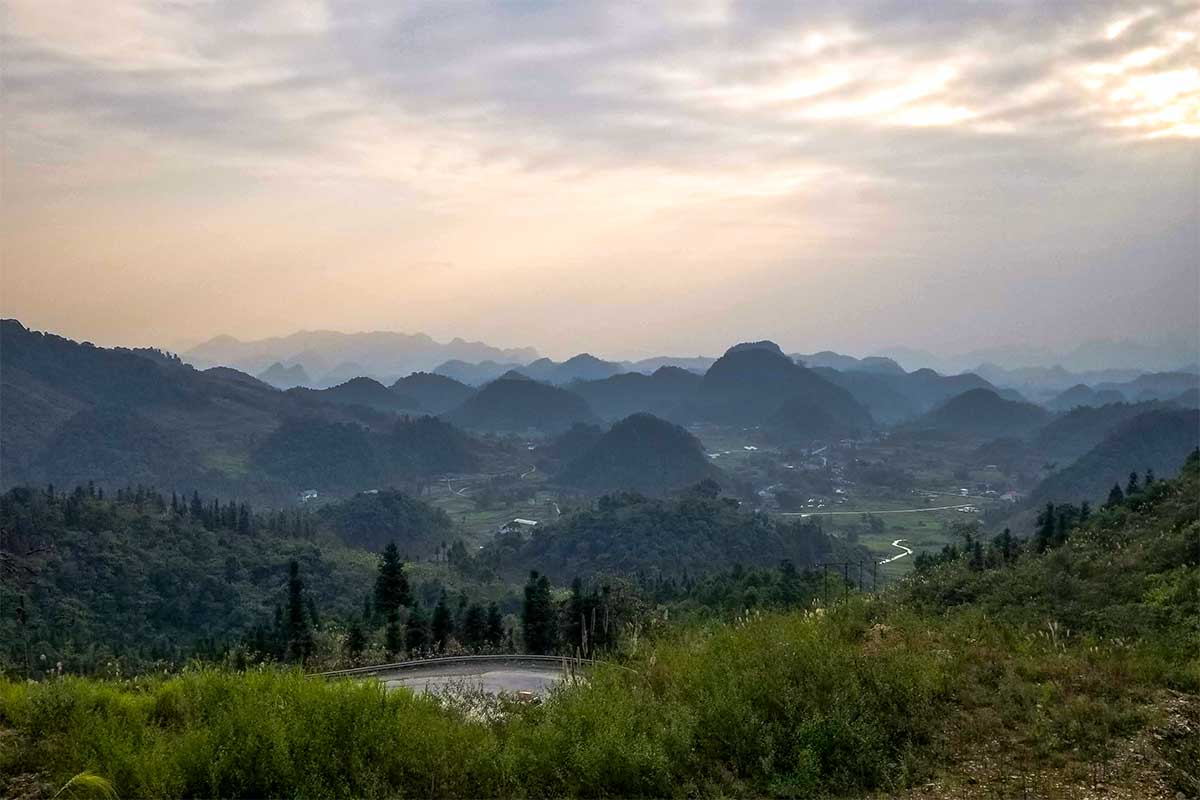
Bac Sum Pass is the first real climb on the Ha Giang Loop. It is not the most dramatic pass you will see, but it is a good warm-up, with wide views over the valleys and terraced fields, and a taste of what is coming.
4. Quan Ba Pass (Heaven’s Gate)
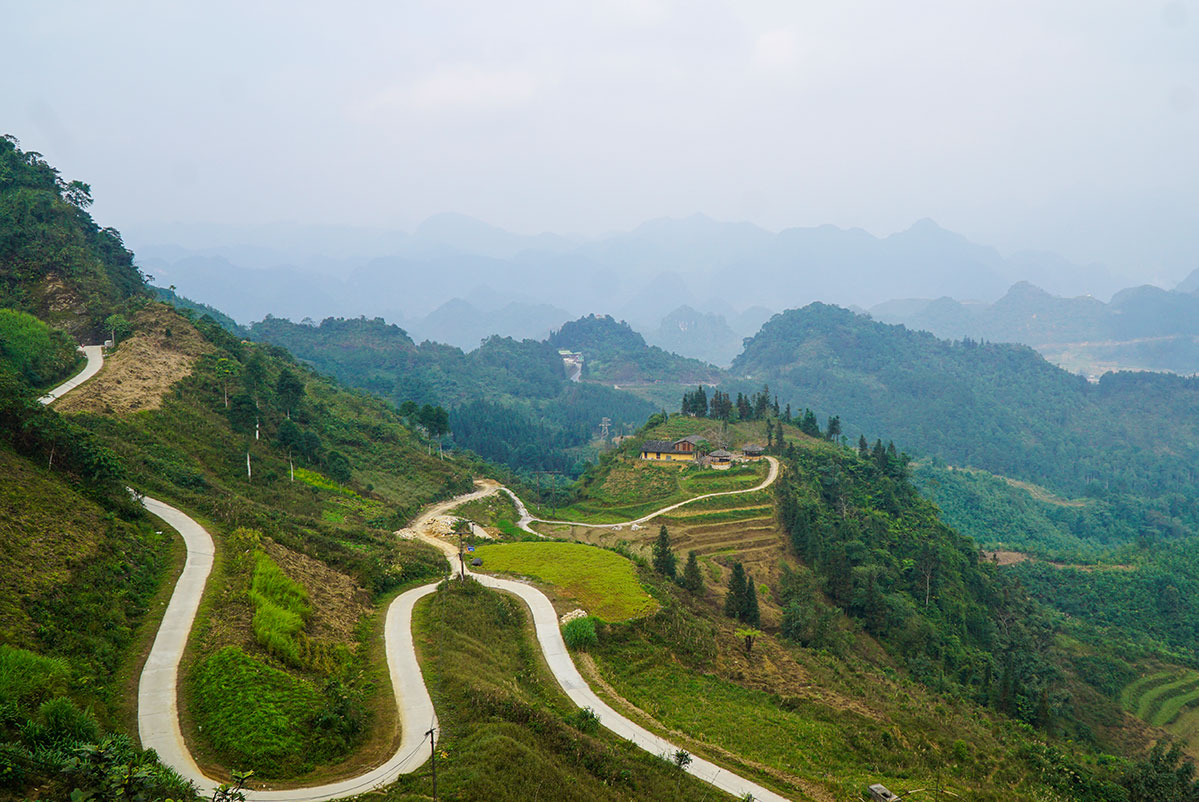
From Quan Ba Pass, also called Heaven’s Gate, the scenery starts to get seriously good. There is a cafe right at the top of the pass with toilets, handy this early in the ride. It gets busy unless you arrive early, but on a cold, foggy morning it is a great place to stop for a hot chocolate or coffee while you take in the view.
5. Twin Mountains Viewpoint
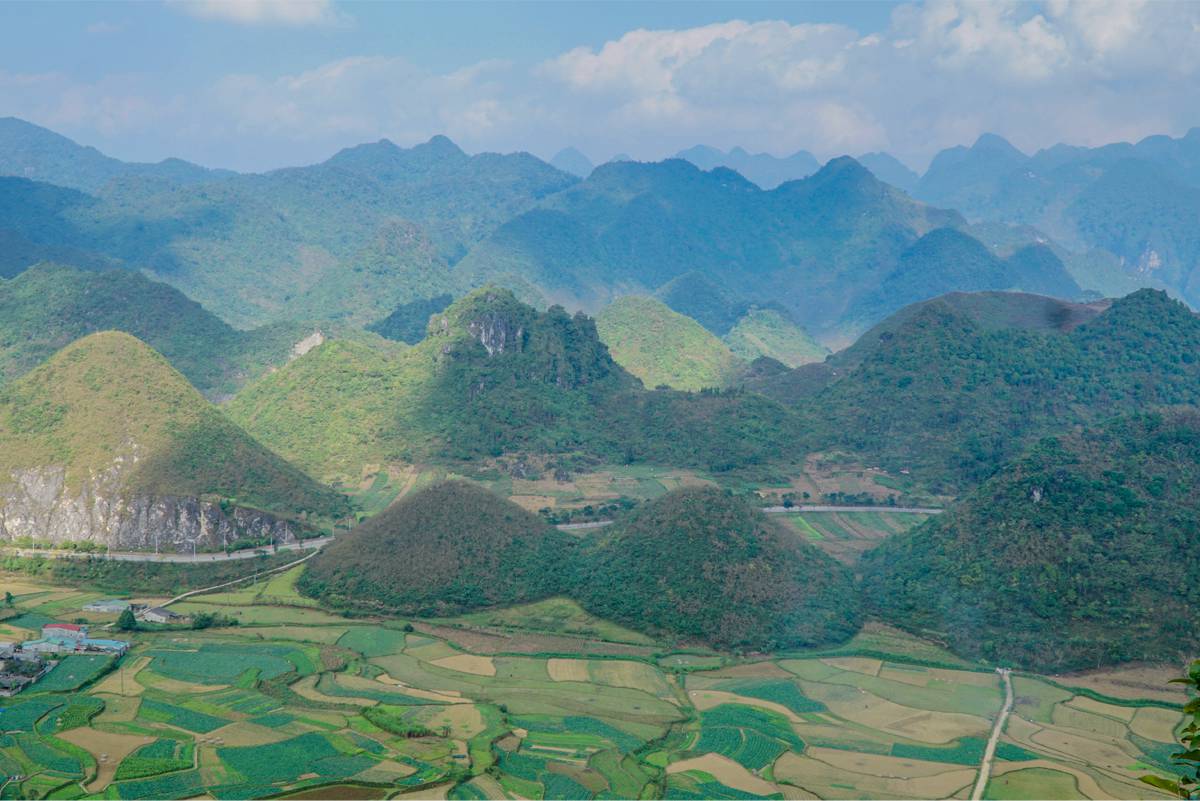
The Twin Mountains, also called Fairy Bosom, are two near-identical hills rising side by side from the valley floor. Halfway down from Quan Ba Pass there is a viewpoint on your left, with stairs up to the lookout. Continue down from here and you reach Quan Ba town, a good place to stop for lunch if you arrive around midday, before carrying on to the next town.
6. Nam Dam Village & waterfall
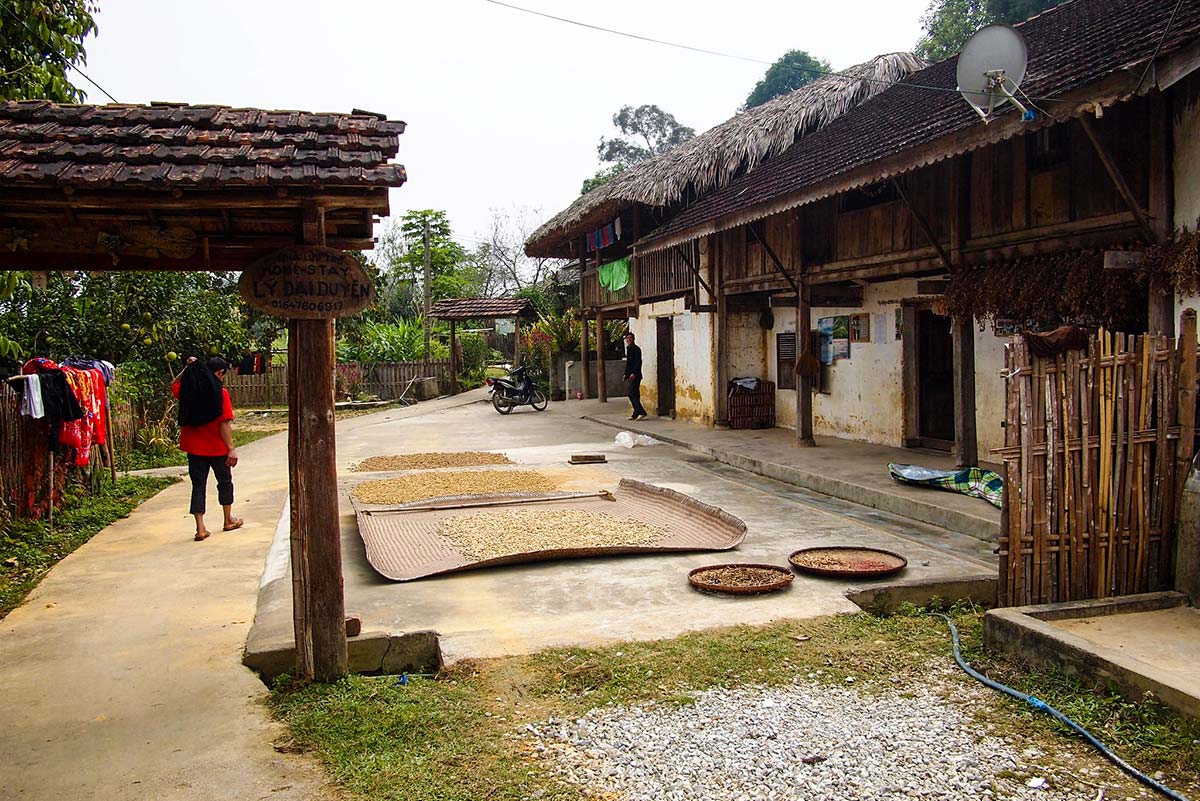
Just off the main route, Nam Dam Village gives you a look at traditional ethnic life, with homestays if you want to stay the night.
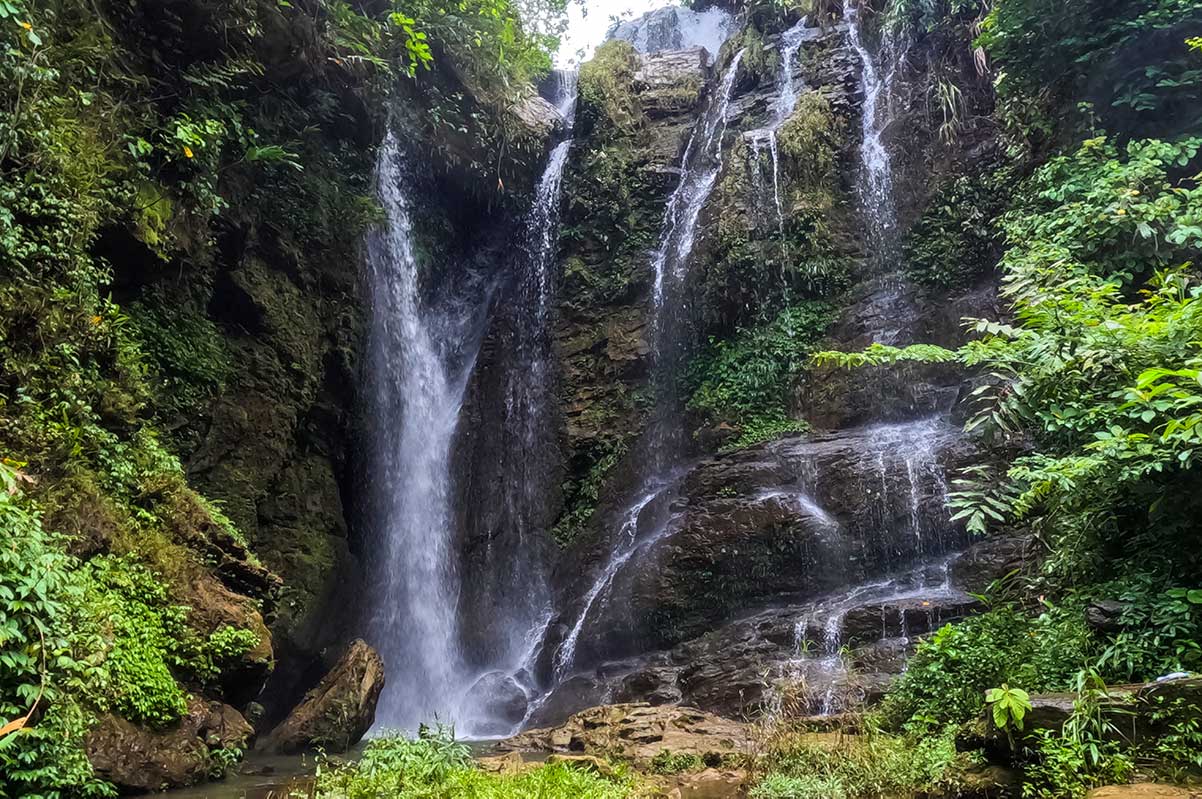
The village also hides a small waterfall where you can take a quick, refreshing shower on a hot day.
7. Lung Khuy Cave

Before heading from Quan Ba town to Yen Minh, take the short detour up to Lung Khuy Cave. The winding road up is worth it on its own, and inside you will find big chambers of stalactites and stalagmites with an easy path laid through. One tip: there are two parking areas. Most people use the first one, which still leaves a long climb up the stairs. Easy Riders know the second, higher parking spot that leaves only a short walk to the entrance. Entrance is 50,000 VND.
8. Lung Tam Village
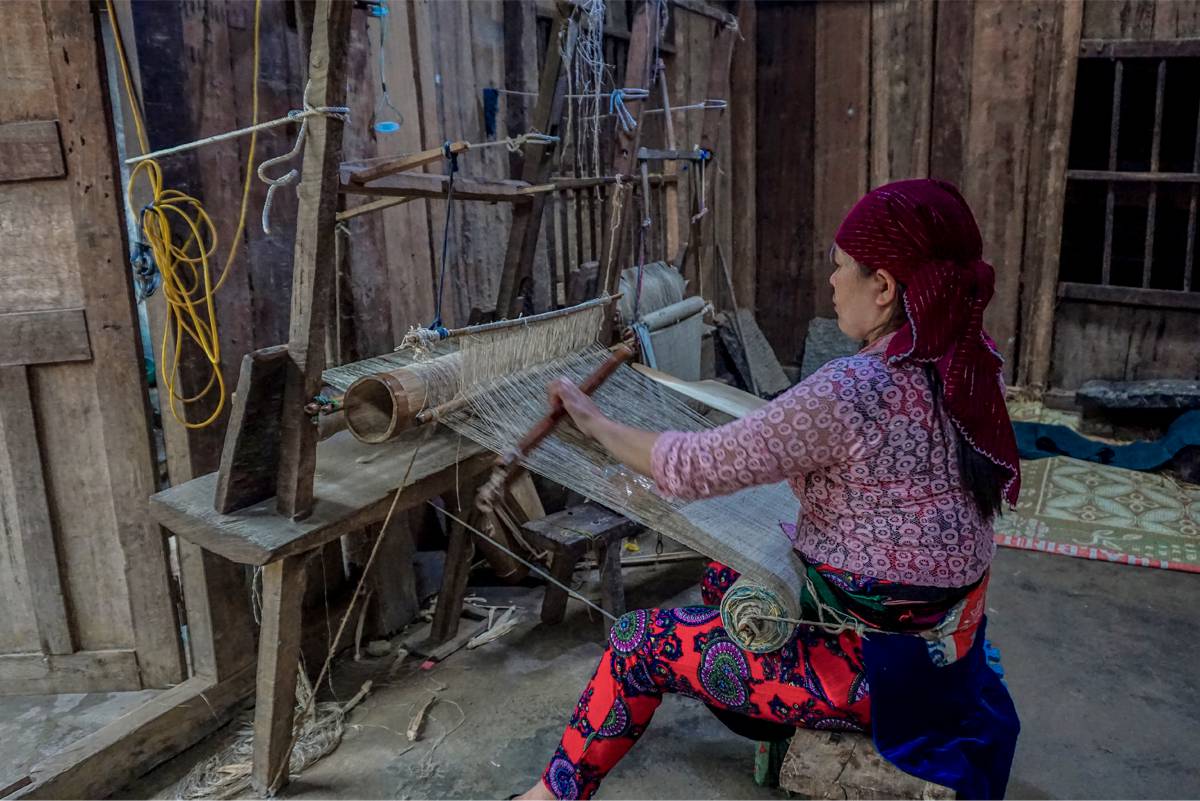
Lung Tam Village is a peaceful Hmong weaving village, known for its traditional hemp weaving and dyeing. You can visit the workshops and see how the textiles are made by hand, and buy a souvenir straight from the source: real handmade work that supports the local ethnic community. With a stream running through it and mountains rising on either side, it is a genuinely beautiful stop too.
9. Yen Minh Pine Forest
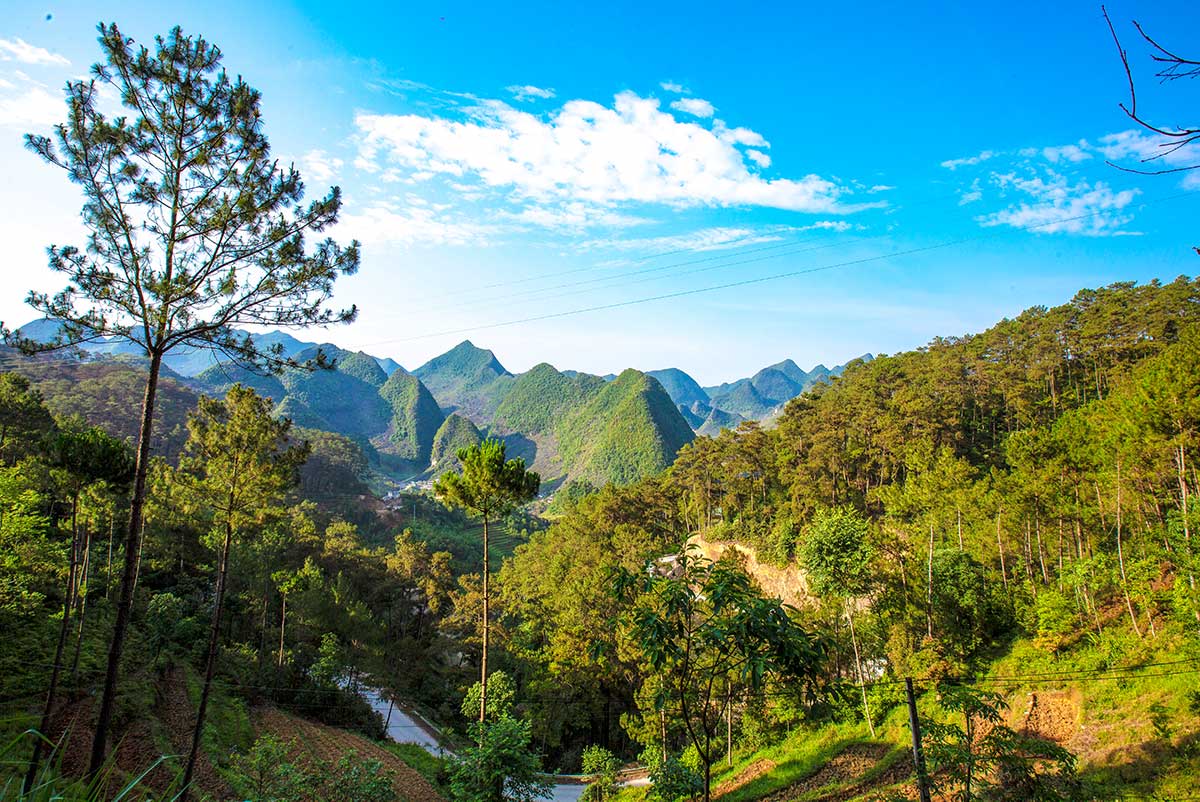
On the way to Yen Minh town, a sign gives you two routes: a shorter one through the mountains, or a longer one through the Yen Minh Pine Forest. Take the longer road. The forest is a cool, shaded break from the rest of the ride, and feels completely different from anywhere else on the Ha Giang Loop.
10. Tham Ma Pass
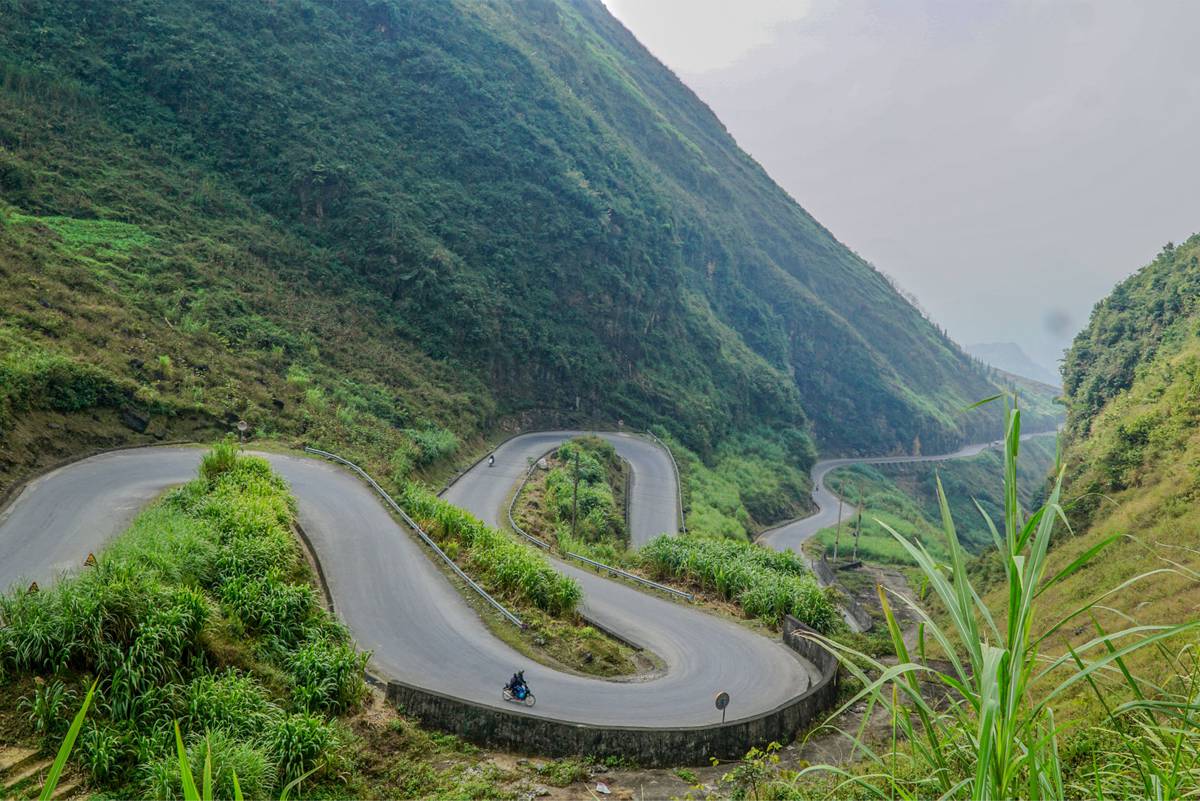
Tham Ma Pass is one of the most iconic spots on the Ha Giang Loop, and one of the busiest, especially at weekends. The winding S-shape of the road cut into the hillside is the classic Ha Giang photo, and there is now a cafe at the viewpoint. You will likely see minority kids in traditional dress posing with flowers for photos. It is best not to give them money, as it only rewards them for skipping school rather than helping them. It is still a great stop, and the view down the pass is worth it.
11. Chin Khoanh Pass
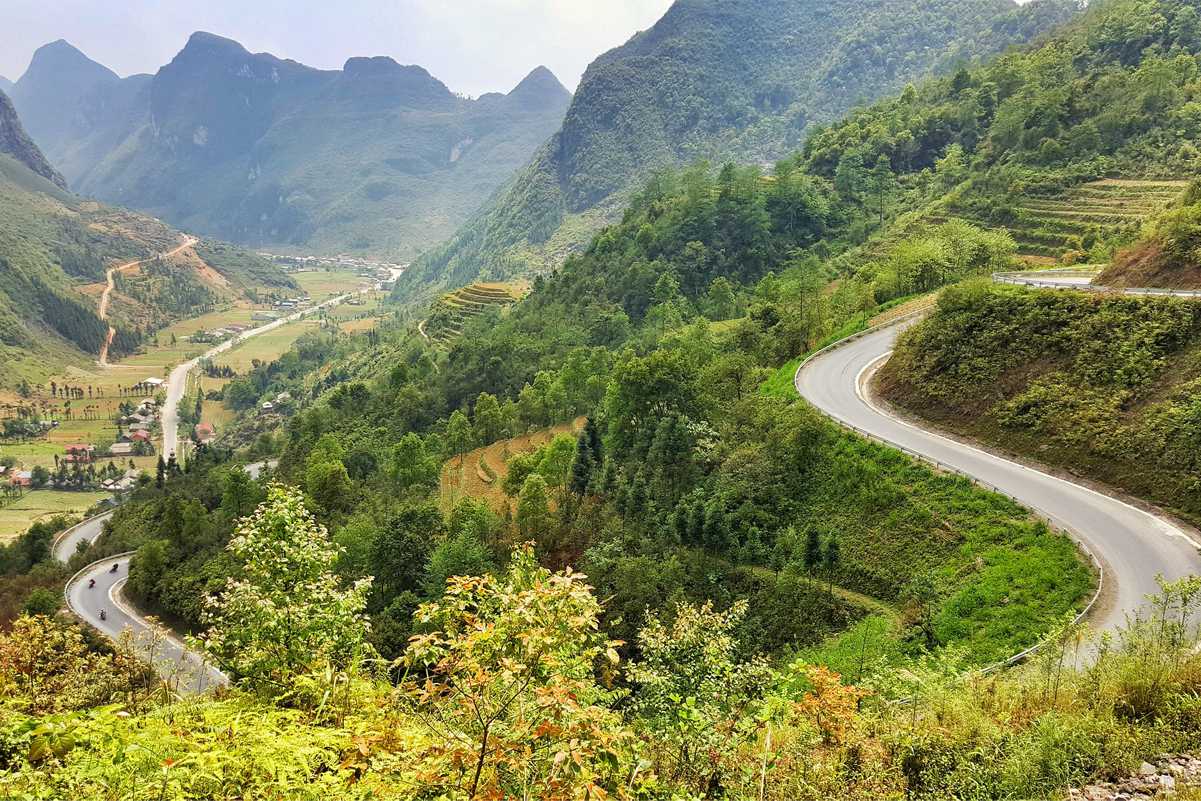
Chin Khoanh Pass, also called the Nine Turns Pass, is less famous than Tham Ma but everyone rides it, even if few know its name. The scenery is excellent, and in the right season the slopes fill with buckwheat flowers. There are not many places to pull over on the pass itself, but there is a spot near the top with good views and a small cafe.
12. Sung La Valley
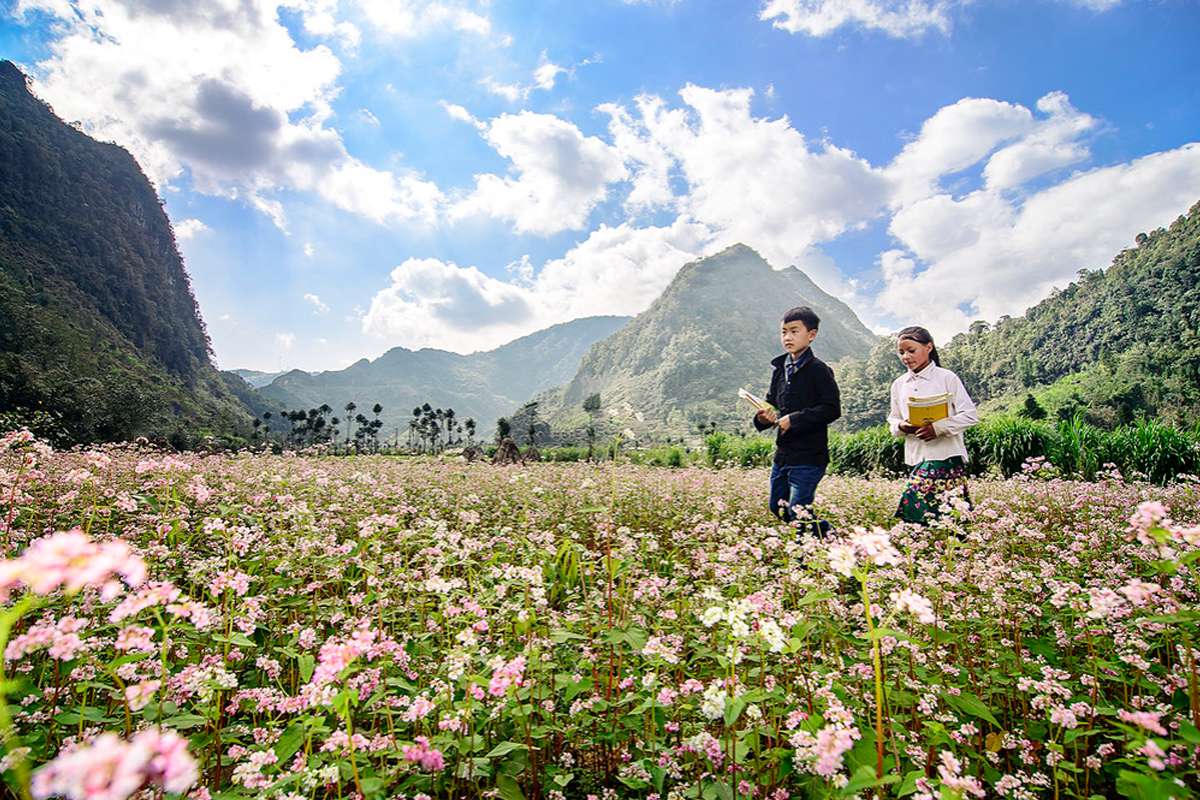
Past Chin Khoanh Pass you drop into Sung La Valley, often called the most beautiful highland commune on the whole Dong Van Plateau. It is at its best in flower season, when the valley turns colorful, which is why locals call it the “Flower of the Plateau.” The valley is dotted with traditional Hmong villages, and its most famous house is Pao’s House in Lung Cam village, used in the well-known Vietnamese film The Story of Pao. You can step inside to see how a traditional minority home looks.
13. Pho Bang Old Town
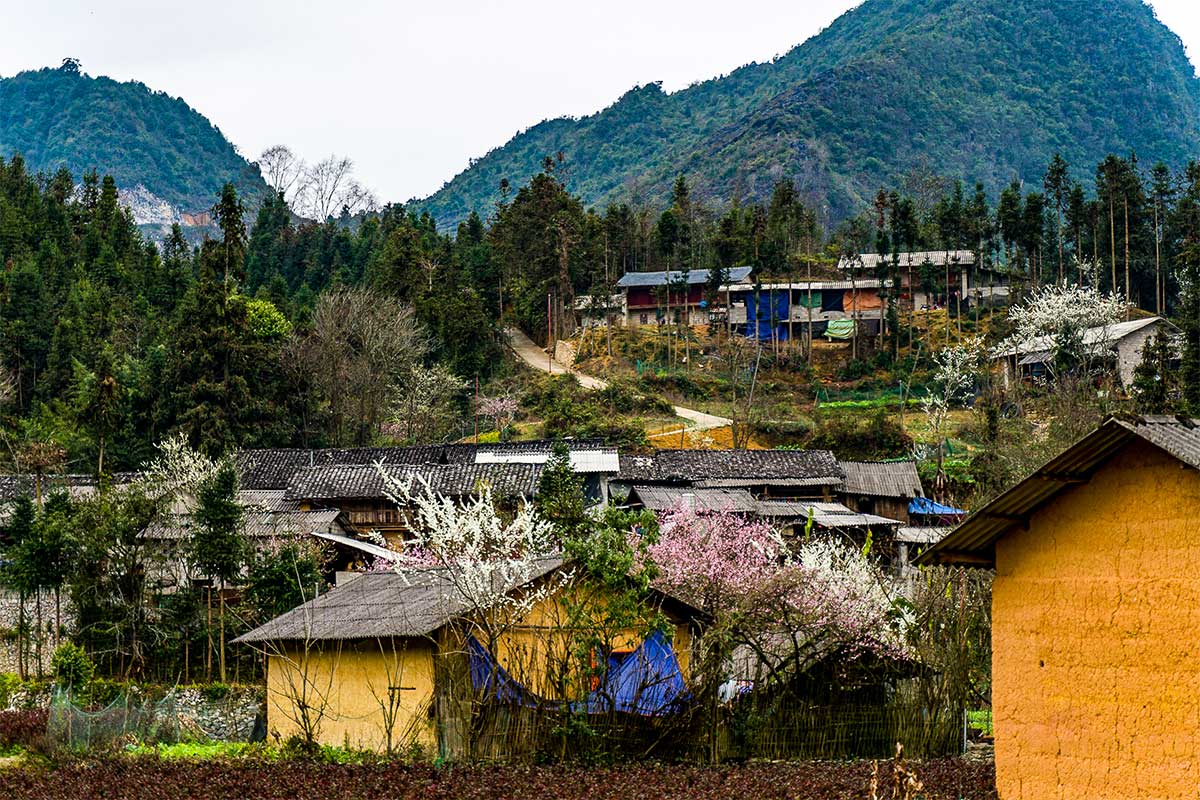
Pho Bang is an old town slightly off the main route, once a Chinese trading post with characterful old houses. Be honest with your expectations here: in recent years many of the old houses have disappeared, so it is no longer as striking as it once was. Go for the experience of getting off the route for a bit, not for the village itself, which is pleasant but no longer stands out among the many villages around Ha Giang.
14. Hmong Kings Palace
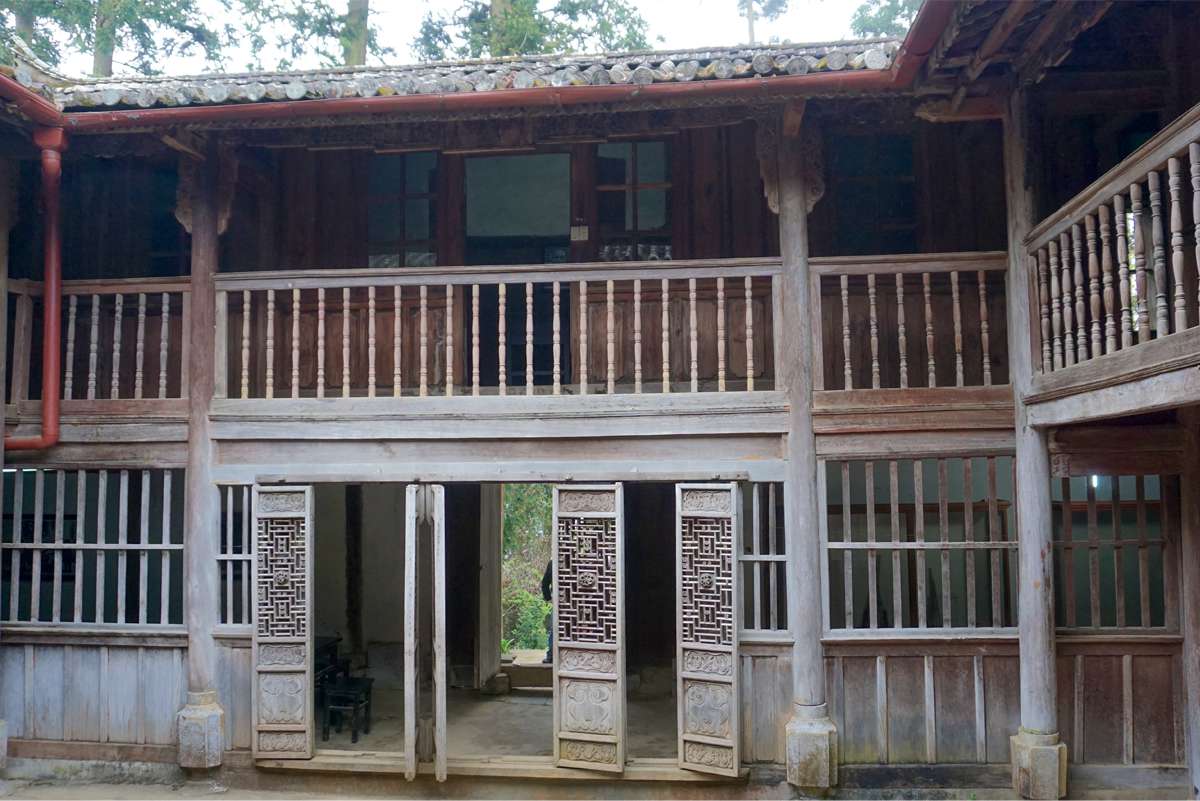
The Hmong Kings Palace in Sa Phin is a worthwhile cultural stop, with a small entrance fee. It was the residence of the Vuong family, the Hmong kings who grew rich on the opium trade and built this as a fortified home for protection. It is not a huge palace, but it is one of the few genuinely historical and cultural sights on the Ha Giang Loop, built in a striking mix of Chinese, French, and Hmong styles.
15. Sa Phin market
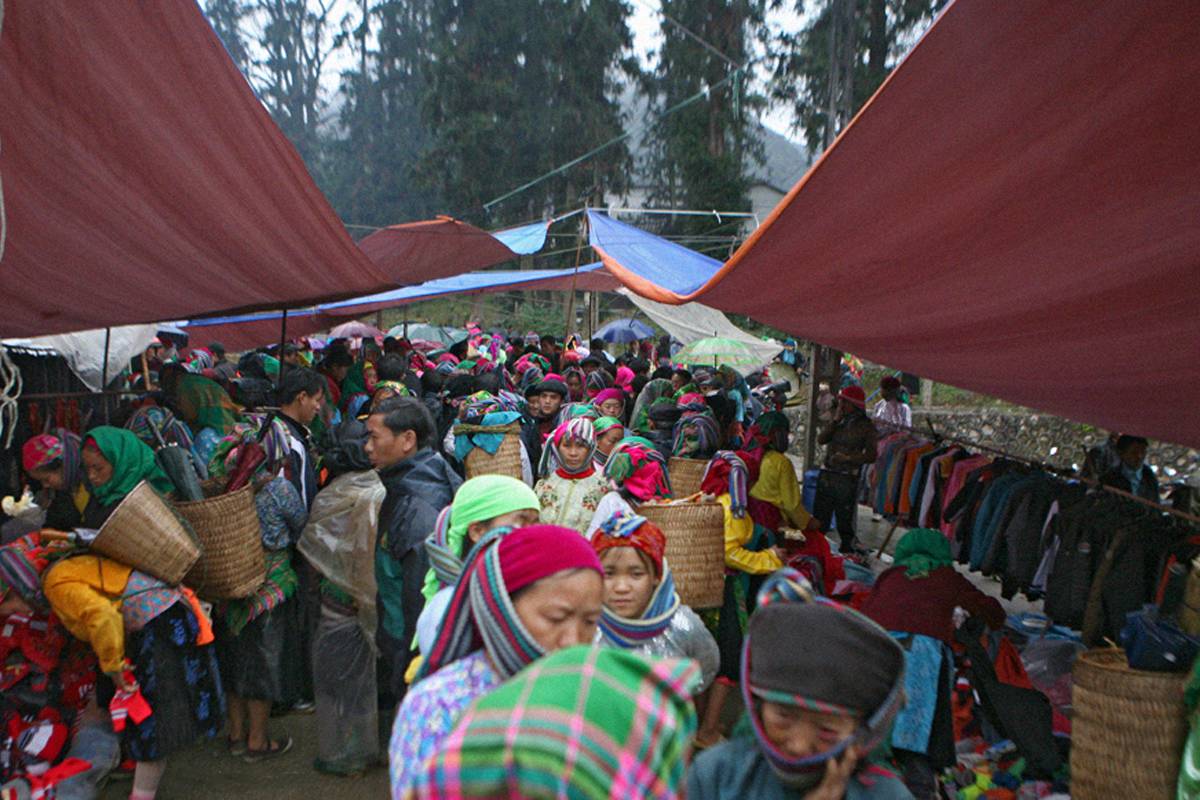
Right by the Hmong Kings Palace is the Sa Phin Market, one of Ha Giang’s “backward markets.” Instead of a fixed day, it runs once every six days and shifts back through the week, so this week it might be Sunday, next week Saturday, and so on. If you time it right, it is a great experience: colorful minorities from the surrounding mountains come to trade, eat, and socialize, with the lively feel of a weekly festival.
16. Dong Van Old Quarter
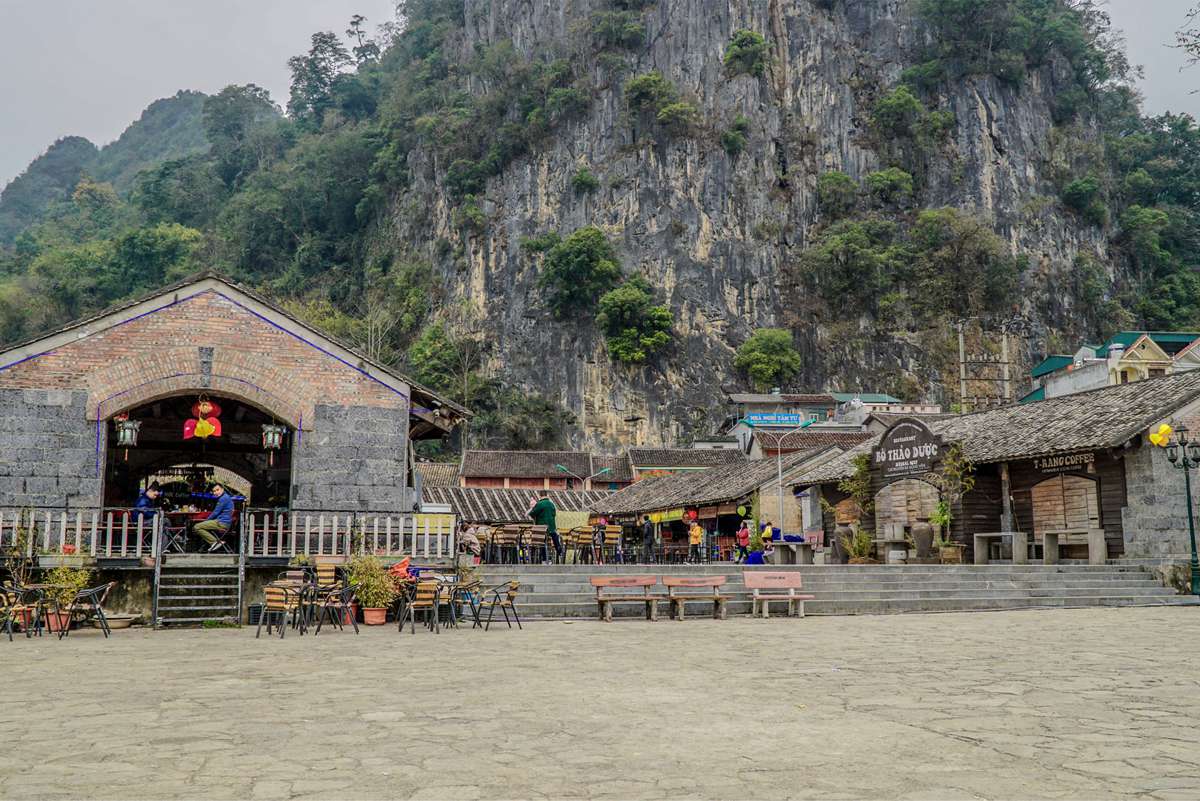
Dong Van is one of the main towns on the loop, and a popular overnight stop. Its historic core, the Old Quarter, is honestly quite atmospheric, though small, just a few old houses and a square. It is not the most visually stunning old town you will see, but in the evening it comes alive: cozy cafes, bars, and restaurants, and sometimes ethnic culture events out on the square. Behind it sits an old French fort on the hill, with views over the town and mountains.
17. Dong Van Market
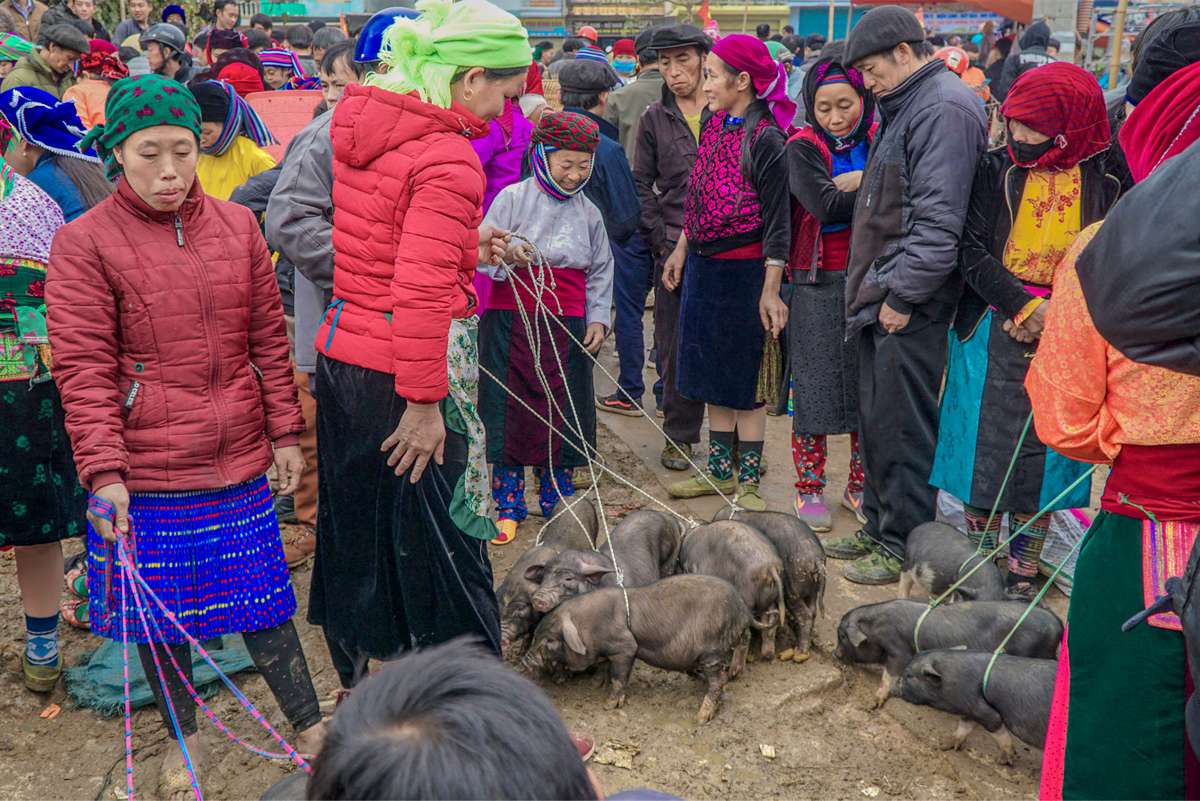
The Dong Van Market is one of the biggest on the loop, held once a week on Sunday. It is a real spectacle: hundreds of ethnic people in their brightest clothes, someone getting a haircut right next to a trader selling a buffalo, stalls of local goods everywhere. Well worth planning your route around if you can be in Dong Van on a Sunday.
Sights and highlights between Dong Van and Lung Cu
18. Khe Lia Panorama
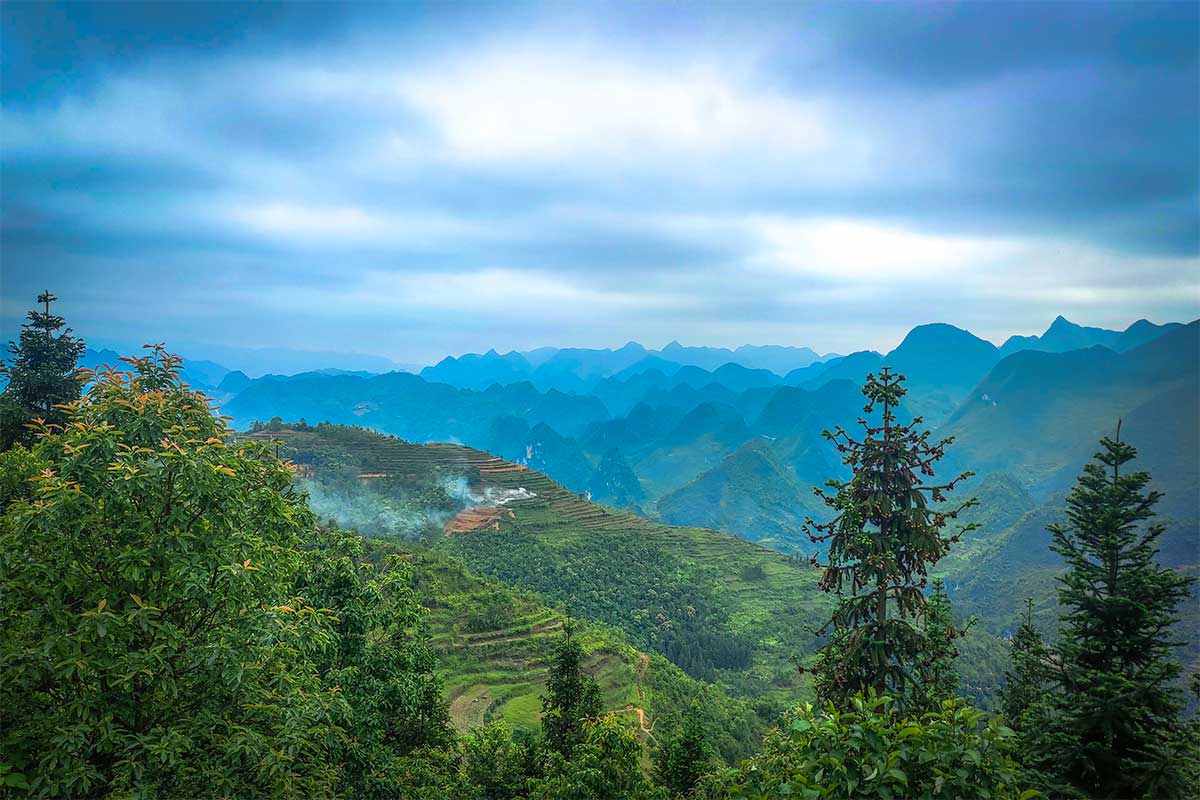
The whole road from Dong Van toward Lung Cu is some of the best scenery on the Ha Giang Loop, with huge rugged mountains and small villages to stop at along the way. Khe Lia Panorama happens to be a named, marked viewpoint, with a small parking area and stairs up to a 360-degree view, but the truth is much of this stretch is just as good. The scenic part is the road before you get close to Lung Cu, so take your time and stop wherever it looks good.
19. Ma Le Village
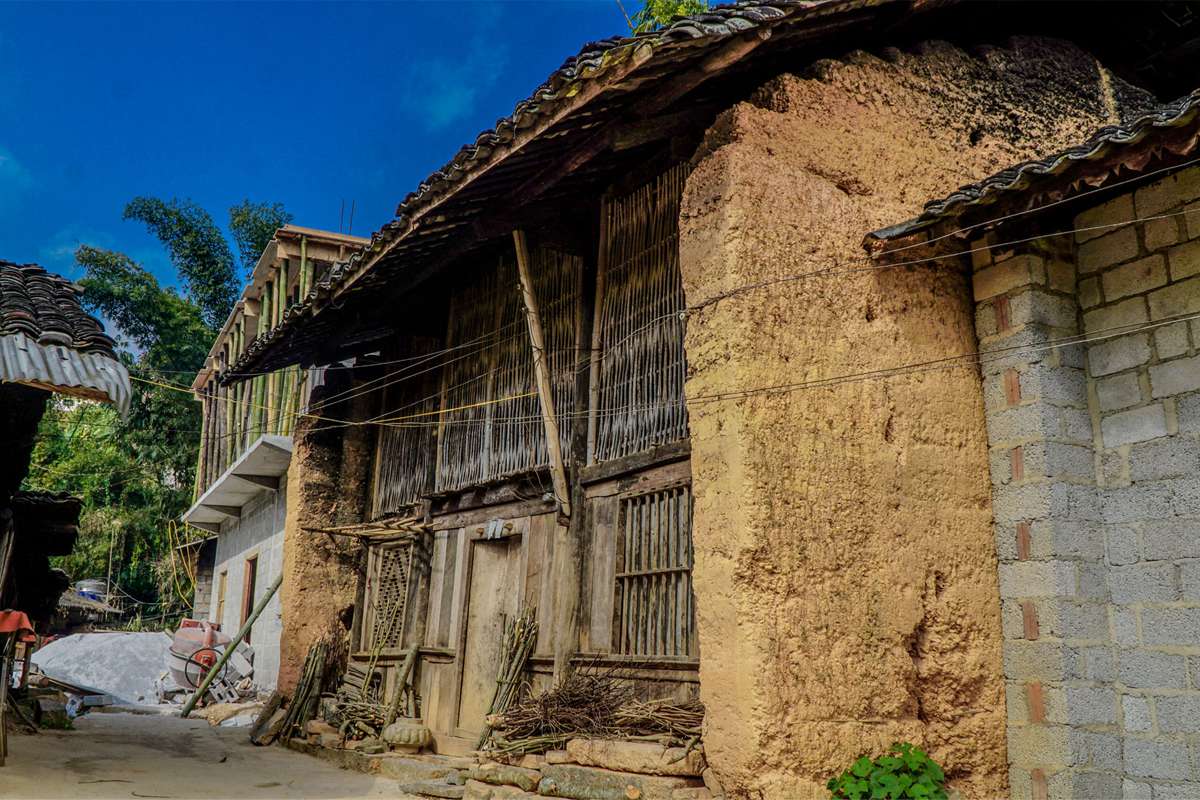
Ma Le Village is not a major highlight, and that is exactly what makes it worth a stop. Everyone rides straight past on the way to Lung Cu, so it stays quiet. Get off the bike or out of the car and take a short 15-minute walk among the old traditional clay houses for a genuine, untouristed look at village life. There are even one or two homestays if you want to stay the night.
20. Lung Cu Flag Tower
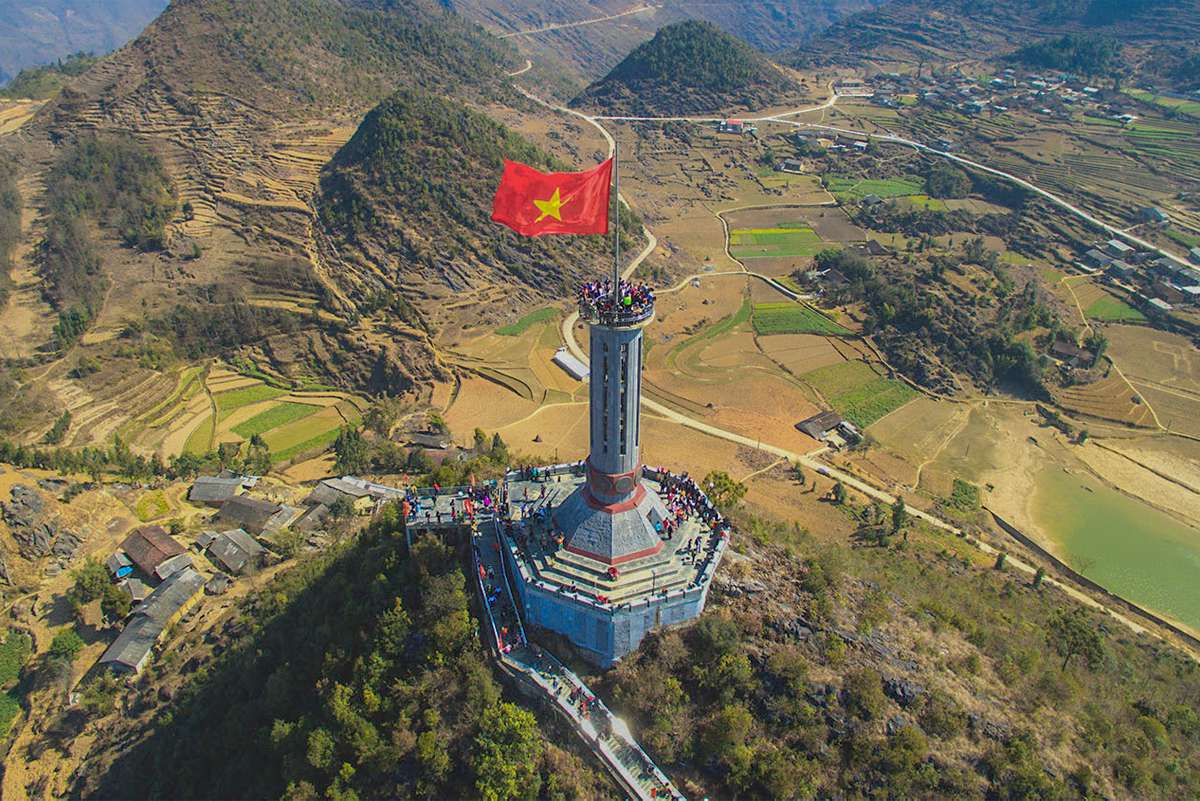
The Lung Cu Flag Tower marks the northernmost point of Vietnam, right on the Chinese border, with a huge national flag on top of the hill. It is more of an iconic, tick-the-box stop than a scenic one, the views are not the best you will see in Ha Giang, and it means more to Vietnamese visitors than to most foreigners. A large new pagoda complex has also been built here, which does not really suit the region but fits the wider trend of Vietnamese spiritual tourism. Still, standing at the very top of the country has its appeal.
21. Lo Lo Chai Village
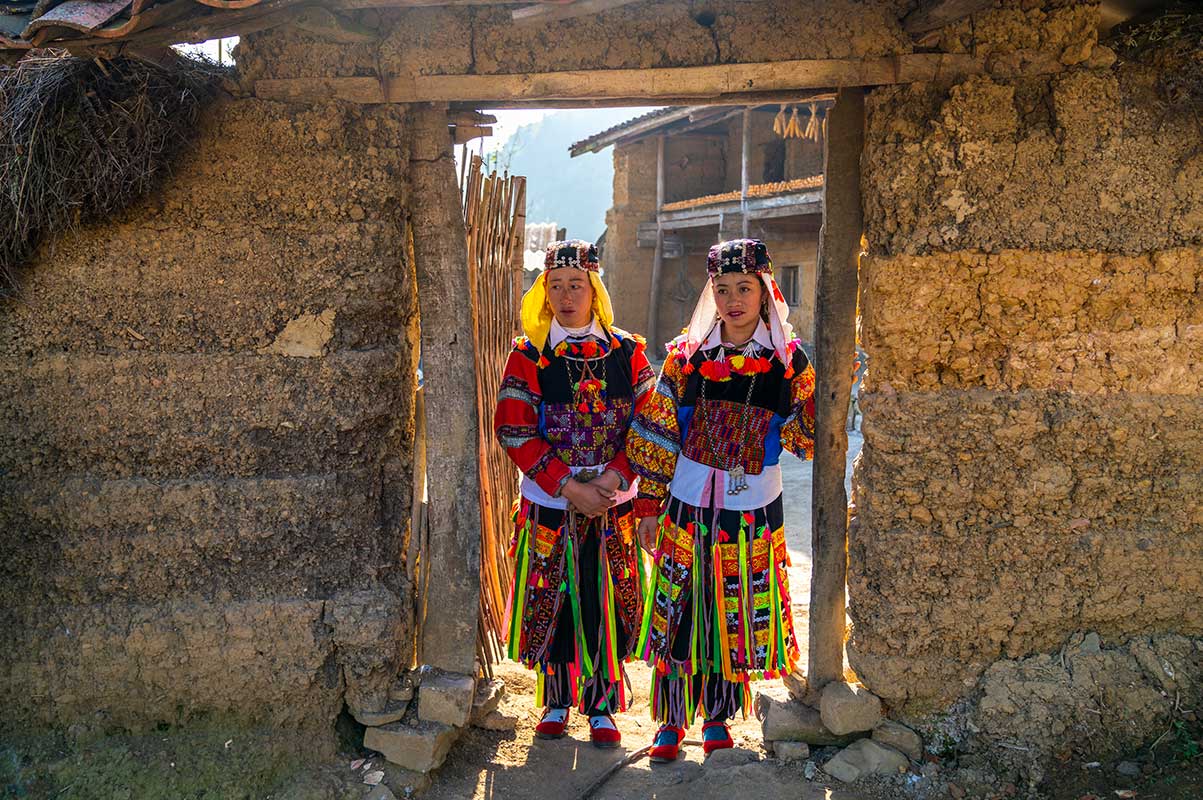
Lo Lo Chai Village, near Lung Cu, is home to the Lo Lo people, one of Vietnam’s smallest ethnic groups, known for their brightly colored traditional clothing and clay-and-wood houses. It is a genuinely beautiful village. Be aware, though, that it has become very popular with Vietnamese tourists in recent years, and a whole bubble of homestays has grown up around it. At weekends it can get busy, sometimes with karaoke. It is still well worth visiting, but if you were hoping for a quiet, authentic overnight stay, it is worth considering somewhere else to sleep.
Sights and highlights between Dong Van and Meo Vac
22. Ma Pi Leng Pass
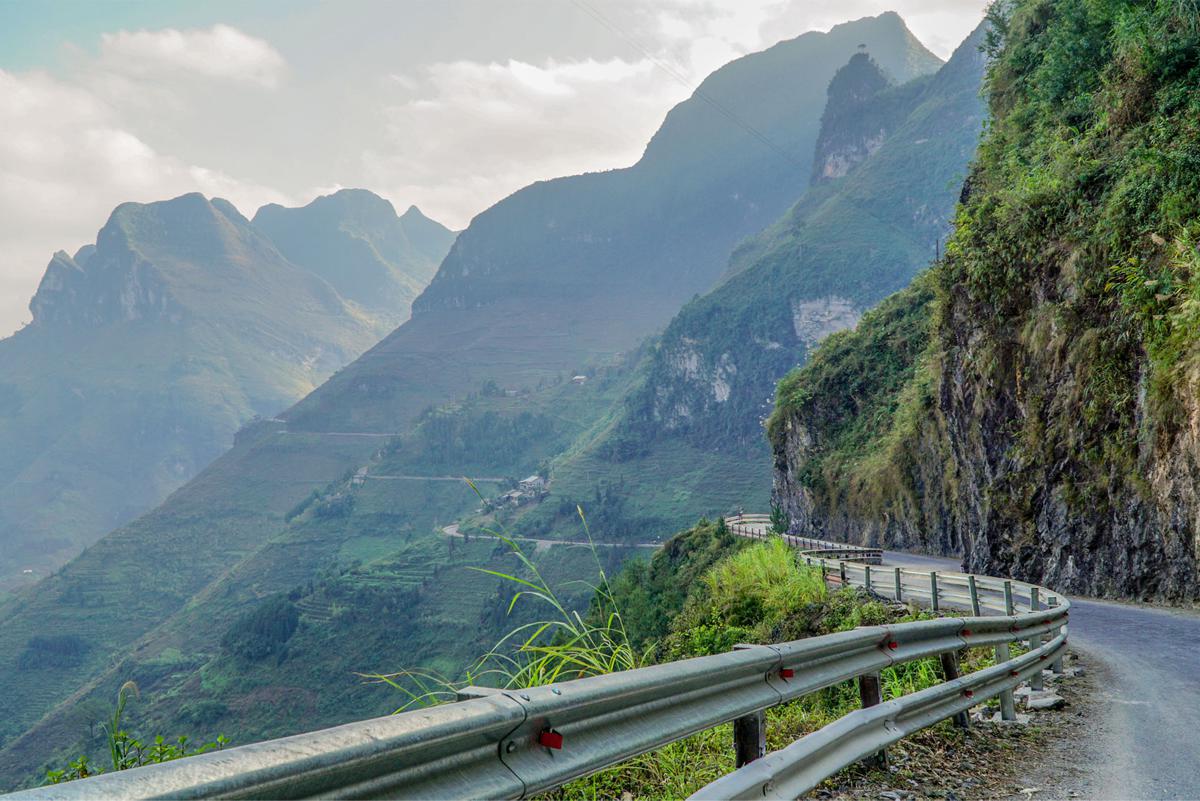
Ma Pi Leng Pass is the most iconic stretch of road on the entire Ha Giang Loop. The road is carved straight into the side of the mountain, with the Nho Que river far below and huge cliffs all around. It can get busy, but the pass is long, so it never feels crowded for long, and the views are some of the best in Vietnam. This is the moment most people came for.
23. Ma Pi Leng Sky Walk
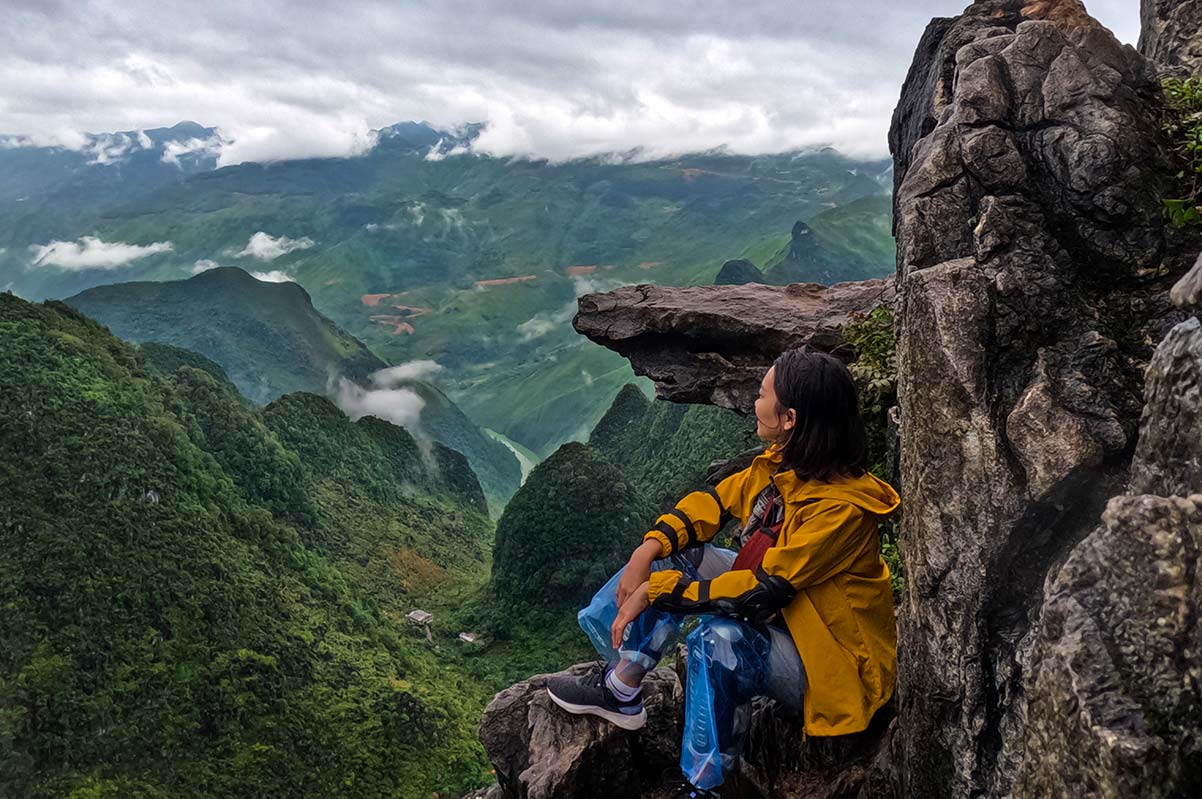
At the Happiness Road Museum on the pass, a side road branches off and climbs higher than the main road. Officially it is for walking only, though some people still ride up. Follow it on foot and you reach the famous overhanging rock that juts out over the valley, where everyone wants their photo standing on the edge. Be careful out there. Most people turn back after the photo, but if you enjoy a bit of trekking, you can carry on much further along the path. Almost nobody does, and the views up there are even better.
24. Nho Que river
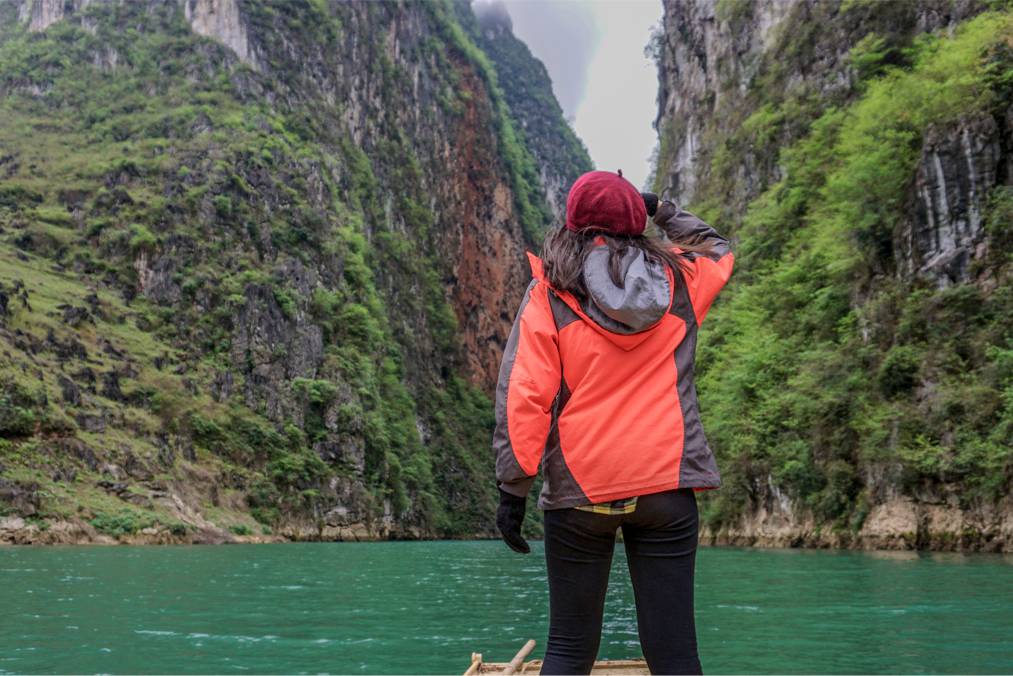
The Nho Que River is the bright turquoise ribbon you see far below from Ma Pi Leng Pass, and you can get all the way down to it for a boat trip through the canyon. There are two roads down, but both are very steep, so only attempt them by Easy Rider or if you are a genuinely confident rider. At the bottom you can arrange a one-hour boat trip between the towering cliffs of the pass, which is well worth it.
25. Meo Vac Market
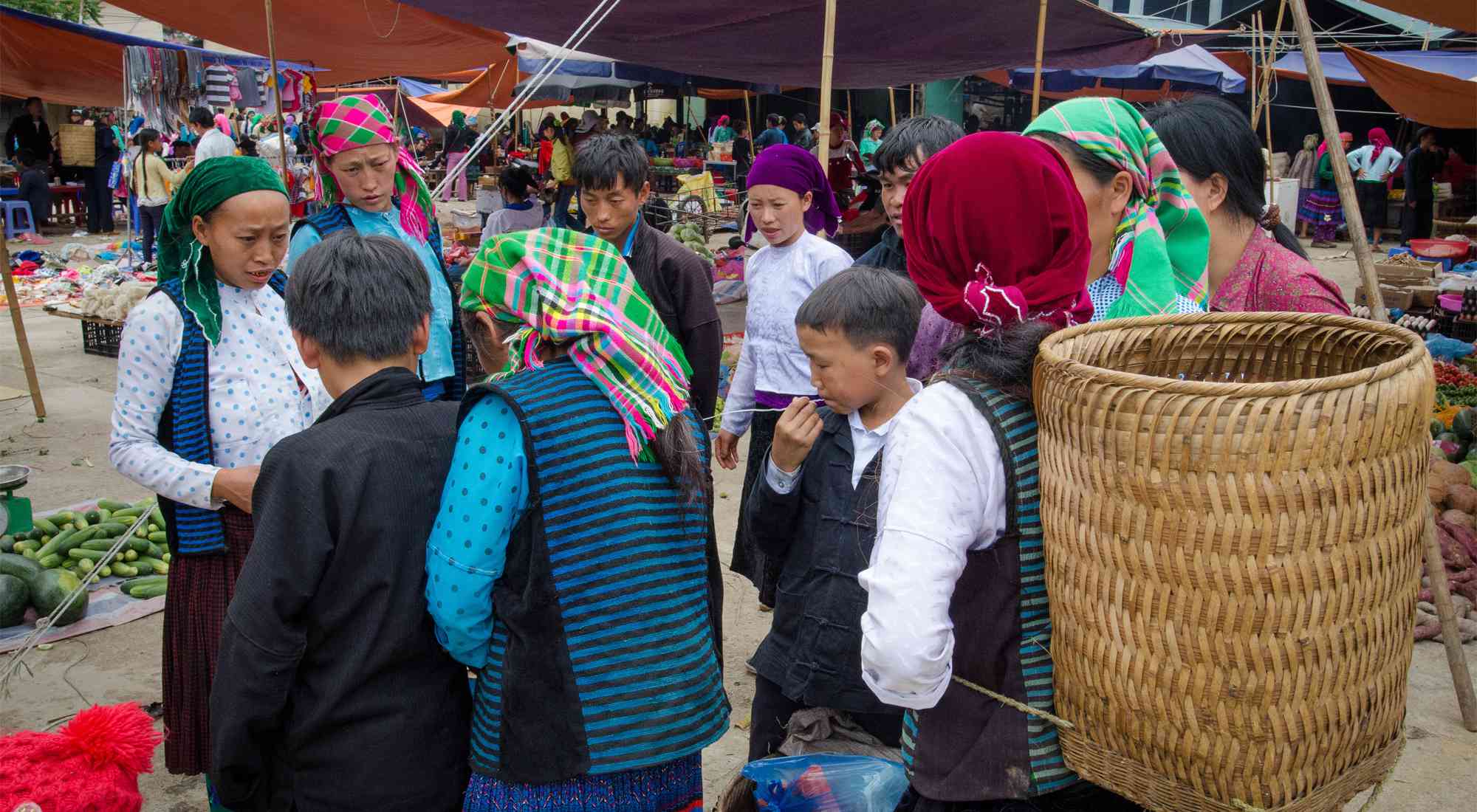
The Meo Vac Market is the biggest market in Ha Giang, held every Sunday, and it is a personal favorite. Here is the surprising part: despite its size, you rarely see many tourists. Most riders stay around Meo Vac rather than in it, or simply do not know about it, so it has stayed 100% local and authentic, nothing like a tourist market. There are no souvenirs here. What you get instead is hundreds of ethnic people in their most beautiful, colorful clothing, an indoor food section, a busy outdoor section, and a livestock area full of cows, pigs, dogs, and chickens being traded and shown off. If you can be in Meo Vac on a Sunday, do not miss it.
Sights and highlights between Meo Vac and Ha Giang
26. The road from Meo Vac to Mau Due
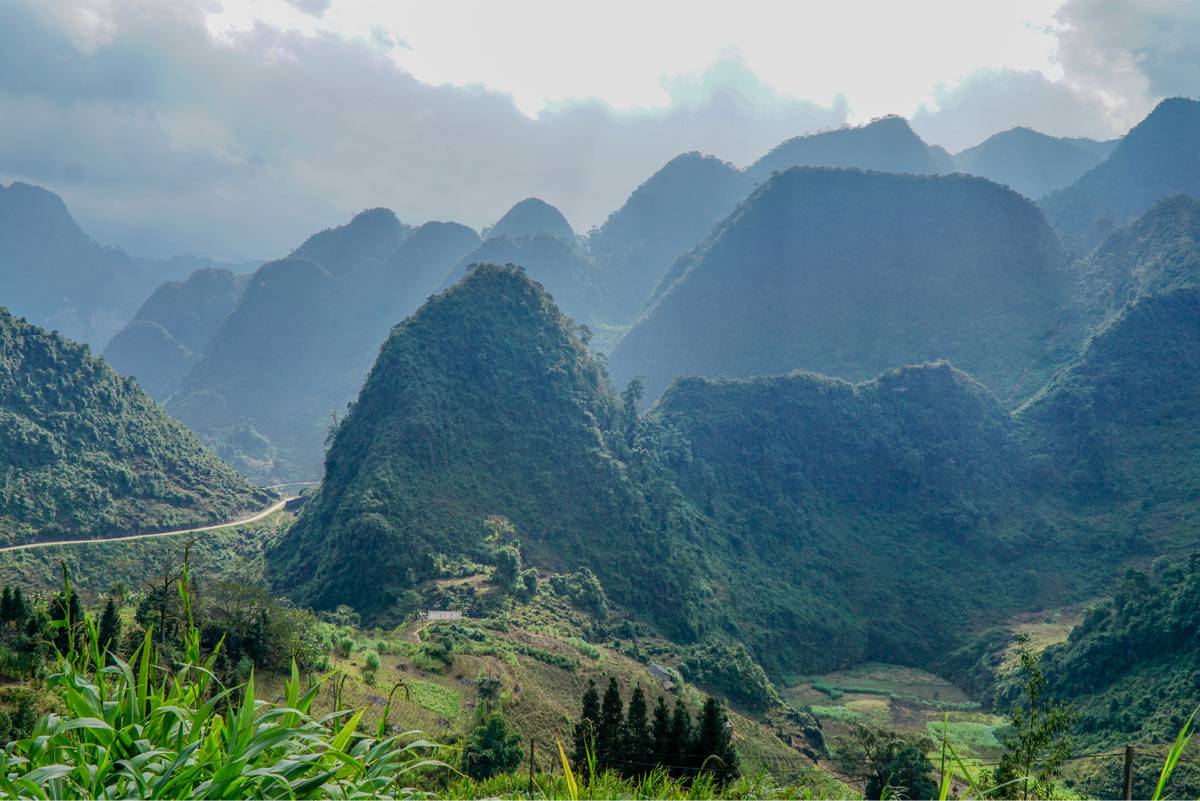
Everyone talks about Ma Pi Leng, but this road does nothing less. It does not have the one extreme cliff with the river below, but in every other way it is as good as the Ha Giang Loop gets, and it sees a fraction of the traffic. You pass Lung Phin, which has its own backward market and almost zero tourists, and Sung Trai, with a Tuesday market, incredible scenery, and Ha Giang Aya Lodge (more on that in its own section below).
This whole stretch is amazing mountain scenery and authentic villages nobody stops at. Turn down a side road here and you will have it entirely to yourself, which is exactly why so many of the best hidden driving and trekking trails are in this area.
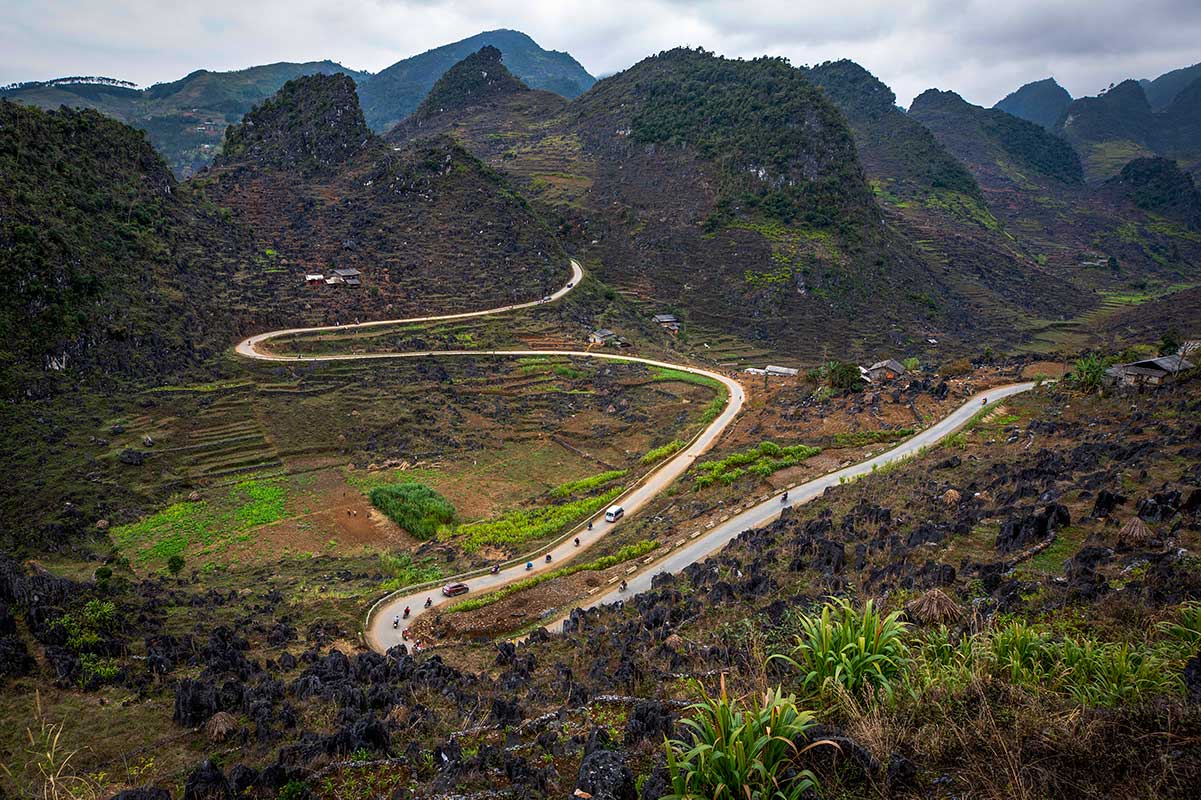
Along the way, the M-Shaped Viewpoint is a quick, popular photo stop, where the road below winds up the mountain in the shape of an “M.”
27. Mau Due rice fields
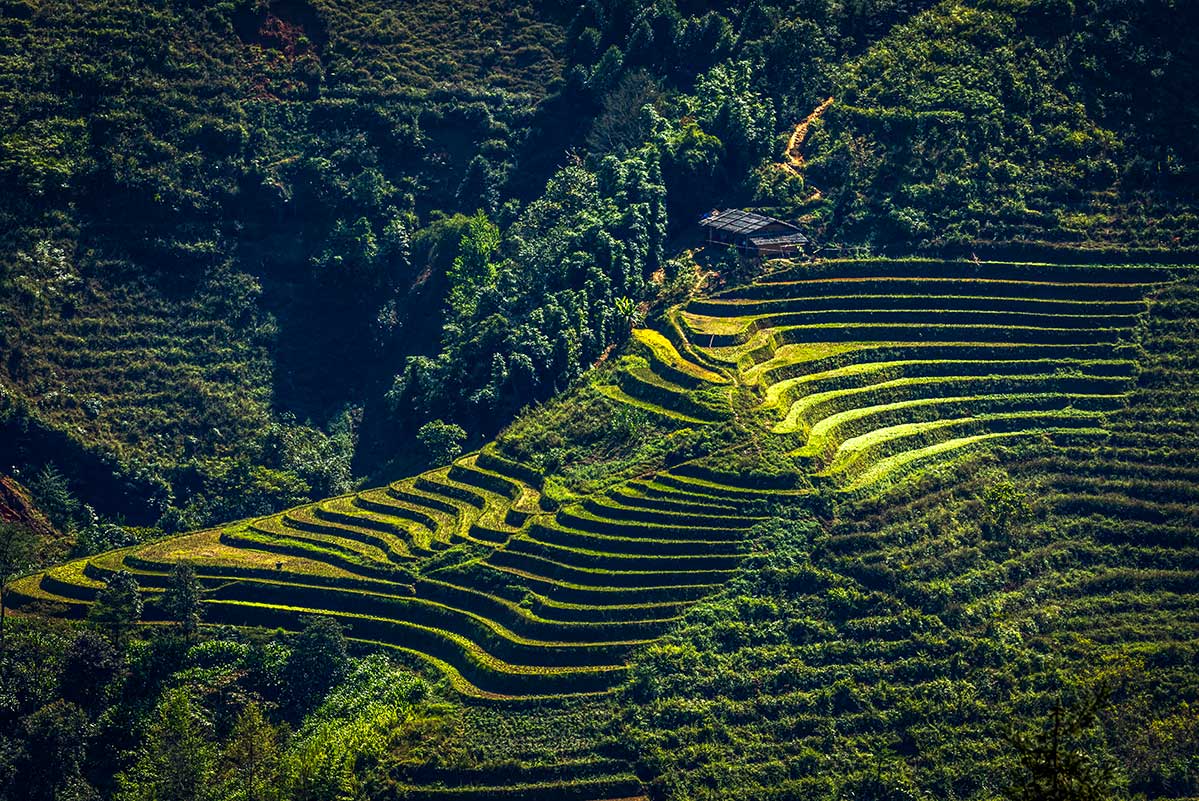
Mau Due is a real change of scenery, and a welcome one. After days of rocky, dramatic landscapes dotted with Hmong stone and clay houses, the land suddenly turns green here. This is one of the only stretches of the loop with proper terraced rice fields, and you start seeing more Tay people living in wooden stilt houses rather than the Hmong homes you have passed so far. It feels like a different region entirely.
28. Ruins of French fort
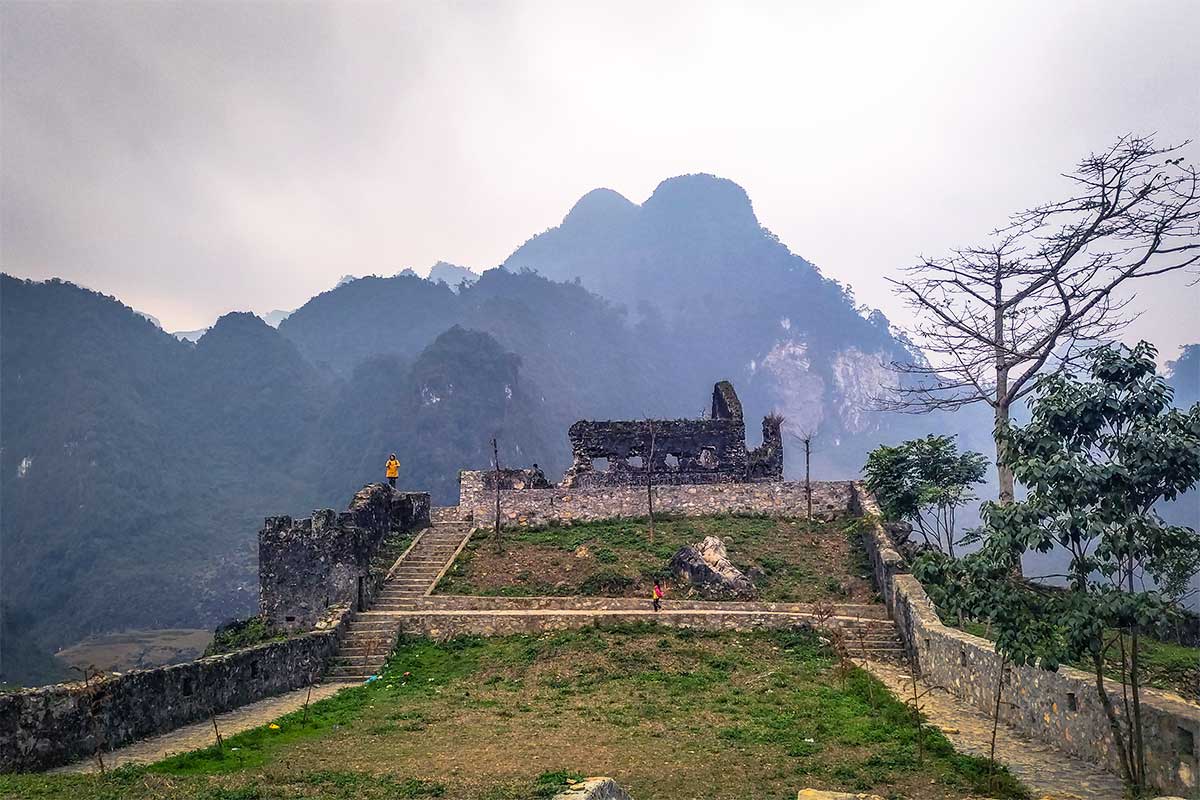
Continuing from Mau Due, you climb a long pass over jagged limestone peaks and reach the ruins of an old French fort. Most of it is destroyed, so there is not a lot to see fort-wise, but it is a genuinely nice place to stop. The site is large, and the real draw is the scenery and the views around it. Just a good moment to get off the bike and take it in.
29. Lung Ho Viewpoint
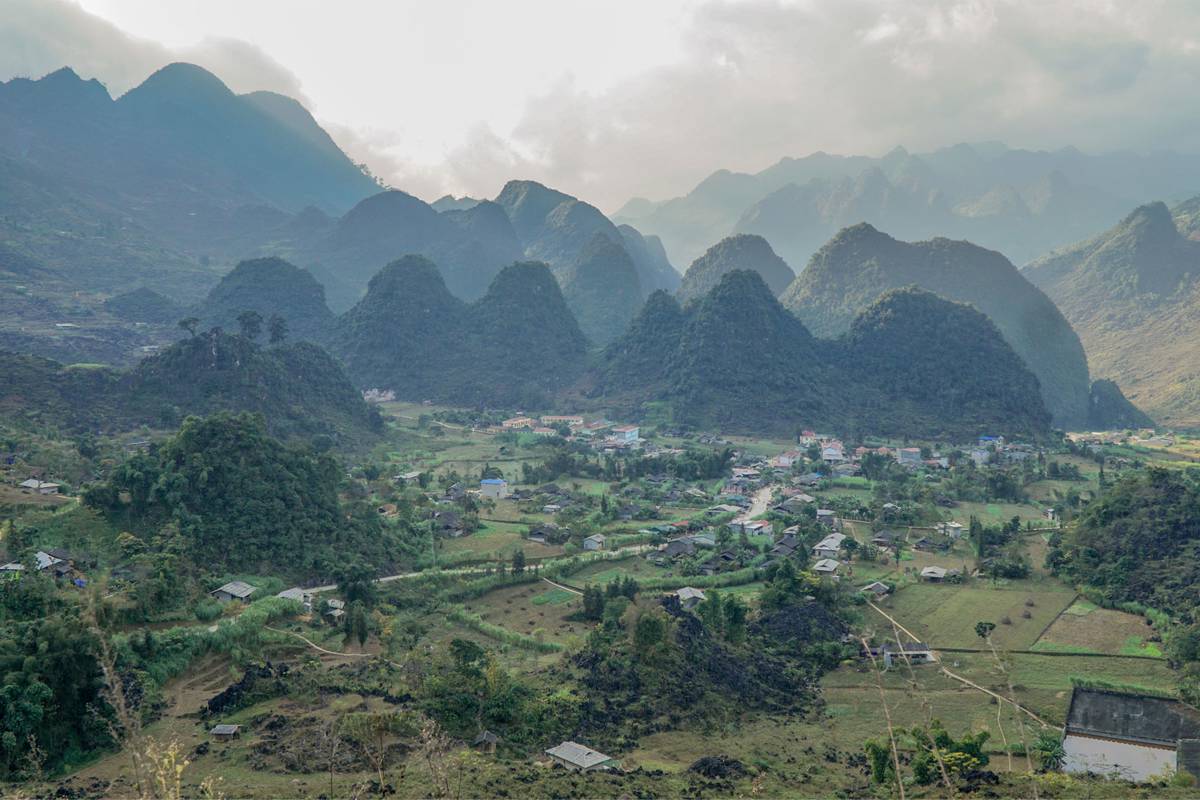
Lung Ho is known for its conical mountains, standing one behind the other so they almost look like the shadows of each other, with a green valley running through. It is a lovely spot, and there is a cafe here where you can have a drink and enjoy the view. It is not Ma Pi Leng or Tham Ma, and that is the appeal: a quiet, scenic stop with no crowds at all.
30. Du Gia Commune
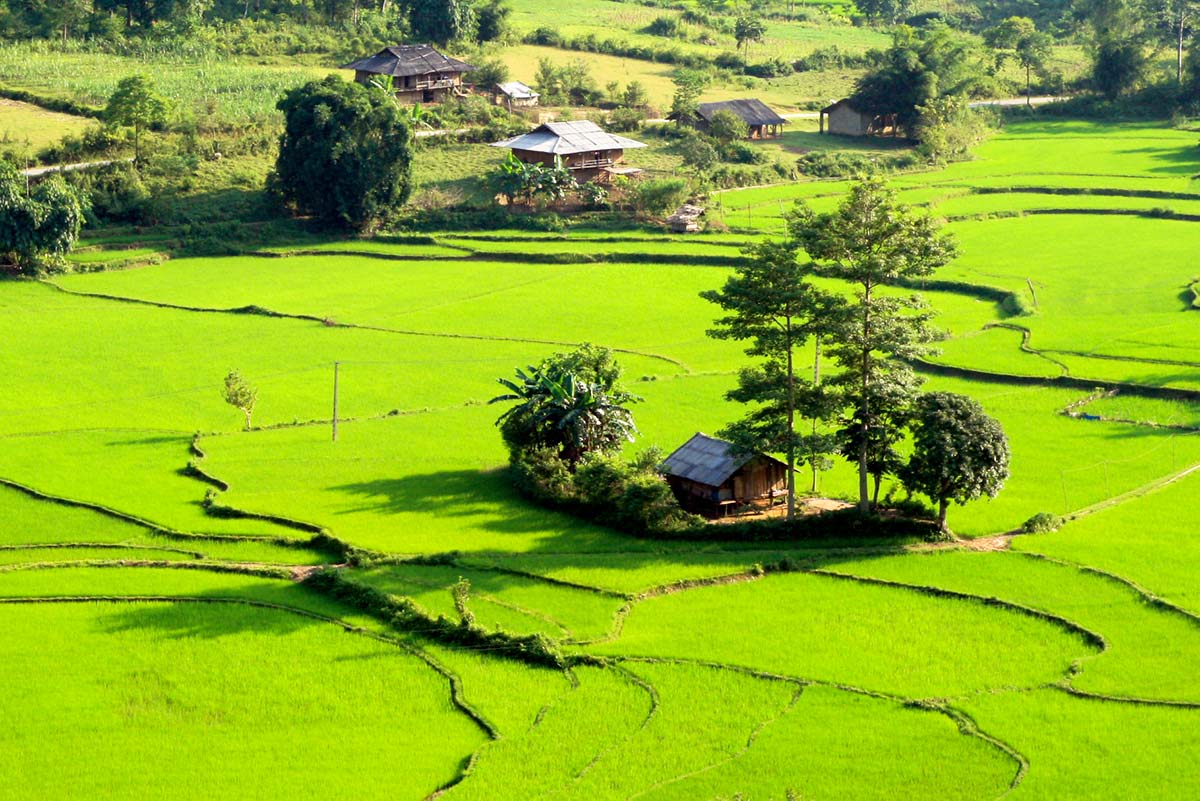
Du Gia is often called a village, but it is really a whole commune of several villages, set in a large valley of rice fields and Tay stilt houses. It feels different from most of the Ha Giang Loop, green rather than rocky, soft rather than rough, more of a gentle valley setting. Ten years ago there was a single homestay here. Now there are many, because people fell in love with it: travelers doing the four-day loop, and increasingly those who tweak their route to skip part of the Lung Cu side just to make time for Du Gia. It is completely full of homestays now, but it is still a lovely place, with some genuinely nice stays in stilt houses, bungalows, on hills with views, or along the stream.
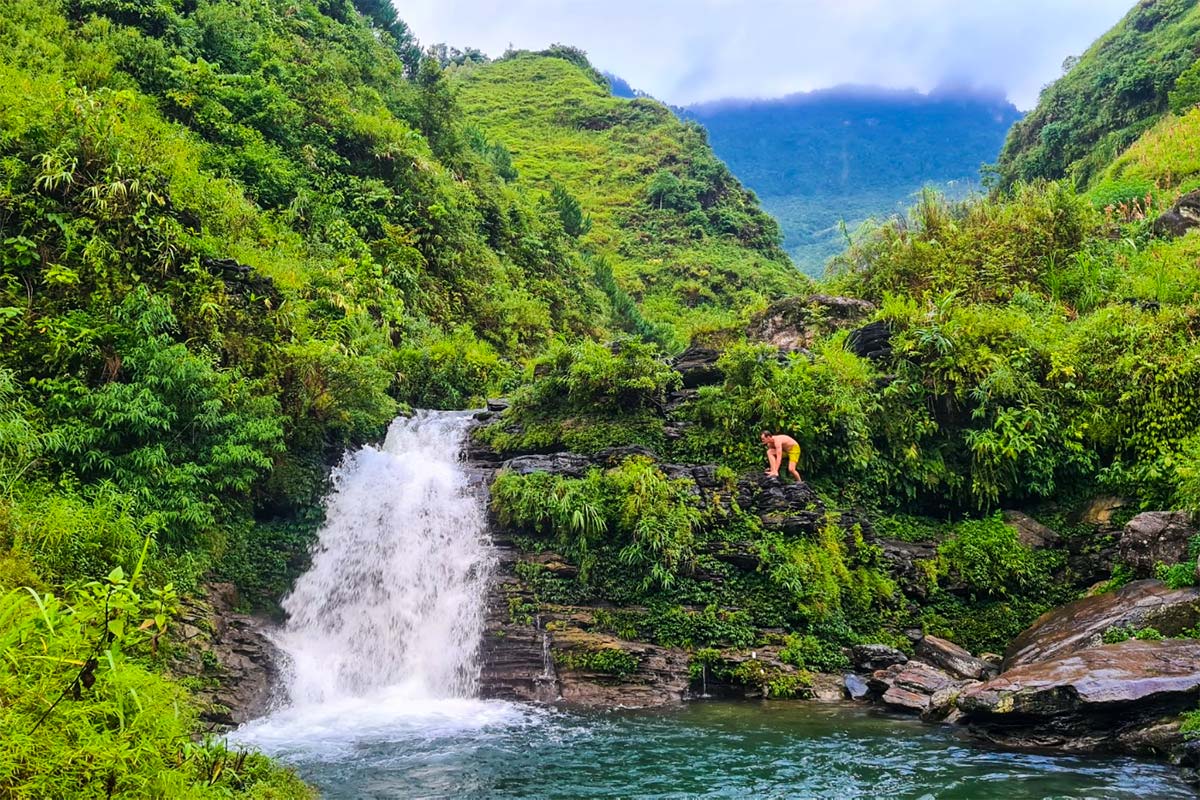
The most famous spot is the Du Gia Waterfall, where people jump in or take a dip and hang out. Worth knowing: in summer it gets genuinely busy with tour and backpacker groups, so it is not the hidden waterfall some guides make it out to be. Come early in the morning if you want it quieter.
Where to stay on the Ha Giang Loop
Where you sleep on the Ha Giang Loop matters more than most people expect. A cold dorm after a long day on the road hits very differently from a comfortable room with a view. The options below run from local homestays to proper hotels. Always check recent reviews before booking, and in winter make sure your accommodation has real heating, not just extra blankets.
Ha Giang Aya Lodge
A traditional homestay gives you the local feeling, but also cold showers, thin mattresses, and paper-thin walls. A hotel in town gives you comfort, but zero atmosphere, zero culture, and a view of the main street. Ha Giang Aya Lodge is the best of both worlds, and for our money the best place to sleep on the entire loop. It sits in a real Hmong mountain village along the quieter Meo Vac to Mau Due road, and it comes down to three things.
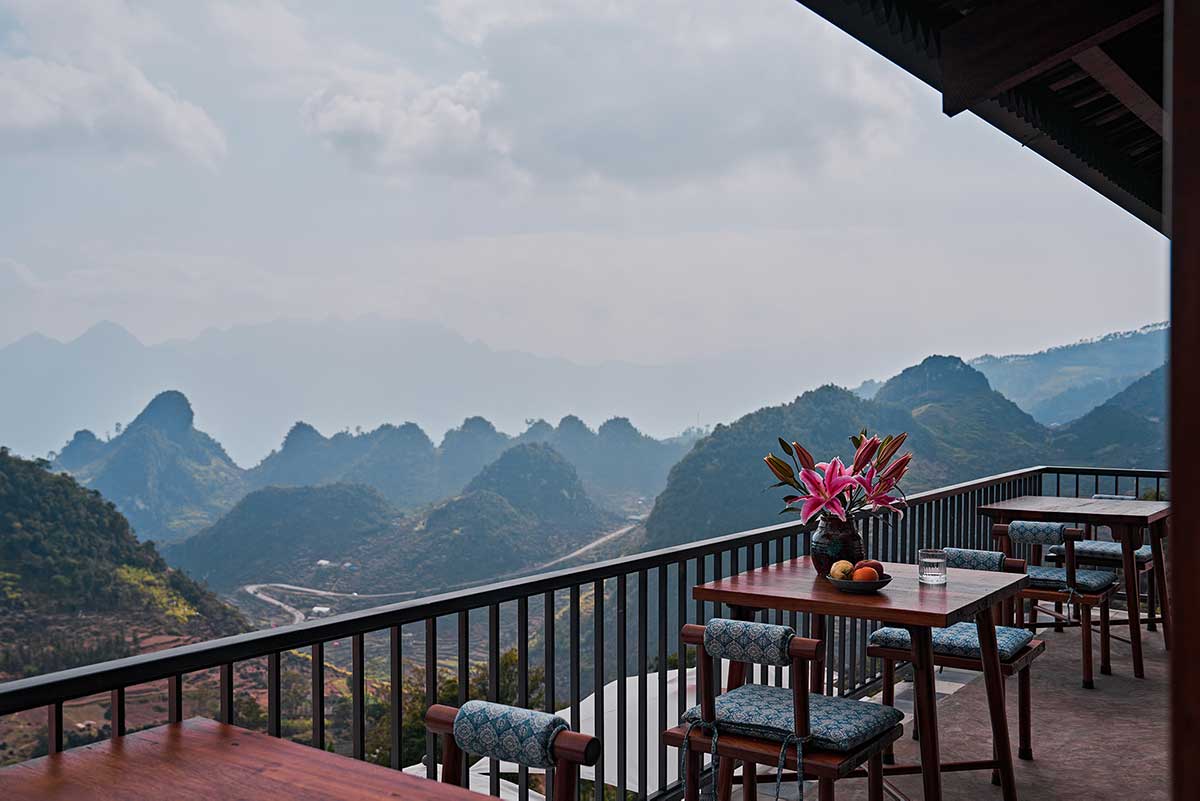
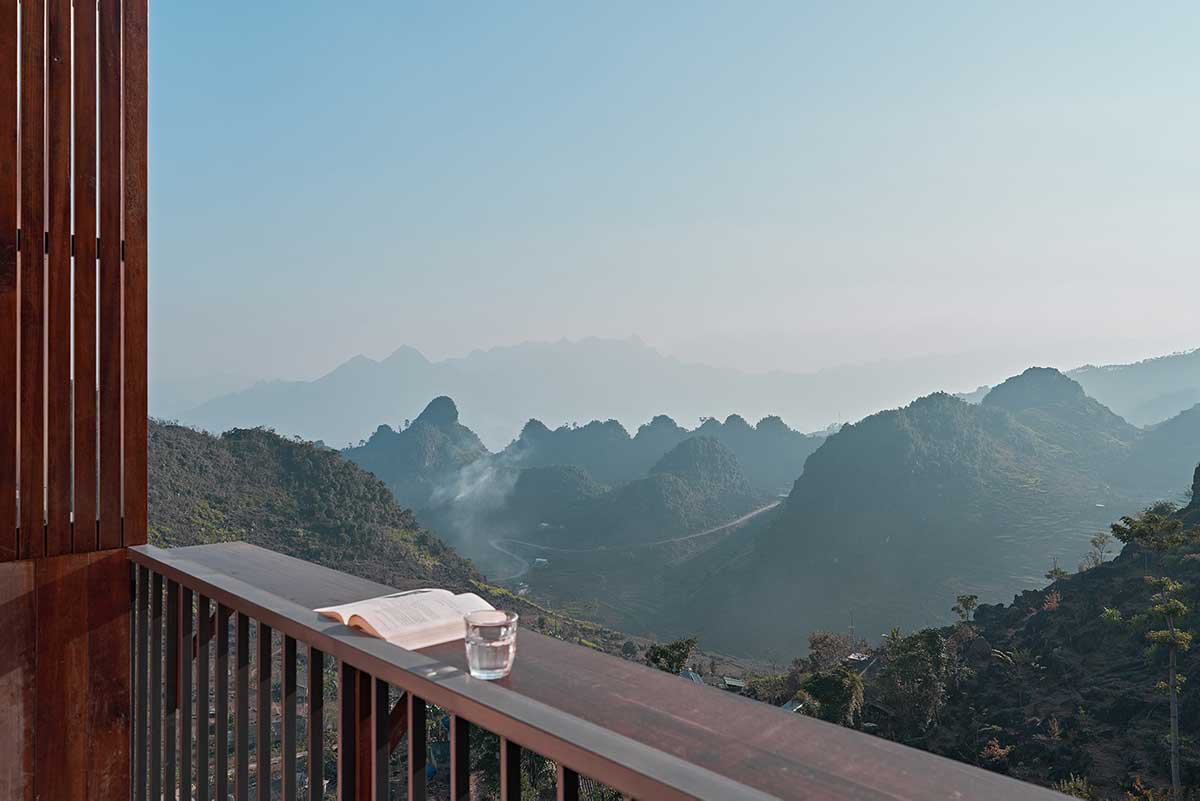
The views. Very few places on the loop can match them. Every room and bungalow has a view, and so do the restaurant and the bar terrace. The mountains are always there.
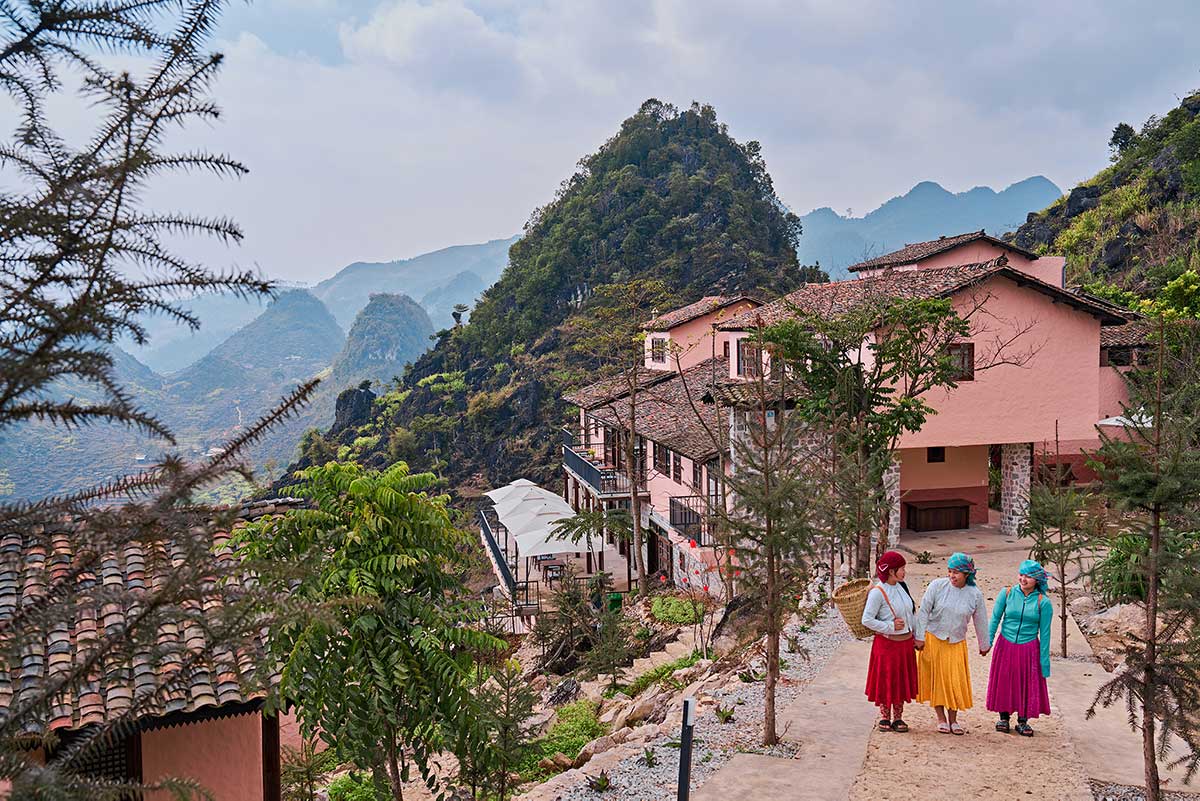
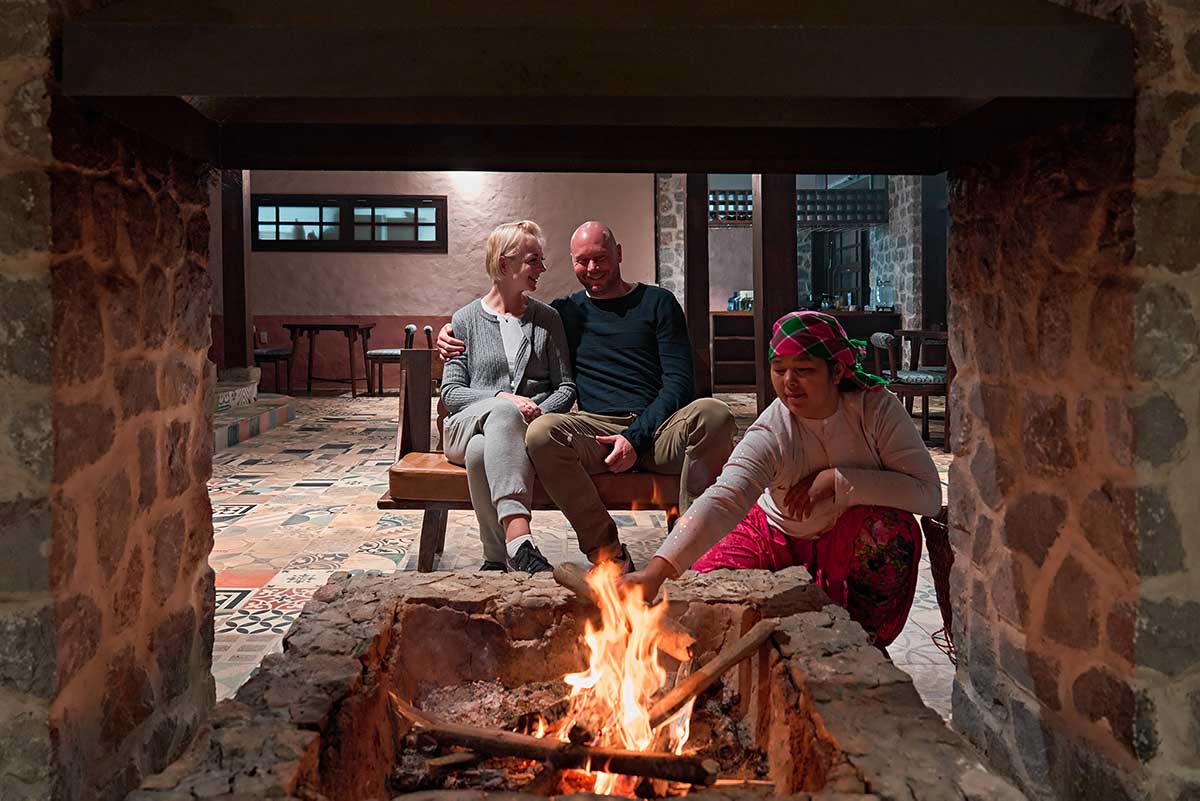
The culture. Ha Giang is as much about its people as its landscapes, and at the lodge you are part of that. This is not a homestay bubble like Lo Lo Chai near Lung Cu or Pavi near Meo Vac. It is a true working village with no other guesthouses, and everyone who works at the lodge is Hmong from the surrounding villages, in their traditional clothing. They earn a fair living and learn English and hospitality skills along the way, so your stay supports the community directly.
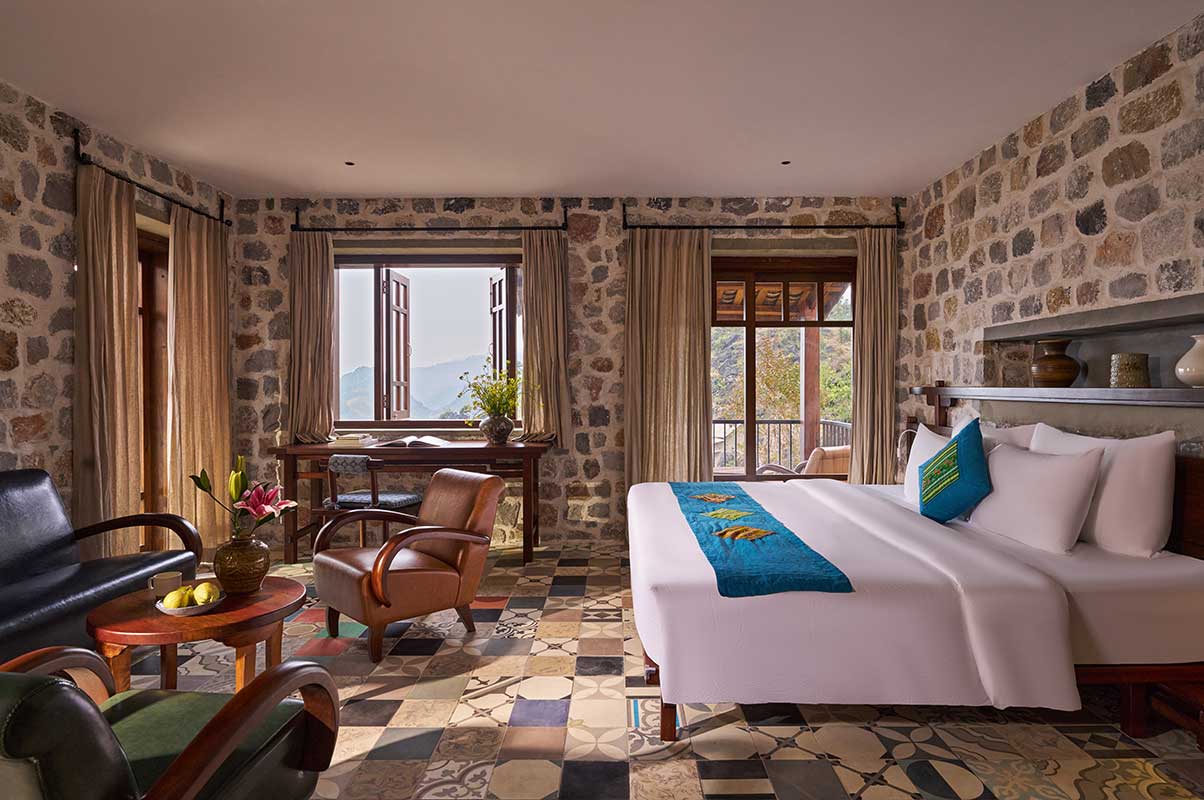
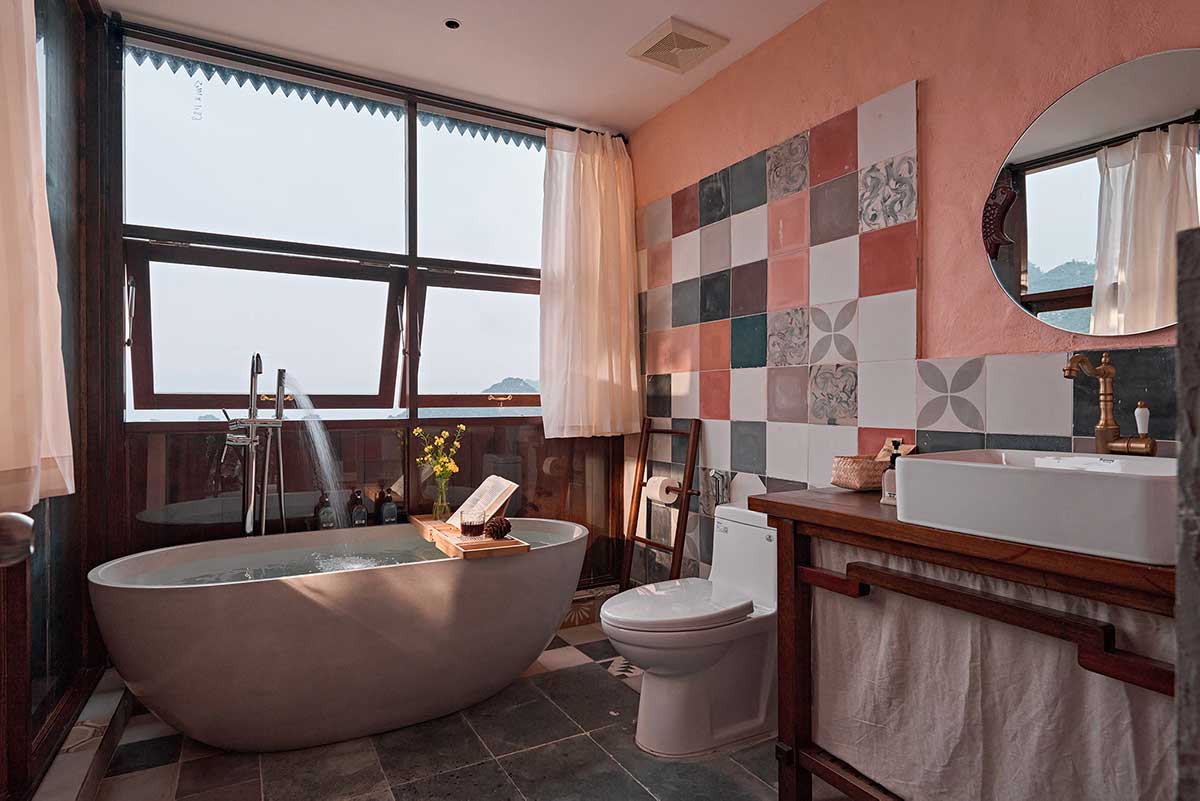
The comfort. You get all of that without giving up comfort. Western mattresses, proper hot showers, air conditioning that heats in winter and cools in summer, a real restaurant, and a bar. Some rooms even have wood-fired hot tubs.
There is one more advantage: you can use the lodge as a base for the whole loop rather than packing up for a different hotel every night. From here you can also do things the road alone cannot offer, like half-day and full-day treks into the surrounding mountains and villages, and hands-on workshops with local Hmong and Red Dao communities, from weaving and indigo dyeing to corn wine brewing.
Other places to stay on the loop
Outside the lodge, here are good options at the main overnight stops, from comfortable hotels in the city to local homestays out on the loop.
Ha Giang City
- Four Points by Sheraton Ha Giang: the city’s first international hotel, a brand-new high-rise with modern, spacious rooms, mountain views, an indoor pool, and a gym. The comfortable, polished choice if you want a proper hotel before or after the loop.
- Ha Giang Historic House: a long-time favorite just outside the center, quiet and friendly, with clean comfortable rooms, a pool, a garden, and genuinely warm hosts who help arrange tours. Good food, too.
- Silk River Hotel: a straightforward, comfortable hotel option in the city.
- Local Vietnam Riverside Lodge: a new riverside lodge from Local Vietnam, coming soon.
Yen Minh
- Homestay Tommy House: a well-rated stop for the first night, set by a small rice field, with friendly hosts, good family dinners, and plenty of space. Simple but comfortable.
- Bong Bang Homestay: a friendly, social homestay with soft beds, a good atmosphere, and family dinners around a campfire.
Quan Ba
- Hong Thu Homestay & Bungalow: a cozy, homely place with a garden, friendly hosts, and a genuine local feel, handy for the Lung Khuy Cave area.
- Dien Homestay: a simple local homestay option in the Quan Ba area.
Dong Van
- Khoi Panorama: a traditional stilt-house homestay on a hill in a Hmong village just outside the Old Quarter, cooler than town and known for its excellent sunrise and sunset views and beautiful woodwork. Rooms are simple, some with shared bathrooms.
- Dong Van Cliffside House: a stilt-house homestay set against the mountains with a valley view, mixing traditional style with modern comforts, and a restaurant on site.
- Nha Nghi Quang Trung: a simple, central guesthouse in Dong Van town.
Meo Vac
- Cao Nguyen Da Homestay: one of the best stays on the loop, near Pa Vi village, designed by its host Hai in traditional Hmong style. Comfortable beds, hot showers, heating, a pool, and superb family dinners, with a fire lit at night after a long day’s ride.
- Hotel Thanh Phuong: a straightforward, comfortable hotel option in Meo Vac town.
- Homestay Chung Pa House: a local homestay in the Meo Vac area.
Du Gia
- Du Gia Village Homestay (Lan’s): consistently rated one of the best stays on the whole loop. While much of Du Gia caters to big easy-rider groups, Lan’s keeps a personal, family feel, with beautifully decorated rooms, great food, excellent English, and a host who makes you want to stay an extra night.
- Chien’s Lodge Du Gia: a comfortable lodge option in Du Gia.
- Du Gia Panorama Ecolodge: a peaceful eco-lodge with garden and mountain views, an outdoor fireplace, and a sun terrace, good for a relaxed stay.
Lung Cu area
- Then Pa Village: a small homestay right by the Lung Cu Flag Tower, handy for the location, though some find the rooms a little pricey and basic for what you get.
- Khoi Homestay and Restaurant: a simple local homestay and restaurant near Lung Cu.
Eating & restaurants
Food on the Ha Giang Loop is simple, local, and part of the experience. Do not expect anything fancy, and outside Dong Van you will find almost no Western food. Here is what to know about eating on the road.
Breakfast and dinner at your homestay. You will usually eat both at wherever you are staying. Breakfast is typically noodles (pho) or a banh mi, and dinner is a shared family-style meal with the hosts and other guests. These family dinners are one of the best parts of the loop, a proper local experience rather than just a meal.
Lunch is on the road, so plan it. You get lunch at small local restaurants along the route. Plan this a little, because some long stretches are nothing but mountains and countryside with no restaurant for a while. Ask your host or guide where to stop before you set off.
Rice wine, the “happy water.” At homestay dinners you will almost certainly be offered local corn wine, known as “happy water.” Drinking a few shots with your hosts is a real Ha Giang tradition and a great way to connect. If you do not drink, the polite move is to accept the glass with both hands rather than refuse it outright, then simply sip slowly or leave it. Turning it down flatly can come across as rude.
Busy local places are the good ones. A crowded local restaurant is almost always a sign of good, fresh food. If locals are eating there, follow them in.
Follow the Easy Riders. Easy Riders know exactly where to eat. If you have a guide, let them choose lunch. If you are riding solo, watch where the Easy Riders pull in with their groups and eat there too.
Local dishes to try. Look out for thang co, a traditional soup, and men men, a corn-based highland staple. They are not for everyone, but they are a genuine taste of Ha Giang’s food culture.
Vegetarians, manage expectations. Vegetarian food exists but is more limited out here, and easiest to find in the bigger towns. Let your homestay know in advance and they will usually cook around it.
For more on what to eat and where, see our guide to food and restaurants on the Ha Giang Loop.
Ha Giang loop tips
A few practical things make the Ha Giang Loop smoother, safer, and more enjoyable. Most are simple to sort before you set off.
Carry cash
ATMs are rare once you leave Ha Giang City, and most small guesthouses, markets, and viewpoints only take cash. Bring enough for the whole trip, including fuel, food, and rooms, and stock up before you head out.
Get a Viettel SIM or eSIM
Signal is patchy in the mountains, but Viettel has by far the best coverage in Ha Giang. Get a Viettel SIM before you leave Hanoi, or set up a Viettel eSIM in advance so you are connected the moment you arrive.
Download offline maps
Mobile data drops out regularly on the loop. Download Google Maps or Maps.me offline before you go, so you are not left guessing at a mountain junction with no signal.
Bring a power bank
Long days on the road and limited charging time mean a power bank is essential, especially since your phone doubles as your camera, map, and torch.
Dress in layers
You can ride through a cold, foggy pass and drop into a hot valley within twenty minutes. Thick sweaters do not help here. Wear several thin layers you can add or remove on the go, plus a waterproof, windproof jacket.
Wear proper footwear
Closed, sturdy shoes are worth it, both for riding safety and for the rocky paths when you stop to explore villages or trek. Leave the flip-flops for the evening.
Pack light, bring a small daypack
You are on the road for three to five days, so leave the big suitcase in Hanoi or with your operator in Ha Giang City. Your main bag gets strapped to the bike and wrapped in a rain cover, so keep a small backpack with your camera, cash, and rain jacket handy for the day.
Check the weather the night before
Mountain passes can be completely fogged out early in the morning and clear by mid-morning. Check the forecast the night before and adjust your start time. If you wake up to heavy rain or thick fog, wait for it to ease before setting off, and ride carefully on wet roads.
Respect local cultures
Ha Giang is home to dozens of ethnic minority communities. Dress modestly in villages, always ask before taking photos, and use common sense. These are real communities going about their daily lives, not a theme park.
Take time to explore
A lot of people race the loop from highlight to highlight and miss what makes Ha Giang special: the villages, the people, and the quiet roads nobody stops on. Build some slack into your itinerary and wander a little. The best moments are rarely the famous viewpoints.
Trekking in Ha Giang
Most people only see the loop from the road, but trekking in Ha Giang gets you into villages, valleys, and landscapes that no motorbike or car can reach. Options run from short half-day walks to multi-day treks, and even one afternoon off the bike shows you a side of the region most travelers miss entirely.
Combining Ha Giang with Cao Bang and Ban Gioc Waterfall
If you have extra time, Cao Bang pairs perfectly with the Ha Giang Loop. Instead of closing the full loop, ride from Meo Vac east to Cao Bang, through wild, barely-visited country, ending at the spectacular Ban Gioc Waterfall on the Chinese border. It is one of the best trips in Vietnam, and most people do not even know it is possible.
Terraced rice fields of Hoang Su Phi
Hoang Su Phi has some of the most stunning terraced rice fields in Vietnam, a few hours from the main loop. It is remote and takes effort to reach, but for the rice terraces at their best, especially during the September harvest, it is worth the detour.
Is the Ha Giang Loop still worth it?
Short answer: yes, very much. But it is a fair question, and it deserves an honest answer rather than a sales pitch.
You have probably seen the photos: crowds at the famous viewpoints, queues for the same rock on Ma Pi Leng, even traffic jams on the passes at peak times. Those photos are real. The Ha Giang Loop is not the empty secret it was five or ten years ago, and at the busiest spots, on weekends and in peak season, it can genuinely feel crowded. If you go in expecting to have it all to yourself, you will be disappointed.
But here is the thing: the crowds are concentrated in a handful of places. Step even slightly off the main route, take a side road, stay in a real village instead of a homestay strip, or trek for half a day, and you are alone again with the mountains. The scale of Ha Giang is so big that the busy spots are a tiny fraction of it. The difference between a crowded loop and a quiet one comes down to how you do it: race the highlights with everyone else, or slow down and go where they do not. Done right, it is still one of the most rewarding trips in Vietnam.
The other honest question is whether it suits you at all. The loop means several days of being on the road, on a bike or in a car, on winding mountain roads. For most people that is the whole appeal. But if you do not enjoy long days of travel, get carsick on endless bends, or were picturing a relaxed beach-style holiday, this may not be your trip, and that is fine. It is an adventure first, not a place to switch off. If long days of dramatic driving and real local culture sound good to you, it is hard to beat. If they sound like a chore, there are better-suited corners of Vietnam.
So is it worth it? If you come for the right reasons and do it the right way, absolutely. Just go in with open eyes, not the empty-roads fantasy from a few years ago.
Ha Giang Loop FAQ
Is the Ha Giang Loop dangerous?
It is as dangerous as you make it. The roads are winding, steep, and dramatic, but most of the route is well-maintained and perfectly manageable with the right preparation and attitude. Most accidents come down to a few avoidable things: inexperienced riders who treat Ha Giang as the place to learn (it is not), automatic bikes that give less control on steep descents, drivers going too fast, and other road users you cannot control. Ride within your limits, go semi-automatic or manual, slow right down in rain, and if you are not a confident rider, take an Easy Rider. Done sensibly, it is a manageable trip, not a reckless one.
What is the difference between a 3-day and 4-day loop?
A fourth day gives you breathing room. Most people use it to make the loop bigger, adding both Lung Cu and Du Gia rather than choosing one, or simply to travel slower with more stops. Slower is highly recommended, especially if you are driving yourself. The extra day is less about covering more ground and more about spending less of each day on the bike and more time actually visiting places along the way.
Is the route different by car versus motorbike?
For the main route, no. Cars, jeeps, and motorbikes all follow the same roads and see the same major highlights without any issue. The difference is the detours: a motorbike can handle narrow side roads and off-the-beaten-path tracks that a car cannot. So if you want to go deep into the quieter corners, a bike is more flexible, but you will see all the big sights comfortably by car or jeep.
Is there an age limit for the Easy Rider tour?
Not really. As long as you are comfortable sitting on the back of a motorbike for a few days, age is not a barrier. Plenty of older travelers do the loop by Easy Rider, and if a bike does not appeal at all, a car or jeep is always an option.
Is the loop fixed, and do you ride all day?
The loop is what you make of it. On a large group tour you follow a set schedule with less flexibility. But riding solo or on a private tour, you can make it as flexible as you like: more stops, short hikes, longer lunches, and time in the villages, rather than being on the road from morning to night. How much you ride versus explore is up to you.
Do I need a motorbike license to do the loop?
To legally drive yourself, you need a valid motorbike license and an International Driving Permit, plus real riding experience. There are police checkpoints on the loop that check documents, and your travel insurance will not cover you without the right license. If you do not have these, the easy and popular solution is to go with an Easy Rider, where a local does the driving.
How fit do I need to be?
Not very, for the loop itself, since most of it is spent riding rather than walking. The main physical demand is the long days on a bike, which can be tiring. If you add trekking or longer village walks, a basic level of fitness helps, but there are easy half-day treks suitable for almost anyone.
Can you do the Ha Giang Loop without riding a motorbike at all?
Yes. While the loop is famous as a motorbike route, you can do the whole thing by private car or jeep and see every major highlight in comfort. It is the best option for families, older travelers, nervous riders, or anyone who would simply rather enjoy the scenery without driving.