

Phu Quoc: Vietnam’s largest island, from fishing boats to mega-resorts
Phu Quoc sits in the Gulf of Thailand off Vietnam’s southwest coast, closer to Cambodia than to the mainland. It’s the country’s largest island, roughly 50 km from north to south, with a forested mountain spine and more than half its area protected as a national park. For most of its history it was a quiet fishing and farming island, best known to Vietnamese for two things it still makes today: black pepper and the country’s most prized fish sauce.
That quiet island has changed quickly. Over the last decade Phu Quoc has become one of Vietnam’s fastest-growing destinations, with an international airport, big resorts, and a cluster of Vingroup theme parks. In July 2025 it became the Phu Quoc Special Zone under An Giang province, and it will host the APEC summit in 2027, so expect construction in places. Despite all the building, the island still has empty beaches and wild forest if you know where to look — which is where the best things to do in Phu Quoc come in.
Best things to do in Phu Quoc
Phu Quoc is best known for its beaches, but there’s more to it than lying on the sand. The best things to do in Phu Quoc split roughly into three: natural draws like beaches, islands and the sea; a couple of cultural and historical sights; and a cluster of large theme parks and shows. How much of each you do depends on whether you came to relax, explore, or keep the kids busy — this list covers all of it, honestly.
1. Relax on the beaches
The beaches are the main reason most people come to Phu Quoc, and they hold up — the island has some of the best beaches in Vietnam. But they vary a lot. The southeast has the postcard white sand, the west is the sunset coast, and the north is quieter and rougher. Here are the ones worth your time:
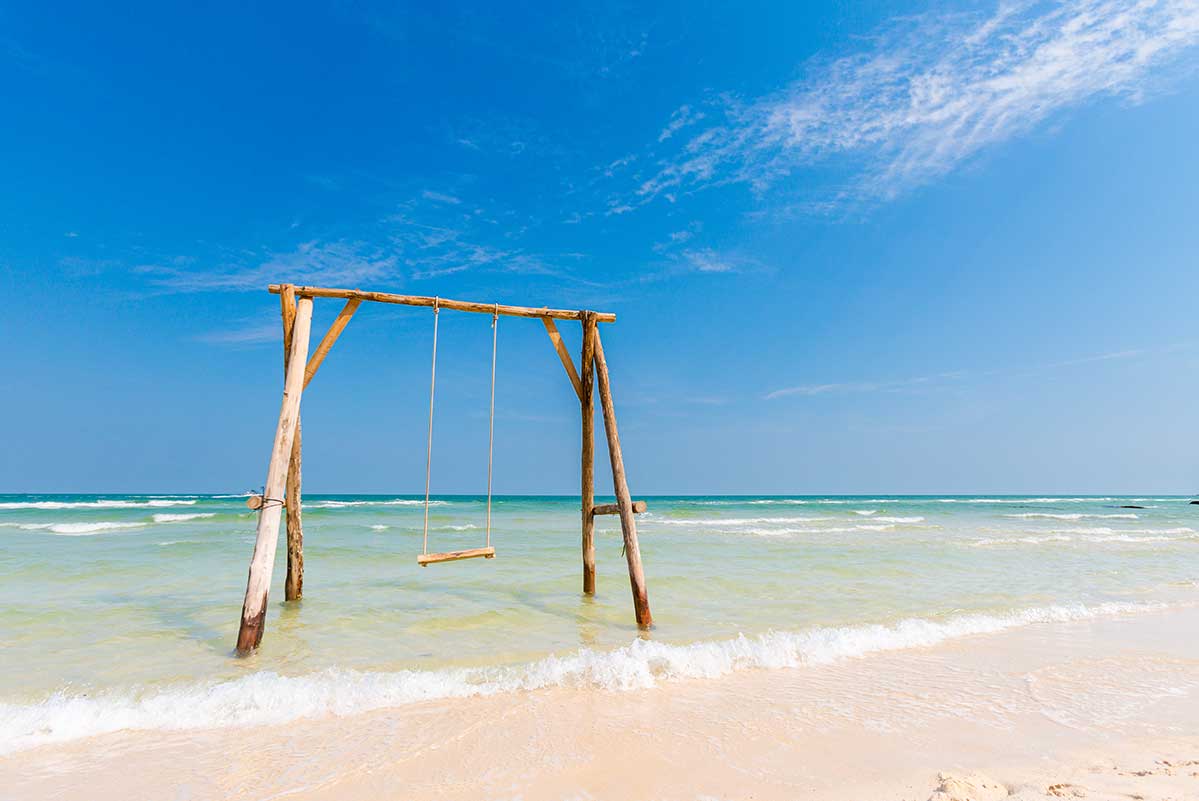
- Sao Beach (Bai Sao) — The whitest sand and clearest water on the island, on the southeast coast. It gets busy by midday with day-trippers and sunbed rentals, so go early if you want it calm.
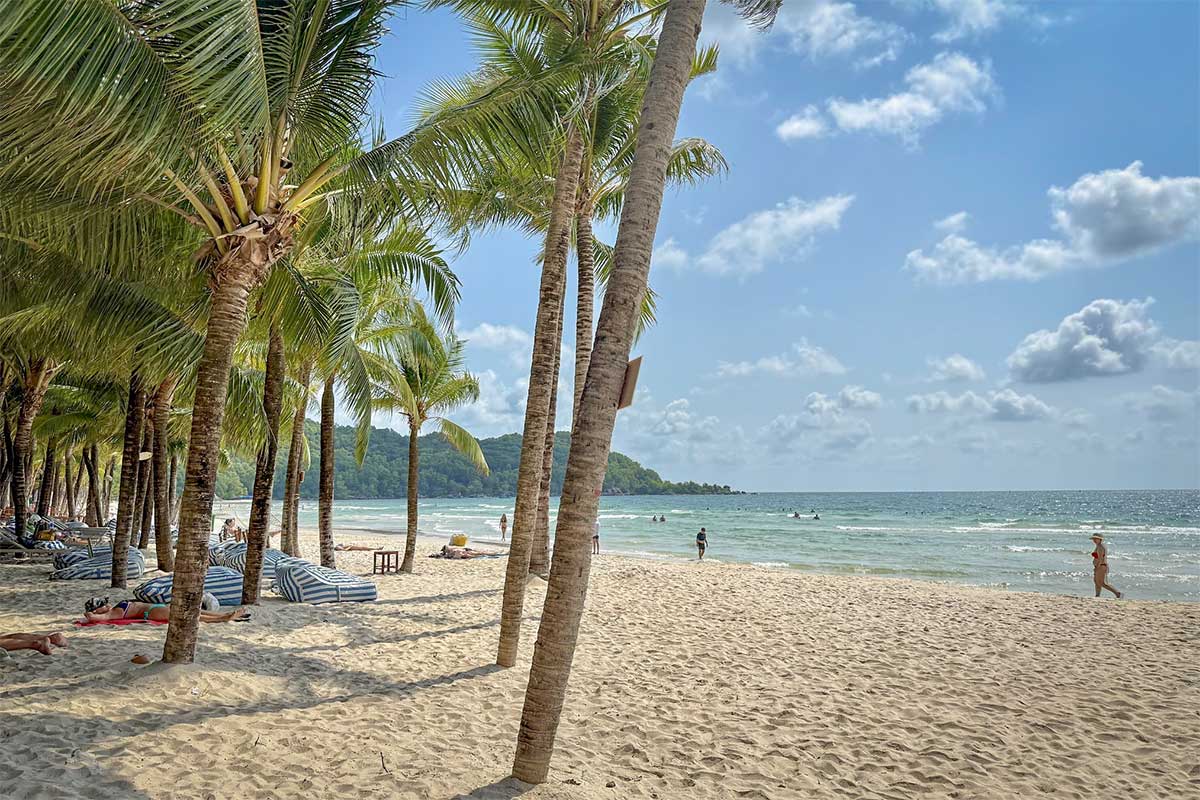
- Khem Beach (Bai Khem) — A long curve of fine sand in the south, part of it fronted by big resorts. Clean and calm, with public access alongside the resort stretches.
- Ong Lang — A laid-back west-coast beach with a mix of sand and rock, good as a quieter base. Better for sunsets and relaxing than for long swims.
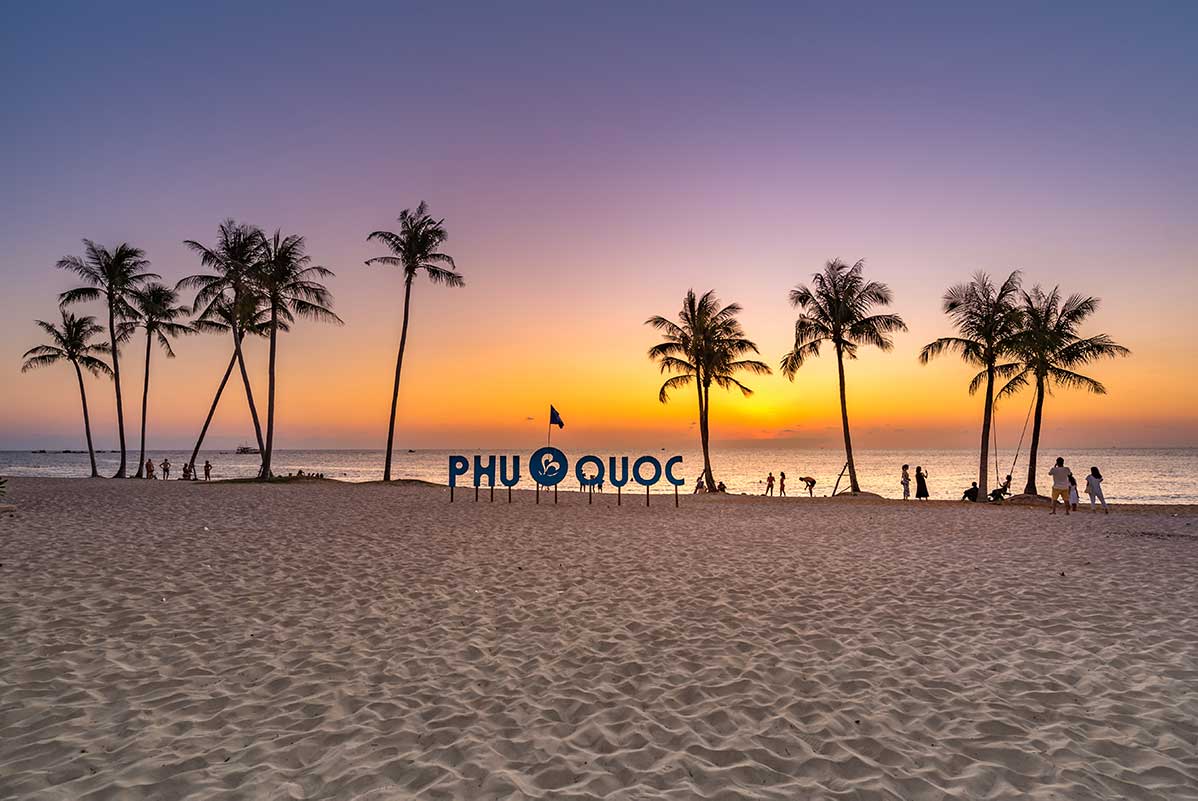
- Long Beach (Bai Truong) — The island’s main strip south of Duong Dong, lined with resorts, bars and restaurants. Not the prettiest sand, but the easiest place to catch the sunset with a drink.
- Cua Can and Vung Bau — Calmer, less-developed beaches on the northwest coast, backed by forest and a river mouth. A good escape from the busier south.
- Rach Vem (Starfish Beach) — A shallow northern bay known for its red starfish and a stilt-house village. The water is calm but can be murky, and it’s best to leave the starfish in the water.
There are far more beaches around the island, from remote northern coves to small southern bays, and not all of them are worth the drive. To work out honestly which ones suit you, read our full guide to the best beaches in Phu Quoc.
2. Go island hopping around the An Thoi islands
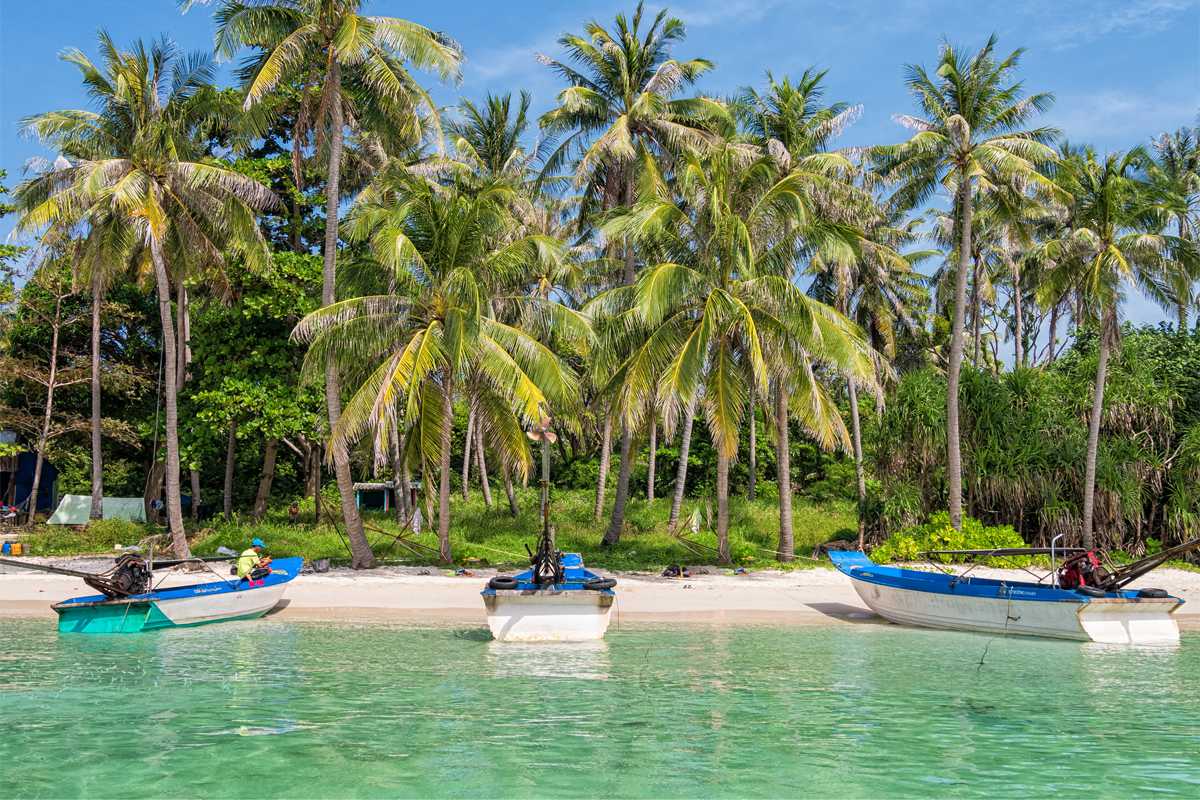
Off the southern tip of Phu Quoc sits the An Thoi archipelago, a cluster of small islands with clearer water and quieter beaches than the main island. A boat trip out here is one of the best things to do in Phu Quoc, and the easiest way to see the prettier, less-developed side of the coast.
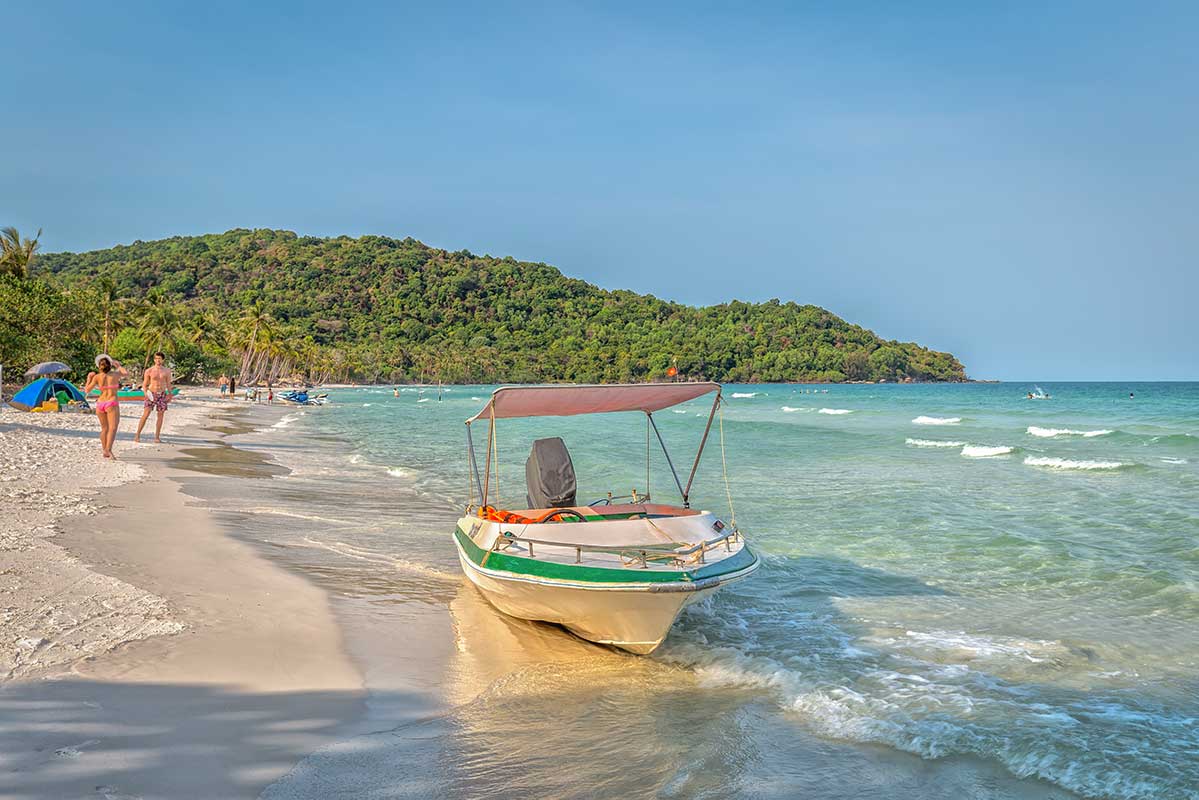
Most day tours leave from An Thoi by speedboat or wooden boat and stop at three or four islands such as May Rut, Gam Ghi and Fingernail Island (Mong Tay) for swimming, snorkeling and lunch. A standard four-island trip costs around 20–30 USD per person, including gear and food. The water is clearest in the dry season, roughly November to April; in the wet months trips are often rough or cancelled.
For the different boat-tour options, what each island is actually like, and how to avoid the most crowded trips, see our guide to boat tours and island hopping in Phu Quoc.
3. Visit the Coconut Tree Prison
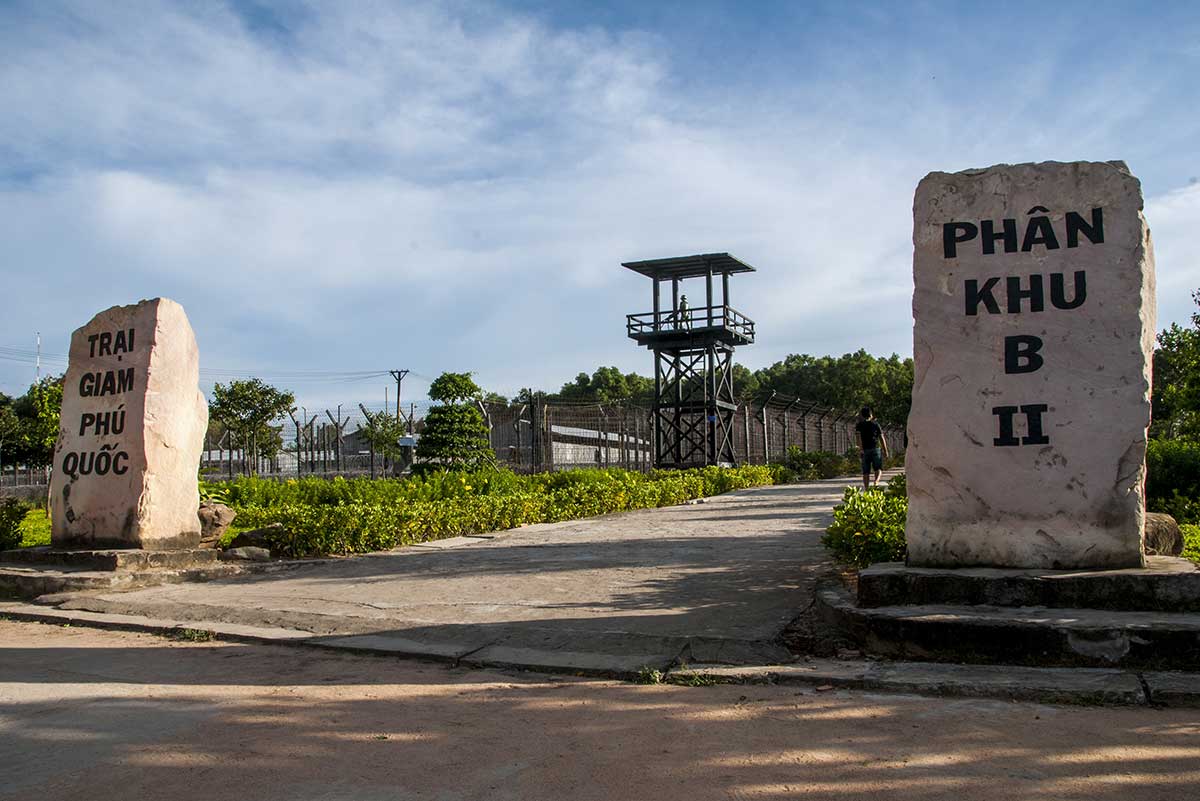
The Phu Quoc Prison, often called the Coconut Tree Prison, is the island’s most sobering sight. Built by the French and later run by South Vietnam during the war, it held tens of thousands of prisoners, many of them in brutal conditions.
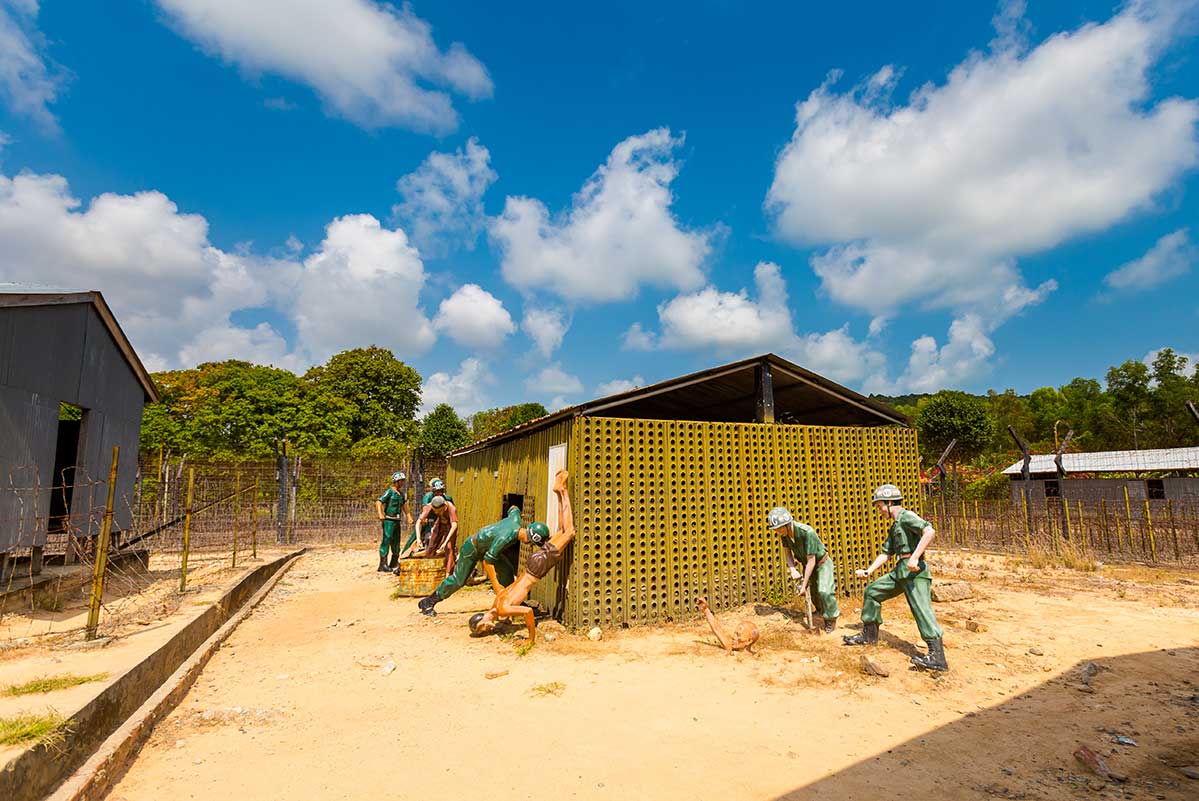
Today it’s an open-air museum in An Thoi in the south, with reconstructed cells, barbed-wire cages and mannequins showing the torture methods used. It’s graphic, so it’s not for young children. Entry is free and a visit takes about 30 to 45 minutes. It sits close to Sao Beach and Ho Quoc Pagoda, so the three combine easily into a southern half-day.
4. Visit local fishing villages
Behind the resorts, Phu Quoc is still a working fishing island, and its villages are a good antidote to the polished side of the coast. You’ll see boats being repaired on land, basket boats on the sand, and stilt houses built out over the water.
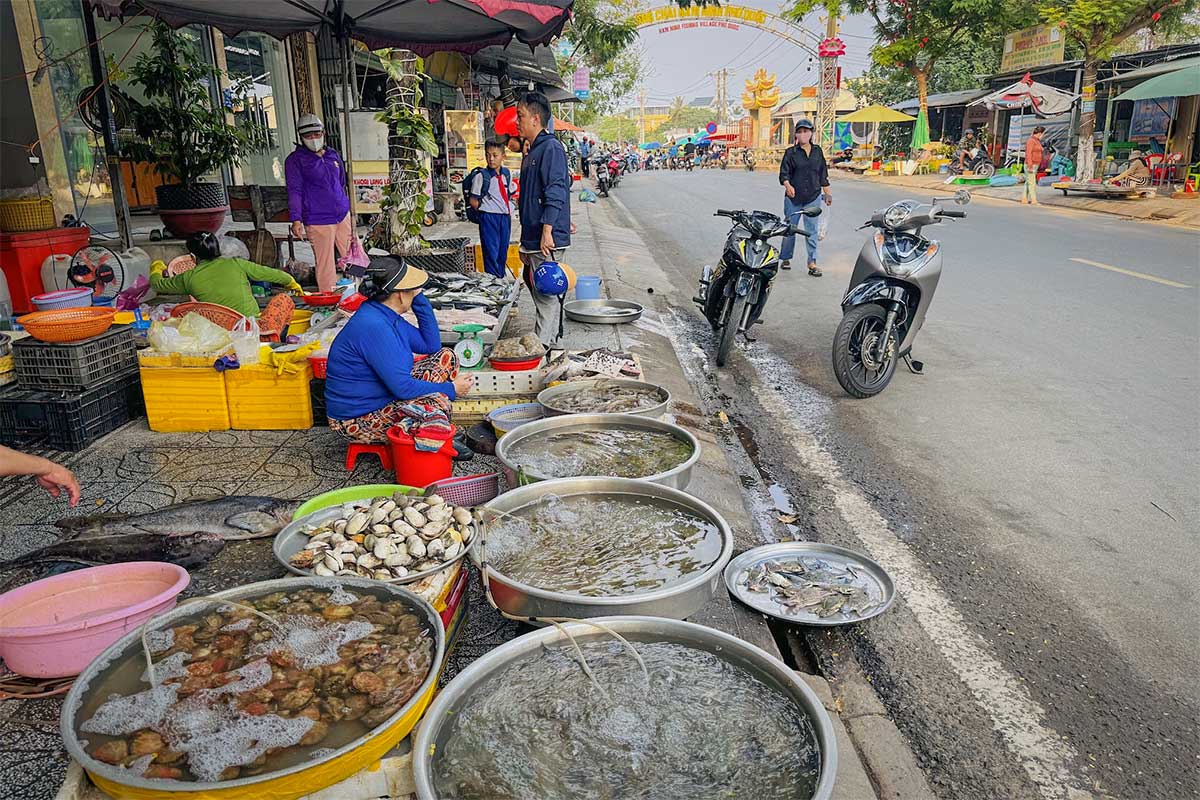
- Ham Ninh — An old village on the calm east coast, known for its long jetty, seafood shacks and views back toward the mainland mountains. Touristy now, but still a real working harbour.
- Rach Vem — A northern stilt-house village in a shallow bay, paired with the starfish beach. Slow, local and scenic, though the food stalls are aimed at day-trippers.
- Ganh Dau — A quiet fishing community in the far northwest, near the Cambodian sea border, covered in more detail below.
Fishing villages are scattered all around the coast, so it’s worth picking the one closest to where you’re staying. For the full list and what to expect at each, see our guide to the best fishing villages in Phu Quoc.
5. Explore the sights of Duong Dong town
Duong Dong is the island’s main town and transport hub, built around a river mouth on the west coast. It’s not a pretty town, but it’s where you’ll find the markets, the nightlife and everyday island life. A few spots are worth a short look.
Dinh Cau temple and lighthouse
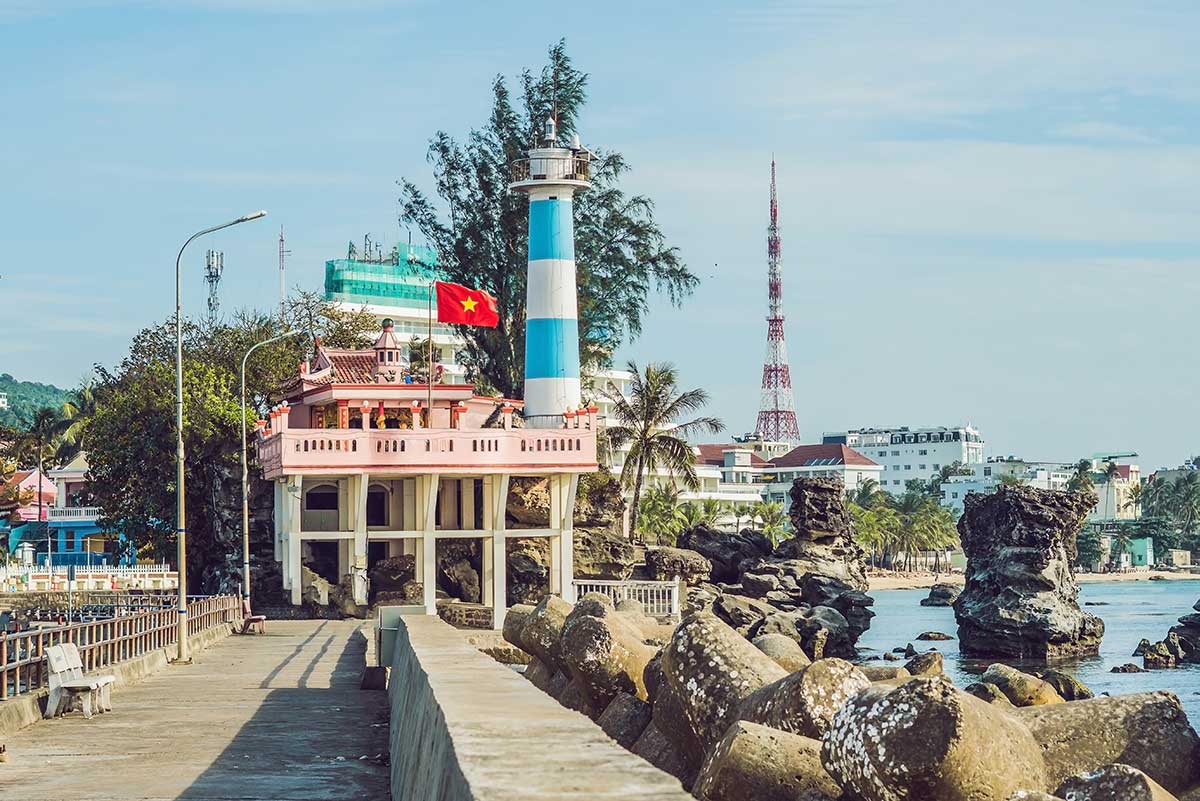
A small temple built onto a rock formation at the river mouth, dedicated to the sea goddess and visited by fishermen before they head out. The Dinh Cau temple and lighthouse beside it is a popular sunset spot, with people gathering on the rocks in the late afternoon.
Duong Dong central market
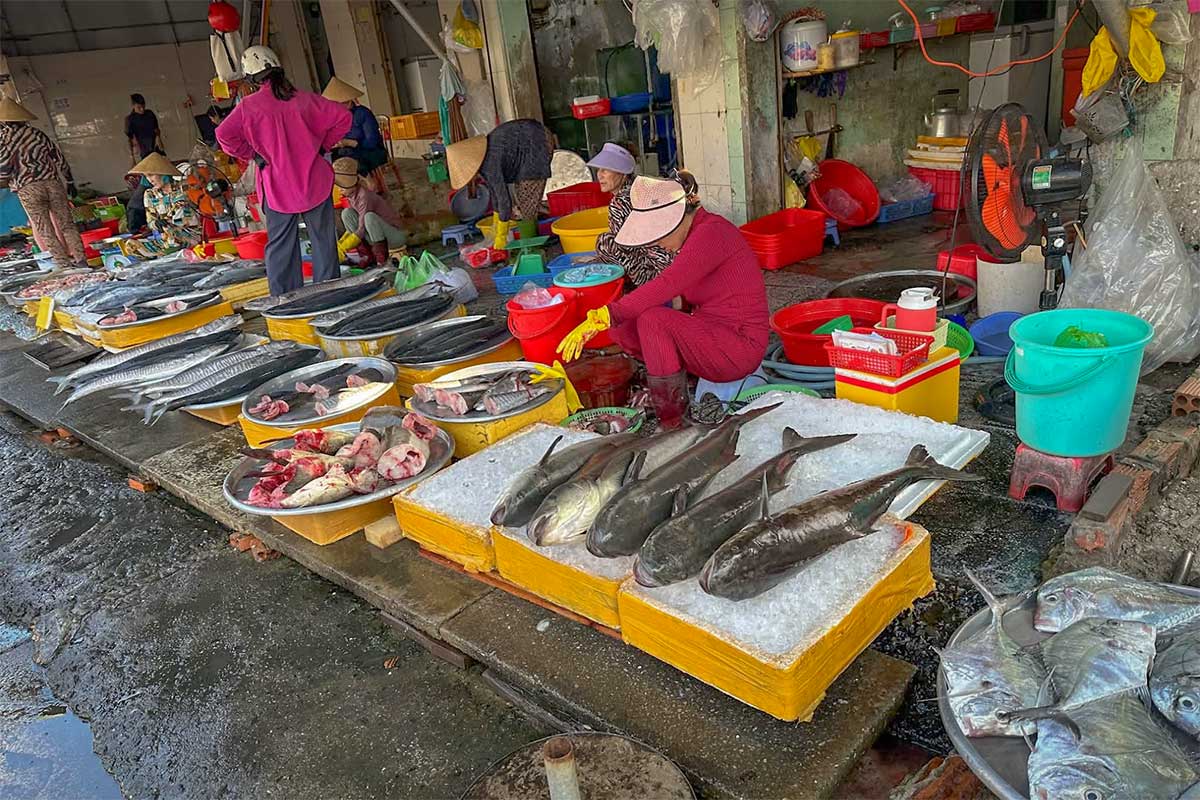
The town’s main day market, busiest in the morning, selling fresh fish, produce and household goods. The central market is more about seeing local life than buying souvenirs, and it’s an easy stop if you’re in town.
Phu Quoc night market
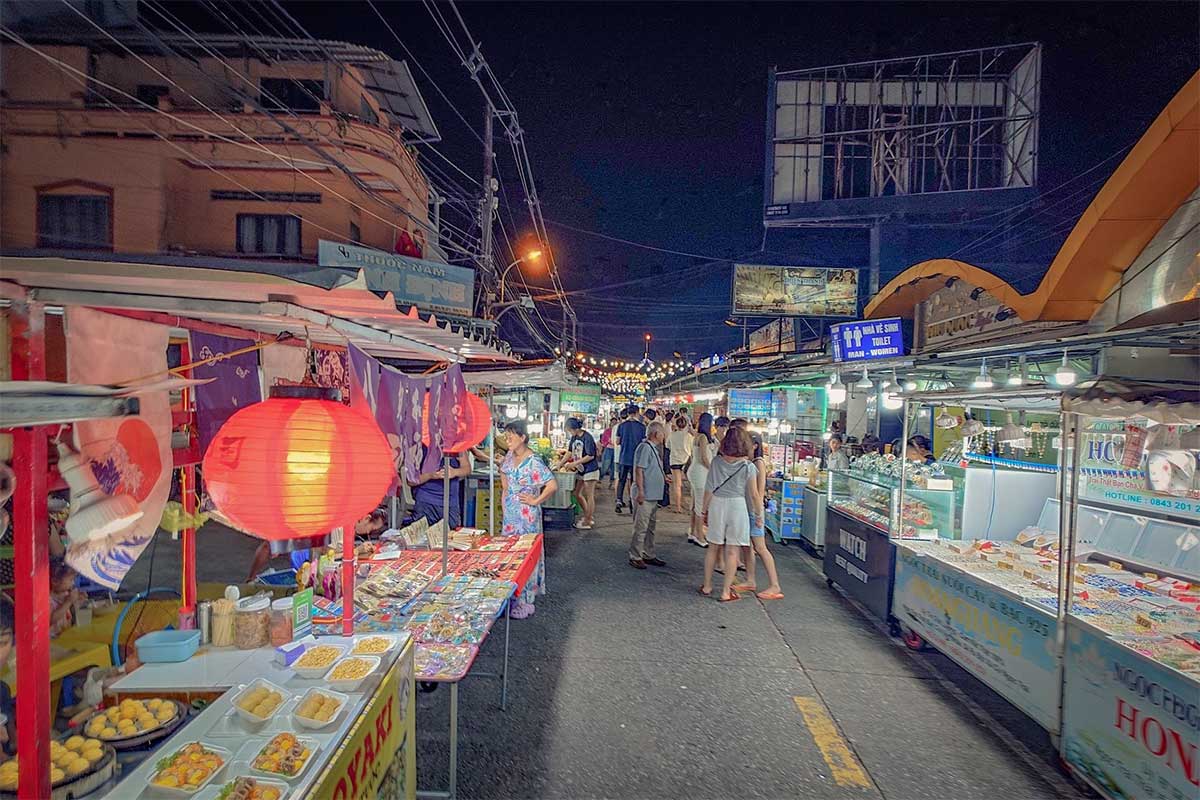
The island’s most popular night market is a few streets of seafood stalls, grills, dessert vendors and souvenir shops. Prices are tourist-level and it gets crowded, but it’s a convenient place for dinner and a wander.
The fishing port
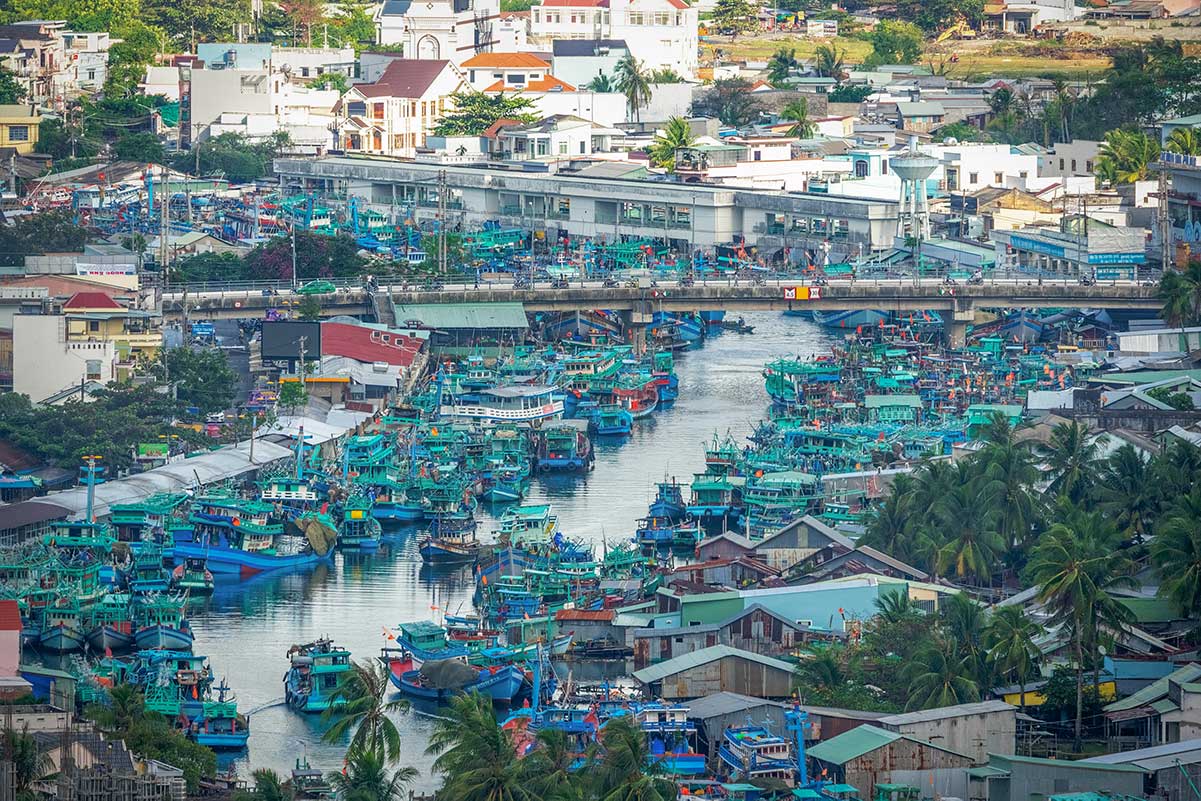
The working harbour along the river fills with colourful boats, and it’s at its best in the late afternoon when the fleet comes in to unload. There’s nothing organised to do here — it’s just a real, photogenic slice of island life.
Long Beach restaurants and nightlife
Just south of town, Long Beach is where most of the island’s beachfront bars and restaurants are. It’s the main place for an evening drink, a sunset dinner, or some low-key nightlife — Phu Quoc is more about beach bars than late clubs.
6. Visit Ho Quoc Pagoda
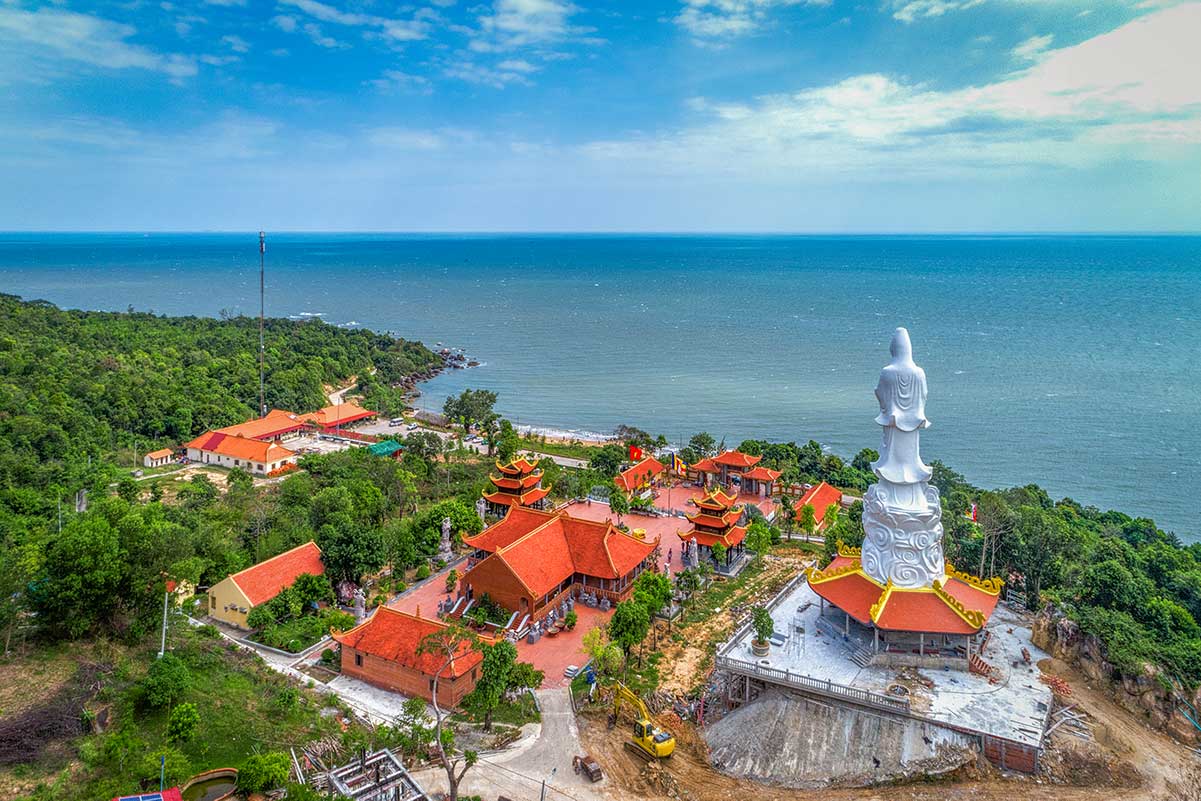
Ho Quoc Pagoda is the most striking temple on the island, a large modern Buddhist complex built into a hillside above the sea on the southeast coast. The mix of traditional architecture and the open ocean view makes it worth the trip even if you’re not usually into temples.
It’s free to enter and easy to combine with Sao Beach or Khem Beach, which are nearby in the south. Dress modestly, covering your shoulders and knees, and try to go in the morning before it gets hot, as there’s little shade on the steps.
There are several other temples and pagodas around the island, but this is the one to prioritise. For the rest, see our guide to the best temples in Phu Quoc.
7. Discover the Ganh Dau area in the north
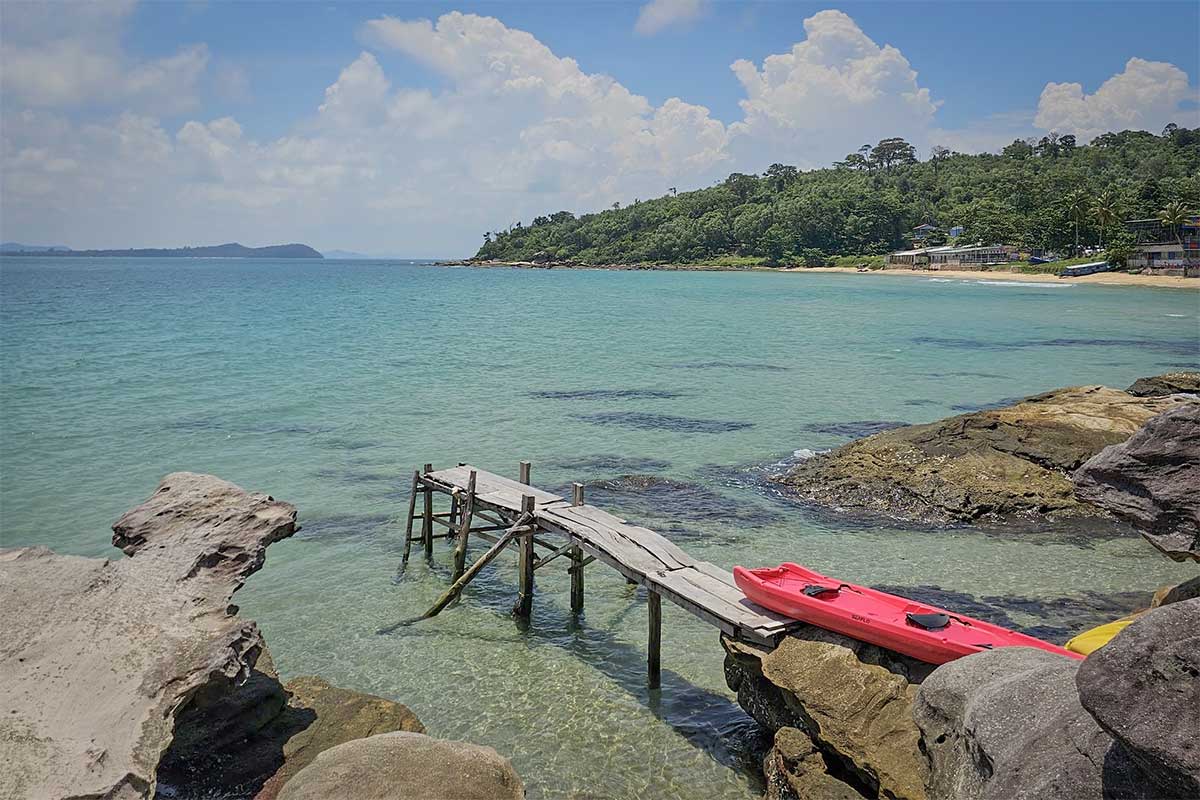
Ganh Dau is the far northwestern corner of the island, where the coast curves toward the Cambodian sea border. It’s a mix of a quiet fishing village, a long beach, a rocky cape with sea views, and the Nguyen Trung Truc Temple, dedicated to a 19th-century leader who fought the French.
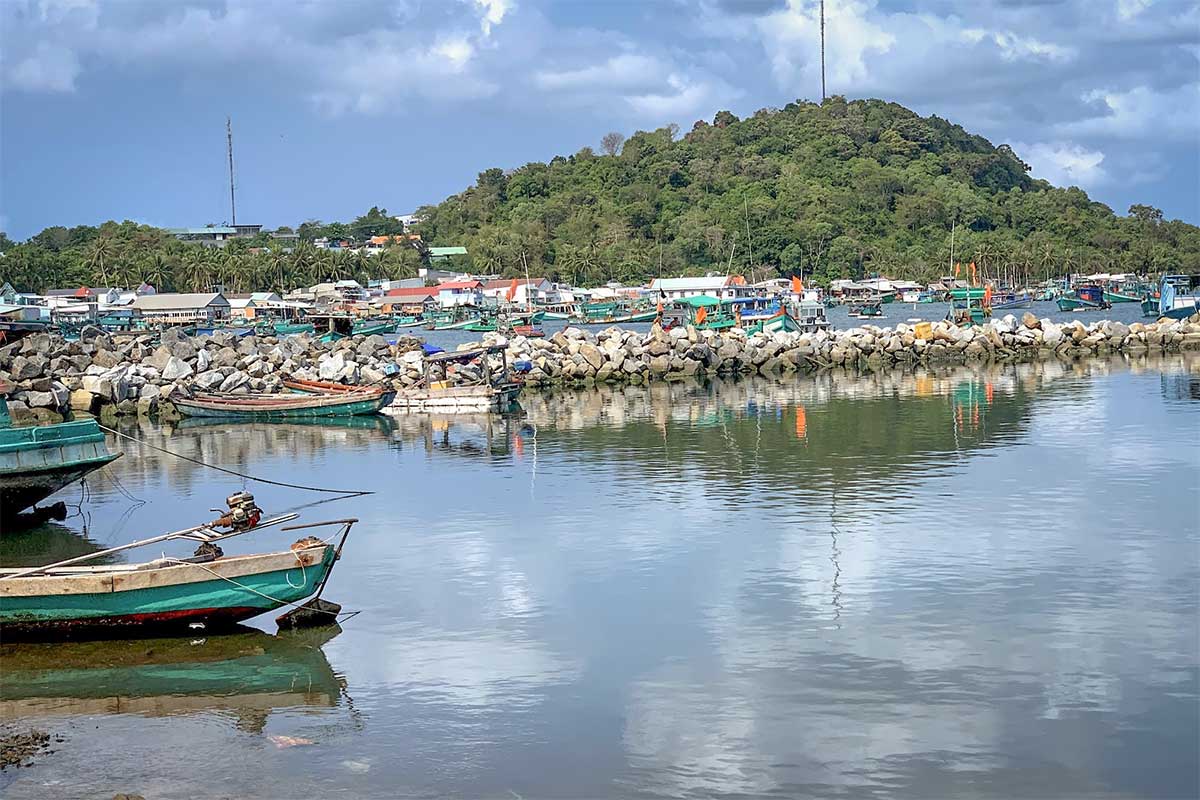
It’s one of the more peaceful areas to explore by scooter, though it sits right next to Phu Quoc’s largest resort-and-casino complex, so the contrast is sharp. Bai Dai runs down this coast too, with calm water and big resorts behind it. If you’re heading this far north, it pairs well with the theme parks nearby.
8. Visit a pepper farm
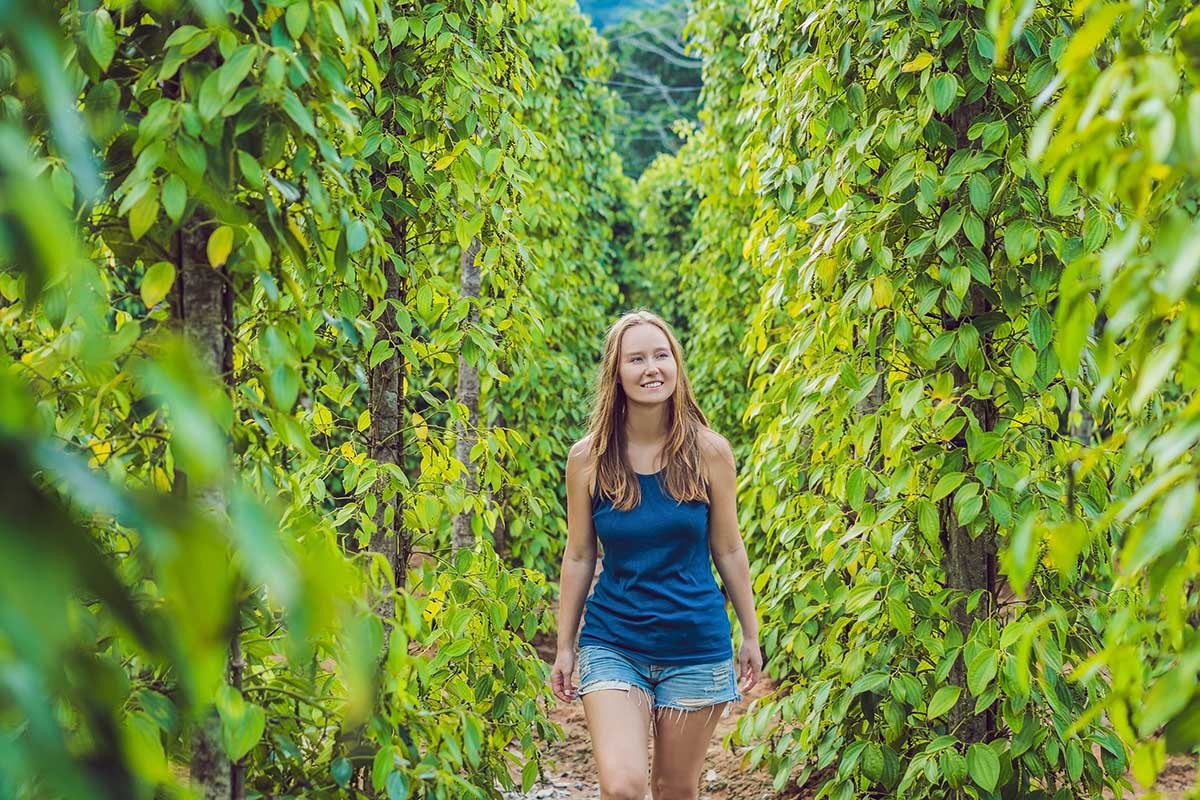
Phu Quoc is one of Vietnam’s most famous black pepper regions, and the red-earth pepper gardens in the centre and north of the island make an easy, free stop. Rows of pepper vines climb wooden poles, and you can see the green, black and red peppercorns at their different stages.
Most pepper farms, concentrated around the Khu Tuong area, let you walk through and watch the drying and sorting, hoping you’ll buy a bag on the way out. The pepper is genuinely good and makes a useful souvenir. A visit takes 15 to 20 minutes and fits neatly alongside a fish sauce factory or a north-island day.
9. See how fish sauce is made
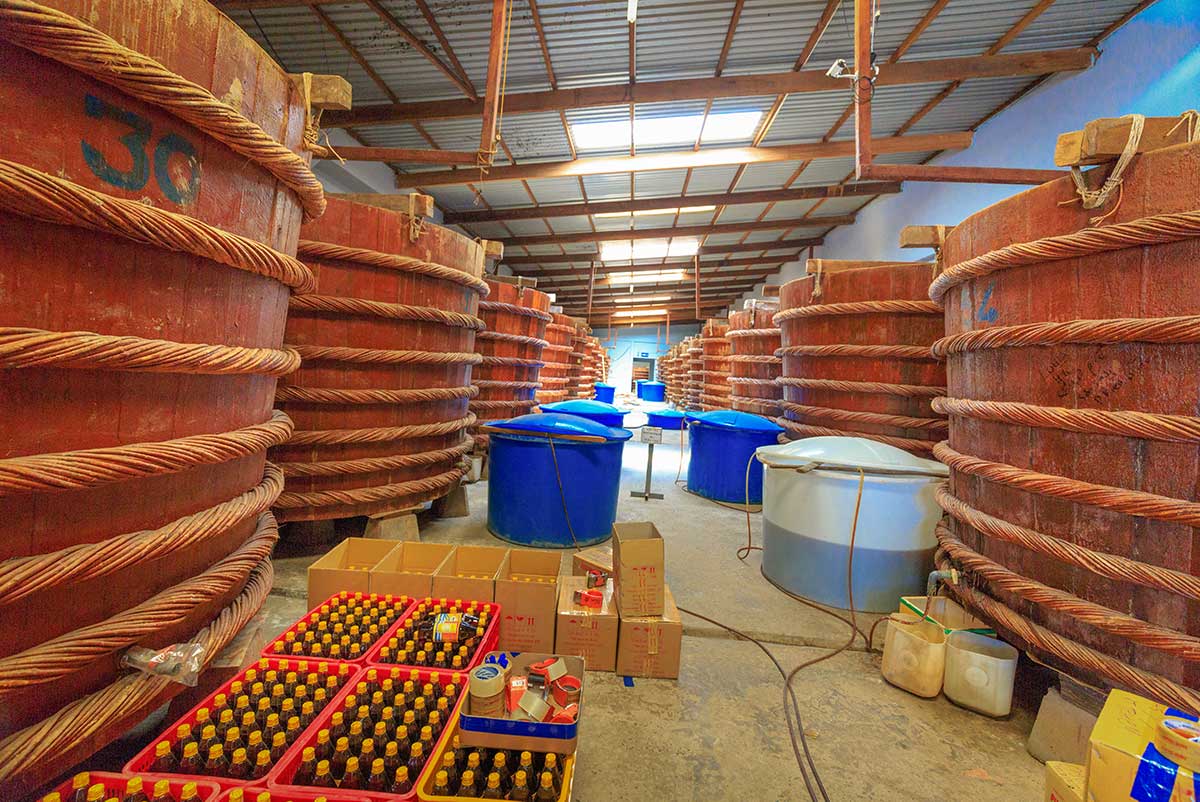
Phu Quoc fish sauce (nuoc mam) is the island’s other famous product, with a protected name in the way champagne is protected in France. It’s made by fermenting anchovies in room-sized wooden barrels for a year or more, and the warehouses where this happens can be visited.
The fish sauce factories, mostly in Duong Dong and An Thoi, are working sites, so expect a strong smell rather than a polished tour. A quick look at the giant barrels takes about 15 minutes, and it’s more interesting than it sounds. You can buy bottles to take home, though you’ll want them sealed and packed well for the flight.
10. Go diving and snorkeling
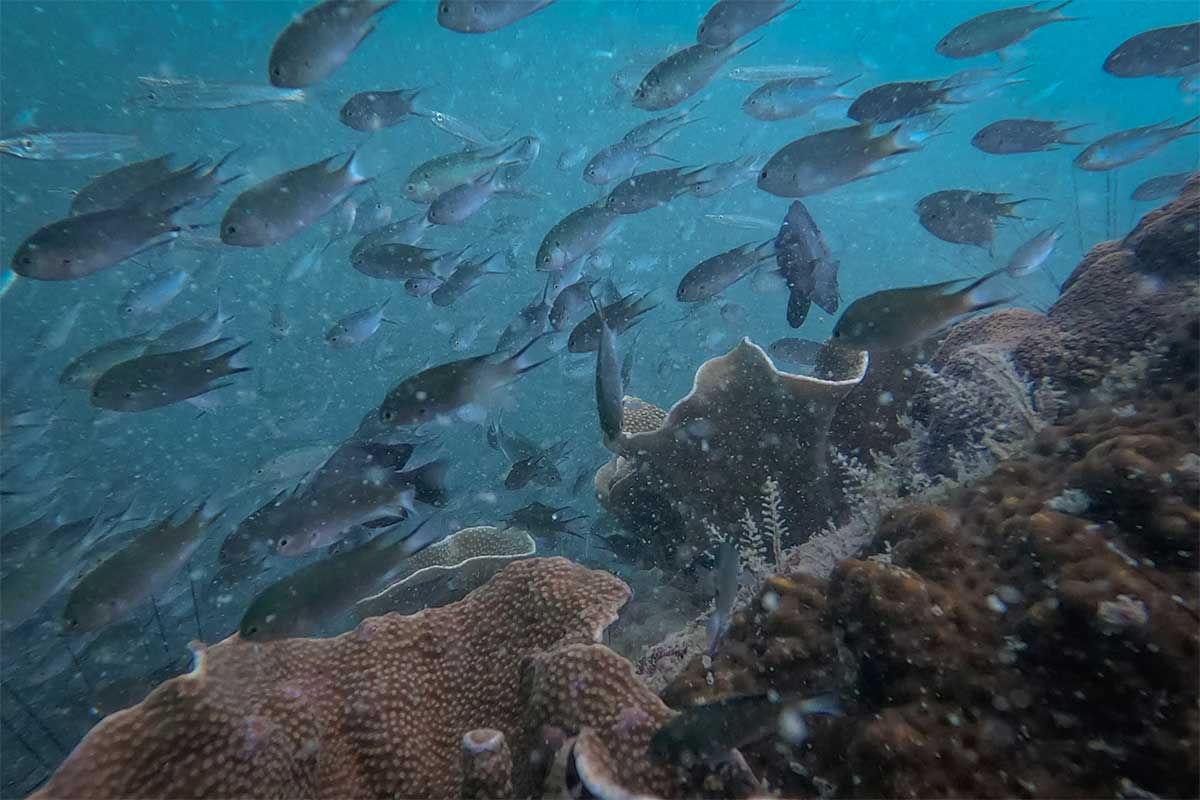
The diving and snorkeling around Phu Quoc centre on the same An Thoi islands in the south. It’s shallow, warm and easy — coral gardens, reef fish, the odd ray and plenty of small macro life — but this is gentle, beginner-friendly diving, not the dramatic walls or big marine life of Indonesia or the Philippines. For serious diving in Vietnam, Con Dao is the better island.
Trips run mainly in the dry season, November to April, when visibility is best at around 15 to 20 metres; in the wet months the sea is often too rough. A couple of fun dives cost roughly 65 to 85 USD, and discover-scuba sessions need no licence and keep an instructor at your side the whole time. Long-running operators include Flipper Diving Club and Rainbow Divers, both PADI-certified and based in Duong Dong. If you’d rather just snorkel, the cheaper island-hopping boat trips cover it.
11. Ride the cable car to Hon Thom island
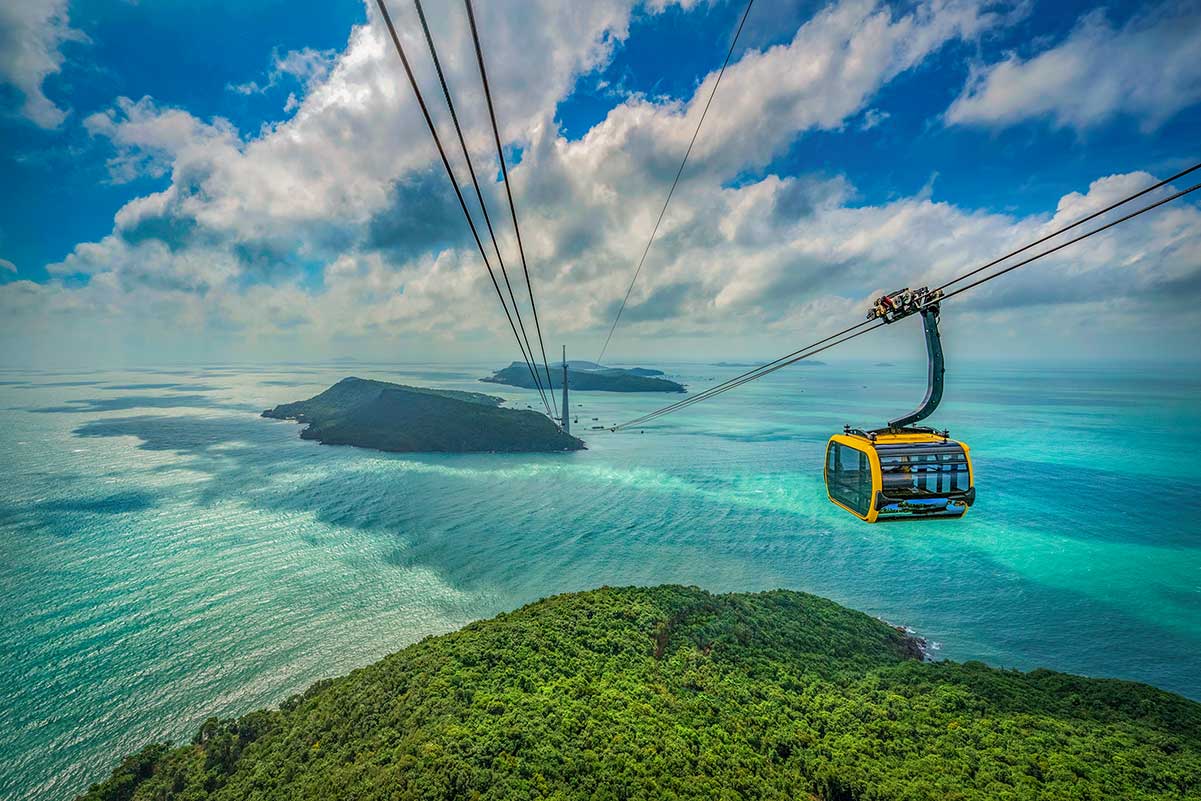
The Hon Thom cable car is the island’s headline attraction, and the ride alone is the reason to do it: a roughly 20-minute, almost 8-kilometre journey over the sea — the longest non-stop sea-crossing cable car in the world — from the southern tip across the An Thoi islands to Hon Thom (Pineapple Island). The views over the fishing boats and islets below are the best part.
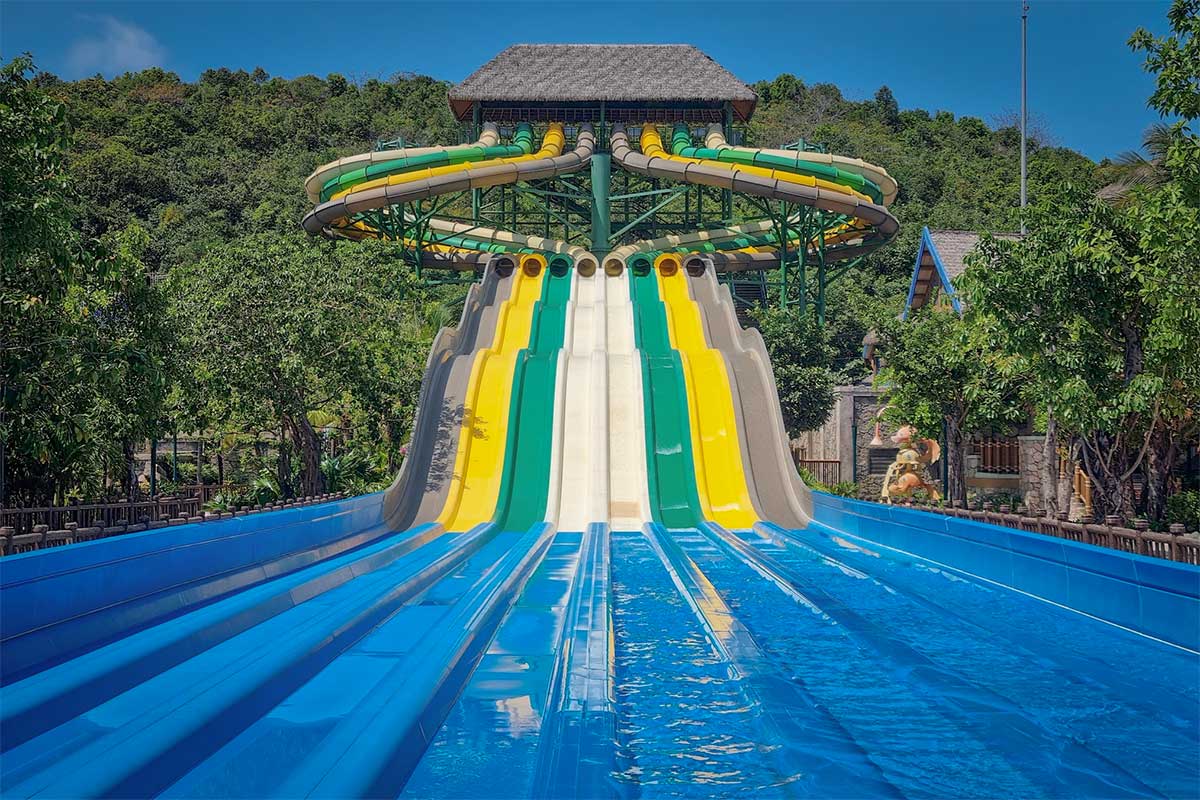
On Hon Thom you’ll find Sun World’s Aquatopia Water Park and the Exotica amusement park, both included in the cable car ticket, which runs around 750,000 VND (about 30 USD) for adults, or roughly 1,000,000 VND with the lunch buffet. It’s polished and family-friendly, but firmly a theme-park day out — fun with kids, easy to skip if you came for quiet nature. The cable car closes over a midday break, so check the times before you go.
12. Spend an evening in Sunset Town
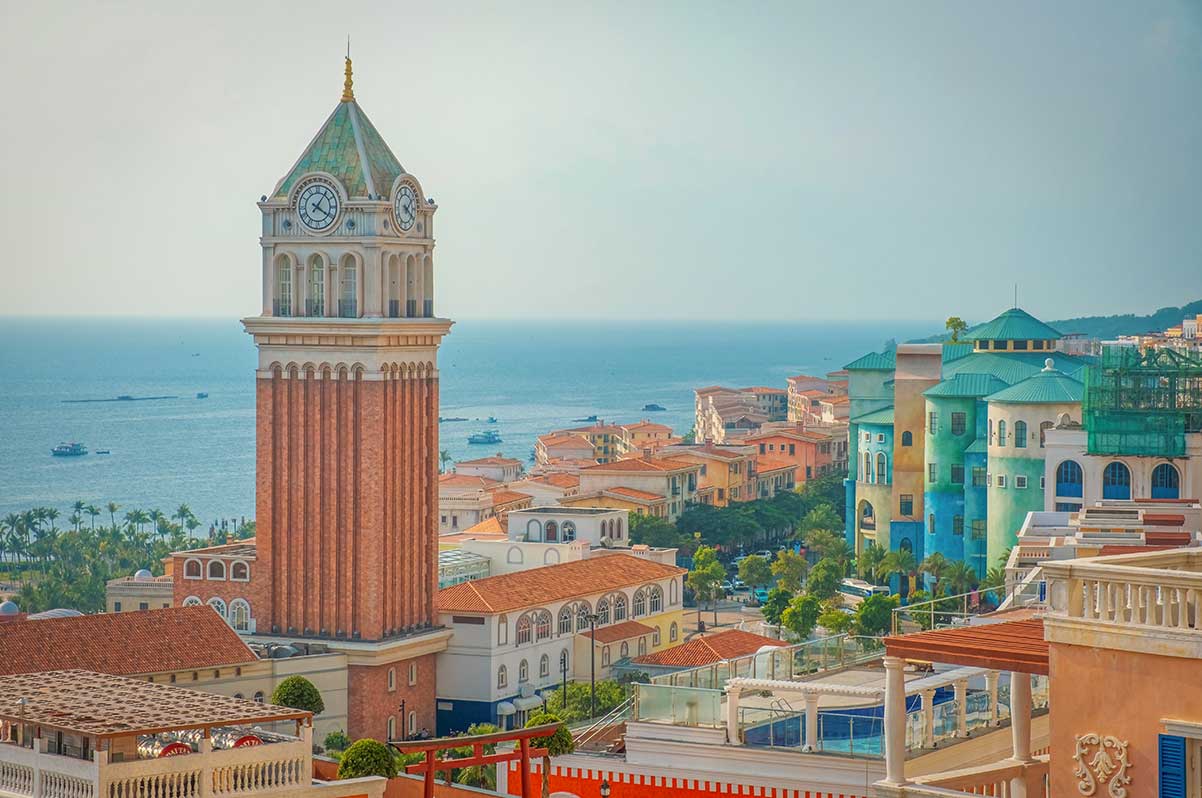
The cable car leaves from Sunset Town (Hoang Hon), a purpose-built Mediterranean-style town on the southern tip of the island. It’s designed for the evening: pastel buildings, waterfront bars, a bazaar, and most nights one of the best sunsets on the island.

The main draws are the Kiss Bridge (Cau Hon), two arcs that stop just short of touching, and the night shows — the Kiss of the Sea multimedia sea show and the Symphony of the Sea fireworks-and-water performance. It’s heavily commercial and can feel staged, but it’s a comfortable, walkable place to spend an evening, especially after the cable car earlier in the day.
13. See the animals at Vinpearl Safari
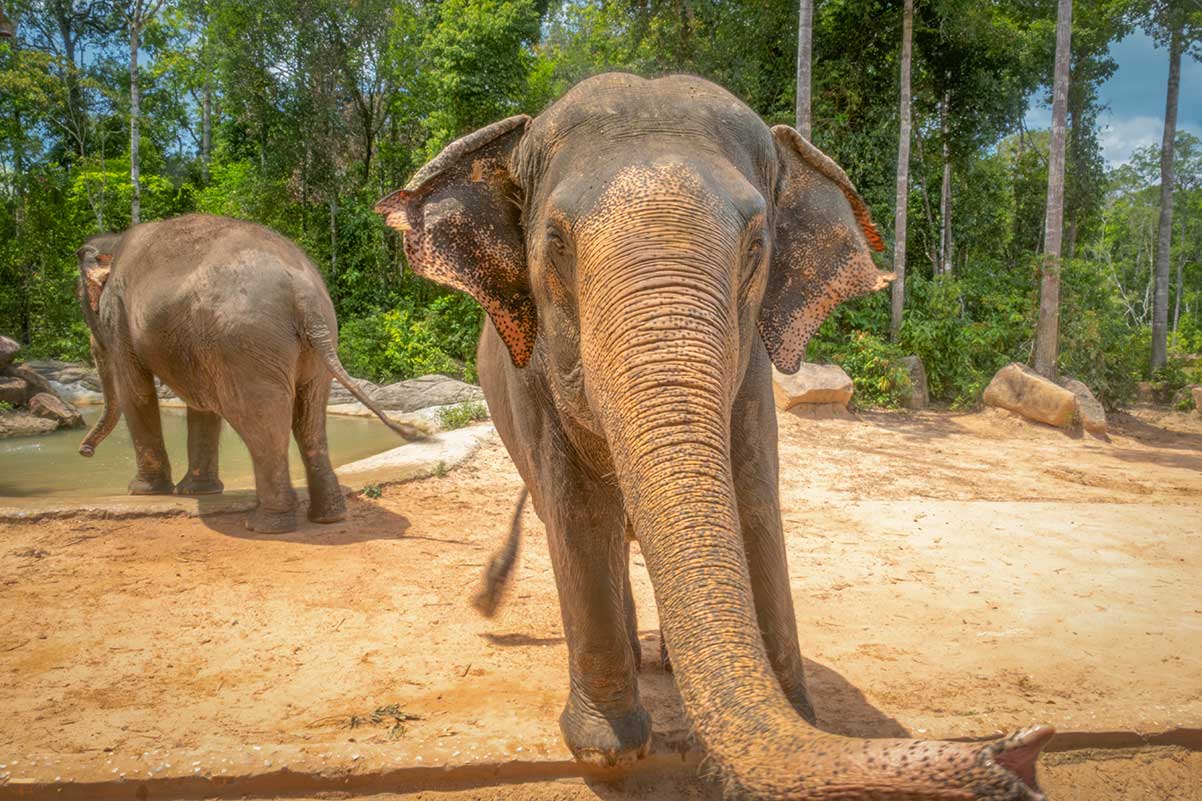
In the north of the island, Vinpearl Safari is Vietnam’s largest open zoo and one of the better-run animal parks in the country. You tour part of it by bus through semi-open enclosures of giraffes, zebras, big cats and more, with a walking-zoo section as well.
It’s a long way north, so plan most of a day, ideally combined with VinWonders next door. Views on captive-animal parks differ, but the enclosures here are relatively spacious and it’s a reliable hit with children. Tickets are noticeably cheaper bought online in advance.
14. Cool off at VinWonders
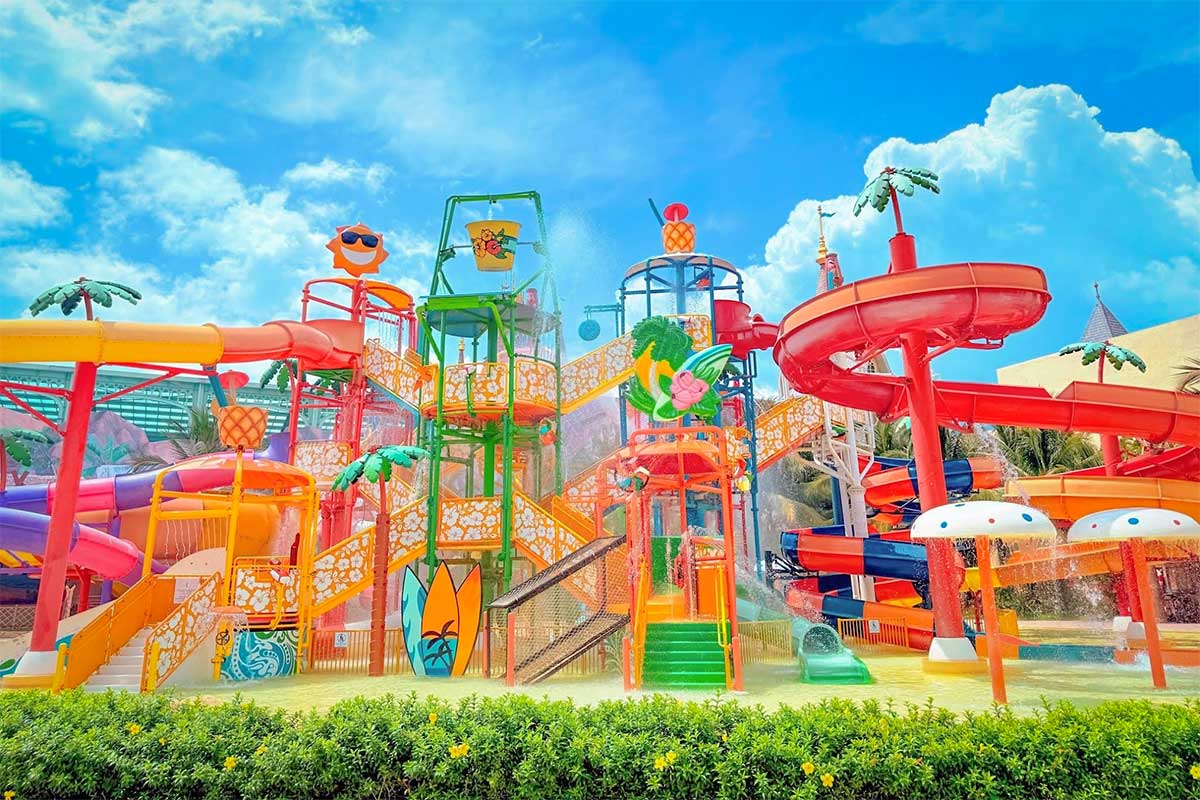
Right beside the safari, VinWonders is the biggest theme park in Vietnam — a sprawling mix of rollercoasters, a large water park, an aquarium and evening shows. With Grand World’s Venice-style canals and culture shows close by, the whole northern corner is essentially one big entertainment zone.
It’s a full day, and it makes most sense for families or anyone travelling with kids who need a break from beaches and temples. Combo tickets bundle VinWonders, the safari and Grand World, and free shuttle buses link the parks. Like the rest of the Vingroup attractions, it’s slick and crowded rather than local, so go in with the right expectations.
15. Trek in Phu Quoc National Park
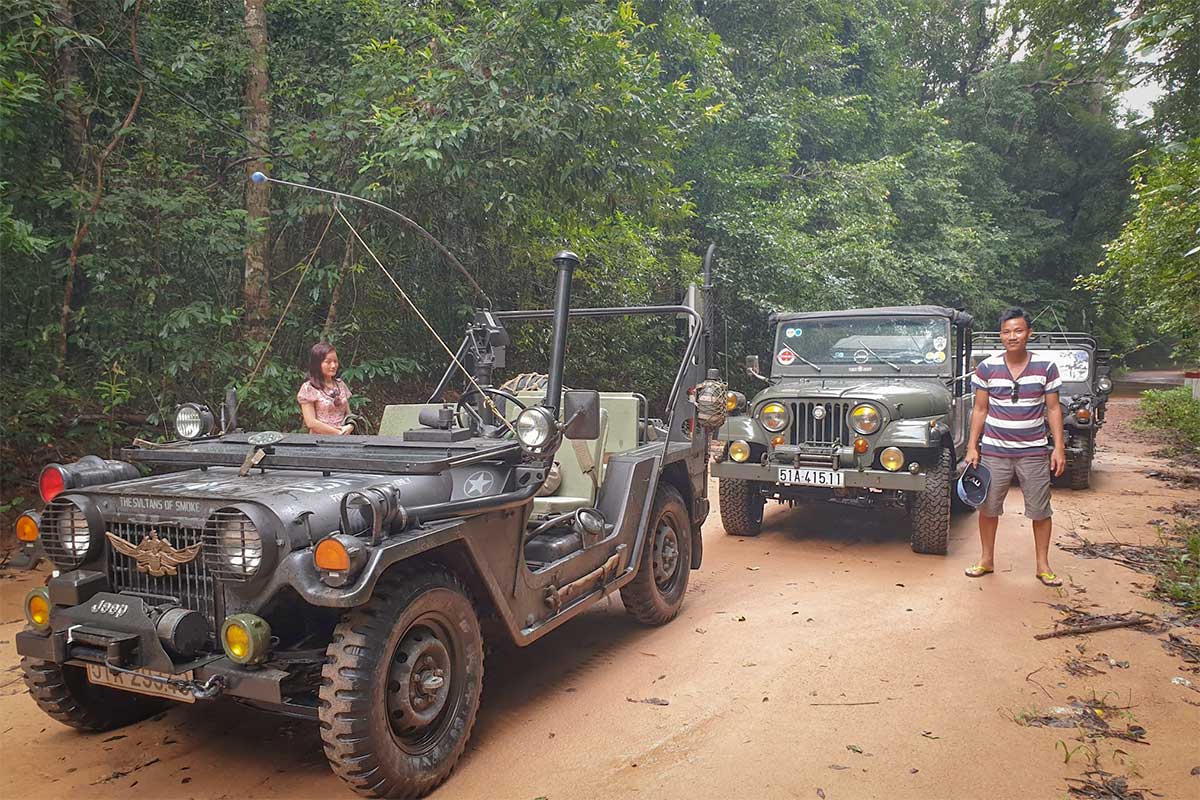
More than half of Phu Quoc, mostly the north, is protected as Phu Quoc National Park, a UNESCO biosphere reserve of dense tropical forest and a low ridge known as the “99 Peaks”. On paper it’s a major draw, but it’s worth setting your expectations.
There are few well-marked or maintained trails, so most “trekking” here means short forest walks, a drive through the wooded north, or an easy stop at the small Suoi Tranh waterfall — modest, but a pleasant freshwater dip after the beach. Serious hikers will find it limited; for most people it’s a scenic drive and a taste of the wild interior rather than a hiking destination. Bring water, and take a guide if you head off the main tracks.
Best time to visit Phu Quoc
The best time to visit Phu Quoc, and the season for most of the best things to do here, is the dry season from November to April. The sea is calm, the water is clear, and the days are sunny and warm, usually between 25 and 31°C — ideal for beaches, boat trips and diving. This is also the busiest and most expensive period, especially around Christmas and Tet.
From April to June it gets hot and humid, with the weather more of a gamble, though there are still plenty of dry days and fewer crowds. July to September is the wet season, when the southwest monsoon brings the heaviest rain, rough seas, and frequent ferry cancellations, with some boat trips off entirely. That said, the rain usually comes in short, heavy bursts rather than all day, prices are at their lowest, and the island is at its greenest. October sits in between as conditions improve.
For a month-by-month breakdown of weather, sea conditions and what’s open, see our guide to the best time to visit Phu Quoc.
Where to stay in Phu Quoc
Where you stay shapes your trip more than usual on Phu Quoc, because the island is big and the areas feel very different from one another.
Duong Dong and Long Beach (Bai Truong)
The central west coast, and the most practical base for first-timers. This is where you’ll find the widest choice of hotels, the restaurants and bars, the night market, and the airport close by, all on the island’s sunset coast. The sand here isn’t the island’s best, but everything is convenient and there’s plenty at the budget and mid-range end.
Ong Lang and the quieter west
Just north of Long Beach, this stretch is lower-key, with boutique and mid-range stays and beaches that mix sand and rock. It’s a good middle ground if you want a relaxed base with a bit of local feel while staying a short drive from town.
The south: An Thoi, Sunset Town and Khem Beach
The newer, more polished end of the island, near the cable car, Kiss Bridge and the best southern beaches. You’ll find big resorts here alongside a growing number of smaller hotels in Sunset Town. It suits travelers who want the southern attractions and don’t mind being a fair drive from Duong Dong.
The north: Bai Dai, Ganh Dau and Vung Bau
This is Vingroup territory — mega-resorts, the casino and the theme parks, all fairly isolated and self-contained. It works well for an all-in resort-and-parks family holiday, but less so if you want to explore the rest of the island, since it’s a long drive from almost everything else.
For specific hotel recommendations across budgets, see our guide on where to stay in Phu Quoc.
How to get to Phu Quoc
Getting to the island
Phu Quoc lies in the Gulf of Thailand off Vietnam’s southwest coast, closer to Cambodia than to the mainland, and there’s no road or rail link — you arrive by air or by sea. As a new special zone preparing to host APEC in 2027, the island is expanding fast, the airport included.
By plane
Phu Quoc International Airport (PQC) is about 10 km from Duong Dong. There are frequent domestic flights from Ho Chi Minh City, Hanoi and Da Nang, plus direct international routes from Bangkok, Singapore, Kuala Lumpur, Seoul and others. Arriving directly on the island, visitors of most nationalities can stay up to 30 days without a visa.
By ferry
Fast ferries run from Rach Gia (about 2.5 hours) and Ha Tien (about 1.25–1.5 hours) on the mainland, operated mainly by Superdong and Phu Quoc Express. They all arrive at Bai Vong port on the east coast, 15 to 30 minutes from Duong Dong. Car ferries can also carry motorbikes. In the wet season, rough weather can cancel sailings, so leave yourself a buffer if you’re catching a flight afterward.
Popular routes
- From Ho Chi Minh City — quickest by direct flight, about an hour.
- From Hanoi or Da Nang — direct domestic flights.
- Via the Mekong Delta — bus or private car to Rach Gia or Ha Tien, then the ferry, which works well if you’re already travelling through the delta.
How to get around Phu Quoc
Motorbike and scooter
The most flexible way to reach the best things to do in Phu Quoc on your own schedule. Most roads are sealed now, though some northern tracks are still rough. Rentals run about 120,000–250,000 VND a day; check the brakes before you ride off, and carry a valid licence. See our guide to renting a scooter in Phu Quoc.
Taxi and ride-hailing
Metered taxis and apps like Grab and the electric Xanh SM cover the main areas. They’re fine for short hops; for a full day of sightseeing, a fixed-price car usually works out better. Our guide on taxis, Grab and car rental has the details.
Car with driver
The easiest option for families or longer distances, and the usual way to do a full island day or reach the northern parks. Drivers don’t normally guide unless you book the trip as a tour.
VinBus
A free electric bus service links the airport, the ferry port and the Vingroup areas in the north. It’s handy if you’re staying at or visiting those resorts and parks, less so for the rest of the island.
Bicycle
Many hotels lend out bikes, which are fine for short rides around Long Beach or your own beach. The island is too big and hot to cycle end to end, though.
Itinerary: 2 days in Phu Quoc
Two days is enough for a first taste of the best things to do in Phu Quoc, focused on the south where most of the highlights sit close together. This simple 2-day itinerary mixes beaches, a bit of history, and the island’s signature sunset. If you want the northern theme parks or a slower beach holiday, add an extra day or two.
Day 1
- Pick up a scooter or car and head south, stopping at a pepper farm and a fish sauce factory on the way.
- Visit Ho Quoc Pagoda for its hillside sea views.
- Relax and swim at Sao Beach or Khem Beach.
- See the Coconut Tree Prison in An Thoi.
- End the day in Sunset Town for the sunset, Kiss Bridge and an evening show.
Day 2
- Take a boat trip out to the An Thoi islands for swimming and snorkeling.
- Spend the day island-hopping between May Rut, Gam Ghi and Fingernail Island.
- Or swap the boat for the Hon Thom cable car and a day at Sun World.
- Back in Duong Dong, have dinner at the night market.
Tips for traveling to Phu Quoc
How long to stay
Three to four days is enough for most people — a couple of days for the beaches and the south, plus a boat trip. Add a day or two if you want the northern theme parks or simply a slower pace.
Money and ATMs
ATMs are easy to find in Duong Dong and the resort areas, and cards are accepted at most hotels and bigger restaurants. Carry some cash for markets, local eateries and scooter rentals.
Shopping and souvenirs
The local buys are black pepper, fish sauce, cultured pearls and sim wine, a liquor made from a local berry. Our guide to shopping and souvenirs in Phu Quoc covers what’s worth it and where to find it.
Traveling with kids
Phu Quoc is one of the easier Vietnamese destinations for families, with calm beaches, short distances, and the theme parks and safari in the north. See our guide to Phu Quoc with kids for more.
Safety and scams
The island is safe, and the main annoyances are minor: taxi overcharging (use the meter or an app) and ferry cancellations in bad weather. Check the brakes and photograph any damage before renting a scooter.
Where to go next
Most onward travel runs back through Ho Chi Minh City by air. By sea, the ferry links to the Mekong Delta at Rach Gia or Ha Tien, which pairs naturally with a few days on Phu Quoc.
What to expect from Phu Quoc: an honest verdict
Phu Quoc isn’t the undiscovered tropical island some marketing still suggests — it’s a developed beach destination, and parts of it are very developed. But that’s not really a criticism, because for a straightforward beach holiday it delivers: warm sea, long sandy beaches, plenty of resorts and easy comfort. The trade-off splits opinion. Some travelers like the polish and the resort infrastructure; others feel the build-up, especially around the busier strips and the big theme-park developments, has cost the island some of its charm. Go in seeing it for what it is — a proper beach holiday island rather than a wild escape — and it does that job well.