
Phu Quoc National Park: Vietnam’s largest protected island forest
Phu Quoc National Park is not just a patch of jungle — it is the ecological backbone of the entire island. Established in 2001, the park was created to protect what remained of Phu Quoc’s original rainforest at a time when development was already starting to reshape the island. Today it remains one of the most ecologically significant protected areas in southern Vietnam, though increasing pressure from tourism and construction continues to test that status.
Size and location
The national park covers approximately 31,400 hectares, which includes both land and marine areas. On land, this accounts for roughly half of Phu Quoc Island. The park occupies the northern and central parts of the island, with its boundaries running through several communes including Ganh Dau, Bai Thom, Cua Can, and Ham Ninh.
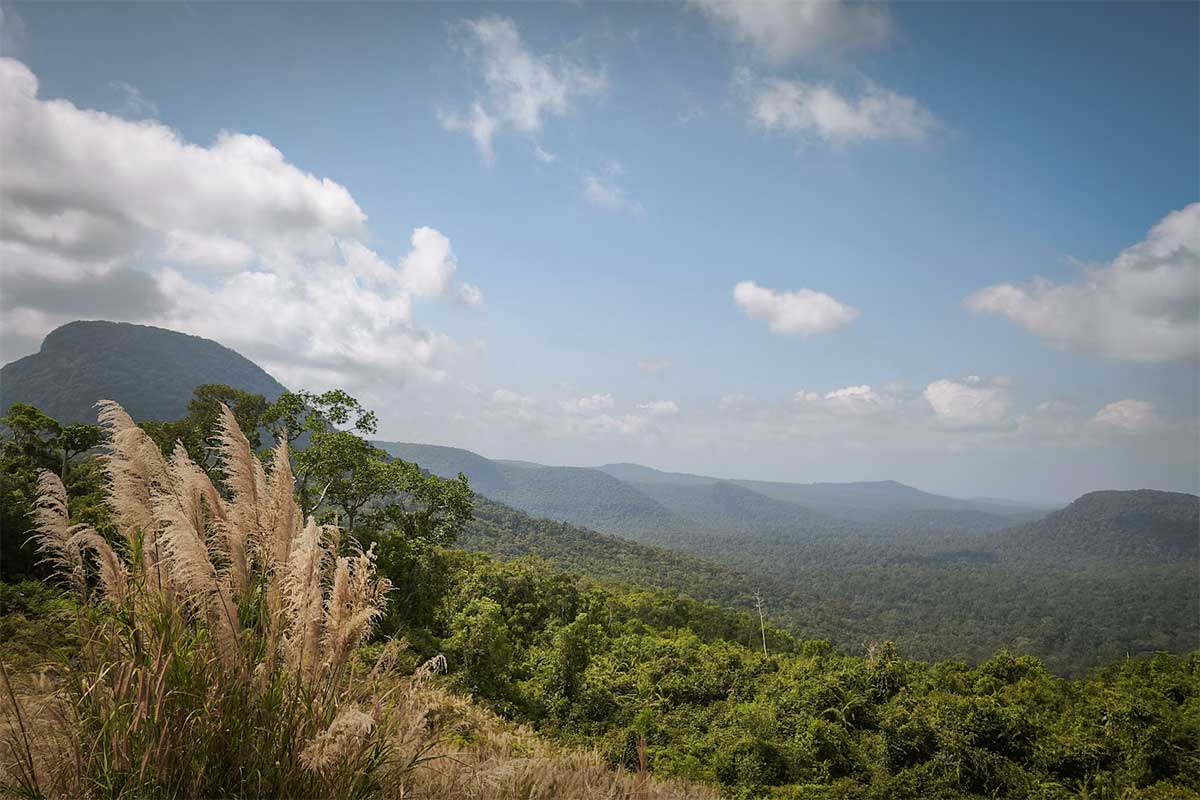
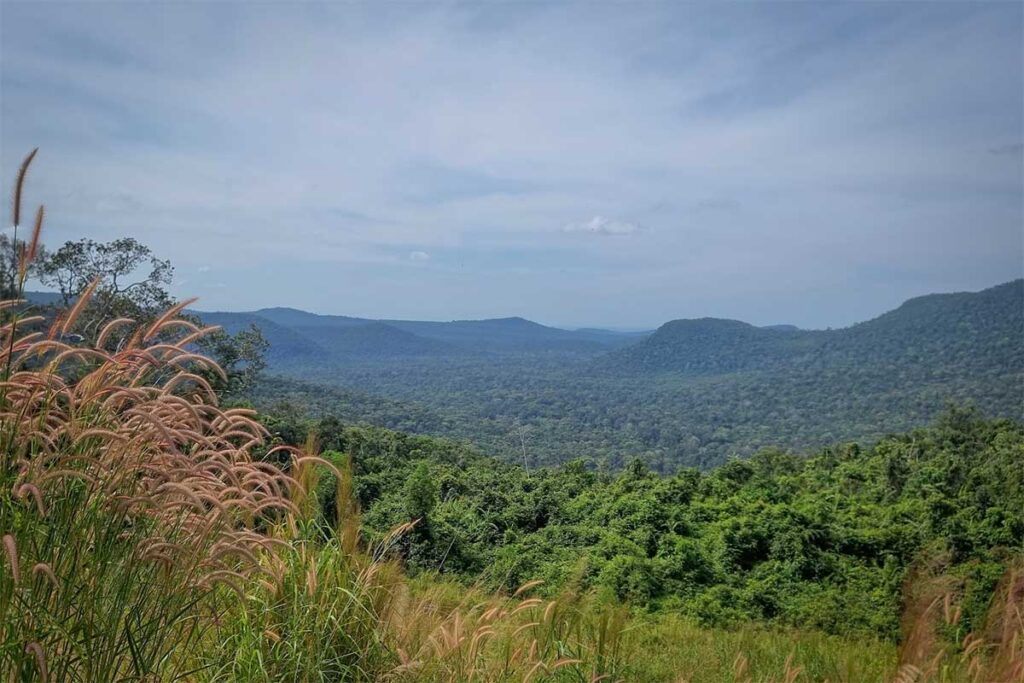
The terrain is mostly low mountainous forest. Mount Chua, at 603 meters, is the highest point on the island and sits within the park. The Ham Ninh mountain range runs along the eastern side. Several seasonal streams and rivers originate in the hills here, including the Cua Can River, which flows west toward the Gulf of Thailand.
Flora and fauna
The park protects a large area of tropical evergreen rainforest — the kind that has largely disappeared from the Vietnamese mainland. Nearly 930 plant species have been recorded on the island, with the national park covering the most intact sections of this forest.
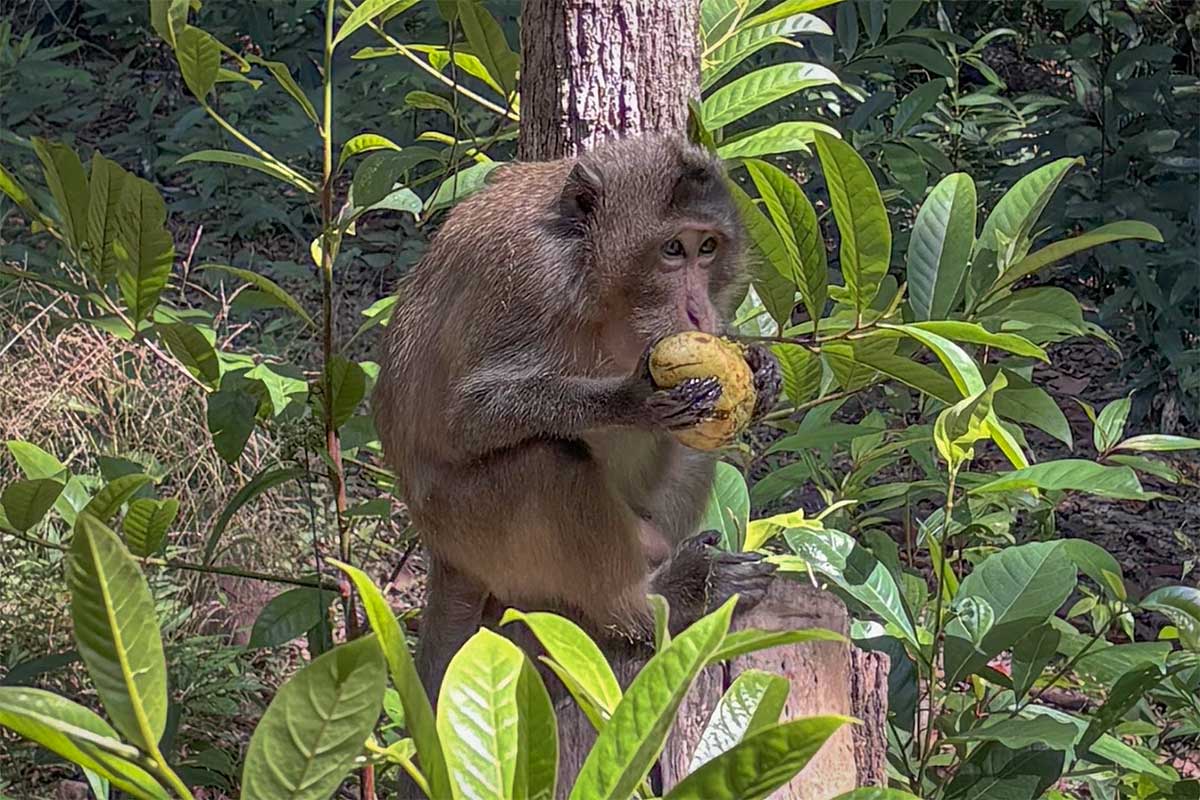
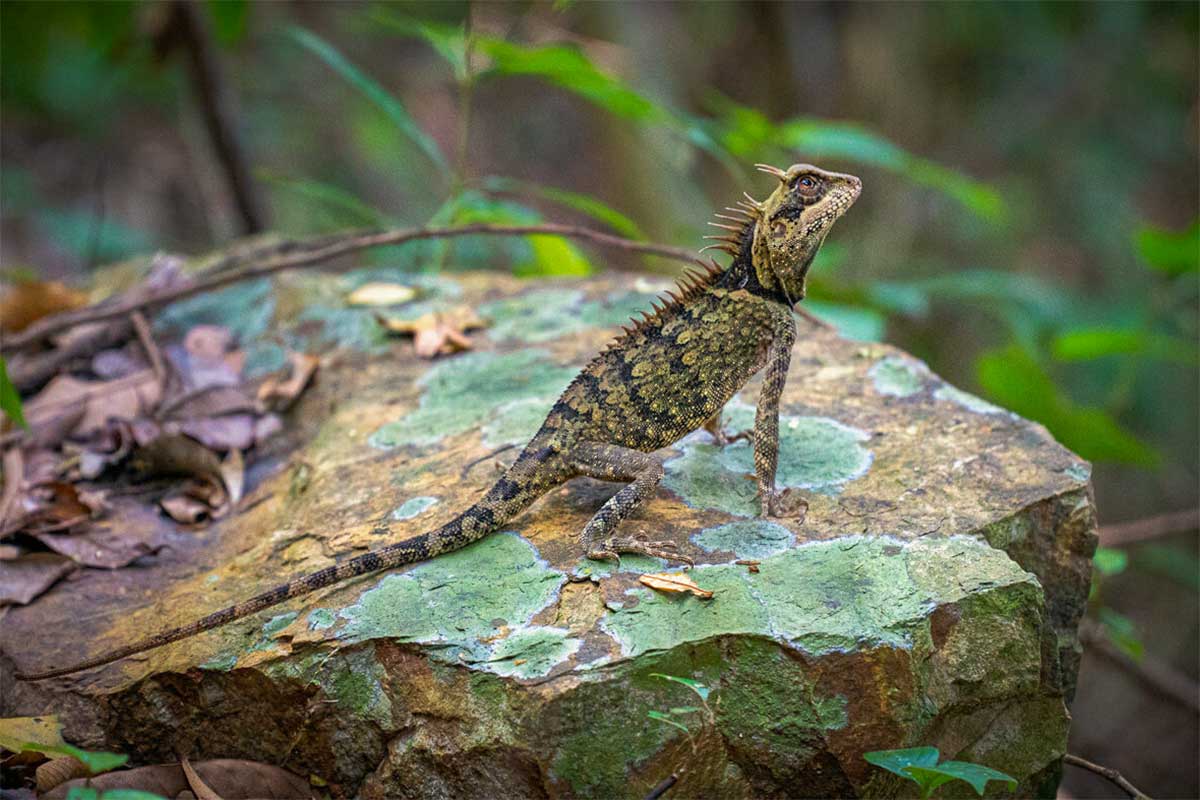
Wildlife includes 43 species of mammals, among them the silvered langur, slow loris, crab-eating macaque, and small-clawed otter. Several of these are listed as threatened or endangered. On a trek through the park you are most likely to encounter monkeys, lizards, hornbills, and a wide variety of insects. Snakes are also present, including pit vipers, which is one reason exploring without a guide is not recommended.
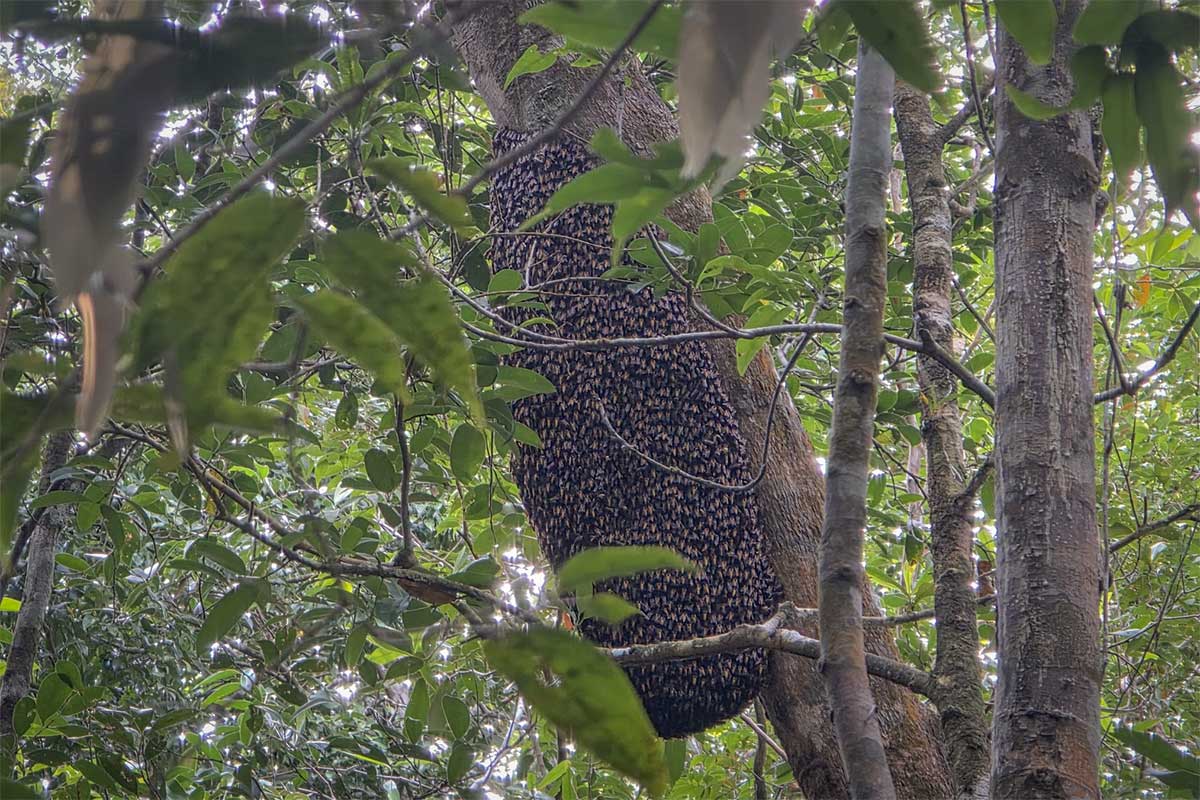
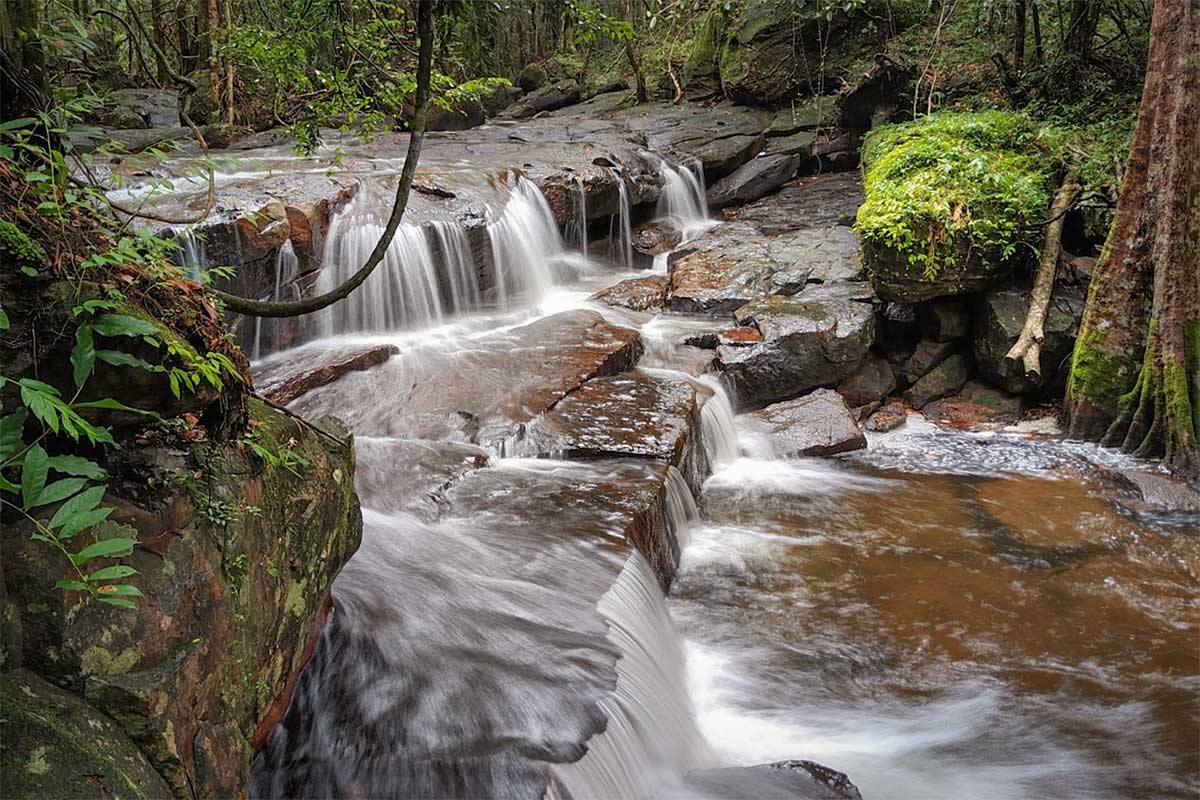
The forest also contains notable orchid species, large old-growth trees, and patches of Melaleuca — a distinctive tree common at lower elevations whose leaves shift between dark green and grey-green through the seasons.
The marine area
The marine section of the park extends around the southern islands and coastline of Phu Quoc. It includes coral reefs that are among the healthiest remaining in the Gulf of Thailand. Surveys have recorded 89 species of hard coral, 19 species of soft coral, and 125 species of reef fish.
The waters are also home to hawksbill turtles, which use some of the beaches as nesting grounds, and there are occasional reports of dugongs in the area, though sightings are rare. The Ganh Dau coral garden in the northwest and the reefs around the An Thoi Archipelago in the south are the most accessible spots for snorkeling within or near the biosphere reserve
Can you explore Phu Quoc National Park on your own?
This is where most travel guides stay quiet — so here is an honest answer: for most visitors, entering Phu Quoc National Park independently is either very difficult or simply not possible.
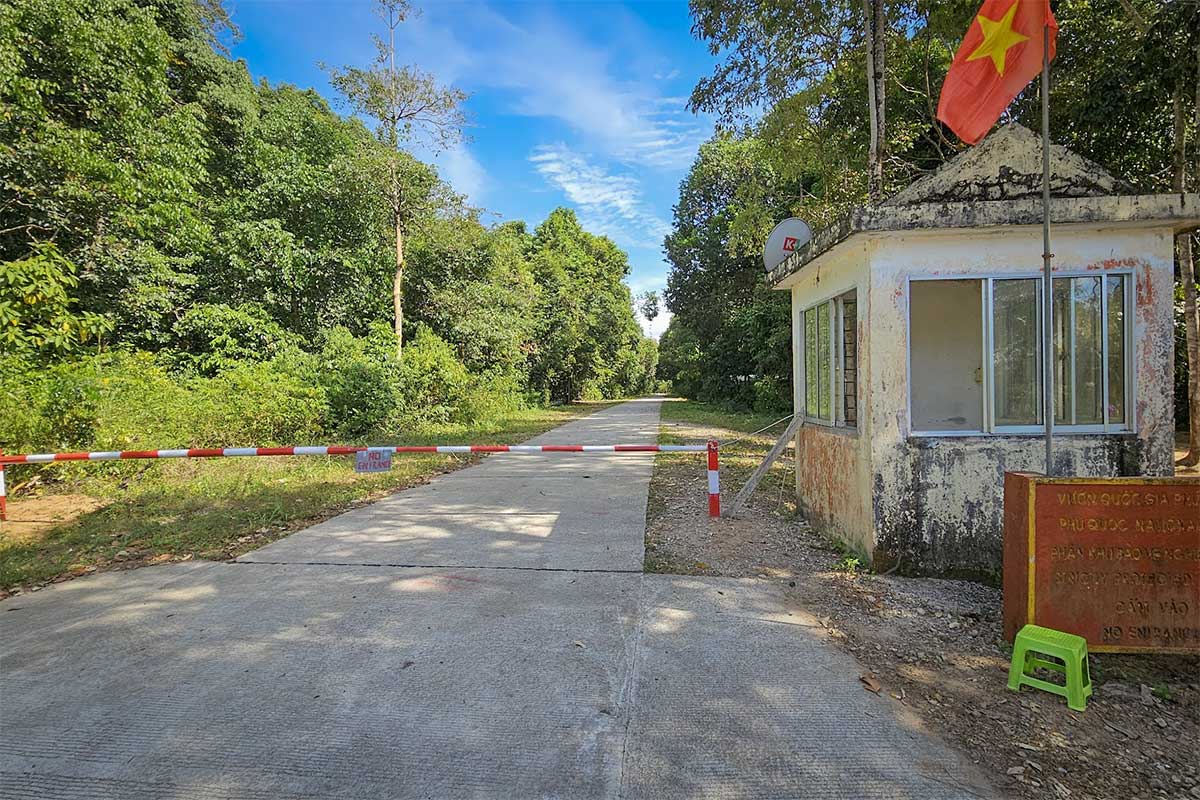
The park has a military presence throughout, which is not unusual for protected areas in Vietnam. Soldiers and guards help with fire prevention, conservation, and keeping poachers out. The side effect for tourists is that many entrances are blocked or restricted without warning. Multiple visitors have shown up at what should be an accessible entry point, only to be turned away on the spot with no explanation. There are no reliable opening hours posted, and closures can happen at any time — including during public holidays.
Even when an entrance is technically open, walking into the forest alone is not a great idea. The trails are not maintained or marked. Pit vipers and other wildlife are present. And the park is large enough that getting disoriented is a real risk.
What you can do on your own is drive through the park. Several roads cross the national park area, including the dirt road between Ganh Dau and Bai Thom in the north. This route passes through dense forest and gives a genuine feel for the landscape — especially if you slow down, cut the engine, and just listen for a while. It is not the same as a trek, but it is free, accessible, and genuinely scenic.
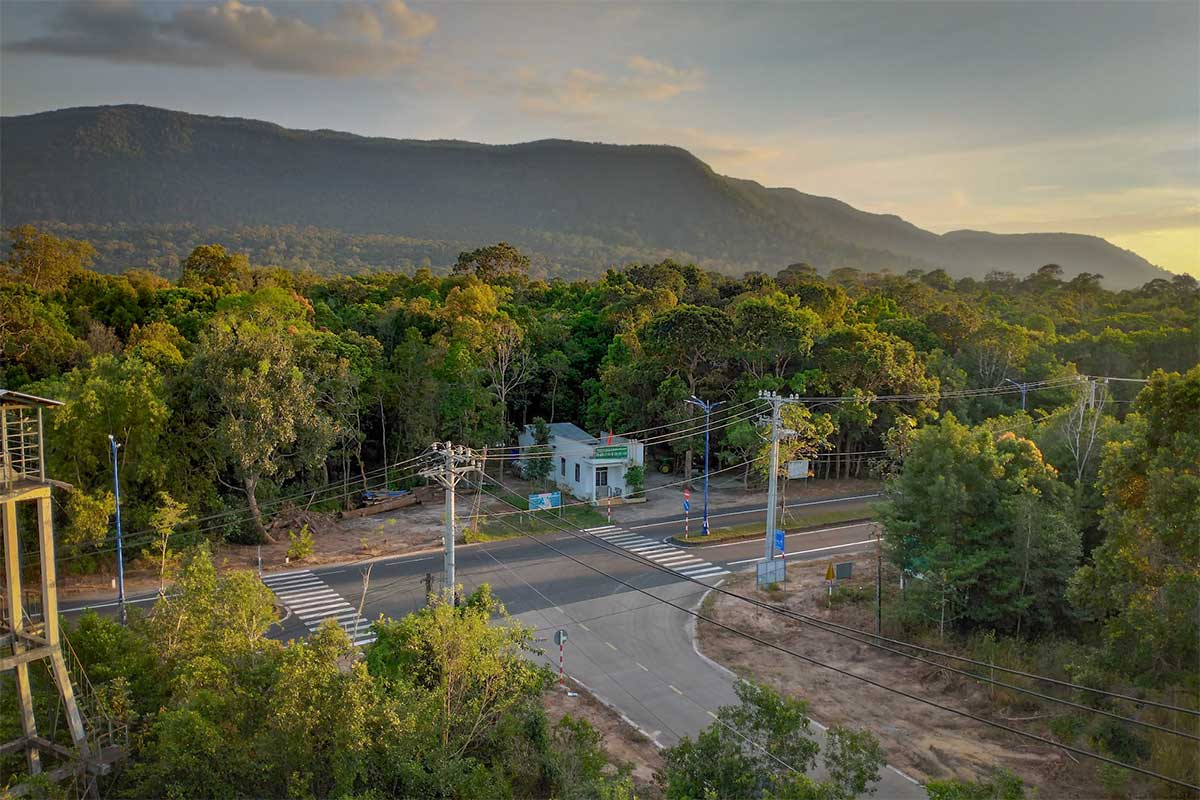
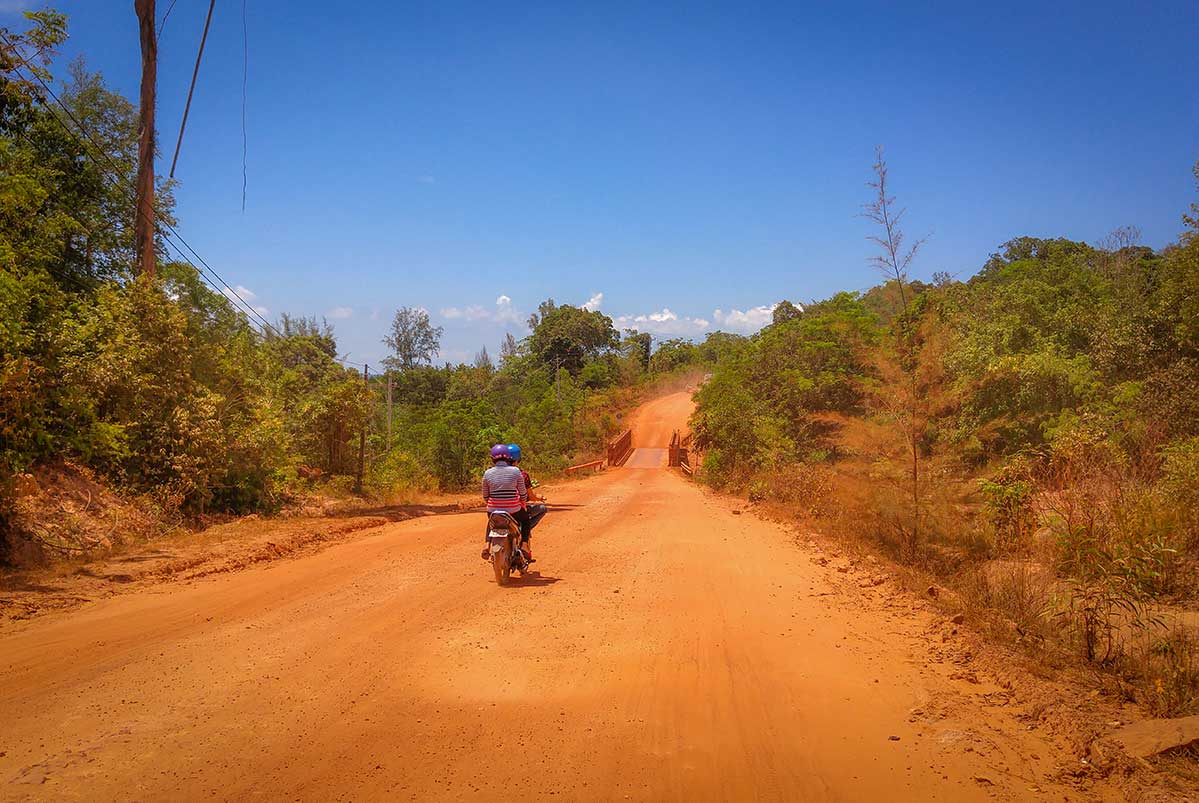
If you want to actually walk inside the forest and see wildlife, a guided tour is the way to go. The good news is that there are solid options available — which is what the next section covers.
How to explore Phu Quoc National Park: your options
1. Guided jungle treks
Booking a guided trek is the most reliable way to actually get inside the forest. Guides know which entrances are open, which trails are worth doing, and how to spot wildlife along the way. Feedback from people who have done these tours is consistently positive — particularly about the quality of the guides themselves, who tend to be knowledgeable about local plants, animals, and the forest ecosystem.
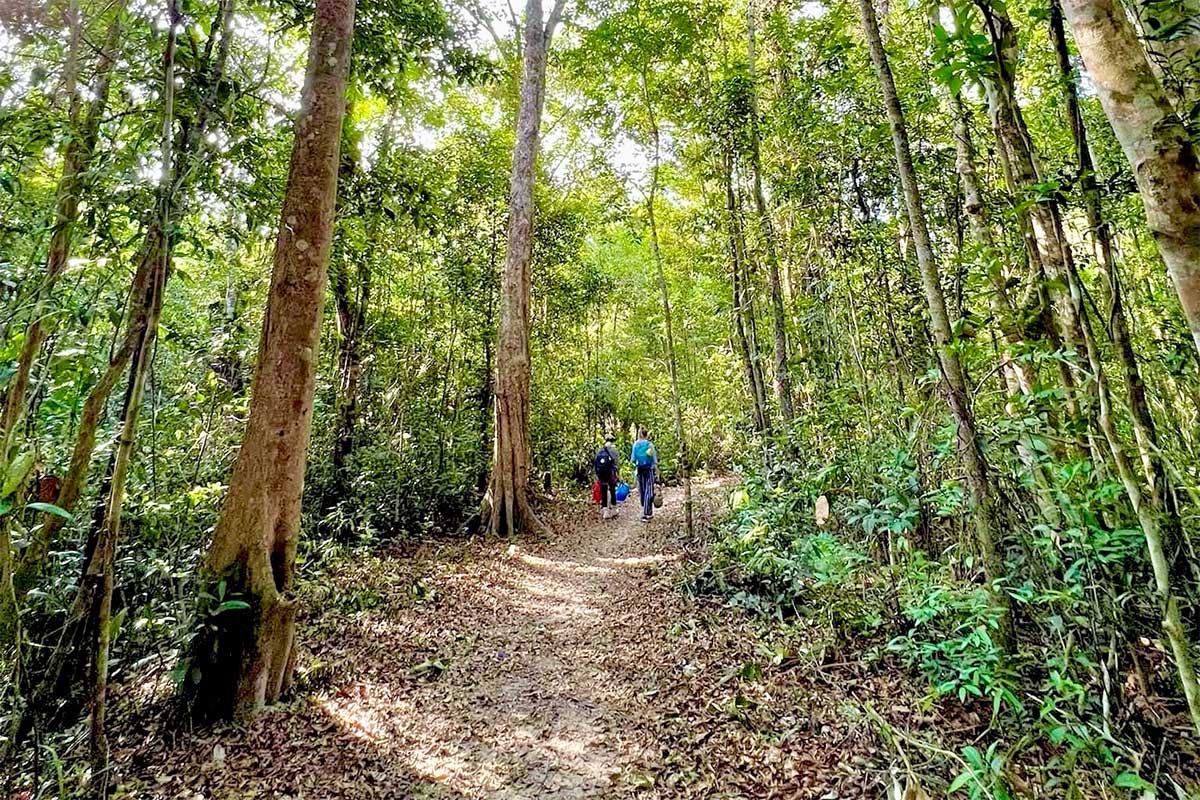
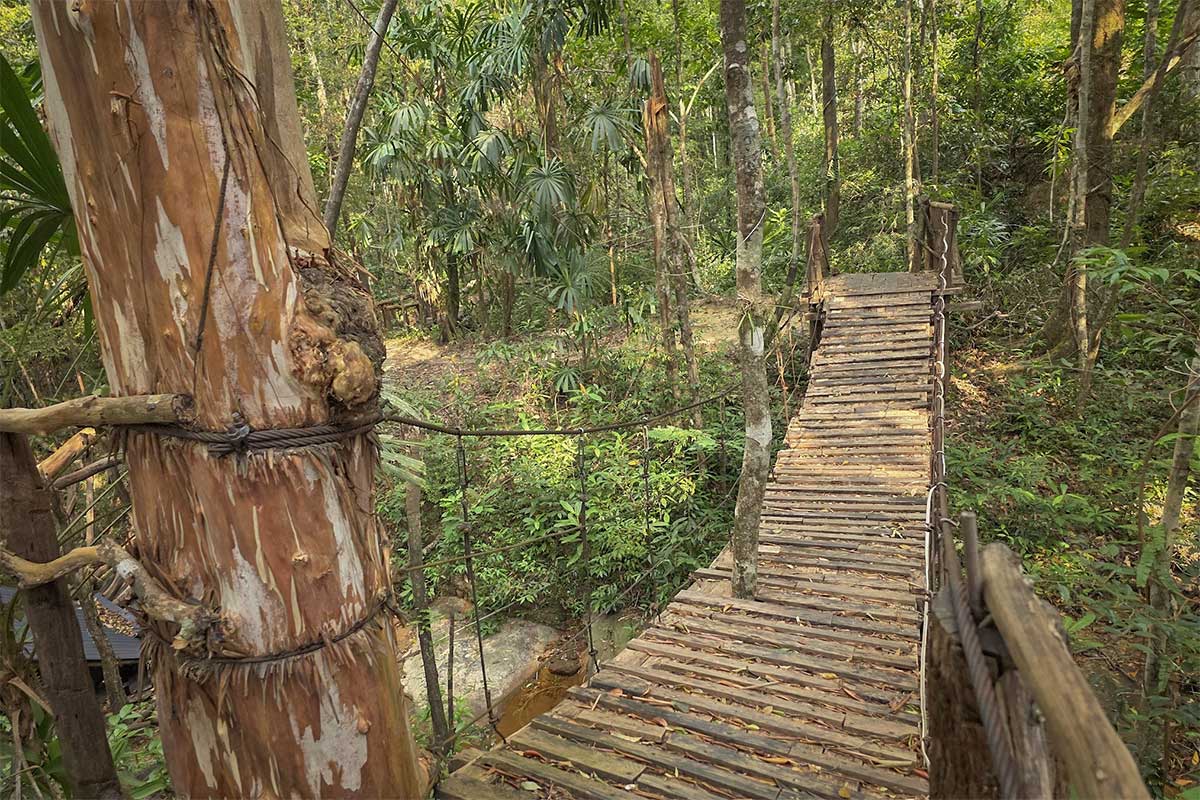
Tours generally run in the morning, which is the best time for wildlife. Expect to walk on uneven trails through dense jungle. Some routes include a swim in a natural stream or spring, which is a welcome way to cool down.
Difficulty varies. Most options fall somewhere between easy and moderate — suitable for reasonably fit travelers without requiring any special experience. The Tien Son Dinh climb is the most demanding option, with steep sections and ladders near the summit.
There is also an official entry point where you can arrange a guide on the spot without booking in advance. Note that the actual meeting point is at a small cafe near the park, not at the official-looking government gate — several people have wasted time at the wrong entrance. Three walk lengths are available: 1 km, 2 km, and 5 km, priced at roughly 150,000, 250,000, and 500,000 VND per person. The guides here speak limited English, but Google Translate works well enough. One bonus: wild macaques tend to gather near the entrance area daily between around 3 and 6pm — worth timing your visit around if you want to see them.
A few practical notes before you go:
- Opening hours are unreliable. Multiple visitors have arrived to find the entrance closed with no warning, even when Google Maps says open. If you are coming specifically for a trek, book a tour operator in advance rather than counting on walk-in access.
- Good tour operators provide water, insect repellent, and hiking poles. Check what is included before booking.
- Mosquitoes can be intense. Long sleeves and strong repellent are not optional.
2. The “Into the Wild” conservation trail
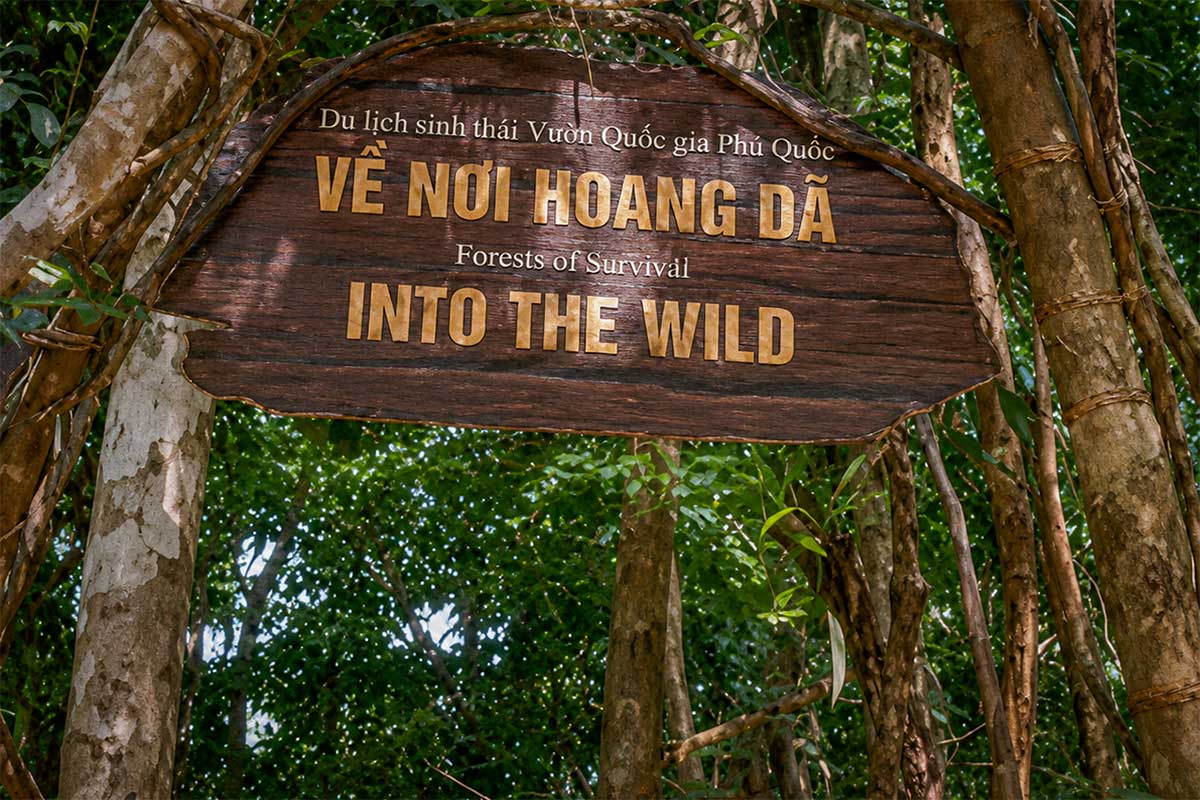
This is the best self-guided hiking option in the national park area and one of the least-known. The Into the Wild trail is a marked conservation trail that runs through thick jungle in the northwest of the island, starting from the red dirt road between Ganh Dau village and Starfish Beach. No guide is required, entry is free, and there are information boards about local flora and fauna along the way.
The trail ends at a remote beach on the northwest coast, reached by descending a series of steep wooden ladders. It is a genuinely rewarding hike — proper jungle, not a tourist park path. You can camp on the beach at the end, which makes it a good option for travelers looking for something more adventurous.
Note that recent visitors have reported the ladders near the beach are in poor condition, with some broken sections. Check the current state before attempting the descent, and wear proper shoes — not sandals.
The trailhead is clearly marked on the north side of the dirt road with a wooden gate made from woven branches and a sign reading “Into the Wild.” It is visible on the Vietnam Coracle map, which is worth downloading before you go.
Practical details:
- Duration: 2–3 hours round trip
- Difficulty: Easy to moderate
- Guide required: No
- Cost: Free
- Best combined with: Starfish Beach, Ganh Dau Beach, or a full northern Phu Quoc day
3. Jeep tours through the national park

If trekking is not your priority but you still want to experience the national park, a jeep tour is a solid alternative. These tours take you through the forest on dirt roads in an open-air 4×4, including the long red dirt road through the northern park area where the ancient tree is located — a genuinely impressive old-growth specimen that is one of the more memorable stops on the island.
A typical northern Phu Quoc jeep tour combines the forest roads with other highlights — usually Rach Vem fishing village, Starfish Beach, and Ganh Dau. Some tours also stop at a pepper farm, bee farm, or fish sauce factory. The format is flexible, and most operators are happy to adjust the itinerary to suit your interests.
This is one of the better ways to cover a lot of northern Phu Quoc in one day without the heat and effort of a full jungle trek.
Practical details:
- Duration: Usually a full day
- Difficulty: No physical effort required
- Best for: Non-hikers, families, travelers short on time
4. Kayaking at Cua Can River
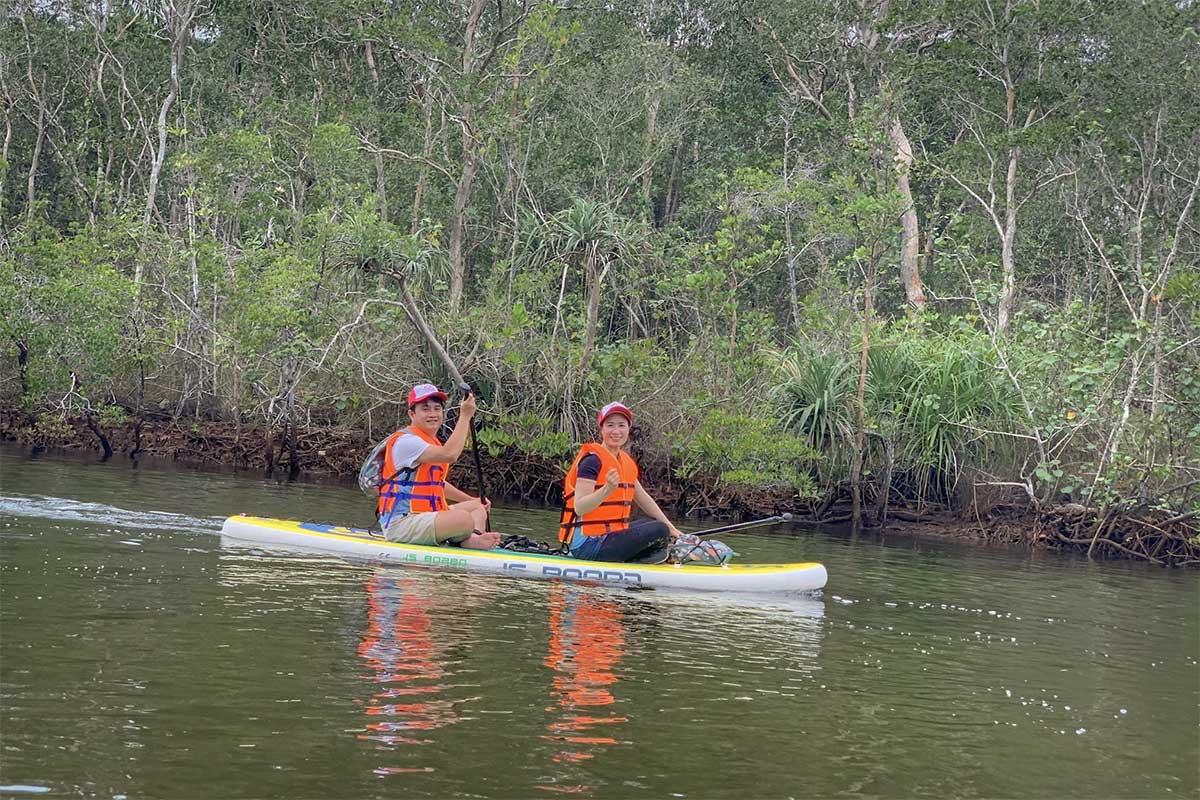
For a gentler nature experience on the edge of the national park, kayaking on the Cua Can River is a relaxing option. The river runs through the northwest of the island and is noticeably quieter than the waterways closer to Duong Dong. The banks are lined with forest and mangroves, and the slow pace makes it easy to take in the surroundings.
It works best as part of a longer day tour combining kayaking with other stops in the north of the island rather than as a standalone activity.
Other trekking options on Phu Quoc
The national park is not the only place to hike on the island. The spine of jungle-covered mountains running along the eastern side of Phu Quoc has several trails that are worth knowing about — particularly for travelers who want proper views and a real physical challenge.
1. Dinh Tien Son Peak
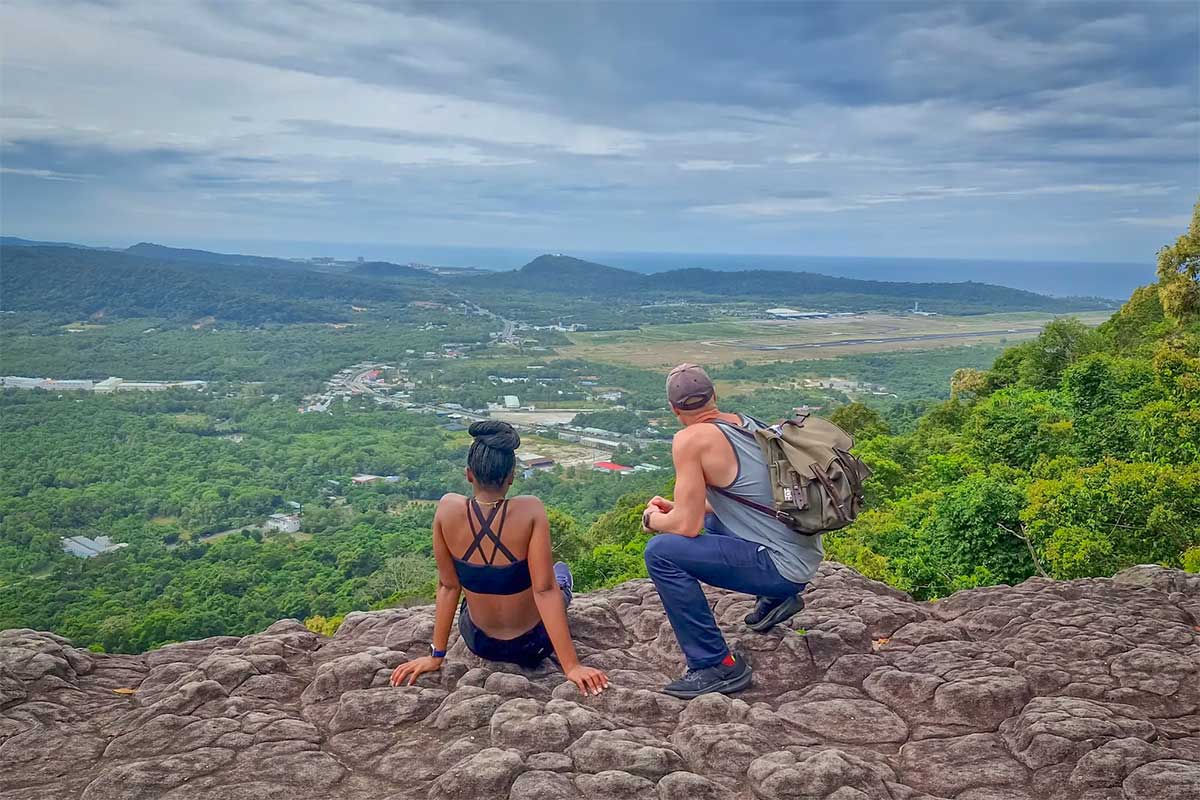
Dinh Tien Son — sometimes called Fairy Mountain Peak — is one of the best independent hikes on the island. The trail climbs steeply through thick rainforest to a cluster of giant boulders at the top, where you get 180-degree views over the southern tip of the island, the airport, and the surrounding sea. It is a short but genuinely rewarding climb.
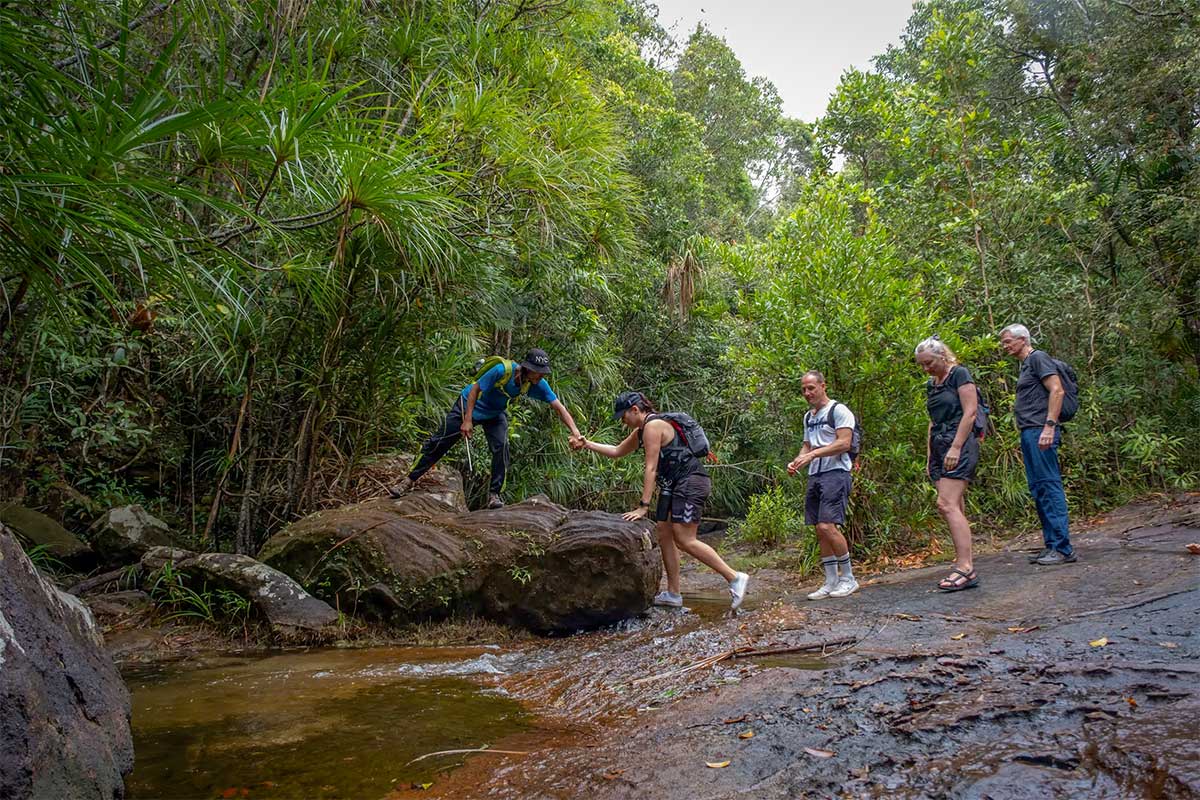
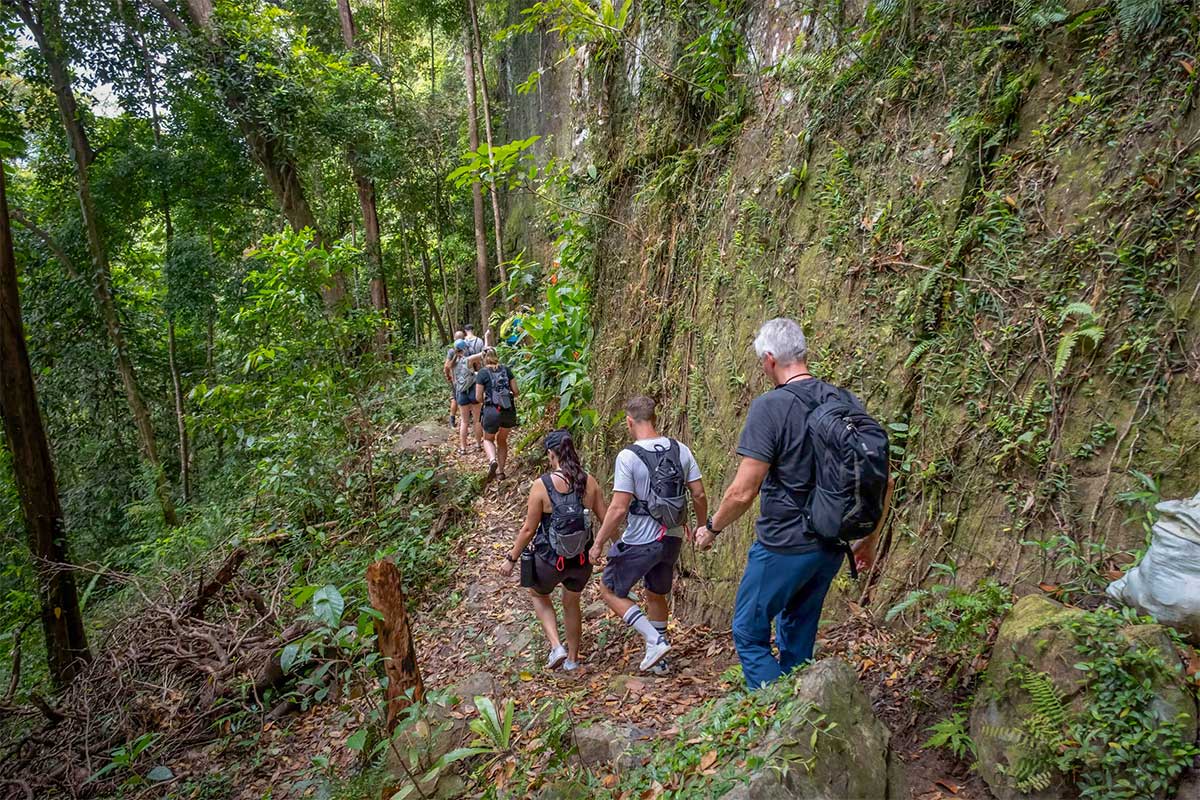
The trailhead starts behind a small cafe called Tien Son Dinh, which is easy to find and charges a small parking fee. No guide is needed, and the trail is well enough marked to follow on your own. That said, guided versions of this trek are also popular and highly rated — a good guide makes a real difference for spotting wildlife and understanding the forest.
The hike takes roughly 1 to 1.5 hours to complete. It is steep in sections with ladders, so a basic level of fitness is needed. Avoid the wet season if possible — the trail gets slippery and the conditions make it less enjoyable.
Practical details:
- Distance: ~2 km round trip
- Difficulty: Moderate
- Guide required: No — but available and recommended
- Cost: Small parking fee at the cafe
- Best time: Dry season (November to April)
For a full trail description and map, the Vietnam Coracle guide to Dinh Tien Son Peak is the most detailed and reliable source available.
2. Nui Da Bac Mountain
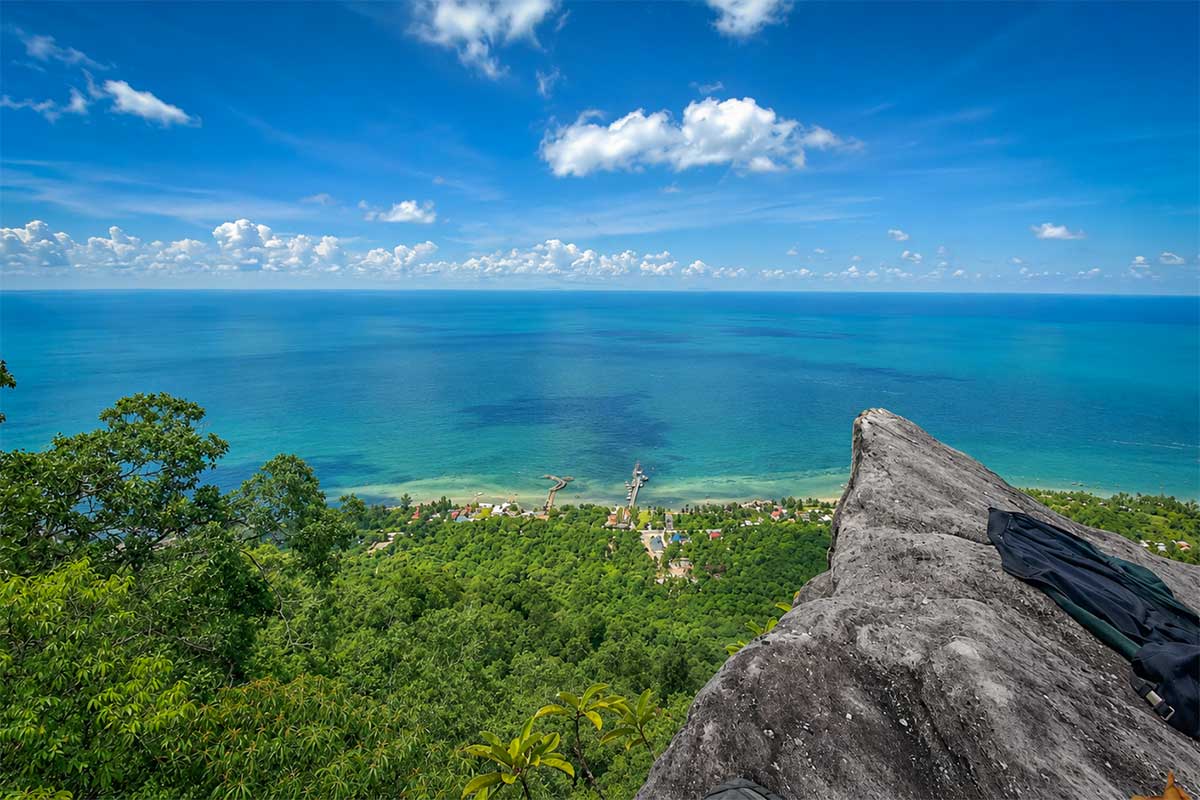
Nui Da Bac is a jungle-clad peak on the eastern flank of the island and one of the quieter hikes on Phu Quoc. The trail takes 2 to 3 hours round trip and finishes at two boulder-capped viewpoints with wide views north over the unbroken green interior of the island. It is the kind of view that reminds you how much of Phu Quoc is still largely untouched.
The trail can be done independently, though the trailhead can be tricky to locate. Bringing a downloaded map or the Vietnam Coracle guide is strongly recommended before heading out. A guide can also be arranged locally.
Go in the dry season. The trail becomes slippery and considerably less safe in the wet months.
Practical details:
- Duration: 2–3 hours round trip
- Difficulty: Moderate
- Guide required: No — but helpful for finding the trailhead
- Best time: Dry season (November to April)
Full route details and a map are available in the Vietnam Coracle guide to Nui Da Bac Mountain.
Practical tips for visiting Phu Quoc National Park
Book a guide in advance
The single most important piece of advice for this visit: do not rely on walk-in access. Entrances to the national park are inconsistently open, and even when they are, guides are not always available on the spot. The safest approach is to book a guided trek before you arrive at the park — either online or through your hotel the evening before.
If you do want to try your luck on the spot, the official walk-in entry point has guides available for 1 km, 2 km, and 5 km routes. The actual meeting point is at a small cafe near the park — not at the official-looking government gate, which is where most people waste time first. Ask your hotel or accommodation to point you in the right direction before heading out.
Best time to visit
The dry season runs from November to April and is the most comfortable time for trekking. Trails are dry, the weather is manageable in the early morning, and you are less likely to encounter the intense humidity that builds through the wet months.
That said, the forest looks its best in the wet season — from May to October — when everything is lush and streams and waterfalls are running at full force. If you do not mind the heat and occasional rain, this is actually a fine time to visit. Just expect muddier trails and more insects.
Avoid the peak dry months of January and February for stream walks — water levels drop significantly and some streams dry up entirely.
Whenever you go, start early. By mid-morning the heat and humidity make trekking considerably less enjoyable. Aim to be on the trail before 8am.
What to bring
The jungle on Phu Quoc is hot, humid, and full of insects. Come prepared:
- Insect repellent — strong, and reapply it. Mosquitoes here are persistent and repellent alone does not always hold them off. Long sleeves and trousers help significantly.
- Decent shoes — not sandals. Trails are uneven, often muddy, and sometimes involve climbing.
- Plenty of water — there is nothing available inside the forest.
- Snacks if you are doing a longer route.
- A raincoat or light poncho if visiting during the wet season.
- Swimwear if your route includes a stream or spring swim at the end.
Safety
The forest is home to snakes, including pit vipers. This is one of the genuine reasons a guide is worthwhile — not just for navigation, but for knowing where to put your feet and how to handle an encounter. That said, serious incidents are rare. Stay on the trail, watch where you step, and do not reach into undergrowth.
Ticks and other biting insects are present. Check yourself after any forest walk.
The terrain on some routes involves ladders and steep climbs. Know your fitness level before booking. The Tien Son Dinh climb in particular is not suitable for people with knee problems or limited mobility.
Accommodation near the national park
There is no reason to stay inside or immediately next to the national park. The area is remote, facilities are minimal, and the park itself does not have enough to fill more than a day. You are better off staying in or near Duong Dong — the main town — and making a day trip into the park from there. All tours pick up from Duong Dong, and the drive to the northern park area takes around 30 to 40 minutes by motorbike or car.
Is Phu Quoc National Park worth visiting?
For beach travelers who have a day to spare and some interest in nature, yes — it is worth it. The forest is genuinely beautiful, the guided treks are well run, and spending a morning in dense jungle is a completely different experience from the rest of what Phu Quoc offers. If you are already on the island for a week, adding one nature day makes sense.
That said, manage your expectations going in. This is not a wildlife destination in the way that Cat Tien or Bach Ma National Park are. You might see monkeys, lizards, or hornbills — but you might not. The main appeal is the forest itself: old-growth trees, the sounds of the jungle, streams and springs, and a side of the island that most visitors never see.
The access situation is the biggest frustration. Entrances are inconsistently open, walk-in visits are unreliable, and the experience of trying to enter independently has left many travelers annoyed and empty-handed. Book a guided tour in advance and this problem disappears entirely. Show up and wing it, and you may well be turned away.
The jeep tour is the easiest entry point for travelers who are not committed hikers — it covers the national park roads, the ancient tree, Rach Vem fishing village, and Starfish Beach in one day without requiring any real physical effort. For those who want a proper trek, the guided jungle walks are genuinely good, and Dinh Tien Son Peak is the most rewarding self-guided hike on the island with views that are hard to beat.
What Phu Quoc National Park is not is a polished eco-tourism destination. Trails are unmaintained, information in English is limited, opening hours are unpredictable, and some of the walk-in guide setups feel disorganised. If you need everything to run smoothly and on schedule, book a reputable tour operator in advance and let them handle the logistics.
Go with the right expectations, and it delivers. Go expecting a national park experience on par with more developed destinations, and you will likely be disappointed.
Phu Quoc National Park is one of the more unusual national parks in Vietnam — raw and unpolished compared to more developed parks elsewhere in the country. For a full overview of which parks are worth visiting and which suit different travel styles, see our guide to the best national parks in Vietnam.