

The underwater world of Phu Quoc
What diving in Phu Quoc is really like
Diving in Phu Quoc is mostly shallow, relaxed, and easy. The water is warm all year, and most dive sites are between 6 and 12 meters deep, with a few deeper spots in the south for more experienced divers.
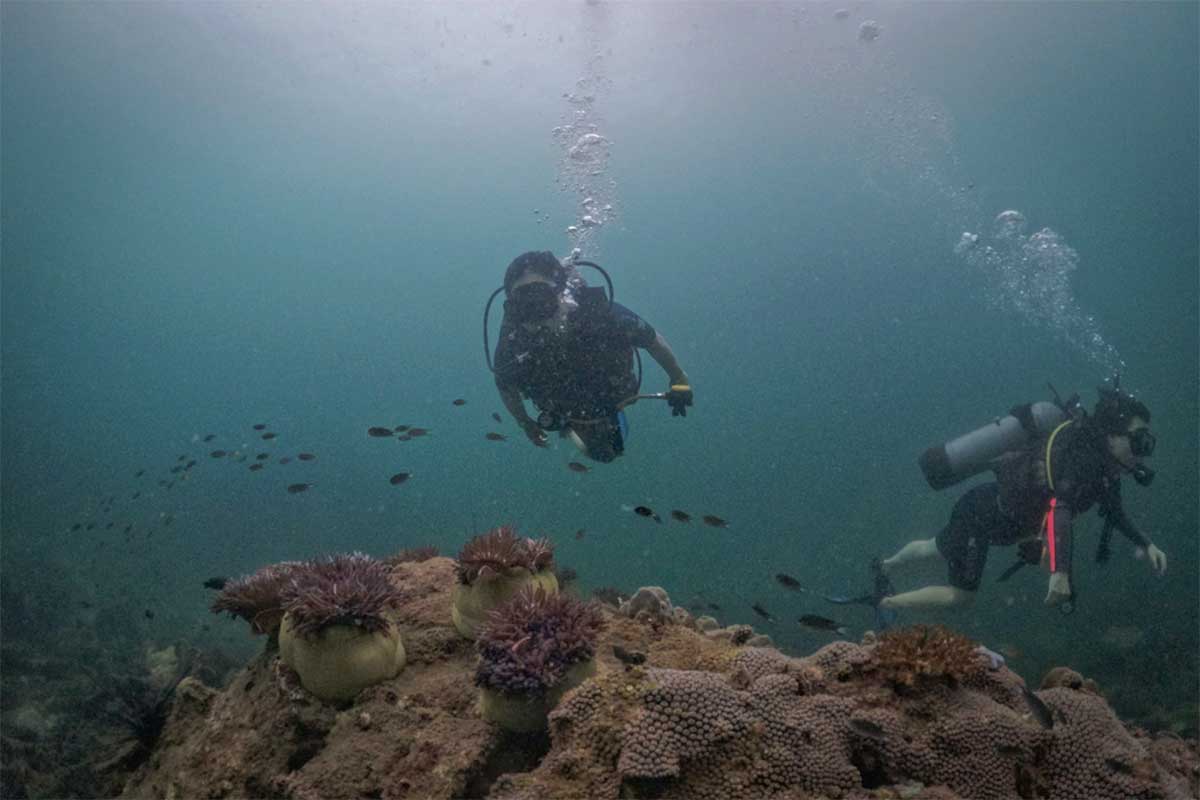
This makes it a good place for beginners, refresher dives, and certified divers who just want an easy, enjoyable dive without strong currents or complicated conditions. It also works well for families and mixed groups, where some people dive and others snorkel.
Phu Quoc is not a destination for big marine life. Instead, it is better known for calm conditions and smaller underwater details.
Coral reefs and underwater scenery
The underwater scenery around Phu Quoc is made up of shallow reefs, coral gardens, and areas with rocks and boulders. You will find both hard and soft coral, as well as anemones and sponges spread across the reef.
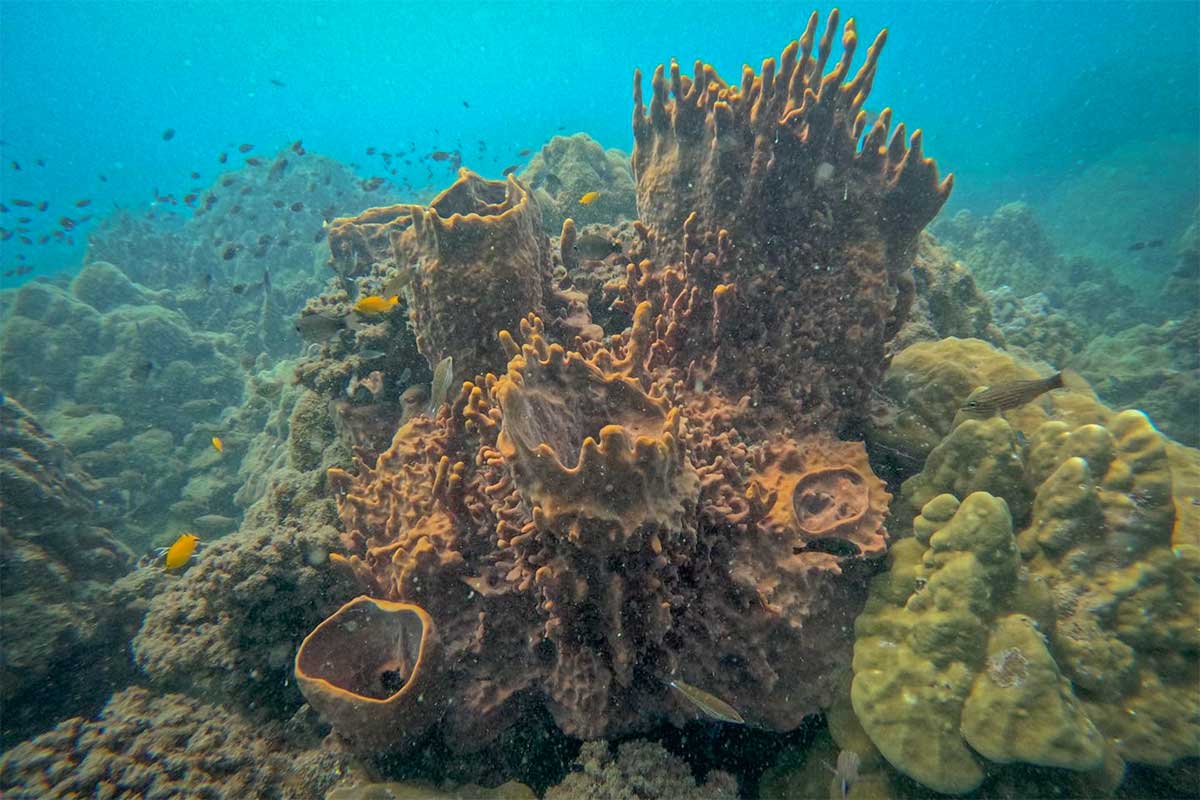
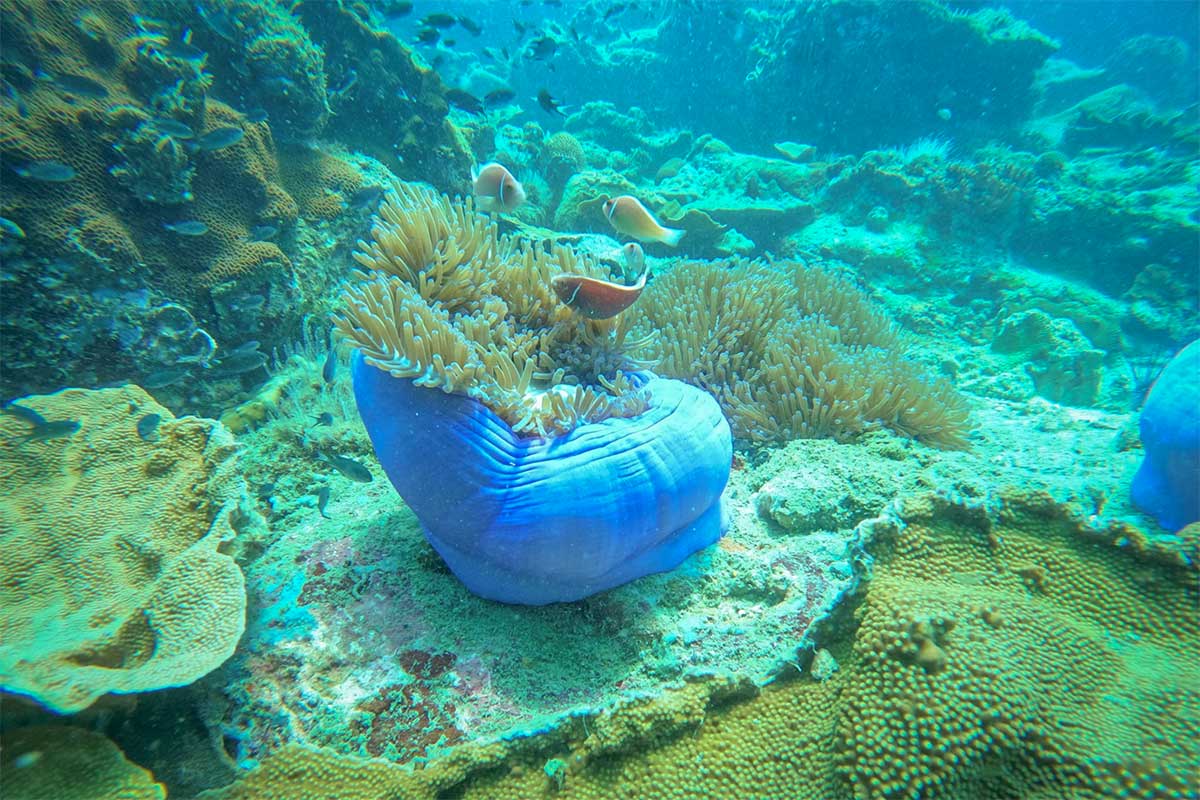
Some dive sites have healthy and colorful coral, especially in the south, while others can look more average. Conditions vary a lot depending on the location, weather, and season.
It is important to keep expectations realistic. Phu Quoc offers enjoyable reef diving, but it is not a world-class coral destination.
Marine life you may see
Most of the marine life in Phu Quoc is small and found close to the reef. If you take your time and look carefully, there is quite a lot to see.
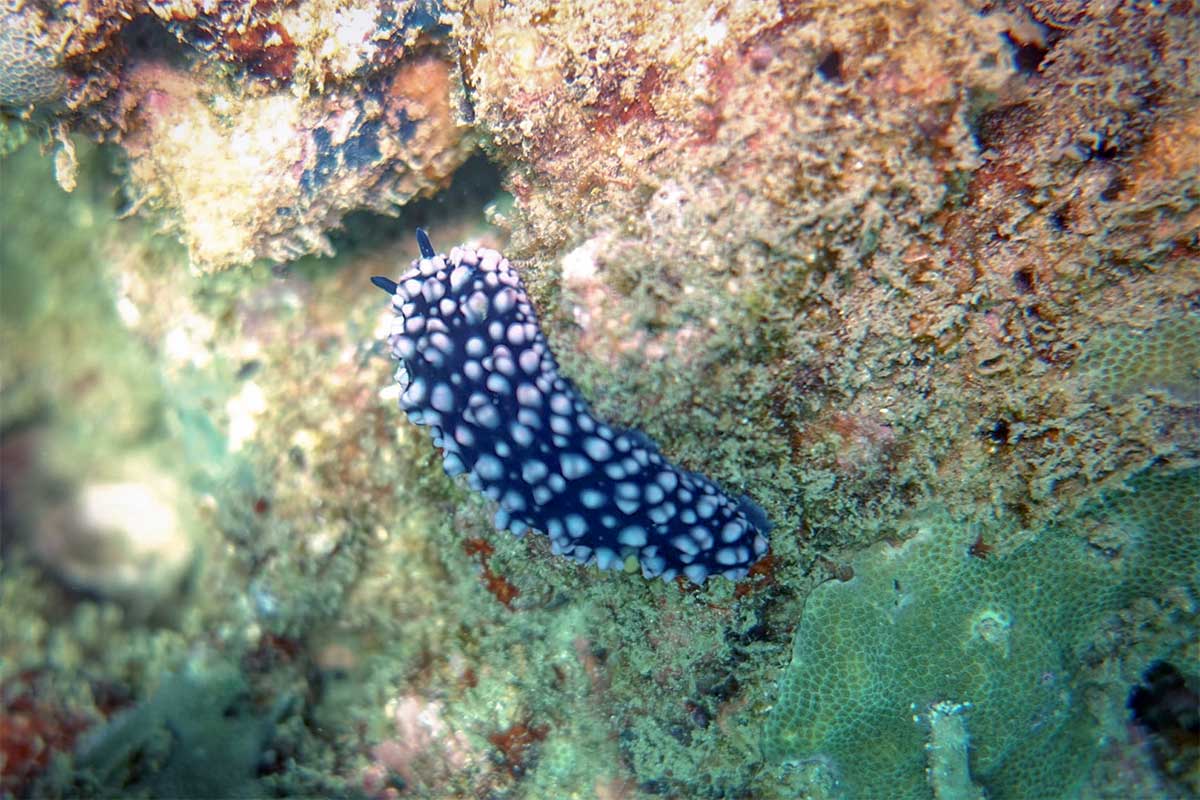
You can expect small reef fish, nudibranchs, pipefish, seahorses, cuttlefish, octopus, scorpionfish, and different types of crabs and shrimps. Moray eels are also seen regularly.
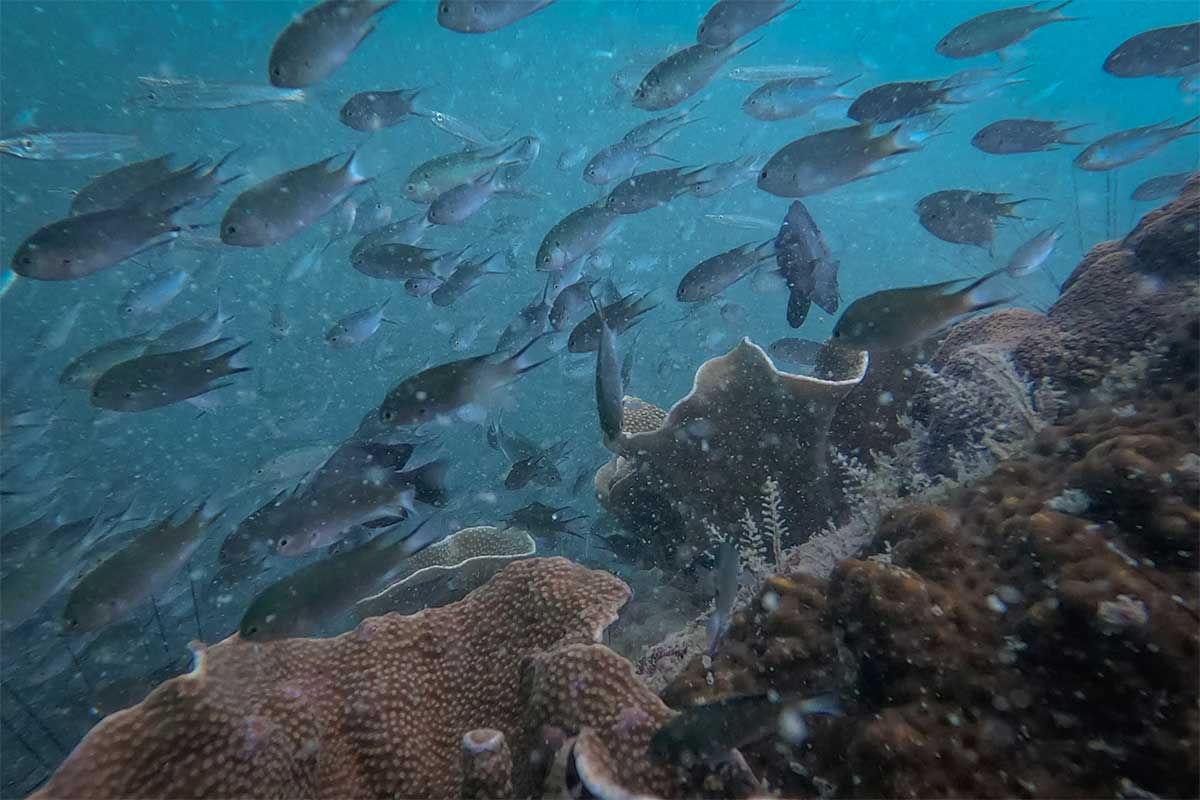
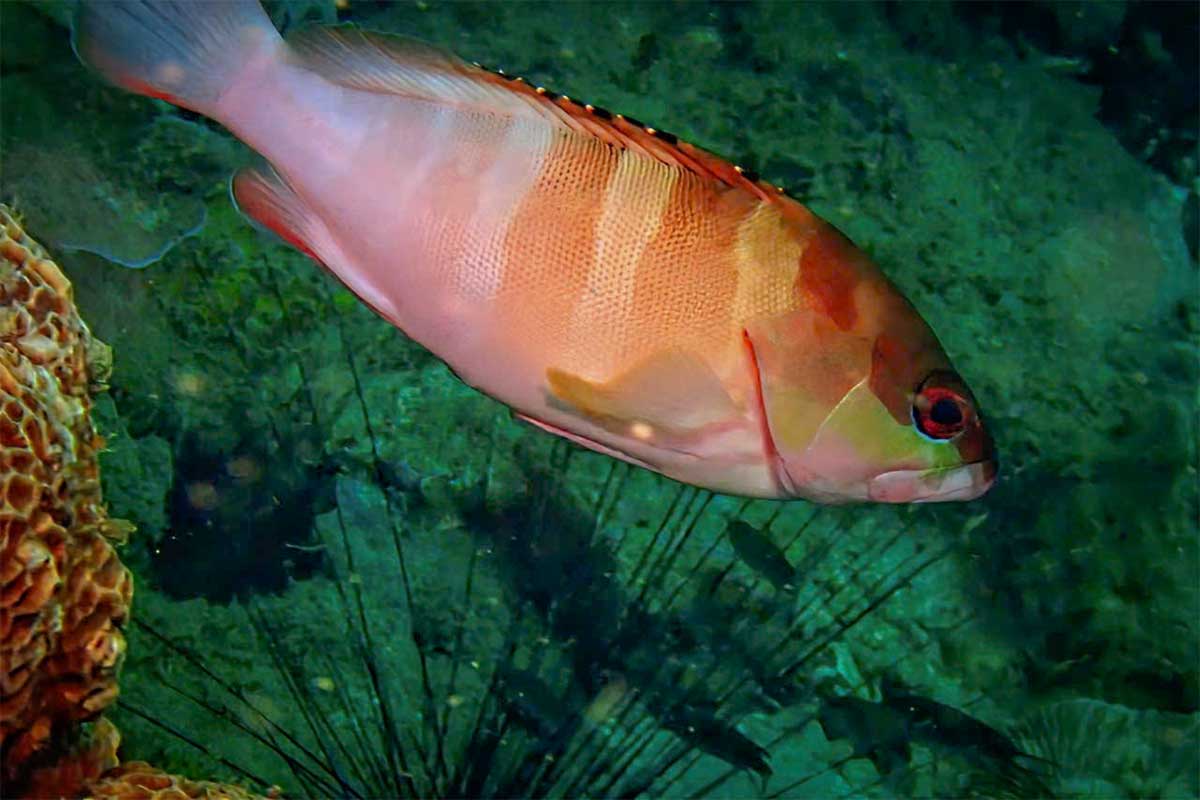
Occasionally, divers spot bamboo sharks, sea snakes, or blue-spotted rays, but these are not guaranteed sightings.
One of the reasons you don’t see many large fish in Phu Quoc is overfishing. Around the island, fishing is still a major local activity, and many species—both big and small—are caught for food. This has reduced the number of larger marine animals on the reefs, which is why most dives focus on smaller species rather than big fish.
What you should not expect
You should not expect to see turtles just because a dive site is called Turtle Island. Sightings are rare.
Also, do not expect large sharks, manta rays, or big schools of pelagic fish. There are no deep walls or dramatic drop-offs like in some famous dive destinations.
Visibility can also be inconsistent. Even during the main diving season, it can vary from quite good to only a few meters.
Phu Quoc diving is best enjoyed for what it is: relaxed, shallow reef diving with coral and small marine life, not big underwater highlights.
Diving in Phu Quoc compared to other places in Vietnam
Diving in Phu Quoc is quite different from other dive destinations in Vietnam, and it helps to know this before you plan your trip around it.
Compared to diving in Con Dao, Phu Quoc is much easier to access and more beginner-friendly. Con Dao feels more remote and protected, with a stronger marine park atmosphere and better chances for larger marine life. However, diving conditions there can be more seasonal and less predictable, and getting there takes more effort.
Diving in Nha Trang is the most established destination in Vietnam, with a larger number of dive centers, more structured operations, and a wider choice of courses and dive trips. It is often a better choice if diving is your main focus, while Phu Quoc works better as part of a beach holiday where diving is just one of the activities.
Whale Island offers a quieter and more nature-focused experience. It is known for relaxed diving and macro life, similar in some ways to Phu Quoc, but with a more secluded setting and fewer crowds.
Around Hoi An and the Cham Islands, diving is more seasonal and usually combined with a visit to central Vietnam. It can be a nice add-on, but it is not as consistently available or as easy to arrange year-round as in Phu Quoc.
Phu Quoc stands out as the most convenient option for easy holiday diving. It is best for first-time divers, families, and travelers who want to combine diving with beaches, island hopping, and a relaxed travel schedule, rather than focusing purely on diving.
If you want to see how Phu Quoc compares to other dive destinations in more detail, you can read our guide about the best diving in Vietnam, where we compare all the main locations and what they are best for.
Best diving season for Phu Quoc
The main diving season in Phu Quoc runs roughly from October or November to April or May. In general, the best period is between November and April, when the sea is calmer and dive trips are more consistent. Water temperature stays warm all year, usually around 28 to 31°C, so you don’t need to worry about cold conditions.
During the rainy season, the sea can become rough, with more wind and lower visibility, which can affect both safety and overall diving experience. That said, even in the dry season, visibility is not always perfect and can change from day to day. Dive centers usually decide whether to go north or south based on the conditions, so if diving is important for your trip, it’s best to plan within the main season and stay flexible with your schedule.
Best dive sites in Phu Quoc
Diving in Phu Quoc is split into two main areas: the north-west of the island and the southern islands around An Thoi. Most dive trips will go to one of these areas depending on weather and sea conditions.
The north is usually more sheltered, which makes it a safer and easier option when the sea is rough. However, it has fewer dive sites and less variety. The south has a wider choice of dive sites and is often considered the better area overall, but it is more exposed and conditions can change quickly.
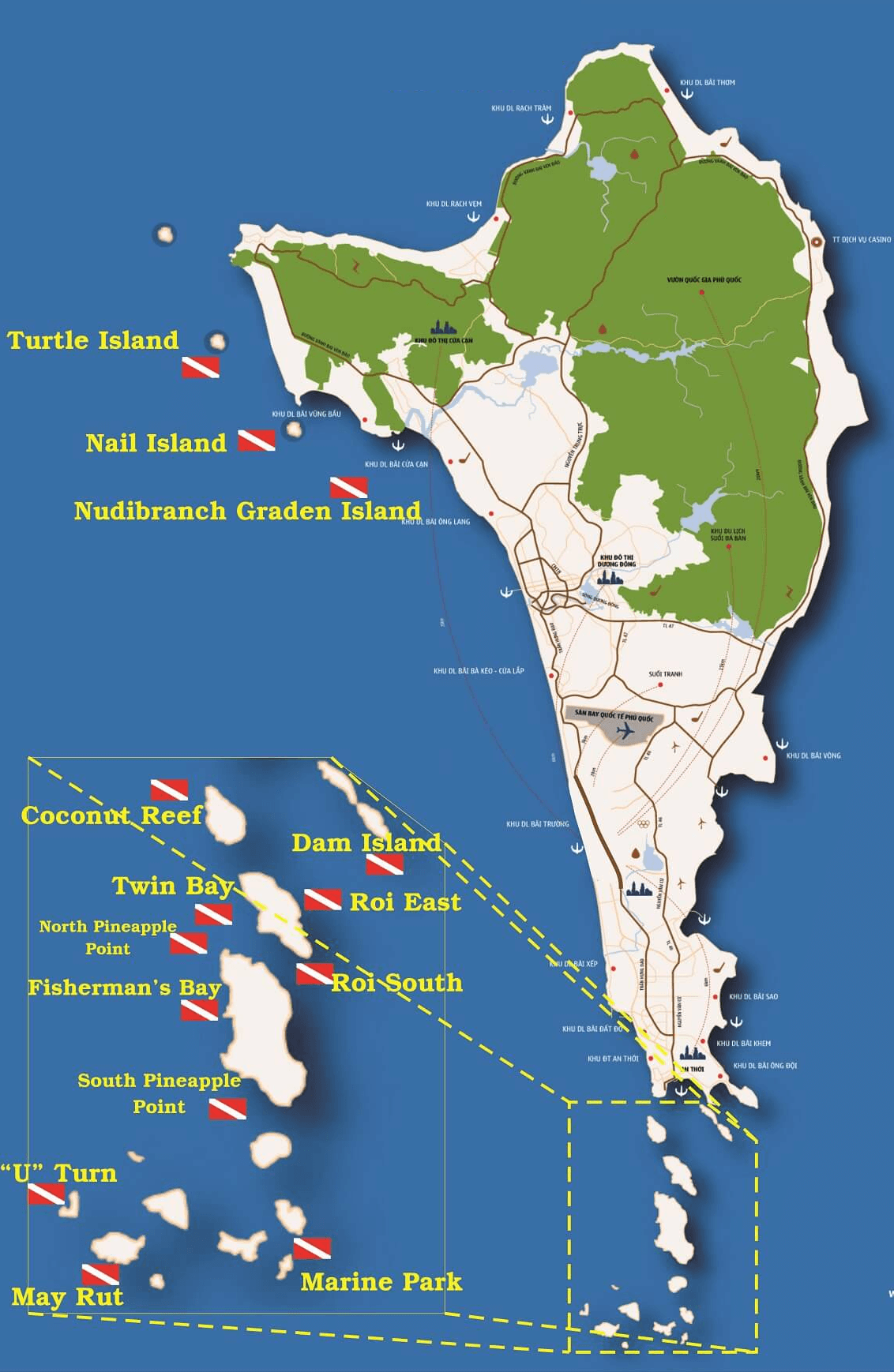
North dive sites
Turtle Island
Turtle Island is one of the most well-known dive sites in the north of Phu Quoc. It is a shallow reef that works well for both divers and snorkelers, making it a common stop on many dive trips.
You will find coral, small reef fish, anemones, and a range of macro life such as nudibranchs and pipefish. With some luck, you might also spot seahorses.
It is a good site for beginners because of the depth and generally calm conditions. Just don’t expect to see actual turtles here, despite the name.
Nudibranch Garden
Nudibranch Garden is a shallow site focused on macro life. It is especially interesting for divers who enjoy looking for small and often well-hidden marine creatures.
The area has coral and rock formations where nudibranchs and other small reef species can be found. This is not a site for big scenery or large fish, but rather for slow, careful diving and spotting details.
If you like taking your time and observing the reef closely, this can be one of the more rewarding sites in the north.
Nail Island
Nail Island offers a mix of shallow reef, sandy areas, and scattered rock formations. This combination creates many hiding places for small marine life.
It is a good place to look for creatures like octopus, shrimp, pufferfish, and other reef fish. The sandy patches can also be interesting if you move slowly and pay attention.
Diving here is usually relaxed and suitable for most levels, depending on the conditions of the day.
South dive sites
May Rut Trong
May Rut Trong is one of the more popular dive and snorkeling spots in the south. The reef is shallow and easy to explore, which makes it suitable for both divers and snorkelers on the same trip.
You can expect coral, reef fish, and generally relaxed conditions when the area is sheltered from wind and current. It is a good choice for mixed groups where not everyone is diving.
May Rut West
May Rut West offers a bit more variation compared to some northern sites. The underwater landscape includes coral formations and rock structures that make the dive more interesting.
You may see small reef life, and sometimes sea snakes, depending on the conditions. Like most southern sites, the experience depends on weather and currents, which can change quickly.
Roi East / Roi South
The Roi dive sites are known for calmer reef areas with a mix of coral, boulders, and sandy patches. They are good places to spot smaller marine life such as shrimp, cuttlefish, and other macro species.
These sites are best for divers who enjoy moving slowly and searching around coral and rocks rather than looking for big fish or dramatic scenery.
Dam Ngoai
Dam Ngoai is a shallow reef with coral and small marine life. It is often used as a backup option when conditions in other areas are not ideal.
Diving here is usually relaxed and straightforward, making it suitable for most divers. It is not a challenging site, but it can still be enjoyable if you focus on the smaller details.
Dragon Rock
Dragon Rock is one of the more interesting dive sites in the south. It features large boulders covered with soft and hard corals, creating a more structured underwater landscape.
You can expect angelfish and other reef fish, along with a good variety of coral life. This site is better suited for certified divers who want a bit more depth and variety compared to the easier shallow reefs.
Pineapple Point / South Pineapple Point
Pineapple Point, especially the southern area, is one of the deeper and more challenging dive sites around Phu Quoc. Depth can reach significantly deeper than most other sites on the island.
Stronger currents are possible here, which makes it more suitable for experienced divers or those with an Advanced Open Water certification.
Because of the conditions, this site is not always available and depends on the weather and sea state on the day.
Diving options in Phu Quoc
Fun dives for certified divers
For certified divers, the most common option is a full-day trip with usually two dives. Most dive centers include equipment, lunch on the boat, and hotel transfers.
Dive sites are chosen on the day based on weather, sea conditions, and the level of the divers in the group. Good operators will group divers by experience level, which makes the dives safer and more enjoyable.
Try diving / Discover Scuba Diving for beginners
If you have never dived before, you can join a try dive or Discover Scuba Diving program. No license is required.
These programs usually include a short briefing, basic skills practice, and close supervision by an instructor during the dive. The minimum age is often around 10 years for PADI Discover Scuba Diving.
It is a good option if you want to experience diving without committing to a full course.
PADI courses in Phu Quoc
Phu Quoc offers a full range of PADI courses, from beginner to more advanced levels.
The most common courses are Open Water Diver, Advanced Open Water, and Rescue Diver. Refresher programs like ReActivate are also available, and some centers offer specialty courses and even divemaster-level training.
Because the water is warm and many dive sites are shallow, Phu Quoc is a comfortable place to learn diving, especially for beginners.
Refresher dives
If you have not dived for a year or longer, a refresher dive is highly recommended.
This can be done in a pool or shallow water before going out on the boat. It helps you get comfortable again with the equipment and basic skills.
For many divers, this makes the actual dives much more relaxed and enjoyable.
Snorkeling for non-divers
Snorkeling is often offered on the same boats as diving trips, which makes it easy for couples, families, or mixed groups to join together.
The quality of snorkeling depends a lot on the dive site and visibility on the day. Some locations are shallow and suitable, but if visibility is poor, snorkelers may not see much.
It is a good option, but expectations should be realistic.
Private diving and private divemaster options
Some dive centers offer private boats or the option to hire a private divemaster.
This is useful for photographers, nervous divers, families, or anyone who prefers a slower pace without being part of a group. A private guide can also help you spot more small marine life that you might otherwise miss.
Boat dives vs shore dives
Most diving in Phu Quoc is done from boats. You will usually be picked up from your hotel, transferred to the harbor, and then travel by boat to the dive sites.
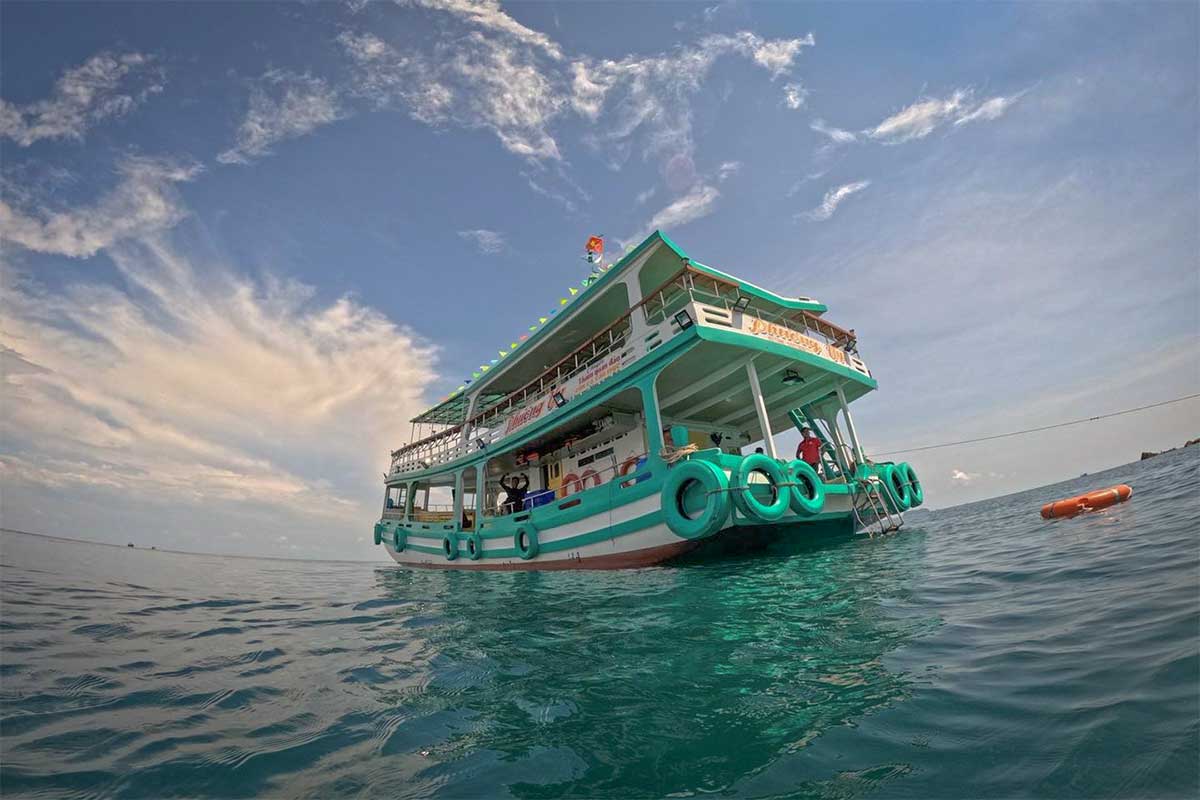
Shore diving is not a common option for most travelers. Expect a day that includes transport and time on the water rather than quick, easy access from the beach.
Recommended diving centers in Phu Quoc
There are several dive operators on the island, and most offer similar trips and courses. This is not a full ranking of every company, but these are some of the main names you are likely to come across when researching diving in Phu Quoc.
Vietnam Active Phu Quoc
Vietnam Active is a PADI 5 Star Dive Resort and one of the more professional and structured options on the island. It is a strong choice for beginners, certified divers, and travelers who want a well-organized experience.
They offer a full range of options, including PADI courses, Discover Scuba Diving, fun dives, private diving, and snorkeling. The focus is on small groups and clear instruction, which makes it especially suitable if you are new to diving or want a more guided experience.
Flipper Diving Club
Flipper Diving Club is one of the longest-established dive operators in Phu Quoc, active since 2009. It is a well-known name on the island and offers trips to both the north and south dive areas. They cater to a wide range of travelers, from beginners and families to certified divers and those taking PADI courses.
Rainbow Divers
Rainbow Divers is an important name in Vietnam’s diving scene. Founded in 1996, it is one of the longest-established PADI dive operators in the country and played a big role in developing recreational diving in Vietnam.
In Phu Quoc, they do not operate in the same way as in places like Nha Trang or Whale Island, but instead work with and support a local PADI partner.
What a typical diving day in Phu Quoc looks like
A diving day in Phu Quoc usually starts with a pick-up from your hotel or a meeting point in the morning. Depending on where you stay, the transfer to the harbor can take around 30 to 60 minutes.
From the harbor, you take a boat to the dive area. During the ride, there is usually a briefing about the dive sites and time to set up your equipment. Once at the first site, you will do your first dive, which typically lasts around 40 to 60 minutes depending on your air consumption and the conditions.
After the first dive, there is a surface interval where you can relax on the boat. This is followed by a second dive at another site. Most trips include two dives in total.
Lunch is usually served on board after the dives, and then the boat heads back to the harbor. You are typically back at your hotel in the early or mid-afternoon. If you go to the southern dive sites, expect a longer day because of the distance.
It is good to bring some patience. Diving trips often include a mix of certified divers, beginners, students, and snorkelers, which can make the day feel a bit slow at times. Once you are in the water, things usually run much smoother.
Things you need to know before diving in Phu Quoc
Visibility can be unpredictable
Visibility in Phu Quoc can change a lot. Some days it can be quite good, while other days it may only be around 3 to 7 meters.
Do not book your dives expecting clear blue tropical water every day. Even in the main diving season, conditions are not always perfect.
That said, diving can still be enjoyable if you like coral and small marine life and don’t rely on long-distance visibility.
Flying after diving
This is important because many travelers fly from Phu Quoc to their next destination shortly after diving.
As a general rule, you should wait at least 12 hours after a single no-decompression dive, and 18 to 24 hours after multiple dives or multi-day diving.
Always follow the advice of your dive computer, instructor, and dive organization.
Dive insurance
Regular travel insurance does not always cover scuba diving, especially at certain depths or for certified diving activities.
Before diving, check your insurance policy carefully. Look at depth limits, certification requirements, and whether emergency evacuation is included.
Dive-specific insurance is recommended, especially if you plan to dive multiple days.
Do a refresher if you feel rusty
Many people try diving in Phu Quoc after not diving for a long time.
A refresher session helps you get comfortable again with your equipment and basic skills, which makes your dives safer and more enjoyable.
This is especially useful if visibility is low or if there is some current.
Bring your certification card or digital proof
If you are a certified diver, you should bring proof of your certification, either as a physical card or in digital form.
Without it, dive centers may limit you to beginner-style programs or require additional checks before allowing you to join fun dives.
Bring your own mask if comfort matters
Most dive centers provide rental equipment, including masks.
However, your own mask will usually fit better and be more comfortable, especially if you have specific needs like prescription lenses.
It is a small detail, but it can make a noticeable difference during your dives.
Do not compare Phu Quoc with top global dive destinations
Phu Quoc is good for holiday diving, but it is not comparable to top global dive destinations like Raja Ampat, Komodo, the Maldives, or the Red Sea.
You will not find the same level of biodiversity, big marine life, or visibility.
Phu Quoc is best enjoyed for what it offers: warm water, easy access, shallow reefs, beginner-friendly conditions, and interesting small marine life.
Is diving in Phu Quoc worth it?
Diving in Phu Quoc is worth it if you are a beginner, want to try scuba diving for the first time, are traveling with family, need an easy refresher, or simply enjoy relaxed shallow reef dives with coral and small marine life. It is also a convenient way to add an underwater experience to a beach holiday without having to travel to a dedicated dive destination.
It is not worth planning your entire Vietnam trip around diving in Phu Quoc if you are an experienced diver looking for deep walls, big marine animals, crystal-clear visibility, or world-class dive sites. For more serious diving, places like Con Dao, Nha Trang, or Whale Island are usually better options depending on the season. Phu Quoc is best seen as easy, warm, and accessible holiday diving rather than one of Vietnam’s most spectacular dive destinations.