

Ninh Binh: Halong Bay on land
Ninh Binh is a region of limestone karst mountains rising straight out of rice fields, rivers and wetlands in northern Vietnam — the same dramatic scenery as Halong Bay, but on land. It was Vietnam’s capital more than 1,000 years ago, so alongside the nature there are ancient temples, pagodas and the ruins of the old citadel at Hoa Lu. The core of it, the Trang An landscape, is a UNESCO World Heritage Site.

One thing to understand early: “Ninh Binh” really means the countryside a few kilometres west of the city of the same name, spread across villages like Tam Coc and Trang An. There’s no single old town to wander on foot — the sights are scattered across the valleys, so you explore by boat, bike or scooter. Most of the best things to do in Ninh Binh fall into three groups: the boat tours, the Mua Cave viewpoint, and the temples and countryside in between.
What the 2025 merger with Ha Nam and Nam Dinh means
In mid-2025 Vietnam reorganised its provinces, and on 1 July the old Ninh Binh merged with its two northern and eastern neighbours, Ha Nam and Nam Dinh, into one larger province. It kept the name Ninh Binh, with its administrative centre at Hoa Lu. For travelers this changes very little on the ground: the scenery, the sights and the name everyone still uses are exactly as before.
The two former provinces have their own character. Ha Nam, just to the north, is best known for the enormous lakeside Tam Chuc Pagoda and the quieter Dia Tang Phi Lai Pagoda, around its capital Phu Ly. Nam Dinh, stretching east to the coast, leans more toward history and tradition than tourism, with the old Tran dynasty temples, Mother Goddess sites and a long run of quiet beaches.
Because most people still think of this whole area simply as “Ninh Binh,” and because these places sit a fair distance apart, we’ve kept Ha Nam and Nam Dinh in their own guides rather than folding them in here. That keeps this guide focused on the karst-and-rice-fields heartland most travelers actually come for, while the others cover their own ground in full.
- Read more in our guide to things to do in Ha Nam.
- Read more in our guide to things to do in Nam Dinh.
Best things to do in Ninh Binh
The sights here are spread across the countryside, and the best things to do range from the two famous boat tours and the Mua Cave climb to quiet temples, a national park and a wetland full of birds. The big highlights fit into a couple of days; the rest reward a longer, slower stay. Here they are, with honest notes on which are worth your time.
1. Take the Trang An boat tour

The Trang An boat tour is the best of all the things to do in Ninh Binh if you only do one. It’s a two- to three-hour row through a chain of lakes, river caves and karst peaks, stopping at a few old temples, all inside the UNESCO-listed Trang An complex. It’s the best-run boat tour in Ninh Binh, with fixed official prices and, unlike Tam Coc, no pushy selling or pressure for tips mid-ride. Tickets are 250,000 VND per adult, and each boat takes four people.
There are three routes. Route 1 is the longest and quietest, heavy on caves and raw scenery. Route 2 is the balanced, most popular one and passes the Kong: Skull Island film set. Route 3 focuses on temples and gets the busiest. Go early morning or from mid-afternoon to dodge the crowds and midday heat, and bring sun cover, as there’s no shade on the water. For how the options stack up, see our guide to which boat tour is best in Ninh Binh.
2. Climb to the Mua Cave viewpoint
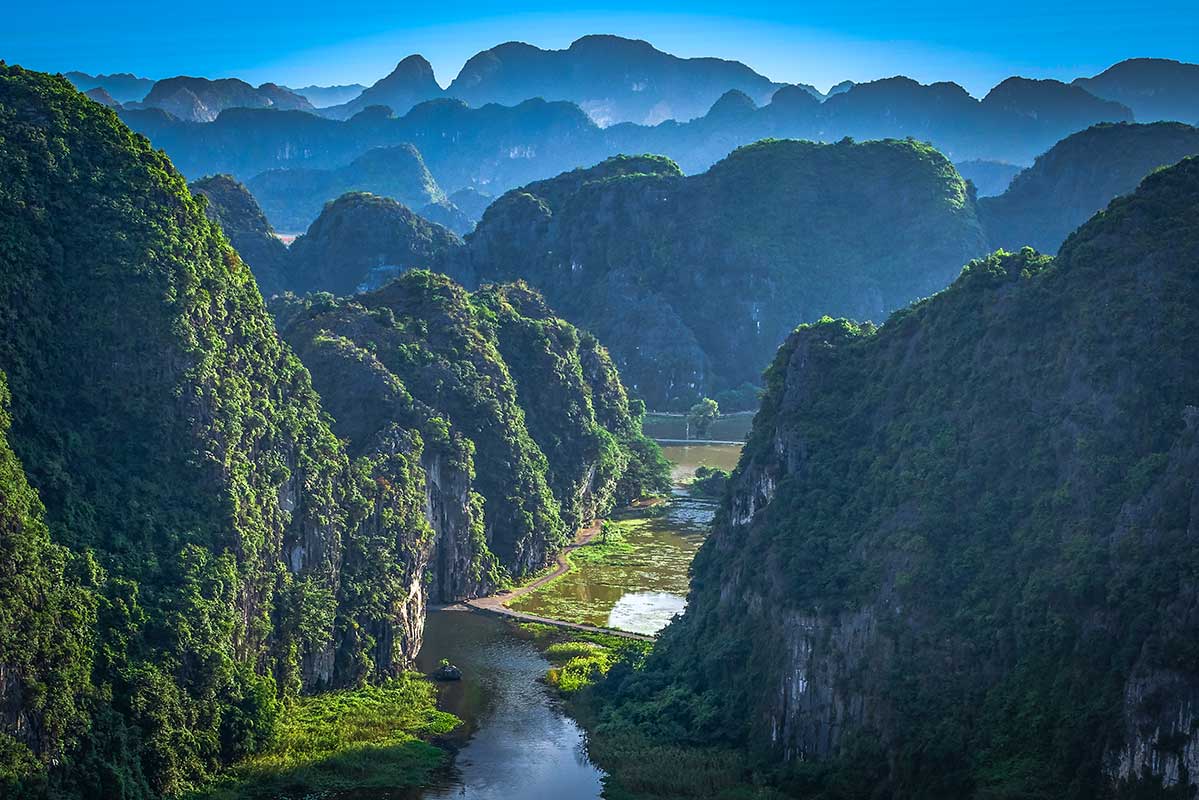
Climbing to the Mua Cave viewpoint is one of the most popular things to do in Ninh Binh, and the photo you’ve probably already seen: limestone peaks stretching to the horizon with the Tam Coc river curling below. The cave at the bottom is minor — the reason to come is the climb. Around 500 steep stone steps lead up the ridge and split near the top into two peaks, one with a dragon statue, one with a small pagoda.

The left path, up to the dragon on Lying Dragon Mountain, has the classic karst-and-river view; the right looks over the lily pond and valley. If you only do one, take the left. Entry is 100,000 VND and it opens early. Come before about 9 to 10am, or it gets crowded — and it’s very busy at sunset, when the top of the dragon is almost impossible to reach. The steps are uneven with little to hold onto near the top, so wear proper shoes and skip it after heavy rain.
3. Cycle through the countryside

Cycling is the best way to see Ninh Binh and one of the most enjoyable things to do here. The land is flat, traffic on the small roads is light, and within minutes of Tam Coc or Trang An you’re rolling past rice fields, lotus ponds, grazing goats and little temples. Many hotels and homestays lend basic bikes for free, and you can rent better bikes or e-bikes in town. There’s more in our guide to cycling in Ninh Binh.
A practical note: the free hotel bikes are single-speed cruisers, fine for short flat loops but hard work further out. If you’re heading any distance, an e-bike or a rented mountain bike is far more comfortable — plenty of couples end up stranded and grumpy on a wobbly basket bike miles from town. Avoid the big motorways that Google Maps loves to suggest; the back lanes through the rice fields are quieter, safer and far prettier.
4. Visit Cuc Phuong National Park
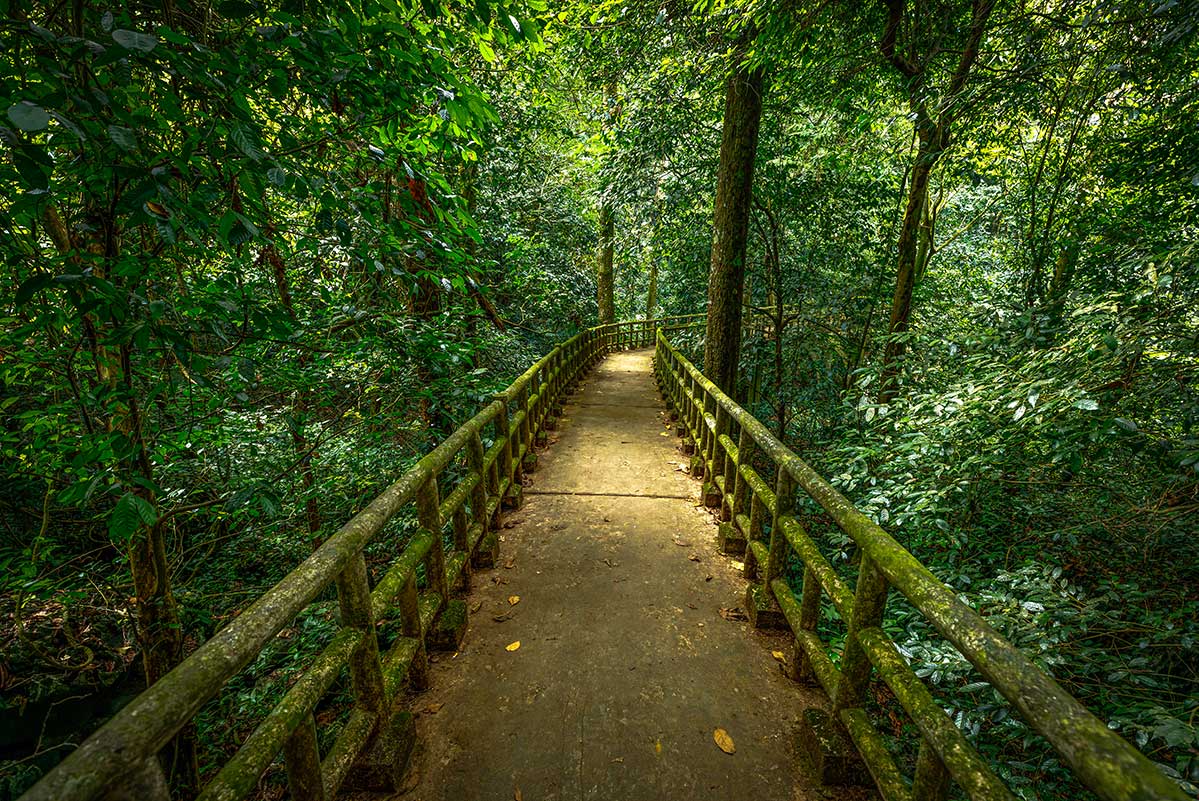
Cuc Phuong is Vietnam’s oldest national park, a vast stretch of old-growth rainforest about 1.5 to 2 hours from the Tam Coc area. The big draw is the Endangered Primate Rescue Center, where rescued langurs, gibbons and lorises are bred and rehabilitated — genuinely worthwhile, and home to species you won’t see elsewhere. There are also turtle and pangolin conservation centres, trails to a 1,000-year-old tree, prehistoric caves and a night safari.
Park entry is around 60,000 VND, with a small extra fee for the primate centre. It’s far enough out to be a half- or full-day trip on its own, best by private car or scooter or on an organised day tour. It’s worth it if you have a spare day and care about nature and conservation, but skip it if you’re tight on time, since the rest of Ninh Binh is much closer together. Bring water, and expect leeches in the wet months.
5. Take the Tam Coc boat tour
Tam Coc is the original Ninh Binh boat tour and the most photographed, especially when the rice along the Ngo Dong river turns gold. It’s a 1.5- to 2-hour row through three river caves and between karst cliffs, and it starts right in Tam Coc town, so it’s the most convenient. Tickets are 250,000 VND, and the boats are famously rowed by foot.

Be straight with yourself before booking: Tam Coc has a long-standing reputation for hassle. Rowers and floating vendors may push you to buy drinks or snacks — sometimes sold back to the seller afterwards — or press for a big tip. It’s still beautiful, but if you only want one boat tour and dislike that kind of pressure, Trang An is the calmer choice. If you do both, do them on the same day, as they’re 20 minutes apart. The small Thai Vi Temple sits nearby and makes an easy add-on.
6. Explore the Hoa Lu ancient capital
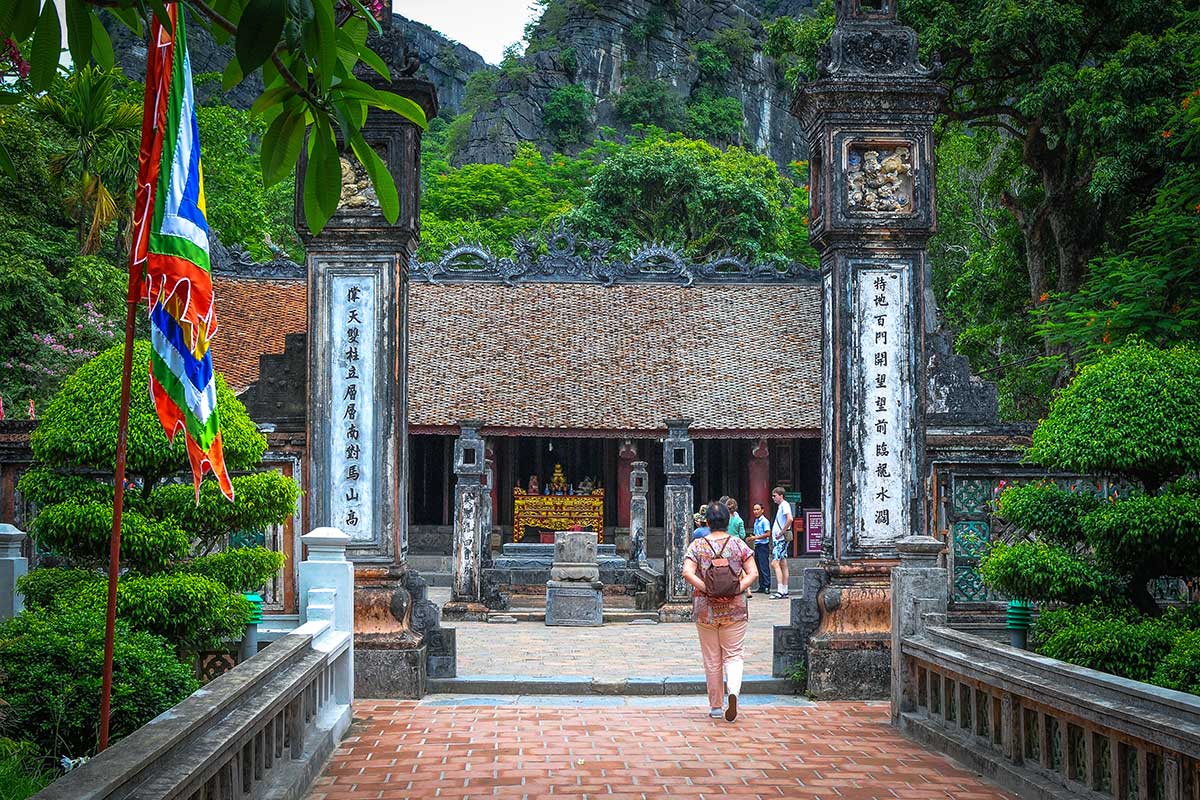
The ancient capital of Hoa Lu was Vietnam’s seat of power in the 10th and 11th centuries under the Dinh and early Le dynasties, set in a dramatic ring of limestone mountains. Today two restored temples honour the old kings, and a short climb behind them leads to a royal tomb and a view over the valley.
Be realistic about what’s here: most of the original citadel is long gone, so unless you’re into Vietnamese history it’s more a pretty, peaceful stroll than a major sight, and an hour is plenty. Its real value is location — it sits right by Trang An, so the two are easy to combine. A good guide brings the history alive; without one, it can feel a little flat.
7. See Bai Dinh Pagoda
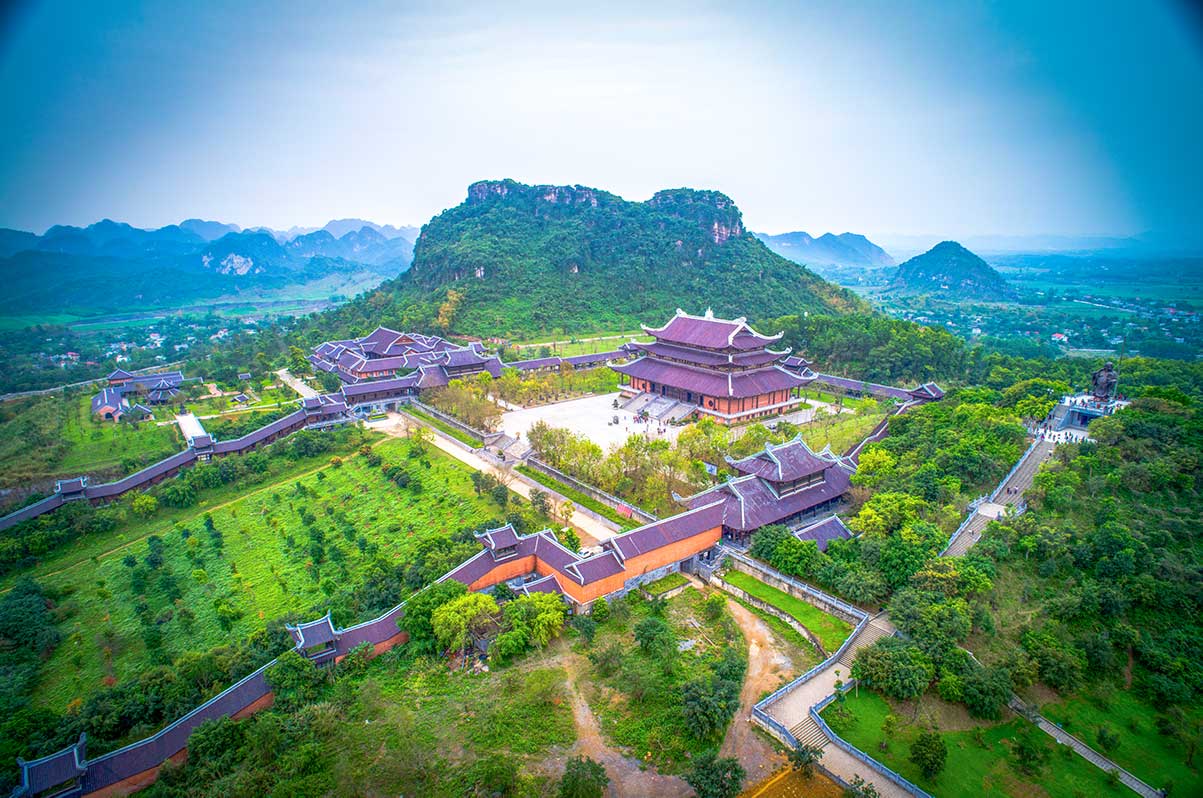
Bai Dinh is the largest Buddhist complex in Vietnam: an enormous hillside of temples, corridors lined with hundreds of stone arhat statues, and giant bronze Buddhas. The highlight is the Bao Thien Stupa, with an observatory near the top giving 360-degree views over the whole site.
Manage expectations: almost all of it is newly built, finished in the last 20 years, and with the shuttle buggies it can feel a bit like a religious theme park. Some travelers find it impressive for sheer scale, others underwhelming for the lack of age. Entry is free, but ticket packages (around 100,000 to 300,000 VND) cover the shuttle and stupa — the 150,000 VND option gets you into the stupa if you’re happy to walk the rest. It’s huge, so allow a couple of hours.
8. Drift through Van Long Nature Reserve

Van Long is the quiet, wild alternative to the big boat tours — a calm wetland about 30 minutes north of Tam Coc, poled across in a flat boat in near silence. It’s the best place here for wildlife: herons, kingfishers and other birds, and it’s one of the few homes of the rare Delacour’s langur, which you might hear or spot on the cliffs.
The scenery isn’t quite as dramatic as Trang An, and it’s far less developed — which is exactly the point. When the big tours have dozens of boats out, this place has almost none of the crowds or selling. Tickets are around 100,000 VND for a roughly 1.5-hour trip. Come early morning or late afternoon for the best light and the most active wildlife.
9. Walk the Thung Nham Bird Garden
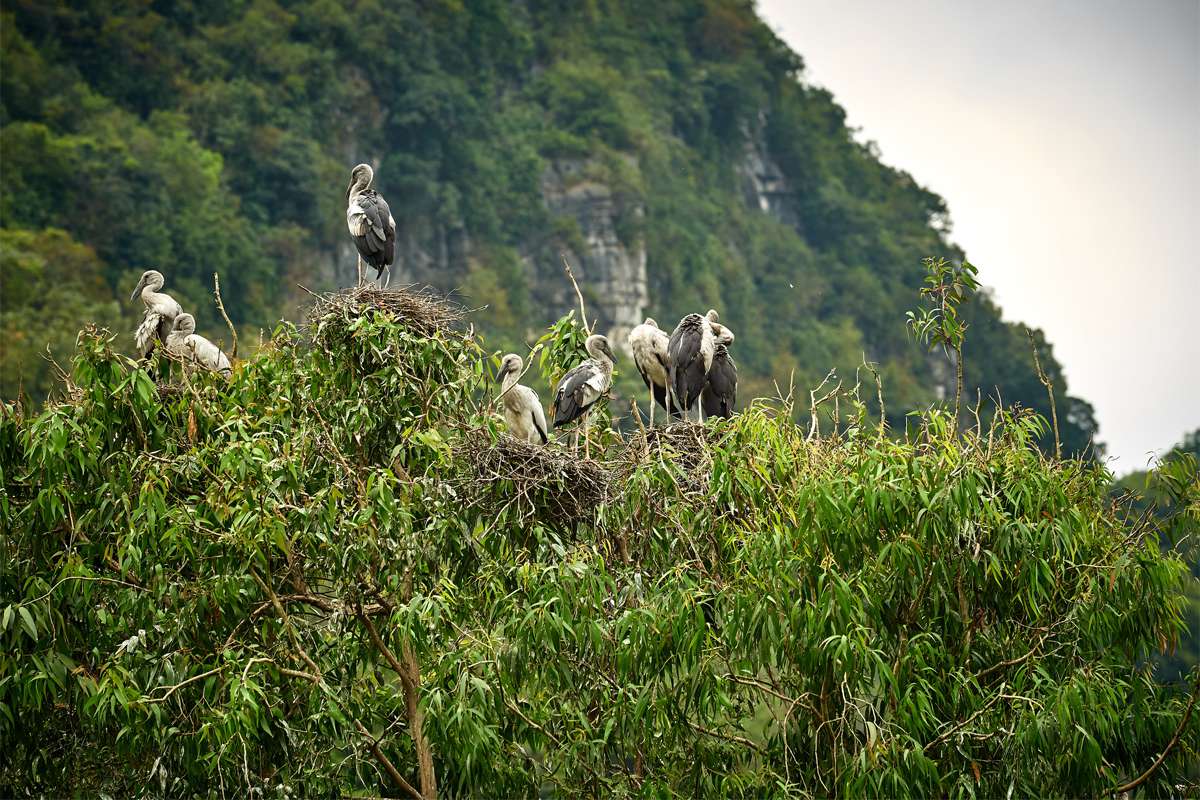
Thung Nham is a park of rivers, lakes and caves about 10 minutes from Tam Coc, built around a large bird nesting area. In the late afternoon, thousands of storks and egrets fly back to roost, which is the main event, but the walkways, bamboo bridges and caves make it a pleasant wander on their own.
There are boat trips, but it’s nicer on foot, since the paths reach all parts of the park and you set your own pace. Go early morning or from late afternoon for the birds — they leave during the day and return around dusk. It stays surprisingly quiet for somewhere so close to town.
10. Stop at Bich Dong Pagoda

Bich Dong is a cluster of small temples built into a mossy cliff face just outside Tam Coc, reached over a stone bridge across a lotus pond — the gate, with karst mountains rising behind it, is one of Ninh Binh’s prettiest photo spots. Three levels climb the hill, one set inside a cave you walk through to the back.
It’s free and quick — 30 minutes to an hour. Two honest warnings: there are pushy souvenir sellers, and a well-known parking scam out front, where attendants ask for 30,000 to 50,000 VND. A fair parking price anywhere in Vietnam is about 5,000 to 10,000 VND, so park a little further down the street, or just pay the fair fee and move on. It’s easy to combine with a cycle past the nearby rice fields and cafes.
11. See Hoa Lu Old Town at night
Not to be confused with the ancient capital, Hoa Lu Old Town is a newer lakeside walking area near the city, with two lit pagoda towers on the water, lantern-strung streets and plenty of places to eat. It’s at its best after dark, when the towers and lanterns reflect across the lake.
It’s free to wander, family-friendly, and a relaxed way to spend an evening if you’re staying nearby or passing through the city. There’s a small “mountain,” Nui Ky Lan, with steps up to a view over the lake. Think of it as a pleasant night-time stroll and dinner spot rather than a sight to plan a whole day around.
12. Find Tuyet Tinh Coc (Am Tien Cave)
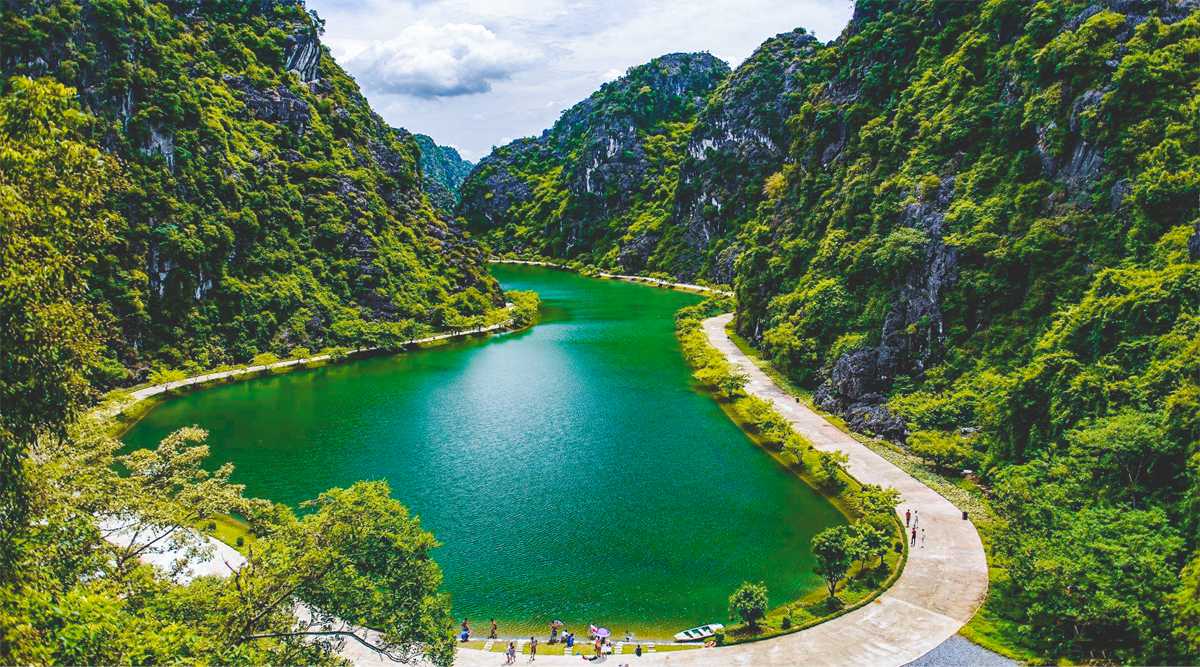
Tuyet Tinh Coc, properly Am Tien Cave, is a hidden valley tucked behind the Hoa Lu citadel: an emerald lake ringed by sheer cliffs, reached through a tunnel cut into the rock, with a small old pagoda up a flight of steps. It’s quiet, photogenic and a favourite for wedding photos, with far fewer people than the big sights.
It has a dark past as a former execution ground and prison over 1,000 years ago, which somehow adds to the still, slightly solemn calm. Entry is small, around 20,000 to 50,000 VND. It sits right by the Hoa Lu ancient capital, so the two pair up easily. Treat it as a lovely, low-key add-on rather than a headline stop — you come for the peace and the scenery, not for a lot to do.
13. Detour to Phat Diem Cathedral
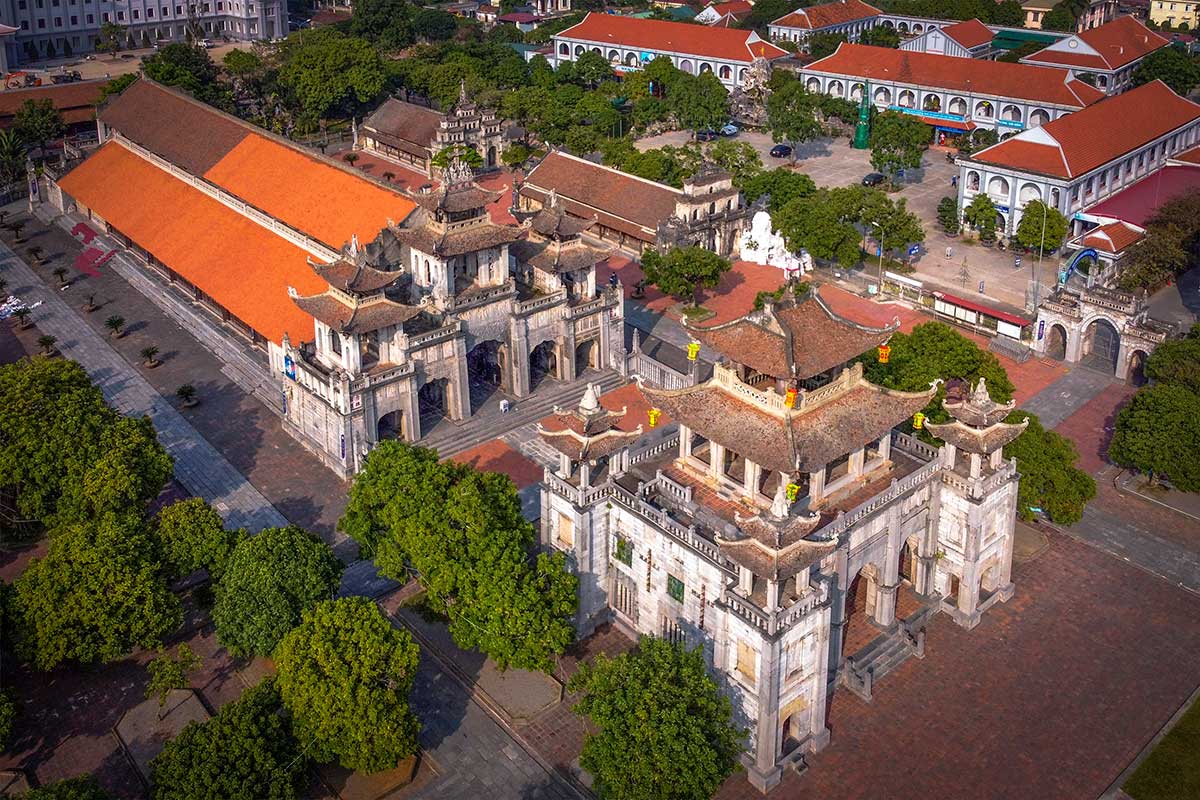
Phat Diem is one of the most unusual buildings in Vietnam: a large 19th-century Catholic cathedral built from stone and wood in the style of a Vietnamese temple, with sweeping tiled roofs and carved pillars instead of European spires. It’s a genuinely distinctive sight, and unlike anything else in the region.
The catch is location — it’s about an hour south of Tam Coc, well away from everything else, so it’s a deliberate detour rather than a quick stop. It’s worth the trip if you’re interested in architecture or history, or if you’re breaking a journey further south, and easy to skip if you’re short on time or here mainly for the scenery.
14. Consider Kenh Ga floating village

Kenh Ga is a riverside village near Van Long where life centres on the Hoang Long river, visited by small boat, with a hot spring nearby. It’s quiet and local, well off the usual tourist track, and pairs naturally with a Van Long trip.
Be honest with your expectations: the “floating village” is more modest than it sounds, as many residents now live on land, and the scenery doesn’t match Trang An or Tam Coc. It’s a pleasant, uncommercial slice of river life rather than a highlight. Worth it only if you have spare days and want something calm and local — skip it on a short trip.
Best time to visit Ninh Binh
The best time to visit Ninh Binh is the dry season, roughly November to April, when the weather is cool and clear, though it can turn genuinely cold in December and January, so pack a layer. The rest of the year, May to October, is warmer and more humid with a higher chance of rain, but also greener.
For many people the real highlight is the rice. The fields are at their famous green around late May to early June, then turn gold just before the harvest in late June and early July — the most photogenic window, especially along the Tam Coc river — with a second green spell around September to October. There’s more on the rice field seasons, and for a month-by-month breakdown see our guide to the best time to visit Ninh Binh.
Where to stay in Ninh Binh
Where you base yourself matters here, because the sights are spread out and the area splits into a few very different bases. Wherever you choose, skip the city itself.
Tam Coc
The most convenient and popular base — a compact area around a lake with the most restaurants, cafes, shops, bike and scooter rental and ATMs, plus the Tam Coc boat tour on its doorstep. Lively and easy, especially for a first visit or a short stay. It can feel a little touristy, but nothing is far. See our Tam Coc guide for the area.
Trang An
More spread out and deeper in the countryside among the karst peaks, with homestays and small eco-lodges rather than a town. Quieter and more scenic — some of the best sunset spots in Ninh Binh are here — but you’ll want a bike or scooter, as it’s less walkable with fewer places to eat. The better choice for a longer, slower stay; more in our Trang An guide.
Not the city
The city of Ninh Binh itself, where the train and most buses arrive, is an industrial place with little charm. It’s fine for a transport connection but not for staying — base yourself in Tam Coc or Trang An instead.
How to get to Ninh Binh
Ninh Binh is one of the easiest trips from Hanoi — about 2 hours and 100 km south — with frequent buses, vans and trains. From the arrival point in the city you transfer the last few kilometres to Tam Coc or Trang An.
By limousine van or bus
The fastest and most popular option. Tourist minivans and limousine vans run from Hanoi in about 2 hours, and many include hotel pickup and drop-off in Tam Coc, which saves the extra transfer. Cheaper local and open-tour buses also run, and buses connect Ninh Binh with Halong Bay (around 4 hours), Cat Ba and points south.
By train
Trains from Hanoi take about 2 to 2.5 hours to Ninh Binh station on the main north-south line, so you can also arrive from Hue, Dong Hoi and Da Nang to the south. From the station it’s a short taxi or Grab to Tam Coc or Trang An.
Getting from the station to Tam Coc
However you arrive, it’s about 5 to 8 km from the city to Tam Coc or Trang An. A taxi or Grab runs roughly 100,000 to 150,000 VND, or a quick mototaxi about 50,000 to 80,000 VND, with drivers usually waiting. Don’t overpay — agree the fare first or use Grab for a set price.
By air
Ninh Binh has no airport. The nearest is Hanoi’s Noi Bai, about 2 hours away, with direct vans and buses, so you fly there and continue overland.
How to get around Ninh Binh
Bicycle
The classic way to explore, and free at many hotels — great for short, flat loops around Tam Coc and the rice fields. For longer distances, rent a better bike or an e-bike (a handful of shops in Tam Coc and Trang An have them) rather than struggling on a basic hotel cruiser.
Scooter or motorbike
The best way to cover more ground and reach the further sights under your own steam. Rentals run about 120,000 to 150,000 VND a day from shops and many guesthouses, often with just a passport photo needed. Only ride if you’re confident, stick to the quiet back roads, and avoid the chaotic motorways.
Grab and taxi
Grab now works in the Tam Coc area, though drivers can be a little thin compared to the cities. It’s the easy, no-haggle way to get between attractions or out to dinner if you’re not riding yourself, and private cars with a driver are simple to arrange for further trips like Cuc Phuong.
Bike parking
Most sights have guarded parking, normally 5,000 to 10,000 VND — a fair fee that supports locals. If someone asks for much more (a common trick at Bich Dong and Mua Cave), it’s a scam: park a little further away or pay the fair rate, not 30,000 to 50,000.
Itinerary: 2 days in Ninh Binh
Two days is enough to fit in most of the best things to do in Ninh Binh, mixing the big highlights with a bit of countryside. This simple plan works by scooter, e-bike or a mix of cycling and Grab, and can also be done as a day tour if you’re short on time.
Day 1
- Start early with the Trang An boat tour, before the crowds and heat.
- Ride the short way to the Hoa Lu ancient capital, and add Tuyet Tinh Coc next door.
- Late afternoon, drift through Van Long as the birds come in, or watch them at Thung Nham.
Day 2
- Take the Tam Coc boat tour early, then cycle past the rice fields to Bich Dong Pagoda.
- Have a goat lunch and a coffee with a view at one of the countryside cafes.
- Climb the Mua Cave viewpoint in the late afternoon, once the midday heat and crowds have eased.
Tips for traveling to Ninh Binh
Money and ATMs
There are ATMs in Tam Coc (on the main street and by the Hidden Charm hotel) and at the Trang An boat dock, but they’re not everywhere, so carry cash. Many resorts take cards, but small restaurants and ticket booths are cash-only.
Avoiding hassle and scams
Two to watch: the Tam Coc boat tour, where vendors and rowers may push for sales or a big tip (Trang An is calmer), and parking touts at Bich Dong and Mua Cave who quote inflated “parking” or “ticket” fees. Stay polite but firm, and know the fair prices.
What to wear
Several sights are working temples and pagodas, so cover your shoulders and knees — bring a light layer or sarong. For the Mua Cave steps and damp cave floors, wear proper shoes rather than flip-flops.
Eat the goat
Ninh Binh’s signature dish is de nui, mountain goat, served grilled, with herbs, or in spring rolls — you’ll see specialist goat restaurants all over. It’s a real local speciality and worth trying at least once.
Traveling with kids
Ninh Binh is one of the easier places in Vietnam with children: safe, flat for cycling, full of boats and animals, and many hotels have pools. See our notes on Ninh Binh with kids.
Where to go next
Heading south, the train from Ninh Binh reaches Phong Nha (via Dong Hoi) and Hue. Going north, it combines easily with Halong Bay, the rice valleys of Mai Chau or Pu Luong, and Hanoi.
What to expect from Ninh Binh: an honest verdict
Ninh Binh is touristy and peaceful at the same time, which sounds contradictory until you’ve been. The big attractions get busy and the boat trips can feel crowded, but that’s no reason to stay away — with a bit of planning it’s easily managed. The trick is where you base yourself and when you go: stay out in the countryside rather than in Tam Coc town, and do the major sights like Trang An early in the morning, before the day-trippers arrive from Hanoi and the tour buses fill the car parks. Done that way, Ninh Binh has both — striking scenery and genuine quiet. It rewards a longer stay too, especially at a good countryside resort: there’s enough to do, and equally enough reason to do nothing and just enjoy the peace.