

Best Temples in Phu Quoc
Temples in Phu Quoc are generally small, local, and easy to visit, rather than large or architecturally impressive landmarks. Most of them are spread across the island, with a few clustered in Duong Dong and others located along common travel routes in the north and south. Below is a selection of the most worthwhile temples to visit, based on their setting, cultural value, and how easy they are to include in your itinerary.
1. Dinh Cau Temple
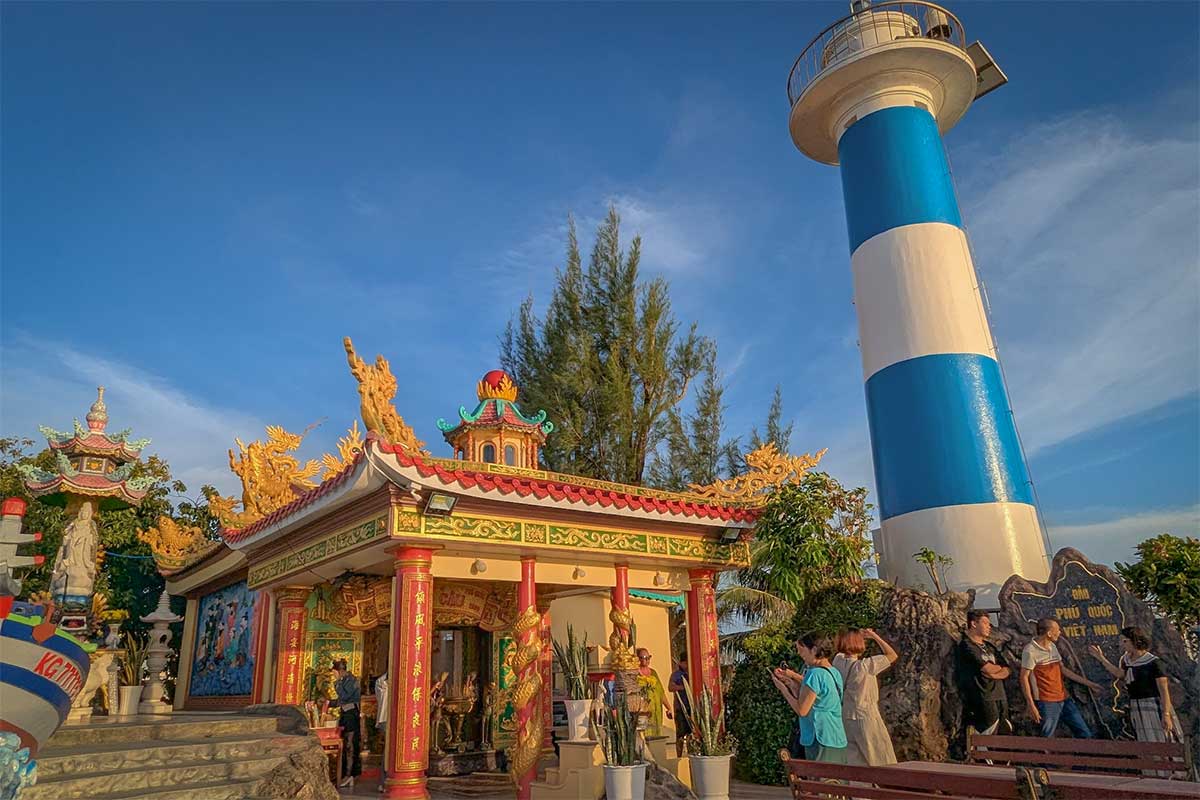
Dinh Cau Temple sits on a rocky outcrop right at the edge of the sea in Duong Dong, which is what makes it stand out compared to other temples on the island. The setting is more memorable than the temple itself, with waves hitting the rocks below, fishing boats in the background, and a small lighthouse next to it.
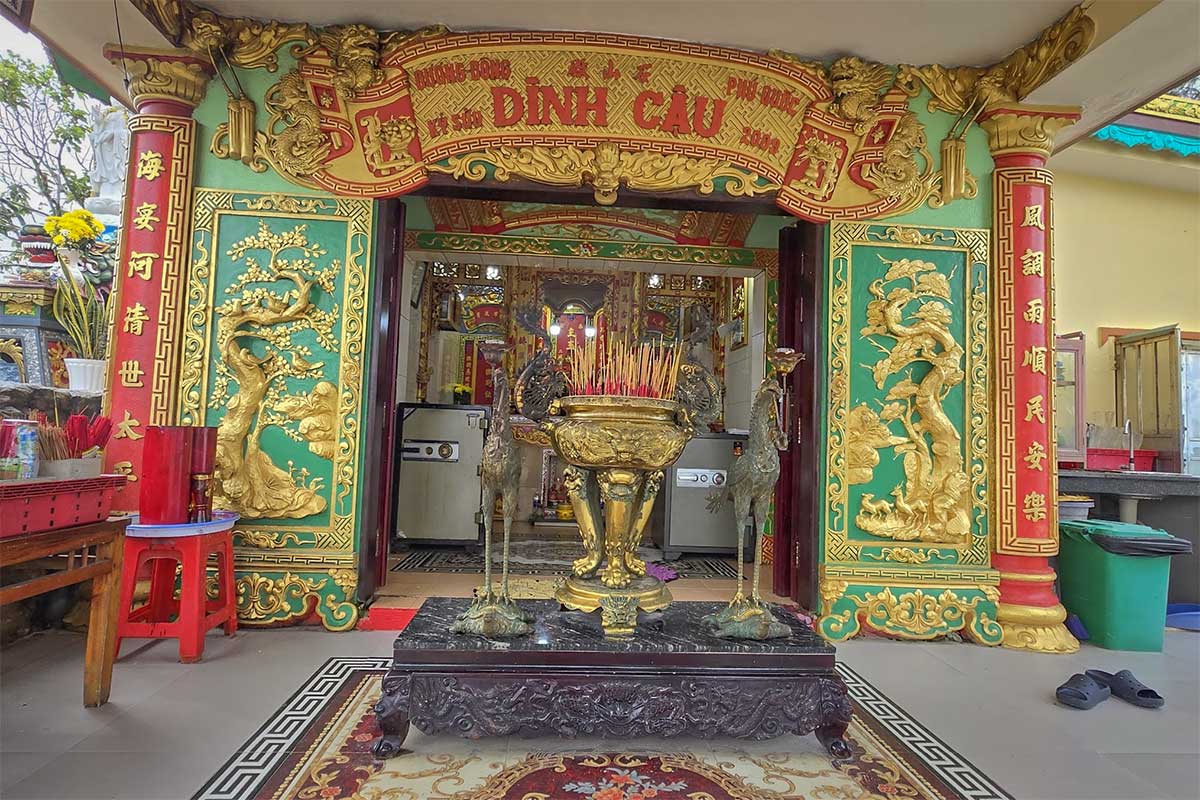
The temple is quite small, with colorful decorations and simple altars dedicated to sea gods who protect fishermen. It’s not a grand or architecturally impressive site, but the combination of the temple, lighthouse, and coastal views makes it a very photogenic and unique spot, especially around sunset.
Practically, it’s located right in the center of Duong Dong town, so it’s easy to visit if you are staying nearby or passing through. The visit is short, usually no more than 15 to 20 minutes, and there is no entrance fee. It works best when combined with a walk along the waterfront or a visit to the nearby night market in the evening. There are limited facilities at the temple itself, and it can get a bit crowded around sunset, but overall it’s an easy and worthwhile stop if you are already in the area.
2. Ho Quoc Pagoda
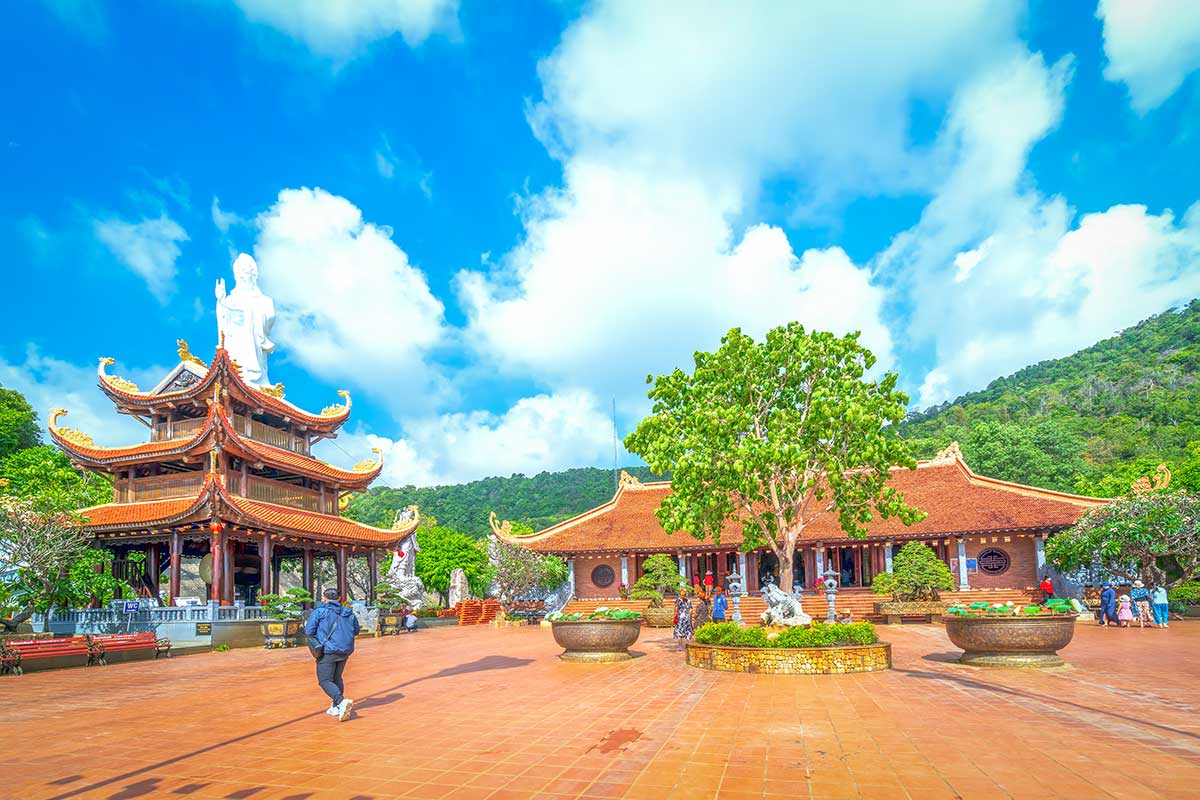
Ho Quoc Pagoda is one of the most visually impressive temples on Phu Quoc, mainly because of its location. It sits on a hillside on the east coast, with forest behind it and wide views over the sea in front. The complex is quite large and built in a traditional Vietnamese style, with layered roofs, open courtyards, and decorative staircases.
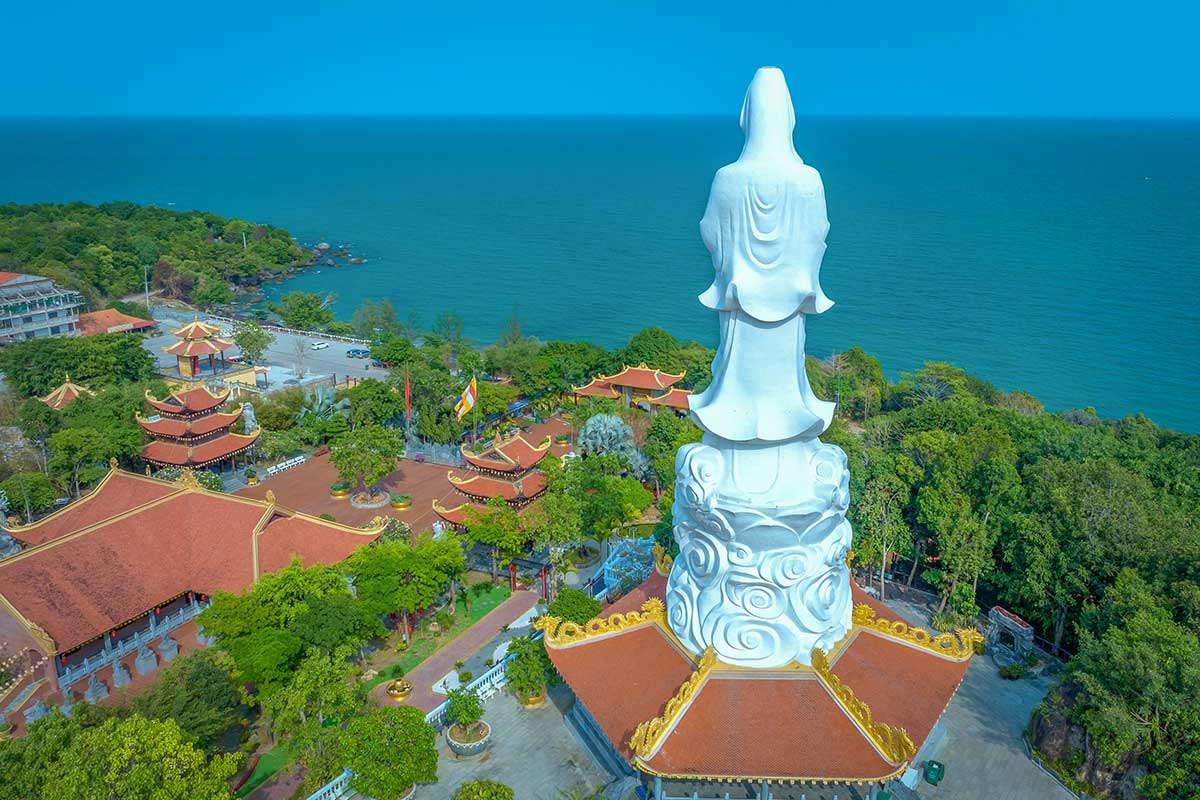
One of the standout features is the giant white Quan Am statue rising above the temple, which you can see from different parts of the grounds. It is not an old historic pagoda, but the combination of architecture, setting, and views makes it a nice place to walk around for a while, especially if you are already exploring the south of the island.
Ho Quoc Pagoda is located in the southern part of Phu Quoc, roughly between the airport area and An Thoi, so it is easiest to visit as part of a south island route. It is close to places like Sao Beach and Khem Beach, making it an easy stop to combine with a beach day. Entrance is free, and there is parking available, but it can get busy with tour groups during the middle of the day. If you want a quieter visit, go earlier in the morning. Like at most temples in Vietnam, dress modestly and behave respectfully when walking around the prayer areas.
3. Sung Hung Pagoda
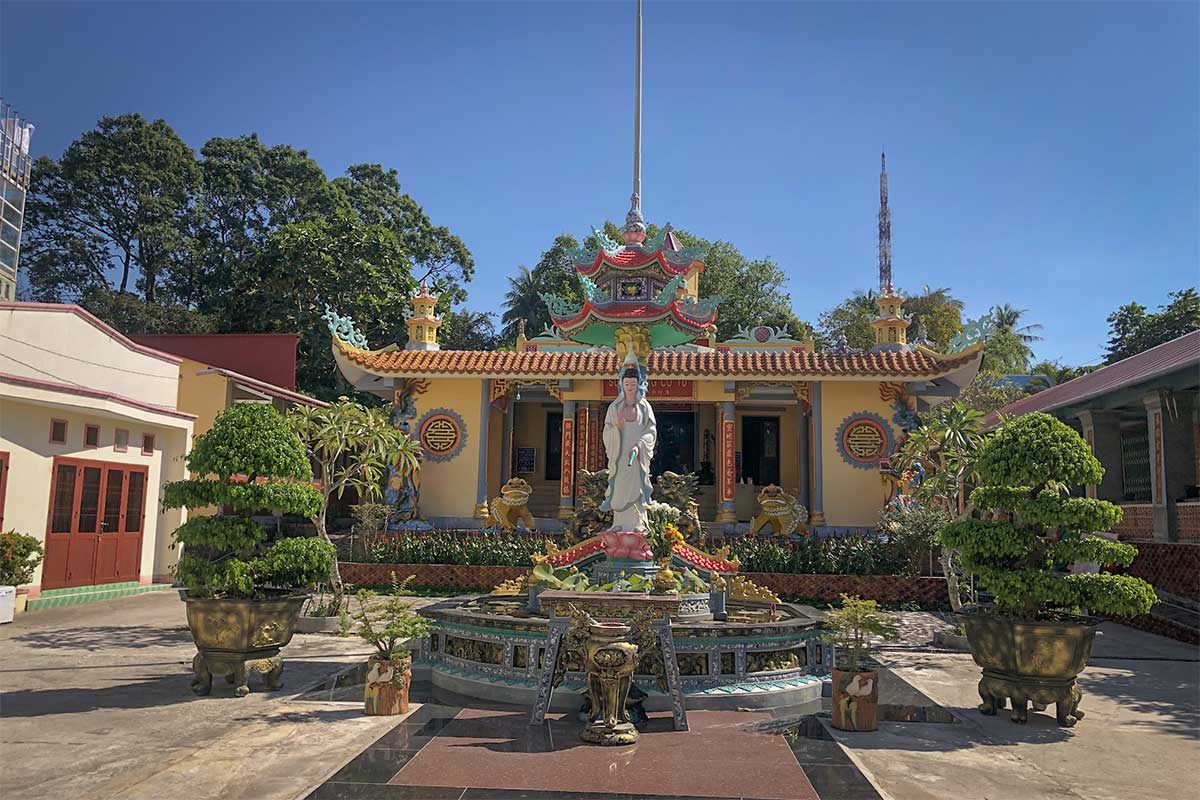
Sung Hung Pagoda is a small but traditional temple right in the center of Duong Dong. It has the typical Vietnamese layout with a three-gate entrance, a shaded courtyard, and a main hall filled with statues, incense, and red and gold altar details. There are also smaller shrines and decorative towers around the grounds, which give it a bit more character than just a single temple building.
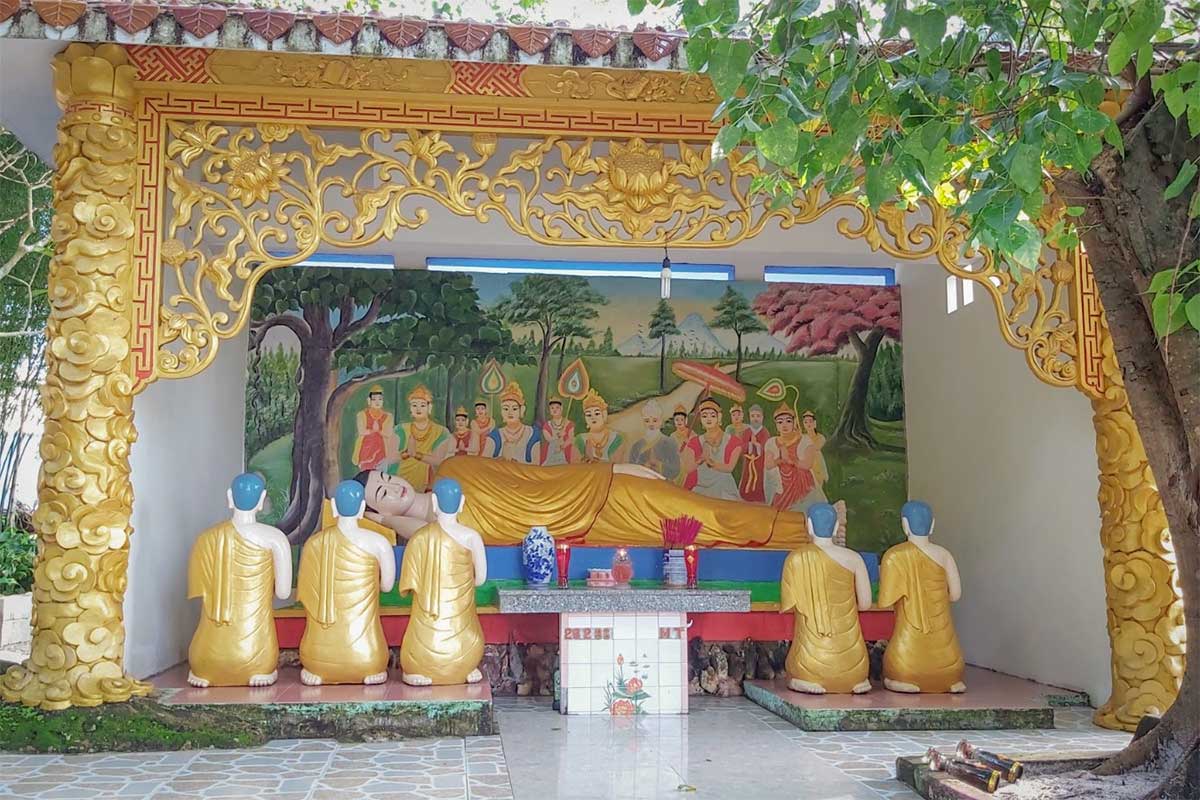
That said, it is not a large or particularly unique pagoda compared to others in Vietnam. What makes it stand out more is its history as one of the oldest temples on the island and its calm atmosphere, especially considering how busy the surrounding streets can be.
In terms of location, this is one of the easiest temples to visit in Phu Quoc. It sits in central Duong Dong, within walking distance of places like Dinh Cau and the Phu Quoc Night Market, with one of the market entrances very close to the pagoda. Because of that, it is best visited as part of a short walk around town rather than a separate trip. Entry is free, and a visit usually takes no more than 15 to 30 minutes. If you are already in the area and want to add a quick cultural stop between the beach, markets, or dinner, it is an easy and worthwhile addition.
4. Su Muon Pagoda
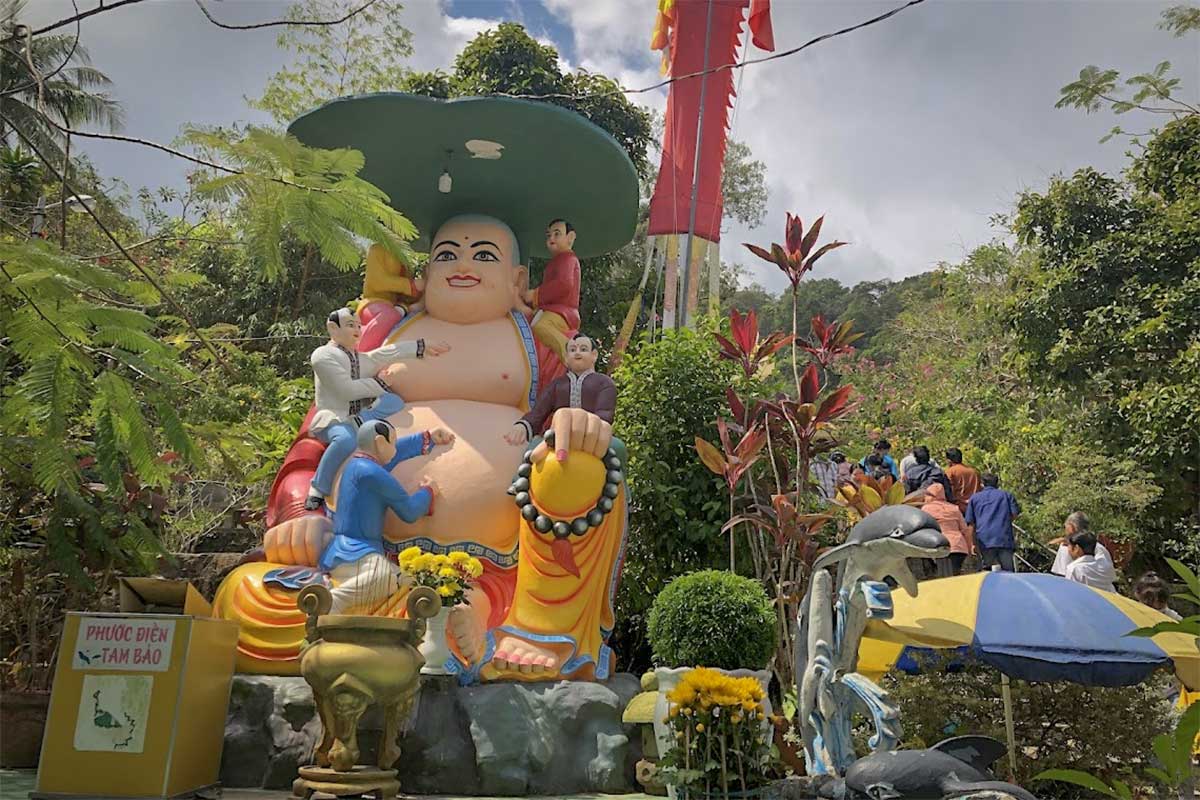
Su Muon Pagoda, also known as Hung Long Tu, is a small hillside temple just outside Duong Dong, known for its mix of colorful statues and quiet natural setting. The complex is not very large and does not have the grand architecture you might see at bigger temples in Vietnam, but it has a few interesting features.
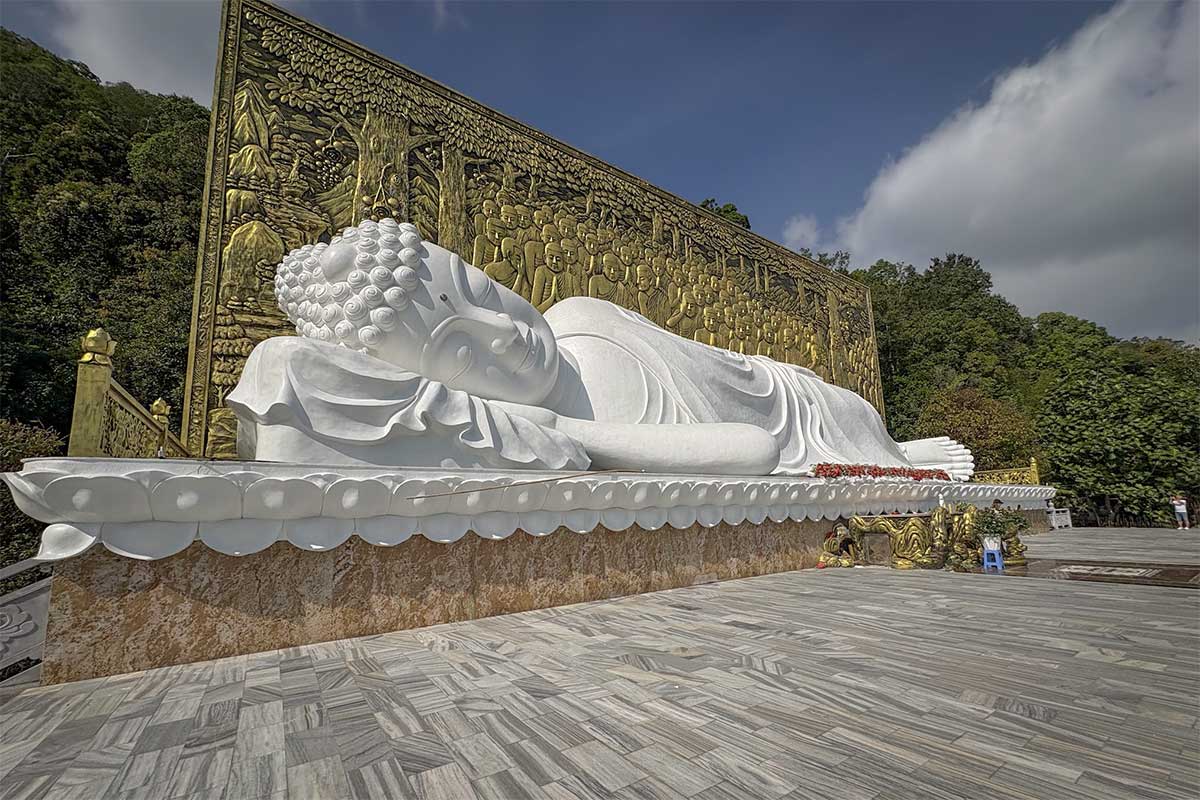
The most notable is the large white reclining Buddha hidden further inside the grounds, along with decorative dragon staircases and a mix of smaller shrines and statues. The layout feels a bit random, with different elements added over time, but that also gives it a slightly unusual character. It is not a standout highlight of Phu Quoc, but it can be a nice short cultural stop if you are already in the area.
The pagoda is located about 5 km from Duong Dong on the road towards Ham Ninh, making it easy to reach by motorbike or taxi. A small road leads uphill to the entrance, followed by a short walk with some steps. Most visitors spend around 20 to 30 minutes here. There is no entrance fee, and it is usually quiet, except during local holidays. It works best as a quick stop when driving across the island, rather than a destination you plan your day around.
5. Nguyen Trung Truc Temple
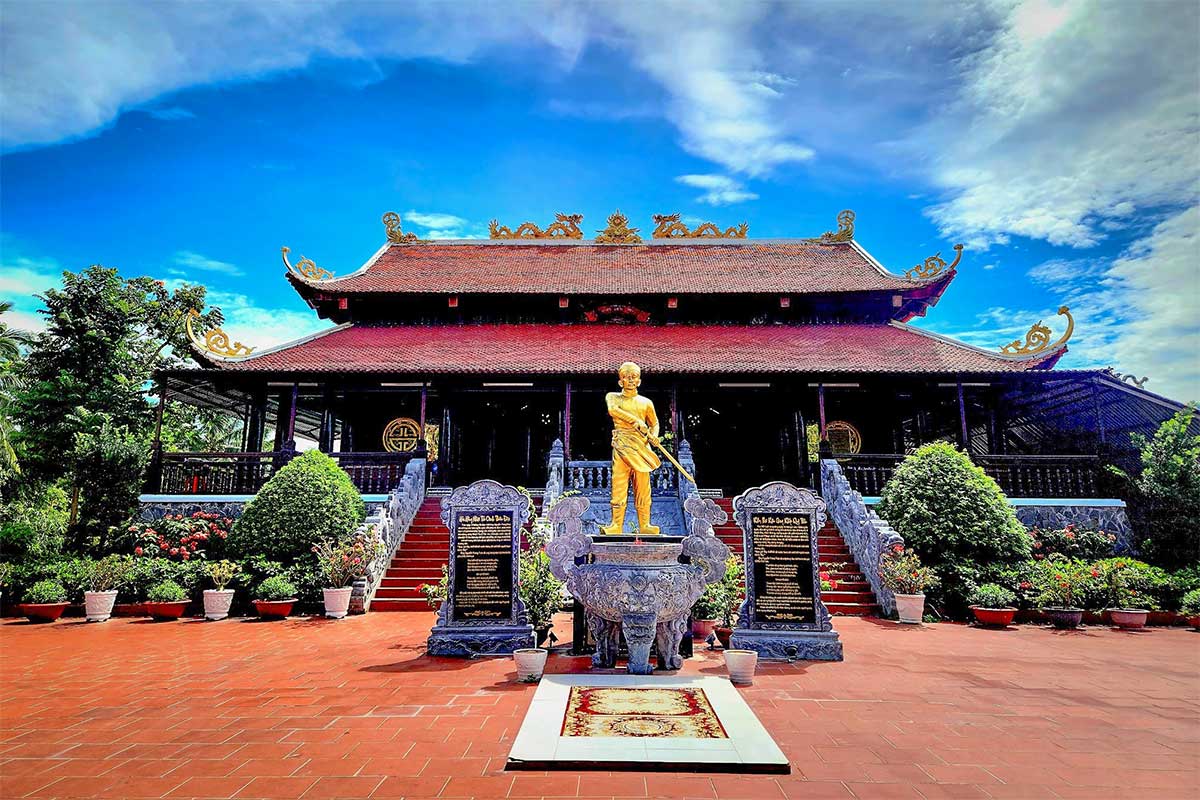
Nguyen Trung Truc Temple is a quiet and well-kept temple in the Ganh Dau area in the north of Phu Quoc, dedicated to one of Vietnam’s national heroes. The complex has a traditional design with a main hall, a courtyard, and a prominent statue of Nguyen Trung Truc at the front. Inside, you will find altars with offerings, incense, and a local worship atmosphere rather than a tourist-focused setup.
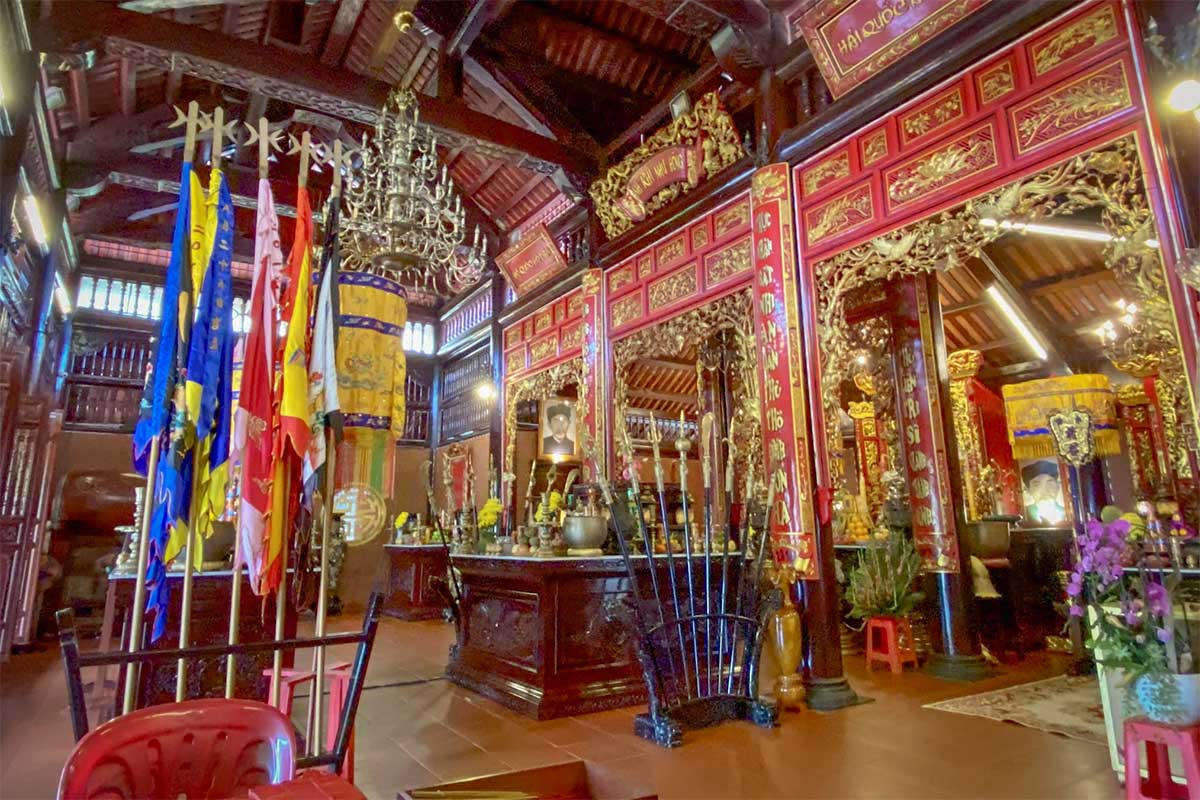
Compared to some larger or more scenic pagodas in Vietnam, it is fairly simple, but the historical background and the connection to a respected figure give it more meaning. The surroundings are calm, and it feels more like a local place of respect than a major attraction.
The temple is located in Ganh Dau, which makes it easy to combine with other stops in the north of the island, such as the local fishing village, nearby beaches, or viewpoints along the coast. There is no entrance fee, and visits are usually short, around 15 to 30 minutes. Most information at the temple is in Vietnamese, so it helps to know a bit of the story beforehand. It is not a place you would travel across the island for on its own, but if you are exploring this area and want a cultural stop beyond beaches and resorts, it is a worthwhile addition.
6. Dinh Ba Thuy Long Thanh Mau Temple
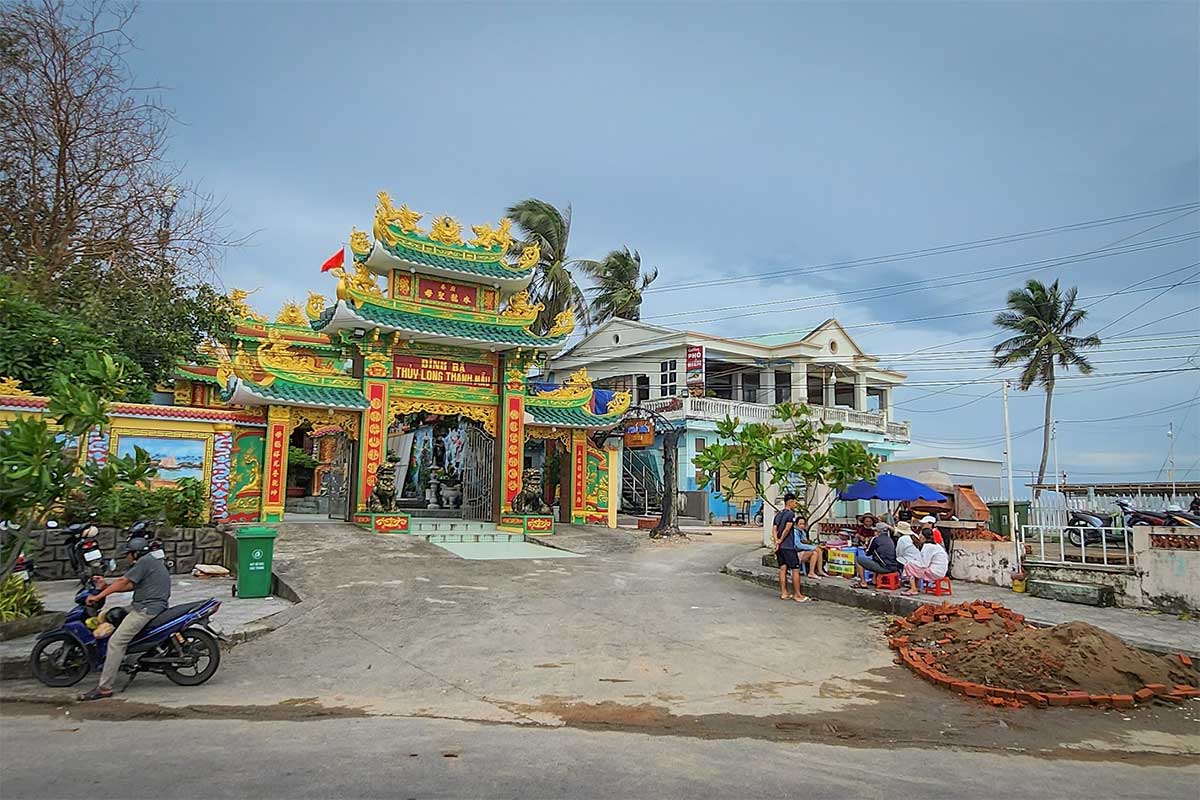
Dinh Ba Thuy Long Thanh Mau Temple is a small but colorful temple in Duong Dong, located right near the sea and just a short walk from Dinh Cau. The entrance stands out with red pillars, gold details, and dragon decorations, while inside you will find a compact but richly decorated altar with incense, offerings, and traditional carvings.
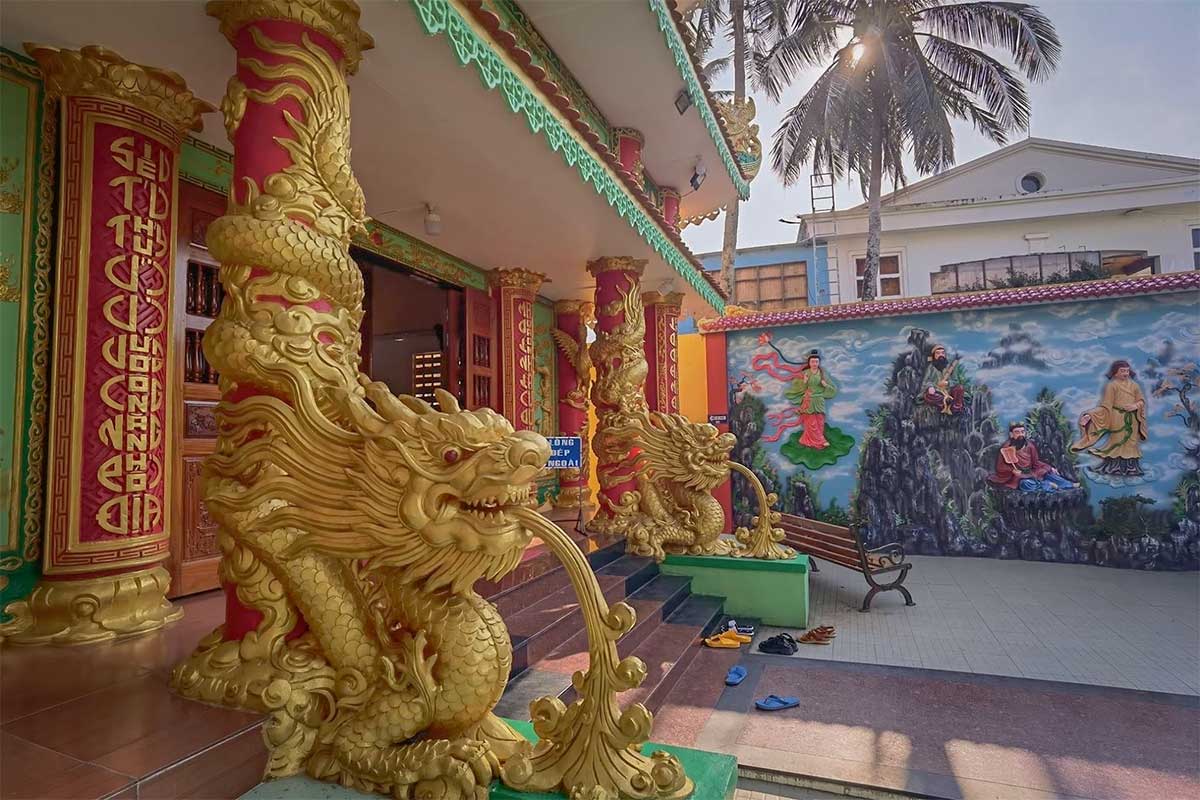
The temple is dedicated to the sea goddess, which reflects Phu Quoc’s fishing history, and you can still see locals coming here to pray. It is not a large or impressive temple compared to others in Vietnam, but the mix of coastal setting, local activity, and detailed interior gives it a bit more character than you might expect from its size.
In practical terms, this is an easy stop rather than a destination on its own. It is located in the center of Duong Dong, about 100 meters from Dinh Cau, and close to the night market and the start of Long Beach. Most people spend around 10 to 15 minutes here, often as part of a short walk through the area. It is free to enter, but you should dress respectfully and remove your shoes before going inside. If you are already visiting Dinh Cau or exploring the area in the late afternoon, it is worth stepping in for a quick look.
7. Cao Dai temple
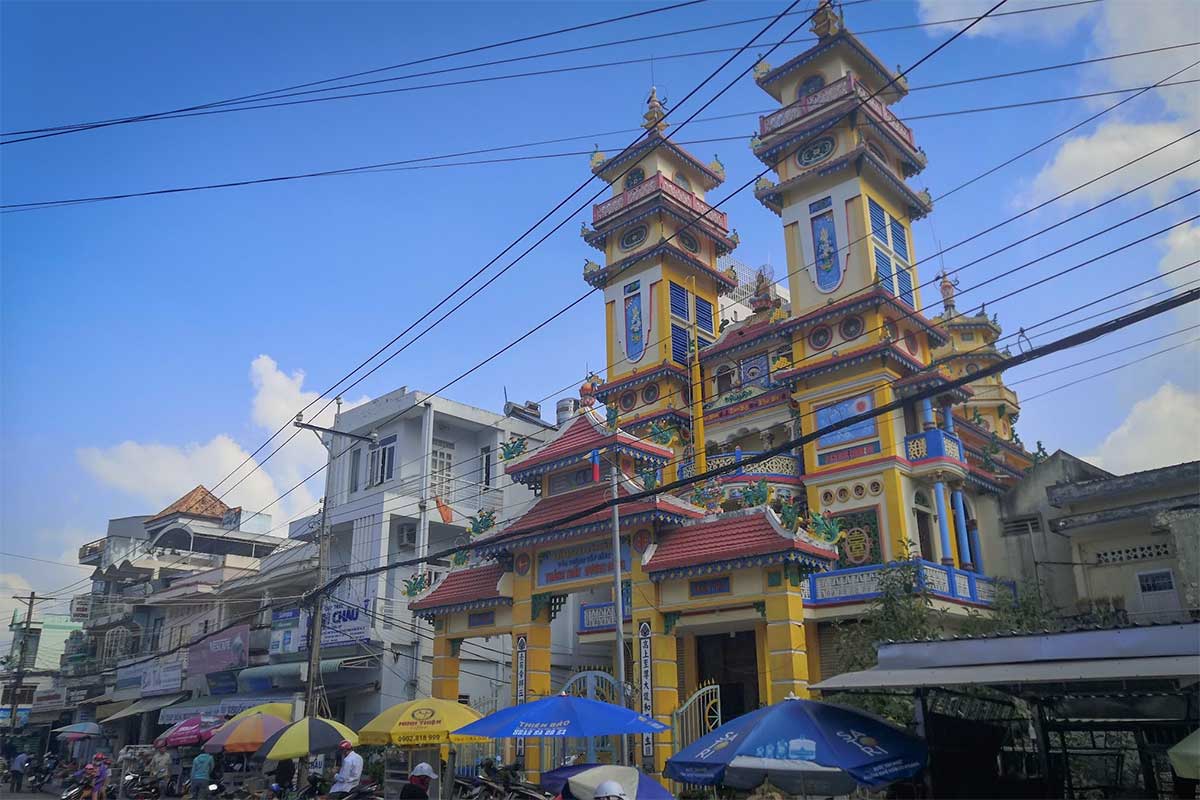
The Cao Dai Temple in Duong Dong is one of the more unusual religious sites in Phu Quoc, mainly because of the religion it represents. The building itself stands out with its bright pastel colors and two tall towers, which you can easily spot while walking through town. Inside, the space is simple but calm, with a symmetrical prayer hall and the well-known Divine Eye symbol of the Cao Dai religion.
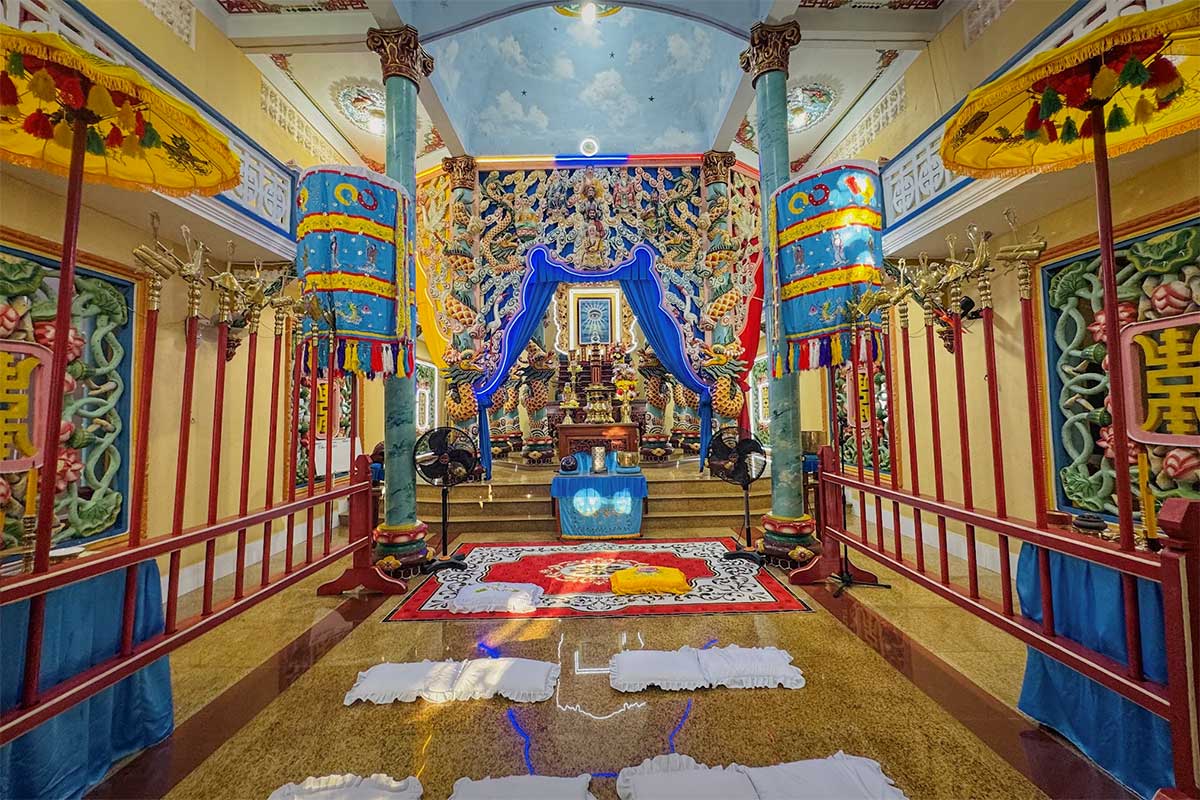
Compared to the large and famous Cao Dai temples on mainland Vietnam, this one is much smaller and less impressive, but it still gives you a quick introduction to a unique belief system that combines elements of Buddhism, Taoism, Christianity, and more.
Practically, the temple is located right in the center of Duong Dong on Nguyen Trai Street, just a short walk from the night market, Dinh Cau, and Sung Hung Pagoda. Because of this, it is very easy to include as a quick stop while exploring the area. Entrance is free, and if the doors are open you can step inside, but sometimes it may be closed depending on activity. Most people spend no more than 10 to 20 minutes here. It is not worth going out of your way for, but if you are nearby, it is an easy and interesting cultural detour from the beaches and markets.
What to Know About Visiting Temples in Phu Quoc
No entrance fees (but small donations)
Temples in Phu Quoc are free to enter. You will often see donation boxes near the entrance or inside the main hall, but giving money is completely optional and not expected. If you do donate, even a small amount is appreciated.
Opening hours are flexible
Most temples are generally open during the day, from morning until late afternoon. However, there are usually no official opening hours posted, and some places may be closed without clear reason. For the best experience, visit in the morning or late afternoon when it is quieter and cooler.
Dress code and behavior
The dress code is not very strict compared to larger religious sites, but it is still respectful to cover your shoulders and knees. When entering temple buildings, you are normally expected to remove your shoes. Keep noise low and avoid walking directly in front of people who are praying.
Photography rules
Photography is allowed in most outdoor areas and temple grounds. Inside the buildings, it is usually permitted as well, but you should be respectful and avoid using flash, especially when people are praying.
Facilities and expectations
Facilities are basic. Some temples may have toilets, but many do not, and there are rarely shops or services nearby. Information is usually only available in Vietnamese, with little to no English explanations. Overall, temples in Phu Quoc are not developed as major tourist attractions, so expect simple, local places rather than fully set up sightseeing locations.
Are Temples in Phu Quoc worth visiting?
Temples in Phu Quoc are generally small, local places of worship rather than major cultural landmarks. You should not expect impressive architecture or large temple complexes like you find in other parts of Vietnam. Most are simple, quiet, and mainly visited by locals, with only a few standing out because of their setting, such as coastal views or hillside locations.
That said, they are still worth visiting in the right context. If you are already nearby, they make easy and quick cultural stops, usually taking no more than 15 to 30 minutes. They work well to break up beach days or add something different to your itinerary, but they are not places you would plan a full day around.
If you are looking for truly impressive temple experiences, you will find much more in mainland destinations like Trang An, Perfume Pagoda, or My Son Sanctuary — or check out our full guide to the best temples in Vietnam for more inspiration.
Suggested itineraries
Temples in Duong Dong (easy walking route)
If you are staying in or visiting Duong Dong, you can easily combine several temples in a short walk. Start at Dinh Cau Temple by the sea, then walk a few minutes to Dinh Ba Thuy Long Thanh Mau Temple. From there, continue to Sung Hung Pagoda and finish at Cao Dai Temple Phu Quoc. This route takes around 1–2 hours in total and works well in the late afternoon, especially if you combine it with the night market or a walk along the waterfront.
South island route
The main temple in the south is Ho Quoc Pagoda, which is easy to include as part of a half-day or full-day trip. It combines well with nearby beaches like Sao Beach and Khem Beach, both known for calmer water and lighter sand compared to the west coast. You can also add stops in Sunset Town and take the Phu Quoc Cable Car for views over the southern islands. This makes for a varied day with a mix of culture, scenery, and beach time.
North island route
In the north, Nguyen Trung Truc Temple is the main cultural stop. It is located near Ganh Dau, a quieter area with a local fishing village atmosphere and coastal views towards Cambodia. You can combine this with nearby beaches, viewpoints, or a visit to the northern coastline. This route is less about temples and more about exploring a less developed part of the island, with the temple as a short cultural stop along the way.