


Tip: Combine the Mekong Delta with your ferry to Phu Quoc
Want to turn your transfer into a full travel experience? With Local Vietnam, you can start in Ho Chi Minh City and explore the Mekong Delta before taking the ferry to Phu Quoc. The trip includes time in Can Tho with cycling through local villages, boat tours, floating markets, and visits to orchards—giving you the full Delta experience instead of just passing through.
After your stay, we arrange the transfer to Ha Tien for the ferry to Phu Quoc, including drop-off at your hotel on the island. Check our “From Ho Chi Minh City to Phu Quoc through the Mekong Delta tour”
Traveling to Phu Quoc: what you need to know
Before going into all ferry to Phu Quoc options, there are a few important things to understand first. The island’s location, alternatives like flying, and the best time to visit can all influence your decision.
Location of Phu Quoc and the ports
Phu Quoc is located in the far south of Vietnam, in the Gulf of Thailand, close to the Cambodian border. Even though it’s part of southern Vietnam, that doesn’t mean it’s close to Ho Chi Minh City. The departure ports for the ferry to Phu Quoc are deep in the Mekong Delta, and getting there already takes around 4 to 6 hours by bus or car from the city.
That’s why many travelers combine the ferry crossing with a trip through the Mekong Delta. If you’re already visiting destinations in the Delta, taking the ferry becomes a logical next step.
Alternative: flying to Phu Quoc
Besides the ferry, flying to Phu Quoc Airport is a popular alternative. Especially if you’re short on time, it can be the more practical option.
Direct domestic flights to Phu Quoc include:
- Ho Chi Minh City – around 1 hour
- Hanoi – around 2 hours
- Da Nang – around 1 hour 40 minutes
- Can Tho – around 1 hour
Travel tip: if you’re combining Vietnam with another country in Asia, flying can be even more interesting. Phu Quoc also has direct international connections with destinations in Thailand, Singapore, Malaysia, and other regional hubs.
Best time to visit Phu Quoc
Before planning your trip, it’s important to understand the best time to visit Phu Quoc. Not only for beach conditions, but also because the ferry to Phu Quoc is more comfortable when there is less wind and fewer waves.
In general, the dry season from around November to April is the best time to visit. During these months, the weather is more stable, rainfall is lower, and the sea is usually calmer. In the rainy season (roughly May to October), heavier showers are more common and the sea can be rougher, which may make the ferry crossing less comfortable.
Ports with ferries to Phu Quoc
There are two main departure points for a ferry to Phu Quoc: Rach Gia and Ha Tien. Both are located in the Mekong Delta, but they differ in location, travel time, and how well they fit into your route. Below is a clear overview to help you decide which port suits your trip best.
Option 1: Rach Gia
Crossing & travel time
From Rach Gia, the ferry to Phu Quoc takes around 2.5 hours on average, making it the longer of the two routes.
Rach Gia is located deeper in the Mekong Delta, so getting there from Ho Chi Minh City usually takes 4 to 6 hours by bus or car before you even reach the port.
When to choose Rach Gia
Rach Gia is a logical option if you:
- Are traveling from Can Tho or the central Mekong Delta
- Are doing a Mekong Delta trip that ends further south
- Prefer not to travel all the way toward the Cambodian border
The city itself is mainly known as a gateway to Phu Quoc and a few smaller islands, rather than a destination on its own.
What to expect from Rach Gia


Rach Gia isn’t a tourist destination. It’s a functional port city with very few sights. Most travelers stay here for just one night before taking the ferry the next morning. It’s best seen as a transit stop rather than a place to explore.
Option 2: Ha Tien
Crossing & travel time
The ferry from Ha Tien to Phu Quoc is faster, taking around 1 to 1 hour 15 minutes.
Ha Tien is closer to the island than Rach Gia, which is why the crossing time is shorter.
From Ho Chi Minh City, the journey to Ha Tien usually takes 6 to 7 hours, as it lies further west, near the Cambodian border.
When to choose Ha Tien
Ha Tien is a good choice if you:
- Are traveling from Chau Doc or the western Mekong Delta
- Are coming from or heading to Cambodia (for example via Kep or Kampot)
- Want the shortest and fastest ferry to Phu Quoc
For travelers combining Vietnam and Cambodia, Ha Tien is often the most logical route.
What to expect from Ha Tien
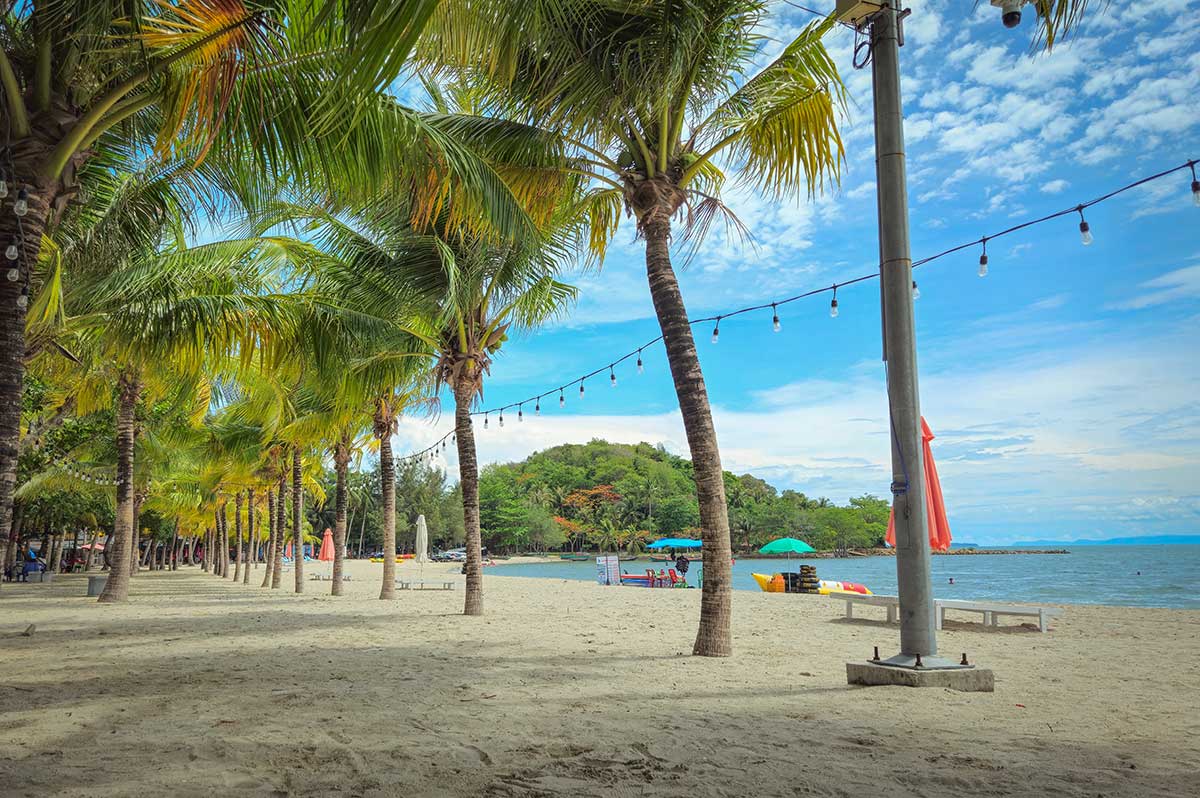


Ha Tien is smaller and slightly more atmospheric than Rach Gia, with a coastal setting and limestone hills in the surrounding area. There are a few temples, caves, and viewpoints, but like Rach Gia, most travelers use it as a practical stop rather than a destination.
Ferry from Rach Gia to Phu Quoc
This is the longer but widely used ferry to Phu Quoc route from the Mekong Delta. Below you’ll find all the practical information you need.
Types of ferries
Fast ferry / speedboat (passengers)
This is the standard option on this route. In practice, there is no slow, traditional passenger ferry—almost all services are fast ferries operated by companies such as:
- Phu Quoc Express
- Superdong
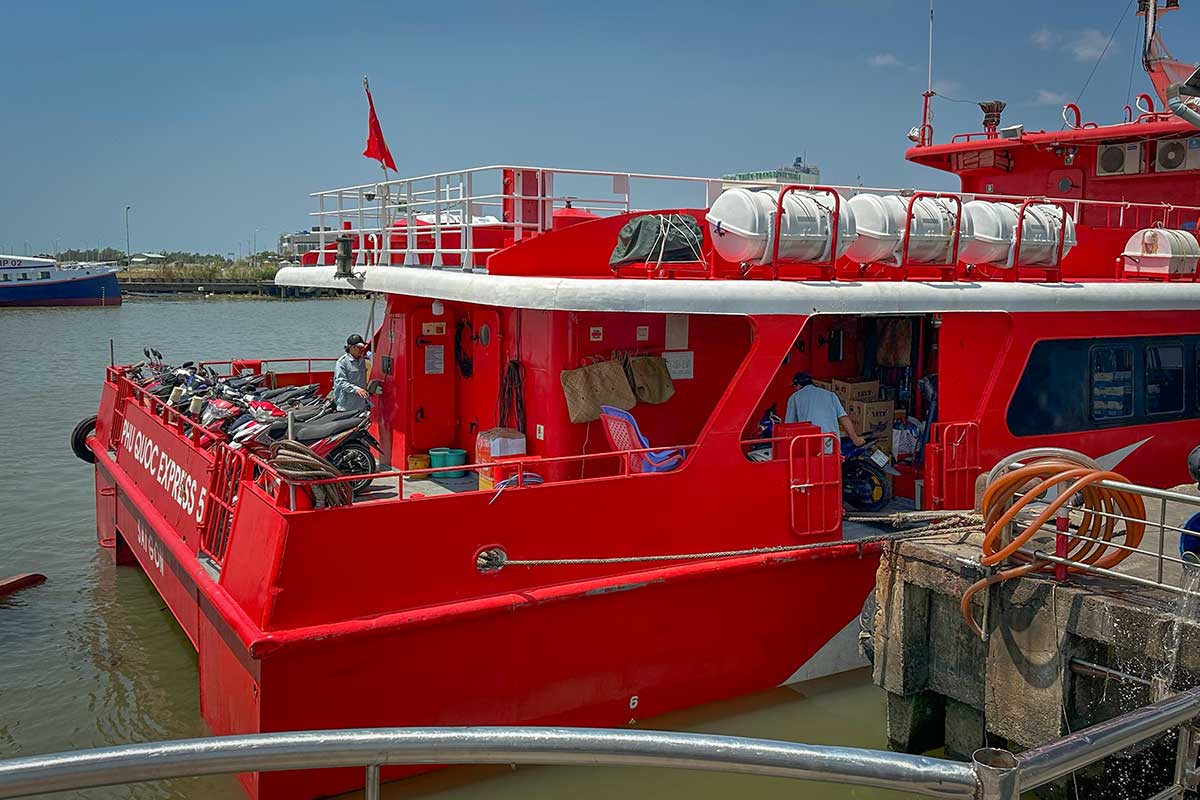

Car ferry (vehicles allowed)
There is also a larger ferry that can carry cars and motorbikes, operated by:
- Thanh Thoi Ferry
This ferry doesn’t run as frequently, so always check the schedule for your specific travel date.
Departure times (approximate)
Exact times vary by season, but this gives a realistic overview:
- Superdong: around 07:00, 08:10, 10:30, 13:10
- Phu Quoc Express: around 07:00, 07:40, 10:20, 11:00, 13:00, 14:00
- Thanh Thoi: multiple departures per day, for example 07:00, 08:00, 11:00, 14:45
Always check the latest schedule, especially in low season or during bad weather.
Crossing time & arrival
- Phu Quoc Express: around 2 hours 20 minutes
- Superdong: around 2 hours 30 minutes
Most ferries arrive at Bai Vong Port.
Ticket prices (one-way, indication)
- Phu Quoc Express: around 315,000 VND (Economy) / 500,000 VND (VIP)
- Superdong: around 330,000 VND
Prices can vary slightly depending on the booking platform, season, and any promotions.
Ferry from Ha Tien to Phu Quoc
This is the shortest and fastest ferry to Phu Quoc route to the island.
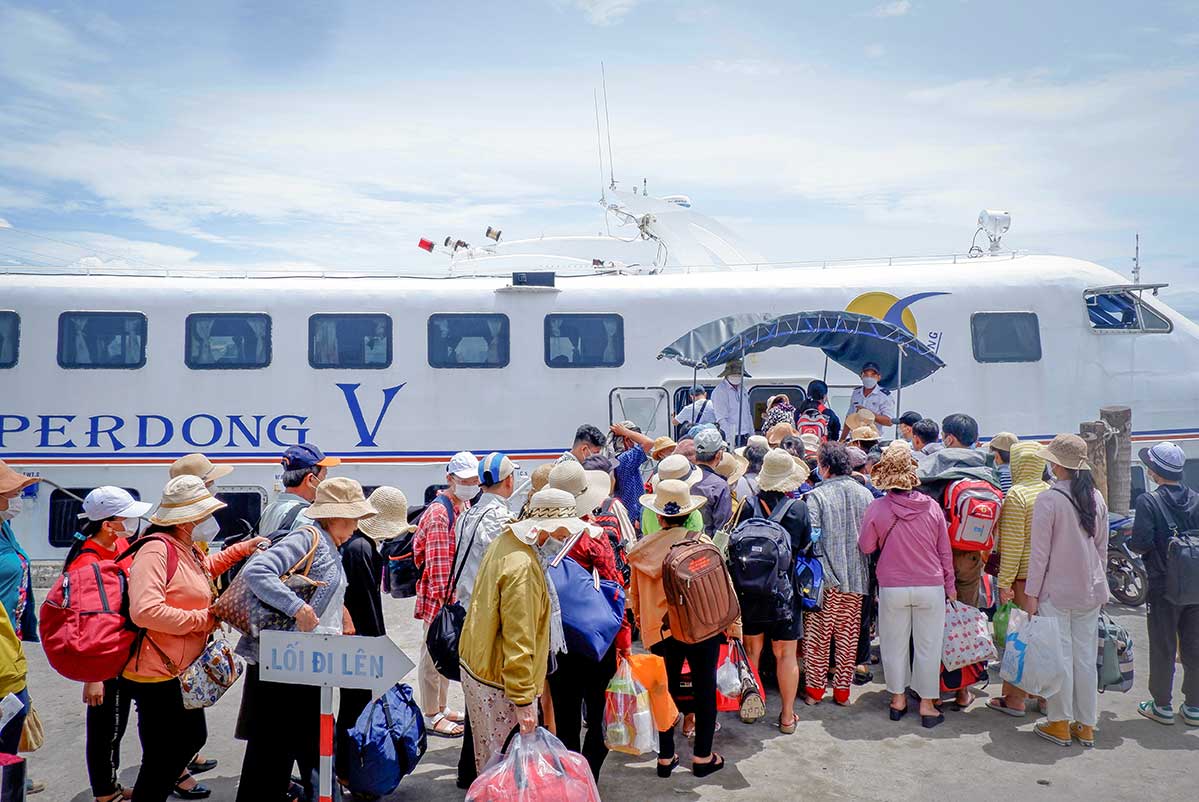
Types of ferries
Fast ferry / speedboat (passengers)
These are the standard options on this route, operated by:
- Phu Quoc Express
- Superdong
Car ferry (vehicles allowed)
- Thanh Thoi Ferry
This larger ferry often has frequent departures and can carry cars and motorbikes.
Departure times (approximate)
- Phu Quoc Express: around 06:00, 07:25, 09:40, 12:30, 13:20
- Thanh Thoi: often very early, for example 04:00, 04:30, 05:30, 07:30, 09:00, 10:00
- Superdong: multiple departures per day
Ha Tien generally offers more departures and earlier options compared to Rach Gia.
Crossing time & arrival
- Phu Quoc Express: around 1 hour 10 minutes
- Superdong: around 70–75 minutes
Ferries usually arrive at Bai Vong Port.
Ticket prices (one-way, indication)
- Phu Quoc Express: around 216,000 VND (Economy) / 330,000 VND (VIP)
- Superdong: around 225,000–230,000 VND
Ha Tien is not only faster, but usually also slightly cheaper than other ferry routes to Phu Quoc.
More details in our guide about the ferry from Ha Tien to Phu Quoc.
How to book tickets for the ferry to Phu Quoc
Tickets for the ferry to Phu Quoc can be booked in several ways. The best option depends on how flexible your travel plans are and whether you’re traveling in high or low season.
Online via official websites
You can book directly through the official websites of:
This is usually the cheapest option, as you avoid extra service fees. You can choose your departure port (Rach Gia or Ha Tien), date, and time yourself. Payment is typically possible with an international credit card.
Via booking platforms
International platforms such as:
show multiple ferry operators at once, making it easy to compare schedules and prices. You may pay slightly more due to service fees, but the booking process is straightforward and fully in English.
Offline in Vietnam
You can also book tickets locally:
- At travel agencies in Ho Chi Minh City or the Mekong Delta
- Through your hotel or homestay
- Directly at the port
Buying tickets at the port works well if you’re flexible, but during high season or Vietnamese holidays, popular departure times can sell out.
During the busy period (roughly November to April and around public holidays), it’s recommended to book your ferry tickets online in advance.
From Phu Quoc (Bai Vong Port) to your hotel
Bai Vong Port is located on the east coast of the island, about 15 kilometers from Duong Dong, the main town of Phu Quoc.
Distance to popular areas
- Duong Dong (center): around 20–30 minutes
- Long Beach (Tran Hung Dao area): 25–35 minutes
- Ong Lang Beach: 35–45 minutes
- Southern Phu Quoc (An Thoi / resorts): 40–60 minutes
How to get to your accommodation
Taxi
The easiest option. Taxis in Phu Quoc are available at the port upon arrival. Expect to pay roughly 250,000–400,000 VND to Duong Dong, depending on distance and vehicle type.
Grab
Grab is available on Phu Quoc, but availability at the port can vary depending on arrival times and demand.
Hotel transfer
Many resorts offer free or paid transfers. This is especially convenient if you’re staying in the south or north of the island, where distances are longer.
Frequently asked questions about the ferry to Phu Quoc
Still unsure about some practical details? Below you’ll find clear answers to the most common questions about the ferry to Phu Quoc, both from Rach Gia and Ha Tien.
Do you get seasick on the ferry to Phu Quoc?
This mainly depends on the weather and which route you take. The crossing from Ha Tien takes about one hour and is generally smoother than the longer route from Rach Gia, which takes around 2.5 hours. During the dry season (November to April), the sea is usually calmer. In the rainy season, conditions can be rougher. If you’re prone to seasickness, Ha Tien is usually the better option, and it’s worth taking motion sickness tablets in advance.
Are there toilets on the ferry to Phu Quoc?
Yes, all fast ferries have toilets on board. They are basic but functional. On busy departures, they may be less clean toward the end of the journey, but overall they are usable.
Is there air conditioning on the ferry to Phu Quoc?
Yes, fast ferries are fully enclosed and air-conditioned. It can feel quite cold inside, especially on the longer route from Rach Gia, so bringing a light jacket or sweater is recommended.
Can you buy food and drinks on board?
Most ferries offer simple drinks and snacks, such as water, soft drinks, and small bites. The selection is limited, so it’s fine to bring your own water or a small snack.
Is there WiFi on the ferry to Phu Quoc?
In practice, there is usually no reliable WiFi on board. Some operators mention WiFi, but the signal at sea is often weak or unstable, so don’t rely on having internet during the crossing.
Are there different classes on the ferry to Phu Quoc?
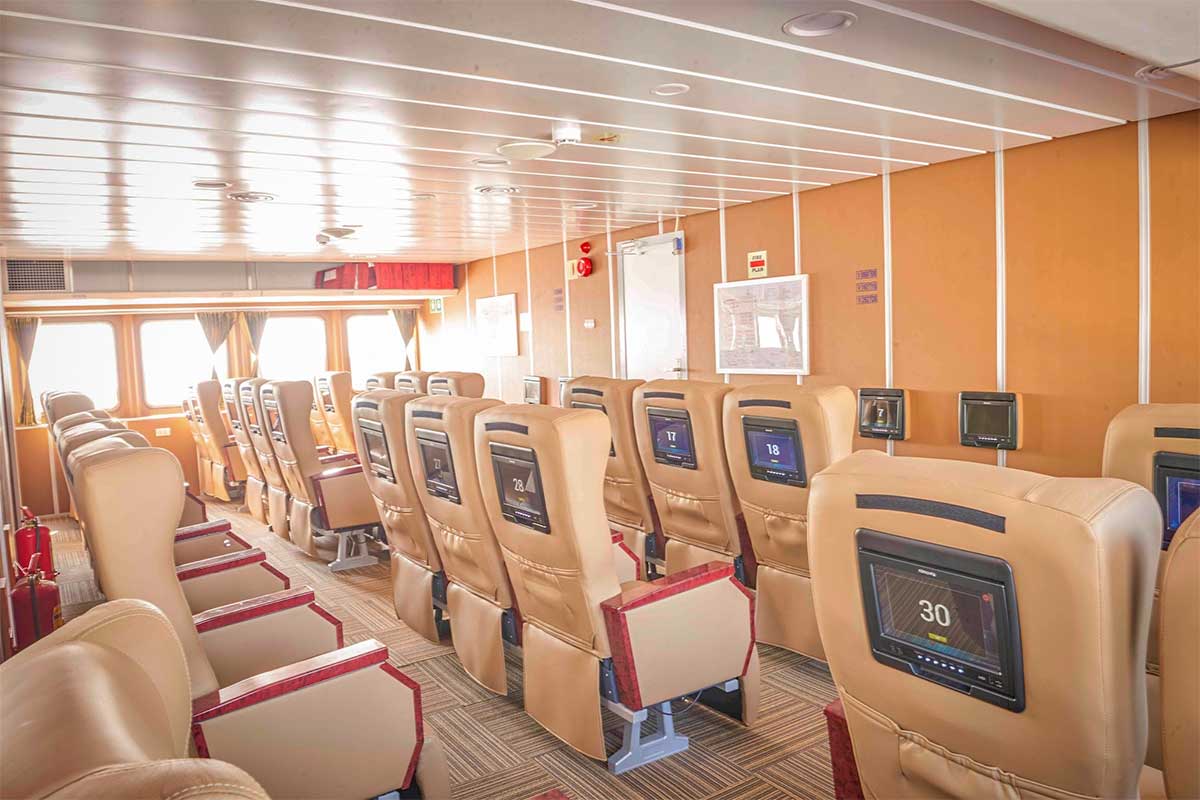
Some operators offer Economy and VIP seating. Economy provides comfortable standard seats similar to airplane seating. VIP seats are more spacious, with extra legroom and often located in a quieter section of the ferry. For the short route from Ha Tien, VIP is usually not necessary, but on the longer route from Rach Gia, the extra comfort can be worth it.
How much luggage can you bring?
A regular suitcase or backpack is not a problem. Larger luggage is usually stored separately in a luggage area, while smaller bags can be taken into the cabin. Weight limits are rarely strict, but very large or heavy items may incur an extra fee.
Can you bring a motorbike on the ferry to Phu Quoc?
Yes, but only on the larger car ferries—not on the fast passenger ferries. This needs to be arranged in advance and comes with a separate fee. Not every departure accepts vehicles, so always check with the operator.
Can you bring a bicycle on the ferry to Phu Quoc?
Yes, in most cases this is possible. On fast ferries, a small surcharge may apply and space must be available. It’s best to mention this when booking.
How early should you arrive at the port?
It’s recommended to arrive at least 30 to 45 minutes before departure. During busy periods or if you’re traveling with a vehicle, arriving earlier is advisable.
What should you bring for the ferry crossing?
You’ll need your passport and your ticket (digital or printed). It’s also a good idea to bring water, motion sickness medication if needed, and a light jacket due to the air conditioning. Otherwise, there’s not much preparation required.
Do you need to show your passport?
Yes, you’ll usually be asked to show your passport or a valid ID during check-in. Keep it ready when collecting or presenting your ticket.
How does boarding work?
After arriving at the port, you check in at the ticket counter. Your ticket is verified, and you’ll enter the waiting area. Once boarding begins, you’ll be guided to the pier. Large luggage is usually handled separately, after which you take your seat inside the ferry. The process is simple and generally well organized.
What happens in bad weather?
In case of strong winds or high waves, ferry departures may be delayed, rescheduled, or canceled. This happens mainly during the rainy season. In most cases, you can rebook free of charge or request a refund, depending on the operator. It’s a good idea not to plan tight onward connections on the same day.