

Central Vietnam: best places to visit and travel guide

Aerial view of the winding road of the Hai Van Pass between Hue and Da Nang

Central Vietnam is one of the most varied regions of the country, from historic cities and old trading towns to long sandy coastlines and remote highlands. It lies between North and South Vietnam and has played a big part in the country’s history, culture and development. In this guide you will find the best places to visit in Central Vietnam, the best time to go, how to get around, the airports, and how to plan your trip.

Last updated:

Central Vietnam: quick overview

Best time to visit

For the central coast, March to August usually has the best weather. October and November are often the wettest months. In the Central Highlands (such as Dalat), December to March is usually the most pleasant.

How long to stay

About one week is a good guideline for the main coastal destinations (Hue, Da Nang, Hoi An). Dalat and the Central Highlands are often visited in 2 to 3 days.

Highlights

The best-known destinations are Hoi An, Hue, Da Nang, Phong Nha, Nha Trang and Dalat, with quieter coastal places such as Quy Nhon, Phu Yen and Ninh Thuan.

Landscape

Central Vietnam combines historic cities, long beaches and mountains. Along the coast you find beaches and fishing villages, while the Central Highlands are known for coffee plantations, forests and waterfalls.

Accessibility

The coast is easy to reach by train, bus and plane. The Central Highlands have no railway and are reached mainly by road.

Safety

Central Vietnam is generally safe to travel in. In the rainy season, heavy rain and typhoons can hit the coast, mainly from September to November.

Travel pace

Most coastal destinations lie fairly close together, but the Central Highlands take more time to reach. Do not plan too many places in a short time.

Travel Central Vietnam

Ancient towns, a long coastline and highland cultures

Central Vietnam has long been a crossroads of trade, power and culture. Trading ports such as Hoi An linked Vietnam with China, Japan and Europe from the 15th and 16th centuries, and left a unique mix of architecture and culture. Further north, Hue became the imperial capital under the Nguyen Dynasty, which shaped the region with its citadel, royal tombs and court traditions. Later, French colonial rule added another layer, visible in buildings, roads and the plantation villages of the coast and the Central Highlands.

The region was also hit hard by the Vietnam War. Key events took place in Hue, the former DMZ and the Central Highlands, and the effects of unexploded ordnance and Agent Orange are still part of the story.

Central Vietnam is a region of variety. Modern beach cities such as Da Nang sit next to well-preserved heritage towns, while quieter stretches of coast run south toward Quy Nhon and north toward Lang Co. Inland, the Central Highlands offer a very different experience: cooler temperatures, ethnic minority cultures, coffee plantations, waterfalls and national parks. History, landscapes and ways of life all come together within short travel distances.

Vietnam Travel Guide book cover by Local Vietnam featuring Halong Bay landscapes, tailoring your trip with tips from authors Nhung and Marnick.
Planning a trip to Vietnam?

Download our free Vietnam travel guide as a PDF, with practical planning tips, destination highlights and the essentials for preparing your trip. Use it as a quick reference before and during your travels.

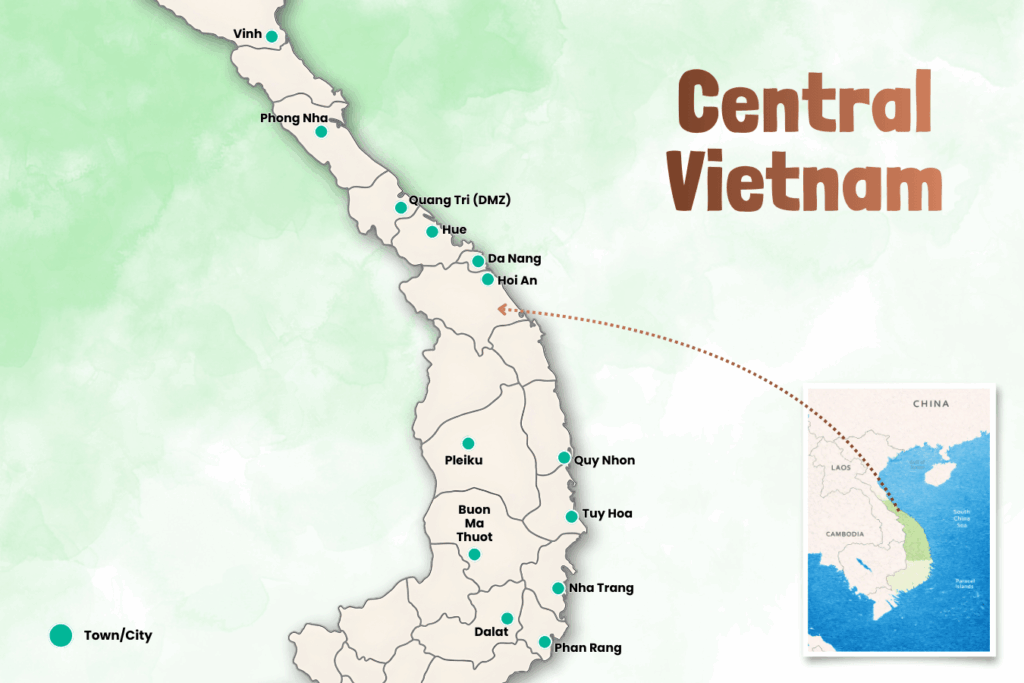
Map of Central Vietnam

This map of Central Vietnam shows the key places to visit, from the coast to the inland areas, and how the destinations connect along the main travel routes.

Map of Central Vietnam with the key places to visit along the coast and in the highlands: Hue, Da Nang, Hoi An, Phong Nha, Nha Trang, Dalat and Quy Nhon

Best places to visit in Central Vietnam

Central Vietnam has a mix of historic towns, an imperial city, modern beach destinations and easy access to nature. The places below are chosen for their popularity, their character and the variety of experiences they offer, so you know what kind of destination each place is before you go on to the detailed guides.

1. Hoi An

Hoi An is one of the best places in Central Vietnam if you want a well-preserved historic town with a relaxed, walkable atmosphere. Once a major trading port, it is known for its yellow shophouses, lantern-lit streets and a mix of Vietnamese, Chinese and Japanese influences. Hoi An combines heritage with nearby beaches and easy trips into the countryside and to ancient sites.

Best things to do in Hoi An

Yellow heritage houses and lanterns along a street in Hoi An Ancient Town
Walk around Hoi An Ancient Town

Walking through Hoi An Ancient Town takes you past merchant houses, assembly halls, temples and riverside streets, the heart of its UNESCO-listed old town.

A traveller with conical hat on a bicycle is looking at the green rice fields during a countryside cycling ride around Hoi An
Cycle through the countryside

Cycling through the Hoi An countryside takes you past rice fields, local villages, and quiet backroads, offering a slower look at daily life around Hoi An.

Ancient Cham temple ruins at My Son Sanctuary near Hoi An
Visit My Son Sanctuary

A visit to My Son Sanctuary introduces you to ancient Cham temple ruins set in a forested valley, easily combined with a stay in Hoi An.

Peaceful morning view of An Bang Beach with straw parasols and empty sunbeds under a blue sky
Relax at An Bang or Cua Dai Beach

An Bang Beach and Cua Dai Beach are the main beaches near Hoi An, known for their wide sandy stretches, beach cafes and calm swimming conditions.
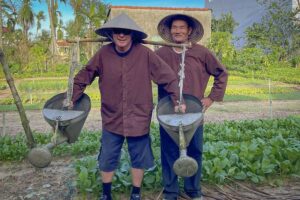
Vegetable farming at Tra Que Village during a Hoi An cooking class
Experience local culture and crafts

Hoi An is well known for tailoring, traditional craft villages, and cooking classes, making it easy to experience local culture and hands-on activities.

Tip: Want to explore the area around Hoi An in more depth? Check out our Hoi An tours, including cooking classes, cycling trips, and excursions to My Son.

2. Hue

Hue is a historic city best known for its role as Vietnam’s former imperial capital. The city sits along the Perfume River and is defined by royal architecture, traditional neighborhoods, and a slower pace compared to nearby coastal cities. Hue also works well as a base for exploring surrounding landscapes, historic routes, and less-visited coastal and rural areas.

Best things to do in Hue

A woman on the stone bridge in front of Ngo Mon Gate, the main gate of the Imperial City of Hue
Explore the Imperial City

The Hue Imperial City is a vast walled complex of palaces, gates, and courtyards that once formed the political and ceremonial heart of imperial Hue.

A stone bridge with steel house part of the tomb of Minh Mang in Hue
Visit royal tombs

The royal tombs of Hue, spread along the Perfume River and surrounding countryside, showcase imperial architecture set in landscaped grounds.

Lang Co Beach and Hai Van Pass seen from the air
Drive the Hai Van Pass

The Hai Van Pass connects Hue with Da Nang and is one of Vietnam’s most scenic coastal mountain roads.

Dragon boats on the Perfume River are docked at Thien Mu Pagoda
Discover temples and pagodas

Hue is home to many historic temples and pagodas, including riverside sites like Thien Mu Pagoda, that reflect the city’s strong Buddhist traditions.

Aerial view of Thanh Toan Bridge in Hue
Explore the area outside the city

The countryside around Hue includes traditional villages, lagoons, waterfalls, and quieter beaches, offering a contrast to the historic city center.

Tip: Want to better understand the city’s historical side? Take a look at our Hue tours, with visits to the Imperial City, royal tombs, and temples along the Perfume River.

3. Da Nang

Da Nang is a modern coastal city that combines long sandy beaches with easy access to mountains and natural attractions. It is well connected by air and road, making it a popular base for exploring Central Vietnam. Compared to nearby historic towns, Da Nang feels more contemporary while still offering quick escapes into nature.

Best things to do in Da Nang

My Khe Beach in Da Nang
Relax on My Khe Beach

My Khe Beach is Da Nang’s main beach, known for its wide shoreline, gentle waves, and proximity to the city.

The road zigzagging up in the mountains and along the coast between Hue and Da Nang called the Hai Van Pass
Drive the Hai Van Pass

Driving the Hai Van Pass from Da Nang offers dramatic views over the coastline and mountains, especially when combined with a route toward Hue.

Aerial view of the Lady Buddha statue at Linh Ung Pagoda on Son Tra Peninsula, Da Nang, at sunset
Explore Son Tra Peninsula

Son Tra Peninsula features forested hills, viewpoints, beaches, and wildlife, all located just outside central Da Nang.

Marble Mountains cave temples near Da Nang – popular spiritual and adventure day trip from Hoi An
Visit the Marble Mountains

The Marble Mountains are a cluster of limestone hills with caves, pagodas, and viewpoints overlooking Da Nang and the coast.

The Golden Bridge in Ba Na Hills near Da Nang – famous day trip from Hoi An featuring panoramic views and unique design.
Experience Ba Na Hills

Ba Na Hills is a mountain resort area known for cooler temperatures, panoramic views, and large-scale attractions located inland from Da Nang.

Tip: Want to discover the nature around the city? Explore our Da Nang tours, including trips to the Marble Mountains, Ba Na Hills, and Son Tra Peninsula.

4. Phong Nha

Phong Nha is one of the most unusual places to visit in Central Vietnam, especially for travelers interested in nature and adventure. It lies in Phong Nha-Ke Bang National Park, an area of limestone mountains, rivers and some of the largest caves in the world. Despite its reputation among adventurers, Phong Nha itself is a relaxed rural place with villages, farmland and jungle.

Best things to do in Phong Nha

Light beams coming through a cave entrance shining on a campsite next to an underground lake at Hang En Cave in Phong Nha
Join a cave expedition

Cave expeditions to Hang Son Doong, Hang En, or the Tu Lan cave system offer multi-day adventures deep into some of the world’s most spectacular cave networks.

Paradise Cave in Phong Nha National Park
Visit Phong Nha Cave or Paradise Cave

Easy cave visits like Phong Nha Cave and Paradise Cave allow you to experience the region’s karst landscapes without technical skills or long treks.
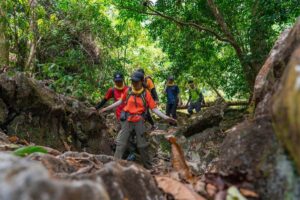
Phong Nha jungle trekking
Go jungle trekking

Jungle trekking in Phong Nha can be done with a local guide for deeper forest routes or independently at the Botanical Garden, with options ranging from short walks to overnight camping.

Cycling around Phong Nha
Explore the countryside by bike

Cycling through the Phong Nha countryside takes you past rice fields, villages, the Duck Stop, and grazing water buffalo along quiet rural roads.

Kayaking on the Con River at Son Trach Town in Phong Nha National Park
Kayak on the river

Kayaking on the Son River or nearby waterways is a peaceful way to see Phong Nha’s landscapes from the water.

Tip: Want to fully experience the caves and jungle of the park? See our Phong Nha tours, with cave explorations, jungle trekking, and adventure expeditions.

5. Nha Trang

Nha Trang is a coastal city best known for its long beachfront, offshore islands, and marine activities. It combines a lively city atmosphere with easy access to quieter bays and islands nearby. While more developed than some other destinations in Central Vietnam, Nha Trang still offers a mix of beach life, water sports, and cultural sites.

Best things to do in Nha Trang

The city beach of Nha Trang
Relax on the beach

Nha Trang Beach stretches along the city and is ideal for swimming, sunbathing, and seaside walks.

A quiet curved beach at Ninh Van Bay near Nha Trang, with pale sand meeting turquoise water, a large boulder at the shoreline, and forested green hills rising steeply behind
Visit Ninh Van Bay or Van Phong Bay

Ninh Van Bay and Van Phong Bay near Nha Trang are quieter coastal areas known for clear water, secluded beaches, and upscale resorts.

diving in Nha Trang
Go diving or snorkeling

Diving and snorkeling around Nha Trang focus on coral reefs and marine life around nearby islands.
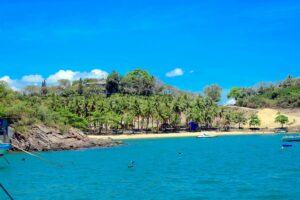
Hon Mun Island at Nha Trang
Join an island hopping tour

Island hopping tours from Nha Trang combine swimming, snorkeling, and short stops at different islands offshore.

Po Nagar
Explore local culture

Local markets, fishing villages, and Cham towers such as Po Nagar Cham Towers offer insight into Nha Trang’s cultural and historical background.

6. Dalat

Dalat is a highland city known for its cool climate, pine forests and its own local culture. It lies in the Central Highlands and feels very different from the coastal cities, with rolling hills, farms and lakes. Dalat has long been a popular retreat, with outdoor activities and a creative, slightly unconventional atmosphere.

Best things to do in Dalat

A man abseiling down a cliff next to a waterfall as part of canyoning in Dalat.
Try canyoning

Canyoning in Dalat combines abseiling, swimming, and climbing through waterfalls and forested canyons.

Bidoup National Park
Go trekking in the highlands

Trekking in Bidoup-Nui Ba National Park or on Mount Langbiang gives forest trails, viewpoints and cool air.

Elephant Waterfall Dalat
Explore waterfalls around Dalat

Waterfalls in Dalat such as Datanla Waterfall, Pongour Waterfall and Elephant Waterfall are among the most visited natural sights around the city.

An Easy Rider motorbike tour in the hills around Dalat
Join a Dalat Easy Rider tour

A Dalat Easy Rider tour often includes waterfalls, coffee and tea plantations, local workshops, and scenic backroads.

Crazy House Dalat
Experience Dalat’s unique culture

Dalat’s unique culture is reflected in places like the Crazy House, independent coffee shops, flower gardens, and creative local spaces.

Tip: Want to explore the natural surroundings of the city? Check out our Dalat tours, including Easy Rider routes, canyoning, and trekking.

7. Buon Ma Thuot

Buon Ma Thuot is the informal capital of Vietnam’s Central Highlands and the country’s main coffee-producing region. The city itself is low-key, but it is surrounded by forests, waterfalls, and ethnic minority villages. Buon Ma Thuot works best as a base for nature, culture, and responsible wildlife experiences rather than classic sightseeing.

Best things to do in Buon Ma Thuot

A wild elephant walking freely through the landscape of Yok Don National Park, surrounded by nature.
Visit elephants in Yok Don

Ethical elephant experiences in Yok Don National Park focus on observation and conservation, allowing you to see elephants in their natural forest environment without riding.

Coffee beans drying in the sun beside a traditional longhouse in Dak Lak, Central Highlands
Explore coffee plantations and museums

Coffee plantations around Buon Ma Thuot and places like the World Coffee Museum explain why this area is considered Vietnam’s coffee capital.

Path through the trees to Dray Sap Waterfall near Buon Ma Thuot, with two streams falling into a pool
Discover waterfalls in the highlands

Waterfalls near Buon Ma Thuot, such as Dray Nur and Dray Sap, are among the most impressive waterfalls in the Central Highlands.

Ethnic minority women pounding rice in front of a traditional longhouse in Dak Lak, Central Highlands
Learn about ethnic minority cultures

Ethnic minority villages around Buon Ma Thuot offer insight into traditional longhouses, weaving, and highland ways of life.

Wide view of Lak Lake in Dak Lak surrounded by hills and wetlands, showing the peaceful natural landscape of Vietnam’s Central Highlands
Visit Lak Lake and nearby villages

Lak Lake near Buon Ma Thuot is a large freshwater lake surrounded by ethnic minority villages, offering a quieter setting to learn about highland life, traditional longhouses, and rural landscapes.
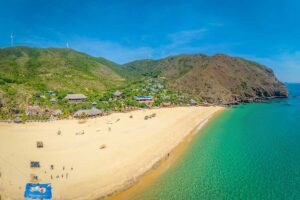
8. Quy Nhon

Quy Nhon is one of the best places to visit in Central Vietnam if you’re looking for beaches without heavy tourism. This laid-back coastal city combines long beaches, nearby fishing villages, and historic Cham sites. Compared to more developed beach destinations, Quy Nhon feels local, spacious, and relatively undiscovered.

Best things to do in Quy Nhon

Aerial view of Ky Co Beach near Quy Nhon: golden sand, green water and huts below the cliffs
Relax on quiet beaches

Beaches around Quy Nhon, including Bai Xep, Ky Co Beach, and Trung Luong Beach, are known for clear water and low crowd levels.

Colorful wooden fishing boats on the beach of Nhon Hai fishing village near Quy Nhon
Visit traditional fishing villages

Fishing villages like Nhon Hai and the area around Bai Xep Beach offer a glimpse into daily coastal life near Quy Nhon.

Tourists walking the red-railed boardwalk along the cliffs at Eo Gio near Quy Nhon
Walk along Eo Gio

Eo Gio is a dramatic coastal viewpoint with cliffs and walking paths overlooking the sea, one of Quy Nhon’s most scenic spots.

Front view of Cham Twin Towers in Quy Nhon city – Two red-brick towers standing side by side in a garden with palm trees.
Explore Cham culture

Cham towers and archaeological sites near Quy Nhon highlight the region’s historical connection to the Champa Kingdom.

Queen’s Beach, Quy Nhon: smooth “egg” stones at dusk with the city skyline across the bay.
Enjoy coastal road trips

Short coastal drives around Quy Nhon link beaches, viewpoints, and fishing villages, making the area ideal for slow exploration.

9. Pleiku

Pleiku is a highland city in Gia Lai Province surrounded by volcanic landscapes, lakes, and coffee farms. It feels cooler and more rural than Vietnam’s coastal cities, with a strong connection to ethnic minority cultures. Pleiku is best suited for travelers interested in nature, scenery, and off-the-beaten-path experiences.

Best things to do in Pleiku

K50 Waterfall falling into a rocky pool in the jungle of Kon Chu Rang Nature Reserve, Gia Lai
Visit Kon Chu Rang Nature Reserve

Kon Chu Rang Nature Reserve near Pleiku is a remote forest area known for trekking routes and K50 Waterfall deep inside the jungle.
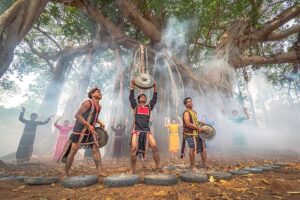
A group of Ba Na people performing a cultural dance, showcasing their traditions in Gia Lai Province.
Experience ethnic minority cultures

Ethnic minority communities around Pleiku maintain traditional longhouses, festivals, and agricultural traditions.

Aerial view of Bien Ho Lake and the greenery around it near Pleiku
Walk around Bien Ho Lake

Bien Ho Lake is a volcanic crater lake near Pleiku, popular for scenic walks and sunrise views.

A wide aerial shot capturing the different shades of green and brown fields spread across Chu Dang Ya Volcano.
Explore Chu Dang Ya Volcano

Chu Dang Ya Volcano is an extinct volcano near Pleiku, especially scenic during the green season and flower blooms.

A farmer wearing a cap carefully handpicking coffee cherries from a plantation in Gia Lai, a major coffee-growing region.
Visit coffee plantations

Coffee plantations around Pleiku show how the highland climate and basalt soil shape local coffee production.

10. Quang Tri (DMZ)

Quang Tri Province is one of the most historically significant areas in Central Vietnam. It lies along the former Demilitarized Zone and was hit hard in the Vietnam War. The area is quiet, and its historical sites help explain the country’s past.

Best things to do in Quang Tri

Dau Mau Bridge along the Ho Chi Minh Trail
Follow the Ho Chi Minh Trail

The Ho Chi Minh Trail runs through much of Central Vietnam, but some of its most famous and accessible sections are located in Quang Tri.

Deep underground in the Vinh Moc Tunnels
Visit Vinh Moc Tunnels

Vinh Moc Tunnels are an underground village built to shelter civilians during intense bombing near the former DMZ.

A US Army tank used during the Vietnam War is displayed at Khe Sanh Combat Base part of the Vietnam DMZ
Explore Khe Sanh Combat Base

Khe Sanh Combat Base is a major Vietnam War site with remnants of airstrips, bunkers, and military exhibits.

The Hien Luong Bridge with on the background the flag tower with huge Vietnamese flag in the DMZ
Cross Hien Luong Bridge

Hien Luong Bridge once marked the division between North and South Vietnam and remains a powerful historical symbol.

Displays and exhibits inside Mine Action Visitor Center for education and showing people about bombs and mines that are still dangerous today in the region of Quang Tri
Visit the DMZ museums and memorial sites

DMZ museums and memorial sites in Quang Tri, including the Truong Son National Cemetery and the Mine Action Visitor Center, provide broader context about the DMZ and the long-term impact of the war on the region.

Tip: Want to better understand the history of the DMZ in Quang Tri? Join our DMZ tour from Hue or choose a DMZ sightseeing transfer between Hue and Phong Nha, visiting key historical sites along the way.

Other places to visit in Central Vietnam

Central Vietnam covers a large and varied part of the country. Beyond the main highlights there are other places that can be interesting if you prefer quieter destinations or off-the-beaten-track travel. International travelers rarely visit them, but they can add depth to an itinerary, especially if you are interested in local life, nature or regional culture.

Pu Mat National Park

Vinh

Vinh is a coastal city in north-central Vietnam and mainly a regional transport hub. Most travelers use it as a stopover on the way north or toward Phong Nha, but it also gives access to beaches such as Cua Lo and the countryside around it.
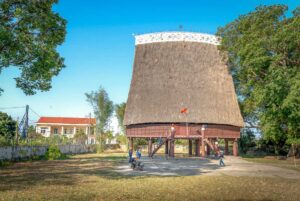
A traditional Rong house with its tall roof in an ethnic village near Kon Tum

Kon Tum

Kon Tum (now part of Quang Ngai province) is a highland town near the Laos border, known for its wooden cathedral, traditional Bahnar villages and its quiet river setting. It gives a more traditional Central Highlands experience than the larger cities.
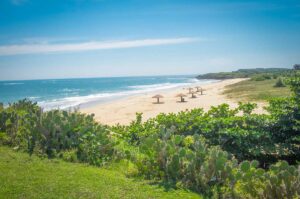
Peaceful Bai Xep Beach in Phu Yen with cactus-lined dunes, soft sand, and thatched umbrellas facing the turquoise sea.

Phu Yen

Phu Yen (now part of Dak Lak province) is a coastal area with undeveloped beaches, fishing villages and open landscapes. The basalt columns of Ganh Da Dia and the quiet bays appeal to travelers who want the coast without mass tourism.

Scenic beach in Ninh Thuan with goats grazing on sandy cliffs overlooking turquoise water and rocky headlands.

Ninh Thuan

Ninh Thuan (now part of Khanh Hoa province) is one of the driest areas of Vietnam, known for its Cham culture, vineyards, salt fields and rugged coast. Vinh Hy Bay and Nui Chua National Park have some of the quietest scenery in Central Vietnam.

Best time to visit Central Vietnam

The best time to visit Central Vietnam depends on where you go, because the region has two climate zones: the Central Coast and the Central Highlands. They are often grouped together, but their seasons differ, and that affects weather, travel conditions and activities. This section gives a short overview. The dedicated guide covers every month in detail.

Best time to visit the Central Coast

(Hoi An, Hue, Da Nang, Quy Nhon, Nha Trang, Phu Yen, Ninh Thuan)

When most travelers talk about Central Vietnam, they are usually referring to the Central Coast, especially when searching for weather or beach conditions. This region has a clear split between dry and rainy seasons, but rainfall patterns are different from northern and southern Vietnam.

  • Dry season: February to August
  • Rainy season: September to January

The best time to visit the Central Coast is generally from March to August, when rainfall is low, temperatures are warm, and beach conditions are at their best. This period is ideal for coastal cities like Da Nang and Nha Trang, as well as heritage towns such as Hoi An.

A key travel tip is to avoid October and November, when heavy rain, typhoons, and flooding are most likely. During these months, historical towns like Hoi An and Hue are particularly vulnerable to flooding, which can disrupt sightseeing and transport.

Best time to visit the Central Highlands

(Dalat, Buon Ma Thuot, Pleiku, Kon Tum)

The Central Highlands follow a different climate pattern from the coast and are more similar to southern Vietnam, with clearer wet and dry seasons. Higher elevation also means cooler temperatures throughout the year.

  • Dry season: December to April
  • Rainy season: May to November

The overall best time to visit the Central Highlands is from December to March, when the weather is drier, cooler, and more comfortable for trekking, motorbike trips, and outdoor activities.

While the rainy season is not considered ideal for travel conditions, it has its advantages. From June to September, waterfalls are at their most powerful, forests are lush and green, and the landscapes are at their most dramatic, making this period appealing for nature-focused travelers despite more frequent rain.

Weather per month

The weather in Central Vietnam changes noticeably throughout the year, especially along the Central Coast. Below is a short, month-by-month overview focused on coastal destinations such as Hoi An, Hue, Da Nang, Quy Nhon, Nha Trang, Phu Yen, and Ninh Thuan.

If you are traveling to the Central Highlands instead, see the dedicated guide about the weather and best time to visit Dalat.

January

January in Central Vietnam is part of the rainy season on the Central Coast, with cooler temperatures and frequent rainfall, especially around Hue and Hoi An. Beach conditions are generally poor, and flooding can still occur in low-lying areas.

February

February in Central Vietnam marks the transition toward drier weather, with rainfall decreasing and more stable conditions returning. While the sea can still be rough, sightseeing becomes easier and temperatures remain comfortable.

March

March in Central Vietnam brings drier days, rising temperatures, and improving beach conditions. It is one of the best months for combining cultural sightseeing with early beach time.

April

April in Central Vietnam is firmly within the dry season, offering warm temperatures and low rainfall. Beaches are generally calm, making April a strong month for coastal travel and outdoor activities.

May

May in Central Vietnam is hot and mostly dry, with long sunny days and excellent beach conditions. Humidity starts to increase, but rainfall is still limited across most coastal areas.

June

June in Central Vietnam is hot and sunny, with stable weather along the coast. It is a good month for beach destinations like Da Nang, Nha Trang, and Quy Nhon, though midday heat can be intense.

July

July in Central Vietnam remains hot with generally good beach conditions, though short rain showers become more common. Sea conditions are usually suitable for swimming, especially further south.

August

August in Central Vietnam is still part of the dry season, but humidity increases and rainfall becomes more noticeable toward the end of the month. Beach travel is still possible, though weather can be less predictable.

September

September in Central Vietnam marks the beginning of the rainy season, particularly in the north-central coast. Rainfall increases, and beach conditions start to decline, especially around Hue and Hoi An.

October

October in Central Vietnam is one of the wettest months, with heavy rain, typhoons, and a high risk of flooding. This is generally not a good month for beach travel or historic towns like Hoi An.

November

November in Central Vietnam continues the rainy season, with frequent rain and unstable weather. Coastal travel is possible but often disrupted, and beach conditions are usually poor.

December

December in Central Vietnam sees gradually improving weather toward the end of the month, though rain is still common early on. Temperatures are cooler, but beach conditions remain limited until later in the dry season.

Getting around Central Vietnam

Central Vietnam is relatively easy to travel through, especially along the coast where most major cities and transport routes are located. Depending on your itinerary, you’ll likely combine flights, trains, and buses to move between destinations. Below is a clear overview of the main transport options and how they work in Central Vietnam.

Airports in Central Vietnam

Flying is the fastest way to cover longer distances in Central Vietnam, especially if you are short on time or combining regions. The main airports are well connected to Hanoi and Ho Chi Minh City, with some limited international routes.

  • Da Nang International Airport: serves Da Nang, Hoi An, Hue and the central coast. The busiest airport in Central Vietnam, with domestic and international flights.
  • Phu Bai Airport (Hue): serves Hue and the area around it, mainly domestic flights to Hanoi and Ho Chi Minh City.
  • Cam Ranh International Airport (Nha Trang): serves Nha Trang and the coast around it, with a strong domestic network and international flights.
  • Lien Khuong Airport (Dalat): serves Dalat and the Central Highlands, domestic flights and a few international routes.
  • Buon Ma Thuot Airport: serves Buon Ma Thuot and the highlands around it, domestic flights only.
  • Pleiku Airport: serves Pleiku and Kon Tum, domestic flights only.

For most travelers, Da Nang and Cam Ranh are the main gateways, while highland destinations rely more on domestic flights or overland travel.

Train travel in Central Vietnam

Train travel in Vietnam runs mainly along the coastline, which makes it a good option for the coastal cities and beach destinations of Central Vietnam. It works well for Hue, Da Nang, Quy Nhon, Nha Trang and Phu Yen, but it does not serve the Central Highlands. Dalat, Buon Ma Thuot, Pleiku and Kon Tum have no railway.

Vietnam’s trains are generally safe and comfortable, though slower than flying. For longer distances, sleeper trains are common and allow overnight travel, while daytime seats work well for shorter coastal routes.

Major train stations in Central Vietnam

  • Hue Railway Station: serves Hue and the nearby coast.
  • Da Nang Railway Station: serves Da Nang and Hoi An (with a road transfer).
  • Dieu Tri Station (Quy Nhon): the main station for Quy Nhon and the coast around it.
  • Tuy Hoa Station: serves Phu Yen.
  • Nha Trang Railway Station: serves Nha Trang and Cam Ranh.
  • Dong Hoi Station: serves Phong Nha-Ke Bang National Park (with a road transfer).

These are the main hubs, but in practice, almost all coastal towns in Central Vietnam can be reached by train. For booking tips, station access, and seat classes, refer to the detailed train travel in Vietnam guide.

Bus travel in Central Vietnam

Bus travel is the most common way to get around Central Vietnam and reaches virtually every destination, from small coastal villages to remote towns in the Central Highlands. Buses are affordable and frequent, but quality and safety can vary, especially on overnight routes.

There are some safety concerns with long-distance sleeper buses, so it’s important to choose reputable bus companies and avoid the cheapest options when possible. Reading a dedicated guide on bus travel in Vietnam helps you understand how to select operators, book tickets, and avoid common issues.

Common bus and van types

  • Sleeper buses: standard overnight buses with reclining beds, widely available, but quality varies.
  • Cabin sleeper buses: newer buses with semi-private cabins, more comfort and privacy.
  • Limousine vans: small, high-end vans with few seats, popular for shorter routes and day travel.

Popular routes by bus or limousine van

  • Da Nang to Hoi An
  • Hue to Da Nang
  • Da Nang to Phong Nha
  • Nha Trang to Dalat
  • Quy Nhon to Nha Trang
  • Buon Ma Thuot to Dalat

Buses and vans offer the greatest flexibility in Central Vietnam, especially when combining coastal destinations with the Central Highlands.

Car with driver

Hiring a car with a driver is the most flexible way to travel around Central Vietnam. It is more expensive than buses or trains, but also safer, more comfortable, and far more adaptable. A car with driver allows you to stop along the way for sightseeing, photos, meals, or short detours, instead of simply traveling from point A to point B.

This option is especially useful for families, couples, or travelers with limited time who want to combine transport with sightseeing in one day.

Popular routes by car with driver

  • Hue to Hoi An: often driven over the Hai Van Pass, with optional stops at fishing villages, lagoons and coastal viewpoints.
  • Phong Nha to Hue: a scenic route that can include the DMZ sites and other historical stops on the way.
  • Dalat to Nha Trang: a mountain-to-coast route past forests, coffee plantations and waterfalls.

Motorbike travel in Central Vietnam

Motorbike travel is one of the most rewarding ways to see Central Vietnam, with freedom, scenery and access to places that are hard to reach by public transport. It is popular with experienced riders who want scenic routes rather than city traffic.

There are two main motorbike routes that travelers focus on:

The coastal route: follows beaches, fishing villages and seaside roads from Hue and Da Nang down toward Quy Nhon, Nha Trang and beyond. Easy to navigate, with frequent towns and sea views.

The Central Highlands route (Ho Chi Minh Trail): follows sections of the Ho Chi Minh Trail through mountains, forests and ethnic minority areas. Quieter, cooler and more remote, it links Phong Nha, Kon Tum, Pleiku, Buon Ma Thuot and Dalat.

There are two main ways to travel Central Vietnam by motorbike:

Driving yourself: self-driving gives complete freedom and is a memorable adventure, but it needs experience. You should be comfortable riding long distances in varying road conditions. A valid motorbike license and an International Driving Permit (IDP) are required to ride legally in Vietnam.

Easy Rider tours: you sit on the back of a motorbike driven by a local guide, which combines safety, local knowledge and scenic routes. Especially popular in the Central Highlands.

Tips for traveling in Central Vietnam

Before you set off, it helps to know a few things specific to this region. Central Vietnam is generally easier to travel than the north, but the weather, the differences between coast and highlands, and the crowds in some places still affect how smoothly your trip goes. These tips are about realistic preparation, for the popular highlights as well as the quieter areas.

Rainy season travel: plan with awareness

Traveling during the rainy season along the Central Coast is very different from short tropical showers elsewhere in Vietnam. Rain can be prolonged, combined with strong wind and rough seas, which limits beach time and water activities. If beaches are a priority, plan carefully or reduce the number of coastal days during peak rainy months.

Flood risk in historic towns

Historic towns such as Hoi An and parts of Hue are vulnerable to flooding during the wettest months, especially in October and November. Flooding does not happen continuously, but when it does, streets, attractions, and transport can be disrupted. Keeping some flexibility in your itinerary and avoiding tight schedules in flood-prone periods makes travel much easier.

Central Coast or Central Highlands: what to expect

The Central Coast is well developed, easy to navigate, and focused on cities, beaches, and heritage sites. The Central Highlands are more rural and slower paced, with longer travel times, fewer services, and simpler accommodation in remote areas. Knowing this difference helps set realistic expectations when combining both regions in one itinerary.

Mobile coverage: coast and highlands

Mobile coverage is strong in coastal cities and tourist areas such as Da Nang, Hoi An, Hue, and Nha Trang. In the Central Highlands, coverage remains good in towns like Pleiku and Buon Ma Thuot, but can drop in more remote parts of Gia Lai, Kon Tum, and national park areas. Downloading offline maps and saving key locations in advance is still recommended.

Getting out of the tourist centers pays off

Places like Hoi An, Hue, and Da Nang are among the most popular places to visit in Central Vietnam and can feel busy at times. Short trips outside these centers often lead to quieter beaches, fishing villages, lagoons, and rural landscapes that show a more local side of the region.

Book accommodation ahead in high season

Central Vietnam has a wide range of accommodation, so rooms are rarely unavailable. However, the best beachfront hotels, boutique stays, and well-located properties often book out early during high season and holidays. Booking ahead gives you better choice rather than better prices.

Cultural sensitivity still matters, even in tourist areas

Despite heavy tourism, temples, pagodas, Cham sites, and fishing villages are active cultural spaces. Dress modestly where appropriate, ask before taking photos of people, and be mindful of daily life, especially outside major tourist zones. Respectful behavior is usually met with very warm local responses.

Try regional dishes from Central Vietnam

Central Vietnamese cuisine is known for bold flavors, smaller portions, and regional specialties. Dishes such as cao lau, mi quang, bun bo Hue, banh beo, and fresh seafood along the coast are closely tied to local culture and worth seeking out as part of the travel experience.

Nhung and Marnick, the founders of Local Vietnam, in the mountains of North Vietnam

This guide was created by Local Vietnam

Local Vietnam is a Vietnam-based travel company founded by Dutch traveler Marnick Schoonderwoerd and his Vietnamese wife Nhung. Nhung was born in Pleiku in the Central Highlands, and Marnick has lived in Vietnam for many years. Together they have lived for several years in different parts of Central Vietnam, including Pleiku, Quy Nhon, Da Nang, Hoi An and Dalat.

With this long experience and local knowledge of the region, from the coastal cities to the Central Highlands, the Local Vietnam team has written this in-depth guide to traveling in Central Vietnam.

Ready to explore Central Vietnam?

Local Vietnam is based on the ground in Vietnam and helps travelers plan routes through Central Vietnam. Whether you want a few days along the coast or Central Vietnam as part of a longer trip through the country, we are here to help you plan it.

Vietnam trip planning of Local Vietnam - A table with map of the world and flag of Vietnam

Travel planning

A traveler in a conical hat above a river valley with limestone mountains

Package trips

Vietnam car rental by Local Vietnam - A red rented car standing on a dirt road between the terraced rice fields in Pu Luong

Rent a car

Scroll to Top
Vietnam Travel Guide book cover by Local Vietnam featuring Halong Bay landscapes, tailoring your trip with tips from authors Nhung and Marnick.
Before you go
Get the free Vietnam ebook
Complete with itinerary, destinations, food, accommodation and tips (200+ pages). We send it to your email as a PDF.
ItineraryDestinationsFoodAccommodationTips
  • This field is for validation purposes and should be left unchanged.
No spam. Unsubscribe anytime.