


Hanoi: Vietnam’s old, fast-moving capital
Hanoi is one of Asia’s oldest capitals, more than 1,000 years old, and it wears that history openly: ancient pagodas, a French-built centre, lakes scattered through the city, and a tangle of motorbike-filled streets that never quite stops. It’s the cultural and political heart of Vietnam and the gateway to the whole north.
Most travelers spend two or three days here before heading out to Halong Bay, Sapa, Ha Giang or Ninh Binh — enough to cover the best things to do in Hanoi, eat very well, and get a feel for the city’s rhythm. The sights cluster in a few areas: the Old Quarter and Hoan Kiem Lake, the Ba Dinh government district, and the lakes to the north. Most of it is easy on foot and by Grab.
Best things to do in Hanoi
The list below mixes the big sights with food, history and the small experiences that make the city, with honest notes on what’s worth your time and what’s a quick look. The first dozen or so cluster around the Old Quarter and the lake, the museums and monuments sit a little west in Ba Dinh, and a few experiences round things off.
1. Explore the Old Quarter on foot
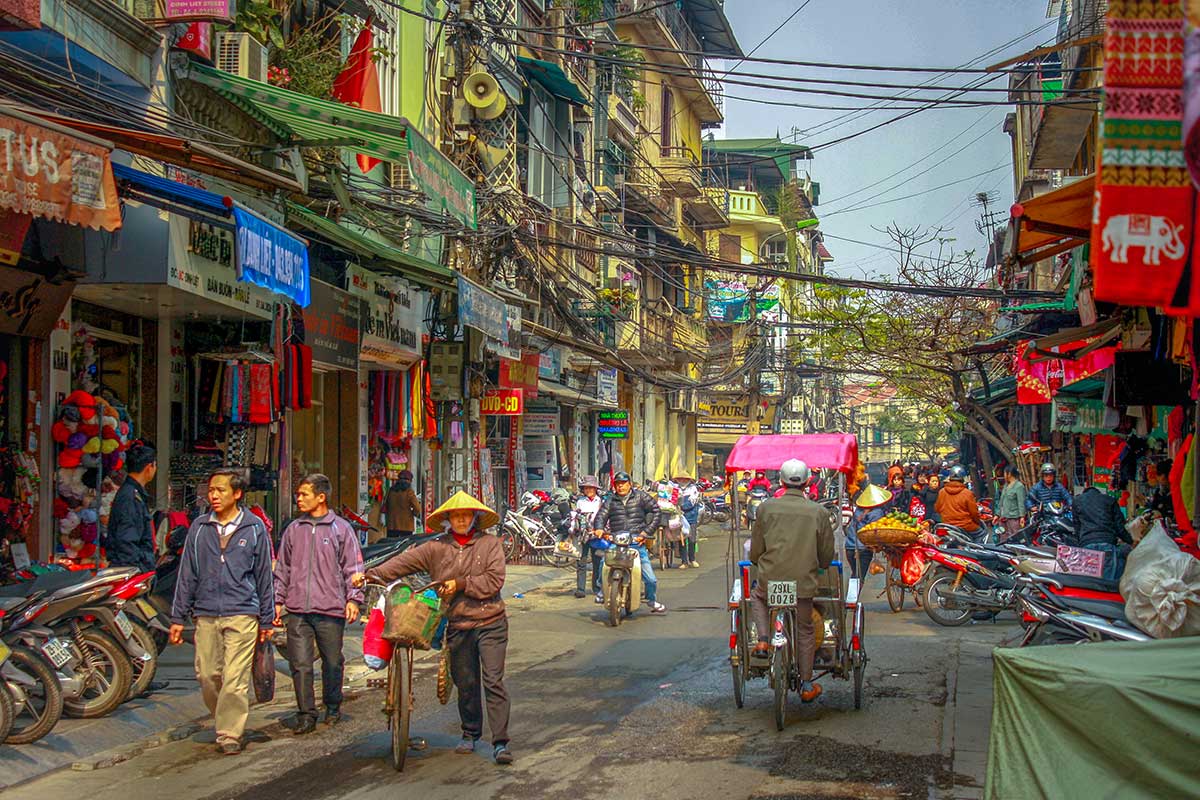
The Old Quarter is the heart of Hanoi and the best thing to do here, but it’s worth understanding what it is: not a list of sights to tick off, but a dense maze of narrow streets — many still named after the trade once sold there — where the experience is simply being in it. Walking it slowly, riding a cyclo through it, browsing the markets and eating street food is the point, with the city happening around you the whole time. Give it a morning with no fixed plan, and brace yourself for crossing the roads (walk steadily and predictably; the traffic flows around you).
That said, there are a few small sights tucked into the streets worth a look as you wander:
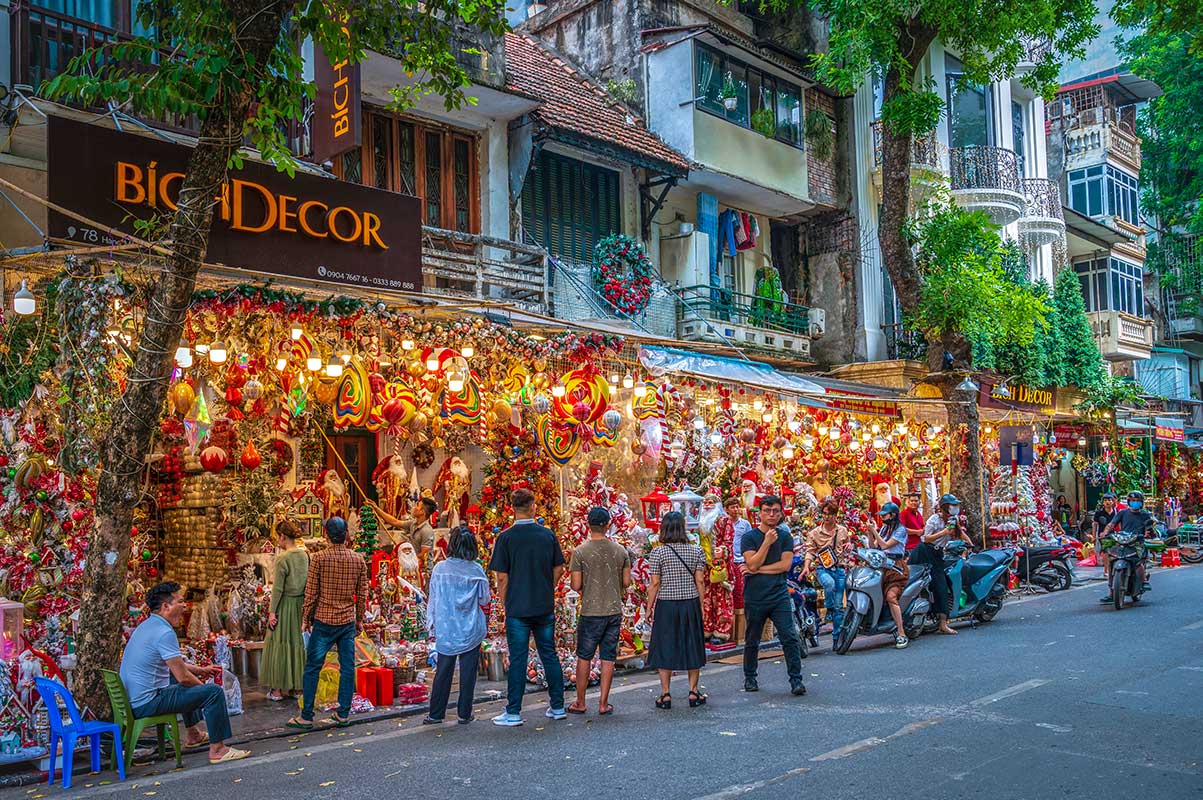
- Hang Ma street — The decorations street, lined with shops selling colourful paper goods and lanterns; it transforms for each festival, going all out for Tet, the Mid-Autumn Festival and Christmas.
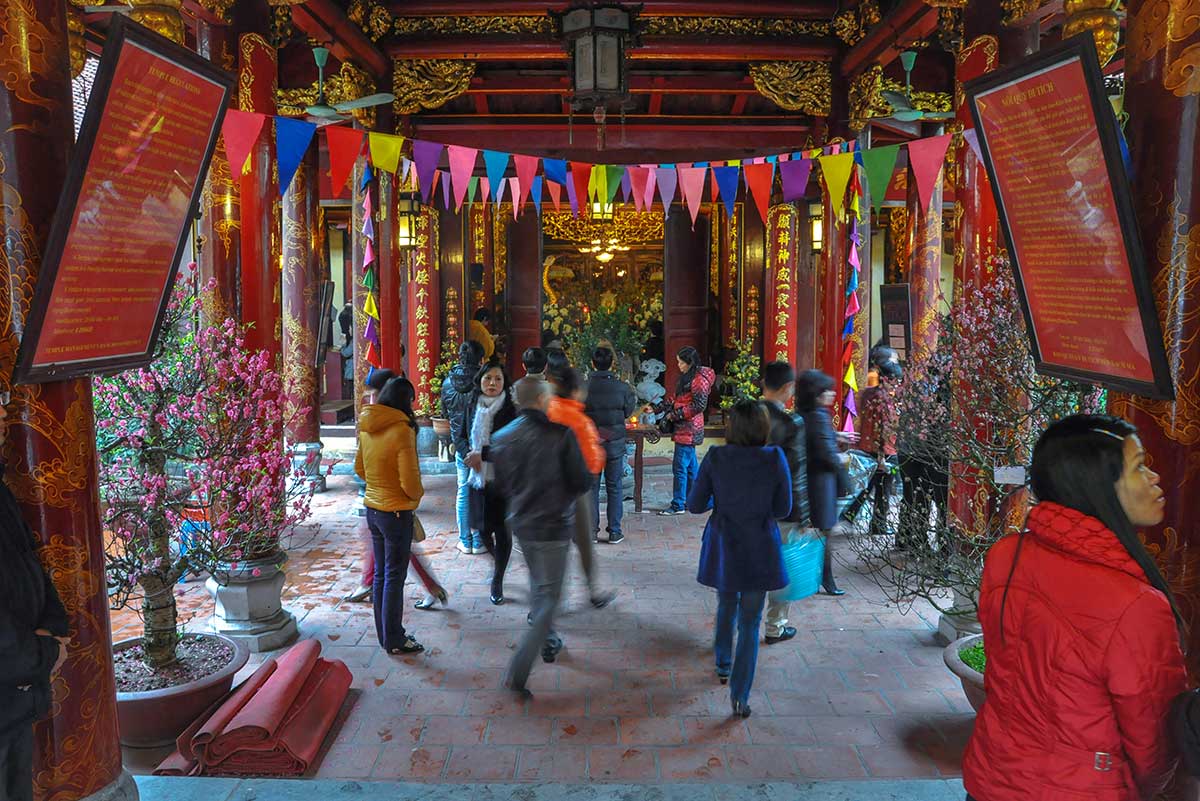
- Bach Ma Temple — The oldest temple in the Old Quarter, a small, atmospheric shrine dedicated to the white horse that legend says helped site the city walls.
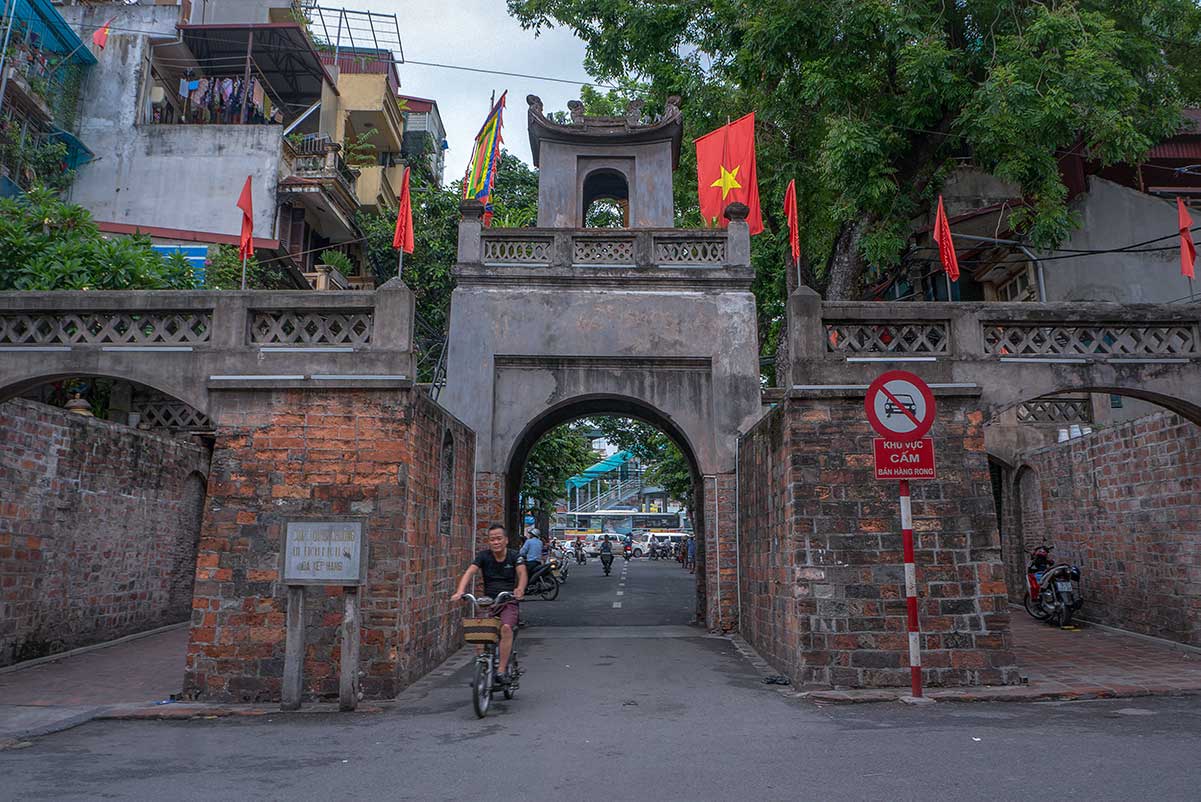
- Hanoi Old City Gate — Quan Chuong gate, the last surviving gate of the old citadel wall, a rare piece of 18th-century Hanoi still standing among the traffic.
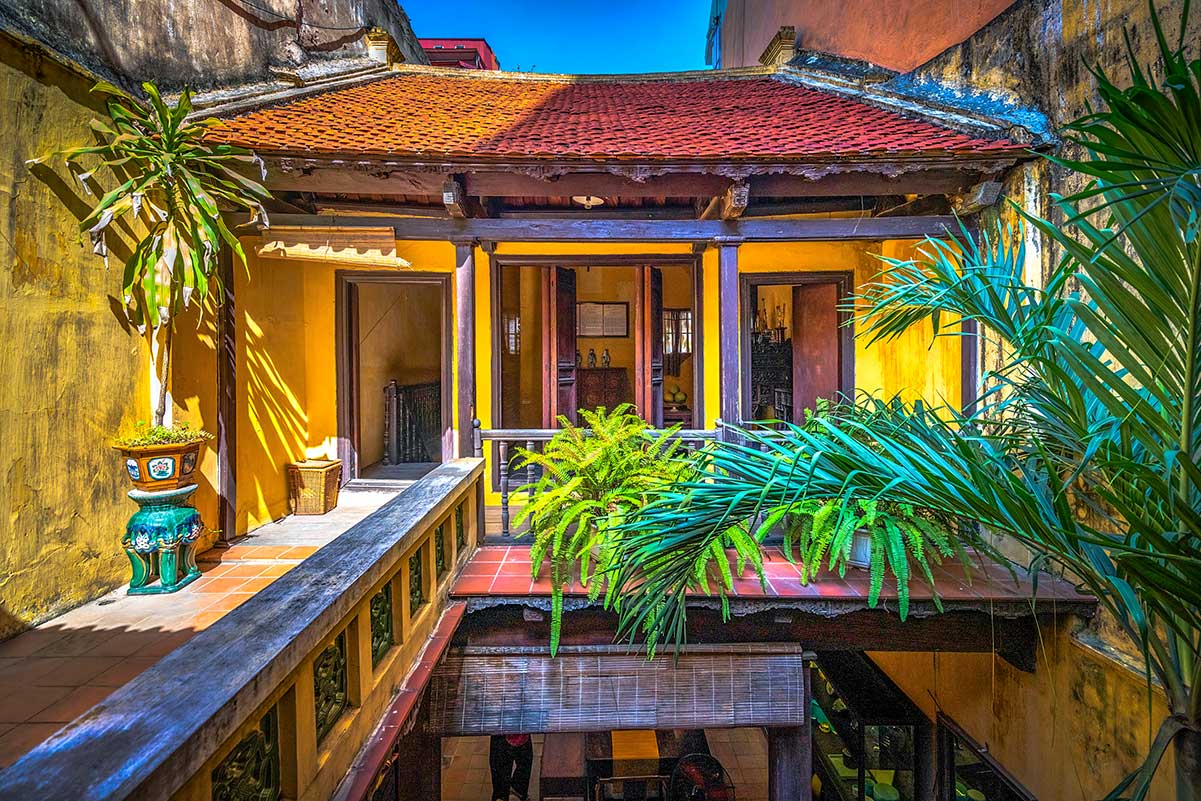
- Ma May ancient house — A restored traditional merchant’s house open to visitors, giving a quick, cheap look at how Old Quarter families once lived and traded.
2. Take a street food tour
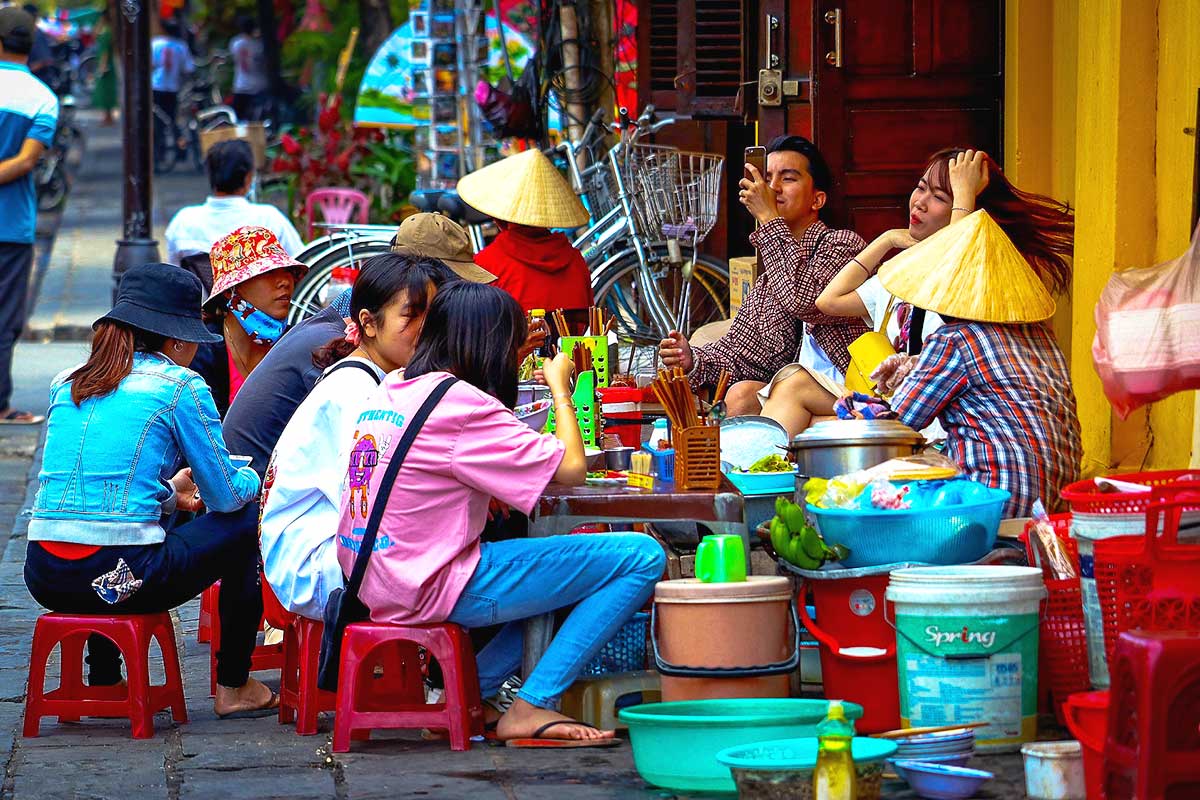
Hanoi has some of the best street food in Vietnam, and a guided tour is the easiest way into it — one of the most rewarding things to do in Hanoi for first-timers. A local guide takes you to stalls you’d never find alone, explains what you’re eating, and steers you to clean, busy spots, handy when the menu is just a woman, a charcoal burner and a stack of plastic stools. Expect bun cha, pho, banh mi, nem and egg coffee along the way. You can explore on your own, but a 3-hour evening tour packs in more and removes the guesswork.
3. Try egg coffee and Hanoi’s coffee culture
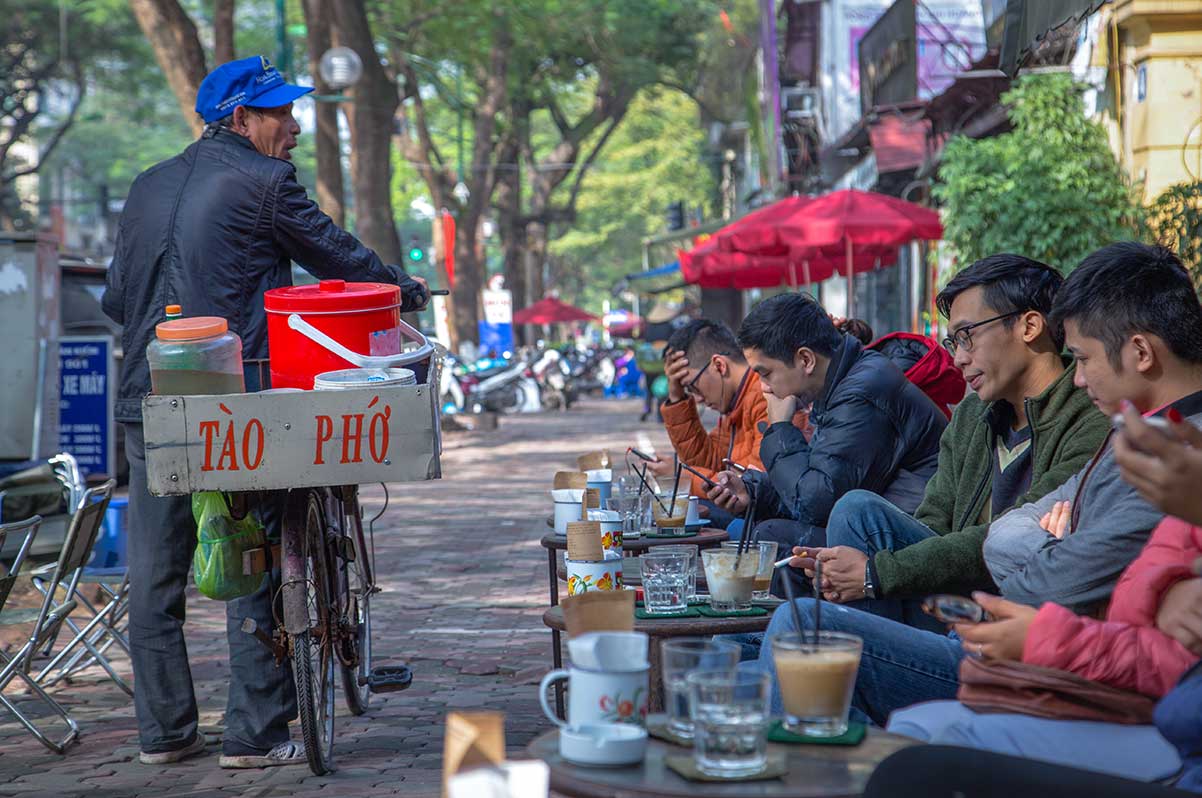
Hanoi takes its coffee seriously, and the city’s signature drink is egg coffee (ca phe trung) — strong coffee under a thick, sweet whipped egg-yolk cream that tastes more like dessert than a drink. It was invented here, and Cafe Giang, run by the inventor’s family, is the classic place to try it. While you’re at it, the smoother coconut coffee is worth a stop too. Sitting on a low stool watching the street go by, coffee in hand, is one of the most genuinely local things to do in Hanoi.
4. Watch a water puppet show
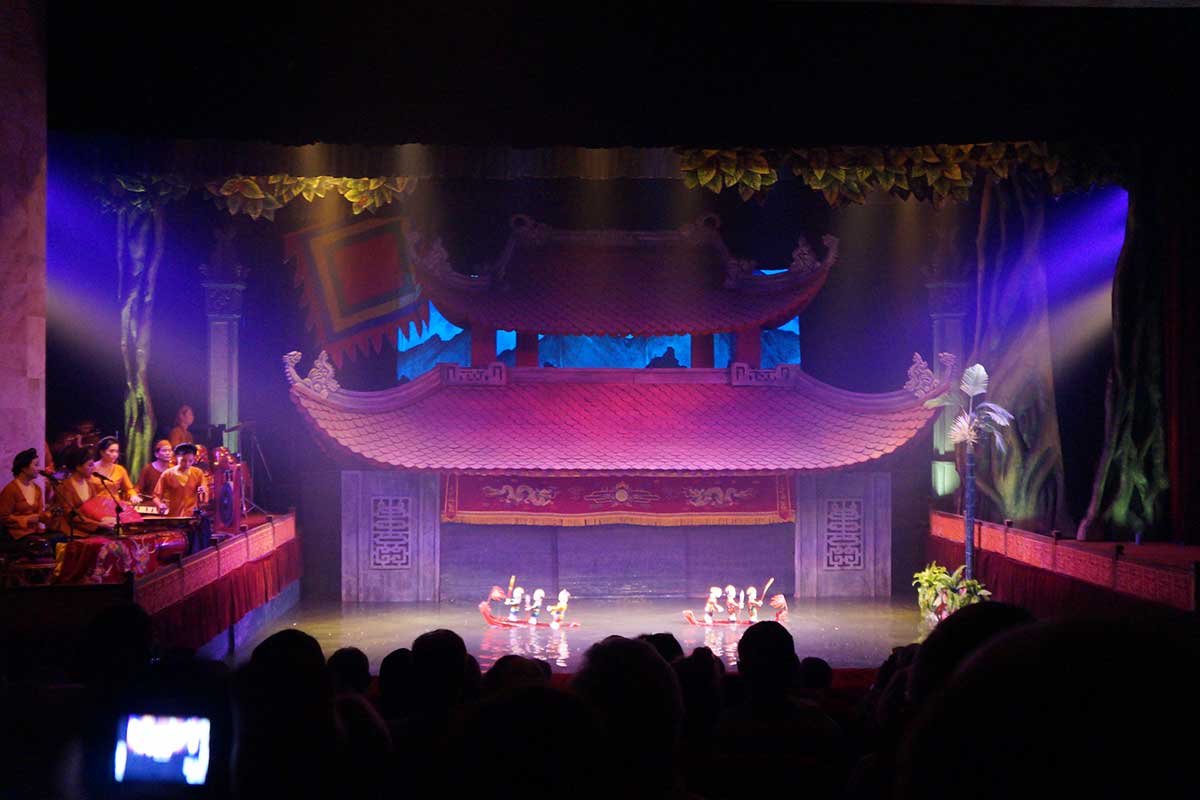
Water puppetry is a northern Vietnamese art form going back centuries, with wooden puppets dancing on a pool of water while musicians play live alongside. The Thang Long Water Puppet Theatre by Hoan Kiem Lake is the original and best-known, with several short shows a day. Tickets run roughly 100,000 to 200,000 VND depending on your seat. It’s touristy and there’s no English narration, but the spectacle carries it, and at under an hour it doesn’t outstay its welcome — a good early-evening thing to do in Hanoi.
5. Drink bia hoi on Ta Hien street

Bia hoi is fresh, light draught beer brewed daily and sold for around 10,000 to 20,000 VND a glass — some of the cheapest beer anywhere. The taste is nothing special; the experience is the point. The liveliest spot is the corner of Ta Hien street (the “beer corner”) in the Old Quarter, where travelers and locals spill onto tiny stools into the night. Go for the atmosphere and the people-watching rather than the beer itself.
6. Walk around Hoan Kiem Lake

Hoan Kiem Lake is the green heart of the city and its main meeting place. A loop around it takes 30 to 40 minutes, past the red The Huc bridge leading to Ngoc Son Temple on a small island. Come at dawn to see locals doing tai chi and jogging, or in the evening for the buzz. On weekends the surrounding streets close to traffic and turn into a pedestrian zone with games, music and food — the best time to be there.
7. Cross Long Bien Bridge and browse the market
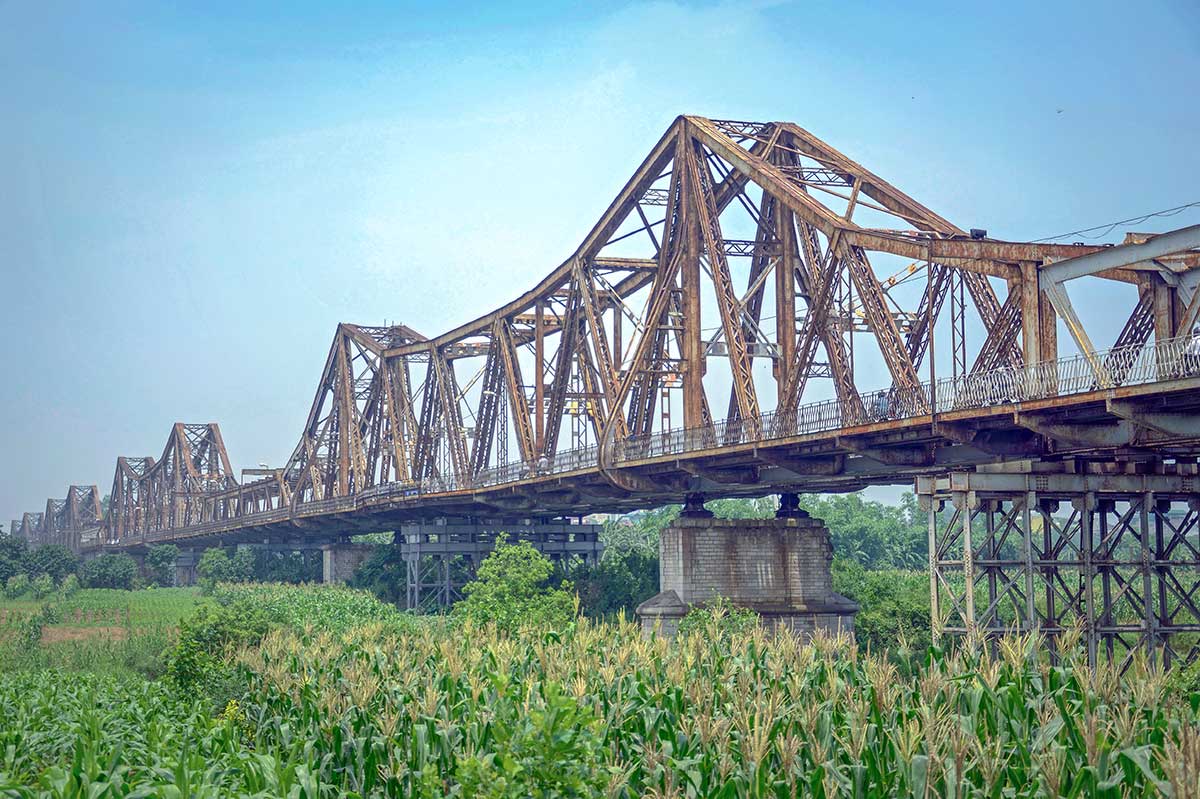
Long Bien Bridge is a long, rusting French-built railway and road bridge over the Red River, more than a century old and still in use. Walking or cycling across gives you views over the river, the banana fields below and trains rattling past.
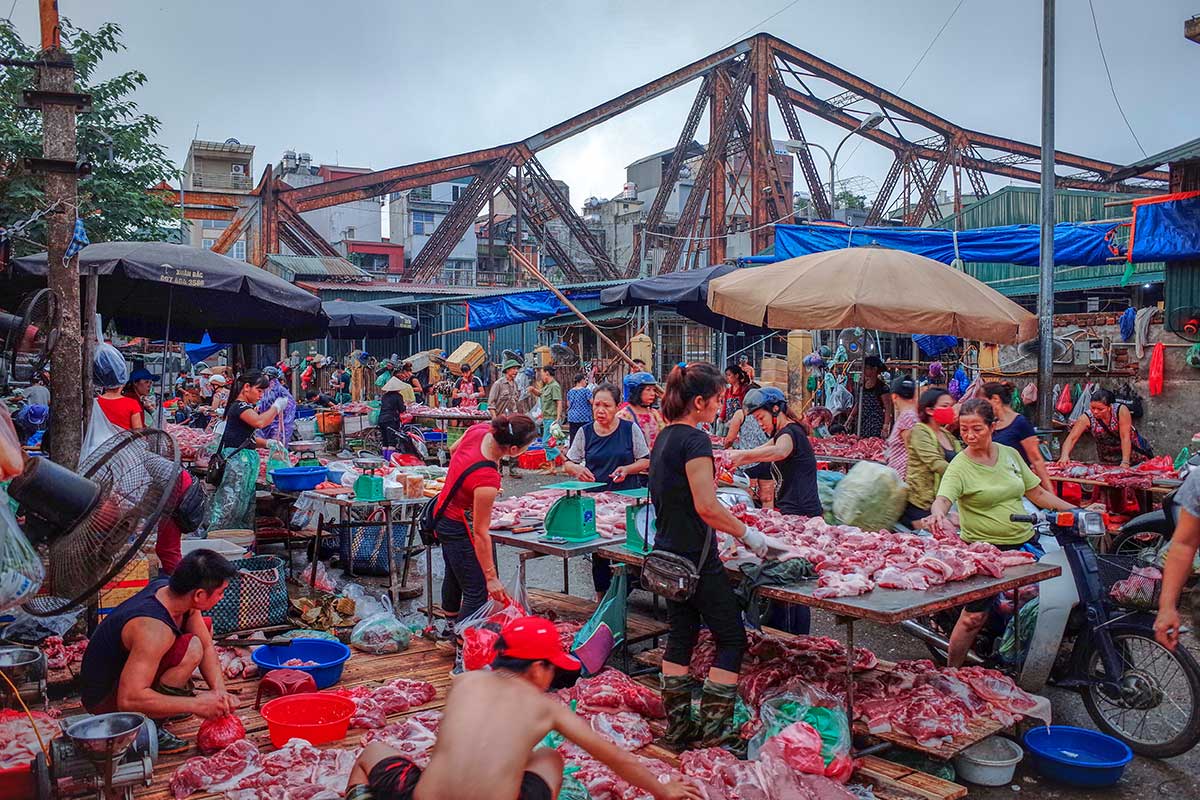
At the foot of it, the wholesale Long Bien market runs through the night and early morning — raw, busy and very local. It’s more about atmosphere and photos than a sight; pair the bridge with the market for an early-morning wander.
8. Visit Hoa Lo Prison
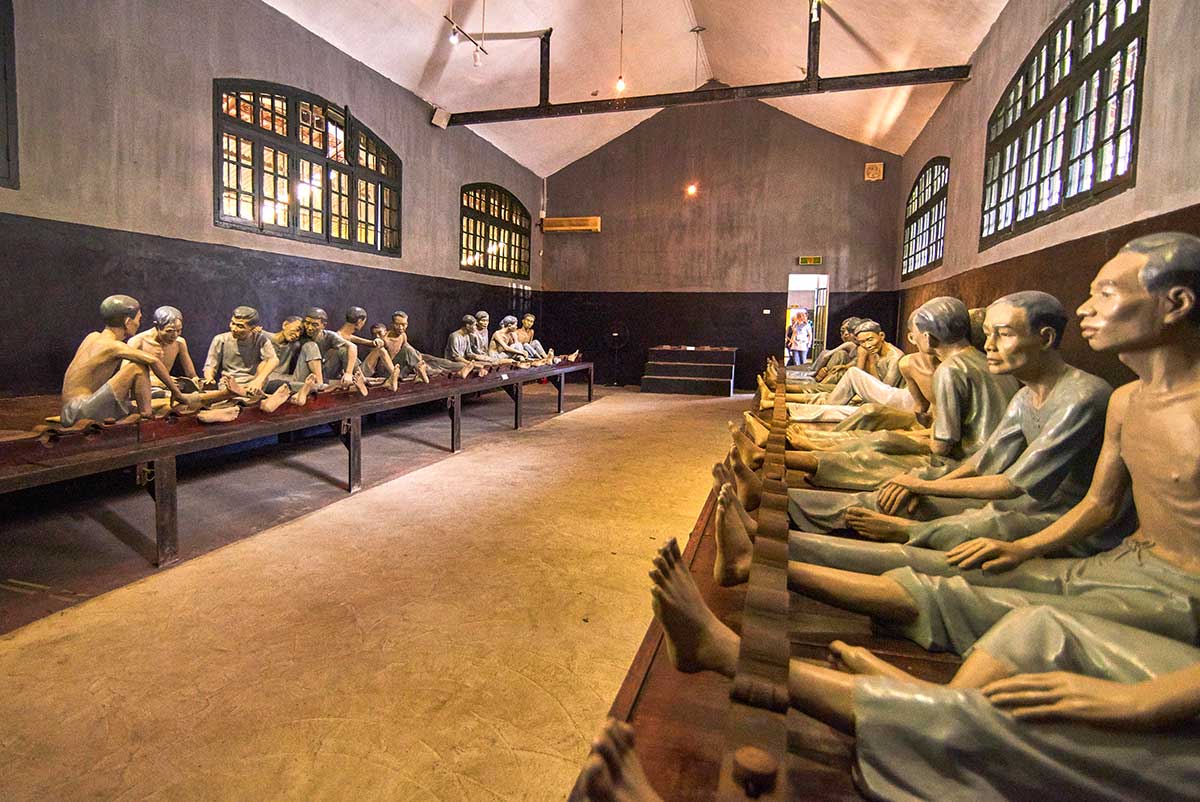
Hoa Lo Prison, nicknamed the “Hanoi Hilton,” is one of the city’s most affecting museums. Built by the French to hold Vietnamese political prisoners, and later used for American POWs during the war, it lays out both eras through original cells, the old guillotine, and personal stories. Entry is around 50,000 VND. The evening “Sacred Night” tour, booked ahead, is a more atmospheric, theatrical way to see it. Allow an hour to an hour and a half — it’s compact but heavy, and one of the better history-focused things to do in Hanoi.
9. See the B52 Lake and Victory Museum
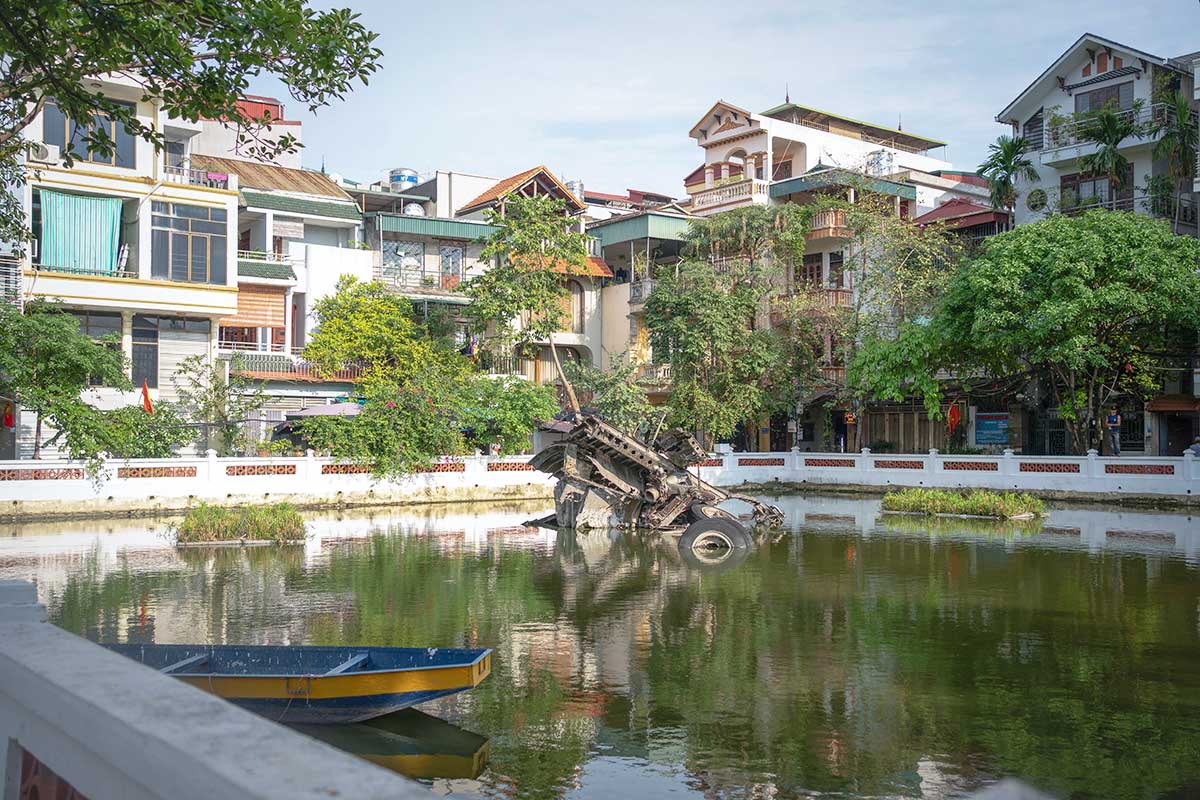
One of Hanoi’s stranger sights, B52 Lake (Huu Tiep lake) holds the wreckage of an American B-52 bomber, shot down over the city in 1972 and left half-submerged in the small residential pond ever since. It’s tucked down a quiet lane and free to see — a striking, low-key war relic sitting among everyday Hanoi life. Pair it with the nearby B52 Victory Museum, which tells the story of the “Hanoi Dien Bien Phu in the air” air battles with planes, missiles and wreckage in its yard.
10. See Hanoi Train Street
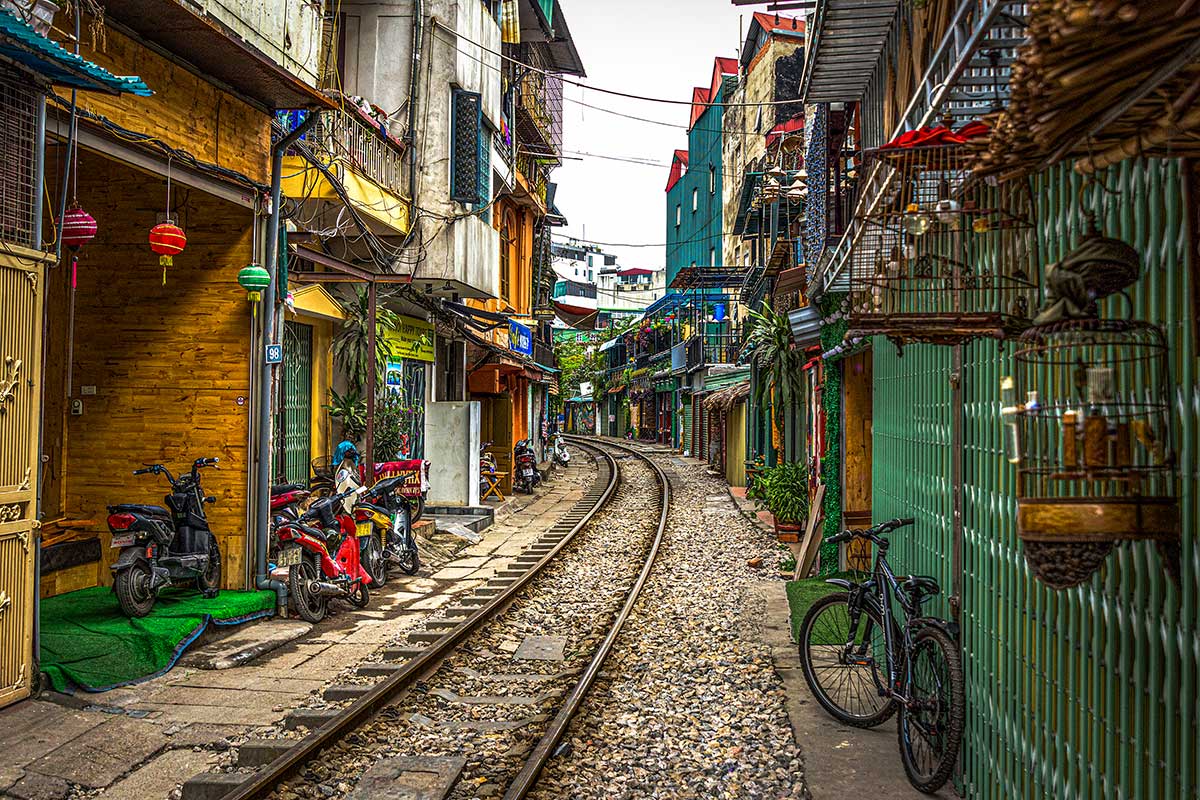
Train Street is the famous narrow lane where a working train passes within an arm’s reach of trackside cafes. Be clear on the current reality: the famous Old Quarter section is barricaded and guarded, so you can only get in by being waved through by a licensed cafe and buying a drink, while the quieter Le Duan section further south is more open and relaxed. Trains mostly pass in the evening on weekdays and more often at weekends, so check times with a cafe on the day. Ignore any motorbike driver who claims it’s “closed” and offers a ride — that’s a standard scam. The coffee is mediocre and overpriced; you’re paying for the moment the train roars past, which is genuinely a thrill.
11. Step inside St Joseph’s Cathedral
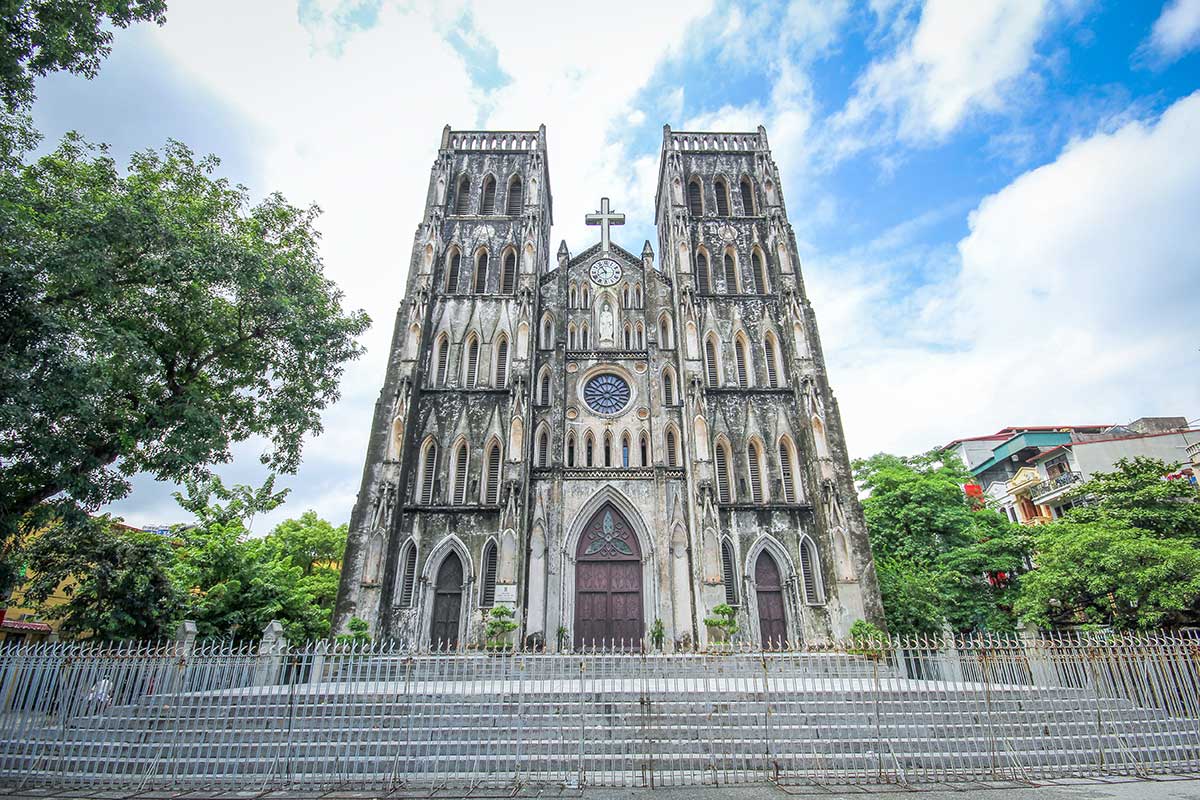
St Joseph’s Cathedral is a weathered, Gothic-style church from the 1880s that looks a little like a smaller Notre-Dame, right in the centre near Hoan Kiem. It’s free to step inside outside of Mass times, and the square in front is ringed with popular cafes — a good spot for a drink and some people-watching. It’s a quick stop rather than a destination in itself, but it’s central and worth a few minutes as you pass.
12. Wander the French Quarter
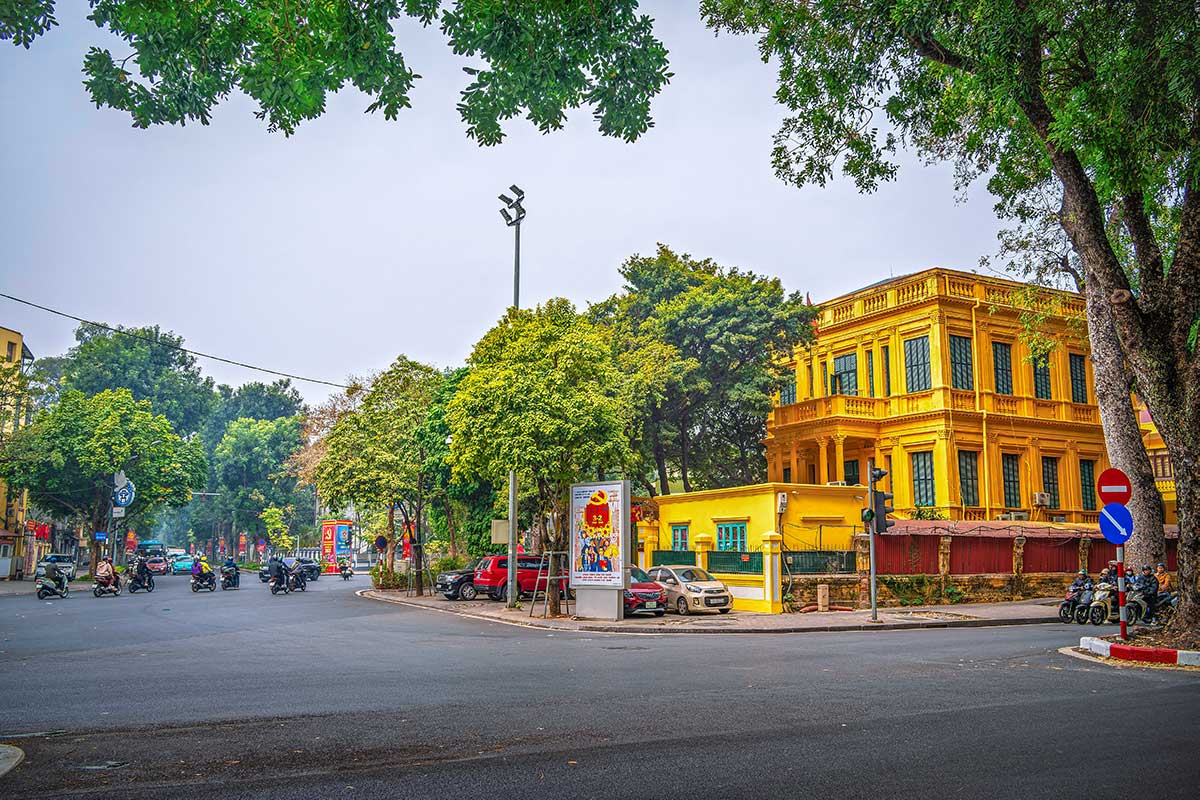
Just south and east of Hoan Kiem Lake, the French Quarter is the elegant, colonial side of Hanoi — wide tree-lined boulevards and grand ochre-yellow buildings that feel a world away from the cramped Old Quarter. There’s no single sight to tick off; the pleasure is wandering the streets and taking in the architecture, ideally with a coffee stop.
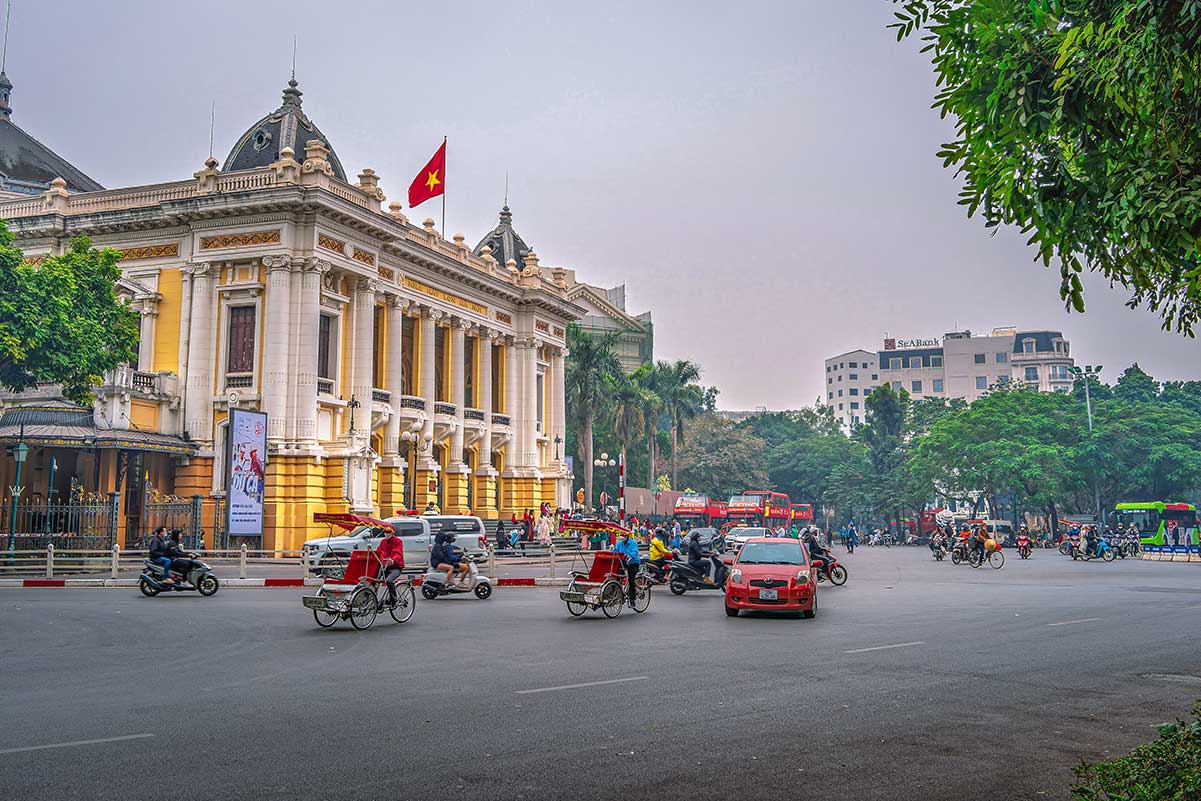
Along the way you’ll pass the grand Hanoi Opera House, the colonial-era Metropole hotel, the Trang Tien Plaza shopping centre, and the small, browsable Hanoi Book Street tucked just off the boulevards.
13. Pay respects at the Ho Chi Minh Mausoleum and Ba Dinh complex
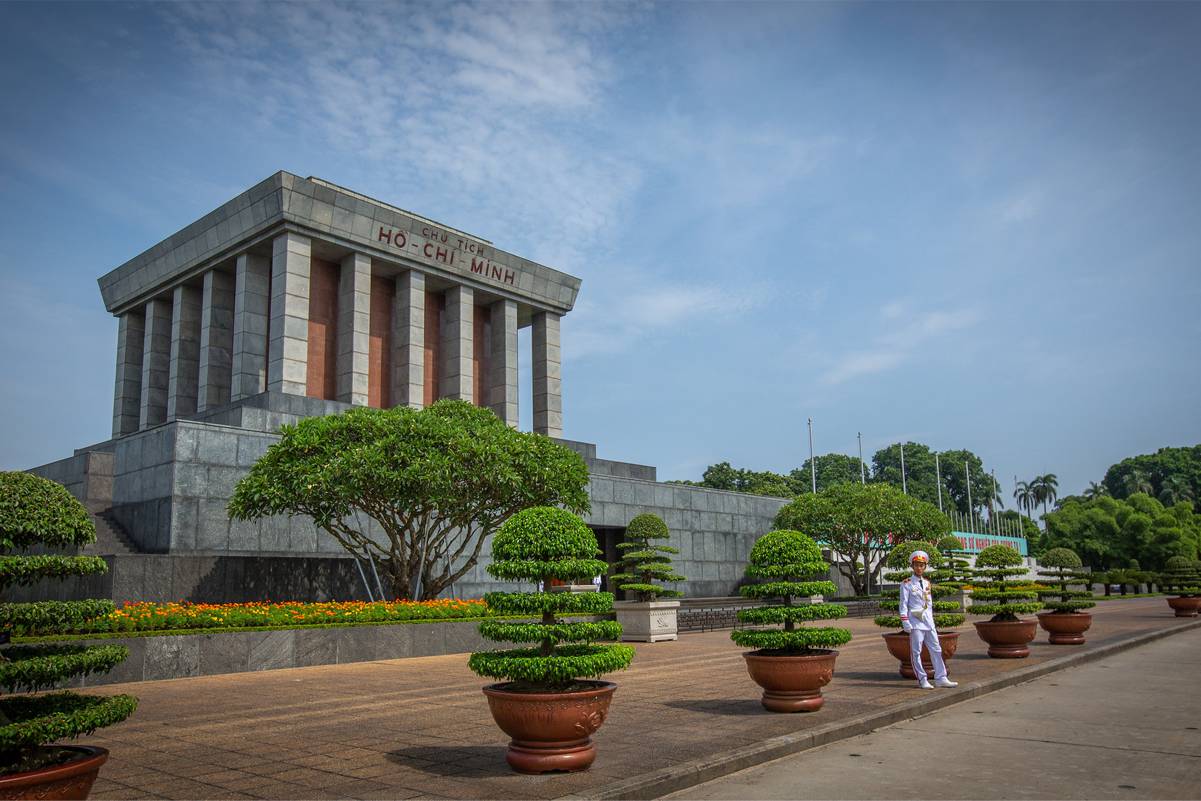
The Ho Chi Minh Mausoleum on Ba Dinh Square holds the embalmed body of Vietnam’s founding leader, viewed in respectful silence as you file past. It’s free for the queue (a small fee for foreigners), but the rules are strict: mornings only, closed Mondays and Fridays, cover your knees and shoulders, no bags or photos inside. It also shuts for about two months a year for maintenance — in 2026 that’s roughly 4 September to 4 November.
The same walkable complex holds several other sights, so do them together:
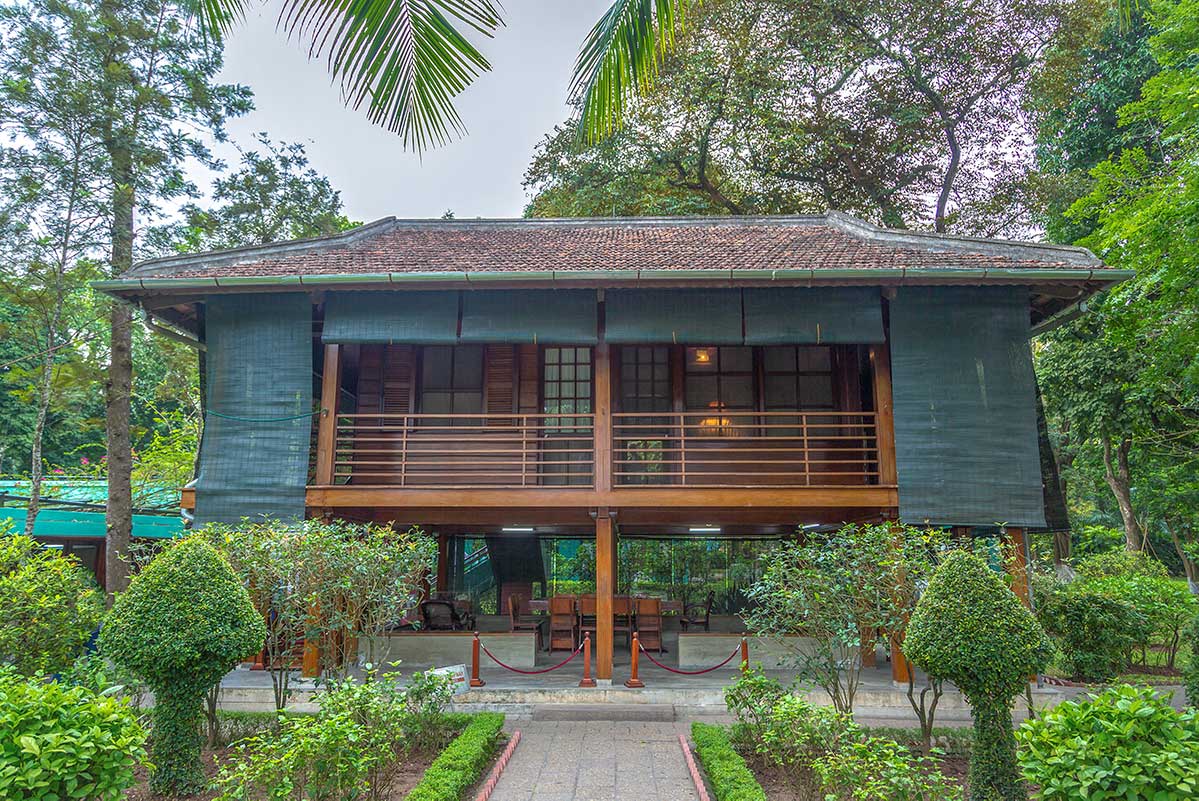
Ho Chi Minh’s stilt house is the simple wooden house on stilts where Ho Chi Minh chose to live and work instead of the grand yellow Presidential Palace beside it, the former French governor’s residence, which you can admire from the outside but not enter.

The One Pillar Pagoda is a small wooden temple built to resemble a lotus blossom rising from the water on a single stone column, dating back to the 11th century and one of the most recognisable symbols of Hanoi.
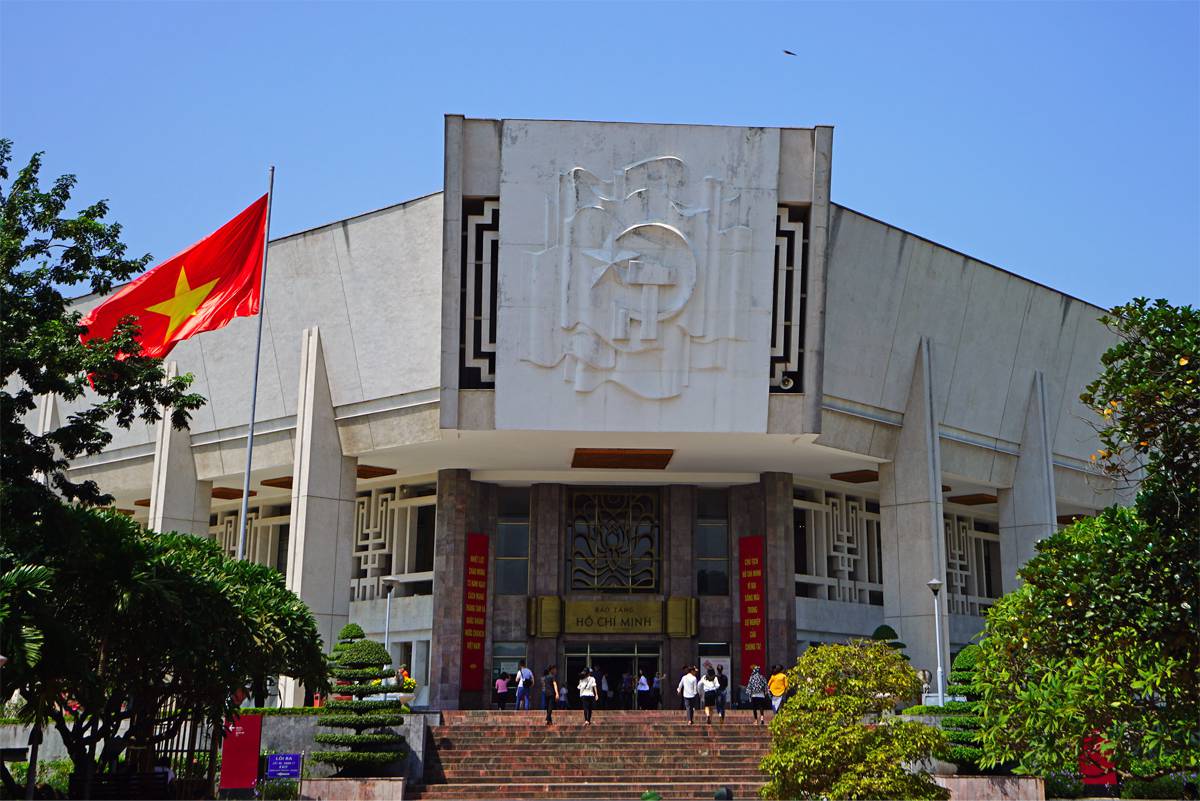
The Ho Chi Minh Museum traces his life and the wider revolution through photos, documents and some strikingly abstract, symbolic displays, set in a large lotus-shaped building.
Allow a half-morning for the lot — together they’re among the most visited things to do in Hanoi.
14. Wander the Temple of Literature
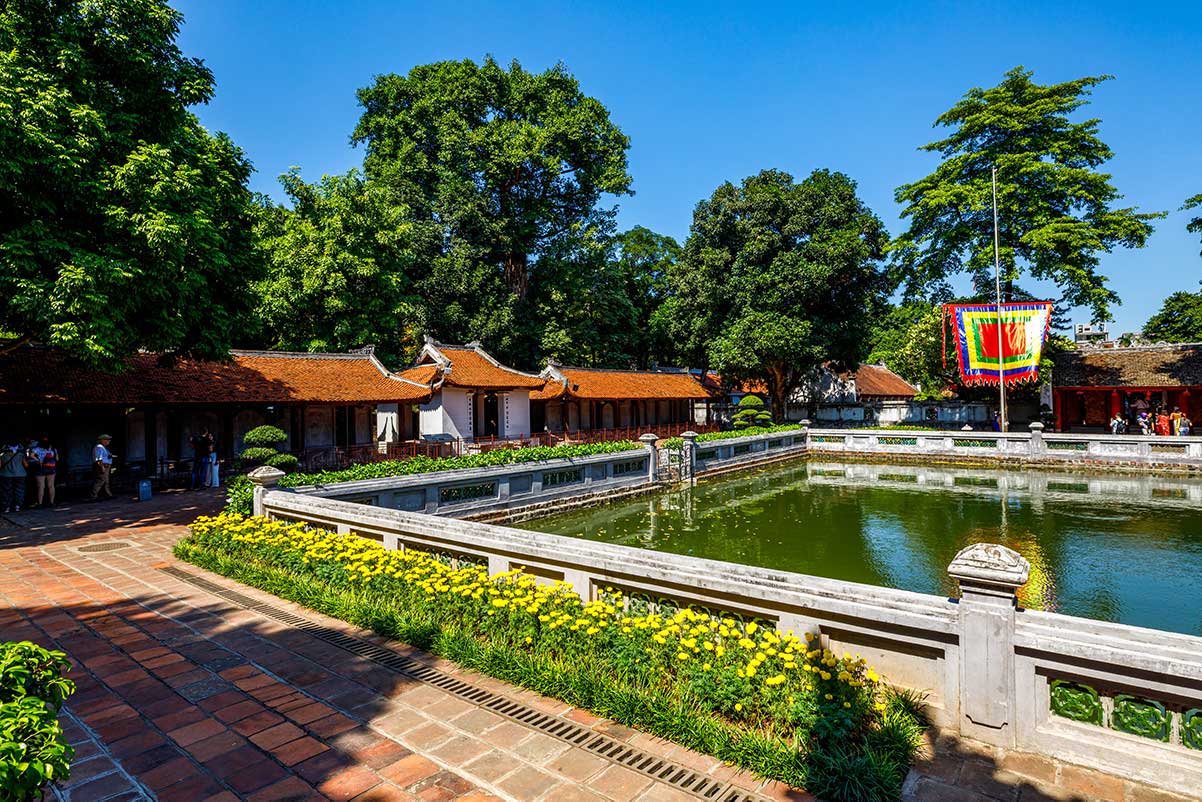
The Temple of Literature is Vietnam’s first university, founded in 1070 and dedicated to Confucius — a series of peaceful walled courtyards, gardens and pavilions that’s one of the best-preserved traditional sites in the city. The stone stelae on turtle backs, carved with the names of old graduates, are the highlight. Entry is around 70,000 VND. It gets busy with students at graduation and exam times, but it’s calm by Hanoi standards and a genuine break from the traffic — worth an hour.
15. Explore the Imperial Citadel of Thang Long
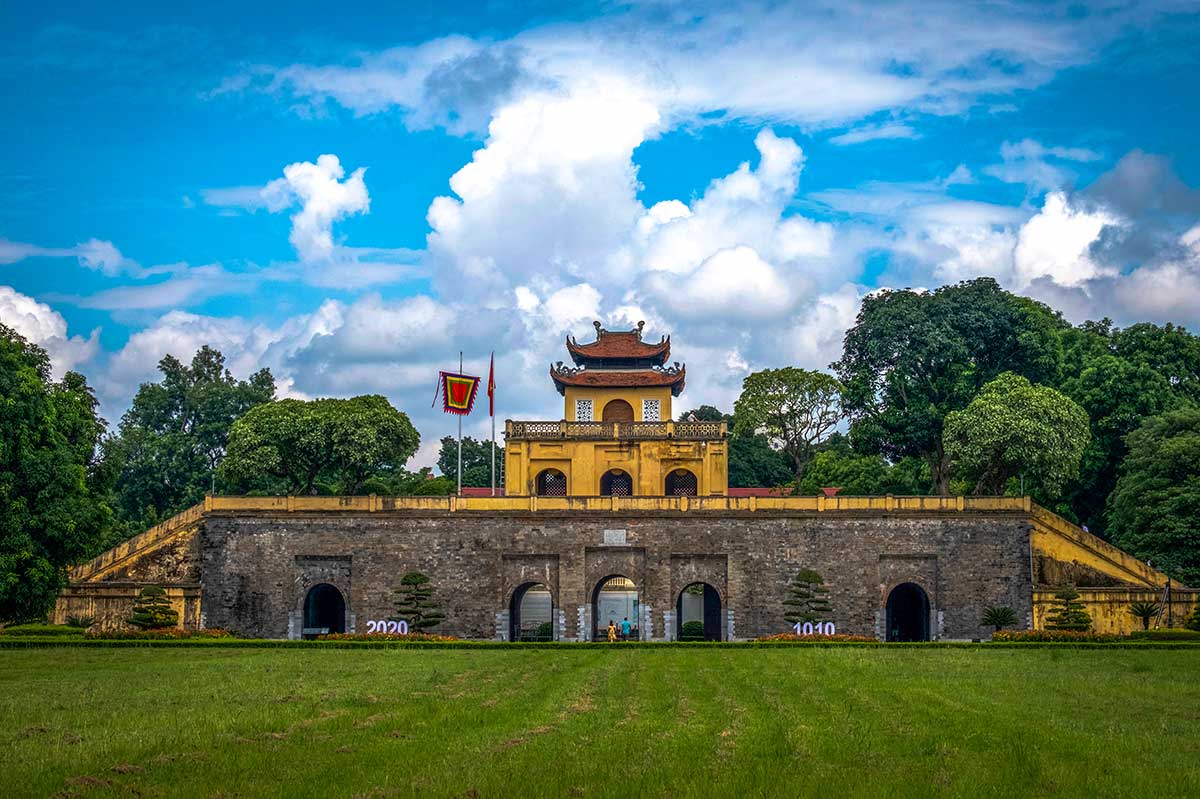
The Imperial Citadel of Thang Long is a UNESCO World Heritage Site and the old seat of Vietnamese power for centuries, with the Doan Mon gate, the Hanoi Flag Tower and excavated archaeological grounds. Honestly, much of it is ruins and foundations, so it rewards a bit of imagination or a guide rather than expecting grand palaces. Entry is around 70,000 VND. Good for history-minded visitors, easy to combine with the nearby Ba Dinh complex; skippable if ancient ruins aren’t your thing.
16. See the new Vietnam Military History Museum
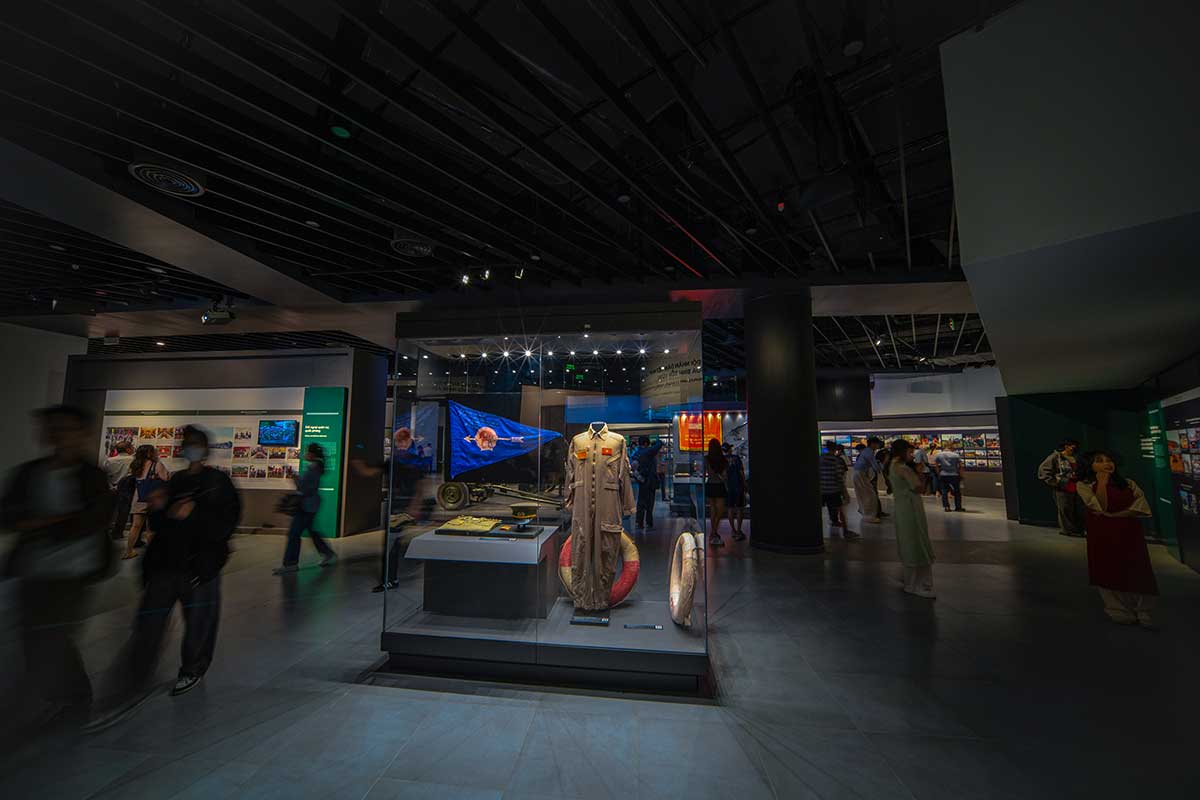
The Vietnam Military History Museum reopened in late 2024 in a huge new building, and it’s become one of the city’s standout sights — over 150,000 artifacts, a captured B-52, a MiG-21, tanks, and modern interactive displays, all under a tall Victory Tower. The catch is location: it’s about 13 km west of the Old Quarter, a 25 to 40 minute Grab ride (roughly 100,000 to 180,000 VND), so it’s a deliberate trip rather than a central stop. Entry is around 40,000 VND, and it’s closed Mondays and Fridays. Impressive and modern, but a long way out and heavy on military history, so best for those genuinely interested.
17. Visit the Vietnam Museum of Ethnology
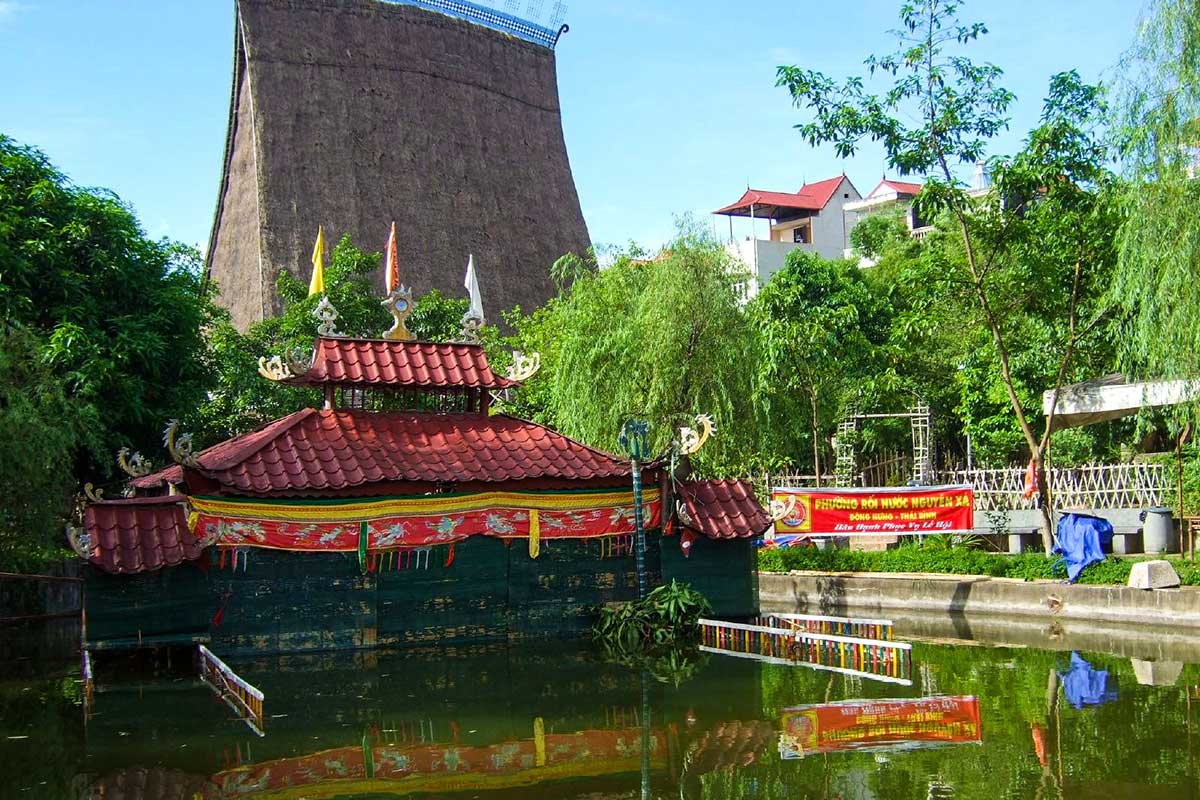
The Vietnam Museum of Ethnology is widely considered the best museum in Hanoi, covering the country’s 54 ethnic groups through clear, well-presented exhibits. The real highlight is the outdoor section, where full-size traditional houses from across Vietnam have been rebuilt and you can walk inside them. Entry is around 40,000 VND. It’s a few kilometres west of the centre, so take a Grab, but it’s worth the trip if you want to understand the country beyond the cities — one of the more rewarding things to do in Hanoi for families too.
18. Learn at the Vietnam Women’s Museum
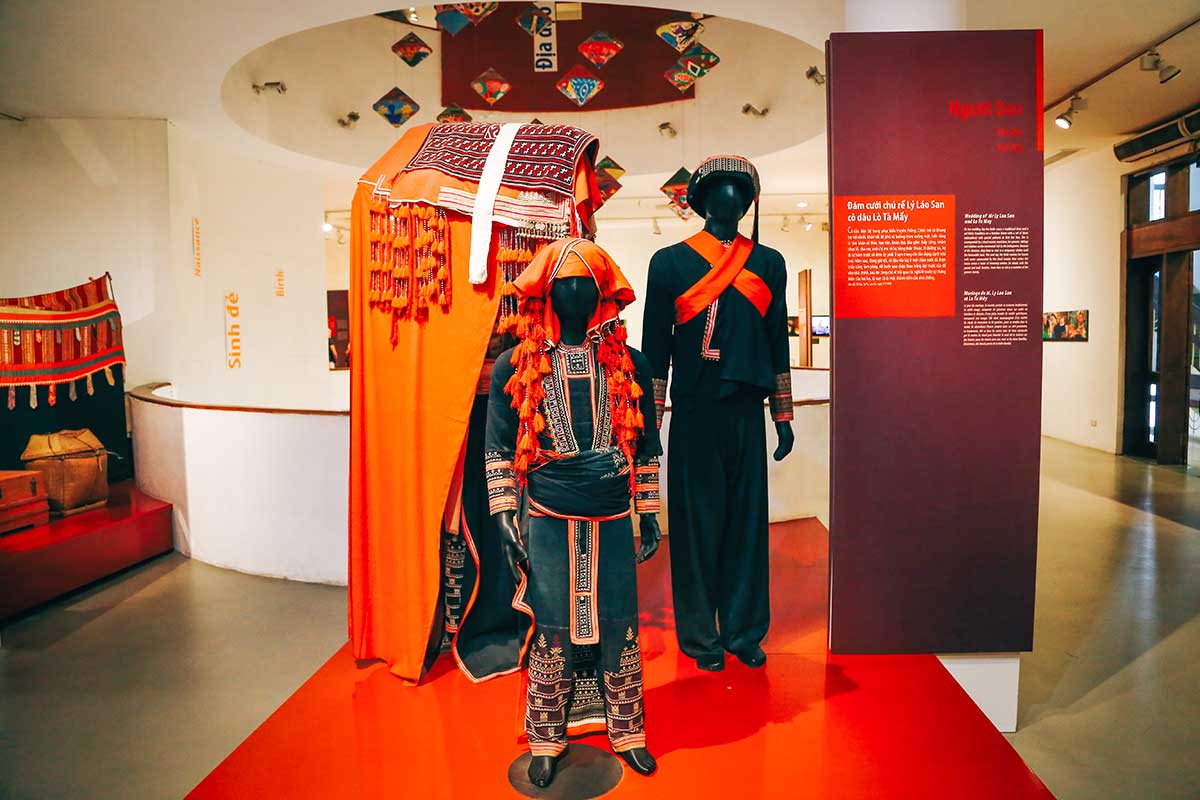
The Vietnam Women’s Museum is a small, well-curated museum near Hoan Kiem covering the role of women in Vietnamese society, history and war, with strong sections on street vendors and on women’s wartime contributions. Entry is around 40,000 VND. It’s often a pleasant surprise for people who don’t expect much from it, and being central it’s easy to fit in. Allow about an hour.
19. Walk around West Lake and Tran Quoc Pagoda
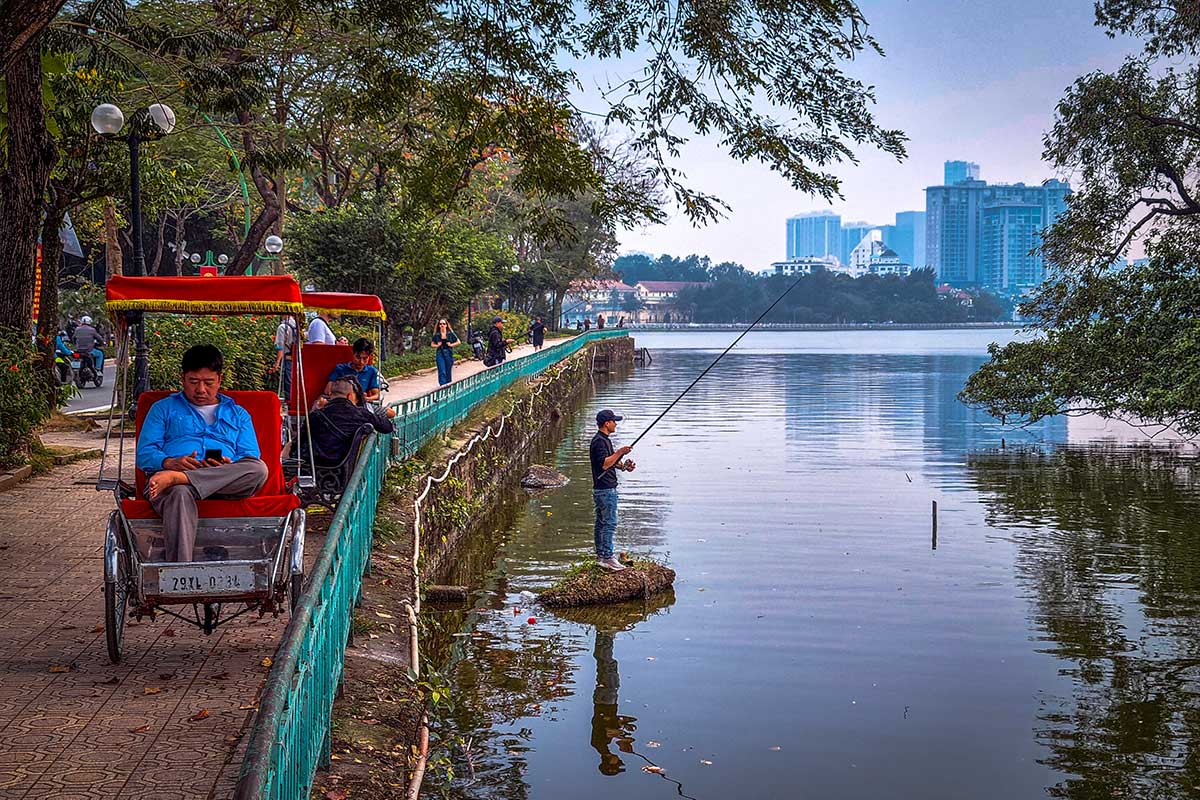
West Lake is Hanoi’s largest lake, ringed by cafes, restaurants and a more relaxed, upscale neighbourhood than the Old Quarter.

On a small peninsula sits Tran Quoc Pagoda, the oldest temple in the city, with a striking red brick stupa that’s especially good at sunset. It’s a calmer, greener side of Hanoi, nice for a slow afternoon, a lakeside coffee or a sunset walk — a change of pace from the centre.
20. Take a cyclo tour
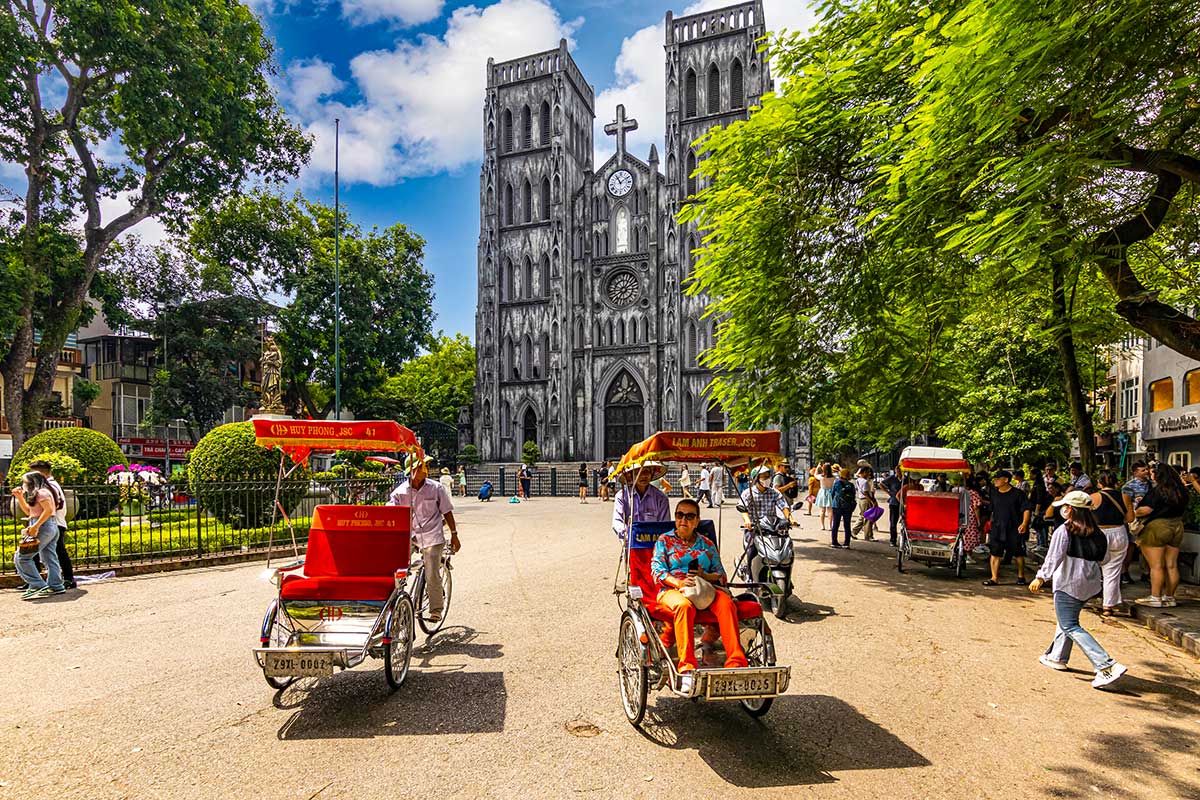
A cyclo is a three-wheeled bicycle taxi where you sit up front while the driver pedals behind — a slow, old-fashioned way to roll through the Old Quarter and take in the streets without dodging traffic yourself. It’s touristy and not cheap, and you should firmly agree the price and route before you set off (overcharging is common). But for 30 to 45 minutes it’s a relaxed thing to do in Hanoi, especially if you’re tired of walking.
21. Cycle through the city and out to Banana Island
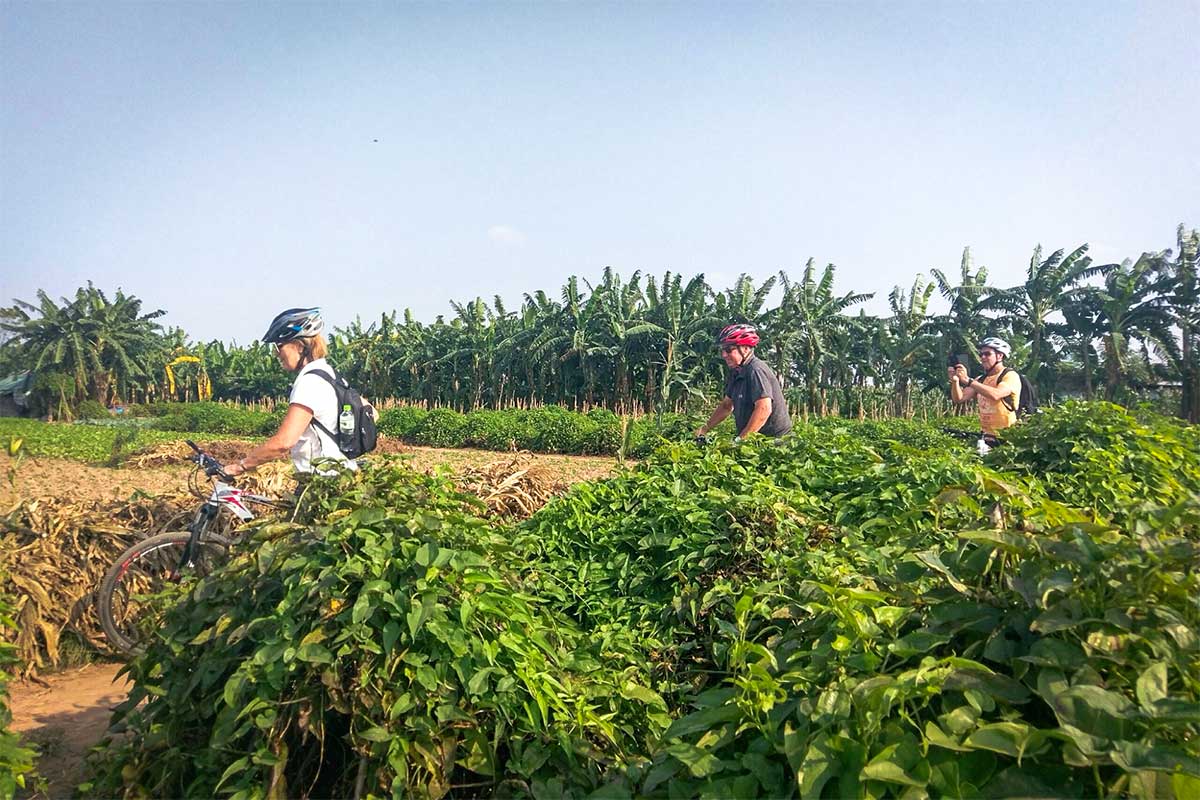
Cycling in Hanoi sounds mad given the traffic, but with a guide it’s a great way to see local life beyond the Old Quarter, including a ride out to Banana Island — a quiet, rural strip of farmland on the Red River, minutes from the city yet a world away. Go with a guided tour rather than alone if you’re not used to the traffic; they pick calmer routes and handle the chaotic bits. A good option for active travelers who want to see the everyday city.
22. Take a cooking class
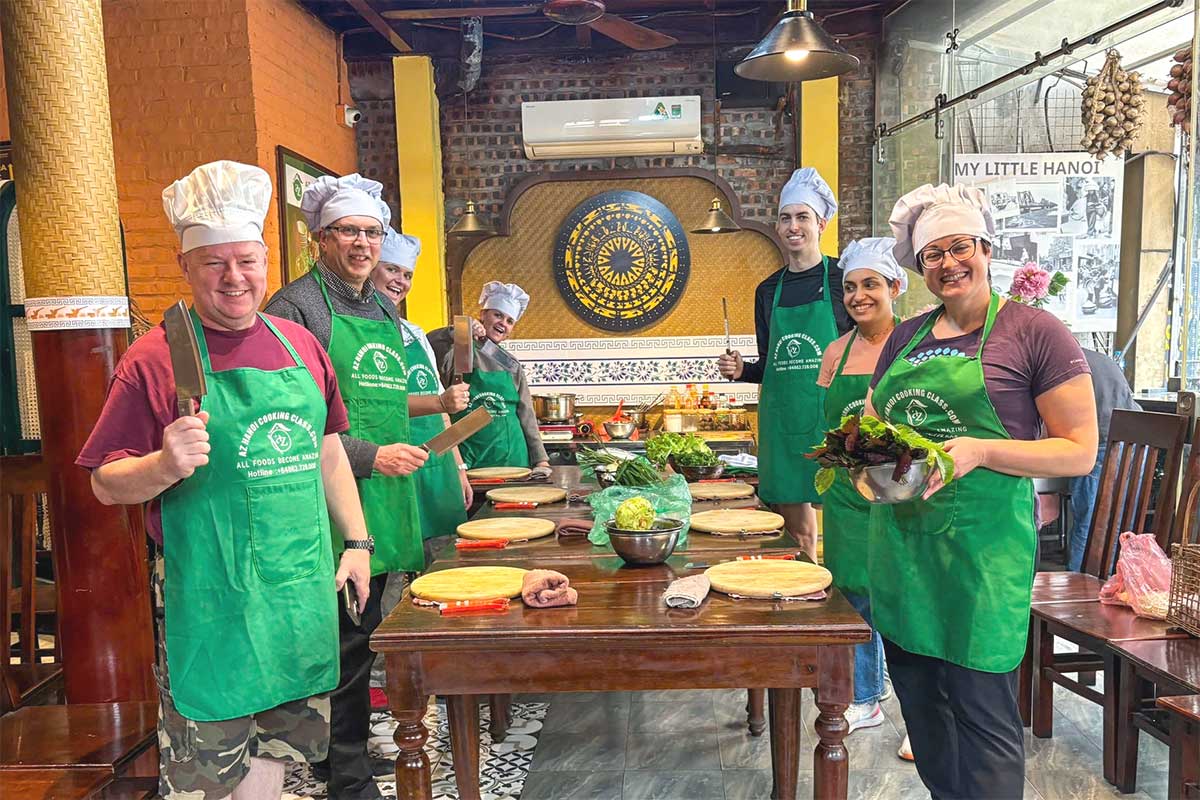
A Hanoi cooking class is a hands-on way to get under the skin of the food, and most start with a walk through a local market to buy ingredients before you cook a few northern classics like pho, spring rolls or bun cha. It’s a relaxed half-day, you eat what you make, and you leave able to recreate it at home. A good pick for food lovers and a nice rainy-day or slower-paced alternative to more sightseeing.
23. Visit a craft village
Ringing Hanoi are dozens of craft villages, each specialising in a single trade for generations, where you can watch things being made and buy direct from the artisans. They’re a half-day trip out of the centre by Grab or tour, and one of the more hands-on things to do in Hanoi. A few worth knowing:
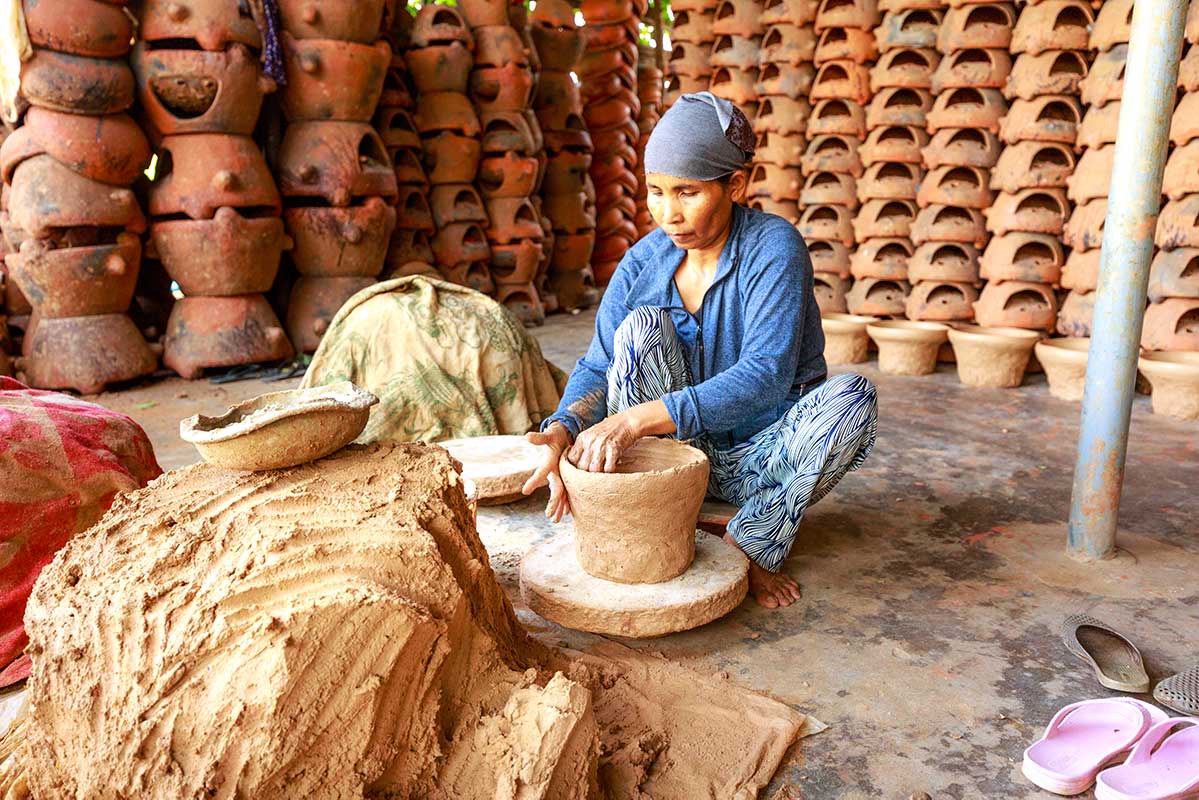
- Bat Trang ceramic village — The most popular and easiest to reach, famous for pottery; you can try the wheel and shop for ceramics at workshop prices.
- Van Phuc silk village — Hanoi’s traditional silk-weaving village, where you can watch the looms and buy silk by the metre or ready-made.
- Duong Lam ancient village — A rare, well-preserved old village of laterite houses and lanes, more about rural heritage than a single craft.
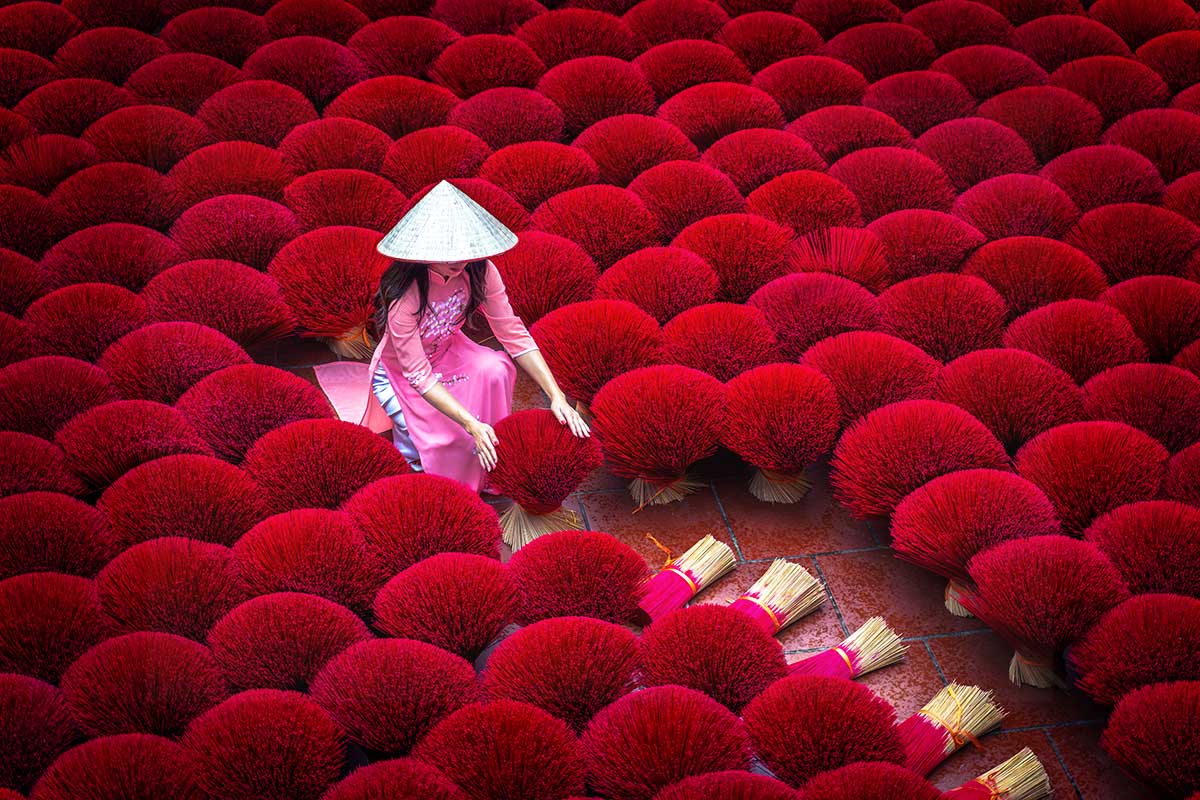
- Quang Phu Cau incense village — Best known for its bundles of bright red incense sticks fanned out to dry, a striking photo spot.
- Chuong conical hat village — Where the classic Vietnamese conical hat (non la) is still handmade in large numbers.
To work out which fits your time and interests, see our roundup of the best craft villages around Hanoi.
24. Shop at Dong Xuan Market
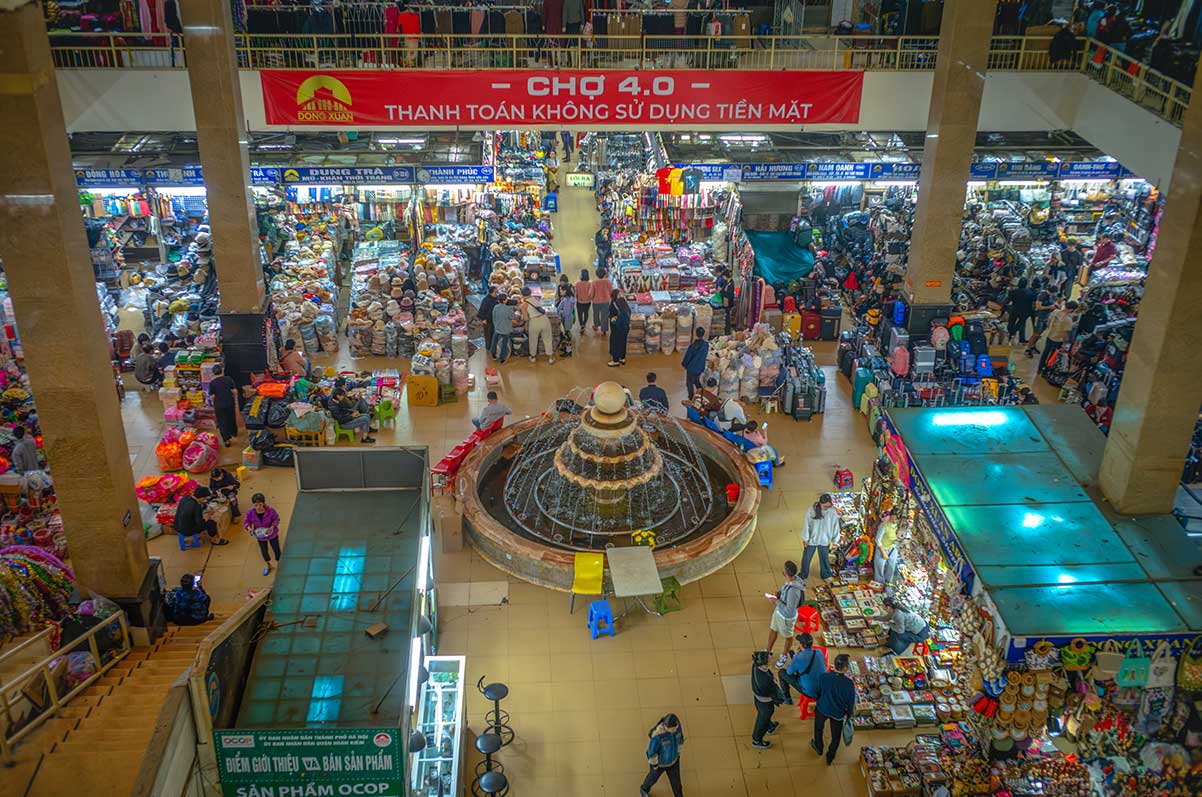
Dong Xuan Market is Hanoi’s largest covered market, a multi-storey wholesale hub at the top of the Old Quarter selling clothes, fabric, household goods and souvenirs, with a busy food section around the edges. It’s more a local trading hub than a tourist market, so it’s good for atmosphere and cheap eats rather than refined shopping. Worth a wander if you’re nearby; bargain hard, and keep an eye on your belongings in the crush.
25. See the Hanoi Ceramic Mosaic Mural
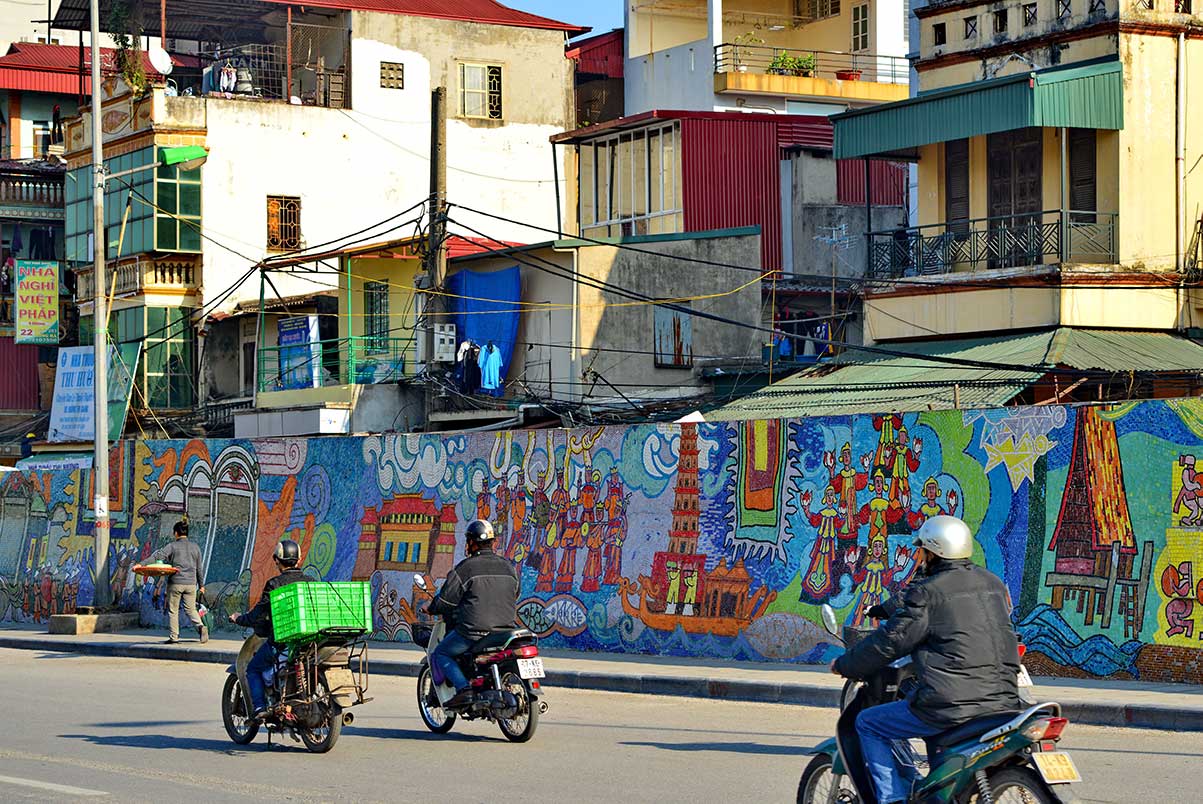
The Hanoi Ceramic Mosaic Mural is a record-breaking ceramic artwork running for several kilometres along the dyke road near the Red River, made of millions of tiles depicting Vietnamese history and patterns. Be realistic about it: it’s a wall along a busy road, not a sight to make a special trip for. If you’re heading to Long Bien Bridge or the riverside anyway, it’s a nice thing to pass and photograph rather than a destination in itself.
26. Catch the Quang Ba Flower Market at dawn
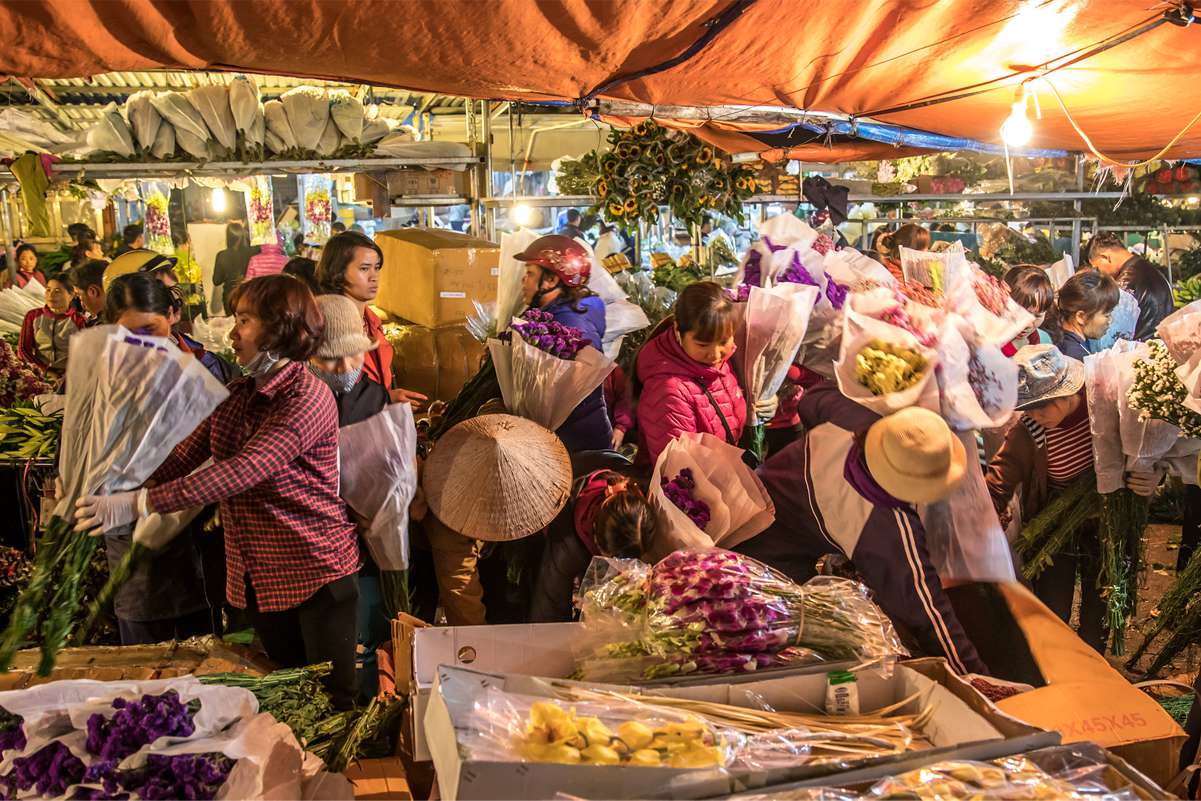
The Quang Ba Flower Market near West Lake is a wholesale flower market that comes alive in the small hours, with traders moving mountains of blooms by lamplight before the city wakes. It’s a genuine slice of pre-dawn local life and a photographer’s favourite. The obvious catch is the timing — you need to be there around 3am to 5am to see it at its best — so it’s strictly for early risers or night owls heading home.
27. Watch the sunset from a rooftop bar
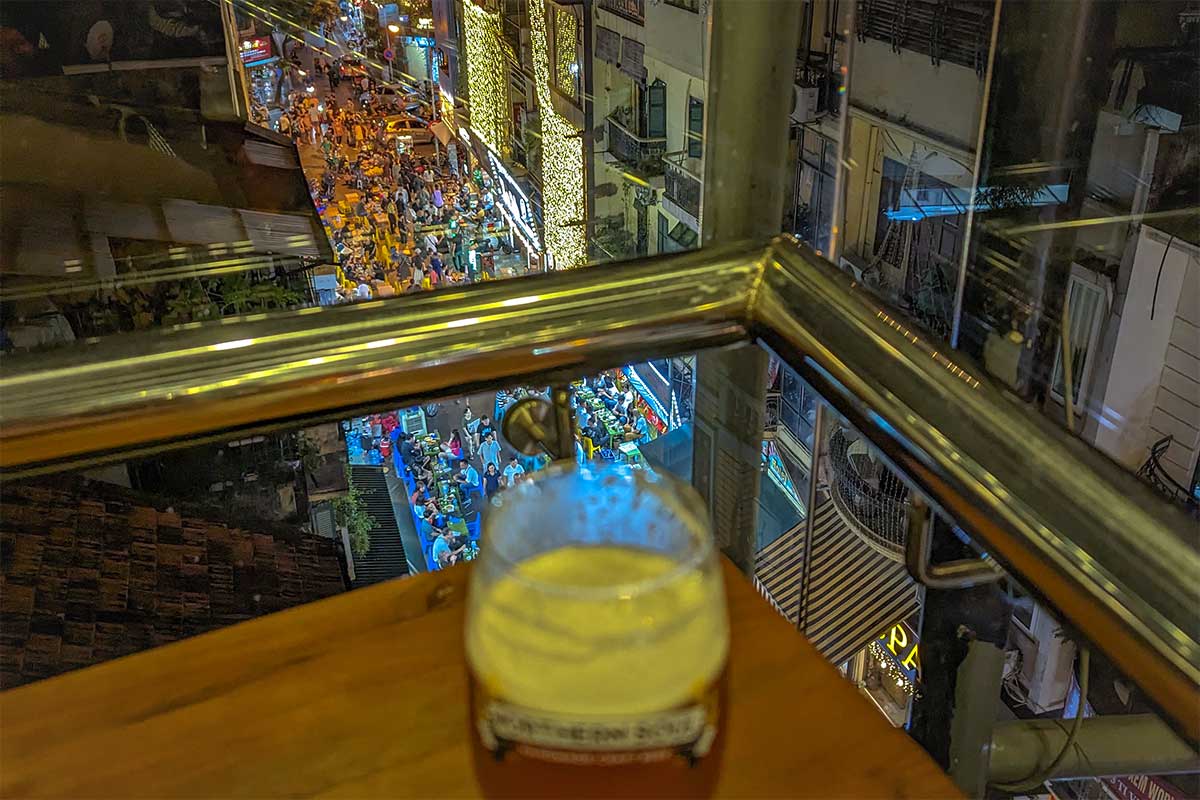
Hanoi has a growing rooftop scene, and a sundowner with a view over the lakes and rooftops is a good way to end a day of walking. For the highest view, the Lotte Observation Deck looks out over the whole city (including a glass-floor section), or you can skip the ticket and head to one of the rooftop bars for a drink with a similar view. Either way, aim for golden hour and check the weather, since haze can flatten the view on bad days.
28. Take a day trip to the Perfume Pagoda
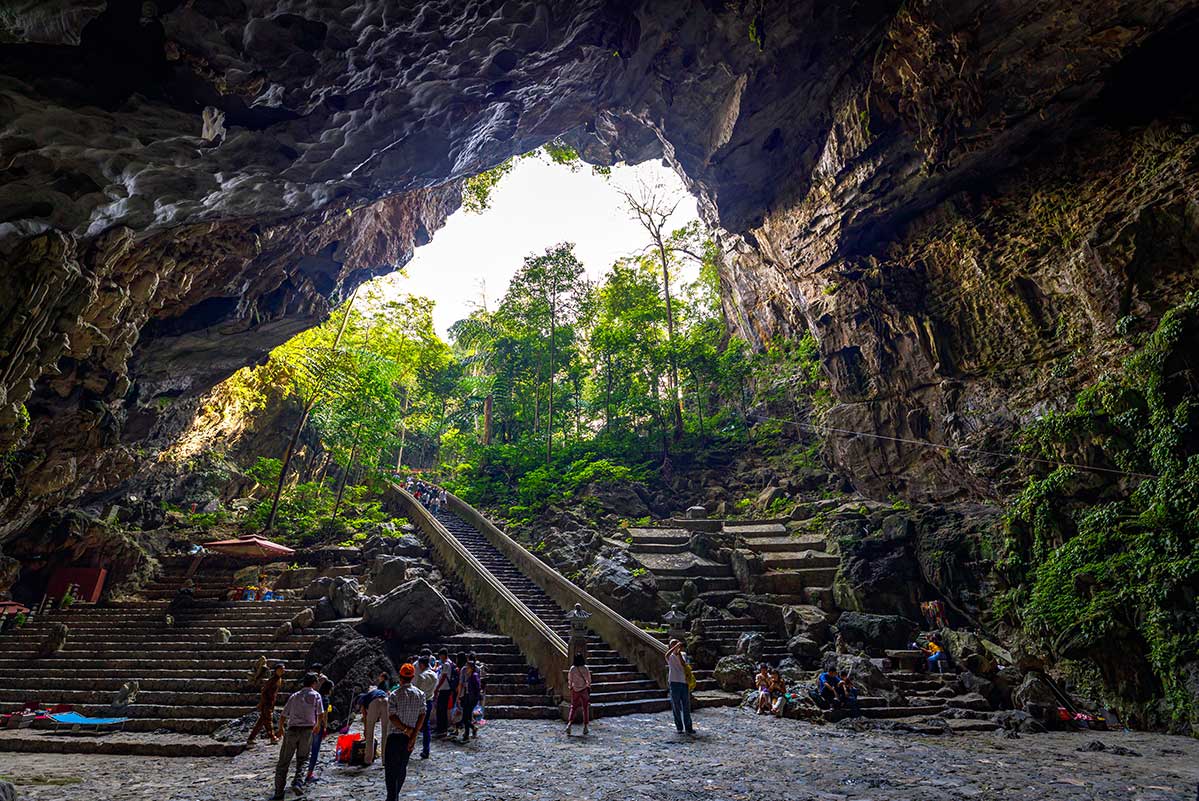
The Perfume Pagoda is a large Buddhist complex in the hills southwest of Hanoi, reached by a scenic rowboat ride along a river through karst scenery, then a hike or cable car up to a cave shrine. It’s a full-day trip and a popular pilgrimage site, busiest and most crowded during its spring festival (roughly February to April). A good choice if you want countryside, river scenery and temples in one go, and don’t mind a long day out of the city.
Hanoi as a hub for northern Vietnam
One of the best things about Hanoi is everything it puts within reach. The city is the hub of the whole north: the main international airport, the north-south and Sapa railways, the sleeper buses and limousine vans, and the new expressways all run from here, so it’s where almost every northern trip begins. Some destinations work as a long day trip, but most reward an overnight or several days — so it’s worth deciding what to add before or after your time in the city.
Halong Bay
Halong Bay is the famous seascape of limestone islands rising from emerald water, usually seen on an overnight cruise. It’s possible as a rushed day trip, but a one- or two-night cruise (often via Cat Ba or the quieter Lan Ha Bay) is far more worth it.
Ninh Binh
Ninh Binh is a landscape of karst peaks, rivers and rice fields often called “Halong Bay on land,” with boat tours and the Mua Cave viewpoint. It’s doable as a day trip about two hours south, but staying a night or two lets you cycle the countryside and see it properly.
Sapa
Sapa is the mountain town in the far northwest, known for terraced rice fields and treks through ethnic minority villages. It’s too far for a day trip, so plan at least two or three days, reached by night train or bus.
Ha Giang
Ha Giang is the wild, mountainous frontier in the far north, home to the spectacular Ha Giang Loop motorbike route. It’s a serious trip rather than a day out, needing at least three to four days plus the travel to get there.
Mai Chau
Mai Chau is a peaceful green valley of rice paddies and stilt-house homestays, gentler and closer than Sapa. It can just about be done as a long day trip, but an overnight in a homestay is the nicer way to feel the calm.
Best time to visit Hanoi
The best time to visit Hanoi is autumn, around September to November, and spring, around March to April, when the weather is mild and dry — autumn especially is the local favourite. Winter, from December to February, gets genuinely cold and grey, sometimes dropping below 15°C with a damp chill, so pack layers. Summer, May to August, is hot, humid and the wettest time of year, with heavy downpours and the occasional storm.
Hanoi works year-round since most of its sights are indoors or short stops, but the shoulder seasons are far more comfortable for the walking the city demands. For a month-by-month look, see our guide to the best time to visit Hanoi.
Where to stay in Hanoi
Where you stay shapes your trip, since Hanoi’s neighbourhoods feel quite different. For a first visit, base yourself in or near the Old Quarter.
The Old Quarter (Hoan Kiem)
The Hoan Kiem area, covering the Old Quarter and the lake, is where most travelers stay and the easiest base — walkable to the main sights, packed with food, hostels and hotels at every budget, and where most tours and buses pick up. It’s central and convenient, but also the noisiest and most crowded part of the city, so light sleepers should ask for a quiet room.
The French Quarter
Just south of the lake, the French Quarter is calmer and more elegant, with wide tree-lined boulevards, colonial buildings and smarter hotels. It’s still walkable to the centre but quieter and a little more upscale — a good choice for couples or anyone wanting comfort over backpacker buzz.
West Lake (Tay Ho)
Around West Lake, the Tay Ho area is leafier, more relaxed and popular with long-term expats, with lakeside cafes and restaurants. It’s further from the Old Quarter, so you’ll rely on Grab to get into the centre, but it’s a calmer, more local-feeling base if you’re staying a while.
How to get to Hanoi
Hanoi is the main transport hub of northern Vietnam, with an international airport, the national railway and buses to everywhere.
By plane
Noi Bai International Airport sits about 30 km north of the centre, with international flights and frequent domestic ones from Da Nang, Ho Chi Minh City, Hue, Phu Quoc and more. From the airport it’s about 45 minutes to an hour into town; a Grab, taxi or pre-booked transfer is the simplest way, and there’s more on the options in our guide to getting from the airport to the Old Quarter.
By train
The main Hanoi railway station (Ga Hanoi) sits on the north-south line, so you can arrive from Ninh Binh, Hue, Da Nang and the south, or take the popular overnight train northwest toward Sapa (Lao Cai). Trains are comfortable and scenic, and the sleeper cabins are a good way to travel long distances overnight.
By bus
Hanoi has several bus stations and connects by sleeper bus and limousine van to essentially everywhere in the north and centre — Sapa, Ha Giang, Halong Bay, Cat Ba, Ninh Binh, Mai Chau and beyond. Tourist minivans and limousines, bookable through hotels and agents, cost a bit more than public buses but include hotel pickup, which is well worth it.
How to get around Hanoi
On foot and by Grab
The Old Quarter and lake area are best explored on foot. For everything else, Grab is the easy answer — both Grab cars and cheaper Grab motorbikes give you a set price with no haggling, which sidesteps the metered-taxi games some drivers play. It’s the default way to get around for most visitors.
Motorbike, metro and car
You can rent a motorbike, but Hanoi’s traffic is intense and not the place to learn, so it’s only for confident riders. The city now has a metro with two lines, but they don’t reach most tourist areas, so it’s of limited use for visitors. For day trips and comfort, a car with a driver is easy to arrange and takes the stress out of the further sights.
Itinerary: 2 days in Hanoi
Two days is enough to cover the best things to do in Hanoi at a comfortable pace. This simple plan keeps the first day in the Old Quarter and the second around Ba Dinh; for more detail and a longer version, see our 2-day Hanoi itinerary.
Day 1 — the Old Quarter and the lake
- Explore the Old Quarter on foot and stop for an egg coffee.
- Walk around Hoan Kiem Lake and over to Ngoc Son Temple.
- See Hoa Lo Prison or St Joseph’s Cathedral in the afternoon.
- In the evening, take a street food tour, catch a water puppet show, and end with a bia hoi on Ta Hien.
Day 2 — history and Ba Dinh
- Start early at the Ho Chi Minh Mausoleum and the surrounding complex (mornings only).
- Walk the Temple of Literature, then the Imperial Citadel nearby.
- Head to Train Street in the late afternoon or evening to catch a passing train.
Tips for traveling to Hanoi
Money and crossing the road
ATMs are everywhere, and cards work in hotels and bigger restaurants, but carry cash for street food, markets and small shops. As for the traffic: to cross the road, walk slowly and steadily without sudden stops, and the scooters will flow around you — hesitating is what causes problems.
Avoiding scams
The common ones are taxi drivers refusing the meter (use Grab instead), cyclo and motorbike drivers quoting one price and demanding more (agree it firmly upfront), and anyone claiming Train Street or a sight is “closed” to steer you onto a paid ride. Stay polite but firm, and you’ll be fine.
Dressing for temples
Hanoi is relaxed about clothing day to day, but temples, pagodas and especially the mausoleum require covered shoulders and knees, so carry a light layer or scarf when you’re visiting them.
Rainy days and downtime
If the weather turns, Hanoi has plenty of indoor options — museums, a cooking class, cafes and markets — and there’s more in our roundup of things to do in Hanoi when it rains. If you arrive early or leave late, most hotels and several shops offer luggage storage.
Traveling with kids
Hanoi’s traffic and narrow pavements make it less obviously child-friendly, but kids tend to love the water puppets, the cyclo ride, Bat Trang pottery and the food. There’s more in our notes on Hanoi with kids.
Where to go next
Hanoi is the springboard for the north: Halong Bay and Cat Ba for the sea, Sapa and Ha Giang for the mountains, Ninh Binh for the karst valleys, and Mai Chau or Pu Luong for quiet rice-field countryside. Wherever you’re headed, there’s a bus, train or tour from here.
What to expect from Hanoi: an honest verdict
Hanoi is chaotic, and there’s little peace to be found in it — but it’s an absolute must on any trip to Vietnam. It’s the kind of place you simply have to experience once, even if only for a day, and even if the chaos isn’t for you, that single day is still worth having. Beyond the experience of the city itself, there are enough sights and things to do to fill a few days. What it isn’t is a place to settle for a week: Hanoi pays off far more as the hub for the far north, the launch point for Halong Bay, Sapa, Ha Giang and Ninh Binh, than as a destination to sit still in. See it, feel it, then use it as the gateway it is.