

1. Explore Vietnam by motorbike
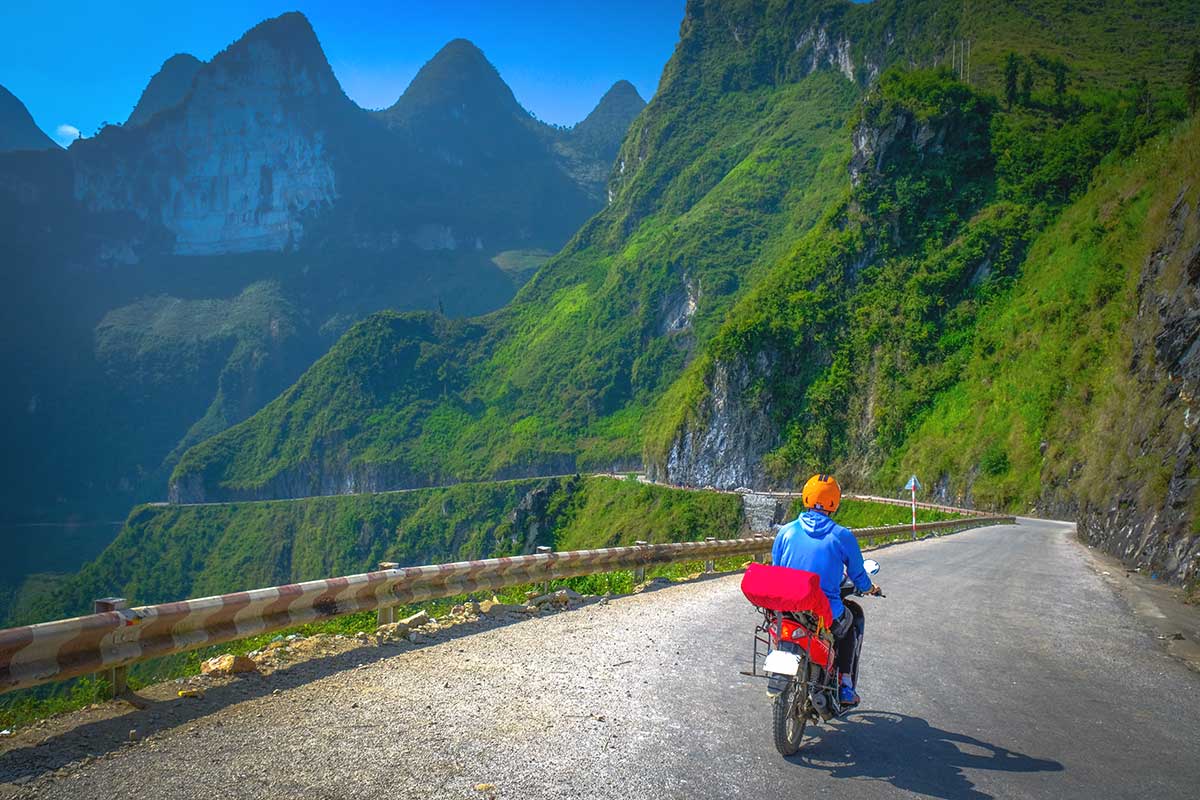
If there is one activity that really feels like adventure in Vietnam, it is traveling by motorbike. You are not just moving from A to B—you are part of the landscape, riding through mountains, small villages, and backroads where buses simply don’t go. It gives you a level of freedom that is hard to match: you can stop anywhere, take a wrong turn just to see where it leads, and experience Vietnam the same way many locals do—on two wheels.
What are your options
There are several ways to explore Vietnam by motorbike, depending on how much time you have and how adventurous you want to go.
- Travel the full country – Buy or rent a motorbike and ride from north to south. This is a real adventure and takes time, but you see a huge part of Vietnam in a very raw way.
- Ride shorter routes or day trips – You don’t need weeks to enjoy this. Even a day riding around Ninh Binh or doing the Hai Van Pass already gives you a good taste of motorbike travel in Vietnam.
- Go with an Easy Rider – Sit on the back of a local driver who takes care of everything and shows you places you would not find yourself. If you want to understand how this works and what your options are, read more about Easy Rider tours.
Most popular motorbike routes
There are many different routes in Vietnam, but these are some of the most popular ones.
- Ha Giang Loop – A mountain route in the far north with steep passes, deep valleys, and ethnic villages. Best for a few days and for people who want a more adventurous and remote experience.
- Hai Van Pass – A short coastal route between Hue and Da Nang with ocean views and easy access. Perfect if you want a one-day motorbike experience.
- Ho Chi Minh Road – A long route through central Vietnam with less traffic and more rural scenery. Ideal if you want to ride longer distances without the chaos of the main highways.
For more ideas and detailed routes, see our guide to the best motorbike routes in Vietnam.
2. Jungle and cave expedition in Phong Nha
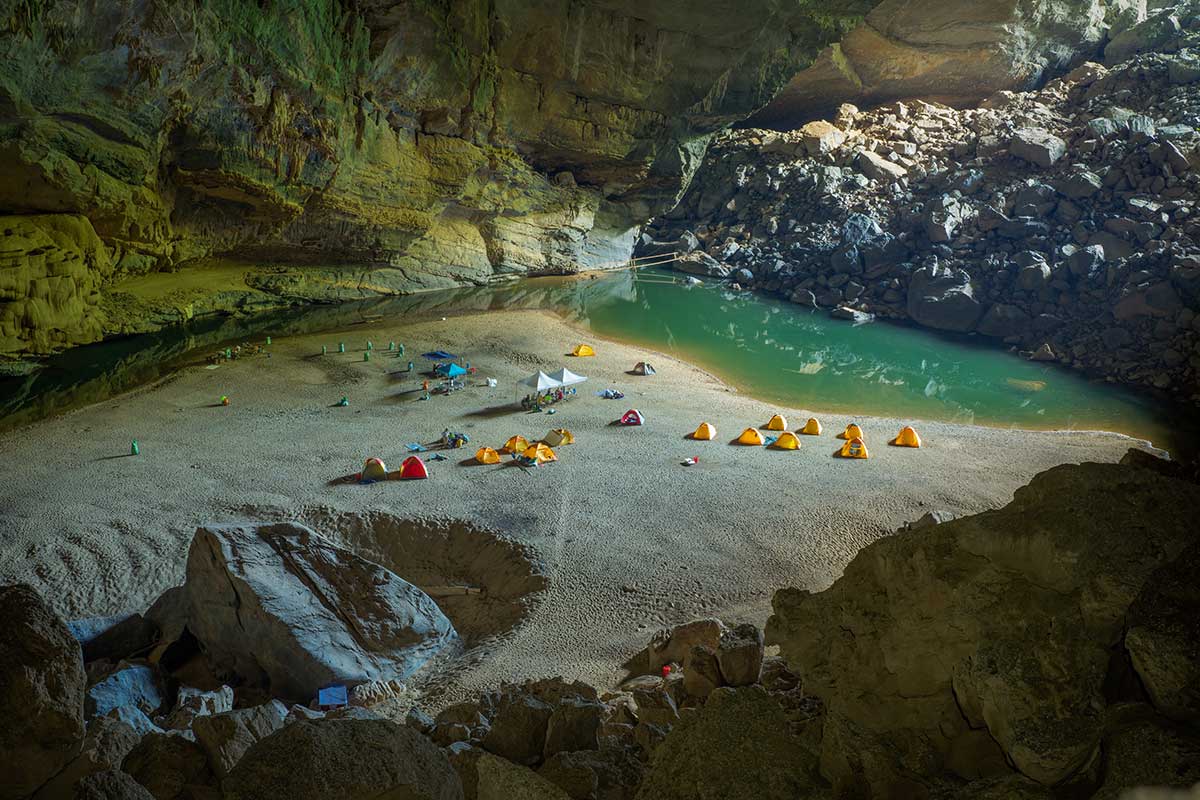
Phong Nha is one of the largest national park areas in Vietnam and one of the best places in Southeast Asia for real outdoor adventure. The landscape is made up of dense jungle, small rivers, and massive limestone mountains hiding some of the biggest caves in the world.
This is not a place where you just walk on a path and look around. You are trekking through jungle, crossing rivers, climbing over rocks, and entering caves so large they feel like a different world. If you are looking for a proper adventure in Vietnam, this is as good as it gets.
What are the options
There are many caves in Phong Nha, with options ranging from extreme expeditions to easy half-day activities.
- Son Doong Cave – The largest cave in the world, but only accessible on a limited expedition. It costs around $3000 and is usually booked out a year in advance.
- Hang En, Hang Pygmy, Tu Lan cave system – Multi-day tours where you combine jungle trekking, river crossings, and cave exploration. These are physically challenging but realistic for most fit travelers.
- Dark Cave – A shorter and easier adventure. You zipline to the cave, swim inside, walk through mud, and kayak back. It’s more touristy, but still a fun and active half-day.
For a full overview of routes and caves, see our guide to the best caves in Phong Nha.
3. Multi-day trekking in northern Vietnam
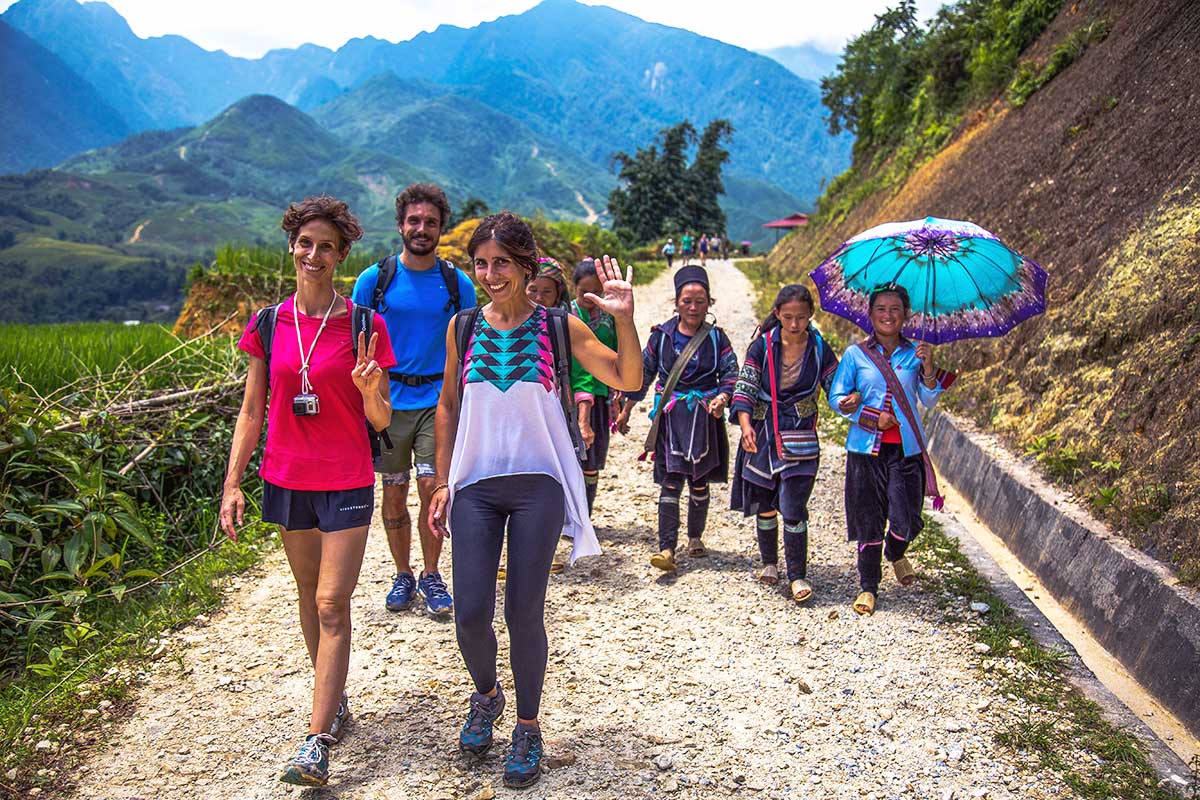
Northern Vietnam is the best region in the country for trekking, with mountain landscapes that look completely different from the rest of Vietnam. Think of steep valleys, terraced rice fields, and small villages spread across the hills.
What makes trekking here special is not just the scenery, but also the people you meet along the way. Many of the villages are home to ethnic minority groups, such as the Hmong, Dao, and Tay. These communities have their own traditions, clothing, and way of life, which is very different from city life in Vietnam.

During a multi-day trek, you walk from village to village and stay overnight in local homestays. These are often simple wooden houses, but you share meals with the family and get a closer look at daily life. It’s not luxury, but it’s a very real experience.
Sapa is the main base for trekking, with the most routes and easiest access. Pu Luong offers a quieter setting with shorter treks and more comfortable lodges. Ha Giang also has beautiful landscapes and strong local culture, but trekking tourism is still less developed, which can make it more raw but also less organized.
For routes, tips, and what to expect, see our complete guide about trekking in Sapa.
4. Canyoning in Dalat
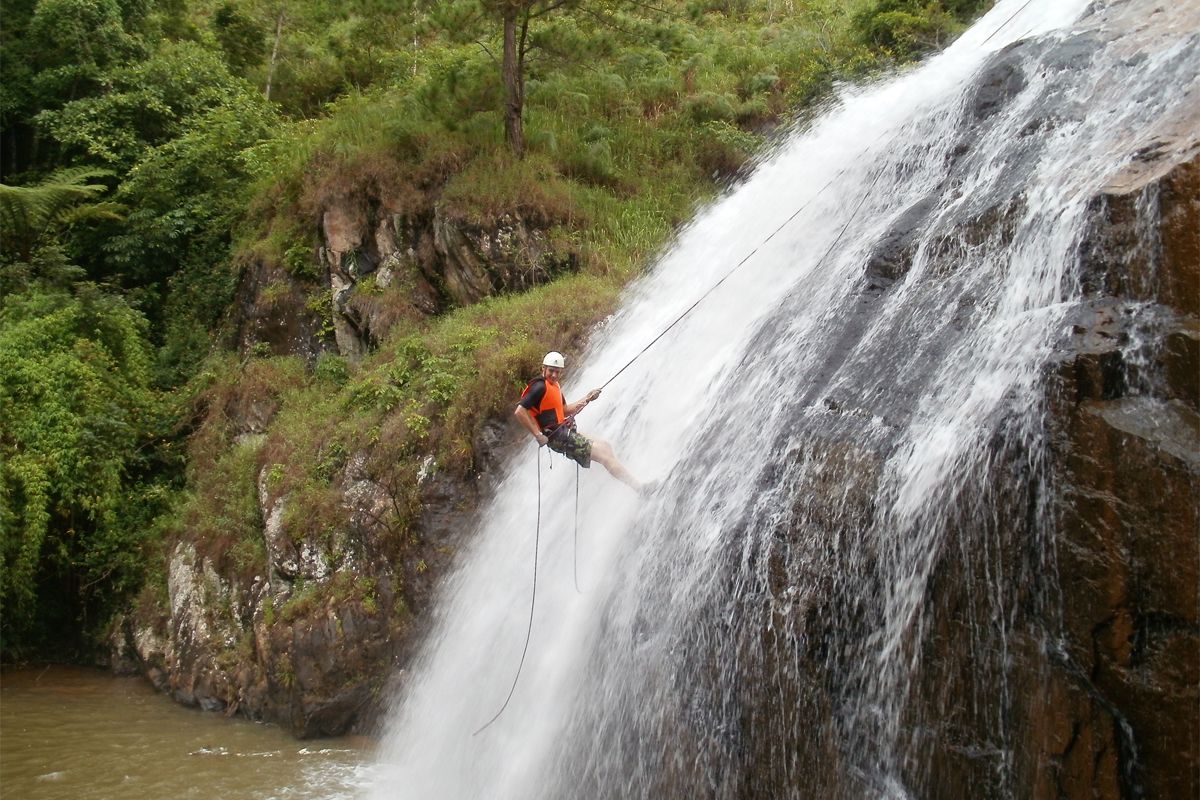
Canyoning is one of the most exciting outdoor adventure activities you can do in Vietnam, and Dalat is the main place for it. You hike through the forest and follow a river downstream, but instead of just walking, you abseil down waterfalls, jump into natural pools, and slide over wet rocks. It’s a mix of adventure, adrenaline, and being fully in nature, all in one activity.
Most tours are guided and suitable for beginners, as long as you are comfortable with heights and basic physical activity. You don’t need experience, but you do need to be ready to get wet and push yourself a bit.
For more details and tour options, see our guide to canyoning in Dalat.
5. Kayaking in Halong Bay
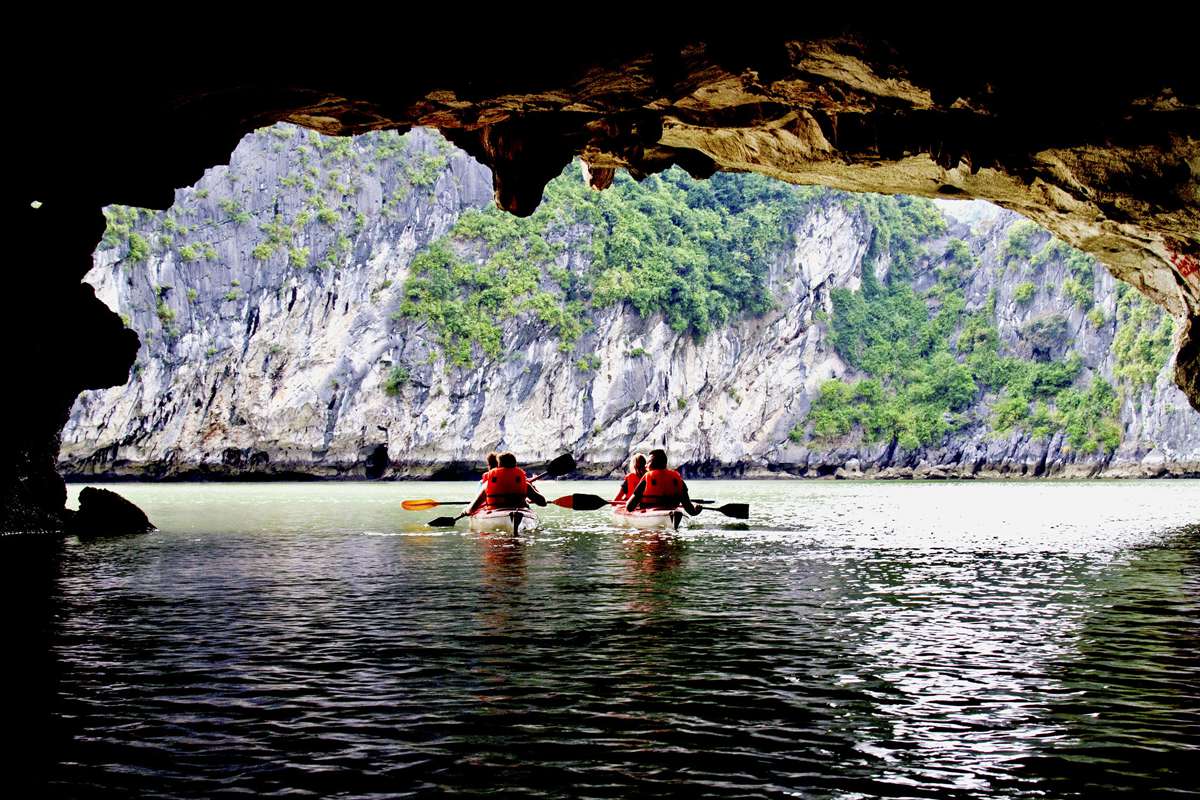
Kayaking in Halong Bay is one of the best ways to explore the famous limestone landscape up close. Instead of just seeing the karst mountains from a boat, you paddle yourself through narrow passages, small lagoons, and hidden corners between the cliffs.
In areas like Lan Ha Bay and around Cat Ba, you can kayak through low cave openings into quiet lagoons, pass floating fish farms, and reach small beaches where there are no other people. This is where kayaking really feels like exploring, not just an activity.
Most cruises include kayaking as part of their program, usually for a short session in a set area. If you want a more quiet experience, choose Lan Ha Bay or Bai Tu Long Bay, where there are fewer boats. You can also go to Cat Ba Island yourself and rent a kayak to explore more independently.
6. Rock climbing in Cat Ba
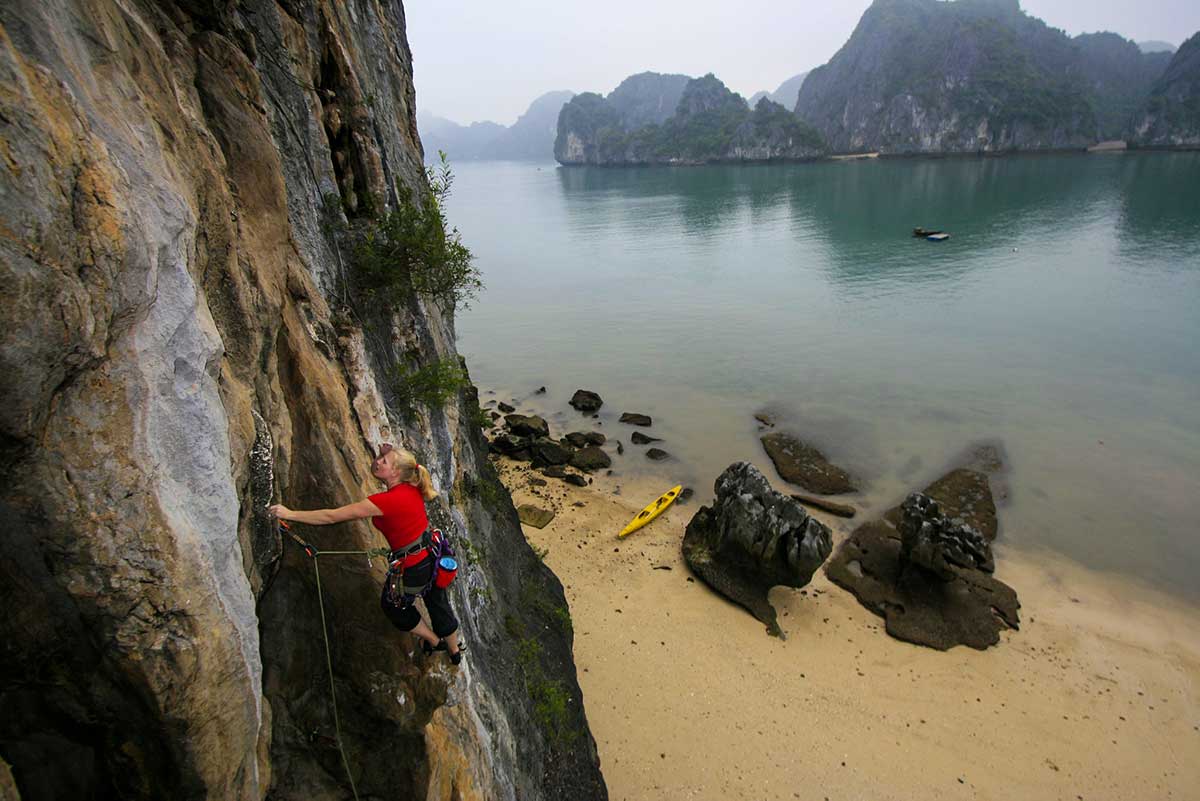
Cat Ba Island is one of the main spots in Vietnam for rock climbing, set among limestone cliffs that rise straight out of the landscape. There are routes for both beginners and experienced climbers, and some locations are right next to the sea, which makes it quite a unique setting.
You can do regular climbing on land or try deep water soloing, where you climb above the sea and drop into the water if you fall. Even if you are new to climbing, guided trips make it accessible and safe to try.
For routes, levels, and how to arrange a trip, see our guide to rock climbing in Cat Ba.
7. Kitesurfing in Mui Ne
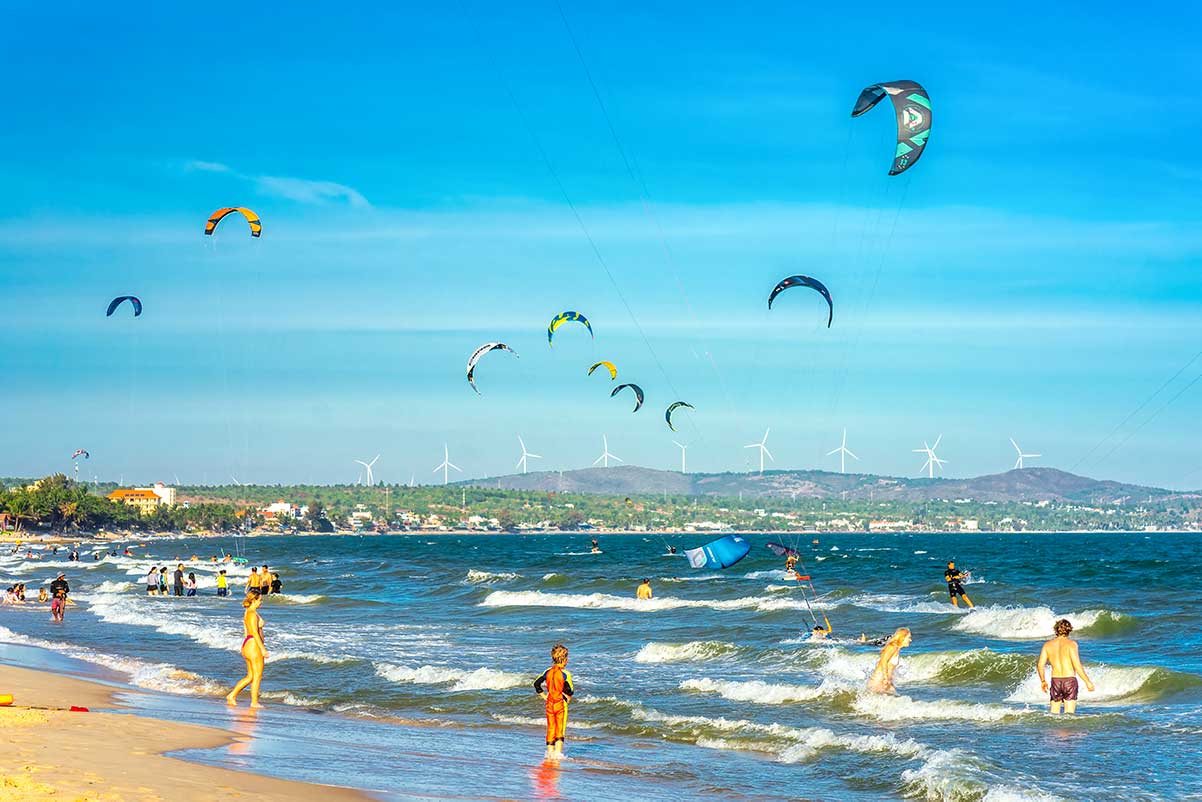
Mui Ne is a coastal town in southern Vietnam, about a few hours from Ho Chi Minh City. It is known for its long sandy beach, steady wind conditions, and a relaxed beach town atmosphere that attracts travelers looking for both adventure and time by the sea.
What makes Mui Ne so good for kitesurfing is the consistent wind, especially during the main season from around November to April. In the morning, the wind is usually lighter and more suitable for beginners, while in the afternoon it gets stronger, which is better for more experienced riders. The wide beach and open water also make it a safe place to learn.
There are many schools along the beach offering lessons and equipment rental. Whether you are a complete beginner or already have experience, it is easy to find a course or rent gear for a few hours or several days. Compared to many other countries, prices are relatively affordable, which makes it a popular place to learn.
8. Scuba diving in Con Dao
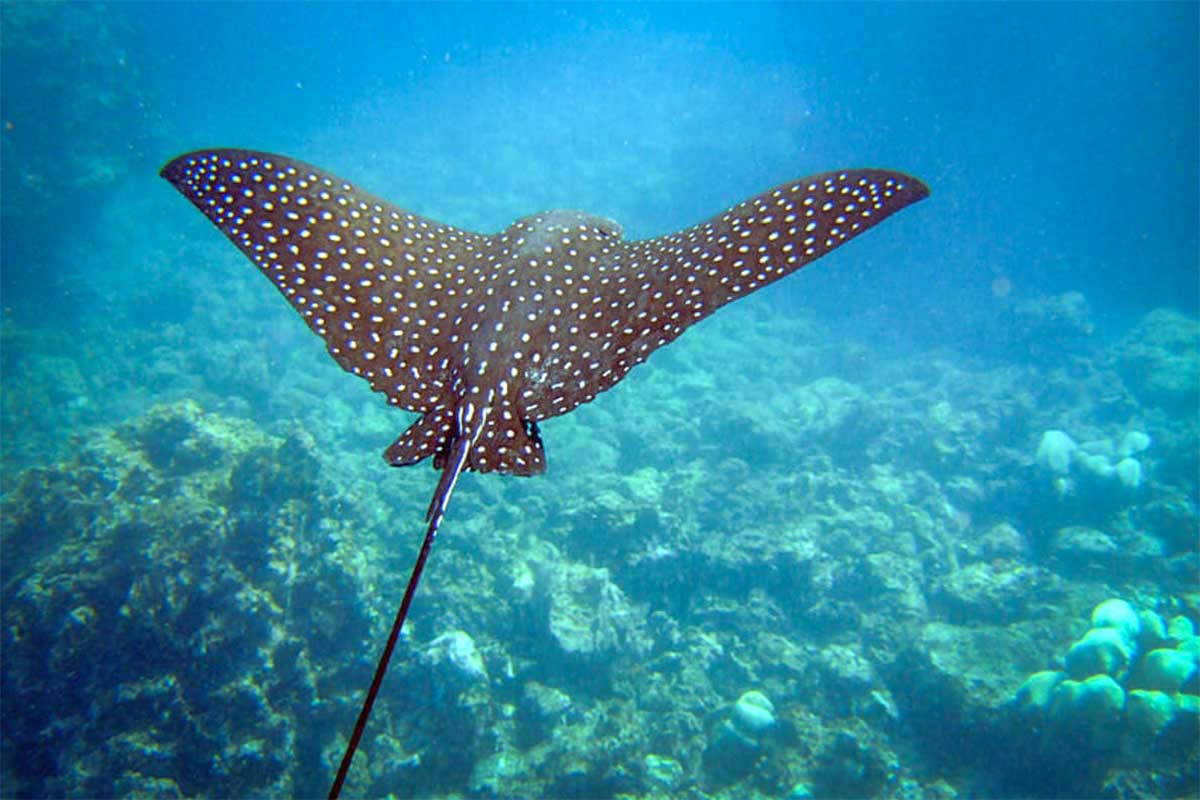
Con Dao is widely considered the best place for diving in Vietnam, mainly because of its protected waters and relatively healthy coral reefs. The islands are part of a national park, which helps preserve marine life better than in many other coastal areas in the country.
Underwater, you can see coral gardens, reef fish, and sometimes larger species like rays and turtles. The visibility is usually good during the right season, and the dive sites are not overcrowded, which adds to the experience.
Con Dao is also known for its sea turtles, especially during the nesting and hatching season. While you might spot a turtle during a dive, the actual nesting areas are protected and not accessible for diving. However, you can combine diving with above-water experiences, such as visiting nesting sites or releasing baby turtles during the hatching season.
Another unique fact is that Con Dao has a small population of dugongs. These are rare marine animals that live in seagrass areas, but in reality, they are almost never seen at regular dive sites. It’s more something that shows how healthy the ecosystem is, rather than something you should expect to see.
For more details, seasons, and dive options, see our guide to diving in Con Dao.
Other places in Vietnam for diving
Con Dao is generally considered the best, but there are a few other places where you can dive in Vietnam.
- Diving in Nha Trang (Whale Island) – One of the more established dive areas with easy access and several dive centers. Conditions are decent, but not as untouched as Con Dao.
- Diving in Phu Quoc – Offers some beginner-friendly dive sites in the south of the island. Visibility can vary depending on the season.
- Diving in Hoi An (Cham Islands) – A smaller-scale diving area with coral and marine life, best during the dry season with calmer seas.
9. Mountain biking in Dalat

Dalat is often seen as the adventure capital of Vietnam, and mountain biking is one of the best ways to explore the area. The region has rolling hills, pine forests, dirt trails, and quiet countryside roads that are very different from the busy cities.
You can ride through forest paths, visit small villages, and stop at viewpoints or waterfalls along the way. Some routes are quite easy and suitable for beginners, while others include long downhill sections and rough terrain for more experienced riders.
Most tours include a guide, transport, and bikes, which makes it easy to arrange even if you only have one day. It’s a good mix of activity and sightseeing, without being too extreme.
For routes, difficulty levels, and tour options, see our guide to mountain biking in Dalat.
10. Paragliding in Mu Cang Chai
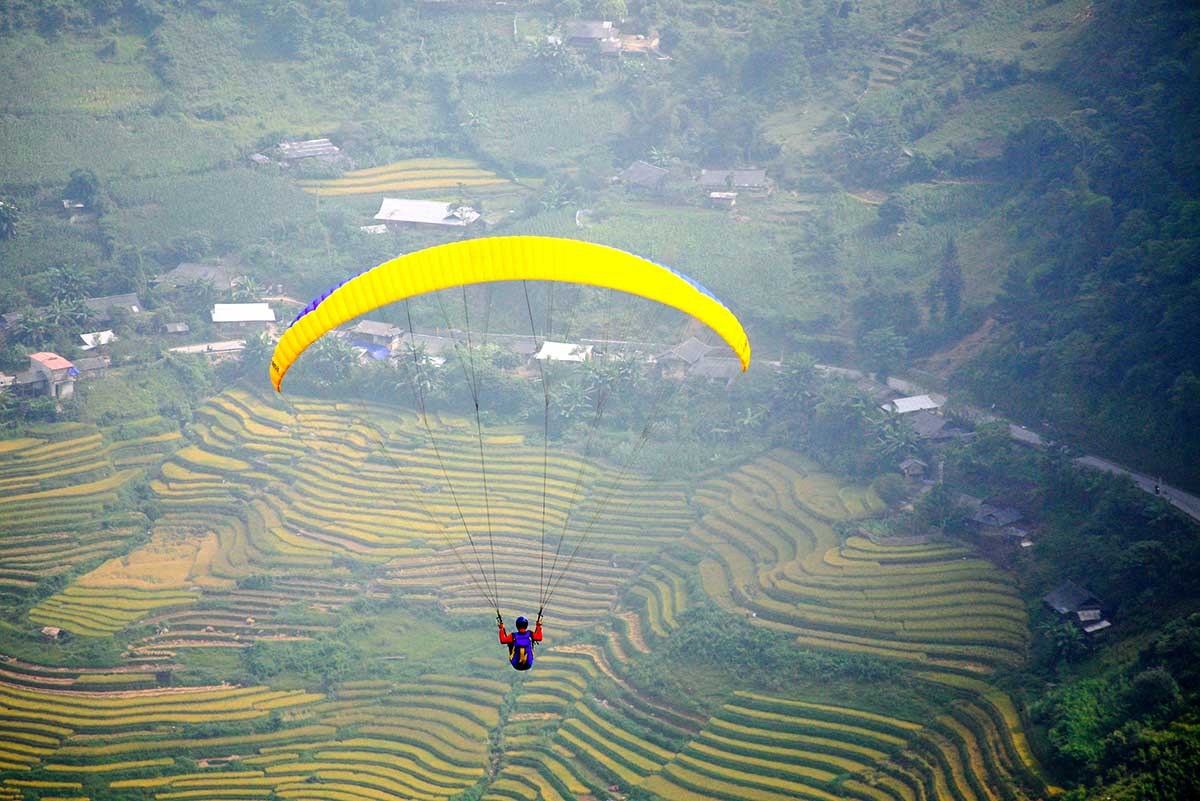
There are only a few places in Vietnam where you can go paragliding, but Mu Cang Chai is considered one of the best. This region is located in the northwest of Vietnam and is known for its large terraced rice fields spread across mountain slopes.
When you take off from one of the viewpoints, you glide over valleys filled with rice terraces, small villages, and winding roads. Especially during the rice season, when the fields are green or golden, the views are very impressive from above.
Paragliding here is usually organized during certain seasons or events, and often with experienced pilots. It’s not something you can do every day like in some countries, but when conditions are right, it’s a unique way to see one of the most beautiful landscapes in Vietnam.
Other places to do paragliding in Vietnam:
- Paragliding in Son Tra (Da Nang) – Coastal flights with views over the sea and the city.
- Paragliding in Nha Trang – Fly above the coastline and nearby hills.
- Paragliding in Hanoi (festival events) – Occasional flights during organized events outside the city.
11. Sliding down the hills of Dalat
Dalat appears more than once on this list, and for good reason. If you are looking for some of the best adventure activities in Vietnam in one place, Dalat offers a wide mix of outdoor experiences, from serious activities like canyoning to more fun and unusual ones.
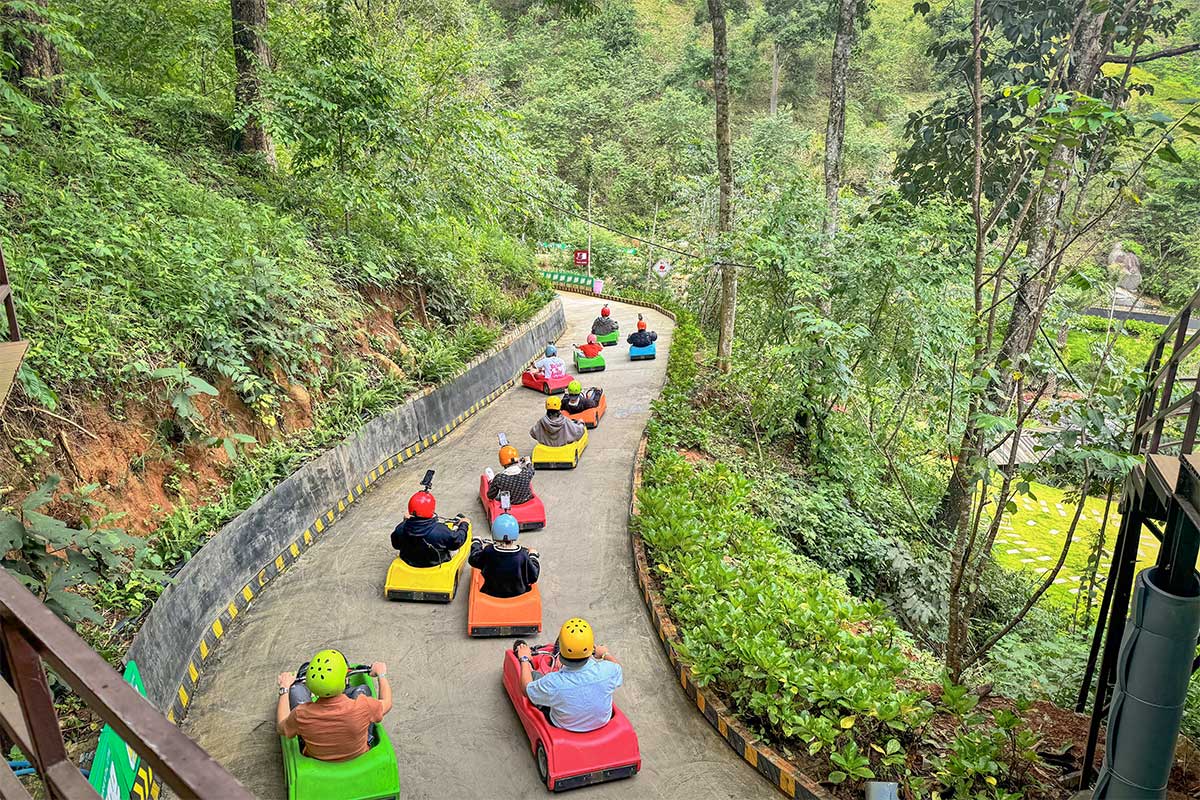
One of the more unique and popular activities—especially on social media—is riding small carts down a hill, similar to a luge. At places like Cao Nguyen Hoa Park, you sit in a low cart and race down a winding track, steering yourself while avoiding obstacles like trees and curves. It’s often compared to real-life Mario Kart and is more about fun than skill, but still feels fast and a bit chaotic.
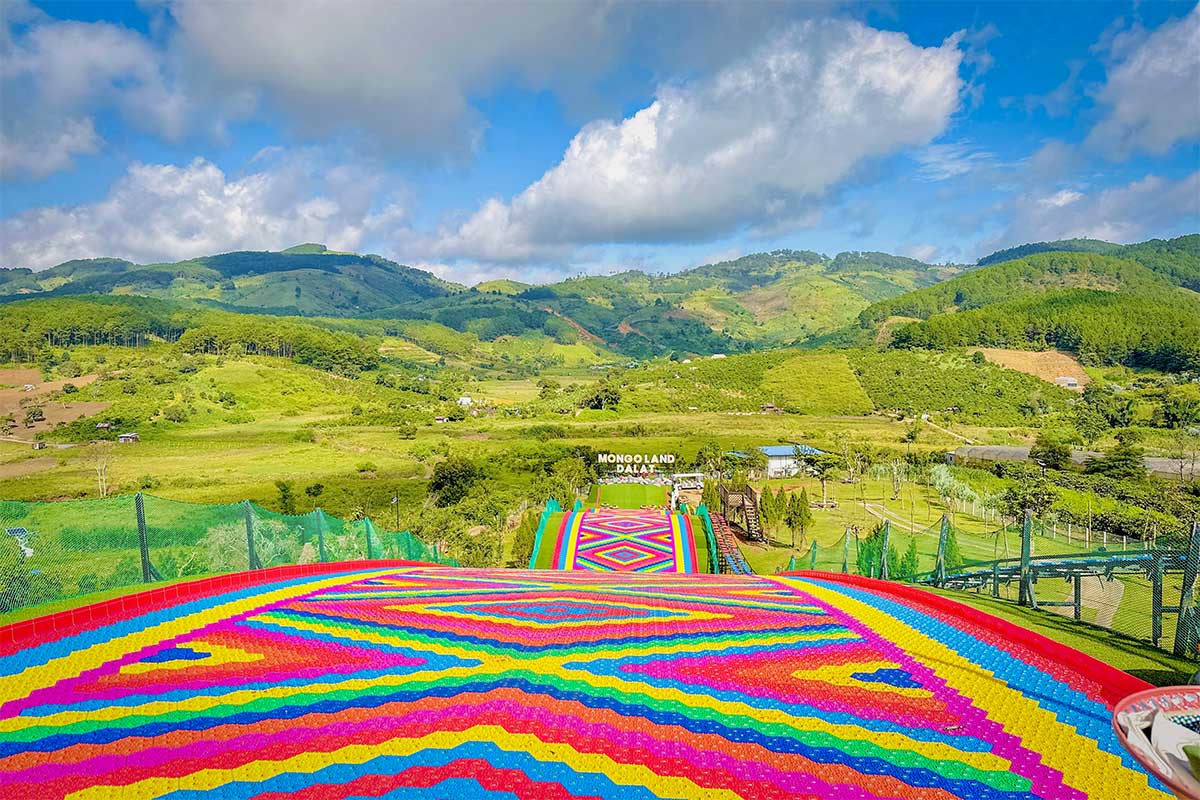
Another popular option is the rainbow slide, found at places like Mongo Land. These are long, colorful slides where you sit on a mat and go down a track built into the hillside. It’s simple, but surprisingly fun, and very popular with younger travelers and backpackers.
These activities are less extreme than others on this list, but they are easy to access and a good way to add some light adventure to your time in Dalat.
12. Sandboarding and quad biking in Mui Ne
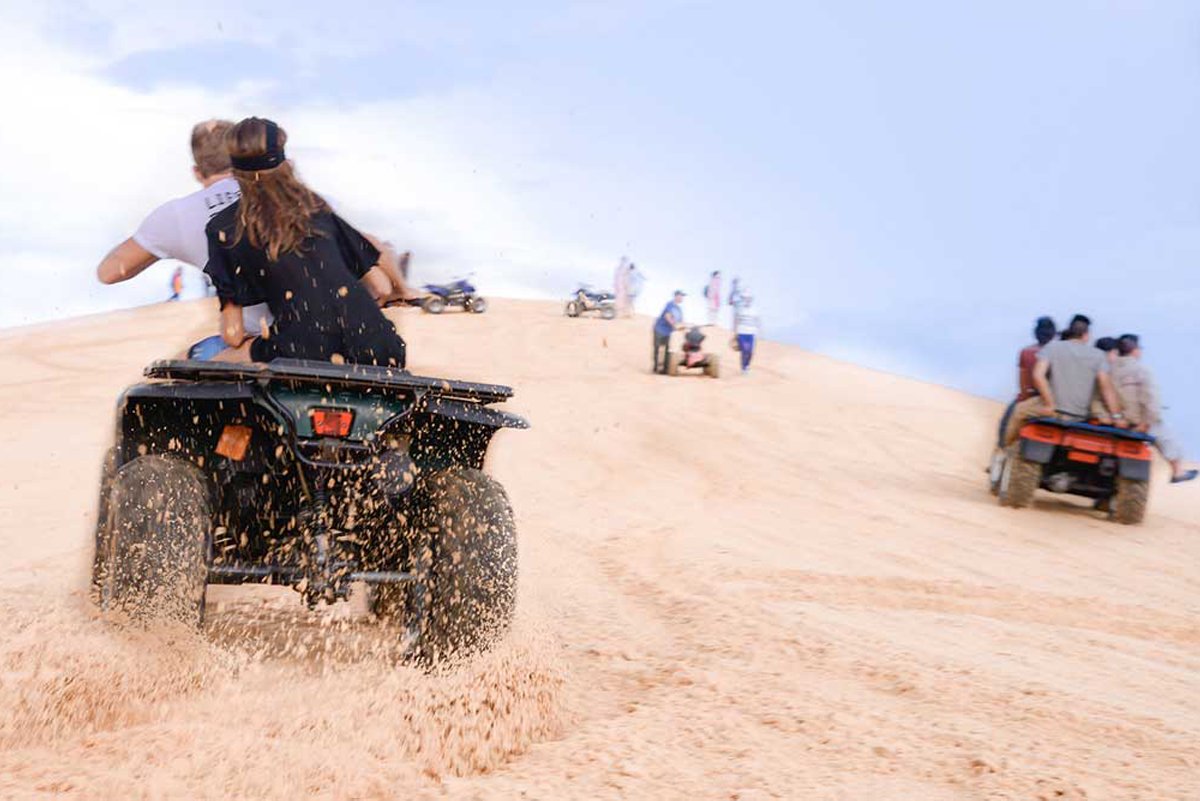
Mui Ne is not only known for kitesurfing, but also for its large sand dunes just outside the town. These dunes look very different from the rest of Vietnam, with wide open landscapes that feel more like a desert than a tropical country.
There are two main dune areas: the white sand dunes, which are larger and more spread out, and the red sand dunes, which are smaller but easier to access.
The most popular activities here are:
- Quad biking – You can rent a quad bike and drive across the dunes, either on your own or with a guide. This is the most active way to explore the area.
- Sandboarding – On the red dunes, you can rent a plastic board and slide down the sand. It’s simple, but fun for a short time.
These activities are more about having fun than real adventure, but the setting is quite unique within Vietnam and worth a visit if you are in Mui Ne.
Practical tips and safety for adventure activities in Vietnam
Adventure in Vietnam is accessible and often well organized, but the level of safety and regulation can vary depending on the activity. In general, the more serious the activity, the better it is managed, while lighter, more touristy activities are sometimes less controlled. A bit of awareness goes a long way and helps you enjoy these experiences without unnecessary risks.
Safety standards by activity
For more technical activities like canyoning in Dalat or multi-day cave expeditions in Phong Nha, safety standards are generally high. These tours are run by professional operators using good equipment, trained guides, and clear procedures. You don’t need experience, but you do need to follow instructions carefully.
For lighter adventure activities, like slides, dune activities, or small local attractions, safety is more basic. Equipment can be simpler, and rules are not always strictly enforced. These are still fun, but it’s important to use common sense and not take unnecessary risks.
Motorbike travel: the biggest risk
Traveling by motorbike is one of the best adventures in Vietnam, but also the one with the highest risk.
Traffic in cities can feel chaotic, with many vehicles moving in all directions. In the countryside and mountains, roads are quieter but not always well maintained. You might encounter sharp turns, loose gravel, animals on the road, or sudden weather changes.
If you are an experienced rider, you will likely be fine, but always stay alert. No matter how good you are, you also depend on how others drive. If you are unsure, going with an Easy Rider is a much safer option.
Travel insurance is essential
If you plan to do adventure activities in Vietnam, good travel insurance is important. Not all policies cover activities like motorbiking, canyoning, or trekking.
Check in advance:
- Whether motorbike riding is covered (and under what conditions)
- If adventure sports are included
- What kind of medical coverage you have
This is something many travelers overlook until something goes wrong.
Main adventure hubs in Vietnam
Some places in Vietnam stand out as real adventure bases, where you can easily combine multiple activities.
- Dalat – The main hub for outdoor adventure, including canyoning, mountain biking, rafting, and more playful activities like slides.
- Phong Nha – Best for jungle trekking and cave expeditions, with some of the most unique experiences in the country.
- Ha Giang – Known for the Ha Giang Loop, one of the most adventurous motorbike routes in Vietnam.
- Mui Ne – A coastal spot for kitesurfing and sand dune activities.
- Sapa – The main trekking base in northern Vietnam, with easy access to mountain trails and ethnic villages.
A few practical tips
- Book with reliable operators – Especially for activities like canyoning, caving, or climbing. Cheaper is not always better.
- Check the weather – Conditions can change quickly, especially in the mountains and during rainy season.
- Don’t overplan your days – Adventure activities take energy. Give yourself time to rest in between.
- Pack simple but smart – Good shoes, a rain layer, and a small backpack make a big difference.
With the right preparation, adventure activities in Vietnam are not only exciting, but also very doable for most travelers.