
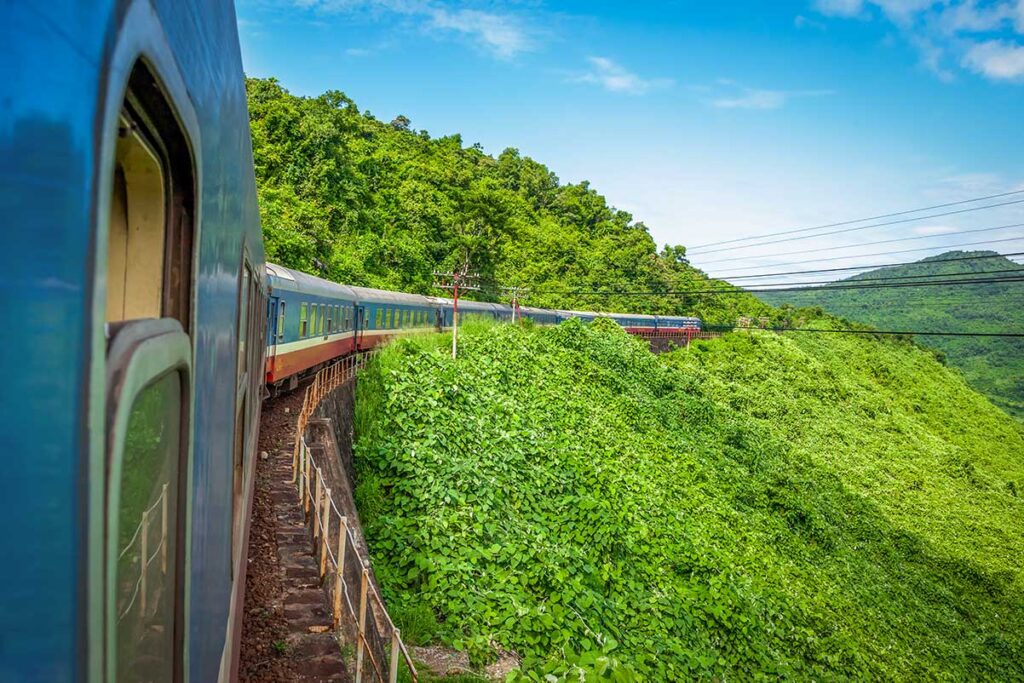

1. Hue → Da Nang: Most scenic coastal train route over the Hai Van Pass
If you are looking for one of the best train routes in Vietnam, this is the one almost everyone agrees on.
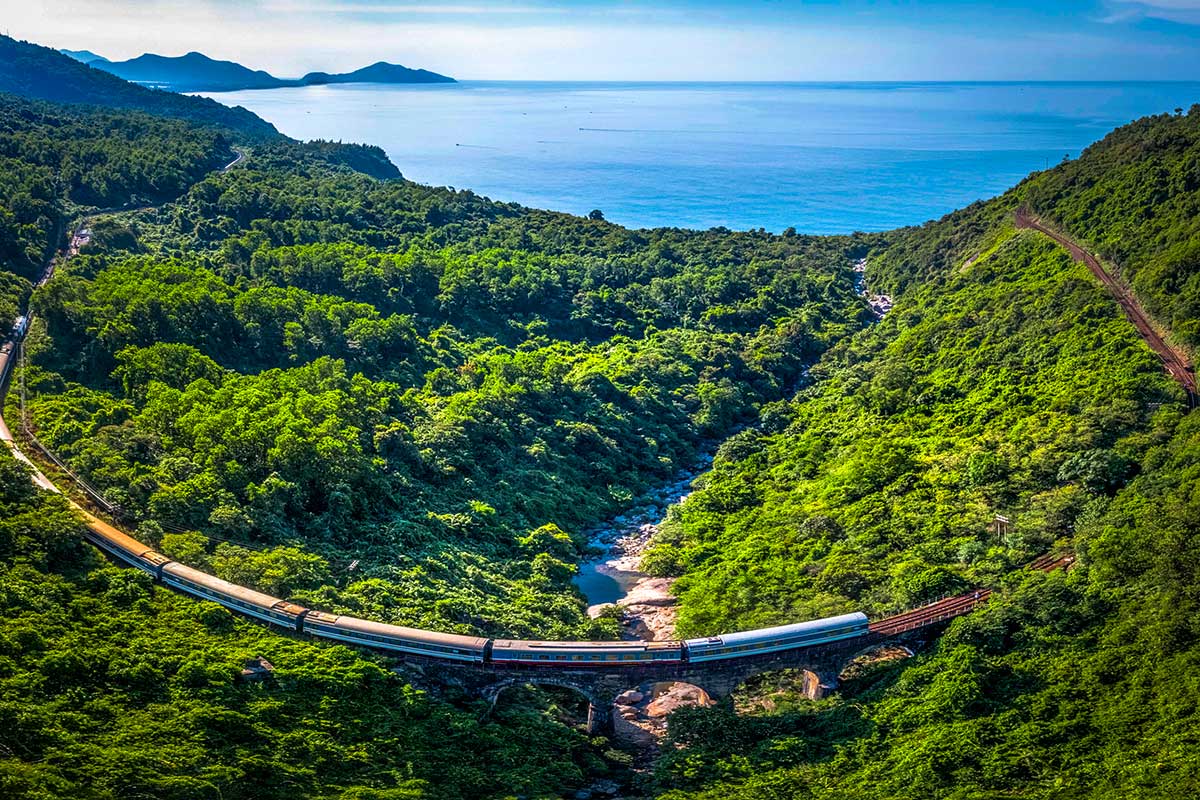
The train journey between Hue and Da Nang takes around 2.5 to 3 hours, but the highlight is the section over the Hai Van Pass, where the railway curves along the mountains with open views over the sea. Unlike the road, the train runs on a quieter track, often closer to the coastline, which makes the scenery feel more remote and uninterrupted.
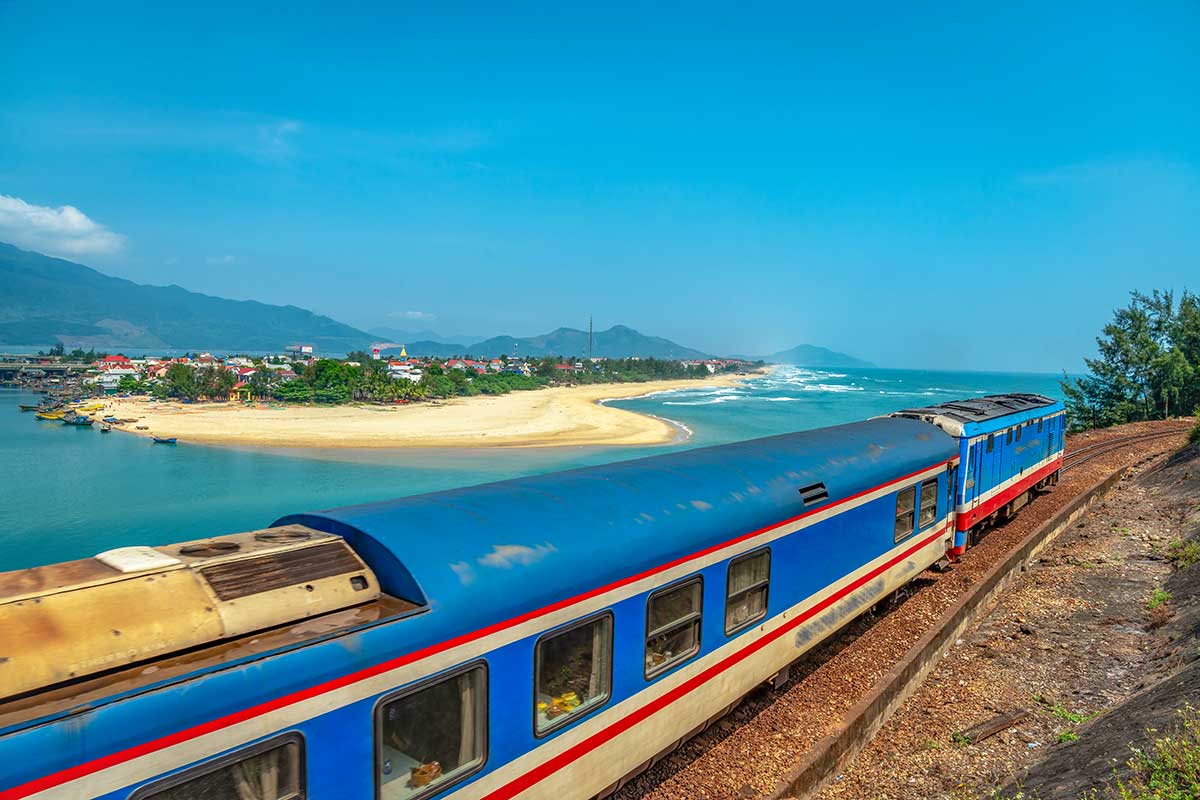

Expect a mix of:
- Coastal views with beaches and fishing villages
- Jungle-covered mountains
- Small tunnels and curved tracks hugging the cliffs
For train enthusiasts, this route stands out because it combines classic railway engineering (old tunnels, winding tracks) with some of the most open coastal views in the country.
In terms of trains, you will be on a regular Vietnam train (Reunification Express), not a luxury train. That said, some upgraded or tourist-style carriages occasionally run on this section, offering slightly better seating and larger windows.
Practical tip: if possible, choose a soft seat during daytime and sit on the coastal side for the best views. This is one of the few routes in Vietnam where your seat choice really matters.
2. Nha Trang → Quy Nhon: Vietnam’s most premium train experience with The Vietage
This is where Vietnam train travel becomes something more special. The route between Nha Trang and Quy Nhon is not just scenic, but also home to one of the best luxury trains in Vietnam: The Vietage.
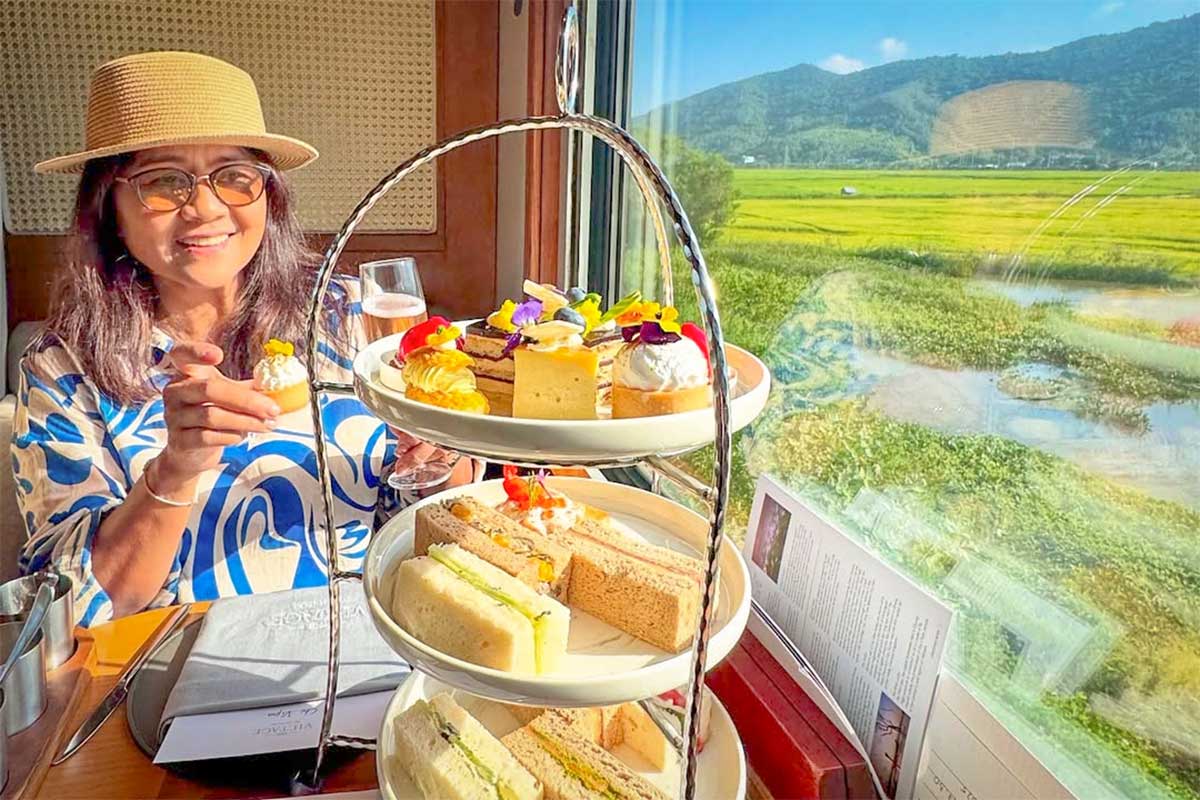
The journey takes around 5 to 6 hours, depending on the train, and passes through a mix of quiet coastal stretches, farmland, and less-visited parts of central Vietnam. It’s not as dramatic as the Hai Van Pass, but it feels more authentic and relaxed, with fewer cities and more open countryside.
What makes this route stand out is the train itself:
- The Vietage is a luxury carriage attached to a regular Vietnam train, with a limited number of seats
- Large panoramic windows designed for scenery
- Comfortable seating (more like a lounge than a train seat)
- Included meals, drinks, and a more refined onboard experience
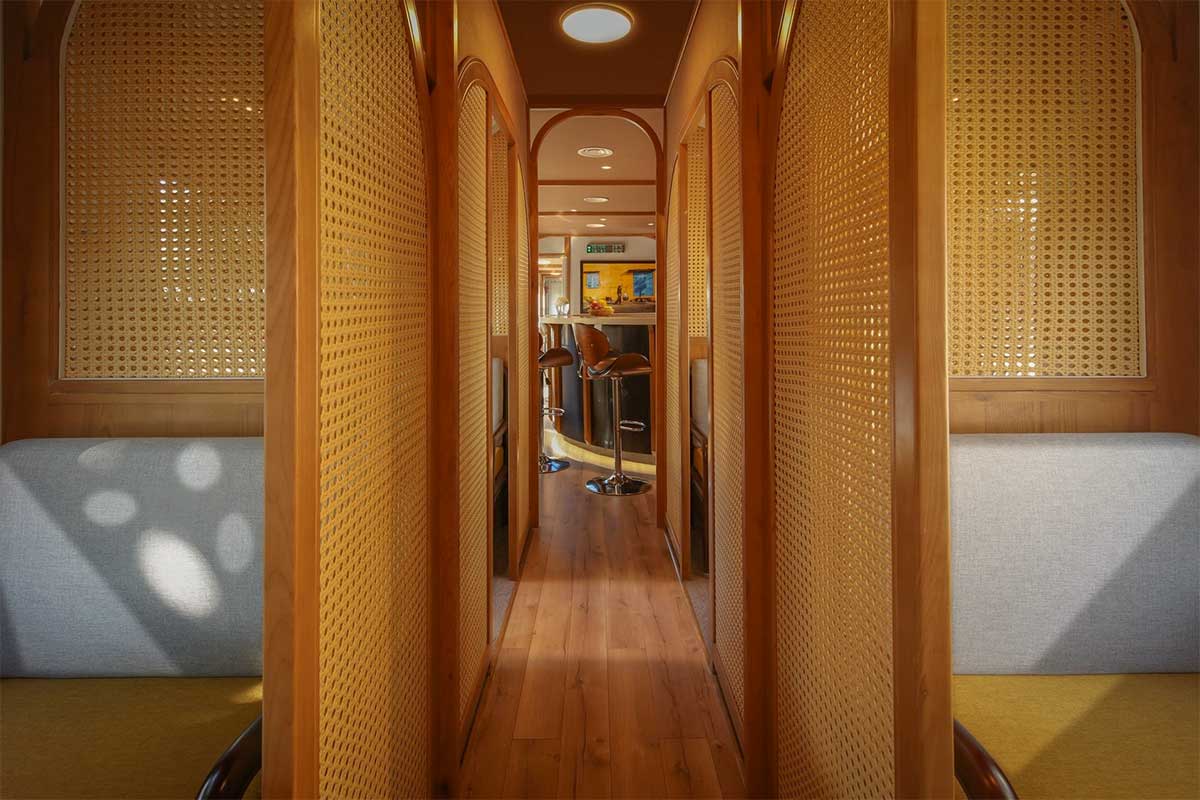
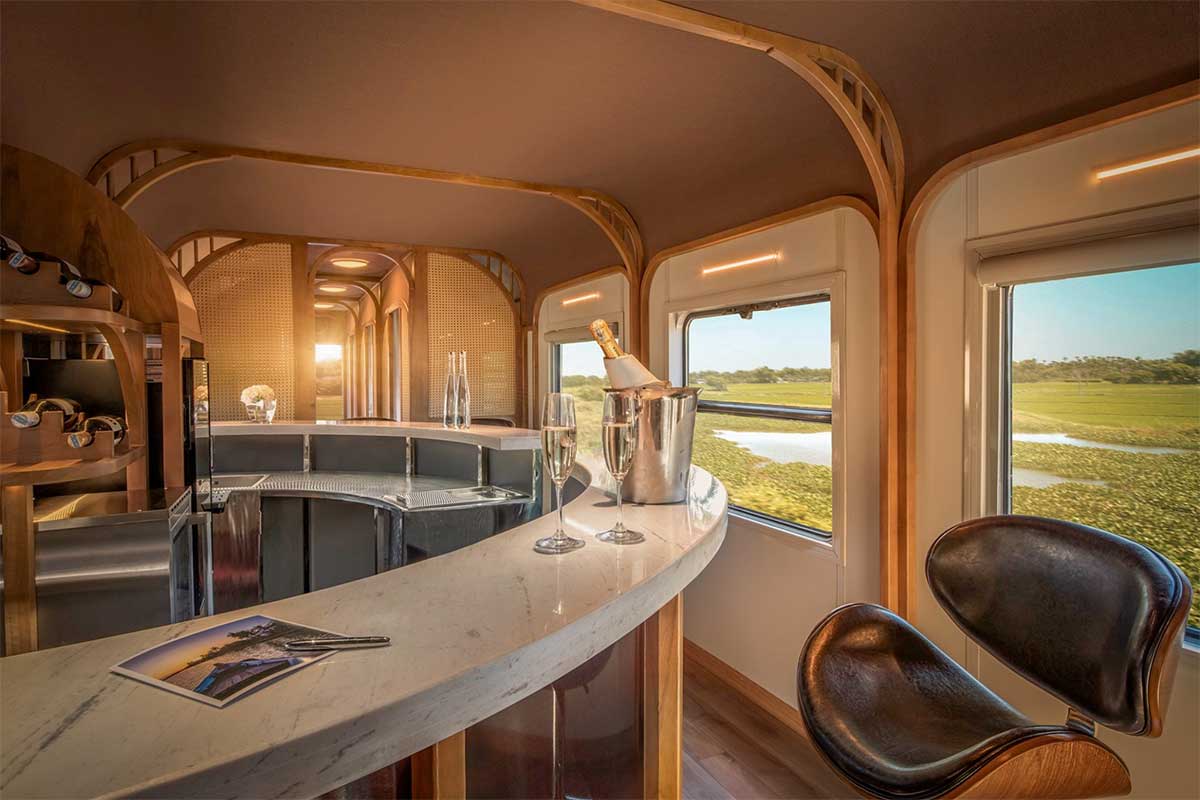
This is not a full luxury train like in some other countries, but for Vietnam, it’s the most premium train experience currently available.
You can also take this route on standard trains, which are more budget-friendly but much simpler in terms of comfort.
For train lovers, this route is interesting because it combines:
- A quieter, less touristy railway section
- One of the best trains in Vietnam in terms of comfort
- A different pace compared to the busy north–south routes
If you want to experience one of the best luxury trains in Vietnam, this is the route to do it on.
3. Hanoi → Lao Cai: Classic overnight train to Sapa with tourist cabins
This is one of the most well-known and best train routes in Vietnam, mainly because of the destination: Sapa.
The journey from Hanoi to Lao Cai by train takes around 7 to 8 hours and is usually done overnight. It’s not about dramatic scenery like the Hai Van Pass, but more about the experience of traveling by train itself, especially with the well-known tourist cabins.
What makes this route stand out for train enthusiasts:
- A wide range of tourist train carriages attached to regular trains
- Different comfort levels, from basic sleepers to more premium cabin styles
- A classic overnight train experience that many travelers specifically look for
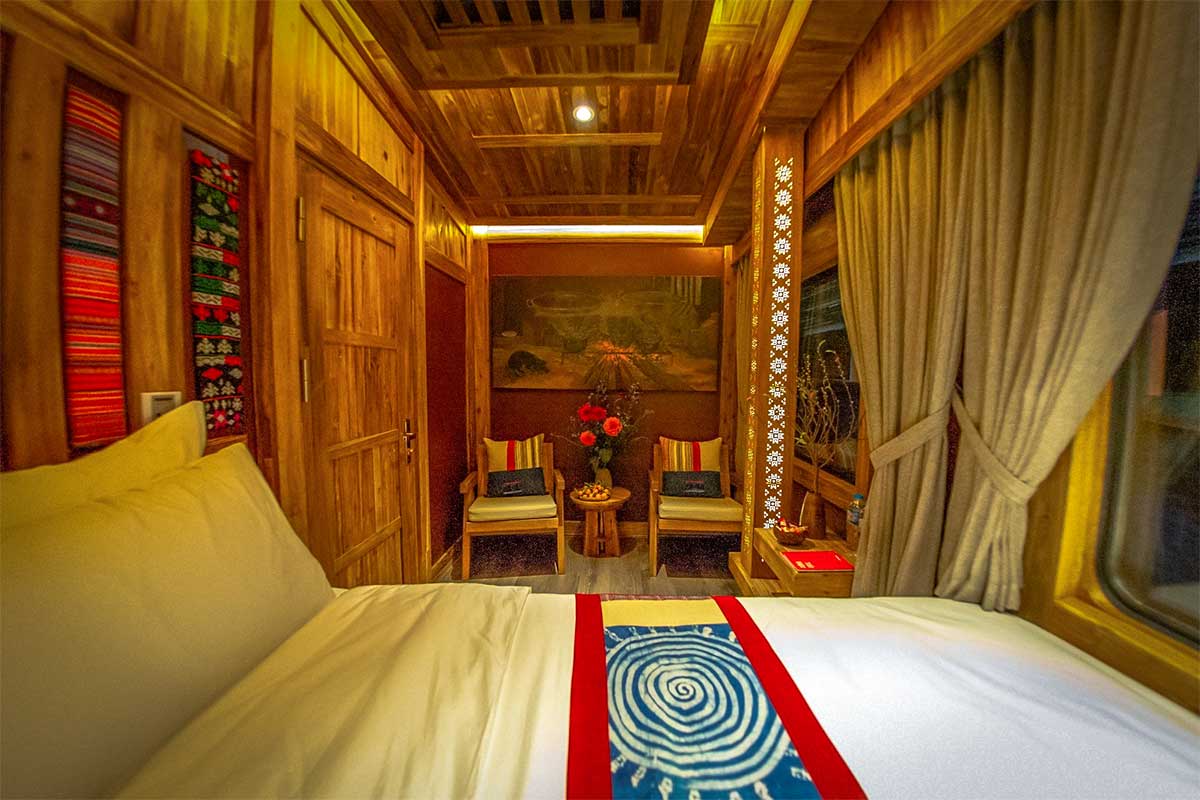
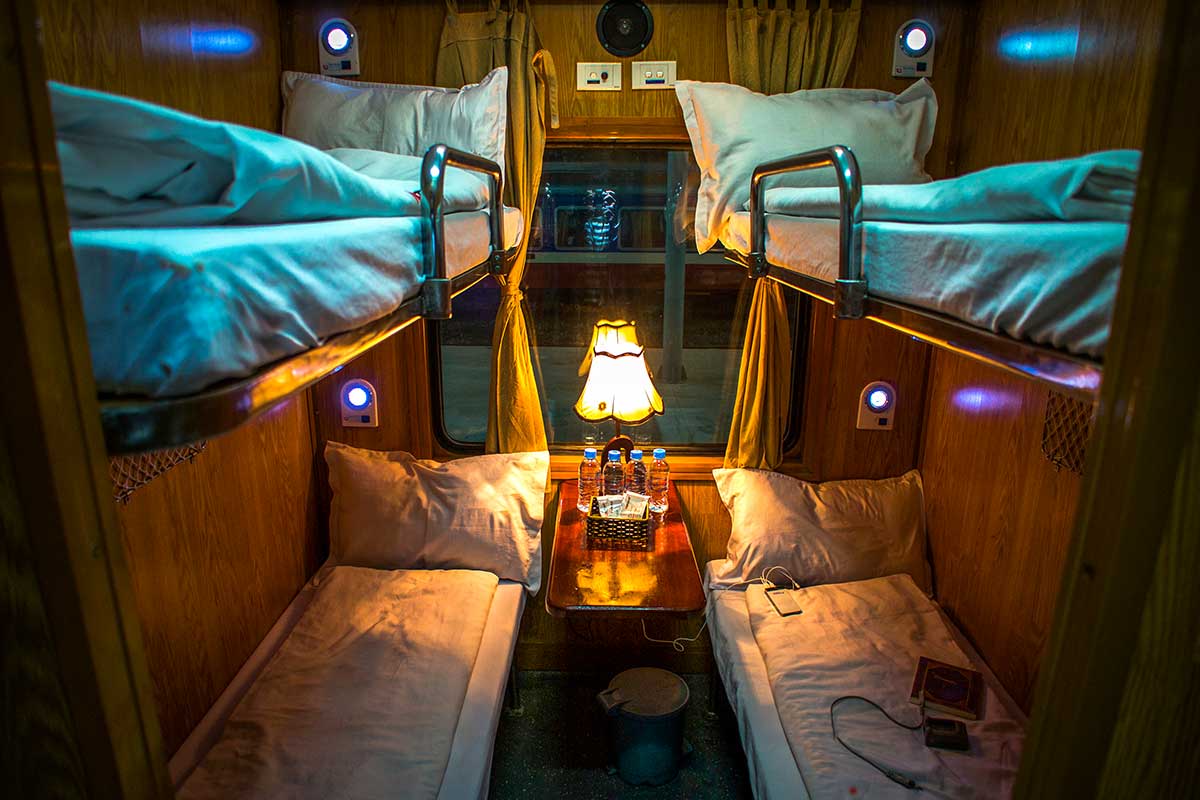
Popular options like Livitrans Express, Sapaly Express, or Chapa Express offer upgraded cabins with better bedding, interior design, and small extras like snacks or drinks.
It’s important to know that these are not separate trains, but private carriages attached to a standard Vietnam train, so the ride itself (speed, track, noise) is the same.
In terms of scenery, most of the journey is done in the dark. If you take a daytime train, you’ll see more countryside and Red River Delta landscapes, but most people choose the overnight option for convenience.
This route is less about views and more about:
- Experiencing one of the most iconic train journeys in Vietnam
- Trying different types of sleeper cabins
- Combining comfort with practical travel to Sapa
From Lao Cai, it’s still about 1 hour by car or bus to Sapa, which is something to keep in mind when planning your trip.
4. Nha Trang → Phan Rang: Unique dry coastal landscapes and quiet countryside
This is one of the more underrated Vietnam train routes, but it offers something quite different from the rest of the country.
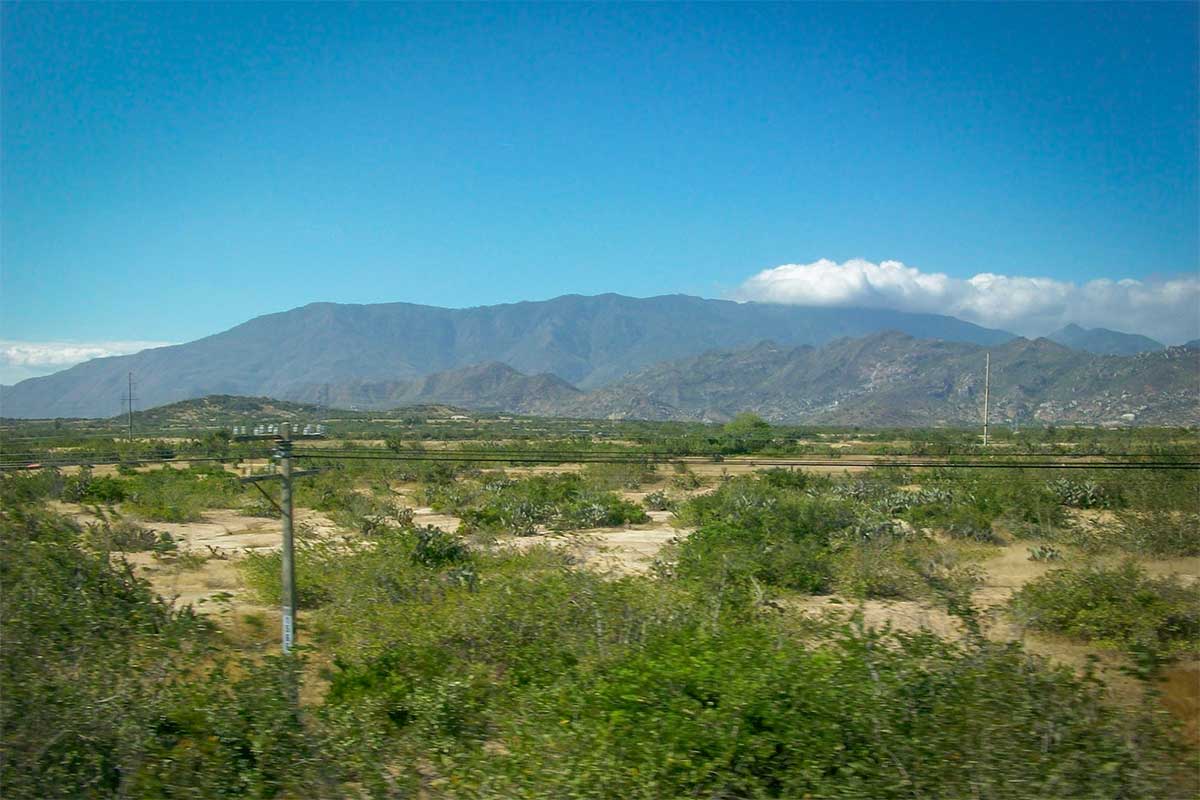
The journey between Nha Trang and Phan Rang takes around 2 to 3 hours and passes through one of the driest regions in Vietnam. Instead of lush green rice fields, you’ll see a landscape that feels almost semi-arid, with sandy soil, low vegetation, and wide open views.
What makes this route interesting:
- A less touristy section of the railway
- Dry coastal scenery that looks very different from the rest of Vietnam
- Small villages, farmland, and quiet countryside
For train enthusiasts, it’s not about luxury or famous views, but about experiencing a different side of Vietnam by train.
There are no special tourist or luxury trains on this route. You’ll be traveling on standard Vietnam trains, which keeps the experience simple and local.
Because it’s a shorter journey, a soft seat is usually enough, and daytime travel is recommended to actually see the changing landscape.
If you’re looking for something beyond the typical highlights, this is one of the more unique train routes in Vietnam, especially if you enjoy quieter, less developed areas.
5. Hue → Dong Hoi: Peaceful countryside ride with rice fields and local life
This is one of the more relaxed and underrated train routes in Vietnam, especially if you enjoy rural scenery over dramatic landscapes.
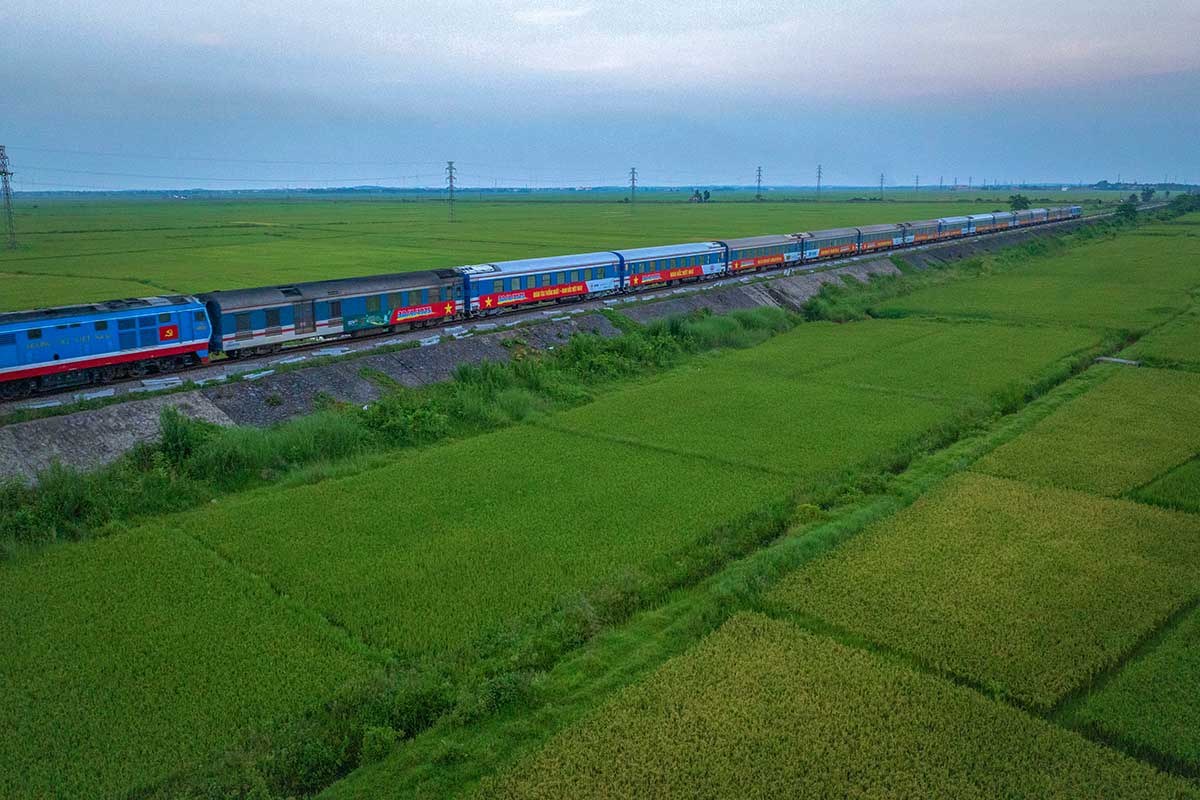
The journey from Hue to Dong Hoi takes around 3 to 3.5 hours and runs through central Vietnam’s countryside. Instead of mountains or coastline, you get long stretches of rice fields, small villages, rivers, and daily local life.
What makes this route interesting:
- A very local and authentic feel, with fewer tourists on board
- Endless rice fields, especially during growing season
- Small stations and quiet towns along the way
For train enthusiasts, this is a good example of what everyday Vietnam by train looks like. It’s not about luxury or famous views, but about watching the countryside slowly pass by.
There are no tourist or luxury trains on this route. You’ll be on standard Vietnam trains, which keeps the experience simple and real.
A big advantage is the destination. Dong Hoi is the main station for Phong Nha–Ke Bang National Park, making this a great alternative to the highway if you’re heading there.
For this route, a daytime soft seat is usually the best choice so you can enjoy the scenery.
6. Hanoi → Bac Ninh: Vietnam’s most unique double-decker cultural train
This is not one of the best train routes in Vietnam for scenery, but it is one of the most unique train experiences in Vietnam right now.
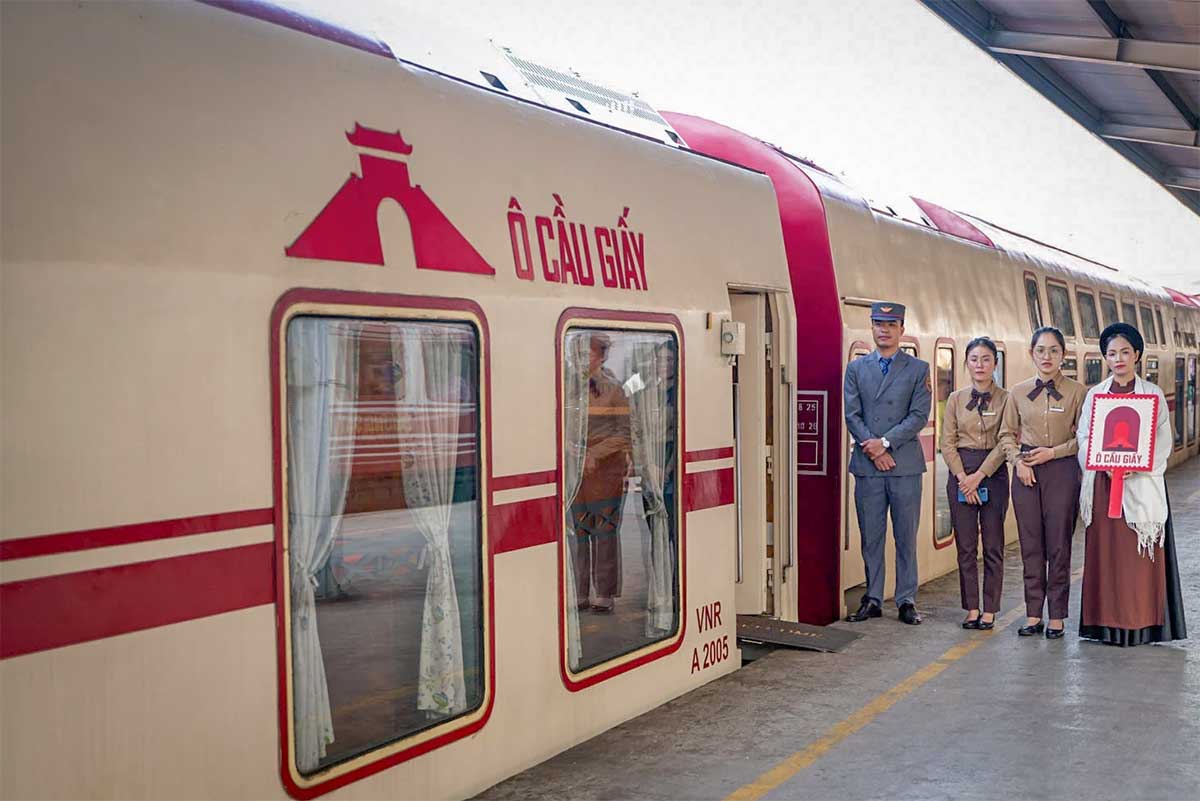
The journey from Hanoi to Bac Ninh takes around 40 minutes, but the focus is entirely on the train itself. The newly introduced “Hanoi Five Gates” train is a rare double-decker tourist train, designed as a moving cultural experience rather than just transport.
What makes this train stand out:
- A double-decker design, something you almost never see in Vietnam
- Themed carriages inspired by the historic gates of Hanoi
- Large windows and slow speed, giving close-up views of Train Street and daily life along the tracks
- Onboard elements like traditional snacks, music, and cultural storytelling
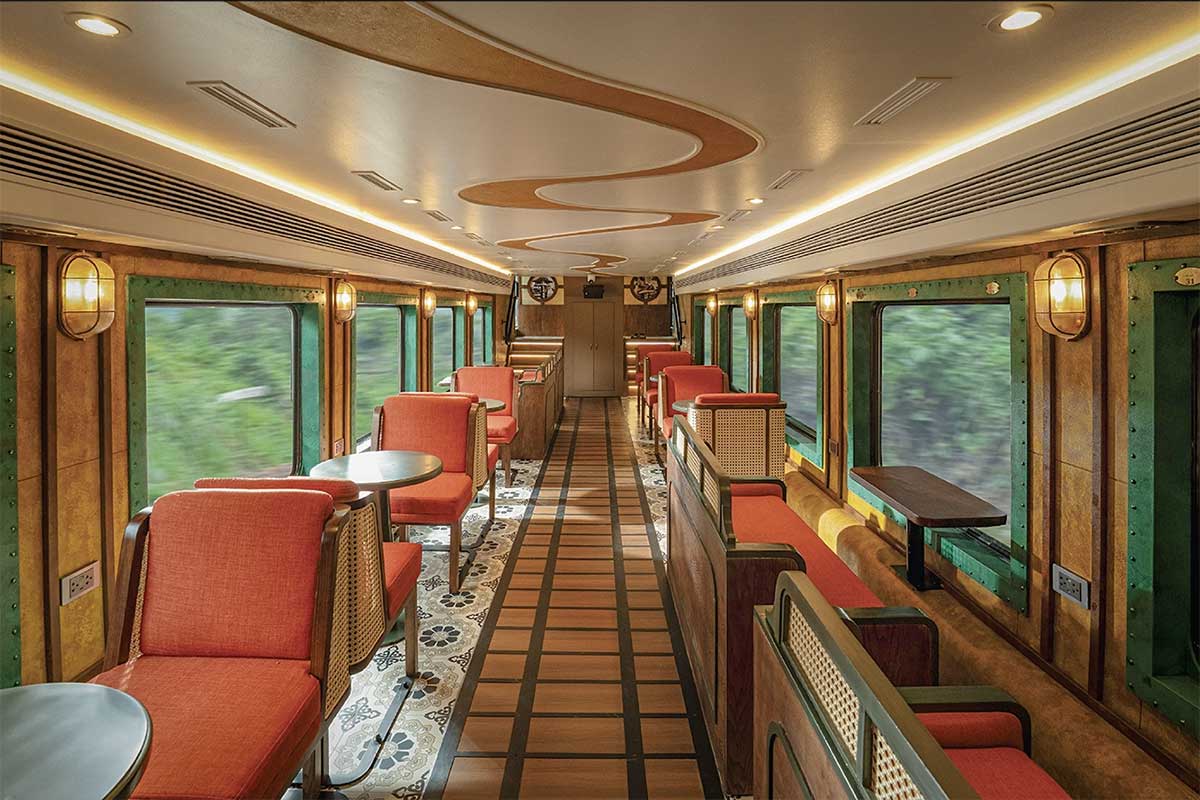
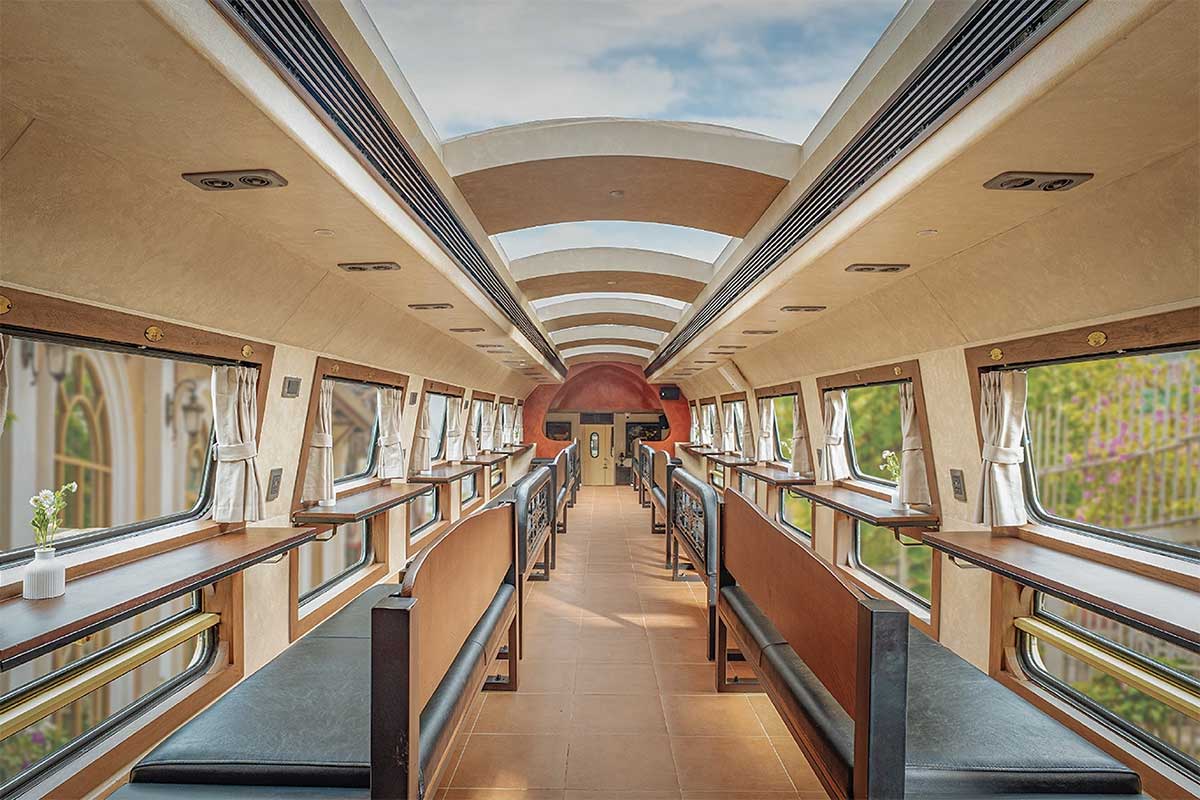
The route itself runs straight through parts of Hanoi where houses, shops, and daily life sit right next to the railway. You are not just looking at scenery, but directly into the everyday rhythm of the city.
For train enthusiasts, this is interesting because:
- It’s one of the newest train concepts in Vietnam
- It focuses on experience over transport
- It shows how Vietnam is starting to develop more tourism-focused trains, not just functional ones
This is best seen as a short, unique train experience, not a must-do route for travel between destinations. But if you are looking for something different or want to try one of the most unusual trains in Vietnam, this is worth considering.
7. Hanoi → Hai Phong: New upgraded train with modern comfort and easy city access
The route from Hanoi to Hai Phong has become more interesting recently thanks to the introduction of upgraded train carriages.
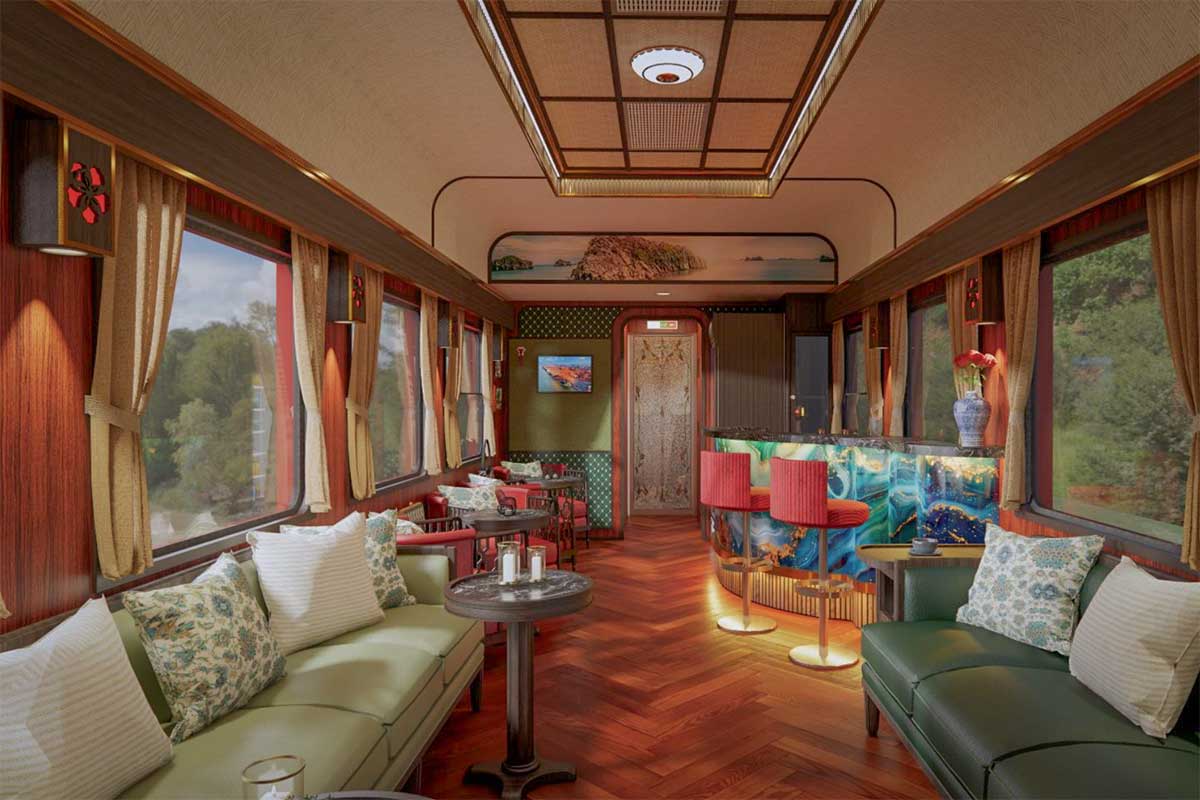
The journey takes around 2 to 2.5 hours and runs through the Red River Delta, with a mix of farmland, towns, and industrial areas. It’s not the most scenic route, but it’s a smooth and easy connection between two major cities.
What makes this route stand out now is the upgraded train:
- The “Hoa Phuong Do” train, a newer and more modern carriage setup
- Improved seating and interior design compared to standard trains
- A more comfortable and slightly premium feel for a short journey
This is not a full luxury train, but it’s a clear step up from the usual Vietnam train experience and one of the better modern train options currently available.

For travelers, this route is mainly practical:
- Easy access from Hanoi to Hai Phong
- Good connection onward to Cat Ba Island or Halong Bay (via Hai Phong)
Because it’s a short journey, a comfortable seat is all you need, but if you want to try one of the newer upgraded trains in Vietnam, this is the route to do it.
Tips for choosing and booking the best train routes in Vietnam
If you’re focusing on the best train routes in Vietnam or want to try one of the best trains or luxury train experiences, a few practical tips can help you choose the right option and book it the right way.
Booking standard vs luxury train experiences
For most scenic routes in Vietnam, you’ll be traveling on regular trains (Reunification Express). These are easy to book:
- Use the official railway website for the lowest price
- Or use platforms like Baolau or 12go.asia for easier booking and payment
For luxury trains or tourist-style carriages, the approach is slightly different:
- Some can only be booked via platforms or travel agents
- Others (like premium tourist trains) can be booked directly through the company
- Always double-check the source, as not all official websites are very clear
Choose the right train for the route
Not every route in Vietnam has a special or luxury train.
- Routes like Hue → Da Nang are all about scenery, so focus on timing and seat position
- Routes like Nha Trang → Quy Nhon are more about the train itself, especially if you want a premium experience
- Routes like Hanoi → Lao Cai are about the classic overnight journey with different cabin styles
Understanding this helps you decide whether to spend more on comfort or just enjoy the route.
Day vs night travel for scenic routes
If your goal is to experience one of the most scenic train routes in Vietnam, always check the timing.
- Day trains are best for routes like Hai Van Pass or coastal sections
- Night trains are more practical for long distances, but you will miss most of the scenery
Some routes offer both options, so it’s worth choosing carefully.
Combine train routes with the right destinations
Many of the best train routes in Vietnam don’t end exactly where you want to be.
- Hanoi → Lao Cai still requires a transfer to Sapa
- Dong Hoi is the gateway to Phong Nha
- Hai Phong is often used for Cat Ba Island or Halong Bay
Planning these connections in advance makes your journey smoother, especially if you are building a route around multiple train experiences.
Manage expectations for “luxury trains” in Vietnam
Vietnam does have some standout premium options, but it’s important to keep expectations realistic.
- Luxury trains like The Vietage offer a high-end experience, but are still attached to regular trains
- New tourist trains (like Hanoi’s themed trains) focus more on experience than transport
- Most routes are still operated with standard trains, even on the most scenic sections
If you go in with the right expectations, you’ll appreciate the experience much more.
If you want a deeper understanding of how train travel works in practice, see our complete guide about train travel in Vietnam, where we explain all seat and cabin options, how to book Vietnam train tickets step by step, and what to expect onboard during your journey.