

What Pa Vi Hmong Village is (and isn’t)
Pa Vi Hmong Village was built specifically for tourism, not as a naturally developed ethnic settlement. It’s a government-supported project aimed at promoting community-based tourism in Ha Giang, located just after Ma Pi Leng Pass. The village is run by Hmong families, but it’s important to understand that they didn’t traditionally live here—it’s not a local village where daily life naturally unfolds.
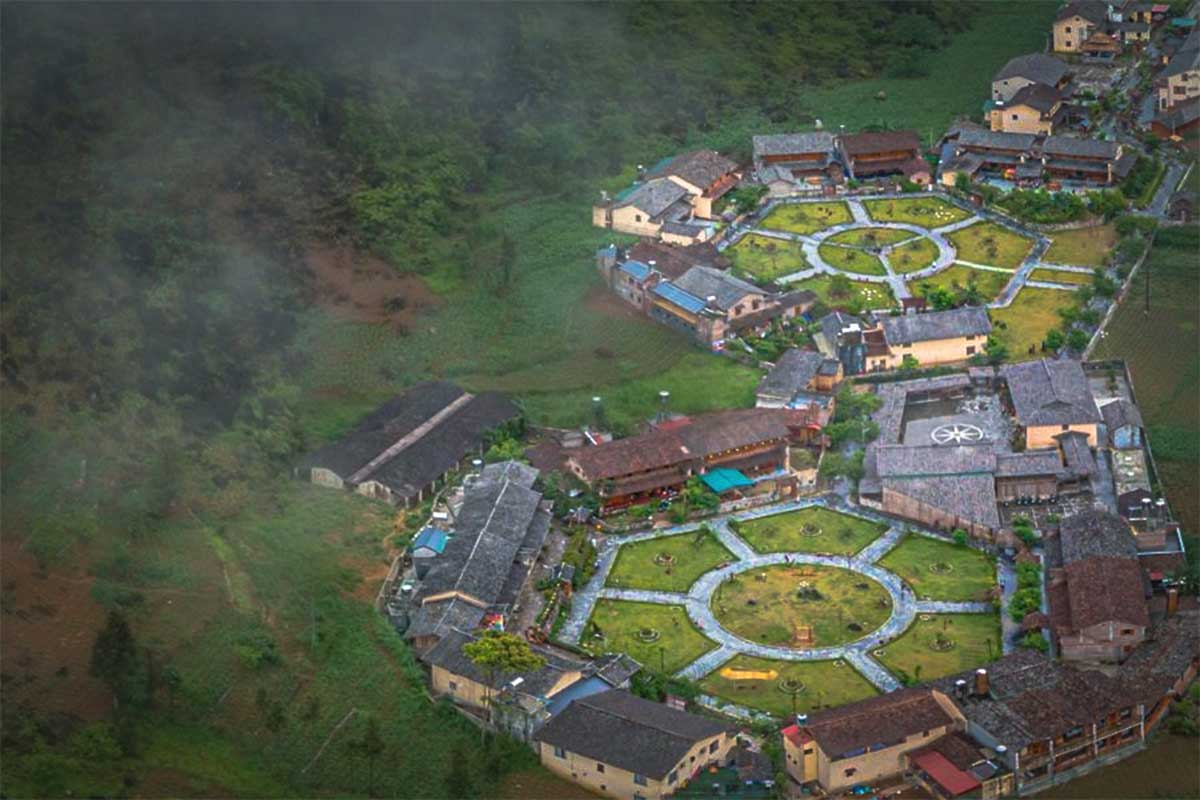
Visually, the village looks impressive. All buildings are constructed in traditional Hmong style, with earthen walls, wooden beams, stone courtyards, and tiled roofs. It’s picturesque and well-maintained, with rows of similar homestays set against the backdrop of rocky mountains.
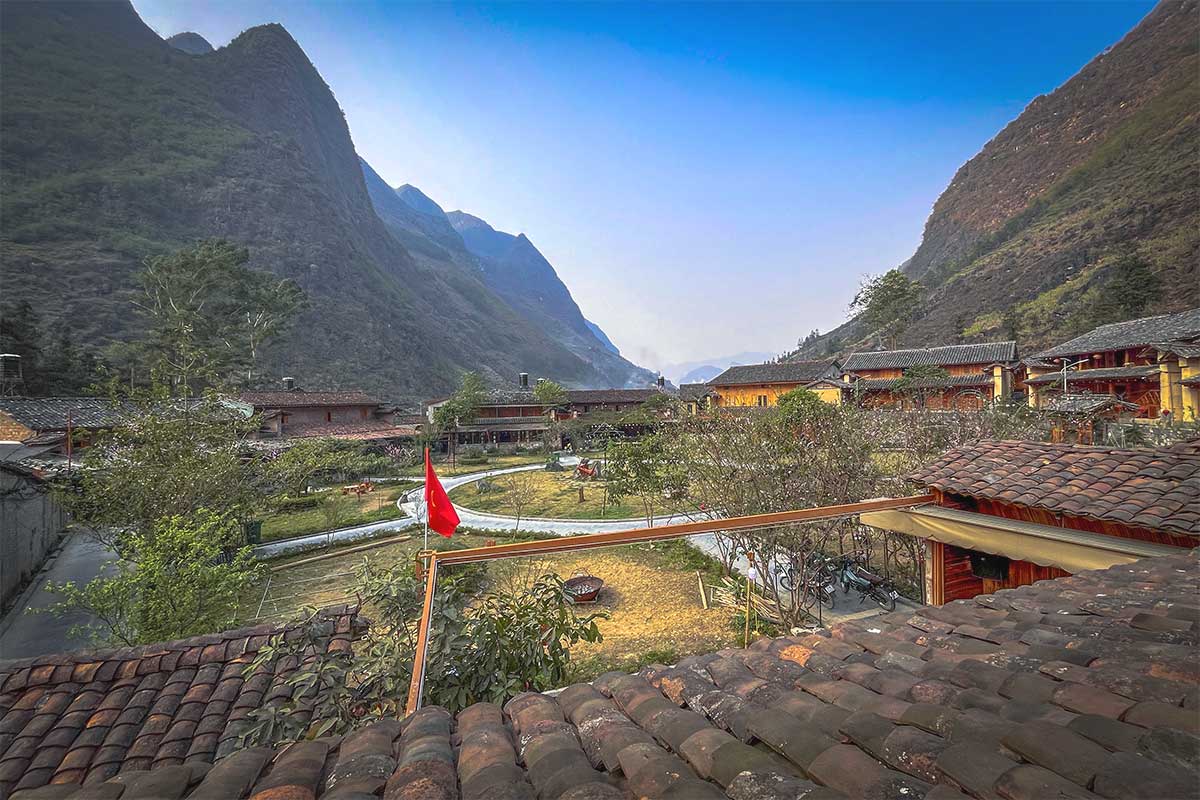
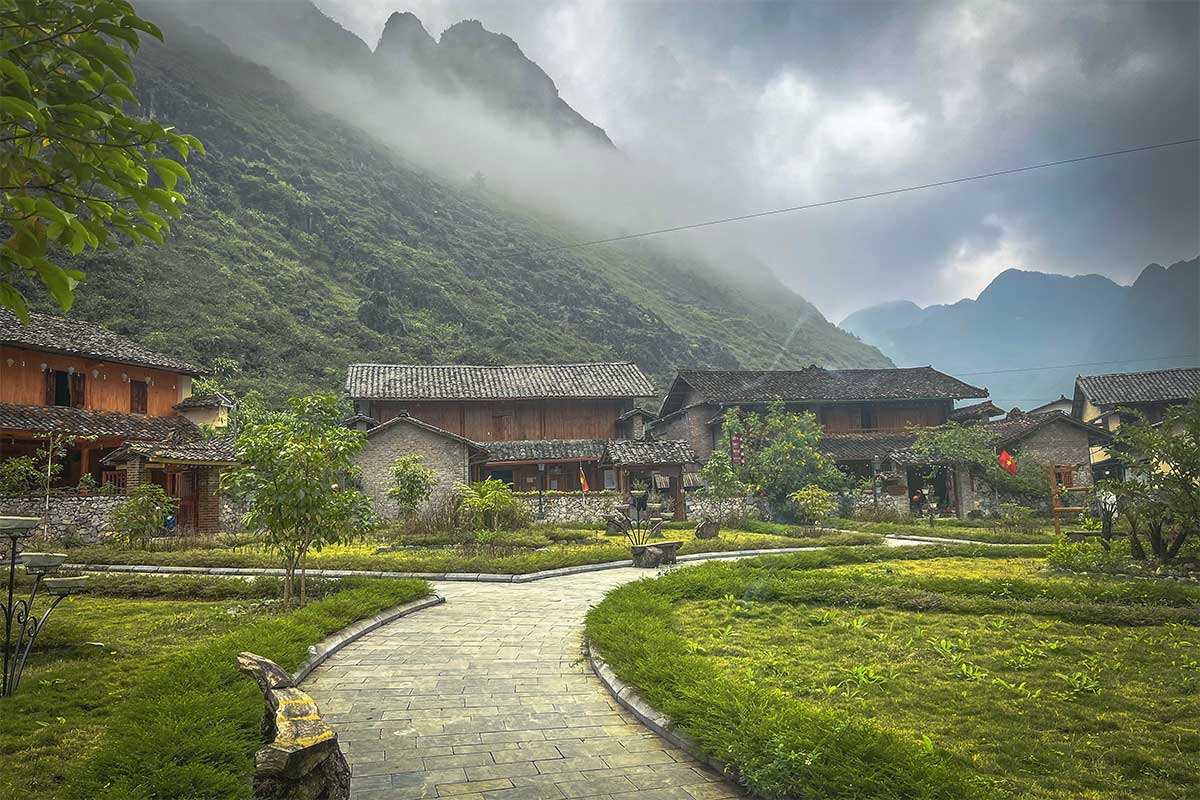
However, while the aesthetics suggest authenticity, the experience is more curated. You won’t see typical village life or spontaneous cultural interactions. What you do get is comfort, convenience, and a scenic base to explore the surrounding region. It’s a place built for travelers, not a village preserved for its original way of life—and knowing that ahead of time makes the visit more enjoyable.
Staying in Pavi Hmong Village
What is staying here like?
Pavi exists almost entirely as an overnight stop, so the staying experience is really the whole point of the place. In practice, it means picking one of roughly a dozen homestays that all sit within the same government-built compound, eating at whichever kitchen you end up at, and hoping your neighbors aren’t part of a large tour group with karaoke plans.
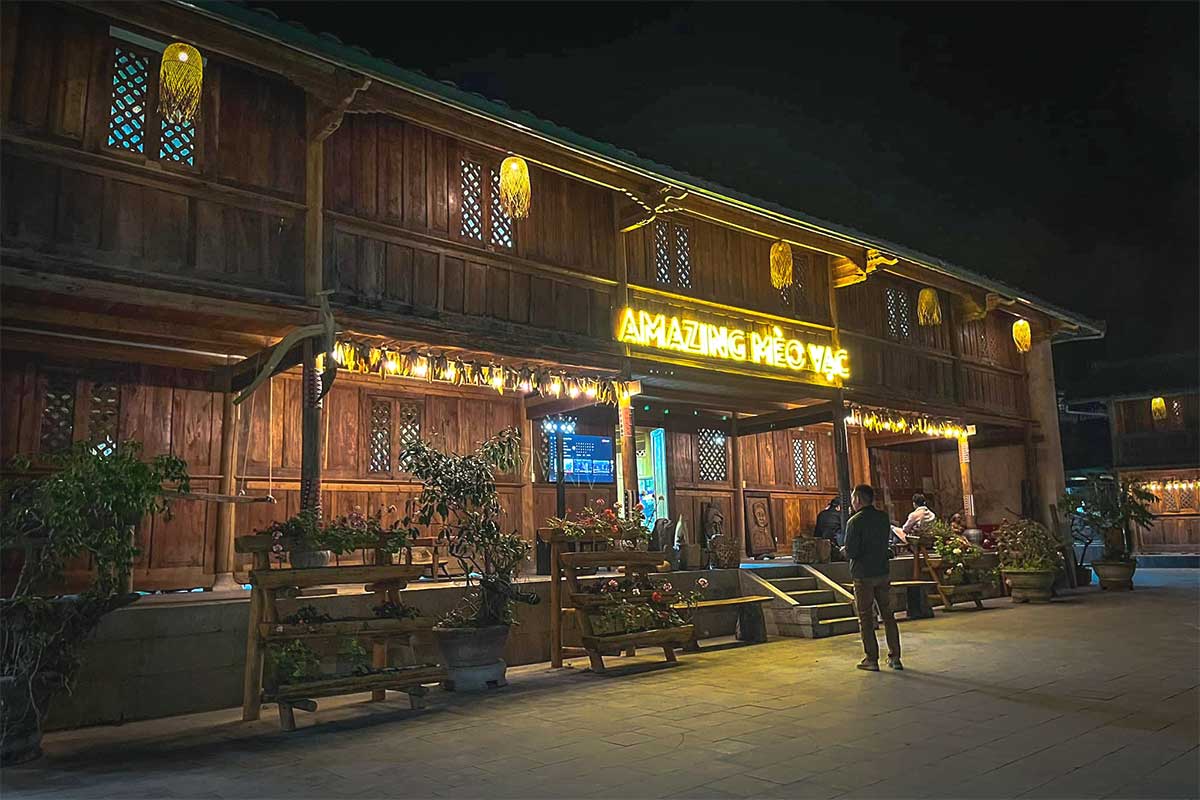
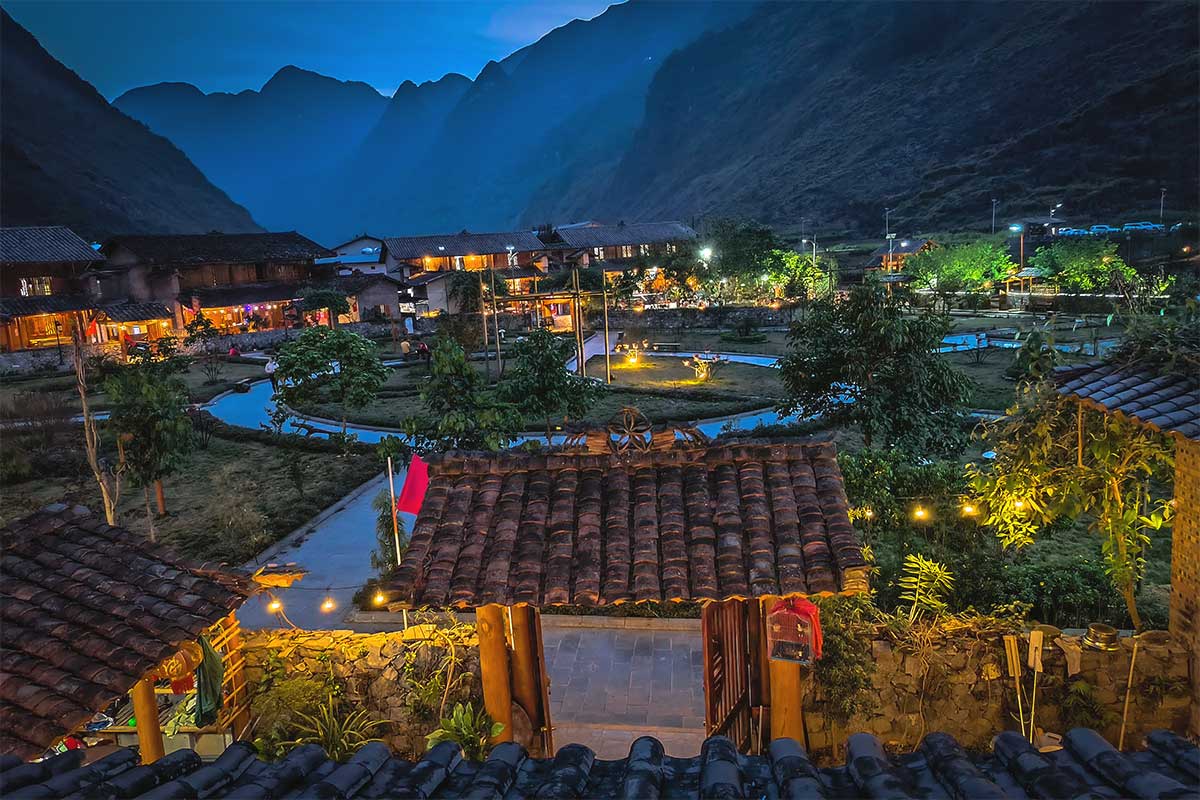
The noise issue is the most consistent complaint across the village and worth taking seriously. A community culture house in the compound runs karaoke most evenings, and the sound carries throughout. Add large tour groups — several operators bring big parties here specifically — and quiet evenings are not guaranteed. Most homestays say music stops at 10pm, but that’s still late if you’re doing an early start on the loop.
Food is only available through homestay kitchens. There are no independent restaurants or shops anywhere in the village. Most homestays serve dinner and breakfast, and you can eat at a different homestay from where you sleep, but that’s the extent of your options. Prices are consistently described as high relative to what you get — the captive audience situation is real. Stock up in Dong Van or Meo Vac before arriving if you want snacks, drinks, or anything else.
Homestays in the village
Meo Vac Clay House
The largest and most reviewed option in the village. Rooms range from crowded dorms to spacious private rooms, and the quality gap between them is significant — private rooms at the back of the property get good feedback, while dorms are described as cramped and noisy. Food gets mixed reviews: dinner is generally decent, breakfast is limited. Staff attitude is a recurring issue, with multiple guests describing indifferent or unhelpful service. Best suited to younger travelers on a budget who aren’t prioritizing sleep or quiet.
O’Chau Meo Vac Homestay
One of the better options in the village. Rooms are clean and well-decorated, the mountain views are genuinely good, and the host — often mentioned by name — is consistently praised for being warm and helpful. Food quality is above average for the village. Karaoke noise still affects this property like everywhere else, but reviewers note it’s on the quieter side of the compound. A solid choice if you’re set on staying in Pavi.
Little Yen’s Homestay
A smaller, more personal operation with bamboo-walled rooms and a welcoming host. Gets strong reviews for food and hospitality when managed well, though experiences vary depending on who is running things on a given night. Dorm noise can be an issue when large groups are present. Priced at the mid-range for the village. One reviewer flagged that it sits on the quieter side of the compound, which is worth factoring in.
Amazing Meo Vac Homestay
Hard to recommend based on available feedback. Recurring issues include unwashed bedding, rats, shared bathrooms that can’t keep up with guest numbers, and loud music. Described by multiple reviewers as the most expensive option in the village while delivering some of the worst conditions. Worth avoiding.
Vivi Homestay
One of the newer and better-looking properties, with cleaner rooms and nicer decor than most. Prices are 20–30% higher than neighboring homestays to match. Food portions are small for the price, and the host has a reputation for being slow to respond and not particularly flexible. Karaoke and noise issues apply here as everywhere in the village. Fine if cleanliness is the priority and budget isn’t a concern, but the premium isn’t fully justified.
Alternatives worth considering
If the Pavi setup doesn’t appeal, there are better options nearby.
Meo Vac town is just five kilometers down the road. It’s a real town with guesthouses, actual restaurants, an ATM, and everyday local life. It doesn’t have the dramatic valley setting of Pavi, but it also doesn’t have the manufactured atmosphere, the captive-audience food prices, or the guaranteed karaoke. For travelers who want a functional, honest overnight stop, it’s the more sensible choice.
For something genuinely different, Ha Giang Aya Lodge is about thirty minutes from Meo Vac. It sits inside a real Hmong village — Sung Trai, in Dong Van District — with actual community life around it, proper mountain views, and a level of comfort and authenticity that nothing in Pavi comes close to. It does require fitting into your loop route, but for travelers who care about where they sleep and what they experience, it’s worth planning around.
Things to do in and around Pa Vi Village
1. Ma Pi Leng Pass
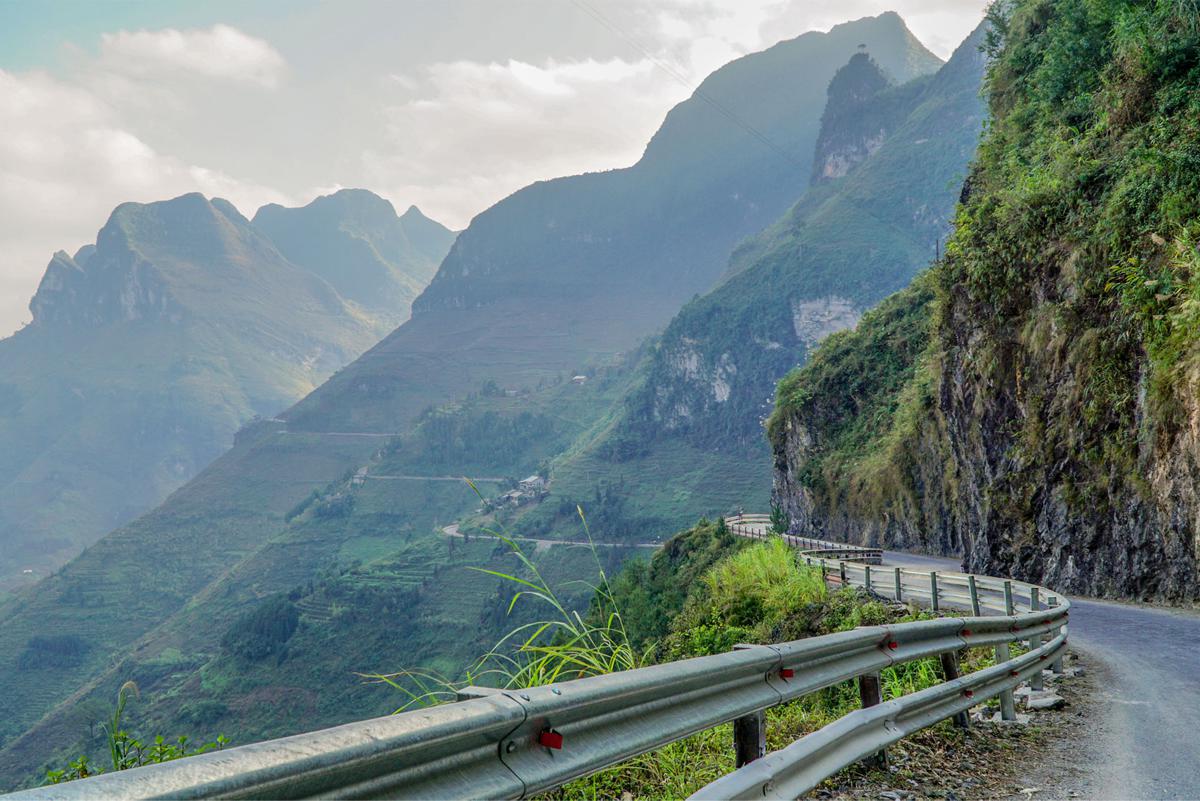
Ma Pi Leng Pass is one of Vietnam’s most iconic mountain passes and just minutes away from Pa Vi. You can easily ride or walk to nearby viewpoints for panoramic vistas over the Nho Que River and limestone peaks. It’s a must-see if you’re staying in the area.
2. Visit Meo Vac Market (Sundays Only)
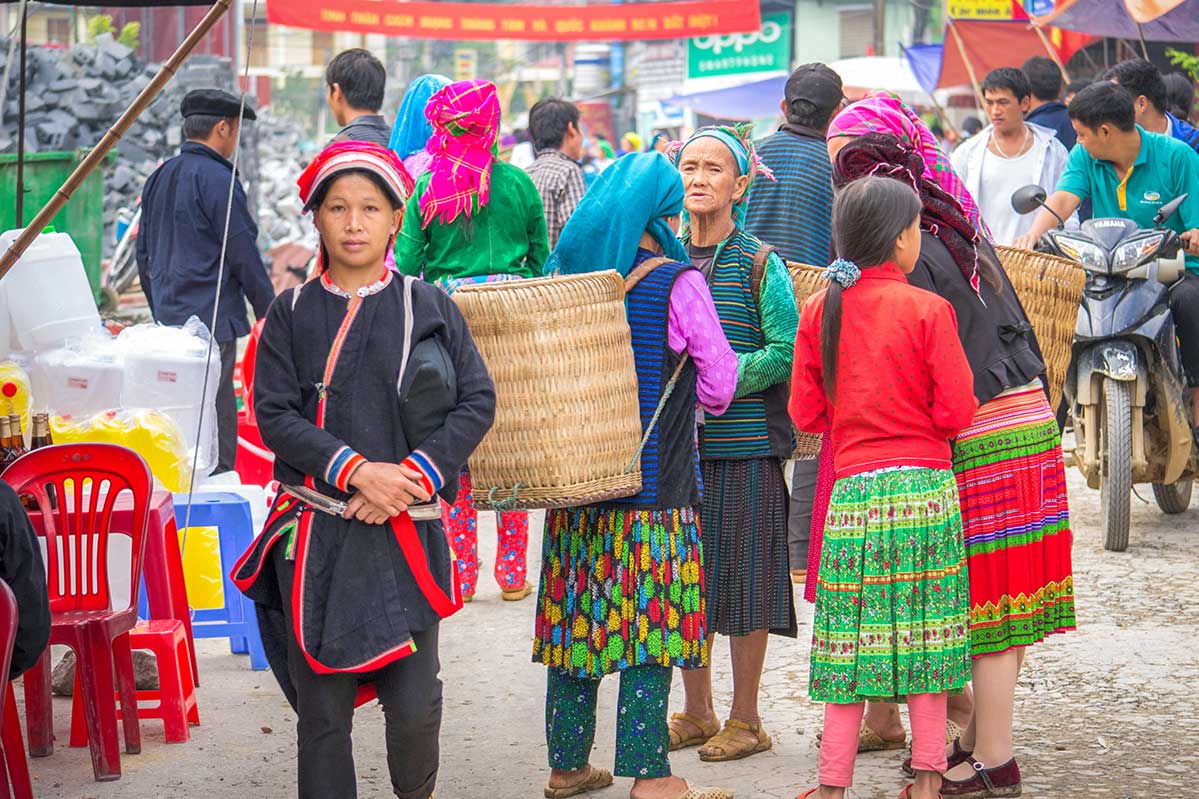
Held every Sunday morning, this busy ethnic market in nearby Meo Vac town is a cultural highlight. Hmong, Tay, and Dao people gather to trade livestock, vegetables, textiles, and more. Arrive early to see the market at its liveliest.
3. Short walks in the village
While Pa Vi is purpose-built, its layout makes for pleasant walking. Admire the traditional Hmong-style architecture, well-kept courtyards, and flower gardens. There are also photo spots like the large welcome gate and stone-paved paths.
4. Campfire & BBQ evenings
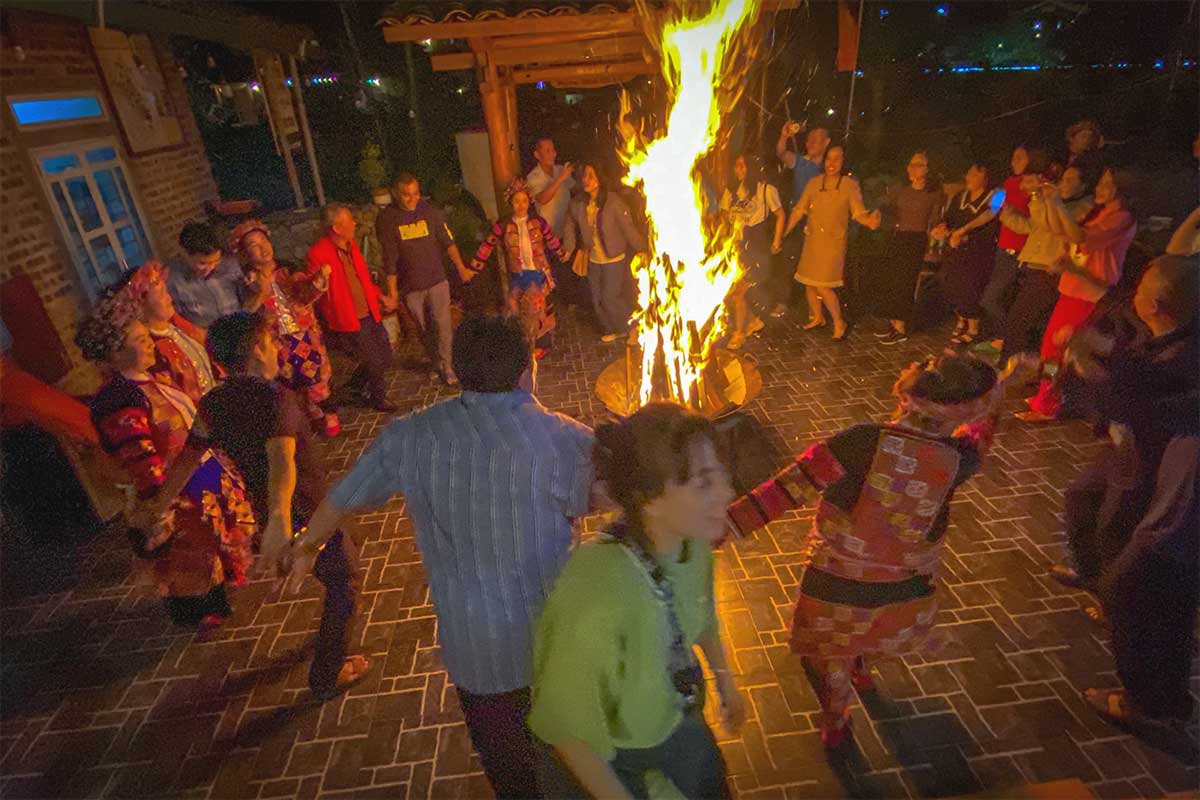
Many homestays organize small evening gatherings with grilled food, music, and sometimes even dancing. It’s a relaxed and social way to spend your night—though some places can be noisy, especially with karaoke.
Location & how to get there
Where is Pavi Hmong Village
Pavi Hmong Village is located in Meo Vac District, Ha Giang Province, in the far northeast of Vietnam. It sits just past Ma Pi Leng Pass on the road toward Meo Vac town, at coordinates 23.1589° N, 105.3972° E. The Nho Que River runs close by, and the village occupies a narrow valley between steep karst ridges. It’s easy to spot from the road.
Getting there
Pavi is reached via the Ha Giang Loop and sits directly on the main route — no detour required. The loop can be done by self-drive motorbike, as a passenger on the back of an easyrider bike, or by car or jeep. Pavi falls naturally on the second or third day depending on your pace, typically after Dong Van and Ma Pi Leng Pass.
Tip: Explore the Ha Giang Loop with Local Vietnam
Ha Giang Loop tours with Local Vietnam are private and small-group, with motorbike, jeep, and car options available. Instead of a night in Pavi, you stay at Ha Giang Aya Lodge — a genuinely local Hmong village with real community life, better views, and more comfort than anything Pavi offers.
Practical tips for visiting Pavi Hmong Village
Food and supplies
There are no shops or independent restaurants in the village. Every building is a homestay, and food means eating at one of their kitchens — either where you sleep or at a neighboring property. Prices are noticeably high across the board, which is predictable when there’s nowhere else to go. Stock up on snacks, drinks, and anything else you need before arriving. Coming from Dong Van, grab what you need there. Coming from the other direction, Meo Vac town is five kilometers away and has small shops, restaurants, and an ATM. Most homestays are cash only, though some accept card — don’t rely on it.
Noise at night
The karaoke issue is consistent enough to treat as a near-certainty rather than a risk. A community culture house in the compound runs music most evenings, and large tour groups add to the noise. It typically runs until around 10pm, sometimes later. If you have an early start planned — which most loop riders do — this is worth factoring into where you decide to stop for the night. Choosing a homestay on the quieter edge of the compound helps, but doesn’t fully solve it.
Getting into the village
Cars are not permitted inside the compound. If you’re arriving by car or jeep, you’ll need to park on the road and carry luggage in on foot. Not a major issue for motorbike travelers, but worth knowing if you’re on a jeep or car tour.
Best time to visit
There’s no specific blossom season or local event tied to Pavi itself. The scenery is at its best in clear weather — October to December offers the most stable conditions in Ha Giang, with good visibility and comfortable temperatures for riding. Avoid Vietnamese public holidays, particularly Tet, the April 30–May 1 break, and the September 2 holiday. Domestic tour groups fill the village during these periods and noise levels increase significantly.
If you want to know more about the weather in the region, best to read our guide to best time to do the Ha Giang Loop.
Entrance and access
No entrance fee. The village is open and freely accessible at any time.
Is Pavi Hmong Village worth staying?
For foreign travelers hoping for an authentic Hmong experience, the honest answer is no. The village looks attractive from the road — wooden architecture, mountain backdrop, valley setting — but it was built for tourism and that shows quickly once you’re inside. The community culture house runs karaoke most evenings, large tour groups dominate the atmosphere, food prices are high with limited options, and the homestay quality is inconsistent. The scenery surrounding the village is genuinely beautiful, but that scenery exists regardless of where you sleep.
That said, Pavi is not without its merits. The location on the loop is convenient, some homestays are well-run and comfortable, and if you arrive on a quiet night with a good room, it’s a perfectly adequate place to rest. The key is going in with accurate expectations. Travelers who understand what Pavi is — a purpose-built tourist compound with Hmong aesthetics — and aren’t looking for anything beyond a bed and a meal will get through the night fine.
If the choice is yours to make, there are better options. Meo Vac town is five kilometers away and feels like a real place. For something that genuinely delivers on what Pavi promises but doesn’t deliver, Ha Giang Aya Lodge sits inside an actual Hmong village about thirty minutes from Meo Vac — with real community life, better views, and more comfort than anything in the compound. It requires fitting into your route, but for travelers who care about where they sleep, it’s worth planning around.