
Con Dao’s history
To understand Hang Duong Cemetery, you first need a bit of background about Con Dao. For over a century, these islands were used as a prison system, first by the French colonial government and later during the American-backed South Vietnamese period.
Thousands of political prisoners were sent here, many of them activists, soldiers, and civilians who opposed colonial rule or later governments. Conditions were extremely harsh, with overcrowded cells, forced labor, and limited food. Many prisoners did not survive their time on the island.
Over the years, different prison camps were built across Con Dao, and deaths became so common that multiple burial sites were created. What you see today is only a part of that history—many graves were never identified, and some were moved from older cemeteries into one main site.
After 1975, when the prison system was closed, Con Dao slowly changed from a place of detention into a place of remembrance. The former prison sites were preserved, and Hang Duong Cemetery became the main resting place for thousands who died here, turning it into one of the most important historical locations on the island.
Hang Duong Cemetery – The main memorial site
What is Hang Duong Cemetery?
Hang Duong Cemetery is the largest cemetery on Con Dao and the main place where former prisoners of the island are buried. There are more than 2,000 graves here, but only part of them have names. Many others remain unknown, which already tells you something about how chaotic and harsh that period was.
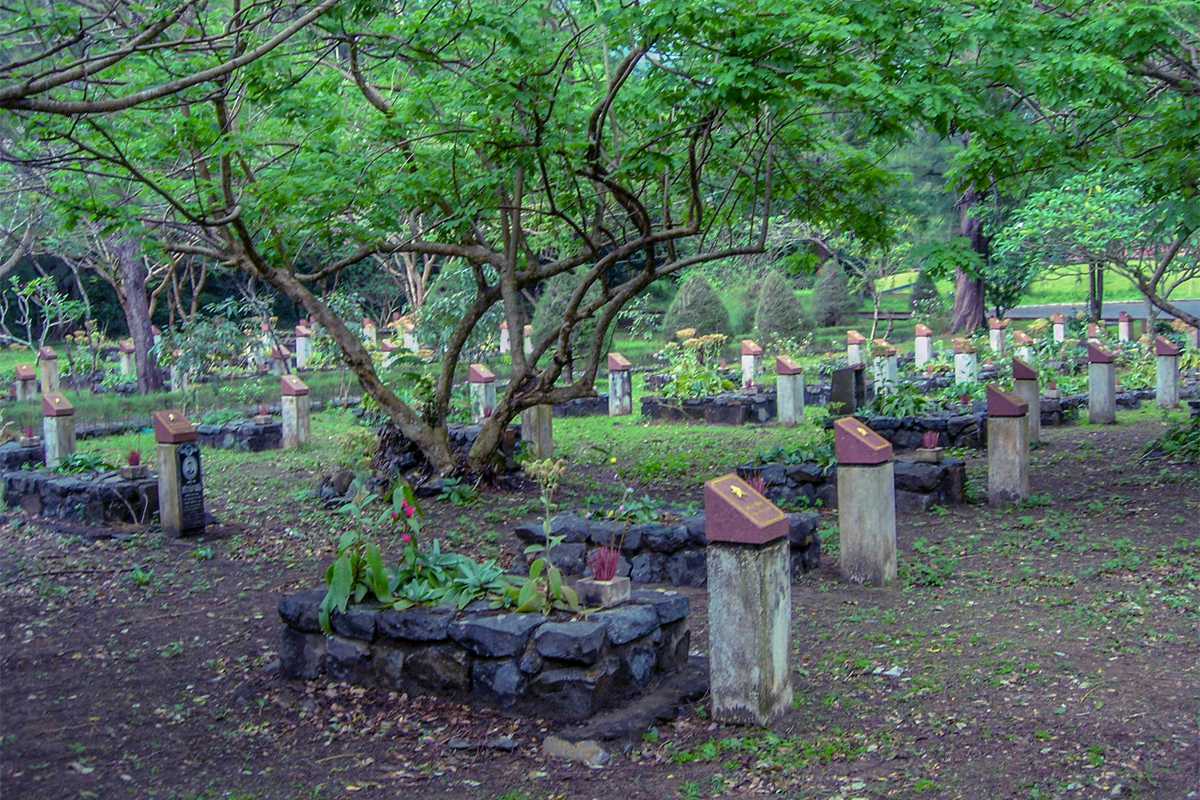
The cemetery brings together people who died during different periods, from the French colonial time to the later American-backed period. Instead of separate burial sites across the island, most remains were eventually moved here, making it the central memorial site.
Today, it is officially recognized as a national historical site and plays an important role in how Vietnam remembers this part of its history.
Layout & What you see today
The cemetery is large and well organized. It is divided into four main zones: A, B, C and D, each linked to different time periods and groups of prisoners.
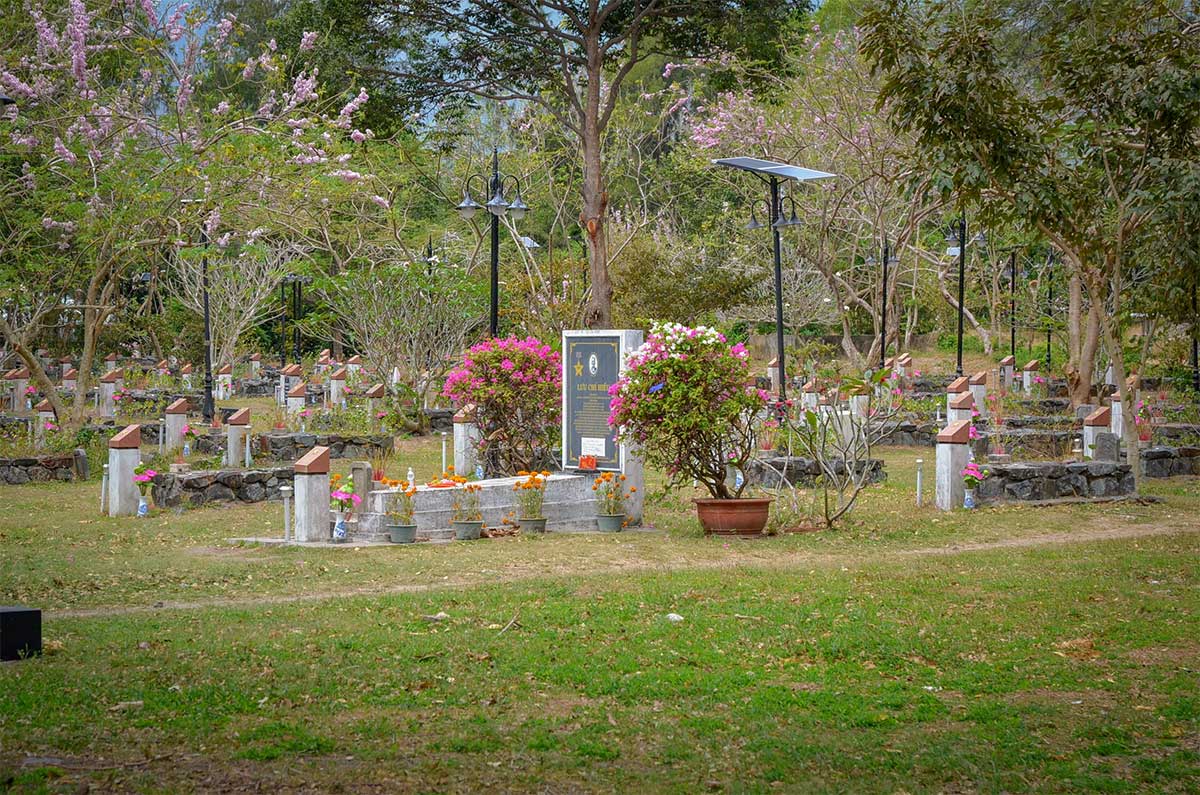
As you walk through, you’ll notice a mix of graves with names and many without. Some are marked with simple stones, others have more detailed inscriptions. This contrast is one of the most striking things you’ll see here.
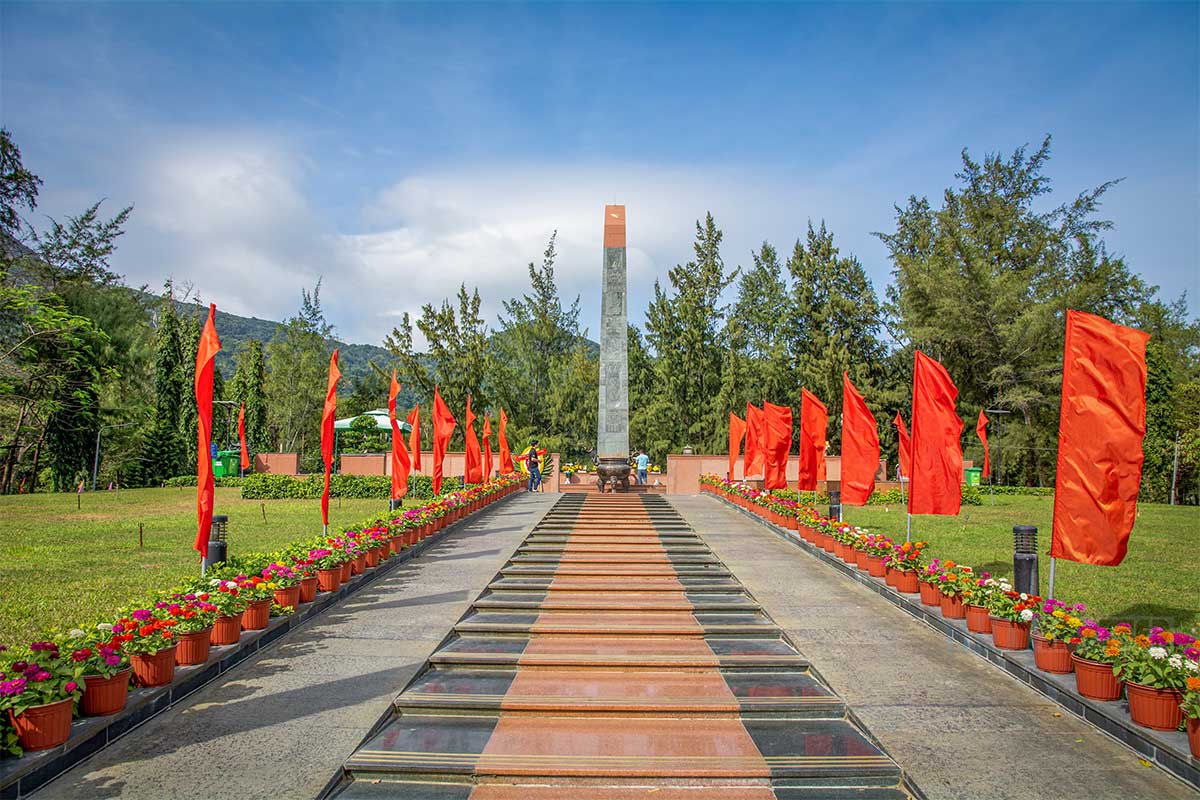
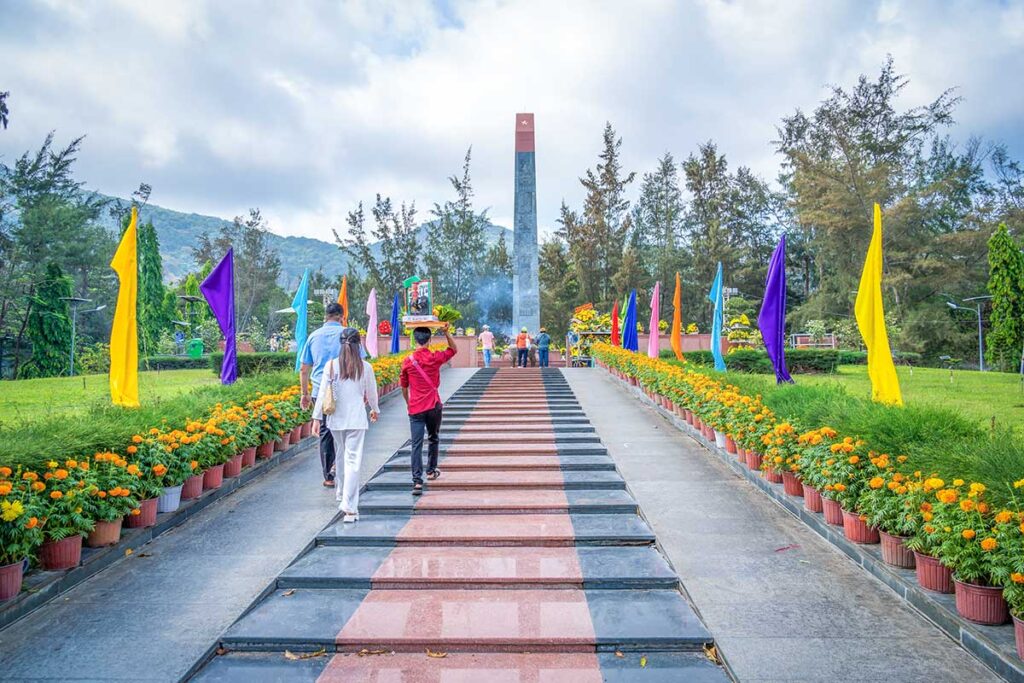
There are also several monuments and statues, as well as a central memorial courtyard where people come to pay respect. The paths are wide, there are many trees, and the whole area is clean and well maintained.
Despite the peaceful setting, the atmosphere can feel quite heavy once you understand what happened here.
What makes it special
Hang Duong Cemetery is not just a cemetery. It is one of the most important memorial sites in Vietnam.
For many Vietnamese visitors, this is a place to honor national heroes and martyrs. For foreign travelers, it often becomes one of the most emotional places to visit on the island. It’s not dramatic or designed to impress, but the simplicity makes it more powerful.
What makes it unique is the combination of history and spirituality. People don’t only come here to learn about the past, but also to pray, leave offerings, and show respect.
If you visit Con Dao, this is one of the places that gives the island its deeper meaning beyond beaches and nature.
Who Was Vo Thi Sau?
Her Story
Vo Thi Sau was born in 1933 in the area of Ba Ria–Vung Tau. At a very young age, she joined the anti-French resistance and became involved in attacks against colonial forces.
She was arrested in 1950 and later transferred to Con Dao. In 1952, at the age of 19, she was executed by firing squad. According to historical accounts, she remained calm and refused to be blindfolded, which is often mentioned as a symbol of her bravery.
Her story is short, but it left a strong impression, especially because of her young age.
Why she is so important today
Today, Vo Thi Sau is considered a national heroine in Vietnam. She represents sacrifice, courage, and the struggle for independence.
Her grave has become one of the most visited in the country, not only by people with a direct connection to history, but also by younger generations. For many Vietnamese, she is more than just a historical figure—she is someone they feel a personal connection to.
Her grave & Spiritual significance
Her grave is located in Zone B of Hang Duong Cemetery and is by far the most visited spot in the entire area.
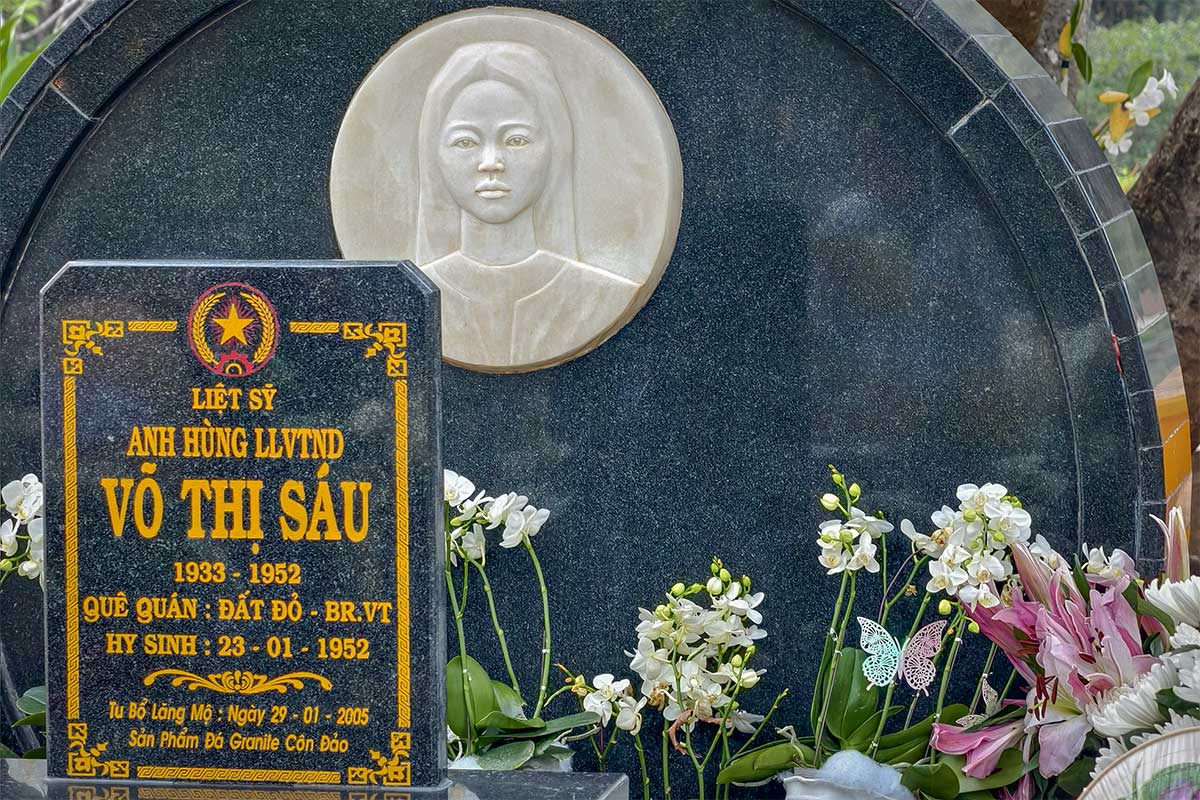
What makes this place different is that people don’t only come to remember her. Many come to pray. It is widely believed that Vo Thi Sau can bring luck, protection, and success, especially for things like business, exams, or important life decisions.
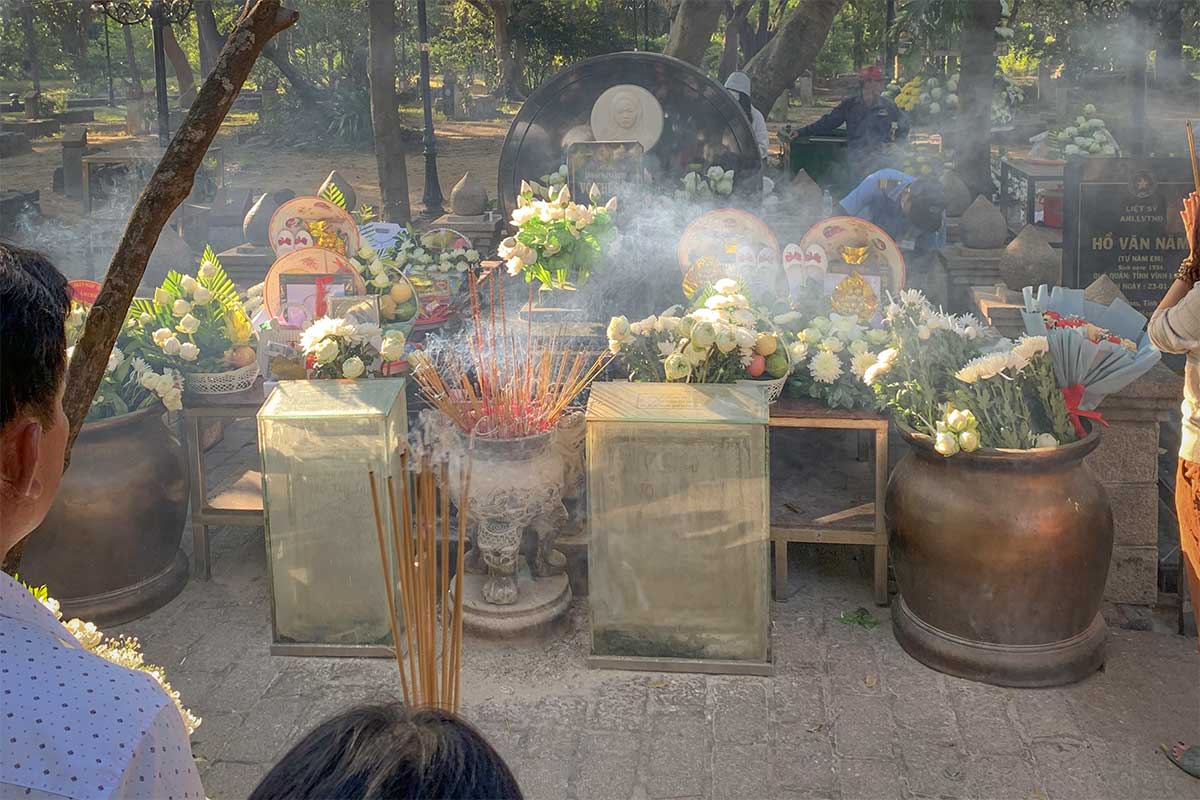
You’ll often see visitors bringing offerings such as flowers, fruit, and incense. Compared to other graves, there is usually a constant flow of people here.
Visiting at night
One of the most unique things about visiting Hang Duong Cemetery is that many people come late at night, especially to visit Vo Thi Sau’s grave.
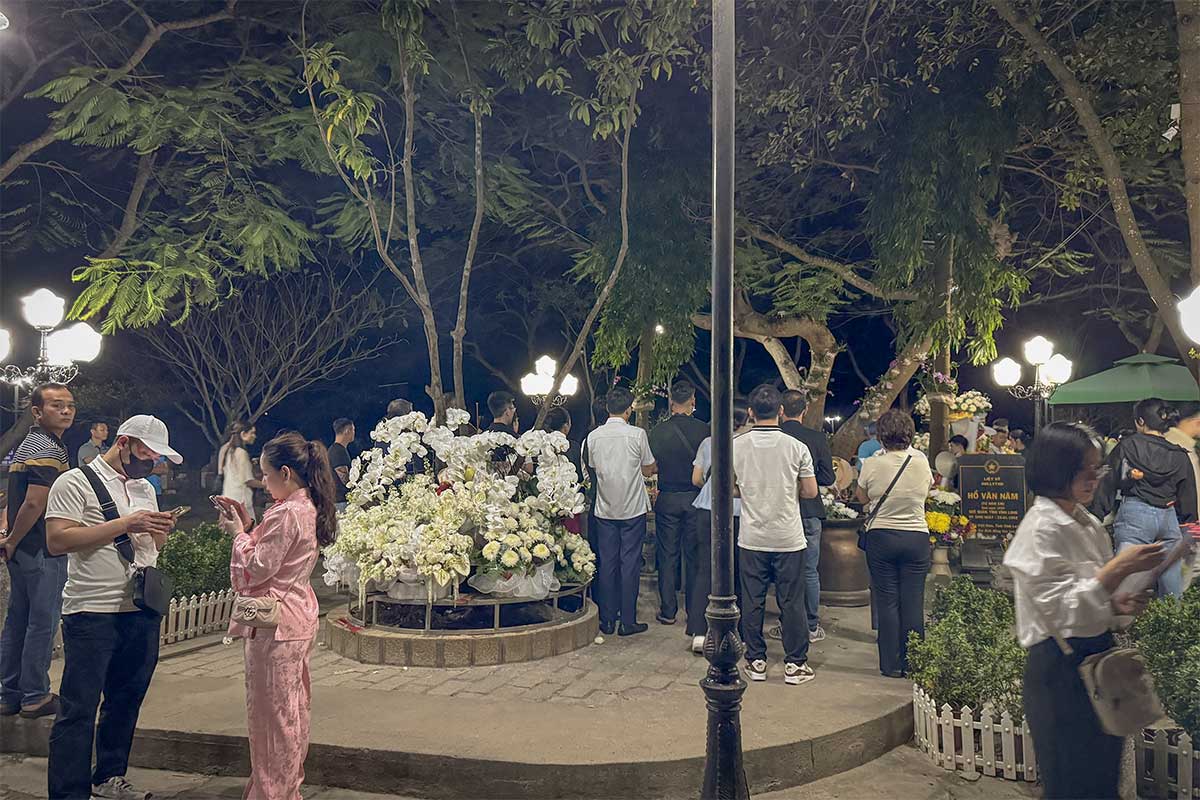
The busiest time is usually between 23:00 and 02:00. During these hours, you’ll see groups of visitors arriving with offerings, quietly lining up to pay their respects.
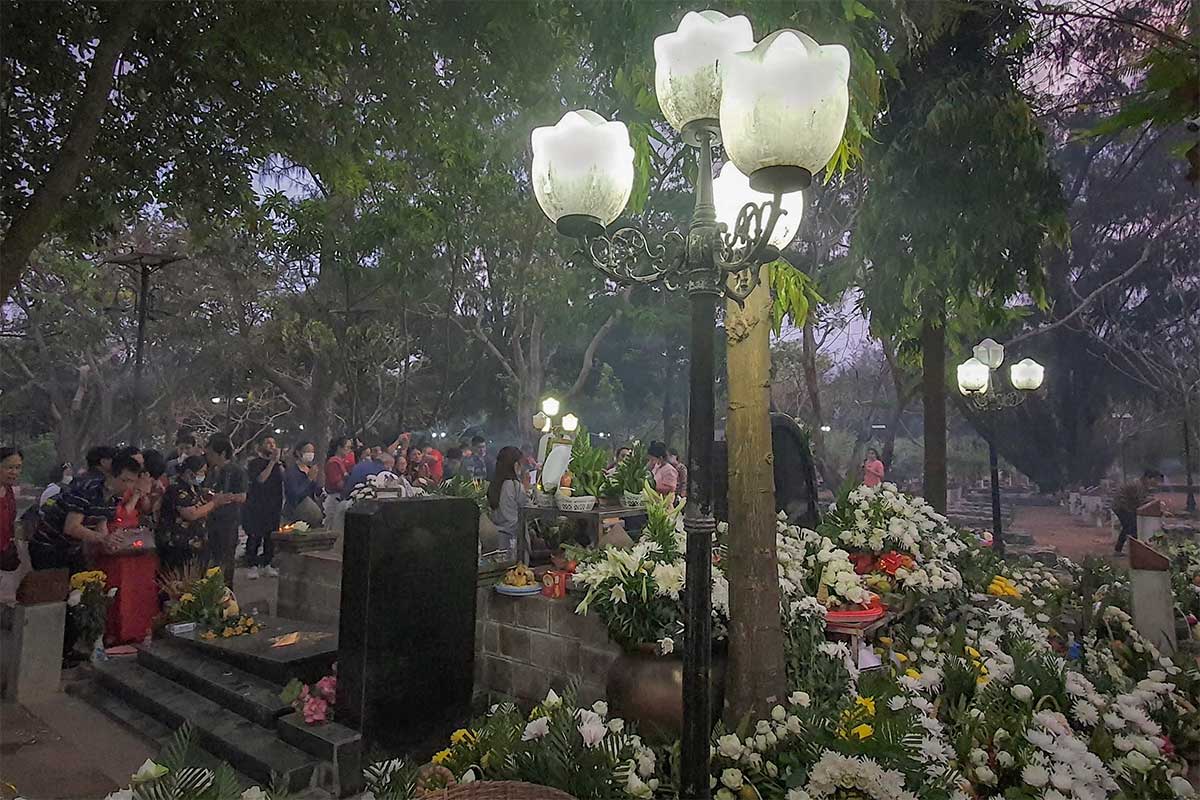
The atmosphere at night is very different from during the day. It feels more spiritual and focused, even if you don’t fully understand the traditions. For some travelers this is a very interesting experience, while for others it can feel unusual or intense.
If you want to see this side of the cemetery, visiting at night is worth considering.
Important visiting information
How to get there
Hang Duong Cemetery is located in Con Son town on Con Dao. If you stay in town, you can easily walk there, as it’s only a short distance from most hotels.
You can also reach it by scooter or bicycle, which are the most common ways to get around the island.
It’s located close to other key historical sites, including the Con Dao Museum and the French Tiger Cages, making it easy to combine multiple places in one visit.
Opening hours
The cemetery is generally open daily:
- Morning: 07:00 – 11:30
- Afternoon: 13:30 – 17:00
There is a break around midday when the site closes for a few hours, so plan your visit around this.
In practice, the area—especially around Vo Thi Sau’s grave—can also be visited in the evening. This is when many Vietnamese visitors come, particularly late at night.
Dress code
There is a clear dress code, and it is taken seriously.
You are expected to wear long pants, and it’s recommended to cover your shoulders as well. This is not just a suggestion—some visitors have been refused entry for wearing shorts.
There are no rental options at the entrance, so make sure you come prepared. Compared to other places in Southeast Asia, this is stricter than you might expect, but it reflects the cultural importance of the site.
Things to see inside
The most visited place is the grave of Vo Thi Sau, but there is more to see if you take the time to walk around.
You’ll find:
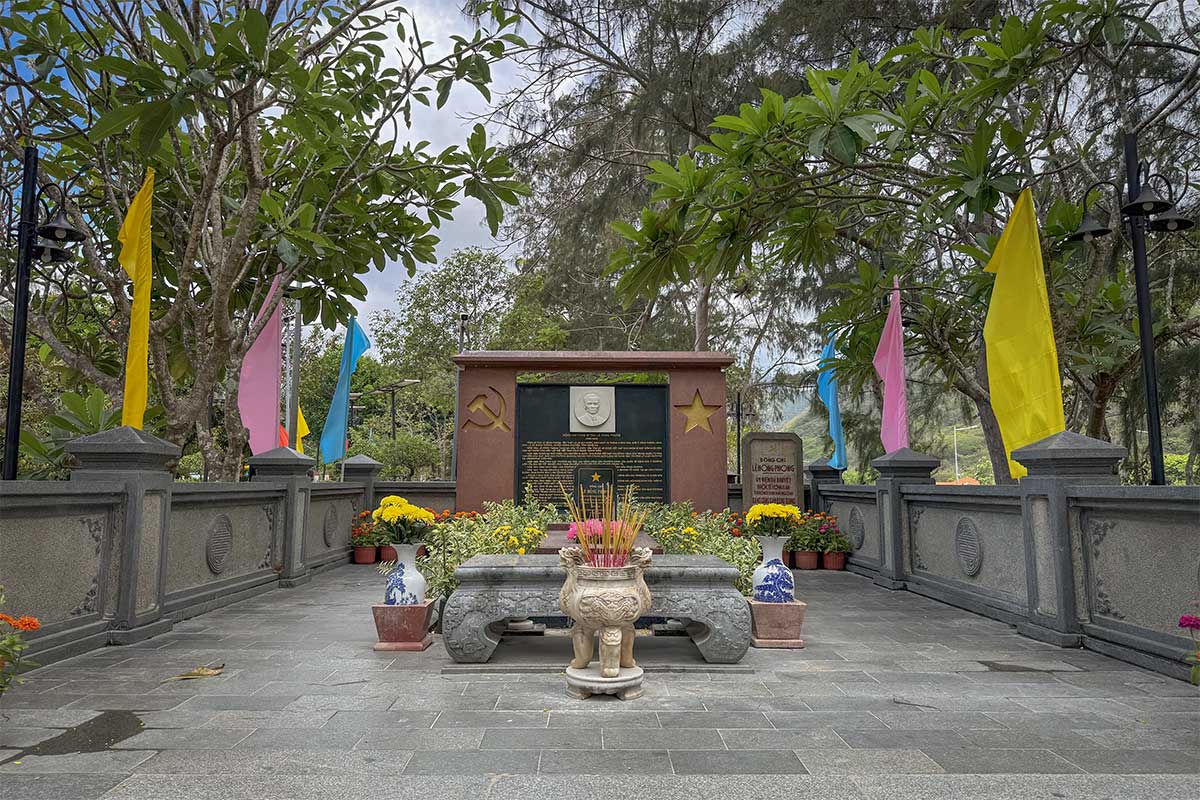
- Other notable graves, including figures like Le Hong Phong, Nguyen An Ninh and Luu Chi Hieu.
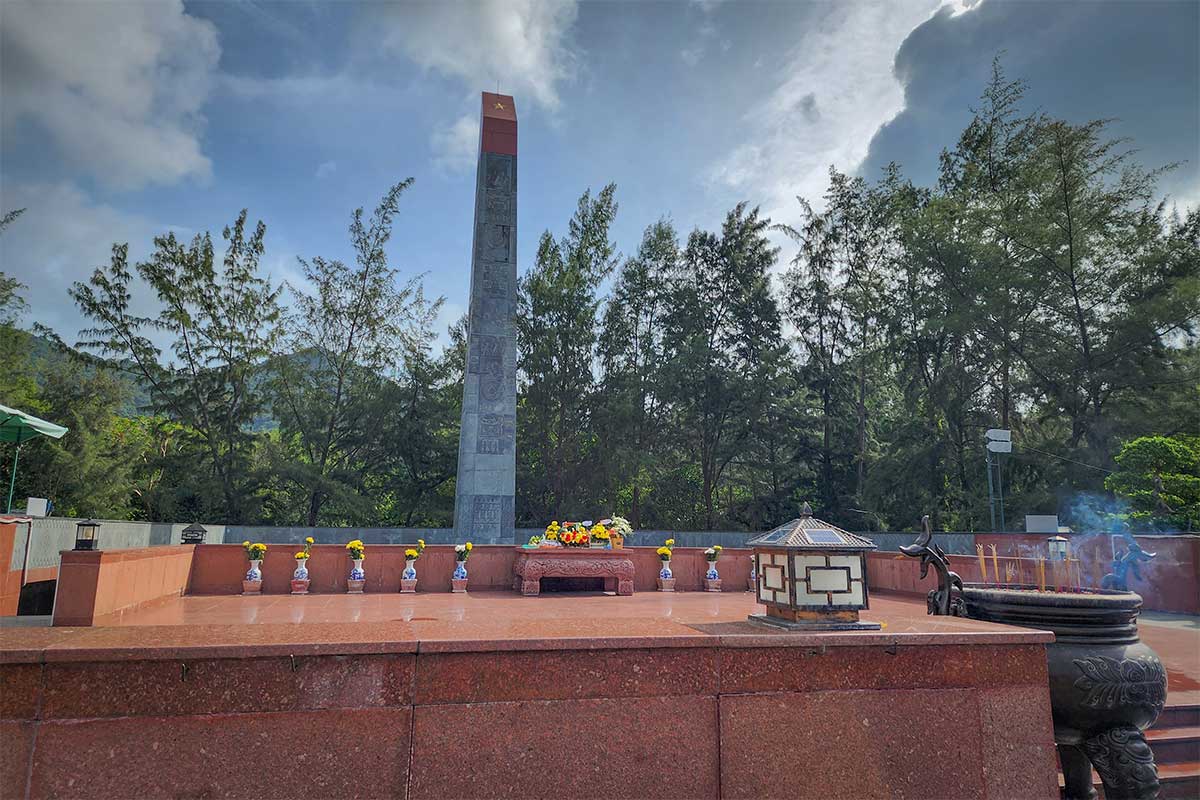
- A central memorial courtyard where people gather to pay respect
- Statues and a stone garden with symbolic designs
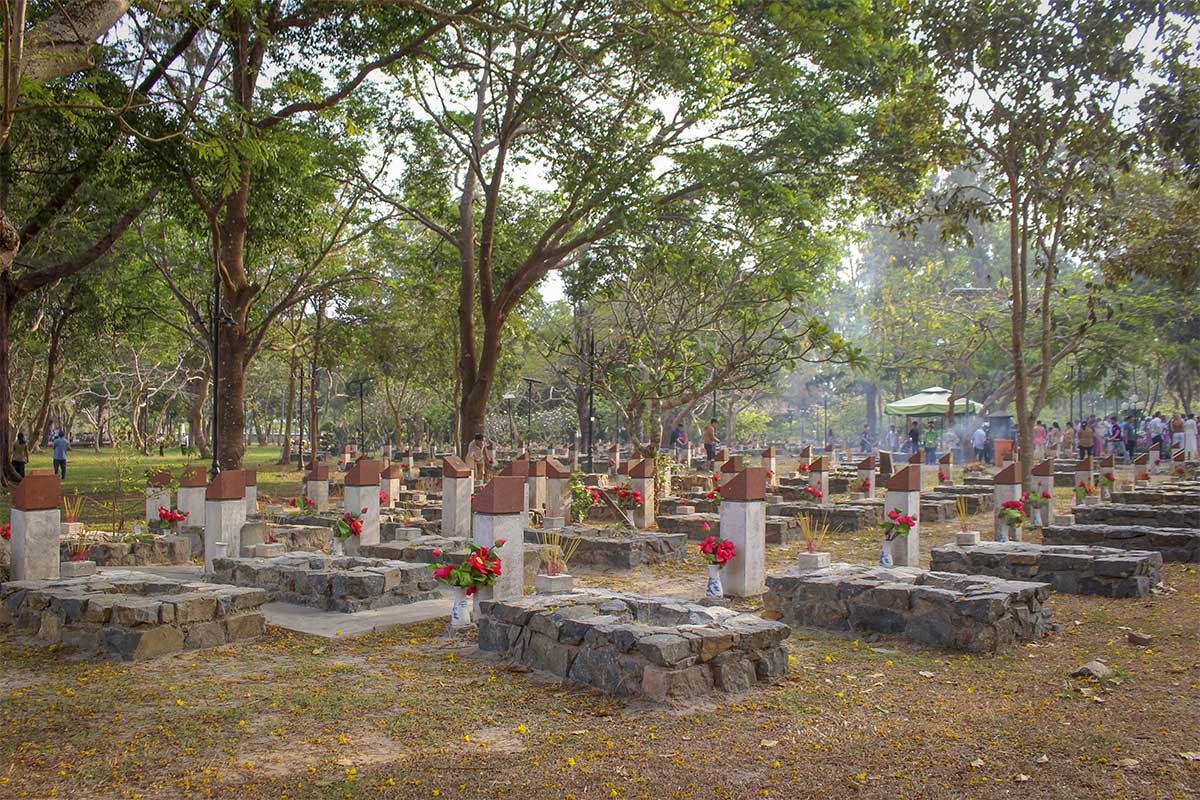
- Long rows of graves, both named and unnamed
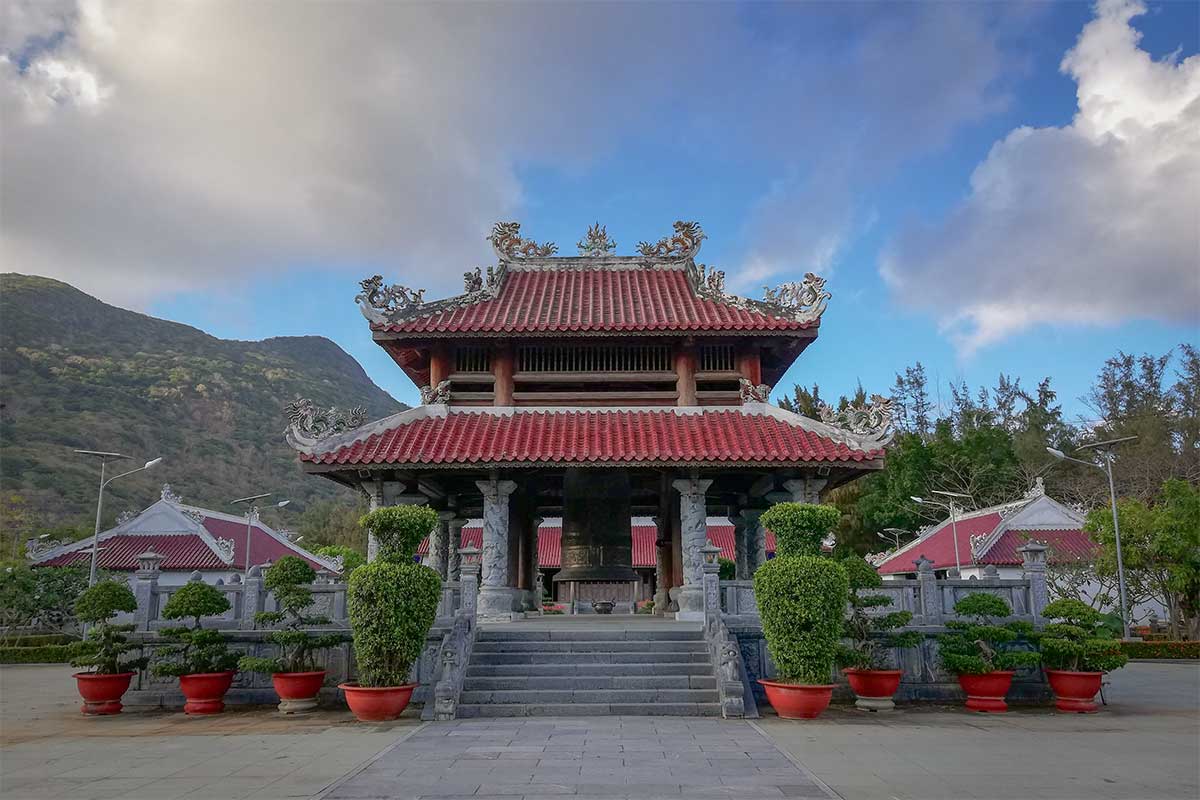
- You’ll also find a small temple area where visitors make offerings, along with a large bronze bell that adds to the quiet, ceremonial atmosphere of the site.
Even if you don’t recognize the names, walking through the cemetery gives a better understanding of the scale of what happened here.
Burning incense & offerings
Lighting incense is a common practice here. Many visitors bring small offerings such as flowers, fruit, or incense sticks.
You don’t have to do this yourself, but it’s considered a respectful gesture if you choose to participate.
It’s also worth noting that some visitors feel the amount of offerings can be a bit excessive, with large baskets and a lot of incense smoke. Others see this as part of local tradition. It depends on your perspective, but it’s good to be aware of it.
The “Offering shops” in Con Son Town
When you walk around Con Son town, you’ll likely notice small shops selling decorated baskets filled with fruit, flowers, and incense.
These are specifically prepared for visits to Hang Duong Cemetery, especially for the grave of Vo Thi Sau.
Once you know this, you start seeing them everywhere. It’s a small detail, but it shows how important this place is in daily life on the island.
Time needed for your visit
How long you spend here depends on your interest.
- Quick visit: around 30–45 minutes
- With more walking and reading: 1 to 1.5 hours
- Night visit: often longer, mainly because of the atmosphere and the number of visitors
What is nearby? (Easy combination tips)
Hang Duong Cemetery is located close to several other important sites, so it’s easy to combine them into one route.
The Con Dao Museum gives useful background before or after your visit, while the French Tiger Cages and other prison sites show where many of the prisoners were held.
Visiting these places together helps you better understand the full story of Con Dao, instead of seeing each site separately.
Is Hang Duong Cemetery & Vo Thi Sau worth visiting?
If you visit Con Dao, Hang Duong Cemetery and the grave of Vo Thi Sau are among the most important places on the island. This is not a typical sightseeing stop, but a place that helps you understand what Con Dao really is beyond beaches and nature.
It’s also not a “fun” attraction. The experience is more emotional and historical than enjoyable. Walking through the cemetery, especially when you realize how many people are buried here—many without names—can feel quite heavy.
At the same time, it’s a strong cultural experience. You’ll see how Vietnamese visitors interact with the site, from lighting incense to bringing offerings and praying. This gives you insight into how history and spirituality are still connected today.
To be honest, not everyone will connect with that spiritual side. If you’re not familiar with these traditions, the night visits in particular can feel unusual or even a bit overwhelming. Without context, it might be hard to understand why so many people come here late at night.
But that doesn’t make it less worth visiting. It just means expectations matter.
In the end, if you are in Con Dao, this is not a place you skip. Just go in knowing it’s a place of remembrance, not entertainment, and you’ll get much more out of the visit.