


Quang Ninh Museum – the black mirror on the bay
Quang Ninh Museum stands on Tran Quoc Nghien Street, the coastal road on the Hon Gai side of Halong, looking straight out over the bay. Its exterior is the thing everyone notices first: a huge block clad almost entirely in black glass, a nod to the coal that the province is known for, with the water reflected across its surface. It sits beside a matching library building on an open plaza, and the bay is just across the road, which makes the setting as much a part of the visit as the museum itself.
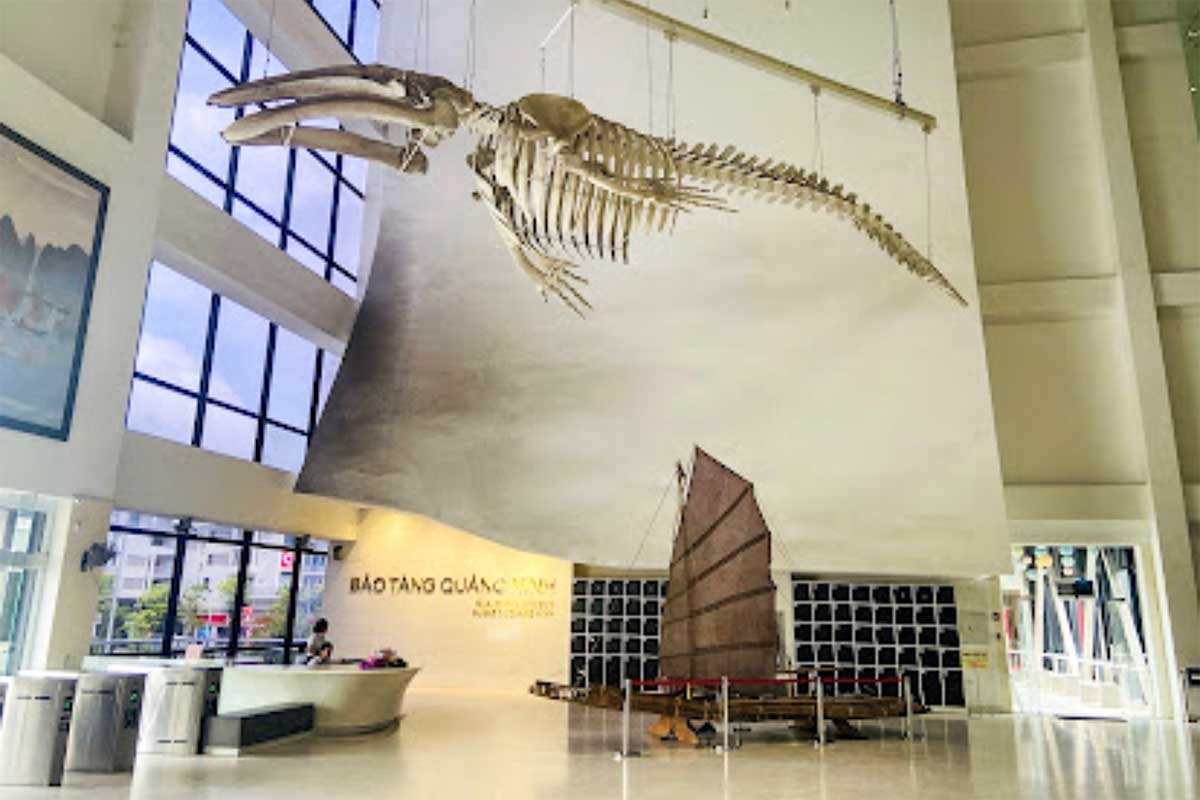
Inside are three themed floors covering the nature of the region, its history and culture, and its coal-mining past. The interior is bright and spacious, a deliberate contrast to the dark exterior, and most visitors spend around one and a half to two hours working through it. Entry is cheap, and because it is all indoors and air-conditioned, it also makes a good option on a rainy day or when the summer heat is too much for sightseeing outside.
What to expect at Quang Ninh Museum
The building and a handful of standout exhibits are genuinely impressive, and the low entry price makes it easy to recommend if you have the time. Be realistic about the rest, though: many of the displays are dated, and the English explanation is thin, so without a guide or a translation app you will often see what something is without learning much about it. Here is what each part offers.
1. The building and its black-glass design
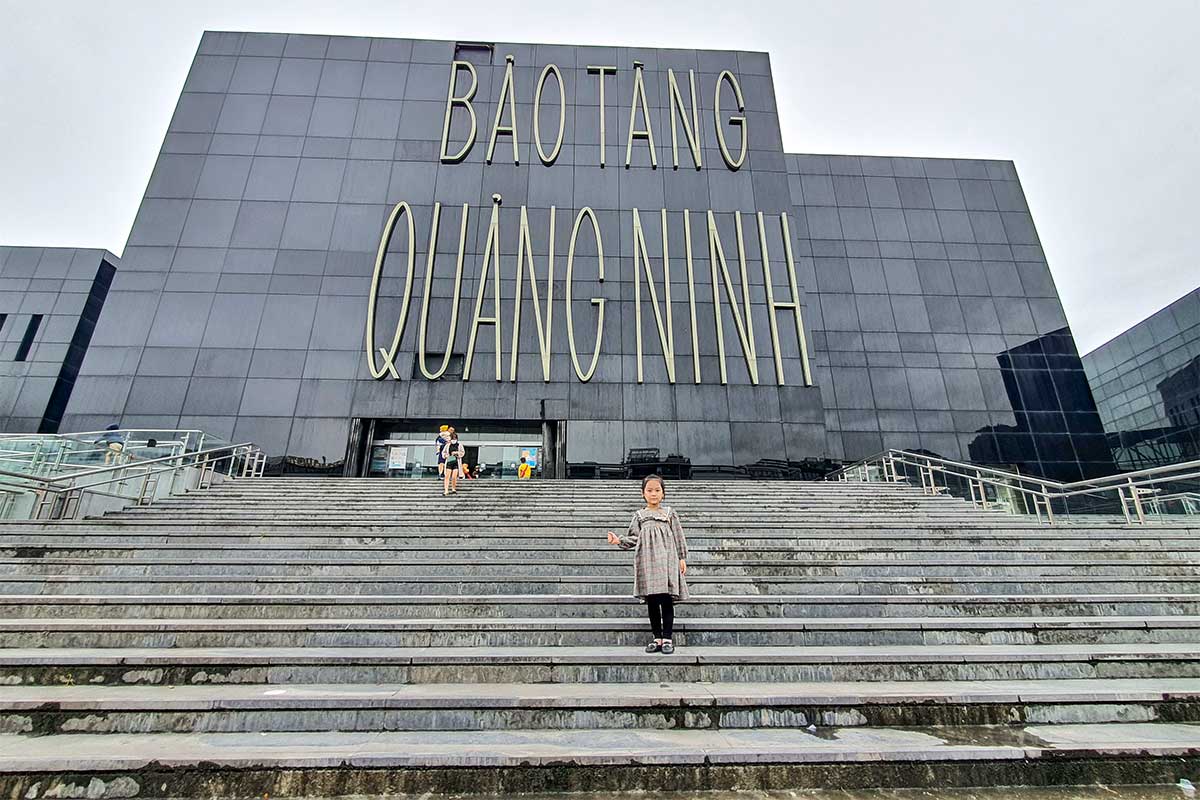
For a lot of visitors, the exterior is the best part. The whole block is clad in black glass that reflects the sky and the bay, with the museum’s name set large across the front, and it has become one of the most photographed spots in the city. The open plaza outside holds a few art sculptures and a 28-ton block of coal, said to be the largest single piece in Vietnam, a fitting nod to what the building represents. Inside, the bright white space is a deliberate contrast to the dark shell. There is also a cafe with shaded outdoor seating and close views of the karsts.
2. First floor: nature and the sea
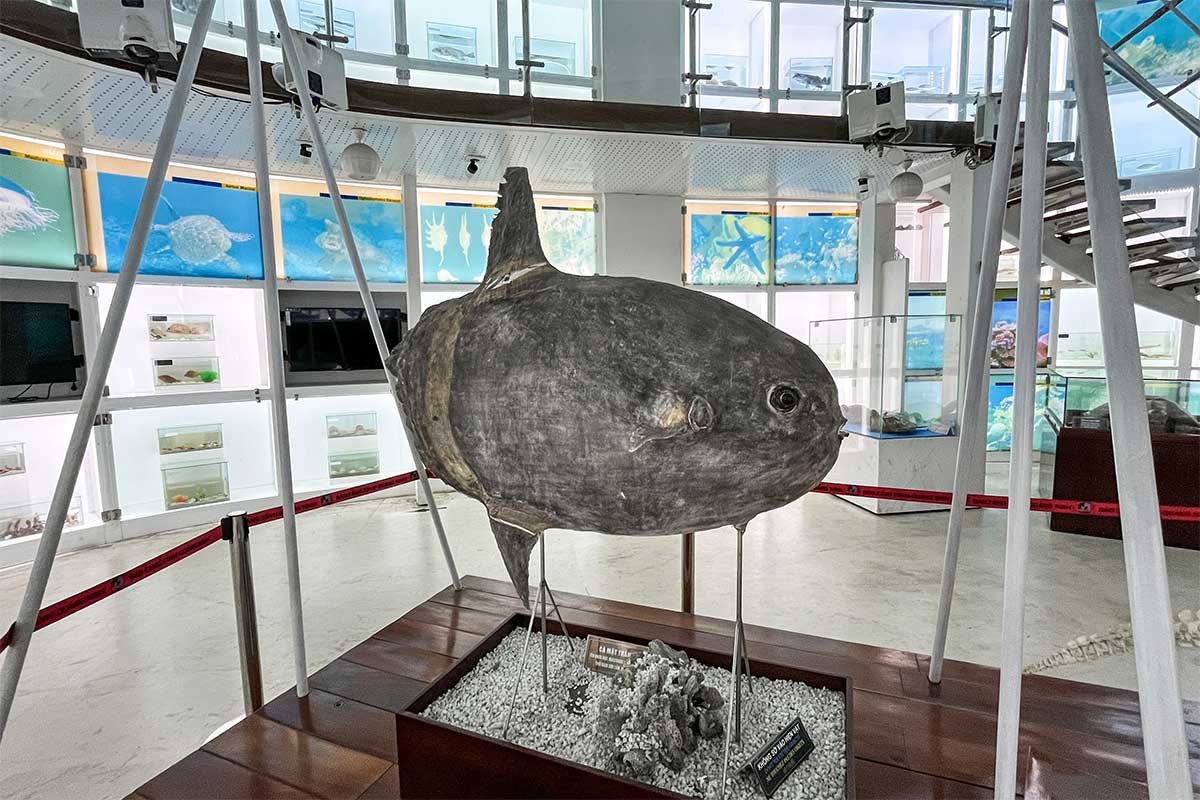
The ground floor covers the natural side of the province: the geology of the bay, its marine life, and its wildlife. The first thing you see is a large whale skeleton in the lobby, and four tall columns wrapped in fabric are designed to echo the limestone karsts.
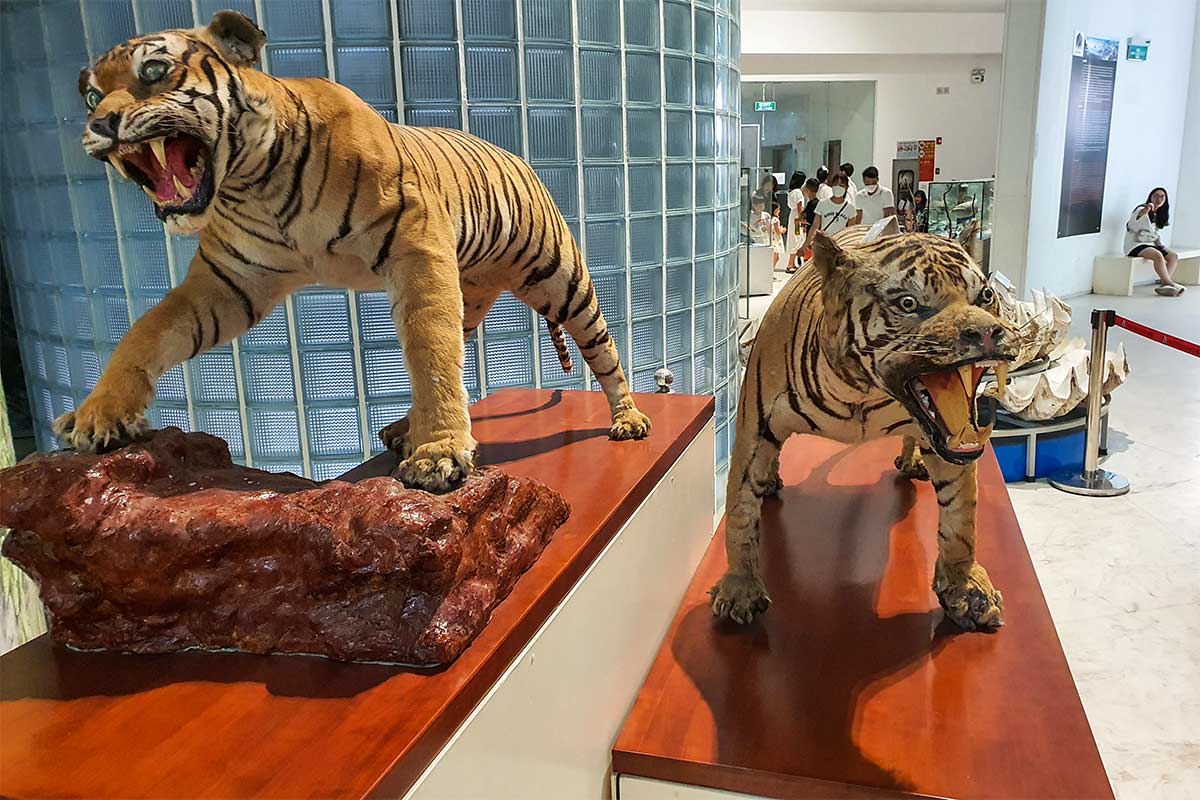
Beyond that are displays of sea creatures, stuffed animals, and insects. This is the most dated part of the museum, and some of the specimens look faded and tired. It is also where the lack of English is most noticeable, so it works better as something to look at than to read.
3. Second floor: history and culture
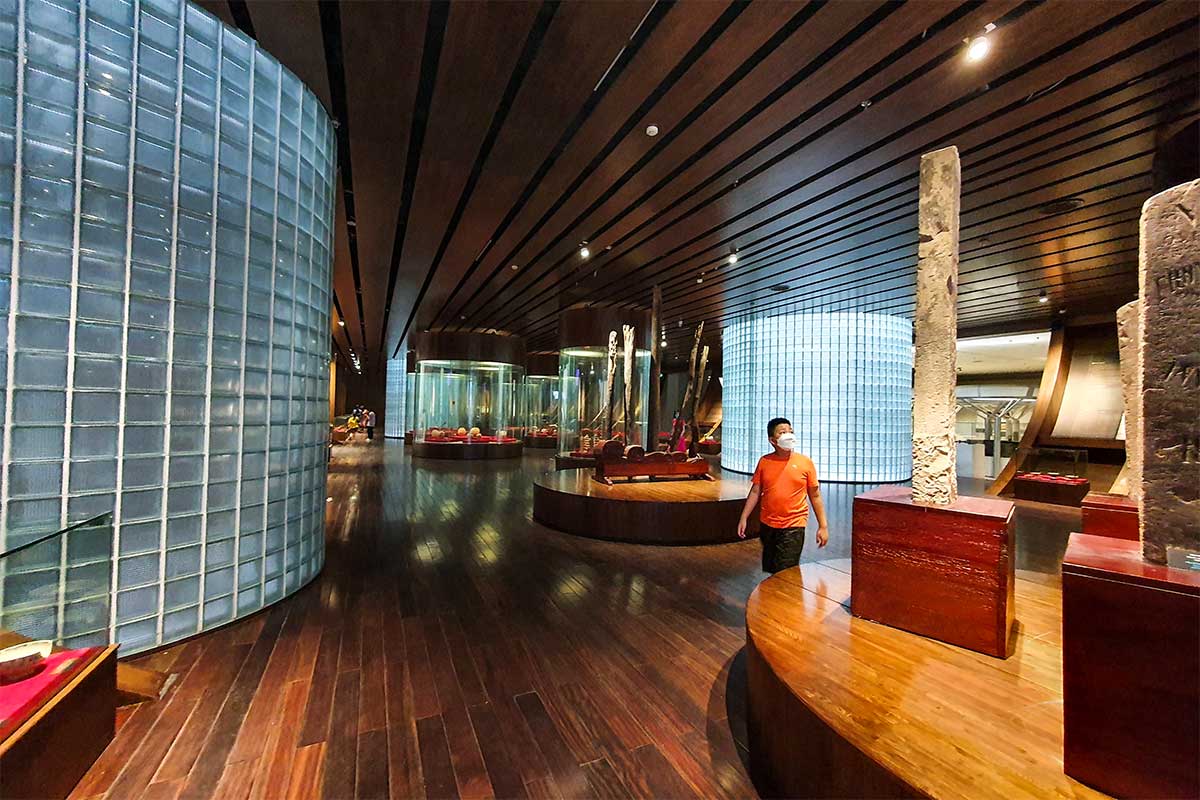
The second floor, laid out in the shape of a giant boat, traces the region’s history from prehistoric times through the Tran Dynasty and on to the modern era, with tools, ceramics, and archaeological finds along the way.
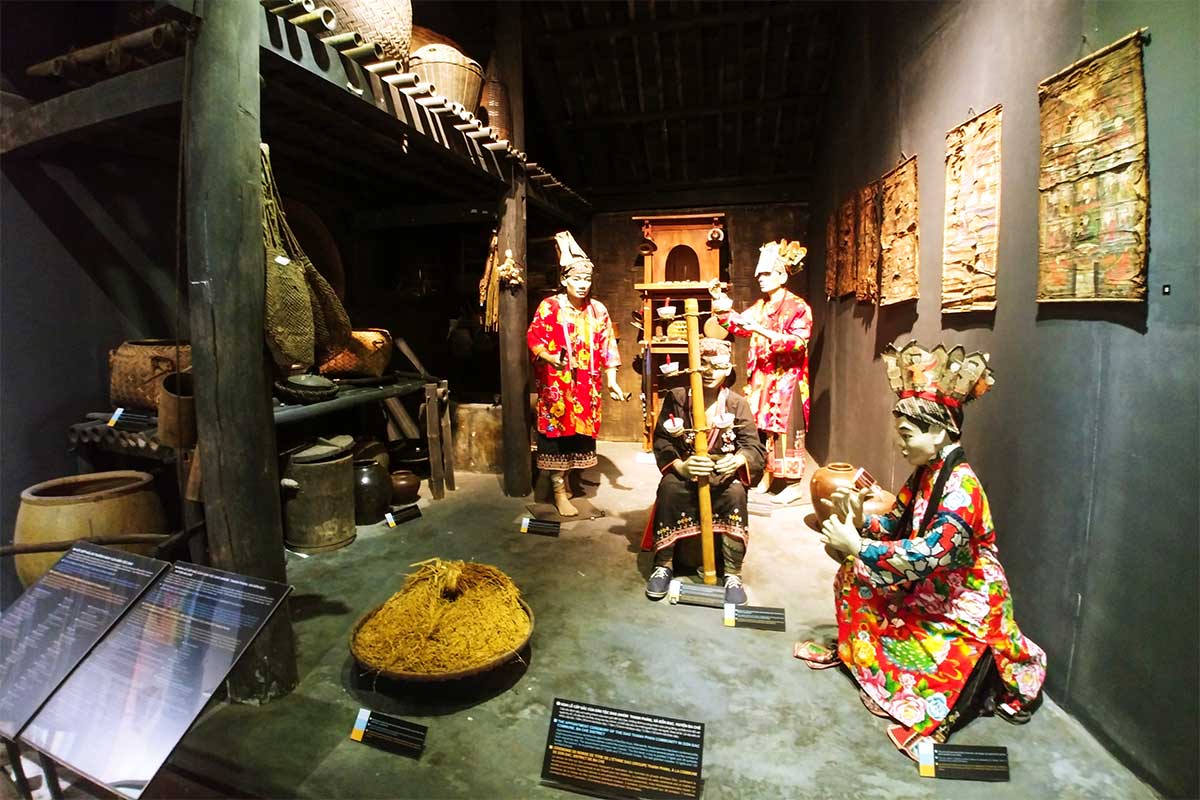
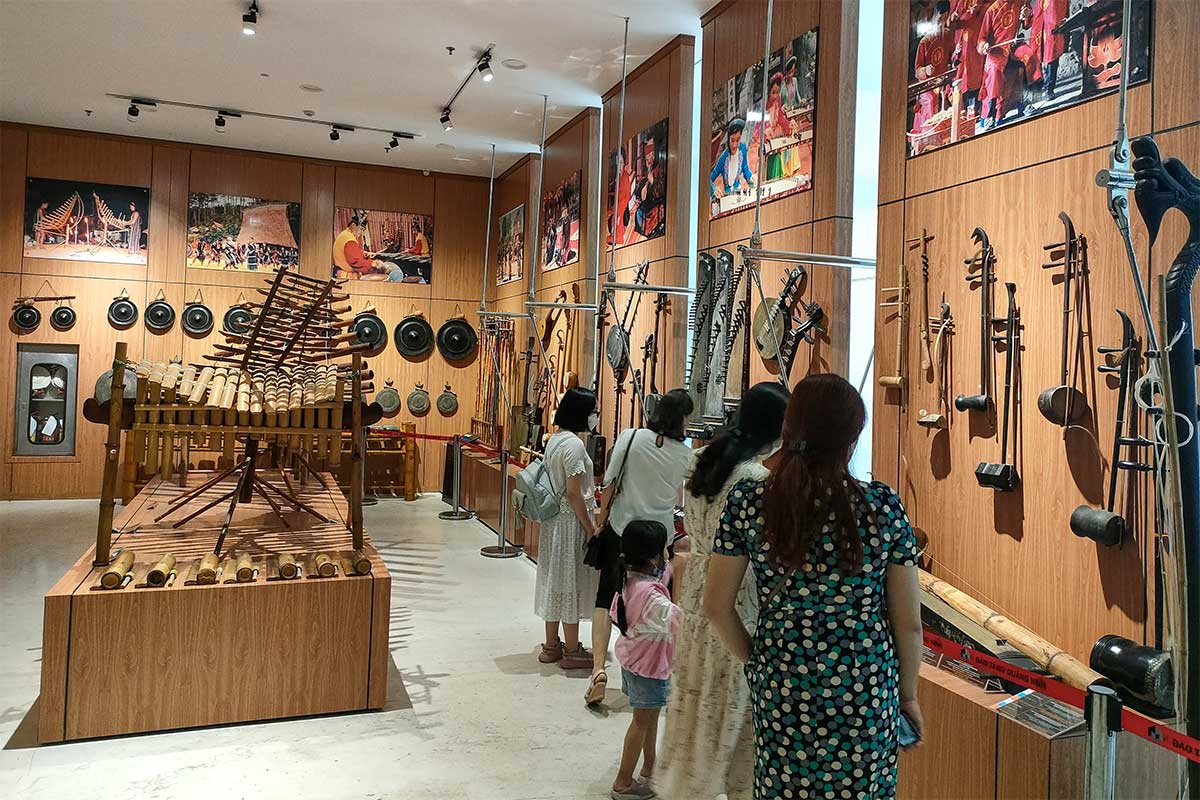
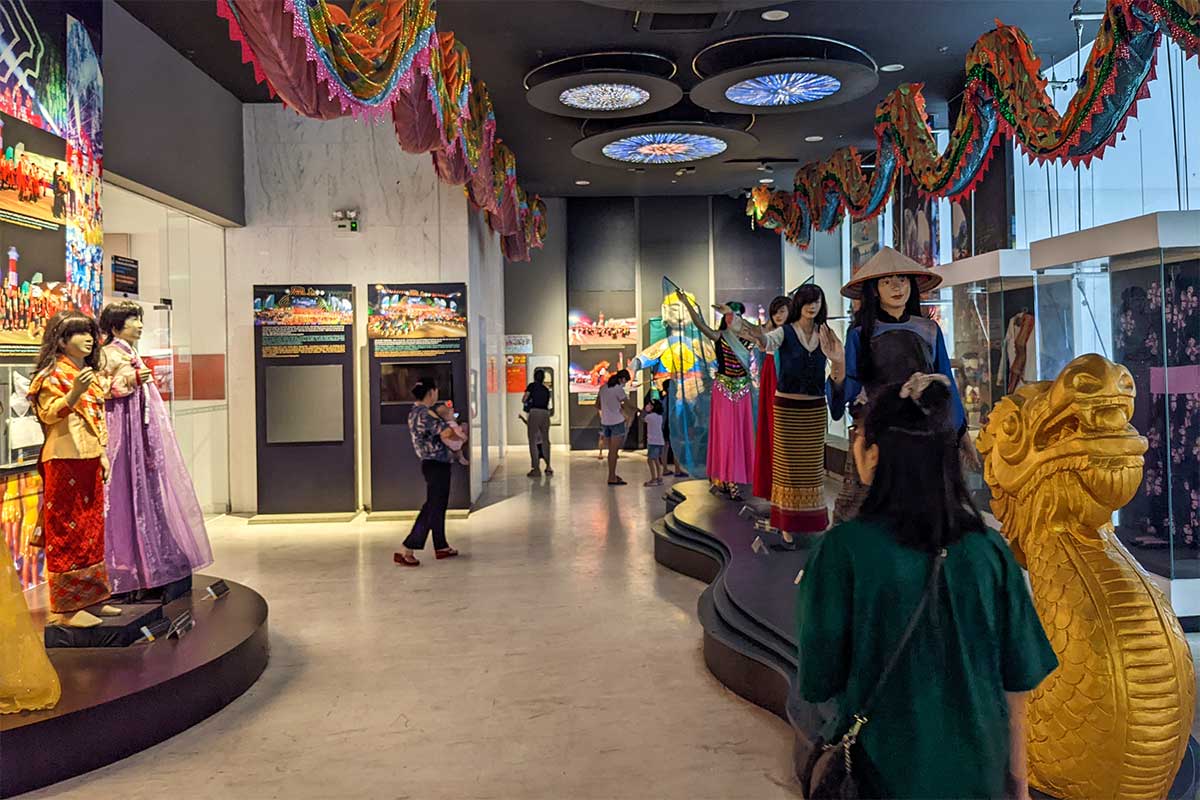
There is a section on Yen Tu Buddhism, including a model of the mountaintop Dong Pagoda, and a larger area on the wars of the 20th century. The war displays are told from the official Vietnamese point of view, with language that frames the period in heroic, patriotic terms. It is interesting to read in its own right, as long as you know that going in.
4. Third floor: coal mining
The top floor is the strongest, and the reason coal runs through the whole design of the building. It recreates the mining world at full size, with a walk-through tunnel, models of machinery and trucks, and figures of miners at work, along with short video presentations. Coal has shaped Quang Ninh more than anything else, and this floor gives that real weight and context. It is more engaging than the subject might suggest, and it is the part most people remember after they leave.
Location and getting there
Where is Quang Ninh Museum
The museum sits on Tran Quoc Nghien Street, the coastal road on the Hon Gai side of Halong, the eastern half of the city. It stands right on the seafront, beside a matching library building on a shared plaza, with the bay directly across the road. It is about 7 to 8 kilometres from the main hotel area in Bai Chay, on the opposite side of the water.
How to get there
A taxi or Grab is the easiest way and costs little. If you are staying in Hon Gai, the museum is within walking distance of many hotels. From Bai Chay, where most visitors stay, it is a short drive across the Bai Chay Bridge, around ten to fifteen minutes, and local buses also run along the coastal road. Coming from Hanoi for the day, the drive is about 2.5 hours, the same route as any trip to Halong.
Nearby to combine a visit
The museum sits on the Hon Gai side, close to several other sights that are easy to fold into the same outing.
- Sun Wheel — the giant Ferris wheel and Queen Cable Car on Ba Deo hill, on this same side of the water, best ridden in the late afternoon or evening.
- Halong Market — the local Hon Gai market nearby, worth a look for everyday market life rather than souvenirs.
- Long Tien Pagoda — the largest pagoda in Halong, a short distance away at the foot of Bai Tho Mountain.
- Hon Gai Church — a recognisable church on a low hill, one of the more visible landmarks on this side of the city.
- Bai Tho Mountain — the best view over Halong, though it is officially closed to climbers, so it is admired from below rather than climbed.
For more in the wider area, read things to do in Halong City.
Practical tips and visiting information
Opening times and tickets
The museum is open every day from 8am to 5pm, but it closes for lunch between 12 and 1, when it clears out, so plan around that gap. It also shuts on the last Monday of each month for maintenance, and on major public holidays such as Tet. Entry is cheap: around 40,000 VND for adults, less for students and children, and free for the youngest. You buy tickets at the kiosks just outside the entrance, where signs point the way, and you can also book online or pay through Zalo.
How long to spend and when to go
Most visitors spend about one and a half to two hours here, enough to cover all three floors at a relaxed pace. The best time to come is the afternoon or a weekday. Mornings and weekends draw the most tour groups, often arriving by the busload, along with school groups, and the halls can get crowded and loud enough to take the calm out of the place. Come after lunch on a quieter day and you may have whole sections almost to yourself.
Understanding the exhibits
This is the one thing worth preparing for. The English labelling is patchy and inconsistent, and in some sections, especially the natural-history displays, there is little beyond the name of each item. Without help you will often see what something is without learning why it matters. A translation app on your phone covers most of this, and English-speaking guides can be arranged at the museum if you want proper context. The lighting is also dim in places and some text is hard to read, so bring reading glasses if you use them.
Facilities and rules
There is a cafe with shaded outdoor seating and views of the bay, handy for a break, and a small gift shop, though it sells fairly generic items rather than anything tied to the region. Restrooms are on each floor and the building has step-free access. A few rules to note: flash photography is not allowed, there is a fee if you bring a professional camera or video equipment, large bags and food are not permitted in the exhibition halls, and smoking is not allowed inside.
Is Quang Ninh Museum worth visiting?
For most travelers already spending time in Halong, yes. It is one of the best things to do in the city away from the bay, the architecture alone is worth seeing, and the coal-mining floor gives real insight into what shaped the province. At such a low entry price, and as a cool, dry place to spend a couple of hours, it is easy to recommend as part of a day on land.
The honest qualifier is to keep your expectations in check. This is not a polished, world-class museum: the displays are dated in places, the layout can feel disjointed, and the thin English means you will get far more out of it with a translation app or a guide. None of that ruins the visit, but it is the difference between arriving expecting a highlight of the trip and arriving expecting a pleasant, good-value couple of hours.
What it is not is a reason in itself to come to Halong, or to make a special detour for. The bay is the real draw, and the museum is best seen as something to round out your time on land, ideally paired with a walk along the waterfront and the other Hon Gai sights nearby. Taken on those terms, it is a worthwhile and genuinely interesting stop.
That completes all six sections of the Quang Ninh Museum guide. Want me to merge them into one document, or run a consistency pass first?