

Phu Quoc’s Cao Dai Temple in Duong Dong town
Phu Quoc’s Cao Dai Temple is located in the center of Duong Dong town, close to the night market, Dinh Cau, and other popular places many travelers already visit. Because of its twin towers, bright pastel colors, and elevated design, it is one of the most noticeable religious buildings in this part of town. You may also see it called Duong Dong Cao Dai Temple or Thanh That Duong Dong. Unlike some attractions created mainly for tourism, this is still an active local place of worship where followers come to pray and attend ceremonies.
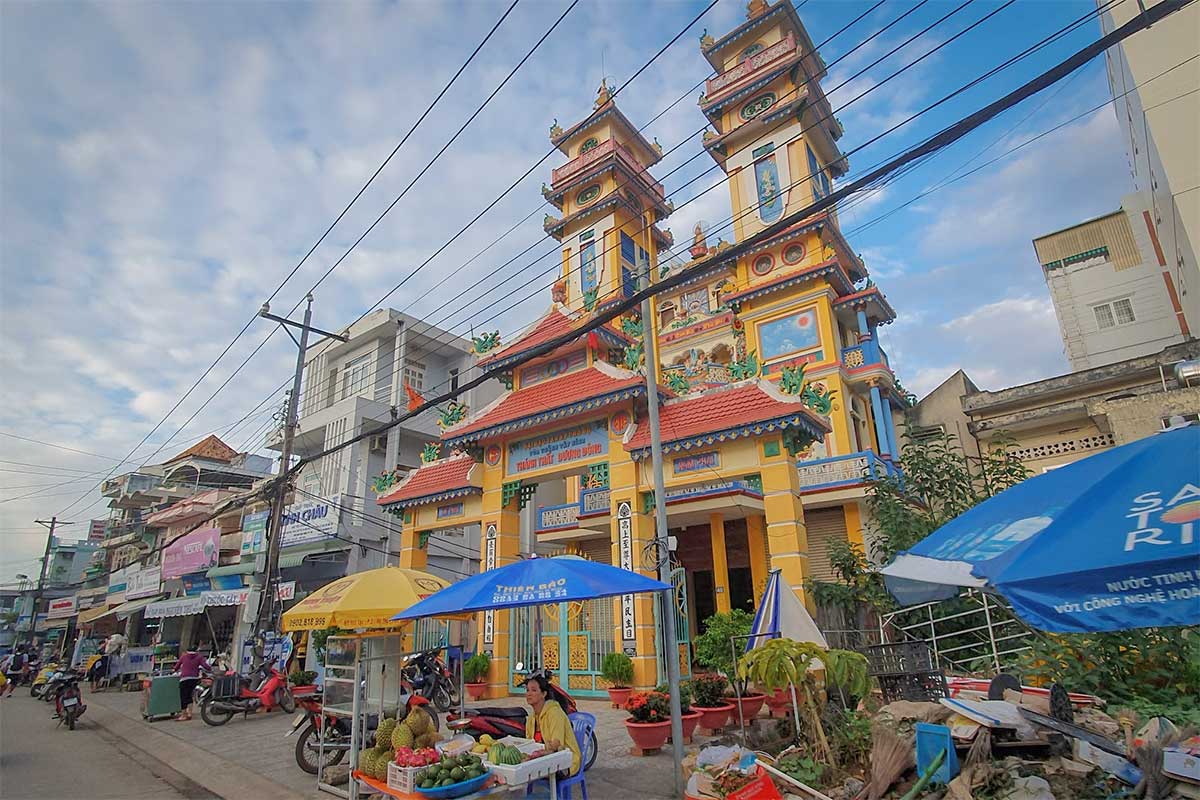
Compared with the large and famous Cao Dai temples on mainland Vietnam, especially the main temple in Tay Ninh, this one is much smaller and more simple. It is not the kind of place most people travel across the island just to see, but it works well as a short cultural stop while exploring Duong Dong on foot. Some sources mention early dates connected to the history of Cao Dai on Phu Quoc, but the building you see today appears newer or significantly renovated. Outside, the surrounding streets are busy and lively, while inside the temple the atmosphere is calm and surprisingly peaceful.
Cao Dai religion in brief
Cao Dai is a Vietnamese religion that began in southern Vietnam in the 1920s. It brings together ideas and symbols from different belief systems, including Buddhism, Taoism, Confucianism, Christianity, and several other traditions. Its most recognizable symbol is the Divine Eye, which represents the presence and guidance of the Supreme Being.
Today, Cao Dai temples can be found across southern Vietnam and in some other parts of the country. The most famous and impressive temple is the Holy See in Tay Ninh, which is the center of the religion. The Phu Quoc temple is much smaller, but for many travelers it is an easier and more convenient first introduction to Cao Dai beliefs and architecture.
Highlights of the Cao Dai Temple in Phu Quoc
1. The colorful exterior and twin towers
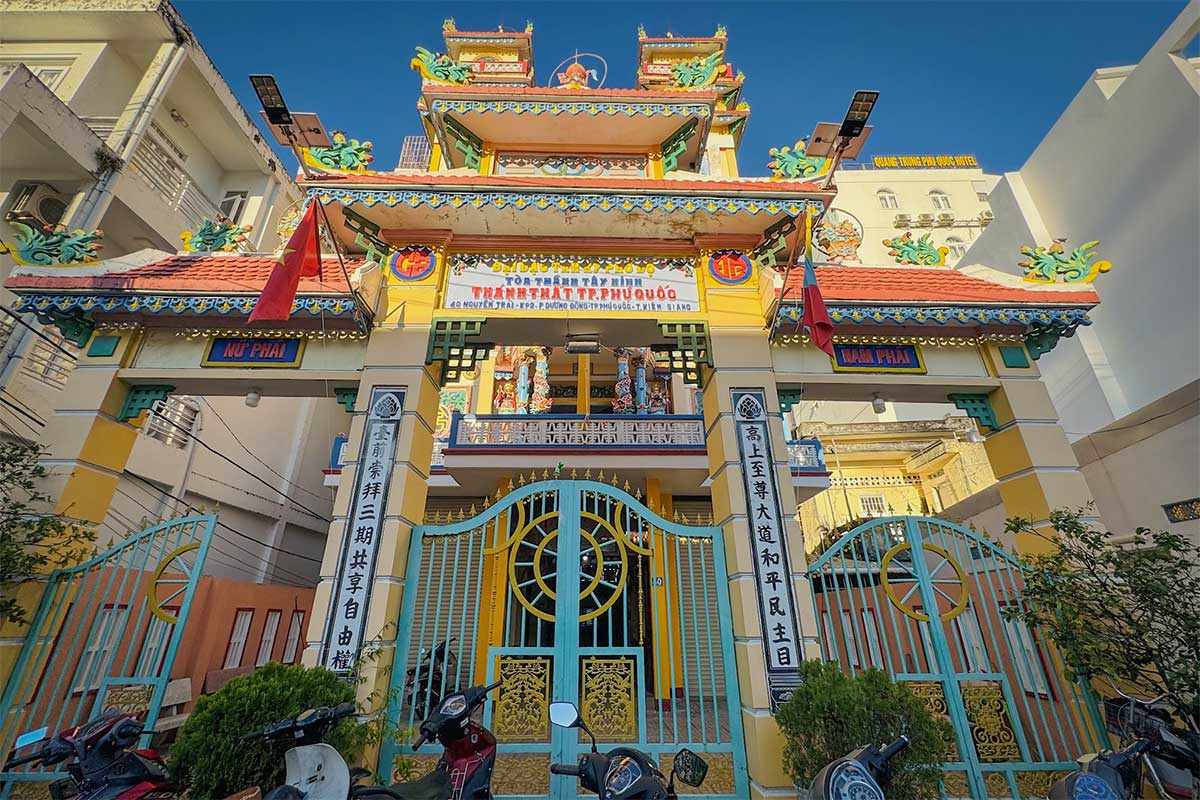
The first thing most people notice is the bright and colorful exterior. Like many Cao Dai temples, the building uses soft pastel shades, decorative details, and symbolic design elements that make it stand out from the surrounding streets. Even if you do not go inside, it is an eye-catching building that is easy to recognize.
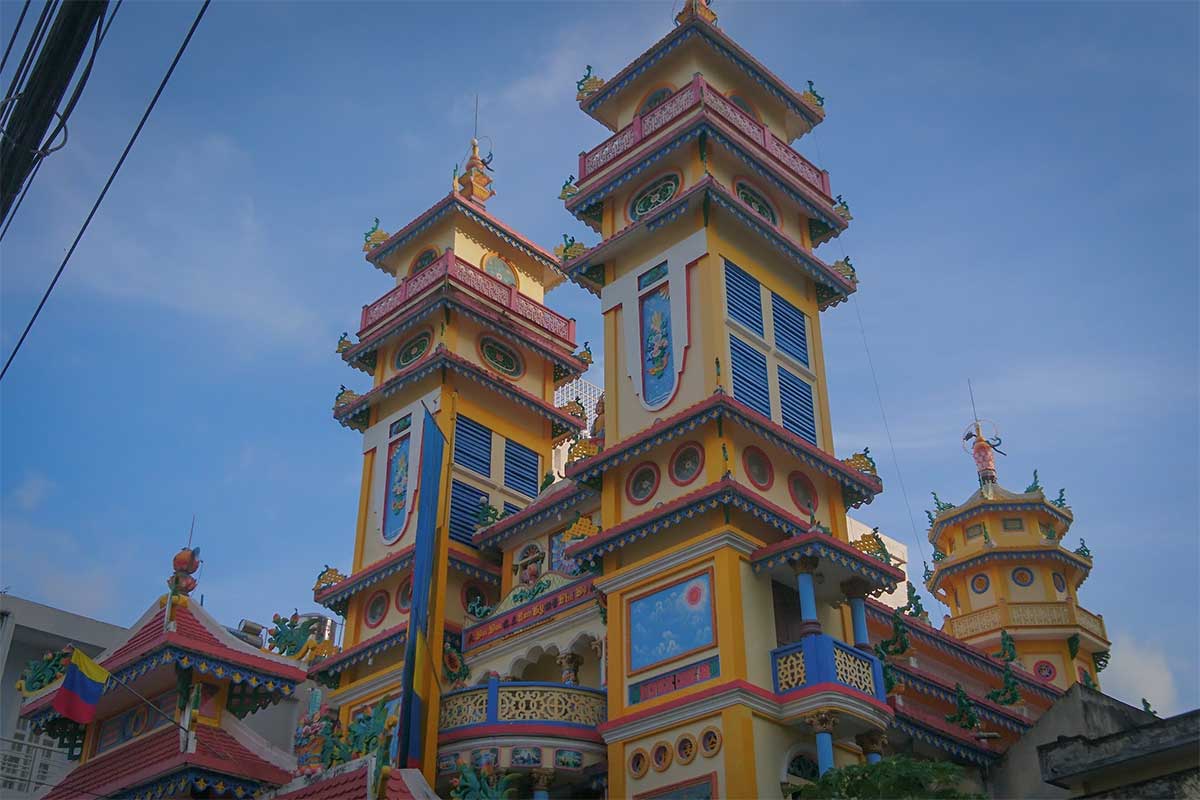
The twin towers are the temple’s most distinctive feature and give it a more vertical look than many nearby buildings. Because the temple sits close to the road, it is also easy to photograph while walking through Duong Dong. Morning and late afternoon usually give the nicest light, but it can be photographed at any time.
2. The peaceful prayer hall inside
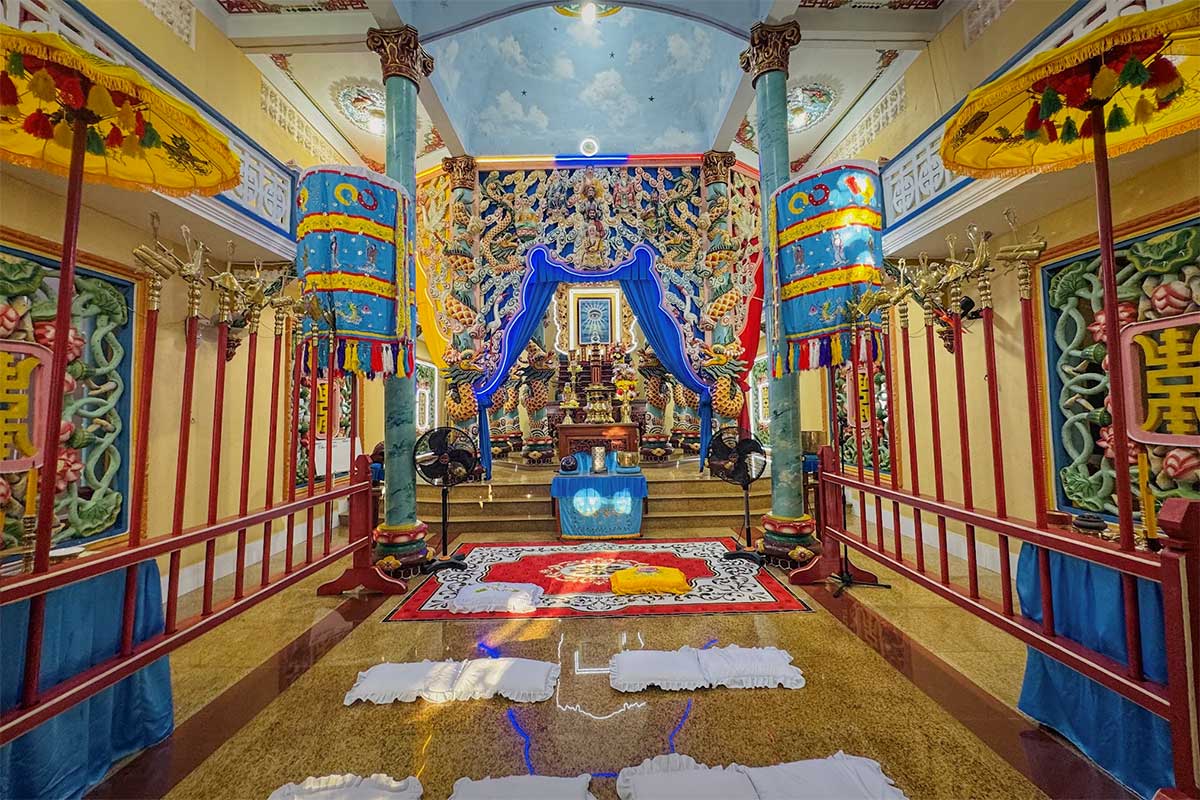
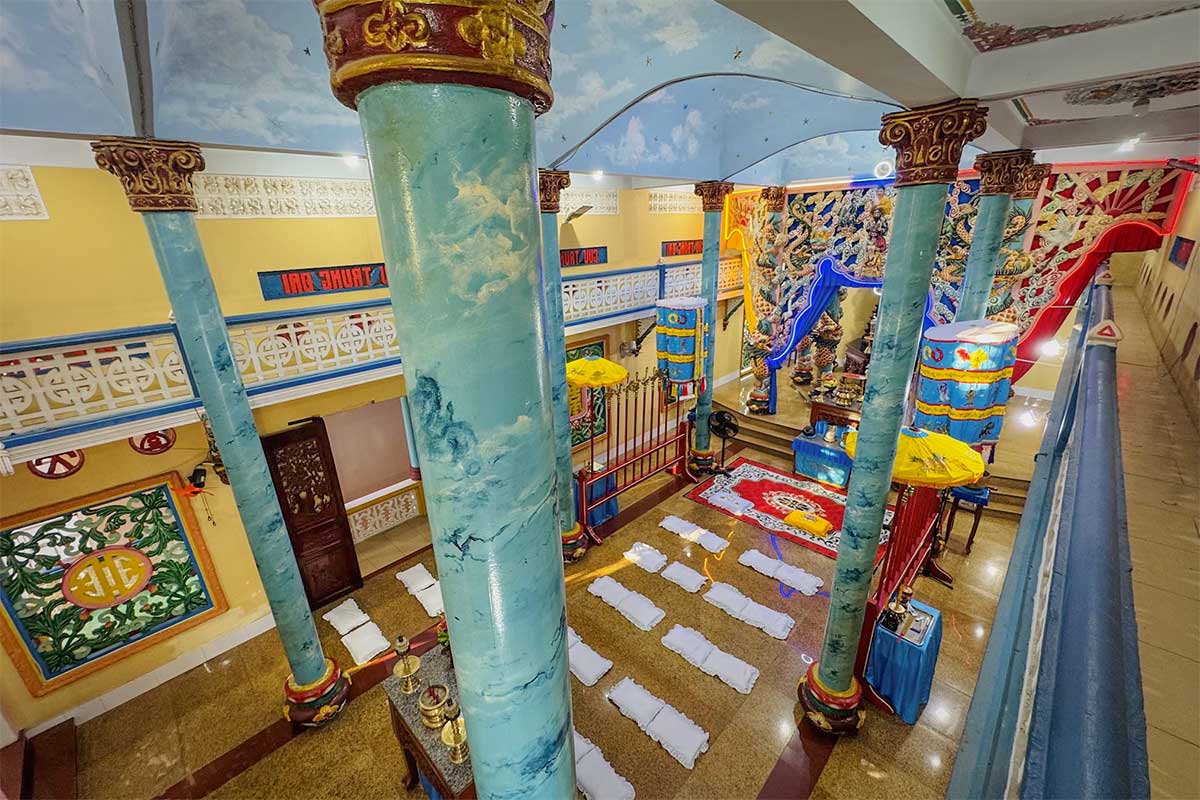
If the doors are open, step inside and remove your shoes before entering the prayer area. The interior is more calm than dramatic, but that is part of its appeal. After the traffic and noise outside, the temple can feel surprisingly peaceful.
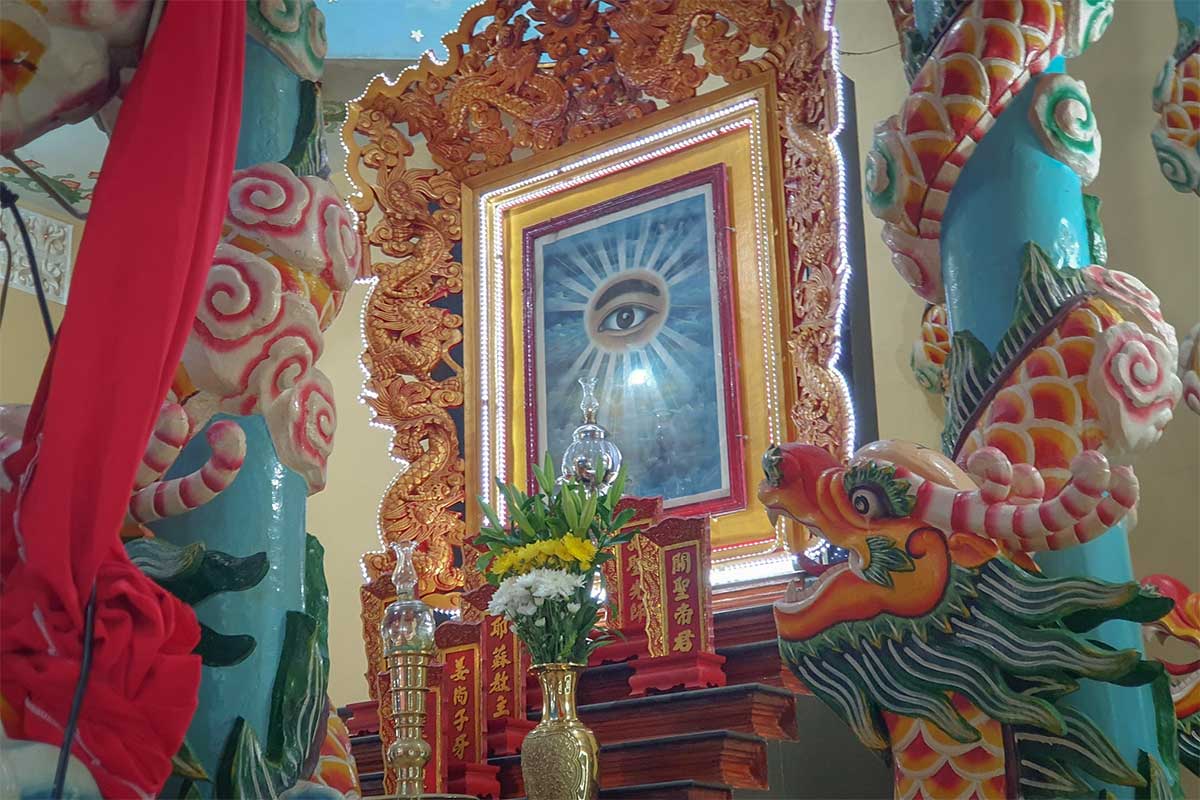
Inside, you will see a symmetrical prayer hall with rows of space leading toward the altar. Look for the Divine Eye symbol, one of the most important signs in the Cao Dai religion. Decorations are simpler than in larger mainland temples, but the space still feels respectful and interesting.
3. Upper floors and tower views
Some visitors mention being able to access upper levels or parts of the towers, although this is not always open. If access is allowed, it can be one of the more memorable parts of the visit because you get a different perspective over town.
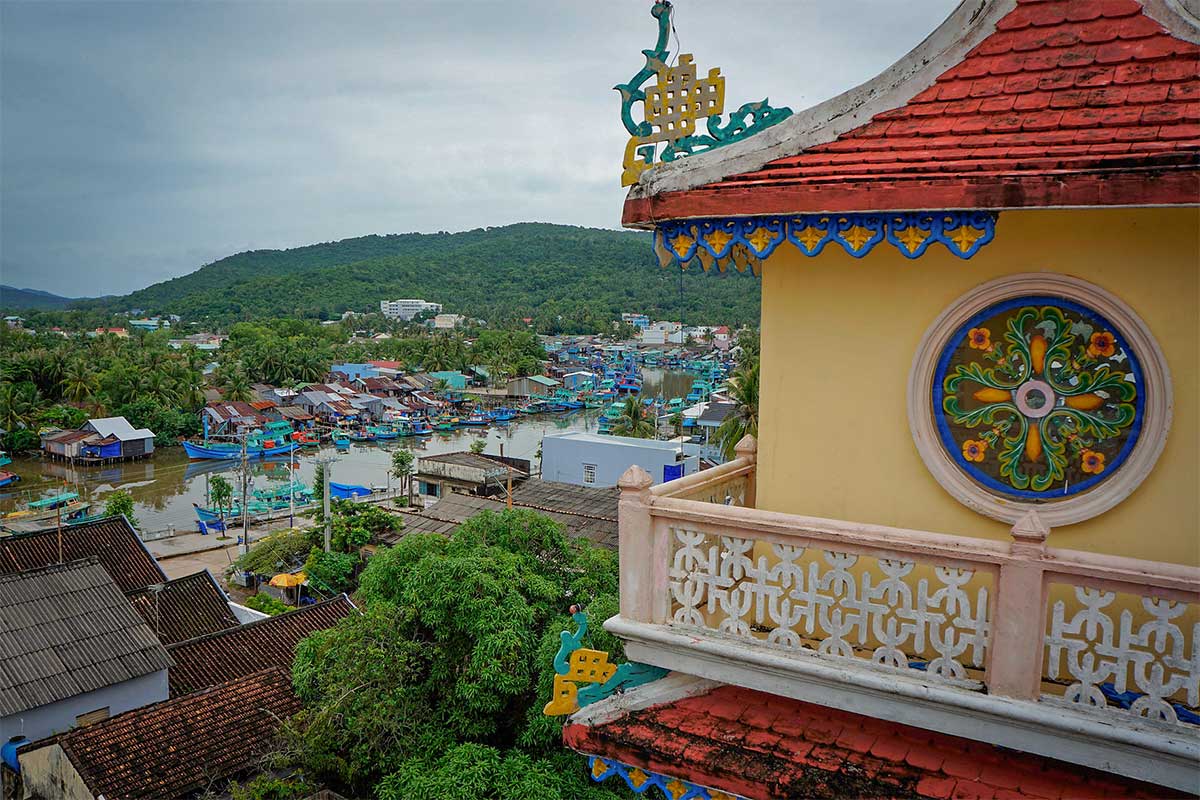
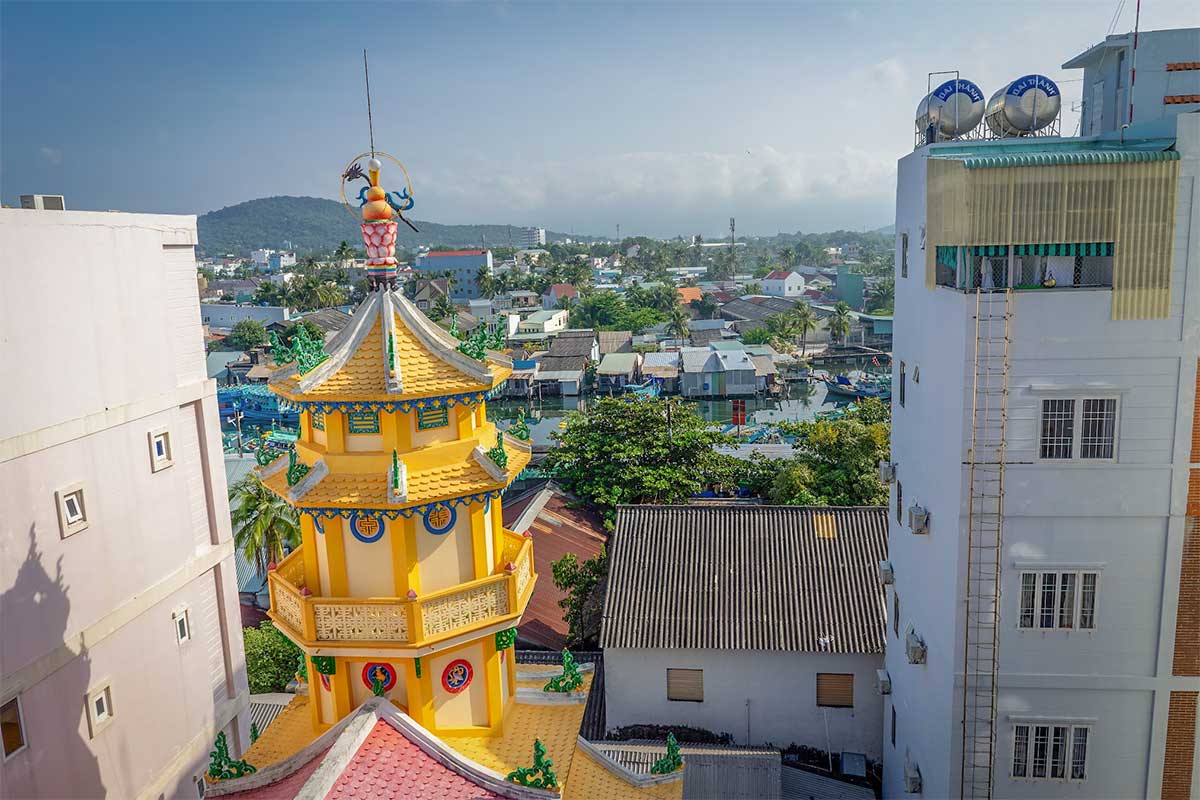
Be aware that the staircases are narrow and can feel steep or tight. Ceilings in some areas are low, so taller travelers may need to watch their head. Depending on where access is permitted, you may see rooftops of Duong Dong, parts of the river area, and glimpses toward the sea.
4. Seeing a ceremony
Like many religious sites, the temple is usually more interesting when something is happening rather than when it is empty. A prayer ceremony adds sound, movement, and a better sense of how the building is used by the local community.
If you happen to visit during worship, observe quietly and respectfully from the side, and only enter visitor areas if it is clearly allowed. Avoid blocking pathways or taking intrusive photos. Even a short ceremony can make the visit feel more meaningful than simply walking through the building.
Getting there
Where is the temple
The Cao Dai Temple is on Nguyen Trai Street in central Duong Dong, the main town of Phu Quoc. Its location is one of the biggest reasons to visit, as it sits close to several places many travelers already plan to see.
If you stay in Duong Dong, especially near the night market or the northern part of Long Beach, it is easy to reach on foot. From other parts of the island, the simplest options are taxi, Grab, or scooter. Parking a scooter nearby is usually easy enough, though streets can be busier in the evening.
What to combine nearby on foot
Because the temple is so central, it works best as part of a short walking route rather than a stand-alone destination. Several of Duong Dong’s most visited sights are nearby and easy to combine in one outing.
Within a short walking distance, you can also visit Phu Quoc Night Market for food and evening atmosphere, Sung Hung Pagoda for another religious site, and Dinh Cau for sea views and sunset. Duong Dong Market is also nearby for local daily life – but only combine when visiting in the morning, while the northern stretch of Long Beach can be reached for a beach walk.
Best walking route idea
A good time to explore this area is late afternoon, when the heat is lower and the town becomes more lively. Start at the Cao Dai Temple, then walk to Sung Hung Pagoda for a second cultural stop.
From there, continue to Dinh Cau for sunset views over the sea. After sunset, walk straight into the nearby Phu Quoc Night Market for dinner, seafood, snacks, or simply to enjoy the busy evening atmosphere. It is one of the easiest and most practical self-guided walks in Duong Dong.
Practical visiting tips
Opening hours and access
The temple does not operate like a standard tourist attraction with clearly posted opening hours and a ticket desk. Access can depend on prayer times, local activity, or whether staff are present.
In general, daytime is the safest time to visit if you hope to look inside. Sometimes the gates are open, while at other times they may be closed or only partly accessible. If it is closed, simply view the exterior and continue your walk around town.
Entrance fee
There is normally no entrance fee to visit the Cao Dai Temple. You can step inside when open without buying a ticket.
Small donations are appreciated if you enter and spend time inside, but they are not expected. If you choose to donate, keep it simple and respectful.
Dress respectfully
Although this is an easy stop in town, it is still an active religious site. It is best to wear clothing that covers your shoulders and knees, especially if you plan to go inside.
Shoes should be removed before entering prayer areas. If you are already dressed for the beach, it may be better to view the temple from outside and return later.
How much time needed
If you only want to see the building and take a few photos from outside, 5 to 10 minutes is enough. Many travelers simply stop while passing through the area.
If the temple is open and you would like to look inside, allow around 15 to 25 minutes. If you visit during a ceremony or upper levels are accessible, you may stay longer.
Photography etiquette
Photography from the street and outside areas is normally fine. The colorful facade and twin towers are the easiest subjects to photograph.
Inside the temple, be more discreet and respectful. Avoid flash, do not interrupt worship, and give space to anyone praying. If a ceremony is taking place, quiet observation is usually better than taking many photos.
Is it worth visiting?
The Cao Dai Temple is not a must-see attraction in Phu Quoc. It is smaller and less impressive than some of the major temples and religious sites you can visit elsewhere in Vietnam, especially if your trip also includes places such as Tay Ninh, Hue, or larger mainland cities. If you have already seen several temples during your travels, this one may feel more like a minor stop than a highlight.
That said, it is still worth a quick visit because it is centrally located, free to enter, visually interesting, and easy to combine with nearby places like Dinh Cau, Sung Hung Pagoda, and Phu Quoc Night Market. The best way to see it is as a short cultural detour while exploring Duong Dong, not as a destination by itself. If you want to compare it with other spiritual sites on the island, read our guide to the best temples in Phu Quoc.