

Sung Hung Pagoda – The oldest pagoda in Phu Quoc?
What Sung Hung Pagoda is
Sung Hung Pagoda is one of the best-known Buddhist temples on Phu Quoc and a familiar local landmark in Duong Dong. Unlike some island attractions built mainly for tourism, this is an active religious place where local people still come to pray, make offerings, and visit during important dates.
It is often described as the oldest pagoda on the island. Exact founding dates are not fully clear, but it is widely accepted as one of the oldest surviving temple sites in Phu Quoc and an important part of the island’s spiritual history.
The pagoda sits in a convenient central area of Duong Dong, close to markets, shops, hotels, and some of the busiest streets on the island. Because of that, many travelers visit it not as a main destination, but as an easy stop while exploring town.
A short history
Sung Hung Pagoda was formed from two older shrines known as Sung Nghia Tu and Hung Nhan Tu. These were later combined into one temple complex, which is where the current name comes from.
Its origins are usually linked to the late 19th century or early 20th century, making it older than many other religious sites on Phu Quoc. Over time, the temple was repaired and expanded as the island developed.
Major renovations are commonly mentioned in 1924 and again in 1960. These restorations helped shape much of the pagoda visitors see today, including stronger permanent structures and updated temple buildings.
Like many religious places in Vietnam, Sung Hung Pagoda also played a local role during wartime. Historical accounts mention it as a discreet meeting point and contact place during periods of conflict.
What to expect at Sung Hung Pagoda
1. Entrance gate and temple grounds
The first thing you will notice is the traditional three-gate entrance, a common feature at many Vietnamese temples. It gives the pagoda a more formal and historic feeling, even though the site itself is not very large.
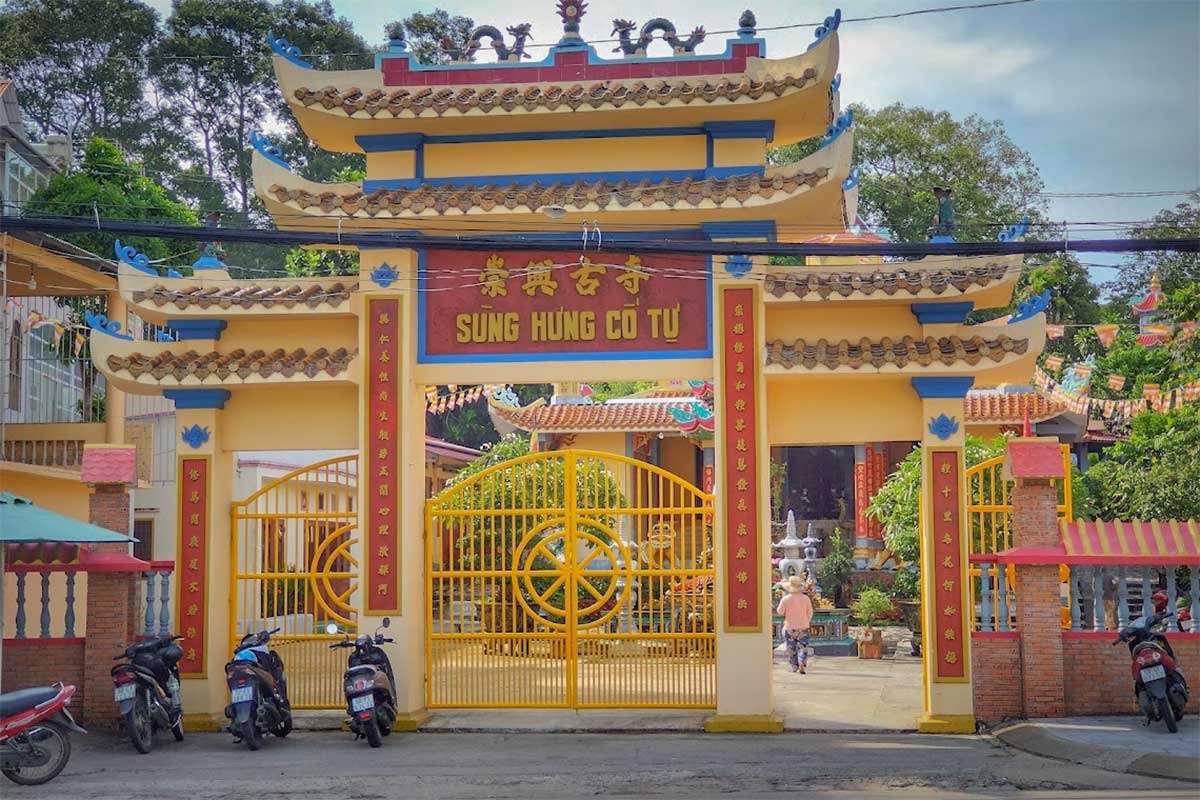
From the entrance, steps lead upward into the main grounds. This slightly raised layout helps separate the temple from the busy streets outside and adds to the feeling of entering a quieter space.
Around the paths and buildings, you will see trees, plants, and shaded corners that give the pagoda a garden-like atmosphere. On a hot day in Phu Quoc, this shade makes the visit more comfortable.
2. Main hall and prayer spaces
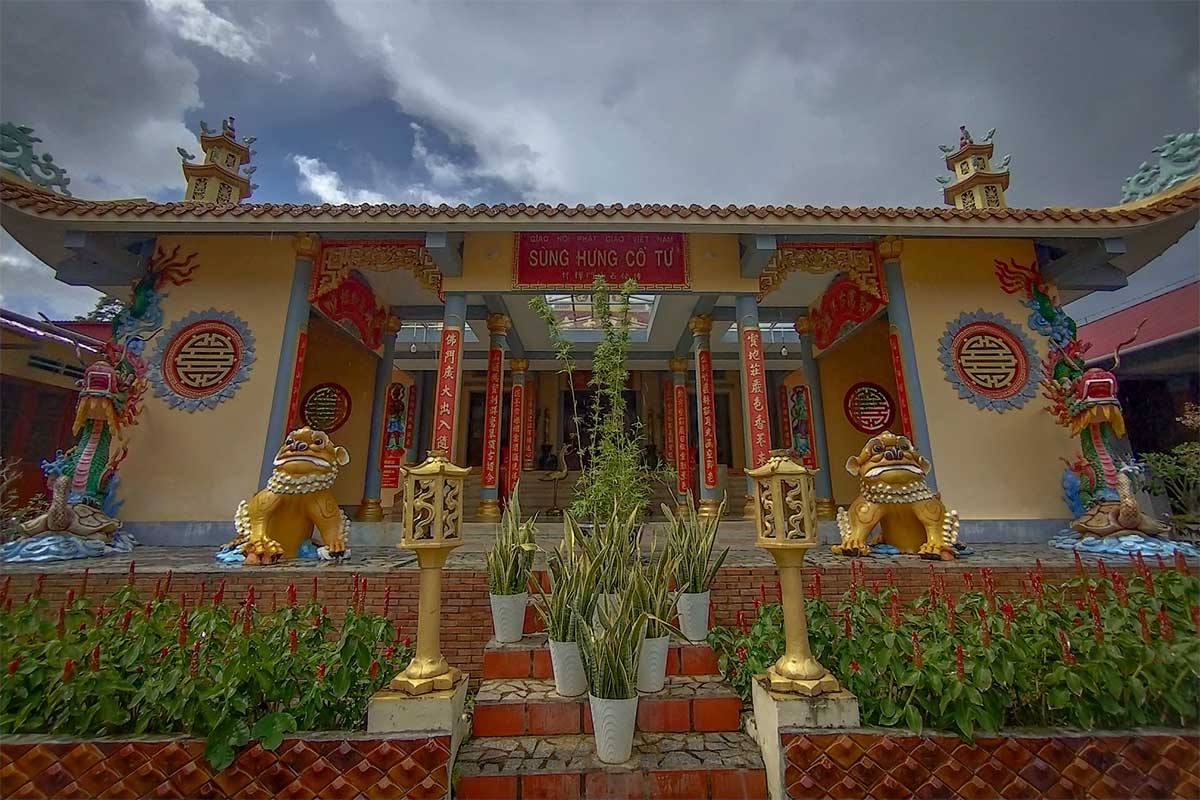
The main hall is the spiritual center of Sung Hung Pagoda. Inside, you can expect decorated altars, Buddha statues, candles, incense, and the red and gold colors often seen in Vietnamese temple interiors.
The space is active rather than purely touristic. Local worshippers may be praying, lighting incense, or sitting quietly for reflection. Because of that, it is best to enter calmly, speak softly, and observe respectfully.
Even if you are not religious, the hall is still worth seeing for its atmosphere and traditional details. It offers a more authentic look at daily spiritual life than attractions built mainly for visitors.
3. Outdoor statues and side shrines
Outside the main hall, one of the most noticeable features is the statue of Quan Am, the Goddess of Mercy, standing in the courtyard area. This is a common and meaningful symbol in many Buddhist temples across Vietnam.
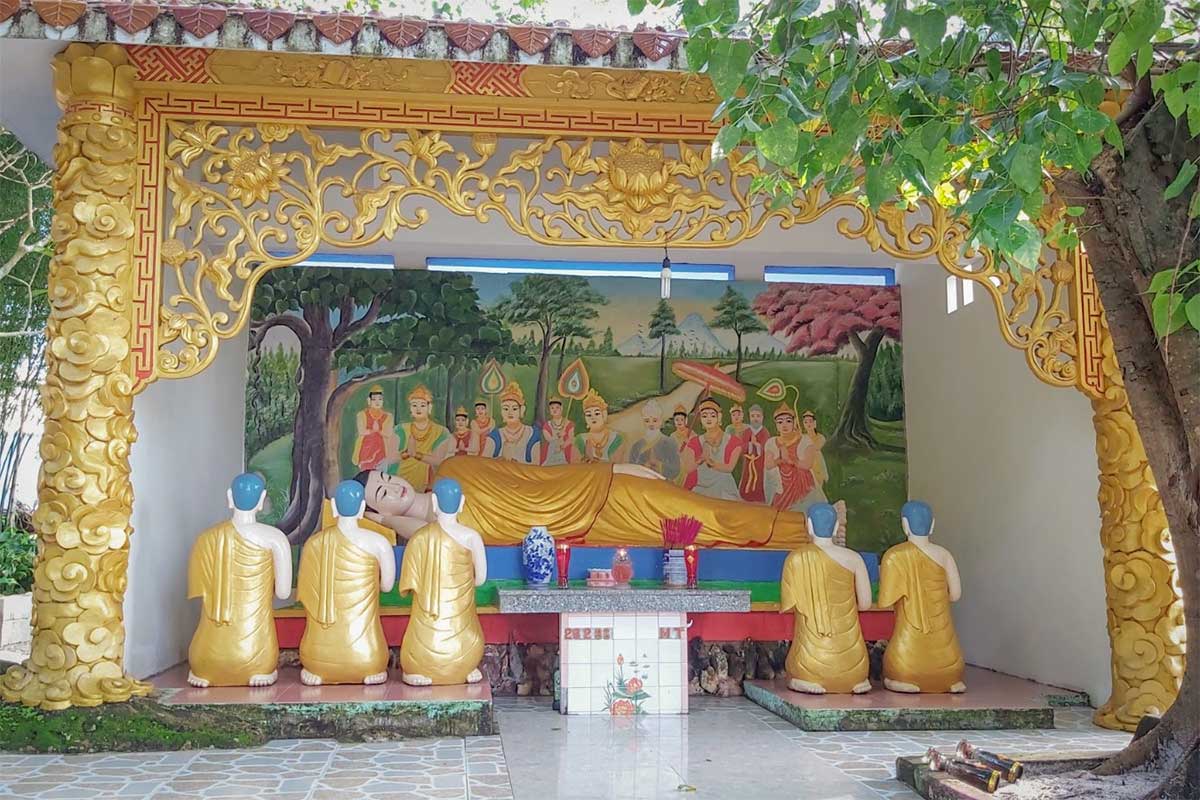
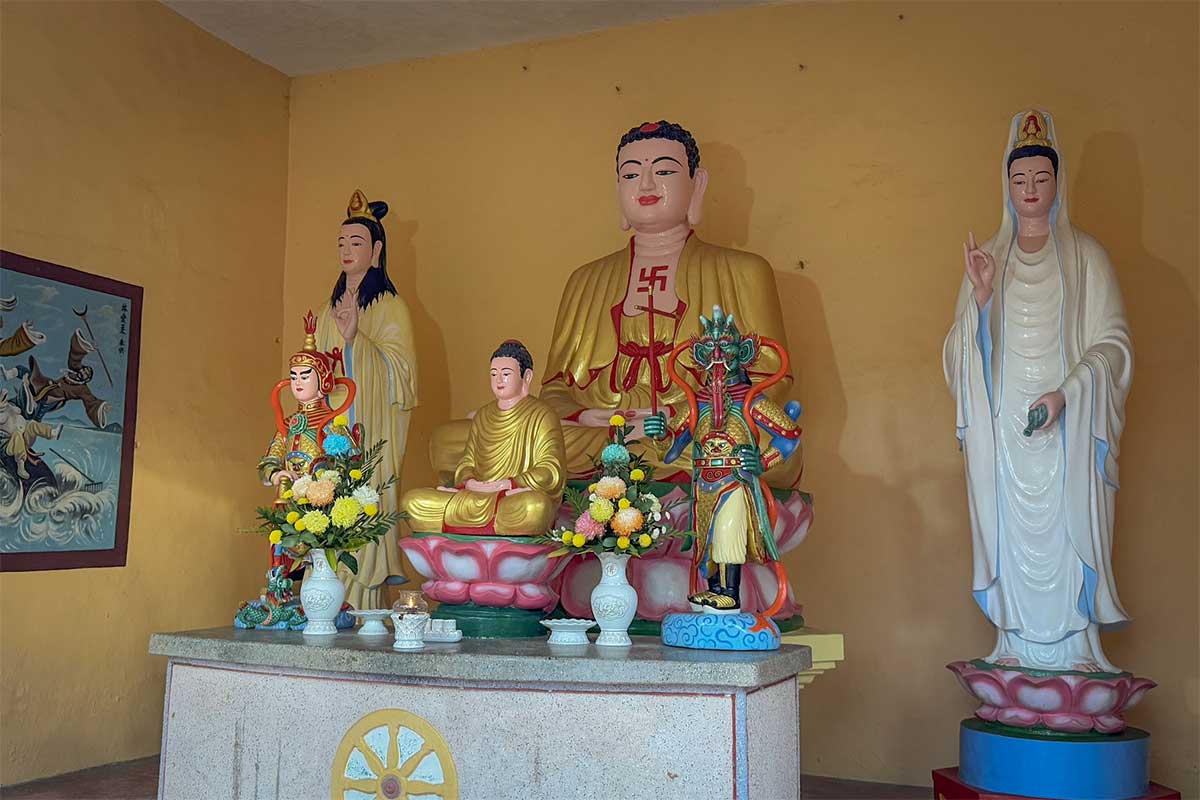
You may also see smaller shrines and additional worship spaces around the grounds. Some are dedicated to local beliefs or historical figures, showing how Vietnamese temples often combine Buddhist traditions with folk religion.
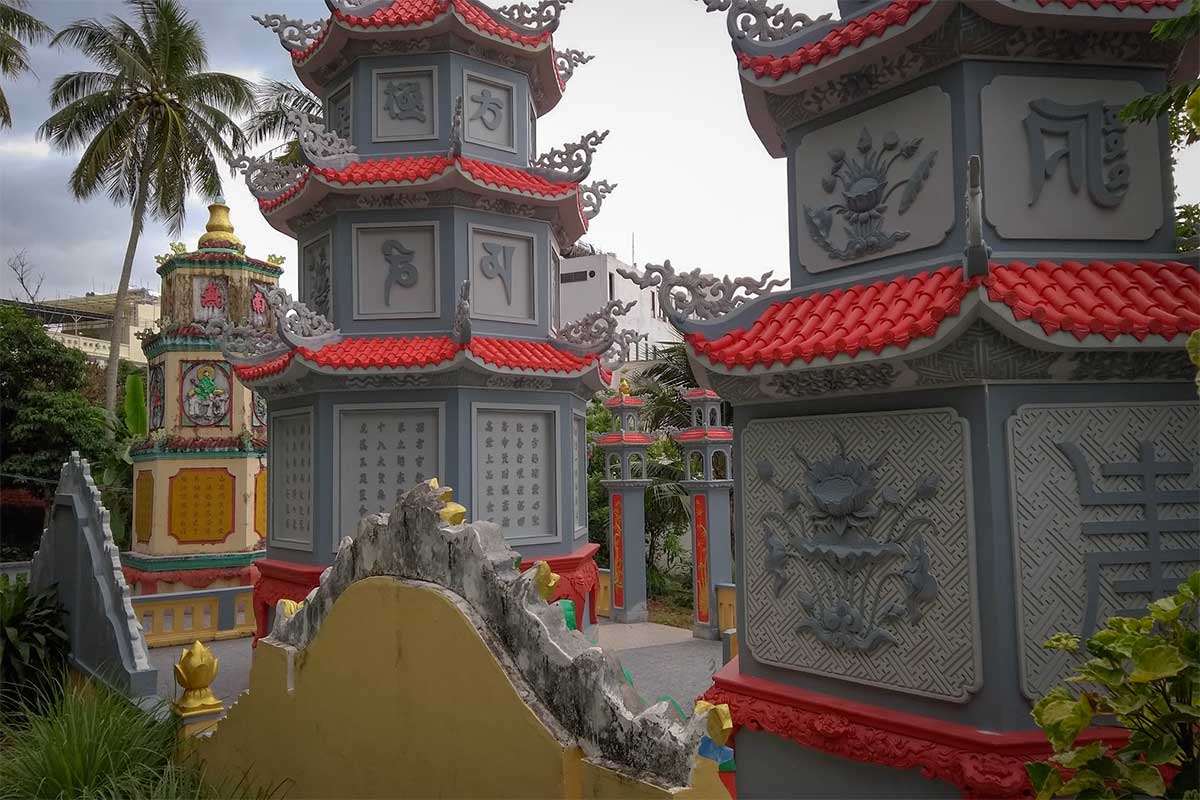
Look around for bells, decorative carvings, guardian figures, and smaller architectural details. None of these alone make Sung Hung Pagoda a major sightseeing attraction, but together they create a pleasant and interesting place to explore for a short visit.
Location and getting there
Where it is
Sung Hung Pagoda is located in the central area of Duong Dong, close to Tran Hung Dao Street and not far from several of the town’s busiest areas. This makes it one of the easiest temples to visit on the island without needing a long drive.
If you stay in Duong Dong, especially near the town center or beachside hotel zones, the pagoda is often within walking distance or just a short ride away. For many travelers, it works best as a convenient stop while already exploring town rather than as a separate trip.
How to get there
If you are already around Phu Quoc Night Market or Dinh Cau, walking is the easiest option. The area is close enough that many visitors combine these places in one outing.
From other parts of Phu Quoc, taking a taxi or Grab is the simplest choice. Fares from most resort areas are reasonable, especially if you are already heading into Duong Dong for shopping or dinner.
If you rent a scooter, access is easy. Roads in town are straightforward, and the pagoda is simple to find on map apps. As with anywhere in Duong Dong, parking and traffic can be a bit busier in the evening.
Practical visiting tips
Opening times and best time to go
Like many local temples in Vietnam, Sung Hung Pagoda does not always operate with strict tourist-style opening hours. Daytime is the safest time to visit, especially from morning until late afternoon when the grounds are normally open and active.
It is better not to leave your visit too late into the evening. Some travelers report finding parts of the temple closed at night, even when outer areas may still be accessible. If you plan to combine it with the night market, visit the pagoda first and then continue to the market afterward.
How much time you need
Most travelers only need around 15 to 30 minutes at Sung Hung Pagoda. It is not a huge temple complex, so you can see the main areas without spending half a day here.
You may stay longer if you enjoy architecture, quiet places, or taking photos of details like statues, gates, and decorative carvings. Some people also simply enjoy sitting for a few minutes in the peaceful courtyard.
Entrance fee and donations
Entry is free, which makes Sung Hung Pagoda an easy extra stop while exploring Duong Dong.
You may see donation boxes inside the grounds or near prayer areas. Donations are appreciated but not expected. If you enjoy the visit and want to support the temple, a small amount is a respectful gesture.
Dress code and respectful behavior
This is an active religious place, not only a sightseeing stop. It is best to dress modestly, with shoulders and knees covered where possible. If you are coming from the beach, bringing a sarong or light cover-up is useful.
Remove hats when entering prayer spaces, speak quietly, and avoid blocking people who are worshipping. A calm and respectful attitude matters more than following every small rule perfectly.
Photography tips
Photography is usually allowed in the outdoor areas and general temple grounds. The gates, statues, incense areas, and trees can make nice photos.
Inside prayer areas, be more discreet. Avoid flash when possible, and do not take close-up photos of people praying or monks without permission. If in doubt, step back and photograph the atmosphere rather than individuals.
Combine it with a smarter route
Because of its central location, Sung Hung Pagoda works best when combined with nearby places rather than visited as a standalone trip.
If you plan to visit in the late afternoon or evening, Sung Hung Pagoda is easy to combine with nearby places. Dinh Cau is only a short walk away, where you can see one of the island’s more famous temples and enjoy sunset views over the sea. One of the entrances to Phu Quoc Night Market is also very close to the pagoda, making it simple to turn the area into one enjoyable late-day outing.
In the morning, you can combine the pagoda with Duong Dong Market if you enjoy local daily life. On the way, the bridge nearby gives pleasant views over fishing boats and the river area.
Is Sung Hung Pagoda worth visiting?
Honestly, Sung Hung Pagoda is not a must-see attraction in Phu Quoc. If your Vietnam trip also includes mainland destinations such as Hue, Hoi An, Da Nang, or Ho Chi Minh City, you will likely see larger, older, or more visually impressive temples elsewhere. It is not the kind of place most travelers would cross the island specifically to visit.
That said, Sung Hung Pagoda can still be worth visiting because of how easy it is to include in your day. Its central location in Duong Dong, peaceful atmosphere, and free entry make it a pleasant short stop between sightseeing, shopping, or beach time. If you are already visiting Dinh Cau, Phu Quoc Night Market, the local market, or walking near Long Beach, it adds a small cultural break to a part of the island that many travelers already explore.
Want to see how Sung Hung Pagoda compares with other spiritual sites on the island? Read our guide to the best temples in Phu Quoc.