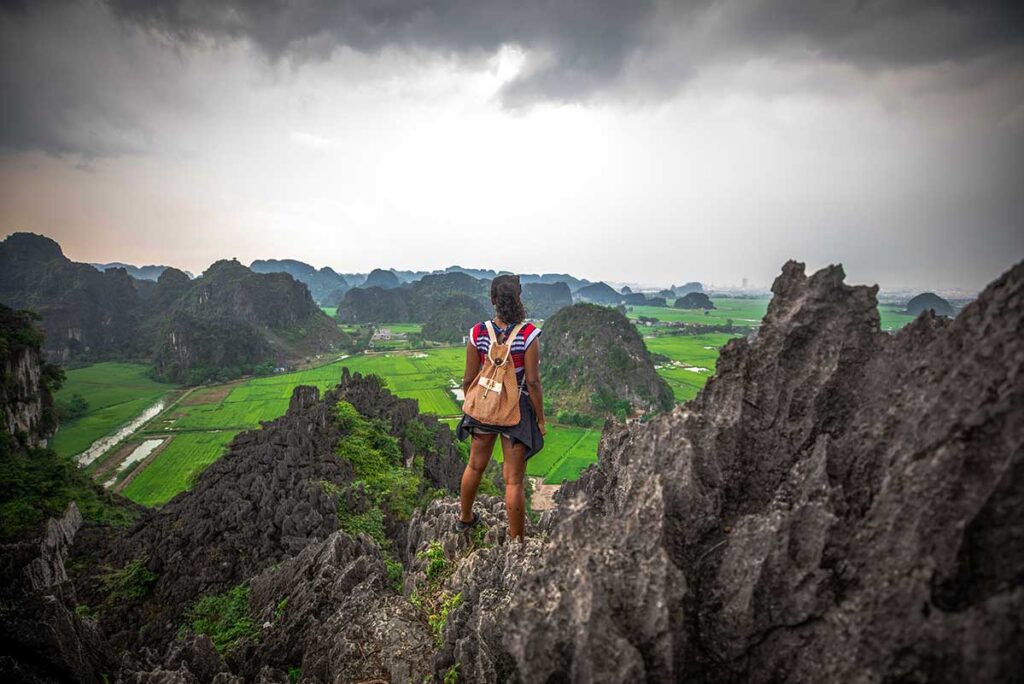

What is cloud hunting?
Cloud hunting — or săn mây in Vietnamese — is exactly what it sounds like: waking up before dawn, heading to an elevated viewpoint, and waiting to watch clouds fill the valleys below as the sun rises. The experience is less about chasing weather and more about being in the right place at the right time, with a warm layer and enough patience to wait it out.
The activity has become a genuine phenomenon among Vietnamese youth over the past decade, with certain hills and peaks turning into dedicated gathering spots on weekend mornings. There is even a lighthearted myth that circulates among locals: if the clouds appear, it means you have good nhân phẩm — moral character. If they don’t, it is a sign you need to keep working on yourself. Whether you believe that or not, it captures the spirit well — cloud hunting is as much about the ritual as the result.
The honest reality is that clouds are never guaranteed. Conditions can change overnight, and plenty of people make the 4 AM drive only to find clear skies. That said, even without clouds, most of these viewpoints offer stunning sunrises, cool mountain air, and a version of Dalat that the rest of the day simply does not deliver. Come for the clouds, but do not be disappointed if the sunrise has to be enough.
Best time for cloud hunting in Dalat
Before diving into the best spots, it is worth understanding when clouds actually appear — because timing makes or breaks the experience.
Best time of year
The most reliable window is from May to August, when afternoon rain is frequent and humidity stays high. The logic is straightforward: if it rained the afternoon or evening before, there is a strong chance clouds will hang in the valleys the following morning. Outside this window, cloud hunting is still possible — the dry season from November to April can deliver clear, beautiful mornings — but the odds of a full sea of clouds are noticeably lower.
Best time of day
Arrive between 4:30 and 5:30 AM. Clouds are densest just before and during sunrise, and once the sun climbs higher, they burn off quickly. By 7 AM, most of what you came to see will be gone. Getting there while it is still dark is not just practical — the transition from darkness to dawn, with clouds slowly catching the first light, is a large part of what makes the experience worth it.
Before heading out, check the weather conditions for Dalat: high humidity (above 75%) and low wind speed are the two indicators that point toward a good morning. Several weather apps show these figures, and spending two minutes checking them the night before can save a wasted early alarm.
What to bring
Dalat is cool year-round, but at altitude before sunrise it gets genuinely cold — temperatures at the viewpoints commonly drop to 13–15°C, and wind makes it feel colder. A warm jacket, gloves, and a scarf are not optional extras.
Shoes matter more than most guides mention. The paths to nearly every cloud hunting spot are steep, often damp, and slippery in the early morning dew. Flip flops or smooth-soled shoes are a bad idea. Wear something with grip.
Bring a flashlight or make sure your phone torch works. You will likely be navigating trails in complete darkness, and most of these spots have no lighting whatsoever.
Beyond that, keep it simple: water, a small snack if you want something while you wait, and a mat or foldable seat if you plan to stay a while. There are no shops or cafes at most of these locations — Cau Dat Tea Hill is the exception — so sort everything out before you leave.
One last thing worth packing: realistic expectations. Check humidity and wind speed the night before. High humidity and low wind are the two conditions that point toward a good morning. If the forecast looks off, you can always shift plans by a day.
The best cloud hunting spots in Dalat
1. Thien Phuc Duc Hill — closest to the city center
Thien Phuc Duc Hill sits about 15 to 20 minutes from the city center, making it the most accessible cloud hunting spot in Dalat without sacrificing the experience. It is free to enter, relatively quiet compared to Cau Dat, and the hike to the top takes no more than 10 to 15 minutes — short enough that even a slow walker will not struggle.
The approach is straightforward on a motorbike. Park at the bend at the base of the hill, where a small cafe operates and parking costs 10,000 VND. From there, follow the steep path up. Steep is the right word — the climb is short but sharp, and the path gets slippery when wet, so shoes with decent grip matter here. Coming down, there is an easier alternative path about five minutes up the road from the cafe.
Arrive around 4:30 AM. There are no facilities at the top, so bring water and anything else you need. The viewpoint looks out over pine-covered slopes and open valley, and on a good morning the clouds roll in thick enough to make the surrounding hills disappear entirely. On a clear morning, the sunrise alone is worth it.
One recurring issue worth mentioning: litter. The hilltop gets enough visitors that rubbish accumulates, which takes the edge off an otherwise genuinely beautiful spot. Pack out what you bring.
2. Da Phu Hill — popular and rewarding
Da Phu Hill is about 30 minutes from the city center and consistently ranks among the most visited cloud hunting spots in Dalat. It is free to enter, the views from the top are genuinely impressive, and on a good morning the clouds sitting over the valley below are as good as anything else the area offers.
Getting there requires a motorbike or Grab. The road up is steep and can be slippery after rain — several visitors have noted it is not beginner-friendly on a bike, and walking the final stretch is a reasonable choice if conditions look rough. Route signage is limited, so check the Google Maps location in advance and save it offline before heading out in the dark. There is also a zipline option partway up the hill for those who want to skip the steepest section, at around 60,000 VND per person return.
At the top, a small stall sells drinks and snacks, which is a welcome find at 5 AM. The summit area is spacious enough for a comfortable wait, and the camping crowd means the spot stays reasonably well set up for early arrivals. Aim to be at the top by 5:15 to 5:30 AM for the best light.
Da Phu Hill also works well as an overnight option. Camping here means waking up already in position, without the pre-dawn drive. Gear can be rented in town, and the hilltop has enough flat space to make it comfortable.
3. Hon Bo Peak — for the more adventurous
Hon Bo Peak sits 9 to 12 kilometers from the city center and is the roughest of the main cloud hunting spots in Dalat. The trail is steep, uneven, and poorly maintained in sections — multiple visitors recommend leaving the motorbike at the bottom and walking up, which takes around 30 to 45 minutes. If you do ride up, the final stretch is rocky and demands a confident hand on the throttle.
The reward for the effort is a panoramic view that the easier hills cannot match. From the summit at 1,709 meters, the city spreads out below in one direction and the valley fades into cloud in the other. At night, the lights of the flower farms in the valley below create an unexpectedly beautiful scene, which makes Hon Bo a reasonable choice for those who want to arrive the evening before and camp overnight.
There are no facilities, no entrance fee, and no management. That freedom comes with a downside: litter is a persistent problem along the trail, which is one of the more honest things to know before making the effort. The spot is worth it, but go in with the right expectations.
For the sunrise and cloud hunting window, aim to start the climb no later than 4 AM to be at the top before first light.
4. Cau Dat Tea Hill — the classic, worth the distance
Cau Dat Tea Hill is the most established cloud hunting destination near Dalat, and the one most likely to appear on any list of things to do in the area. It sits around 25 kilometers from the city center — roughly 40 to 50 minutes by motorbike — and unlike the other spots on this list, it operates as a managed site with an entrance fee of 120,000 VND per person, which includes a simple breakfast and a drink.
The distance is the main barrier, and the road there in the early morning hours is dark and winding. That said, arriving at Cau Dat as the clouds begin to settle over the surrounding tea fields and pine hills is a different experience from the closer hills. The landscape here is genuinely striking — over 100 years of cultivated tea plantations stretching across 230 hectares at 1,650 meters above sea level, dotted with French-era wooden structures and a rattan bridge that puts you directly above the valley and the cloud line.
The wooden viewing platform and bridge are the main draw, but a second viewpoint further along the path offers a wider valley view and tends to be quieter. Arrive by 4:30 AM for the best conditions. Weekends and public holidays get crowded, and the narrow approach road can back up — a weekday visit makes a noticeable difference.
Cau Dat works best as part of a broader morning rather than a single-purpose trip. After the clouds clear, the tea fields and flower gardens are worth exploring, and the surrounding area has enough to fill a half-day without doubling back to the city.
5. Langbiang Mountain — clouds on a different scale
Langbiang is the highest and most well-known peak in the Dalat area, and while it does appear on cloud hunting lists, it works differently from every other spot in this guide. The mountain sits around 12 kilometers from the city center, and reaching the summit means either a multi-hour hike or taking a jeep — but the jeeps do not run at 4:30 AM, which rules out the optimal cloud hunting window for most visitors.
That said, clouds appear on Langbiang at various points throughout the morning and even into the day, given the altitude of over 2,000 meters. For travelers who are already planning a Langbiang visit, catching cloud cover is a realistic bonus rather than a guaranteed feature. The views from the top are expansive, and on the right morning the entire city below disappears under a white layer that is impressive by any standard.
Entrance costs 120,000 VND per person. The jeep to the top runs at 150,000 VND per person and stops at a radar station with views over the surrounding ranges. For those who want to hike, the trail is well-marked and takes around 60 to 90 minutes up — rewarding, but a serious time commitment before sunrise.
Langbiang is worth visiting in Dalat. As a dedicated cloud hunting spot, it is not the most practical option on this list.
Bonus: cloud hunting on the mountain passes
Most cloud hunting guides about Dalat focus entirely on the hills around the city, which means one genuinely good option gets overlooked almost every time: the mountain passes leading down toward the coast.
The passes connecting Dalat to Nha Trang (Khanh Le Pass) and Phan Rang (Ngoan Muc Pass) drop sharply from the plateau and cut through terrain where morning cloud cover is common, particularly after a rainy afternoon. Catching clouds on these passes is less of a dedicated activity and more of a happy coincidence — but for travelers already planning to head toward the coast, timing the departure for early morning turns a routine drive into one of the better stretches of road in the south.
It requires no extra planning beyond leaving early. The cloud line on these passes tends to sit at a specific elevation, and riding or driving through it — rather than watching from above — is a different experience from the hilltop spots around Dalat, and an underrated one.
Practical tips for cloud hunting in Dalat
- Check the weather the night before. Humidity above 75% and low wind speed are the two indicators that suggest a good morning. Several weather apps display both figures. Two minutes of checking before bed can save an unnecessary 4 AM drive.
- Rain the afternoon before is a good sign. If Dalat had a wet afternoon or evening, the chances of cloud cover the following morning go up significantly. This is the single most reliable pattern to follow when planning which morning to go.
- Getting back can be harder than getting there. Grab is widely available for the outward journey, but drivers are scarce in the early morning hours and even scarcer in remote spots like Hon Bo or Pinhatt. If you are not on a rental motorbike, sort out the return trip before you head out — either arrange a driver in advance or accept that you may be waiting.
- Clouds not showing up does not mean the trip was wasted. Every spot on this list delivers a decent sunrise even without cloud cover. The light on the tea fields at Cau Dat, the city view from Hon Bo, the open valley at Da Phu — none of it disappears just because the clouds stayed away.
- Litter is a genuine issue at most of these spots. It comes up consistently across almost every location in this guide. Pack out whatever you bring, and the experience will be better for everyone who comes after.
- A note on Pinhatt Peak. Pinhatt does not appear as a main spot in this guide because access is officially restricted and cloud hunting reviews are essentially nonexistent for the location. That said, the hike from opposite the Sacom Resort entrance is well-documented, the views from the top are well regarded, and for travelers who want somewhere genuinely quiet and off the usual circuit, it is worth looking into. Just go in knowing the situation on the ground is informal.