


Da Nang – Gateway to Hoi An
Hoi An is world-famous for its atmospheric Old Town, but in reality it’s a relatively small city. It doesn’t have its own airport or train station, which means that for most travelers, the journey from Da Nang to Hoi An begins in Da Nang.
Da Nang is a large coastal city with an international airport, a central railway station, and multiple bus connections. The two cities are located about 28 kilometers (17 miles) apart. Depending on your starting point in Da Nang and your destination in Hoi An, the journey typically takes around 40 to 45 minutes.
Airport: Da Nang International Airport
Da Nang International Airport is one of the largest airports in Vietnam, handling both domestic and international flights. You can fly here directly from major cities like Hanoi and Ho Chi Minh City, as well as from various international hubs across Asia. For many travelers, this is the most logical starting point for continuing from Da Nang to Hoi An.
Train Station: Da Nang Railway Station
Da Nang Railway Station is located on Vietnam’s main North–South railway line and is an important stop for travelers exploring the country. Popular routes include connections from Hue, Ninh Binh, and Dong Hoi (for Phong Nha-Ke Bang National Park) in the north, as well as from Nha Trang and Quy Nhon in the south.
Many travelers combine these destinations with a stay in Hoi An. You simply get off in Da Nang and continue easily from Da Nang to Hoi An by taxi, private car, or local bus.
Bus Station: Da Nang Central Bus Station
Da Nang Central Bus Station is the city’s main bus hub, with connections to destinations across Vietnam. While some long-distance buses pass Hoi An and can drop you off along the way, Hoi An itself doesn’t have a large central bus station. So although it’s not strictly necessary to travel via Da Nang, the range of routes and departure times there is significantly better.
Option 1: Taxis
Taking a taxi is one of the easiest ways to travel from Da Nang to Hoi An. You can hop in at the airport, train station, or your hotel and get dropped off directly at your accommodation in Hoi An.
Most recommended taxi companies in Da Nang
In Da Nang, several reliable taxi companies operate. The most well-known are:
- Mai Linh
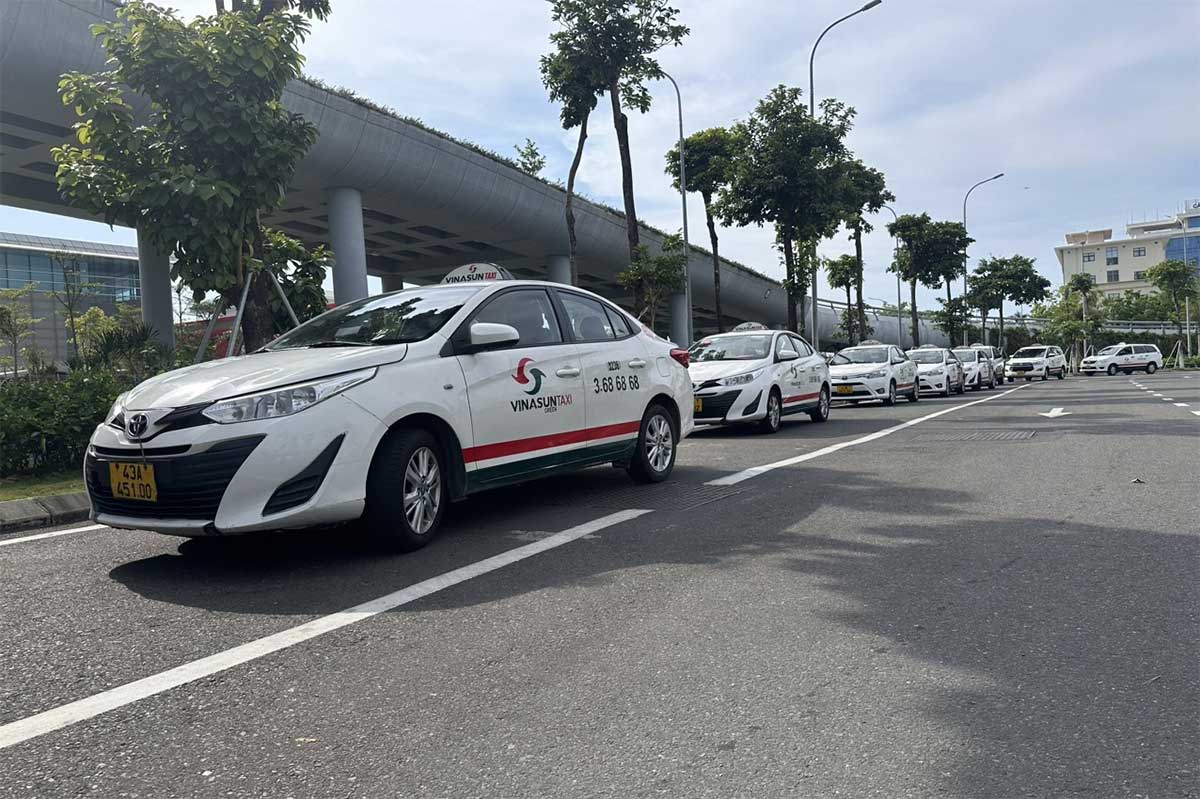
- Vinasun
Both use a meter and are generally considered trustworthy and professional.
How it works
- Take an official taxi from the airport, train station, or on the street
- Make sure the meter is running
- Clearly state your destination in Hoi An (hotel name + address)
- Payment is usually in cash (VND), though some taxis accept card
At the airport, taxis are waiting just outside the arrivals hall. At the train station, you’ll find them right outside on the street.
Cost
A taxi from Da Nang to Hoi An typically costs between 300,000 and 400,000 VND.
That’s roughly $12 to $16 USD, depending on the exchange rate and exact distance. The final price depends on your pickup point in Da Nang and your drop-off location in Hoi An.
Pros & Cons
Pros:
- Easy and directly available
- No internet needed
- Reliable when using recognized companies
Cons:
- Final price is only known at the end of the ride
- Slightly more expensive than some alternatives
Option 2: Ride-Hailing Apps (Taxi Apps)
A ride-hailing app lets you book a taxi through your smartphone. You’ll see the price upfront, along with the driver details and estimated arrival time. In Vietnam, this is one of the most popular ways to travel from Da Nang to Hoi An.
Most popular apps
- Xanh SM – Electric taxis, often slightly cheaper than other options. Less known among tourists but very popular with locals. Registration usually requires a Vietnamese phone number.
- Grab – The most widely used app among travelers, similar to Uber.
- Be – A Vietnamese alternative, often competitively priced.
How it works
- Download the app
- Make sure you have internet access (a local SIM card is very useful)
- Enter your pick-up and drop-off location
- You’ll see the price before booking
- Confirm the ride and track your driver in the app
At the train station, you’ll usually need to walk to the parking area or the street just outside.
At the airport, you often have to cross the road toward the parking area, as regular taxis are typically waiting directly in front of the terminal.
Cost
Average prices range between 250,000 and 350,000 VND (around $10 to $14 USD).
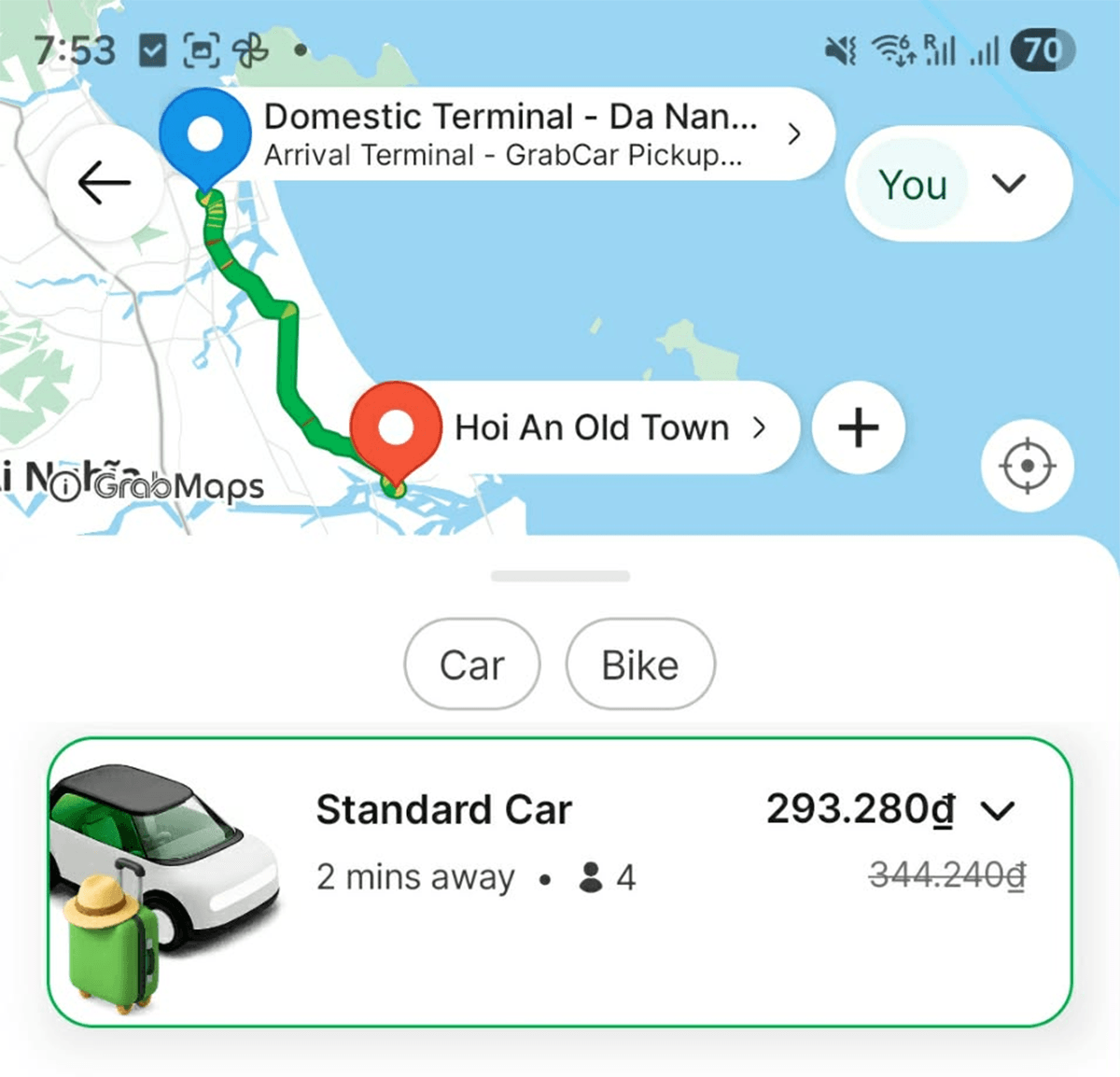
Ride-hailing prices can fluctuate more than regular taxis. During quieter times, they’re often cheaper. However, during peak hours or in bad weather, prices can increase and may even exceed a standard taxi fare.
Pros & Cons
Pros
- Price shown upfront
- Often cheaper than taxis
- No discussion about meter or fare
Cons
- Requires internet
- Some apps require a Vietnamese phone number
- Prices can rise significantly during busy periods
Option 3: Pre-Booked Transfer
A pre-booked transfer is a private ride that you arrange in advance. This is especially convenient if you’re arriving after a long flight and want a smooth, hassle-free trip from Da Nang to Hoi An.
How to book a transfer
- Through your hotel in Hoi An
- Via a local travel agency
- Through an online booking platform
Tip: If you book a full trip with Local Vietnam, a private car with driver to your hotel in Hoi An is often already included. In that case, someone will be waiting for you at the airport or train station holding a sign with your name.
Available options
- Private car with driver
- Shared hotel shuttle (you travel with other passengers)
Cost
Prices for a private transfer usually start from around 250,000 VND (approximately $10 to $11 USD).
Some higher-end resorts include transfers in their room rates, but in most cases, this is an additional service you pay for separately.
Pros & Cons
Pros
- No waiting or negotiating
- Fixed price agreed in advance
- Comfortable and stress-free
Cons
- More expensive than shared transport (bus or shuttle)
Option 4: Tourist Shuttle Buses (Minivans)
Besides taxis and ride-hailing apps, there are also shared tourist shuttle buses operating between Da Nang and Hoi An. These are comfortable minivans with fixed departure times, ideal if you’re looking for a more affordable yet still convenient transfer.
Shuttle providers
Well-known companies on this route include:
- Barri Ann Travel
- April Adventure
They run multiple departures per day between Da Nang Airport, the city center, and various locations in Hoi An (both the Old Town and beach areas).

How it works
- Book in advance online or through your hotel
- Choose a fixed departure time
- Get picked up at an agreed location (airport, train station, or hotel)
- In Hoi An, you’ll be dropped off at a central point or sometimes directly at your hotel
This is shared transport, so you’ll be traveling with other passengers. The vehicles are usually modern, air-conditioned minivans (typically 7–16 seats). Because of multiple pick-ups and drop-offs, travel time can be slightly longer than a private transfer.
Cost
Prices typically range between 120,000 and 250,000 VND per person (around $5 to $10 USD).
Transfers from the airport are usually a bit more expensive than those from Da Nang city center.
Pros & Cons
Pros
- Cheaper than a private transfer, especially for solo travelers
- Comfortable with air conditioning
- Fixed price known in advance
Cons
- Fixed departure times (less flexible)
- Possible waiting time for other passengers
- Longer travel time due to additional stops
Option 5: Local Bus from Da Nang to Hoi An
There is also a local public bus running between Da Nang and Hoi An. This is not a tourist shuttle, but regular public transport mainly used by locals. It’s the cheapest way to travel from Da Nang to Hoi An, but also less straightforward and less comfortable.

Where to get on
In Da Nang, you can board the bus at:
- Da Nang Central Bus Station (BX Trung Tam)
- Bus stops along the route in the city center, for example along Tran Phu Street
The bus does not run along the beachfront area in Da Nang, but follows an inland route.
In Hoi An, there is no large central bus station. The most common drop-off point is along Ly Thuong Kiet Street, within walking distance of the Old Town. The bus then continues toward Cua Dai Beach.
How it works
- Board the bus at a stop along the route
- Buy your ticket on board from the driver
- You’ll usually receive a paper ticket
- The journey takes around 1 hour
Bus stop signs are not always clear or up to date. The route is often referred to as LK-02, although some stops may still display older route numbers.
Cost
The fare is around 30,000–35,000 VND (approximately $1 to $1.50 USD).
Payment is in cash (Vietnamese dong). It’s helpful to have small bills, although exact change is usually not required.
Pros & Cons
Pros
- By far the cheapest option
- Regular departures
Cons
- Bus stops can be unclear
- No hotel drop-off
- Less comfortable than taxis or shuttles
- Can be confusing if you’re not familiar with the system
Best way to travel from Da Nang to Hoi An
Not sure what the best way is to travel from Da Nang to Hoi An? Below is a simple breakdown based on different travel styles and priorities.
Want maximum convenience and peace of mind?
Go for a pre-booked transfer. Especially after a long flight or train journey, this is the most relaxed option. Someone will be waiting for you with your name and take you directly to your hotel in Hoi An. No waiting, no price discussions, and no need to deal with apps or finding bus stops.
Prefer to arrange things on the spot and stay flexible?
Use a ride-hailing app like Grab or take an official taxi.
If you have a working SIM card with internet, an app is usually more transparent and sometimes cheaper.
If you don’t have internet or prefer not to use apps, a taxi is a simple and reliable alternative.
Traveling solo or on a smaller budget, but still want comfort?
Tourist shuttle buses are a great middle ground. They’re affordable, air-conditioned, and operate on fixed schedules. You’ll share the ride with other travelers, but it’s straightforward and more comfortable than the local bus.
On a very tight budget and don’t mind less comfort?
Then the local bus is the cheapest option. For around one dollar, you can get to Hoi An, but you’ll need to figure out where to board and be prepared for less comfort and limited signage.
In short:
- For convenience → pre-book a transfer
- For flexibility → taxi or ride-hailing app
- For saving money with comfort → shuttle bus
- For the lowest price → local bus