
Safety and scams in Vietnam
Is Vietnam safe for travelers?
Vietnam is considered one of the safest countries in Southeast Asia. Violence against tourists is extremely rare, and most trips go smoothly without any issues. The main risks for travelers are usually related to busy traffic, small scams, or simple misunderstandings about prices.
Read more about: is Vietnam safe?
Where do scams happen most?
Most scams occur in tourist areas where many international visitors travel. This includes major cities and popular destinations such as Hanoi, Ho Chi Minh City, Hoi An, and Nha Trang. This doesn’t mean these places are unsafe—simply that there are many visitors who may not yet be familiar with local prices and customs.
The reality of scams
It’s important to understand that the vast majority of Vietnamese people are honest and helpful. Many small business owners are simply trying to earn a living in busy tourist areas. A few negative experiences don’t mean that everyone is trying to scam you.
Common sense for travelers
With a bit of common sense, most scams are easy to avoid. A few simple tips:
- Check prices in advance whenever possible
- Use reliable apps or services
- Book tours and hotels through official websites or trusted platforms
- Be cautious with payments via social media or unknown accounts
Transport scams in Vietnam
Many of the most common scams in Vietnam are related to transport. Taxis and motorbike taxis, in particular, may sometimes try to charge higher prices than normal—especially in tourist areas where many new travelers arrive.
1. Taxis without meters or with manipulated meters
How it works
One of the most common scams in Vietnam involves taxis. Some drivers don’t use a meter at all, while others use a meter that runs much faster than normal. As a result, even a short ride can suddenly become much more expensive than expected.
How to avoid
Use reliable taxi companies such as Mai Linh Taxi and Vinasun Taxi. These companies use proper meters and have a long-standing reputation.
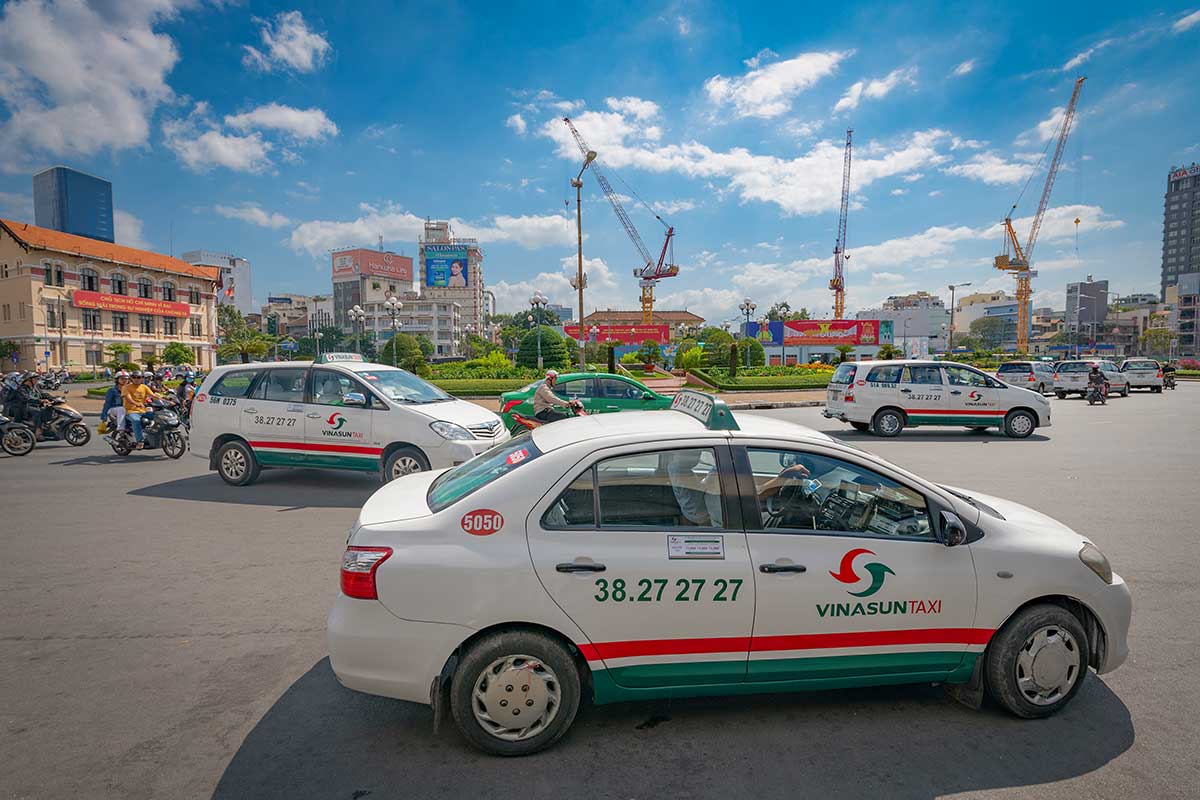
Read more tips about reliable taxis, how meters work, and what prices to expect: Taxi’s in Vietnam.
An even better option is to use Grab. This is the most popular ride-hailing app in Vietnam. You can book a car or motorbike taxi, see the price in advance, and avoid any discussion about fares.
If you’ve never used it before, read this guide: How does Grab work in Vietnam?
2. Fake taxis that look like real companies
How it works
In some tourist areas, you’ll see taxis that closely resemble well-known companies. They use similar colors or logos, making them look official. In reality, they belong to different operators who often charge higher prices.
Sometimes you’ll also see cars with stickers that look like Grab, even though they are not actually connected to the app.
How to avoid
Always double-check the company name and logo before getting in.
Even safer is to book your ride through Grab or arrange a taxi via your hotel or accommodation. This way, the ride is officially registered and the price is clear in advance.
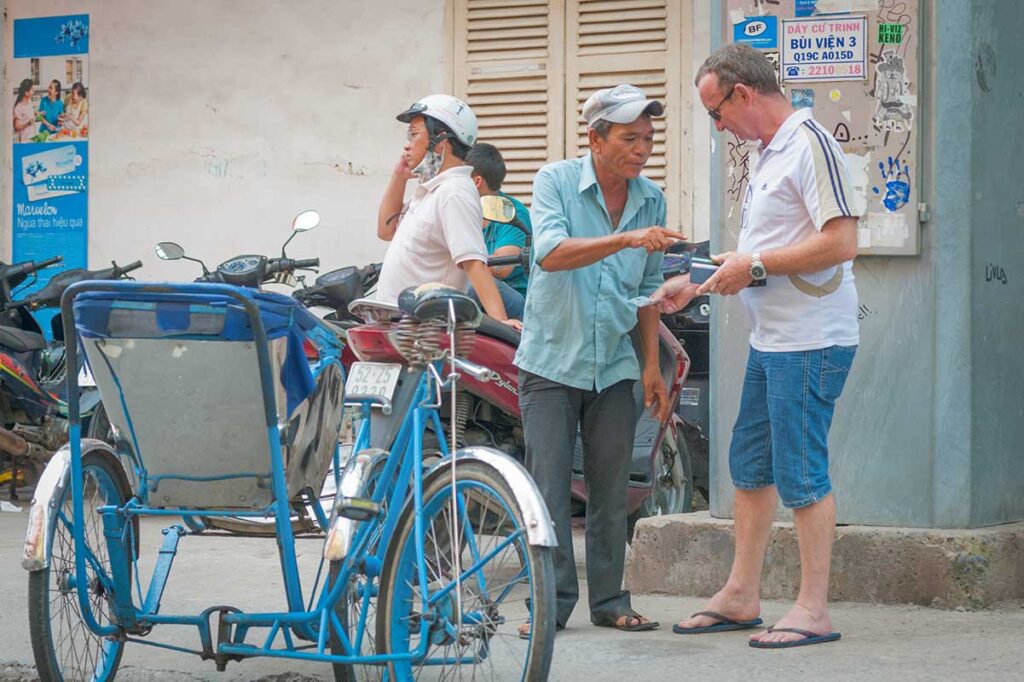
3. Motorbike taxi price changes after the ride
How it works
On the street, tourists are sometimes approached by motorbike taxi drivers offering a ride. The price sounds cheap at first, but after arriving, they suddenly demand a much higher amount.
How to avoid
The best solution is to avoid motorbike taxis that approach you on the street.
Always book your ride through GrabBike in the Grab app. You’ll see the price in advance, so there’s no discussion after the ride.
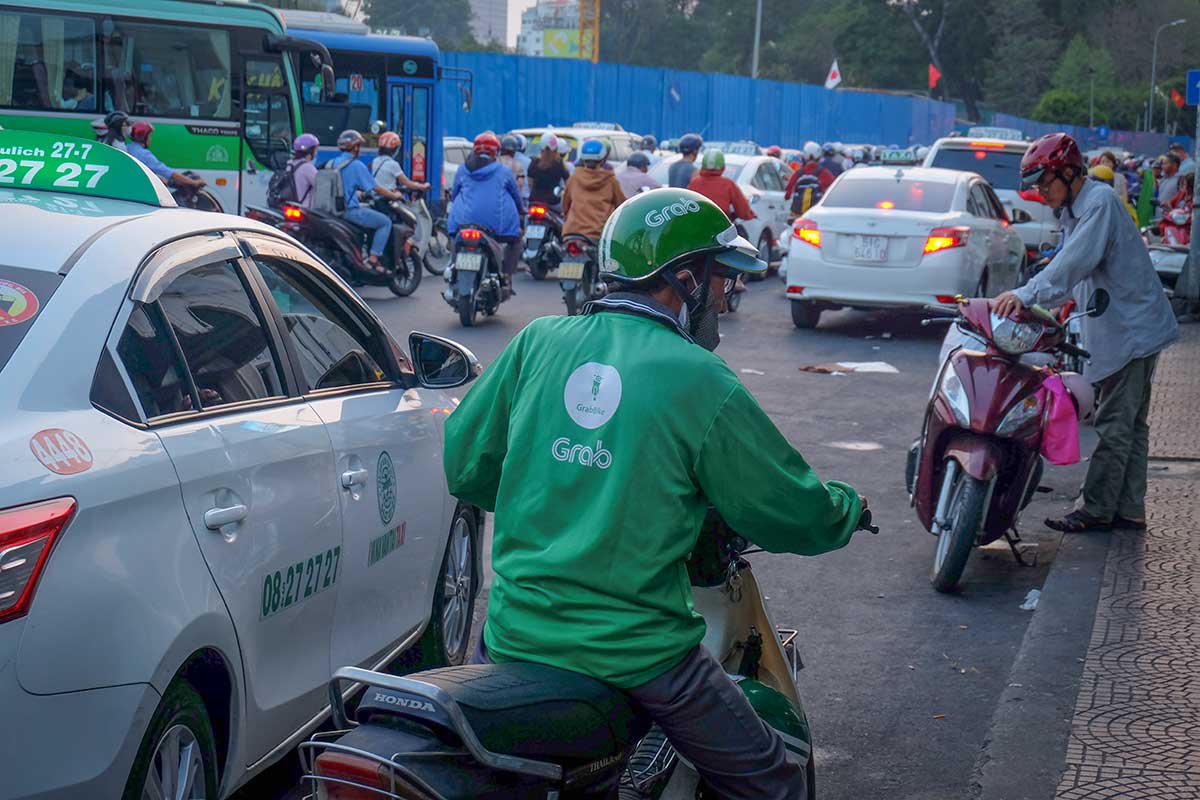
Apps like Grab make transport much easier and more transparent because the price is fixed beforehand. Always book through the app instead of negotiating directly on the street.
4. Motorbike rental scams
How it works
You rent a motorbike from a small rental shop. The price seems low, and everything appears fine.
When you return the bike, the owner claims there is damage that wasn’t there before. This can be small scratches or parts that were already worn or damaged.
They then ask you to pay for repairs, often at prices much higher than the actual damage.
How to avoid
- Take photos or videos of the motorbike before you leave
- Check for existing scratches or damage in advance
- Rent through your hotel or a provider with good reviews
- Never leave your passport as a deposit
Street scams in Vietnam
Some smaller scams in Vietnam happen on the street, usually in busy tourist areas. These situations often involve someone offering you something you didn’t ask for, followed by a request for money afterward.
5. Shoeshiners who start without asking
How it works
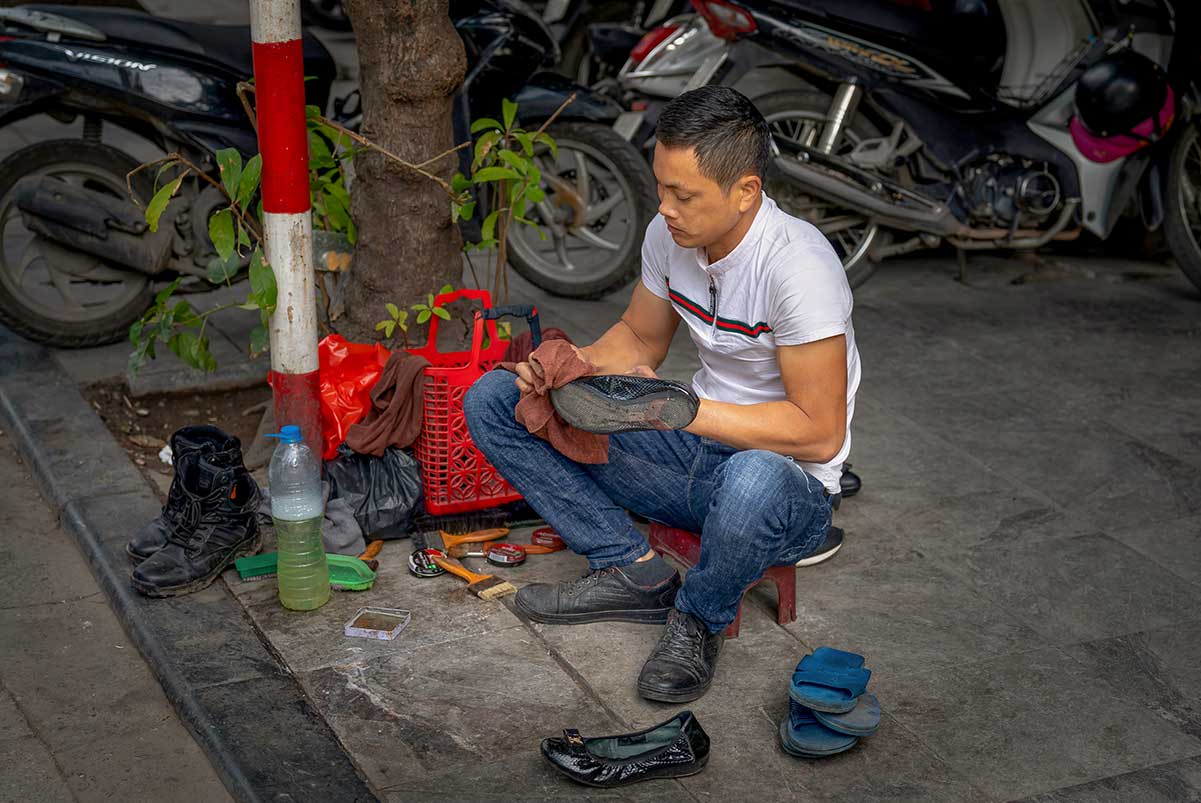
In some tourist areas, especially in Hanoi, shoeshiners walk around offering to clean your shoes. Sometimes they even start polishing before you’ve clearly agreed.
Once the shoes are cleaned, they may suddenly ask for a high price.
How to avoid
The easiest solution is to clearly say “no thank you” and keep walking.
Don’t stop or let anyone touch your shoes if you don’t want the service. Once they’ve started, it can be harder to stop the situation.
6. Fruit sellers and the photo trick
How it works
In tourist areas like Hanoi or Hoi An, you may see fruit sellers carrying traditional baskets on a shoulder pole. They sometimes offer to let you try it for a photo.
It often seems like a friendly gesture, but afterward they may ask for money. This can also happen with other props or items used for photos.

How to avoid
If you want to take a photo, always ask beforehand if there is a price.
If you’d rather avoid any risk, it’s easiest to politely decline the offer.
7. Bracelet or “free souvenir” trick
How it works
Sometimes someone on the street gives you a small souvenir or bracelet and says it’s a gift. Once you accept it, they ask for money anyway.
Because the item is already in your hand, some travelers feel pressured to pay.
How to avoid
Don’t accept items from strangers on the street if you don’t intend to buy anything.
A simple “no thank you” and continuing to walk is usually enough to avoid the situation.
Online and booking scams in Vietnam
Not all scams happen on the street. Some take place online, for example through social media or websites that appear to represent legitimate businesses. Especially when booking accommodation, tours, or transport in advance, it’s important to carefully check who you’re dealing with.
8. Fake hotel Facebook pages
How it works
Scammers sometimes create Facebook pages that closely resemble the official page of a hotel. These pages can look convincing, with photos, reviews, and sometimes even a large number of followers. In some cases, they are also promoted through ads on Facebook.
When you contact them via Messenger, they offer to reserve a room for you and then ask for a deposit. After payment, the booking simply doesn’t exist.
How to avoid
Always book accommodation through reliable channels, such as:
- The hotel’s official website
- Platforms like Booking.com or Agoda
Be cautious with reservations made through social media. Never send payments via Messenger or through unknown payment methods that are not linked to a confirmed booking.
9. Fake travel agencies online
How it works
Some websites appear to be professional travel agencies but are actually fake. The site may look well-designed, with photos, tours, and contact details, but the tour either doesn’t exist or turns out to be completely different from what was promised.
In some cases, the company disappears after receiving payment.
How to avoid
Always check a few key things before booking a tour:
- Read reviews on multiple platforms
- Verify if the company has a real location on Google Maps
- Check if the company is mentioned on other websites outside its own
Also be careful with payment methods. Transfers through services like Western Union usually offer little to no protection if something goes wrong.
Travel scams
Besides small street scams, some issues can also arise when booking tours or transport. In most cases, this isn’t outright fraud, but rather situations where travelers end up paying far too much or receive incorrect or unclear information.
10. Tour agencies charging inflated prices
How it works
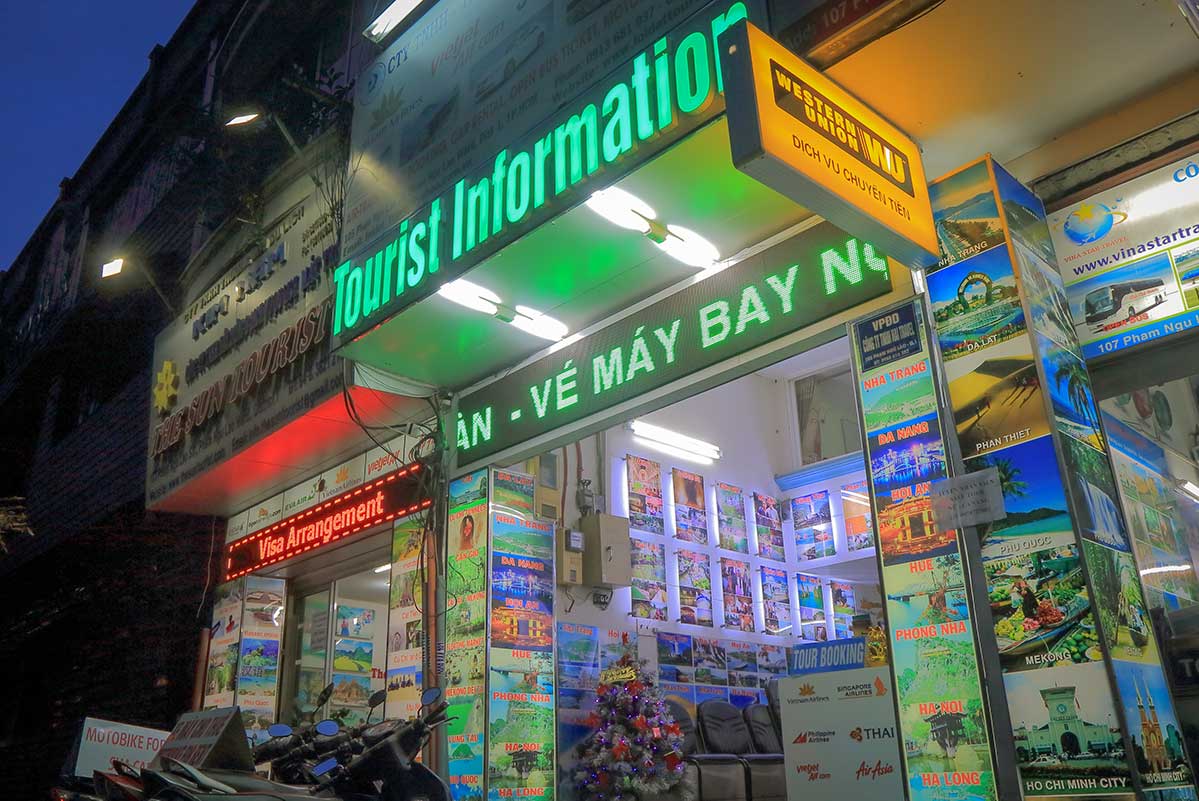
In tourist areas, especially around backpacker streets, you’ll find many small travel agencies selling tours. The tours themselves are usually real, but prices can sometimes be two to three times higher than normal.
This mostly happens when travelers book something on the spot without comparing prices first.
How to avoid
Always check online what a typical price is before booking a tour.
Also read reviews of the agency beforehand. This quickly gives you an idea of whether other travelers had good experiences and whether the prices are reasonable.
11. Bus tickets that don’t exist
How it works
Bus tickets are sometimes sold through small ticket offices or middlemen. In some cases, the ticket turns out to be invalid, or the bus doesn’t run as promised.
This doesn’t happen often, but it can occur when booking through unreliable sellers.
How to avoid
Book bus tickets through reliable channels, such as:
- Platforms like 12Go Asia
- The official website of the bus company
- Your hotel or accommodation
These options are generally more reliable and make it easier to resolve issues if something goes wrong.
12. “Closed attraction” scam
How it works
With this scam, someone tells you that a popular attraction is closed, for example due to a holiday or renovation. They then offer to take you somewhere else, such as a shop, souvenir store, or an expensive tour.
In reality, the attraction is often open as usual.
How to avoid
Check the opening hours of attractions yourself before you go.
Don’t rely on random people on the street who claim something is closed and offer alternatives. It’s usually better to go to the entrance yourself and verify the situation there.
Shops and money-related scams
In shops and markets, you may occasionally come across situations where tourists pay slightly more than locals. In most cases, this isn’t really a scam, but rather small price differences or simple misunderstandings.
13. Incorrect change
How it works
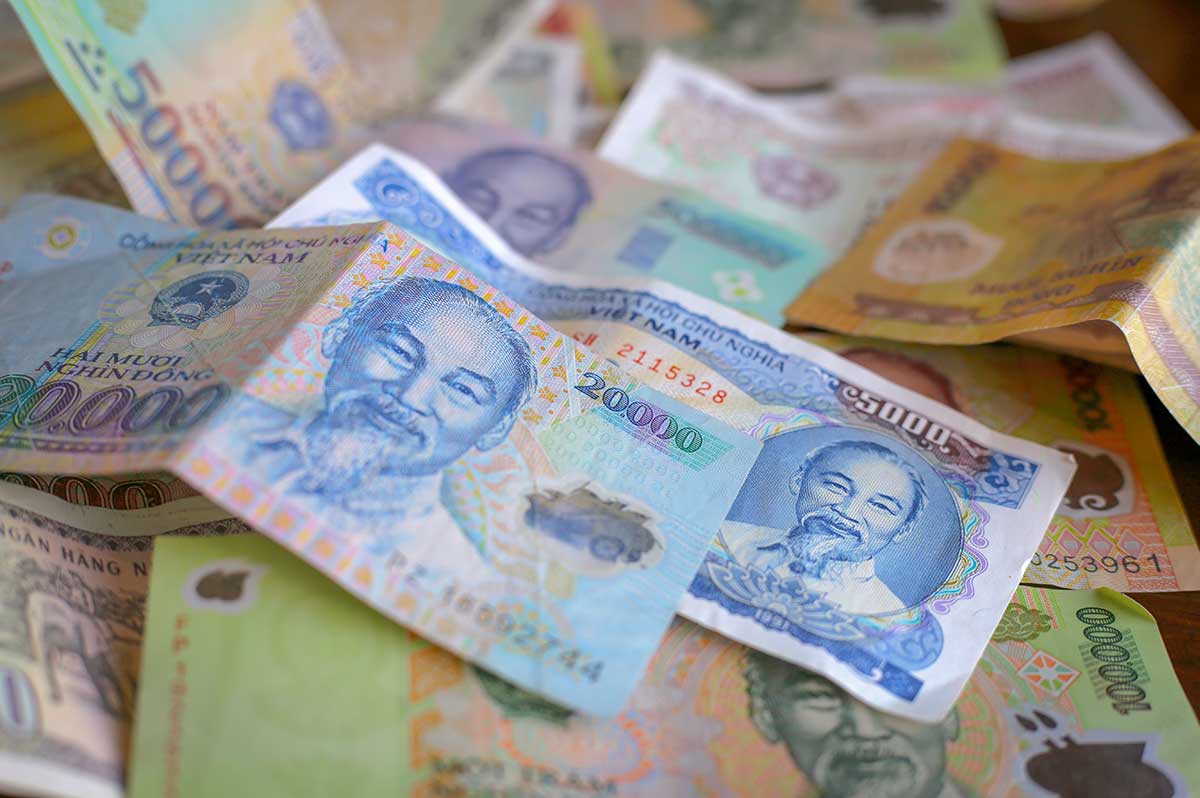
Vietnamese banknotes can look quite similar in color, which can be confusing for new travelers. Some of the larger denominations in particular are easy to mix up.
Because of this, you might receive the wrong amount of change—sometimes simply because a different note is handed back by mistake.
How to avoid
Always take a moment to check your change before walking away.
It also helps to become familiar with the most commonly used Vietnamese banknotes so you can quickly recognize if the amount is correct.
14. Prices without clear labeling
How it works
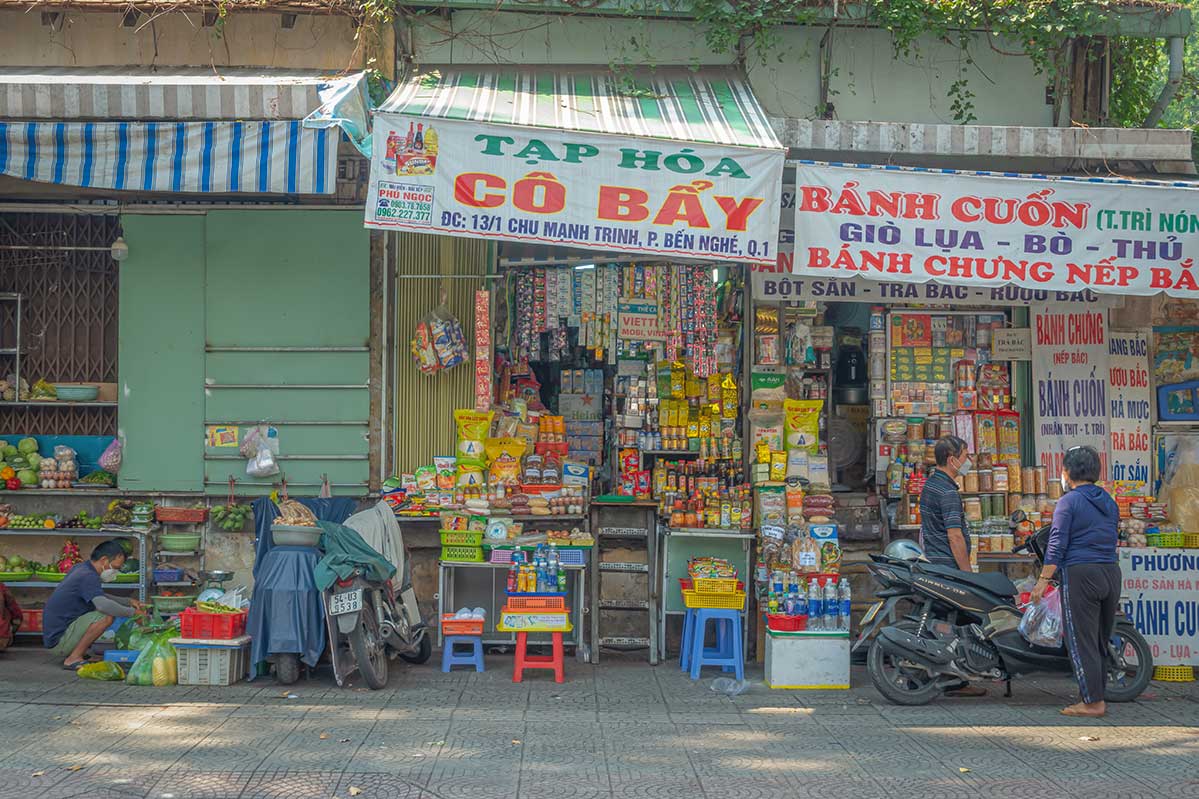
At local markets, small shops, or street food stalls, prices are not always clearly displayed. As a result, tourists may sometimes be charged slightly more than locals.
In practice, the difference is usually small. For example, a sandwich that costs 20,000 VND for a local might be 30,000 VND for a tourist. While not entirely fair, the difference is often only a small amount.
How to avoid
If you want to make sure you’re paying the same price, simply ask for the price before ordering.
That said, many travelers choose not to worry too much about this. The difference is often less than a dollar, and for many small business owners, it can make a small but meaningful difference in their daily income.
How to easily avoid scams in Vietnam
While small scams do exist, they are usually easy to avoid. With a bit of preparation and common sense, you can prevent most situations before they happen.
A few practical tips:
- Use apps like Grab for taxis and motorbike taxis
- Check reviews before booking tours or accommodation
- Book through official websites or trusted platforms whenever possible
- Be cautious with payments via social media
- Ask for prices in advance if they are not clearly displayed
By following these simple steps, you can avoid most situations where travelers end up overpaying or being misled.
What to do if you get scammed in Vietnam
With the tips in this guide and a bit of common sense, most scams are easy to avoid. For most travelers, that’s already enough. But if it does happen, there are a few steps you can take.
Stay calm and try to resolve it on the spot
Many situations are the result of miscommunication about prices. Try to calmly explain what you believe was agreed upon. In some cases, the issue is resolved once both sides clarify what happened.
Collect information
If a larger amount of money is involved, it helps to gather some details, such as:
- A photo of the taxi’s license plate
- The name of the company
- The location where it happened
- A receipt or proof of payment
Try to do this discreetly.
Contact the tourist police
Vietnam takes its reputation as a safe travel destination seriously. When tourists are clearly scammed, it is often taken seriously. In larger cities, you can contact the tourist police or a local police station.
This is mainly useful for larger amounts, for example in cases involving taxis, tours, or transport.
Report it to the platform or company
If you booked through an app or website, you can often report the issue there as well. Companies such as transport apps, booking platforms, or hotels may be able to help resolve the situation.
Leave an honest review
For smaller amounts, many travelers choose to move on. In that case, it can still help to leave an honest review on platforms like Google Maps or booking websites. This helps other travelers make better-informed decisions.
Be fair and careful when doing this, and only leave a negative review if you’re sure that something actually went wrong.
Conclusion: don’t let scams ruin your trip
Small scams do occur in Vietnam, but they are usually easy to recognize and avoid. With a bit of awareness and common sense, you’ll already prevent most situations.
The most important thing is that after reading this guide, you don’t feel like everyone is trying to scam you. The vast majority of Vietnamese people are friendly, honest, and helpful, and most travelers have overwhelmingly positive experiences.
By simply being aware of a few common situations and using common sense, you can travel through Vietnam with confidence—without constantly worrying about scams.