South Vietnam is the most dynamic and diverse region of the country, shaped by major cities, fertile river landscapes, and a tropical coastline. It feels fast-paced and modern in some areas, while remaining deeply rural and traditional in others, especially outside the main urban centers. In this guide, you’ll find an overview of South Vietnam, including background context, places to visit in South Vietnam, how to get around, airports, travel planning, and the best time to visit.
The dry season from December to April usually offers the most stable weather. Traveling during the rainy season (May to November) is also very doable, as rain often comes in short, heavy showers.
With 4–5 days, you can combine Ho Chi Minh City with a short Mekong Delta trip. For South Vietnam as a region, 7–10 days is a good guideline.
Well-known destinations include Ho Chi Minh City, the Mekong Delta, Phu Quoc, Con Dao, and Mui Ne.
South Vietnam mainly consists of flat river landscapes, tropical islands, and coastal areas. The Mekong Delta is known for its rivers, canals, rice fields, and fruit orchards.
Ho Chi Minh City is the main transport hub of South Vietnam, with many flights, buses, and connections to other regions.
South Vietnam is safe to travel in. The biggest challenge for most travelers is the busy traffic in Ho Chi Minh City.
Distances are relatively short and the terrain is flat, so travel is generally quicker than in the mountainous regions of North Vietnam.
South Vietnam is defined by contrast. The region is home to Ho Chi Minh City, Vietnam’s largest and most economically active city, while just a few hours away you’ll find quiet river villages, rice paddies, and floating markets in the Mekong Delta. Along the southern coast and offshore islands, the pace slows again, with beach destinations, fishing communities, and warm year-round temperatures shaping daily life.
Historically, South Vietnam developed differently from the north. It was more strongly influenced by trade, migration, and later colonial and wartime history, which helped shape its open, outward-looking character. The Mekong Delta, often referred to as Vietnam’s “rice bowl,” has long been vital to the country’s food supply and economy, while Ho Chi Minh City grew into a commercial hub that continues to attract people from all over Vietnam.
Today, South Vietnam is often seen as the easiest region to travel in. Infrastructure is generally good, distances between major destinations are manageable, and the tropical climate makes it a year-round destination. Whether you’re interested in urban life, river culture, or island escapes, South Vietnam offers a broad introduction to the country’s modern identity alongside its agricultural and coastal roots.
This map of South Vietnam shows the most popular places to visit in South Vietnam and helps you understand the scale of the region and how destinations relate to each other.
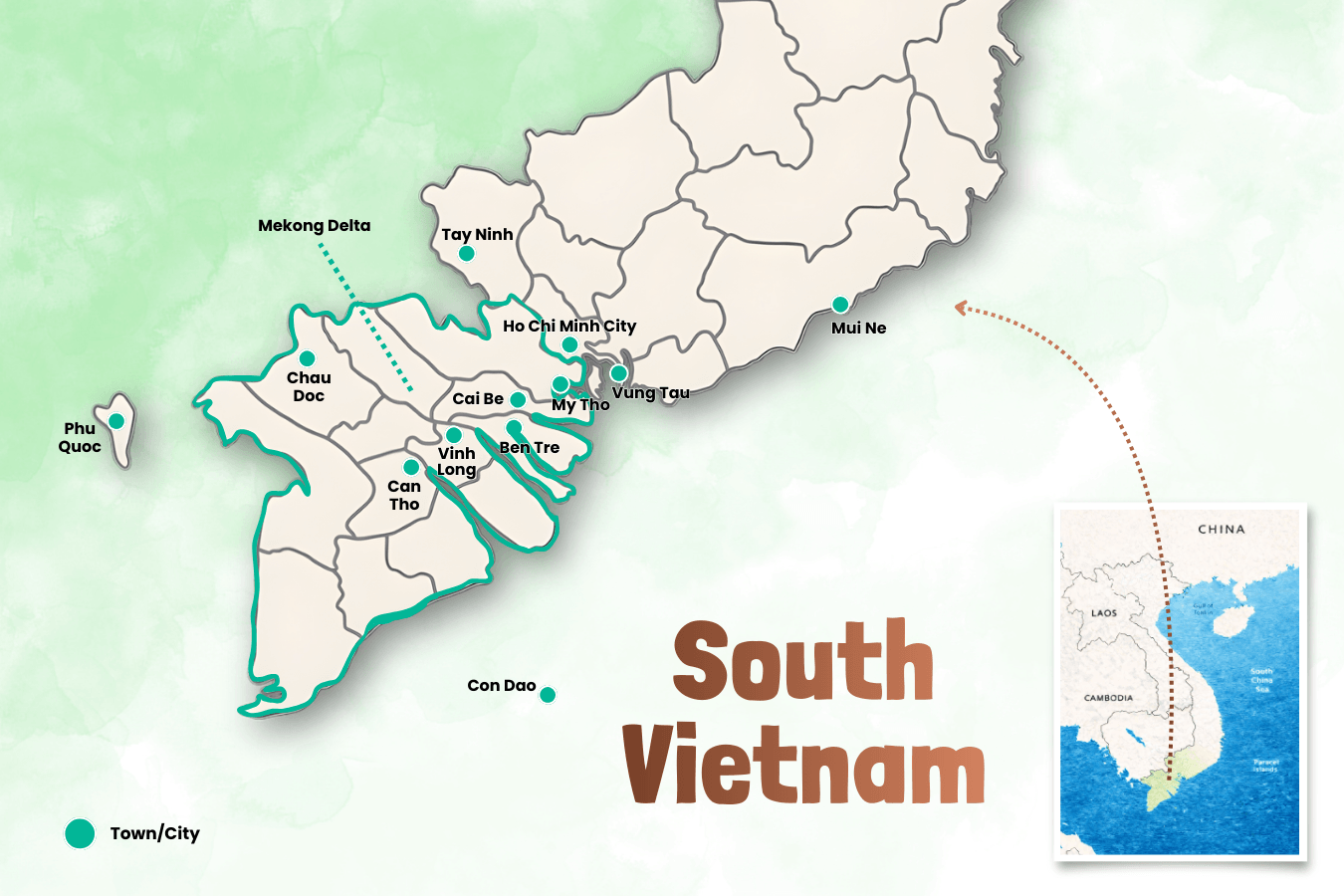
South Vietnam offers a wide mix of destinations, from fast-paced cities to quiet islands and remote national parks. The places to visit in South Vietnam below are selected based on popularity, unique experiences, and how well they represent the region’s diversity, making them especially useful for first-time and returning travelers.
Ho Chi Minh City is Vietnam’s largest city and the economic heart of the country, known for its energy, density, and constant movement. It blends modern skyscrapers with historic districts, colonial architecture, and neighborhoods that still feel very local. For many travelers, it’s the main gateway to South Vietnam and a key starting point for exploring the region.
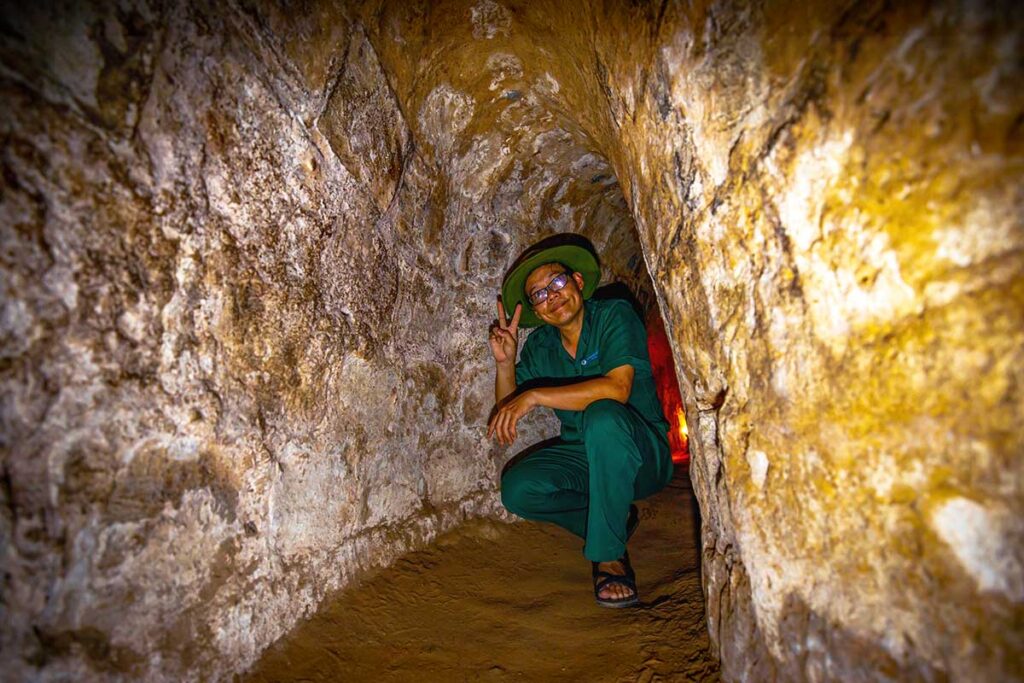
Visit the Cu Chi Tunnels to understand how the underground tunnel network was used during the Vietnam War just outside Ho Chi Minh City.
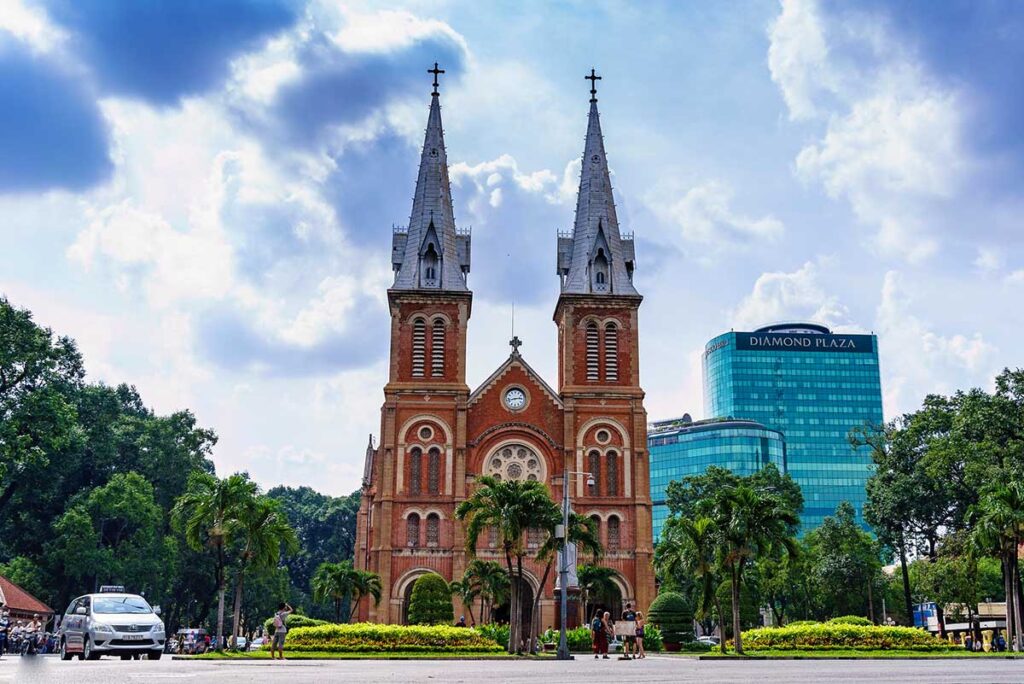
See Ho Chi Minh City’s French colonial history through landmarks like Notre Dame Cathedral, the Central Post Office, the Opera House, and City Hall.
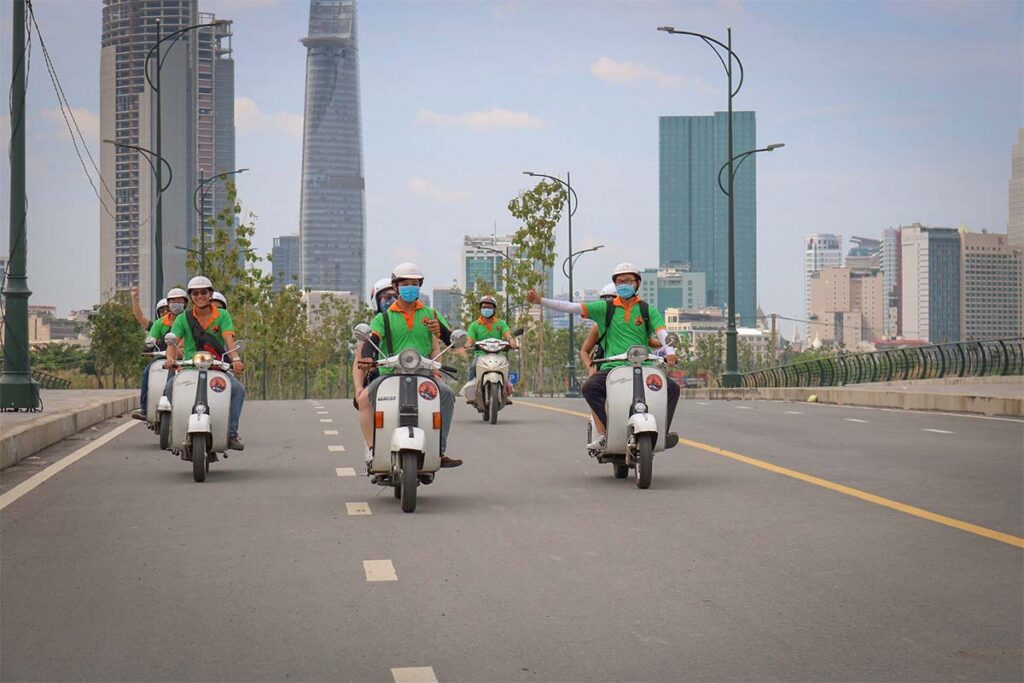
Experience Ho Chi Minh City on the back of a motorbike with a sightseeing tour, local culture tour, or a motorbike street food tour.
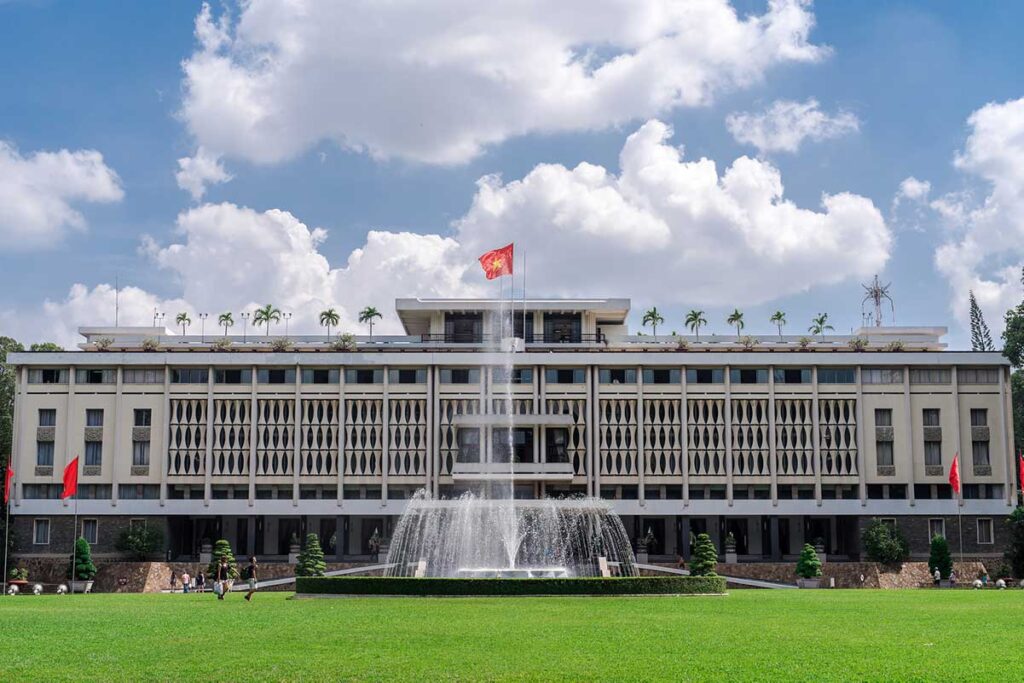
Visit the Reunification Palace and the War Remnants Museum to learn about the Vietnam War from a South Vietnamese perspective.
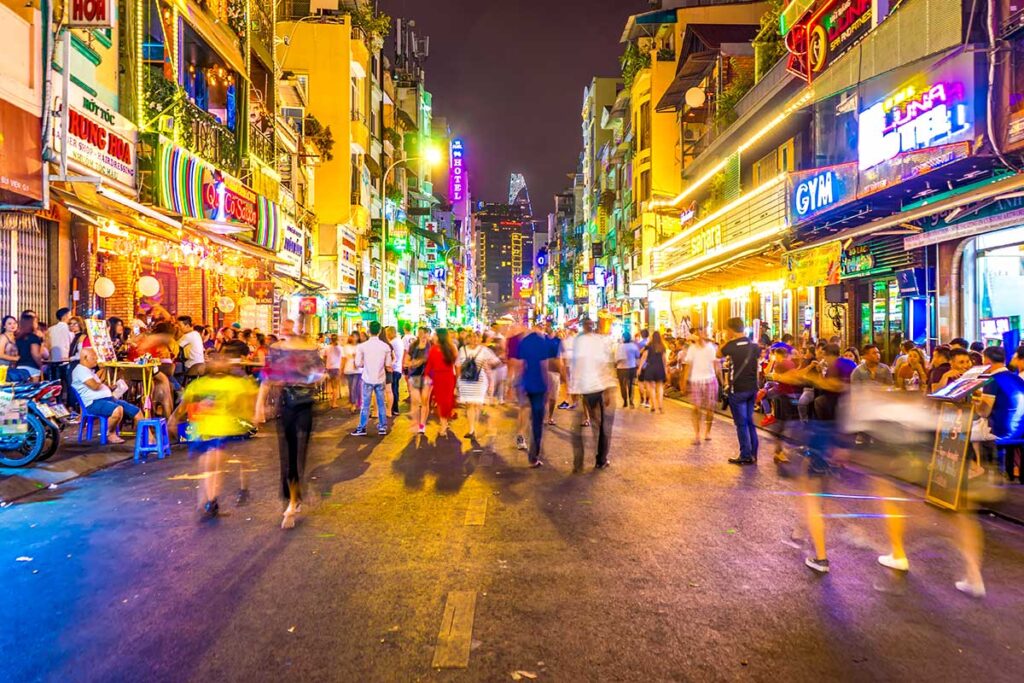
Enjoy Ho Chi Minh City nightlife around rooftop bars, live music venues, Bui Vien Street, and late-night local eateries.
The Mekong Delta is a vast river region in southern Vietnam, defined by waterways, rice fields, floating villages, and daily life shaped by the Mekong River. Instead of one single destination, most travelers explore the Mekong Delta through a combination of towns and cities, each offering a different perspective on river life.
Can Tho is the largest city in the Mekong Delta and acts as the main transport and accommodation hub for exploring the region.
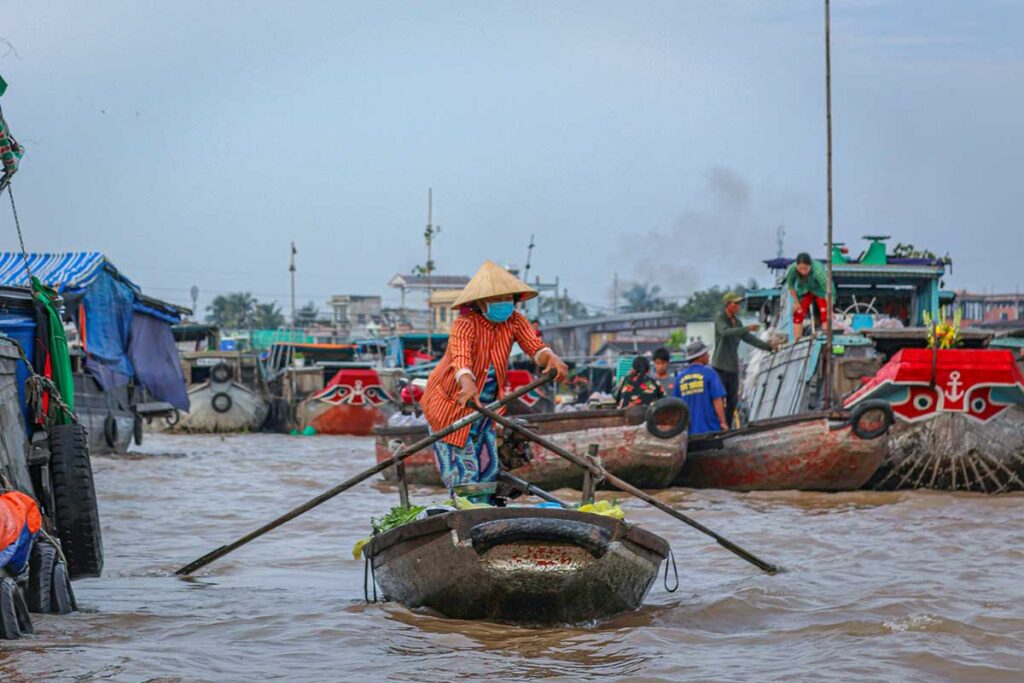
Experience Can Tho floating markets, including Cai Rang Floating Market, where traders sell goods directly from boats in the early morning.
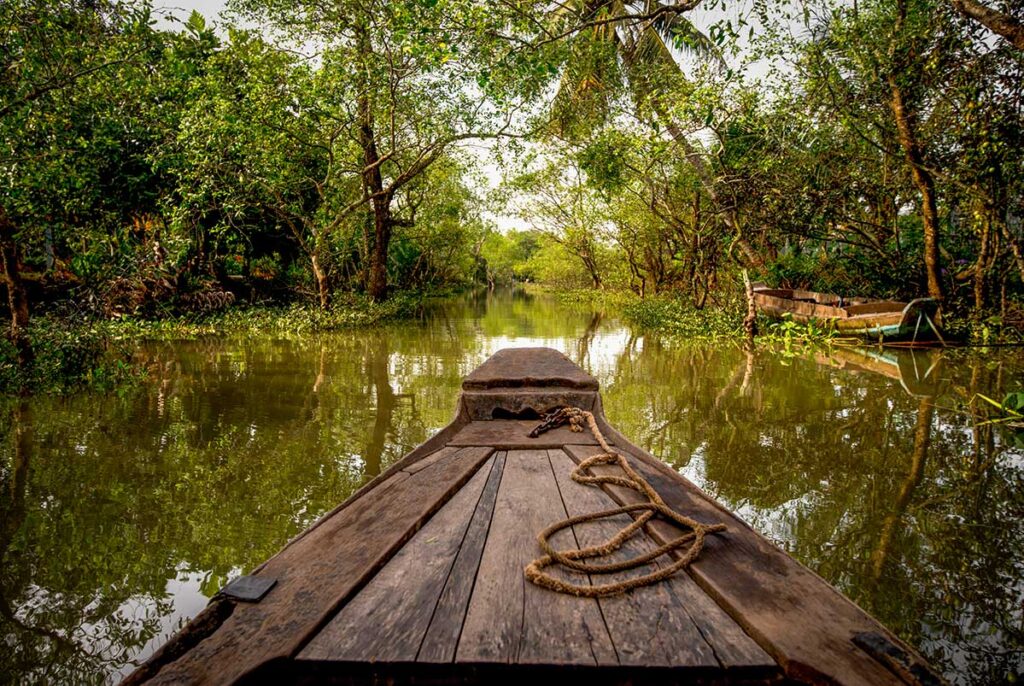
Take boat trips through Can Tho’s countryside to visit fruit orchards, canals, and small riverside villages.
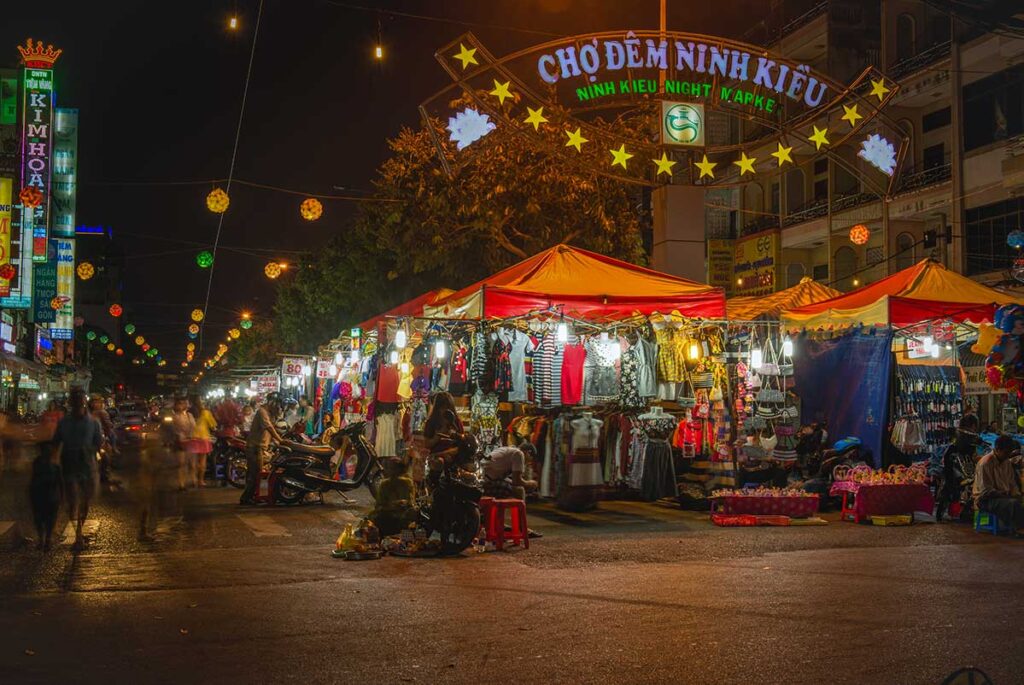
Explore Can Tho city highlights such as Ninh Kieu Wharf, local pagodas, and the Can Tho night market.
Ben Tre is a quieter Mekong Delta province known for coconut plantations, narrow canals, and rural village life.
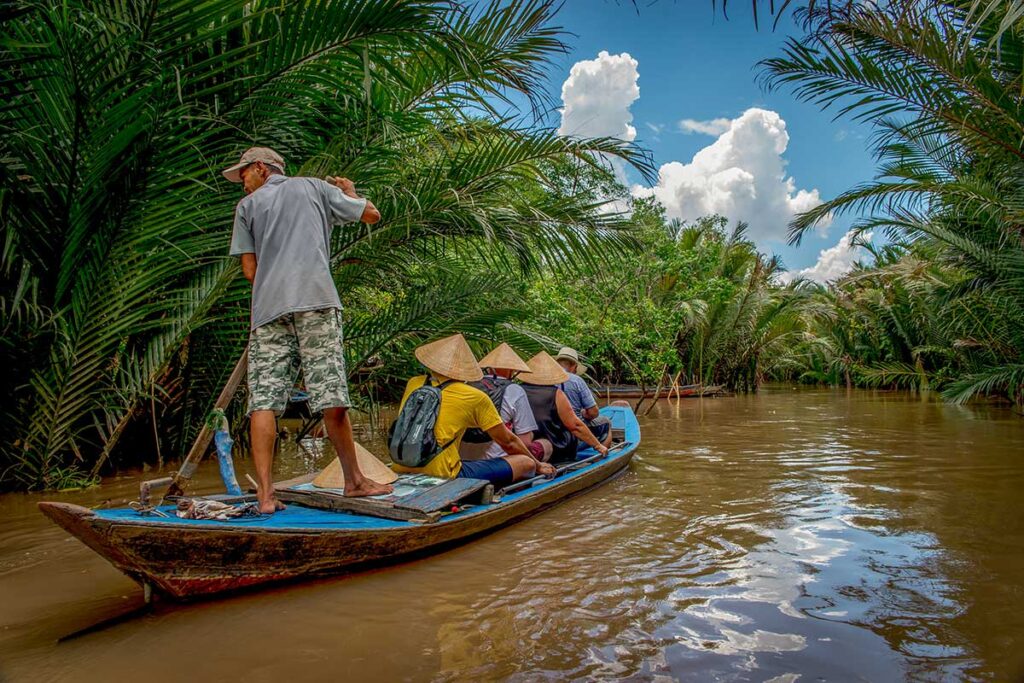
Take a boat trip through the coconut canals of Ben Tre.
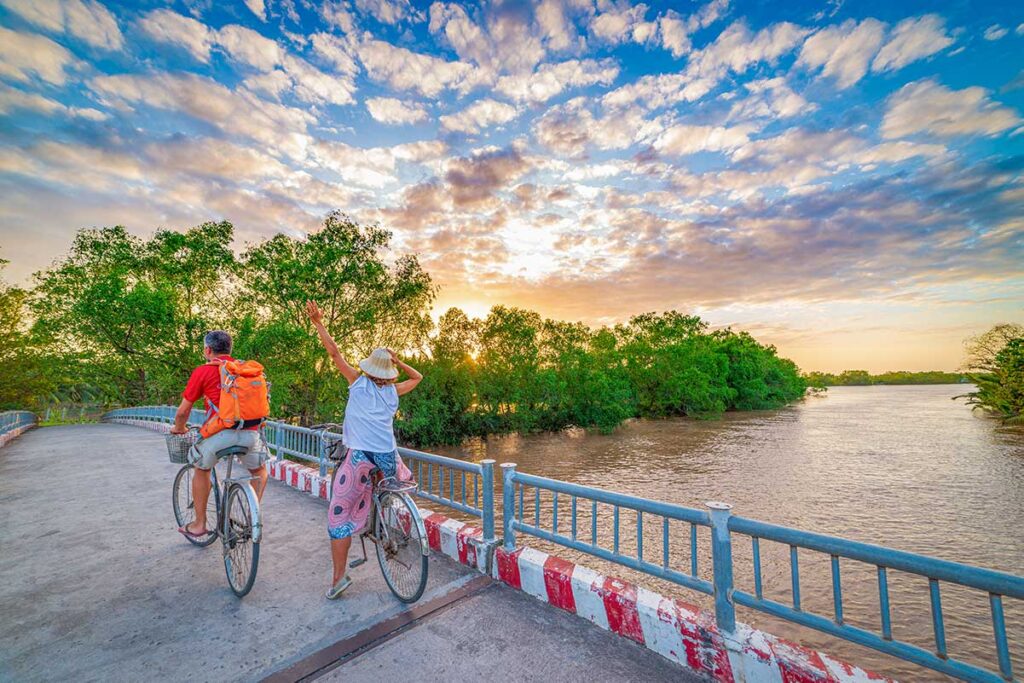
Explore the countryside of Ben Tre by bicycle, passing rice fields and small villages.
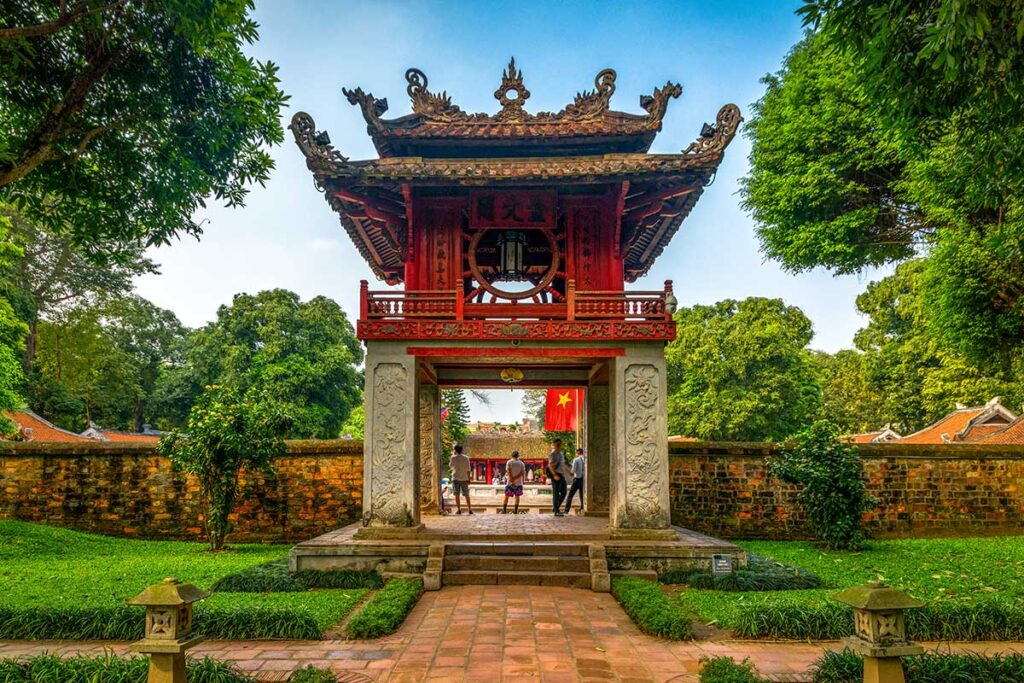
Explore the countryside of Ben Tre by bicycle, passing rice fields and small villages.
My Tho is one of the closest Mekong Delta destinations from Ho Chi Minh City and a popular starting point for day trips.
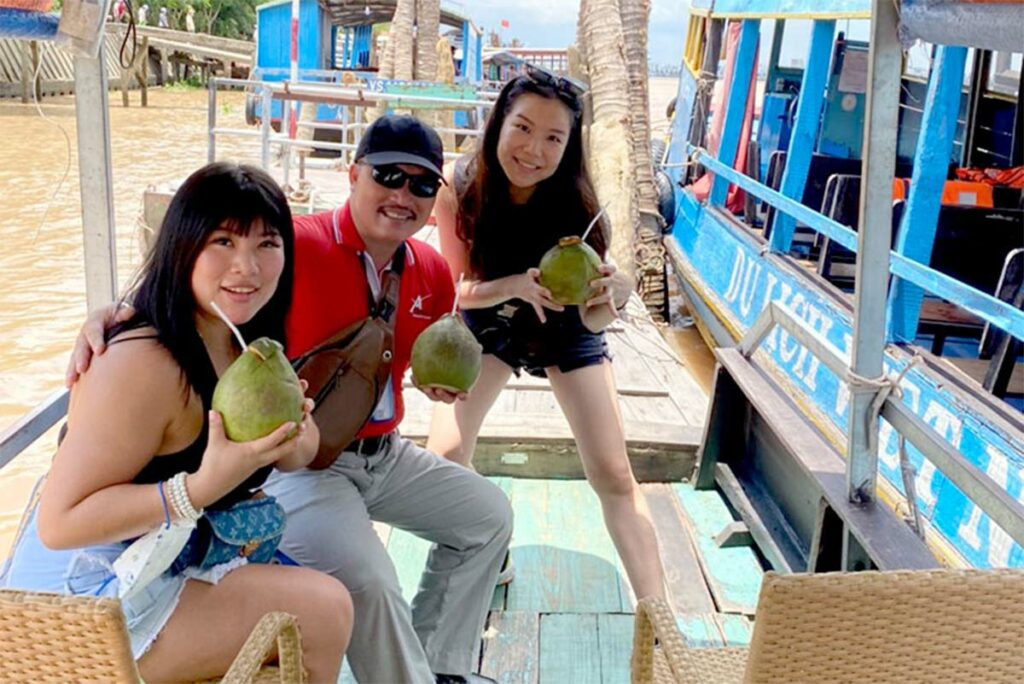
Take a boat trip to islands in the Mekong River such as Thoi Son Island.
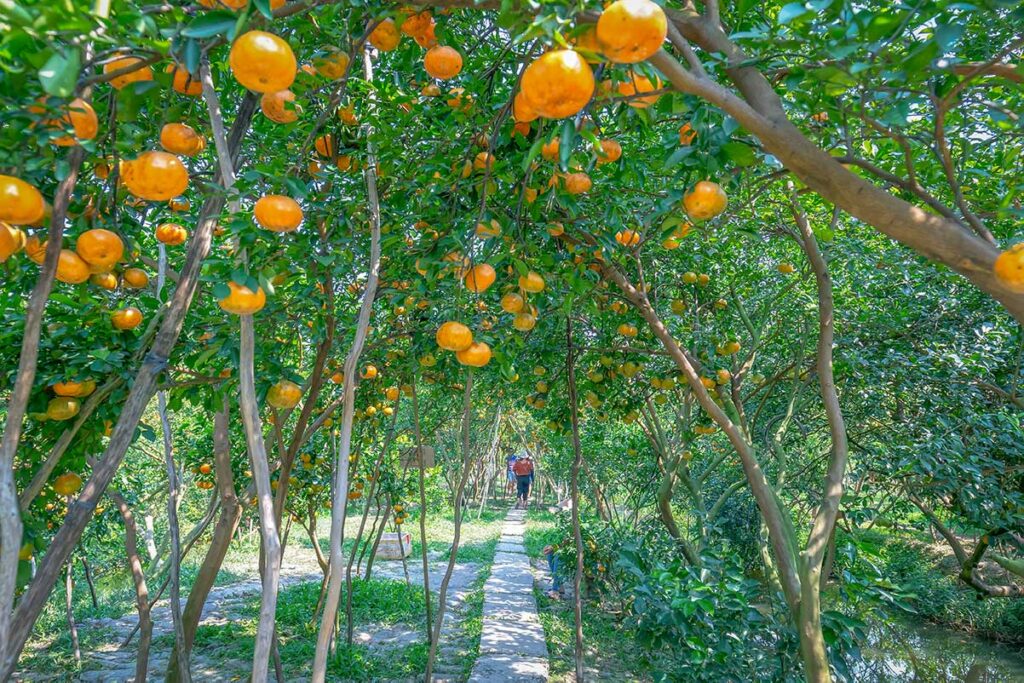
Visit fruit orchards and honey farms around My Tho.
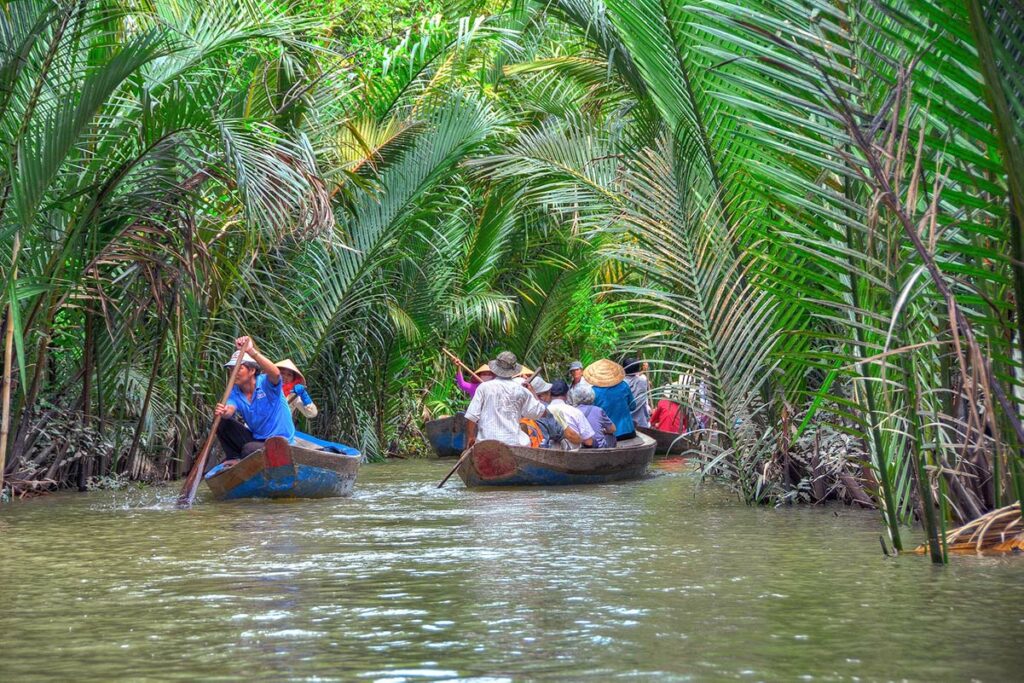
Explore narrow canals by sampan boat to experience daily river life up close.
Chau Doc is located near the border with Cambodia and has a strong mix of Vietnamese, Khmer, and Cham cultures.
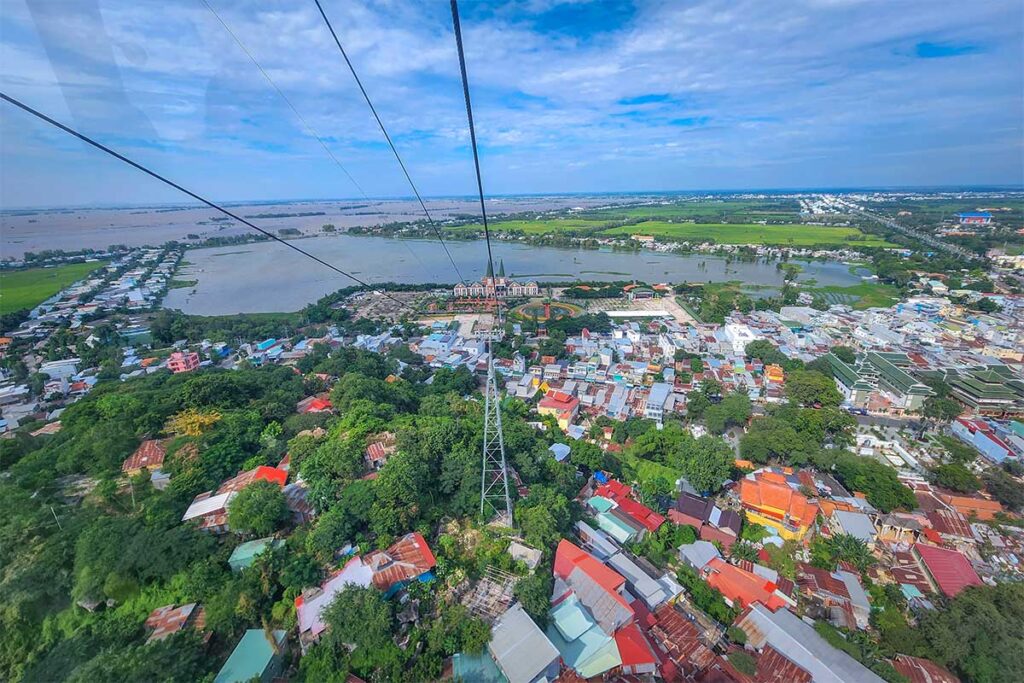
Visit Sam Mountain, with temples and views over the Mekong Delta.
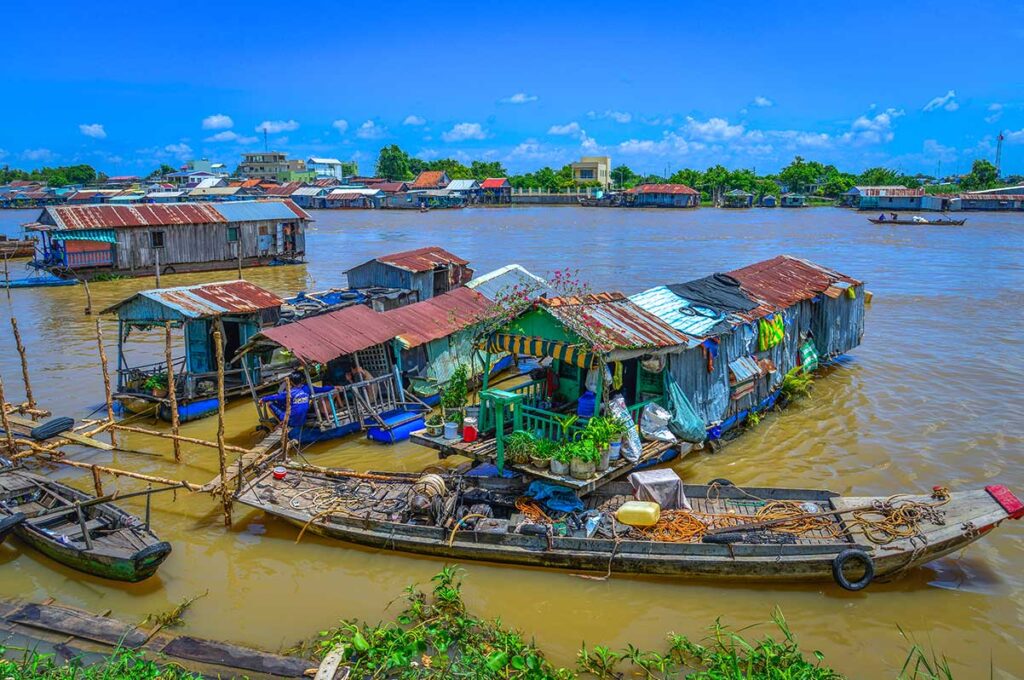
Discover floating villages around Chau Doc, where houses and fish farms are built on the water.
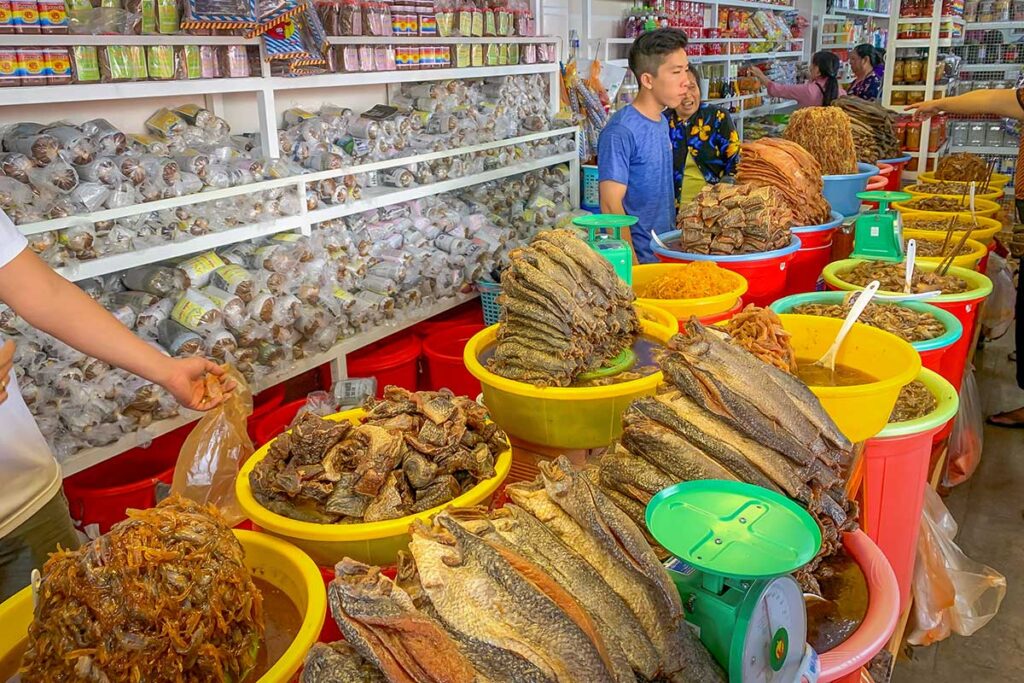
Explore Chau Doc market and local temples in the town.
Tip: Want to explore the Mekong Delta properly? Take a look at our Mekong Delta tours, including boat trips, local villages, and overnight stays in the region.
Phu Quoc is Vietnam’s largest island, located off the southern coast near the Cambodian border. It’s known for its beaches, resorts, and laid-back atmosphere, while still offering a growing number of attractions inland. Phu Quoc appeals to travelers looking for relaxation mixed with easy excursions and modern comforts.
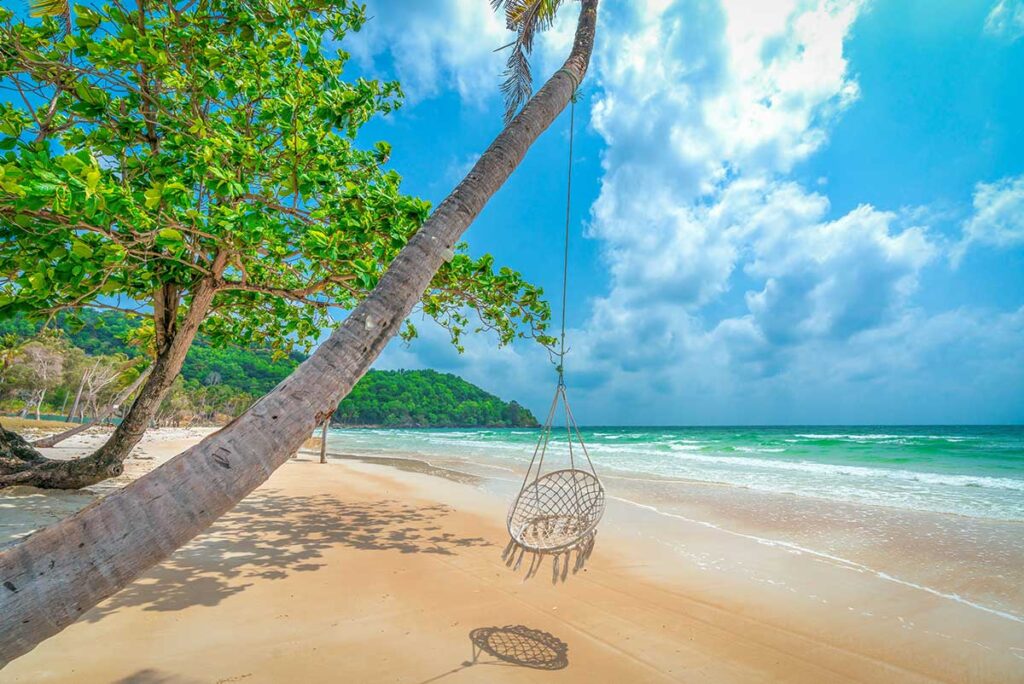
Spend time on Phu Quoc beaches like Long Beach, Sao Beach, and Ong Lang Beach for swimming and sunset views.
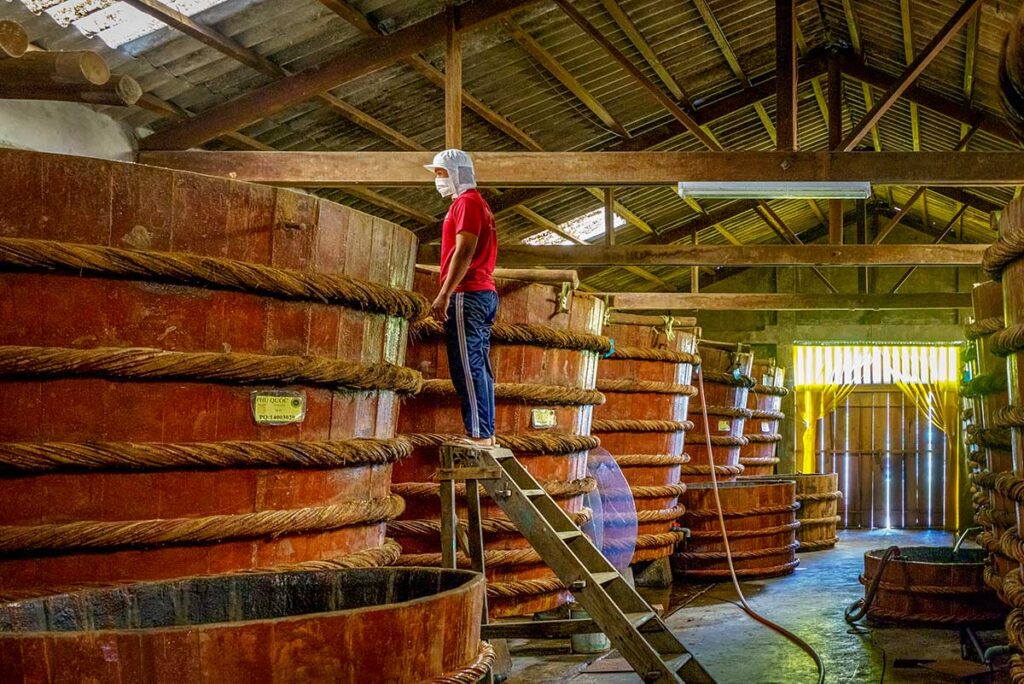
Discover Phu Quoc inland by visiting pepper farms, fish sauce factories, Phu Quoc Prison, and waterfalls.
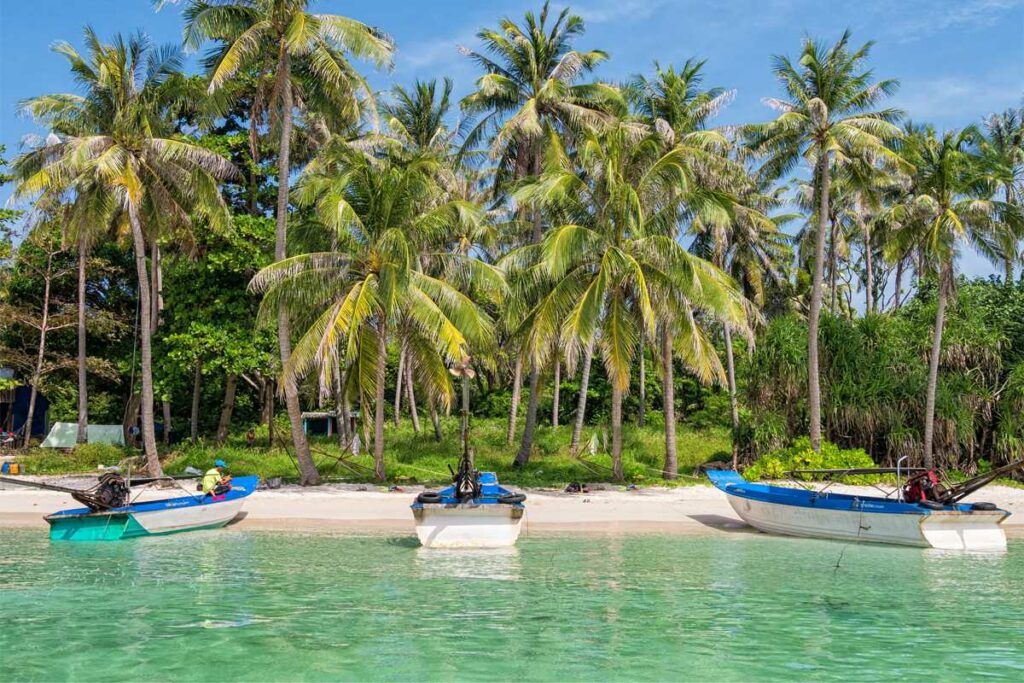
Join island hopping and snorkeling tours around Phu Quoc to explore smaller islands and coral reefs.
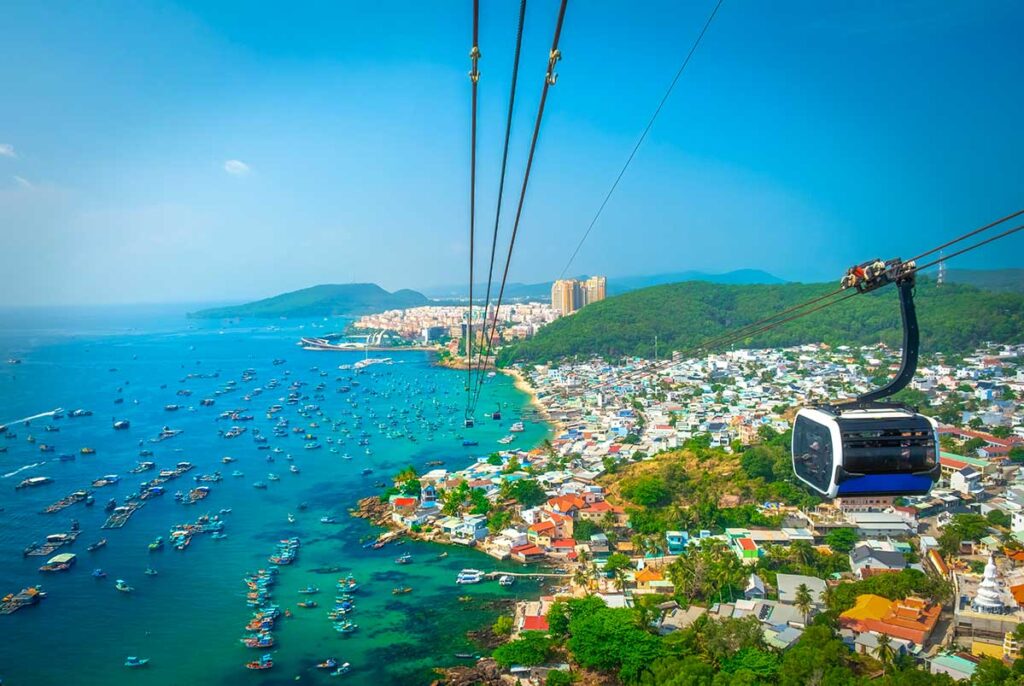
Experience Phu Quoc attractions such as VinWonders, Vinpearl Safari, the Hon Thom cable car, and water parks.
Go diving around Phu Quoc to explore coral sites suited for beginners and certified divers.
Tip: Want to explore the island in more depth? Check out our Phu Quoc tours, including island hopping, snorkeling trips, and excursions around the island.
Con Dao is a remote island group known for its natural beauty, quiet atmosphere, and historical significance. Compared to other islands in South Vietnam, Con Dao feels less developed and more protected, with large areas designated as national park. It’s best suited for travelers looking for nature, history, and a slower pace.
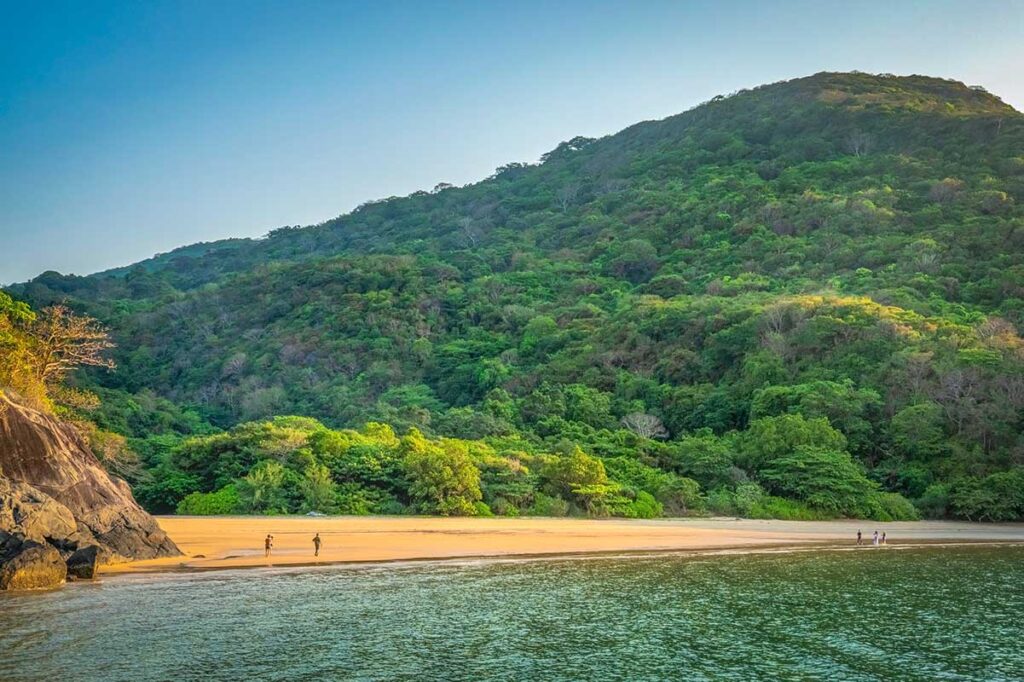
Enjoy peaceful Con Dao beaches that are less crowded and surrounded by protected natural landscapes.
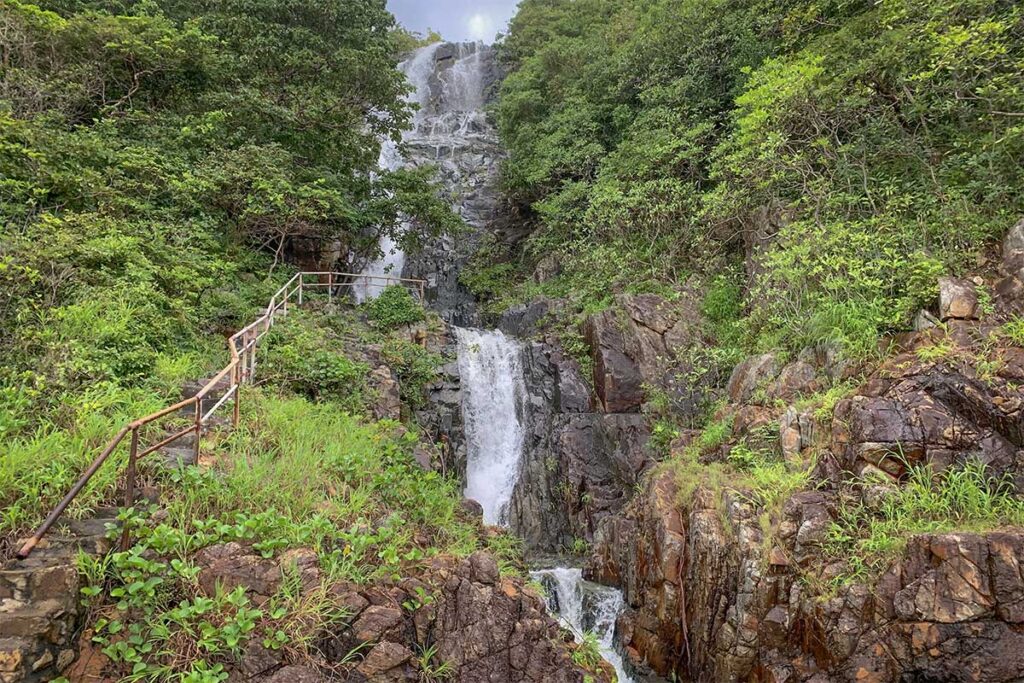
Go trekking in Con Dao National Park to explore forest trails, viewpoints, and remote coastal areas.
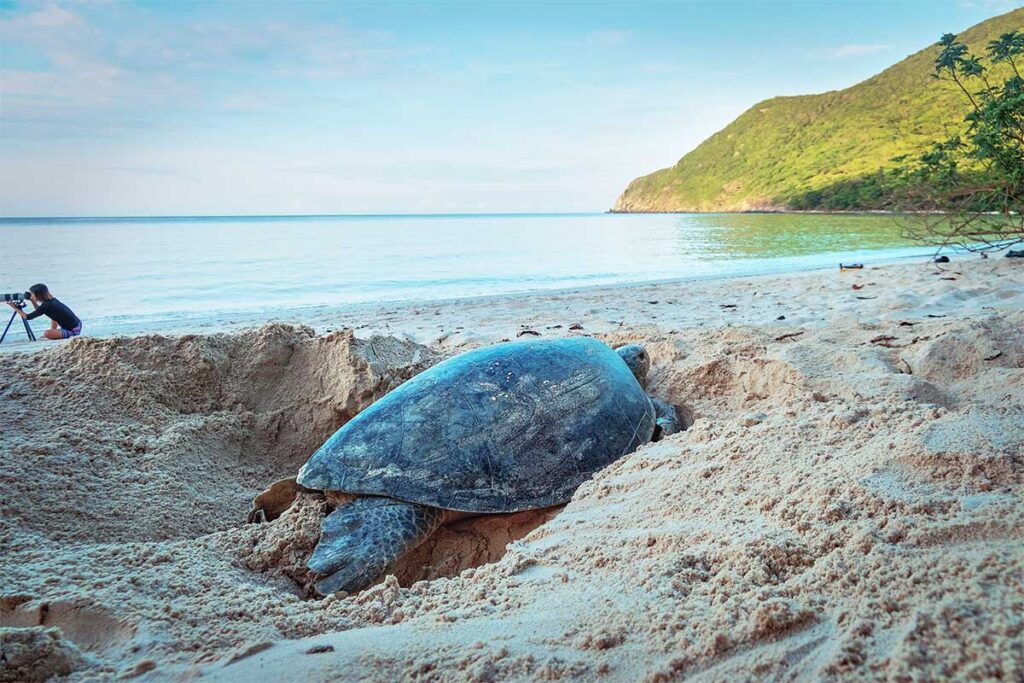
Join turtle hatch watching programs in Con Dao during nesting season as part of conservation efforts.
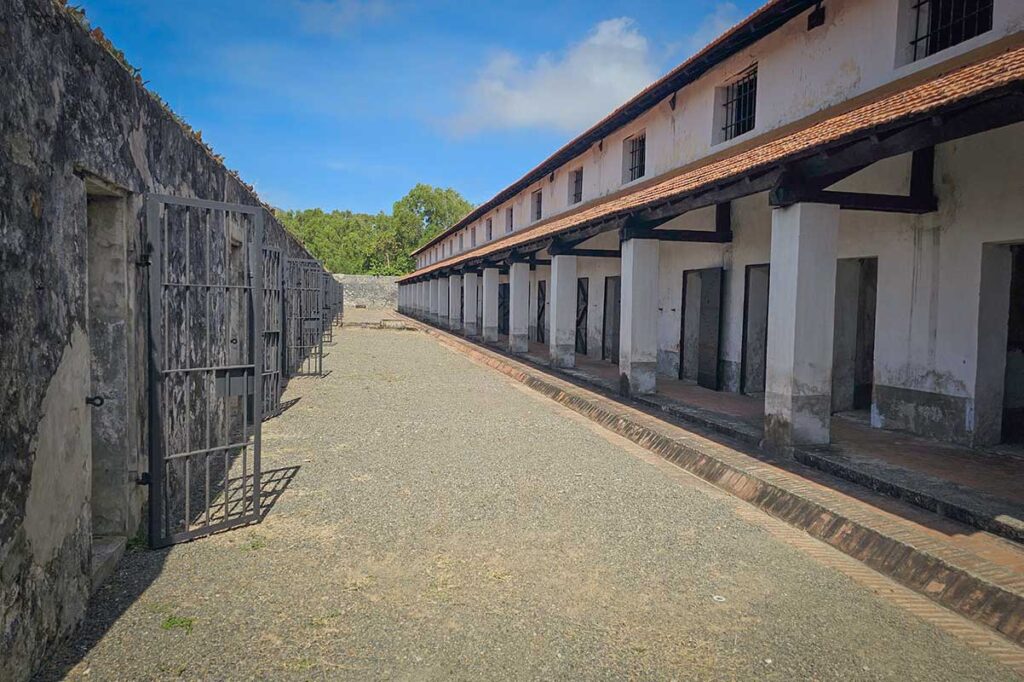
Learn about Con Dao’s past by visiting the Con Dao prisons, one of the most important historical sites in South Vietnam.
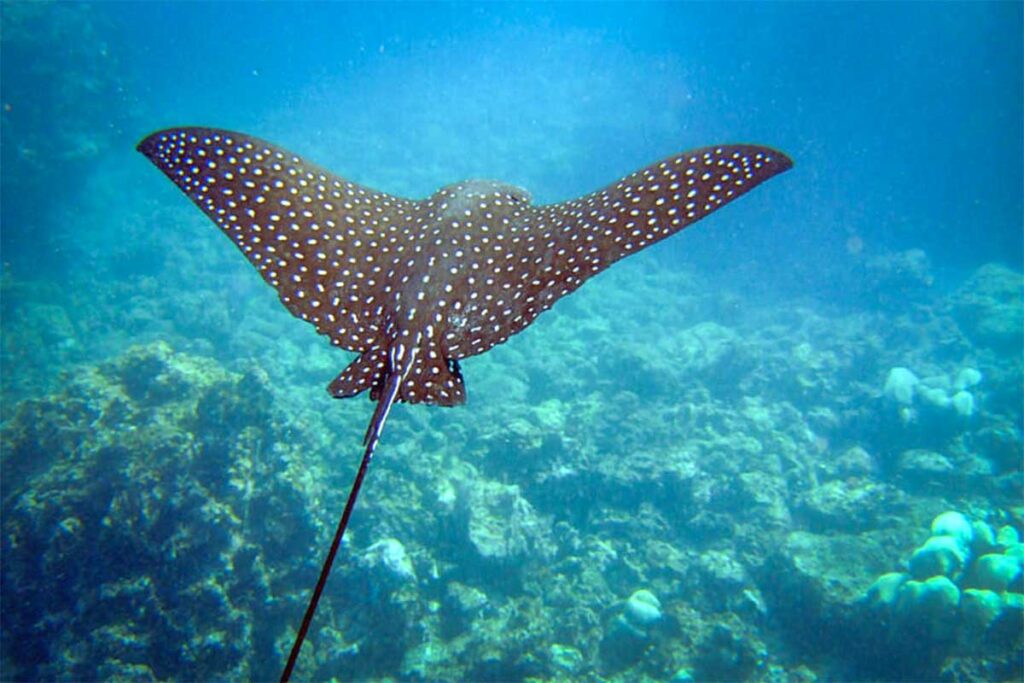
Go diving in Con Dao to explore some of the best coral reefs and marine life in southern Vietnam.
Tip: Want to properly explore Con Dao? Take a look at our Con Dao tours, with snorkeling trips, island excursions, and nature experiences.
Mui Ne is a coastal town in southern Vietnam best known for its desert-like landscapes and relaxed seaside atmosphere. Once a quiet fishing village, it has developed into a small resort destination while still keeping a local feel in many areas. Mui Ne is one of the best places to visit in South Vietnam if you’re looking for something different from cities and tropical islands.
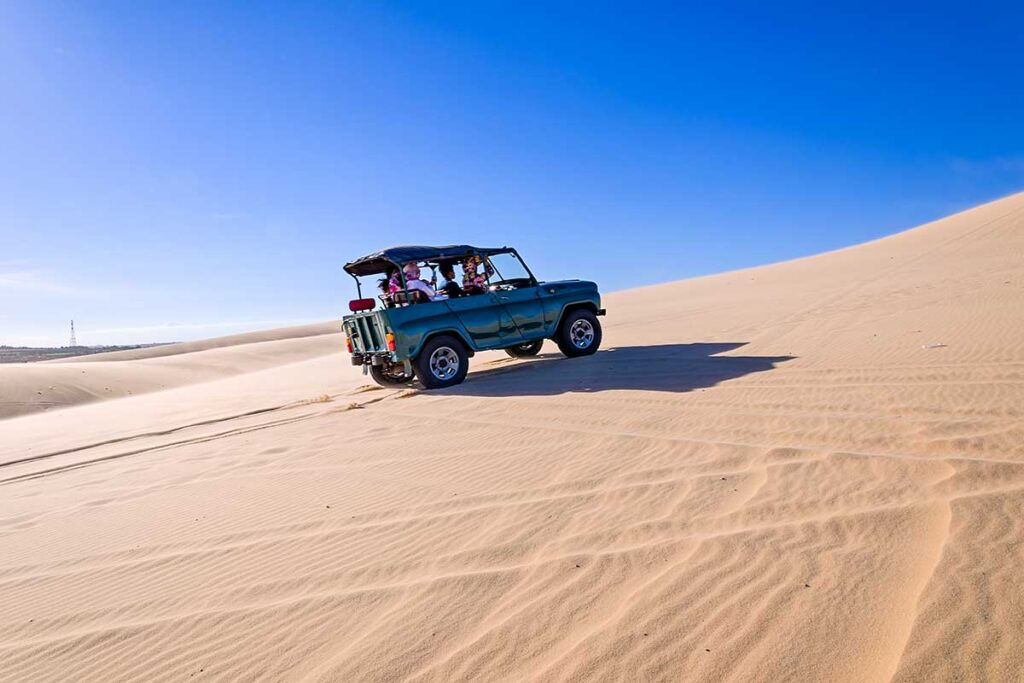
Explore the red and white sand dunes in Mui Ne, where you can walk the dunes, try sand sledding, or visit at sunrise or sunset.
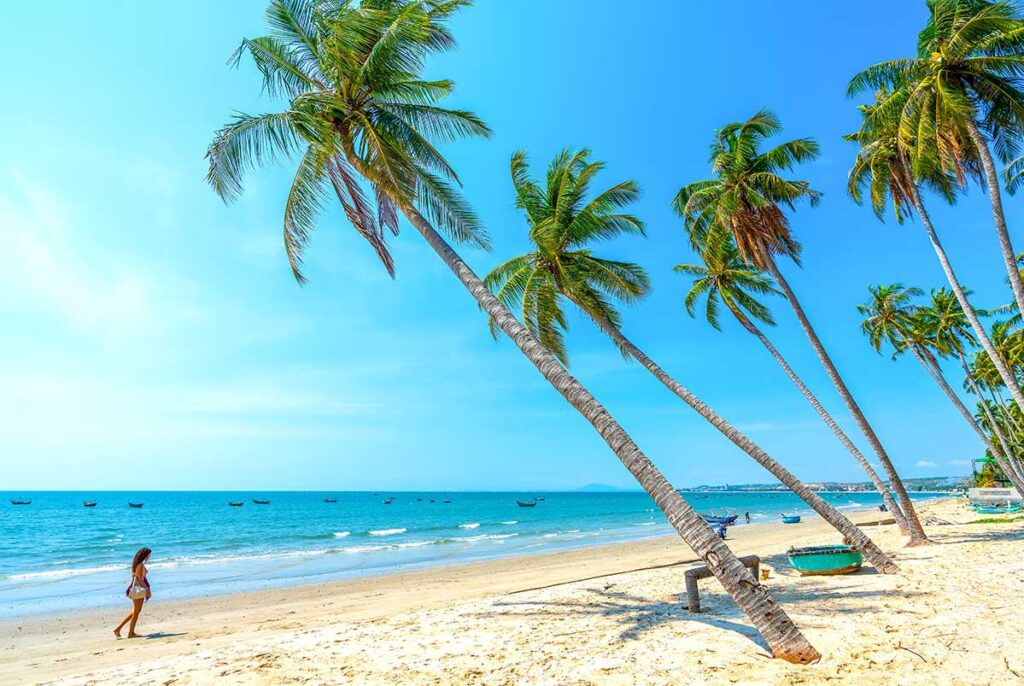
Spend time on Mui Ne beaches, which are long and open, with a mix of quiet stretches and areas near resorts and cafés.

Mui Ne is one of Vietnam’s top spots for kitesurfing and windsurfing thanks to its strong and consistent coastal winds.
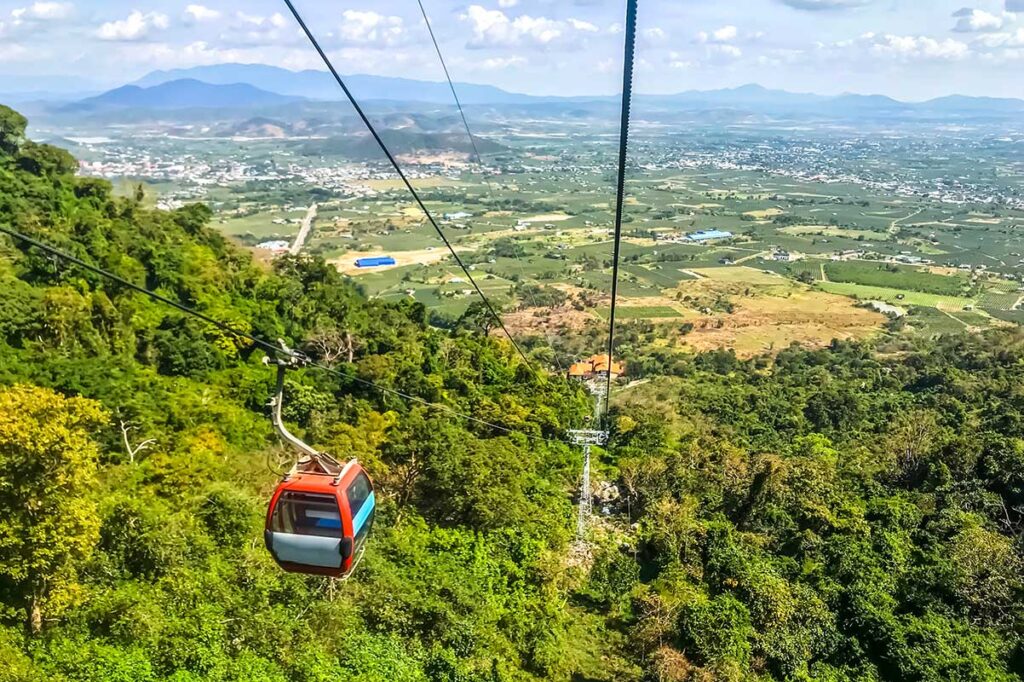
Take a trip to Ta Cu Mountain to see the large reclining Buddha statue and enjoy views over the surrounding countryside.
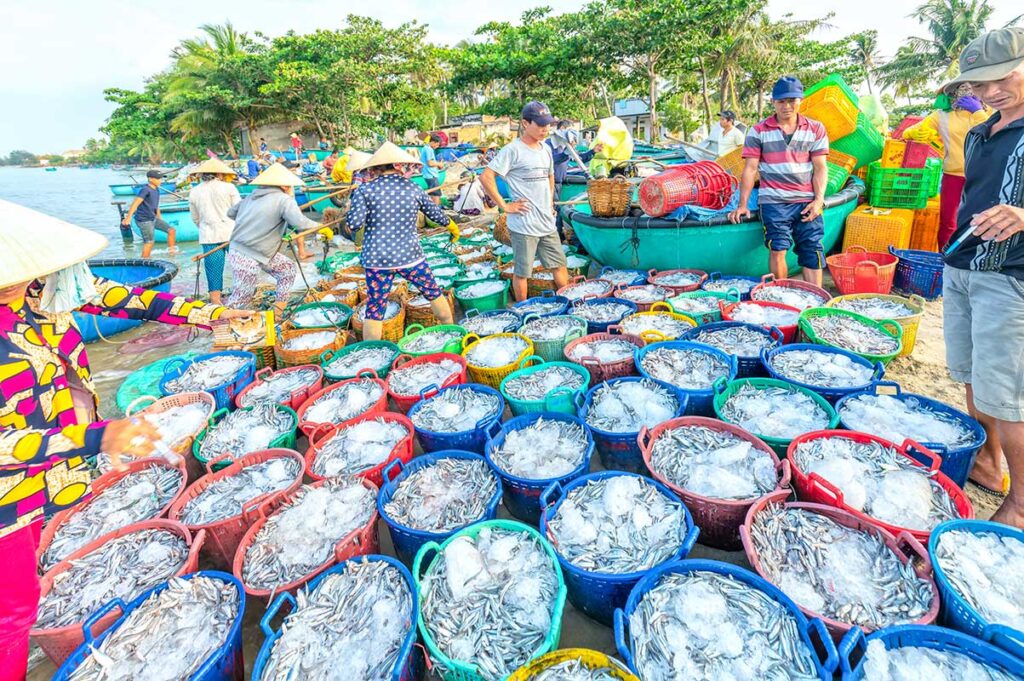
Visit Mui Ne fishing villages and early-morning fish markets to see local life centered around the sea.
Vung Tau is a coastal city located a short distance from Ho Chi Minh City, making it a popular weekend escape for locals. The city combines urban life with beaches, hills, and historical landmarks. Vung Tau has a more local and lived-in feel compared to resort-focused beach destinations.
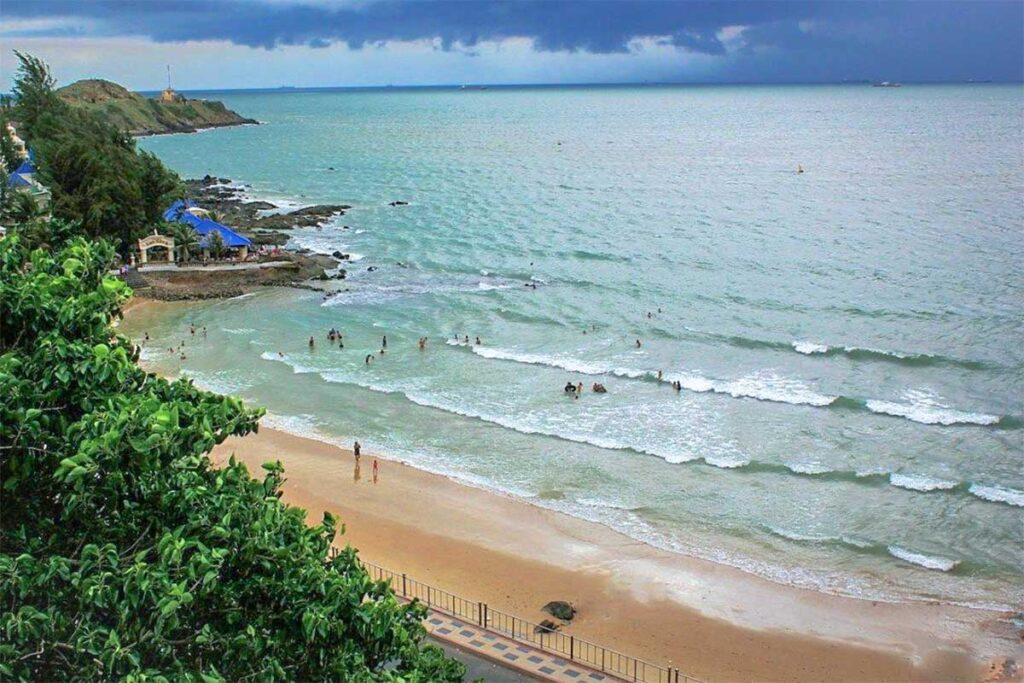
Visit Vung Tau beaches such as Back Beach and Front Beach for swimming, walking, and coastal views.
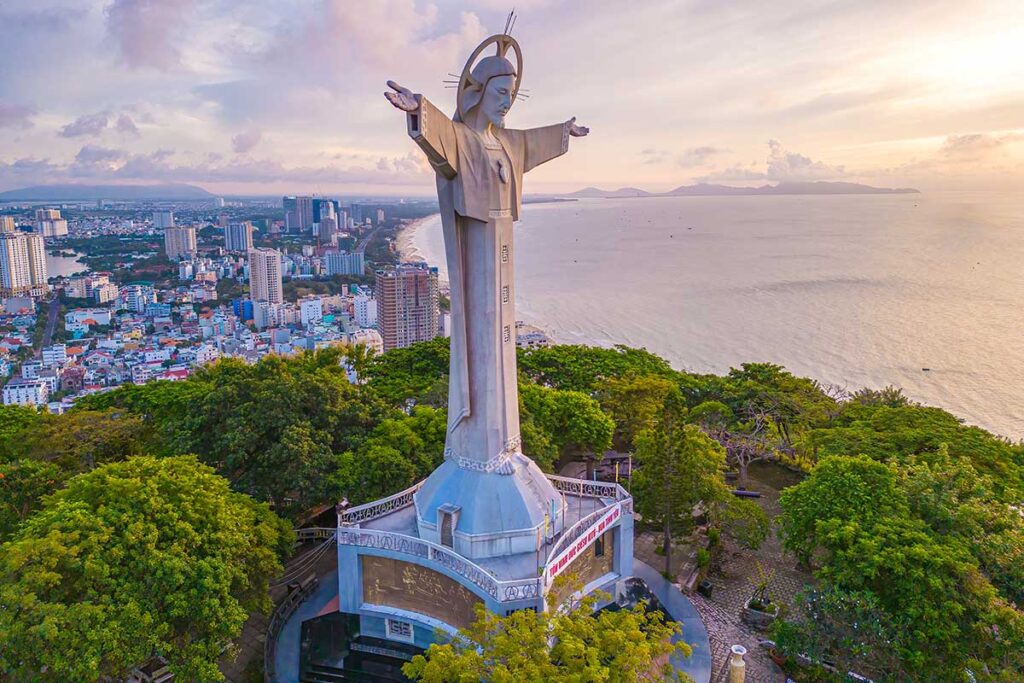
Walk up to the Christ the King statue in Vung Tau for panoramic views over the city and coastline.
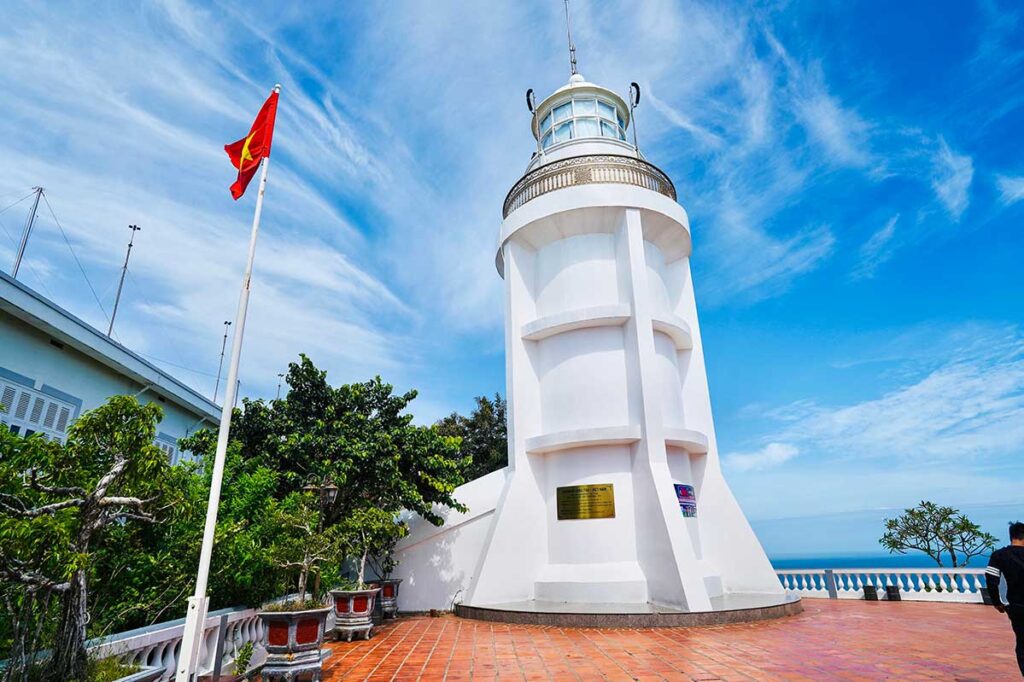
Head to Vung Tau Lighthouse for one of the best viewpoints in the city, especially around sunset.
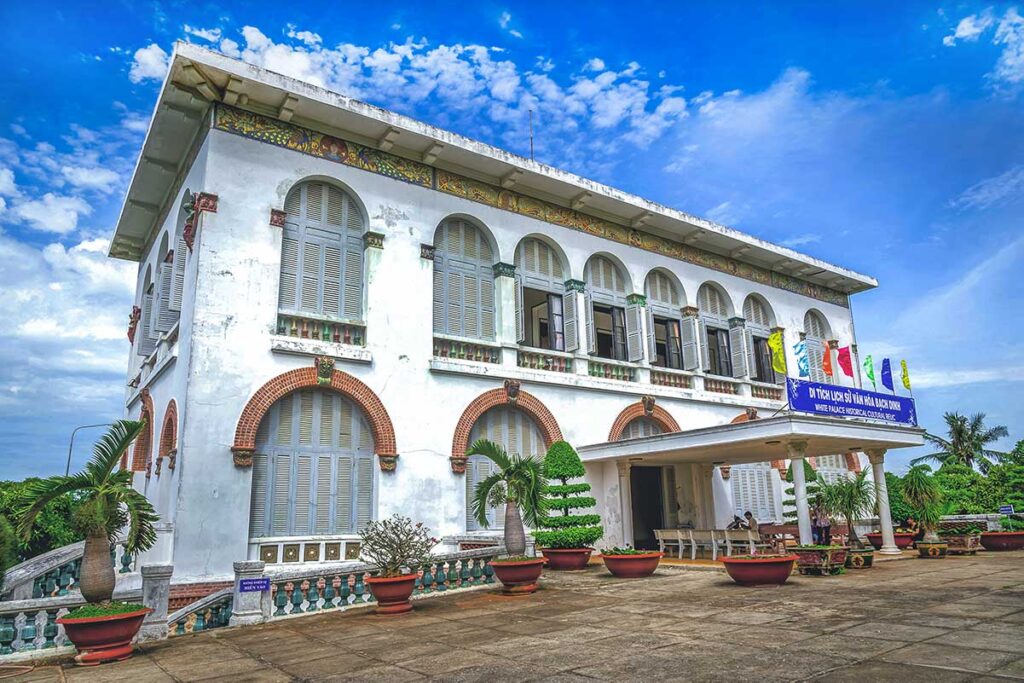
Visit the White Palace in Vung Tau, a former French colonial residence with historical exhibits and sea views.
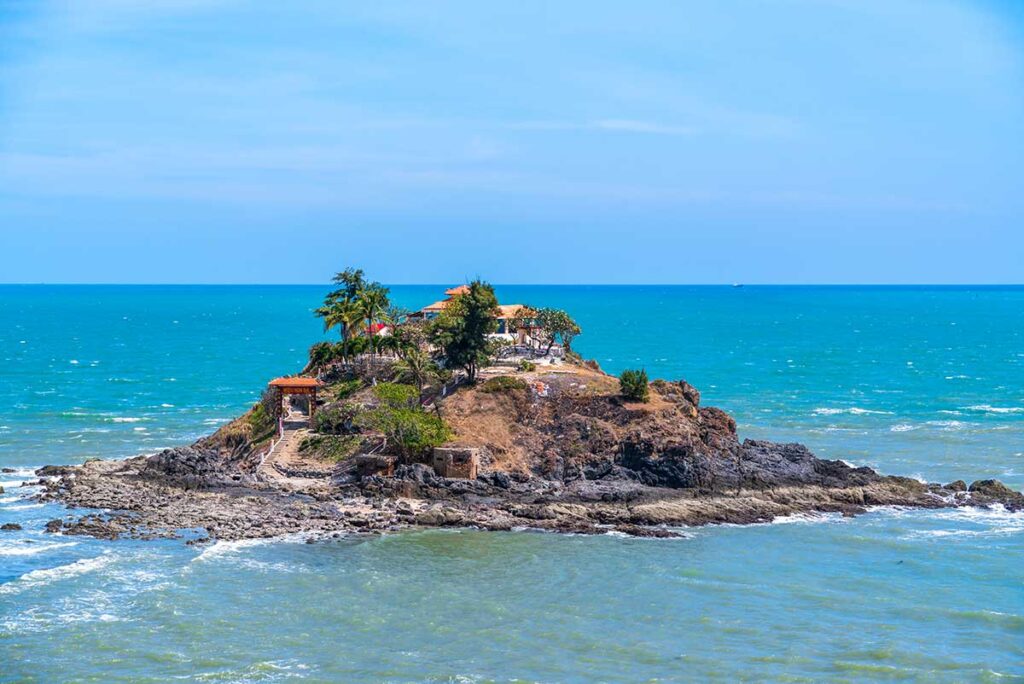
Walk to Hon Ba Island at low tide to see a small island shrine connected to the mainland by a narrow stone path.
Tay Ninh is an inland province near the Cambodian border, known for spiritual landmarks and natural scenery rather than urban attractions. It offers a quieter, less touristy experience compared to coastal and island destinations. Tay Ninh is especially interesting for travelers who want to explore religious culture and landscapes beyond South Vietnam’s main cities.
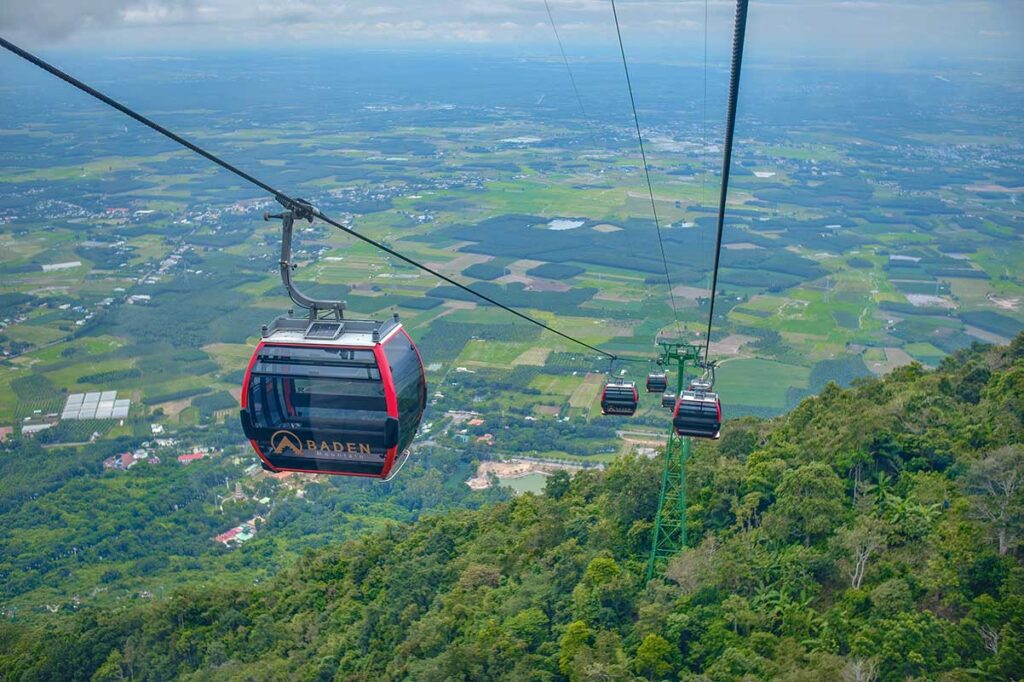
Take the cable car or hike up Ba Den Mountain, the highest peak in southern Vietnam, for views and temples along the way.
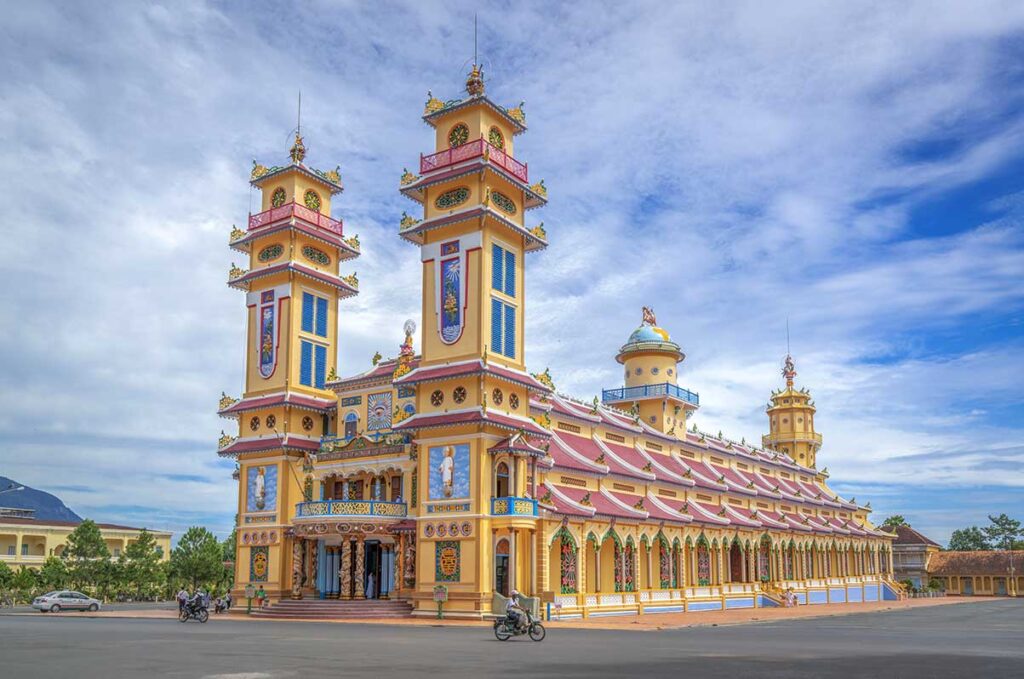
Visit the Cao Dai Temple in Tay Ninh to learn about Caodaism and see its distinctive, colorful religious architecture.
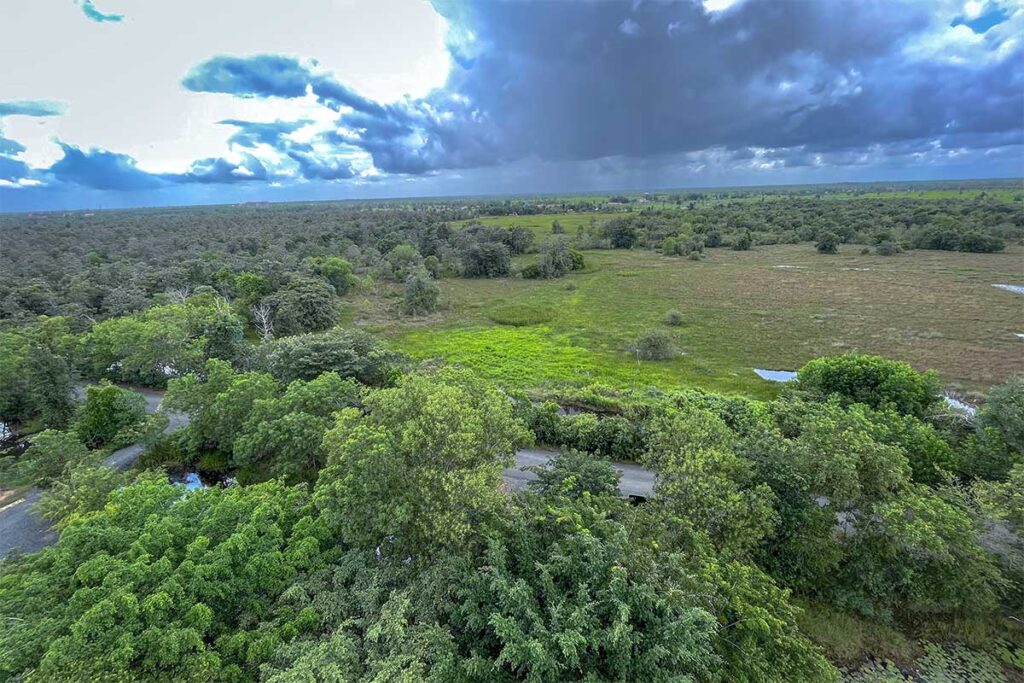
Explore Lo Go Xa Mat National Park for wetlands, forests, and wildlife near the Cambodian border.
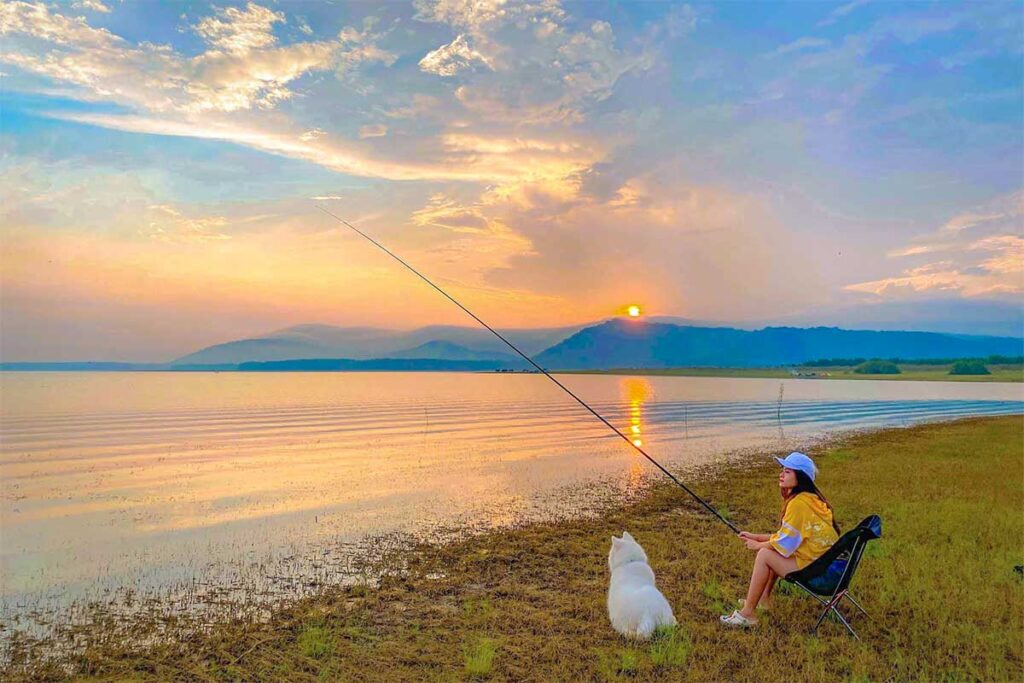
Go to Dau Tieng Lake to enjoy open landscapes, sunsets, and quiet countryside surroundings.
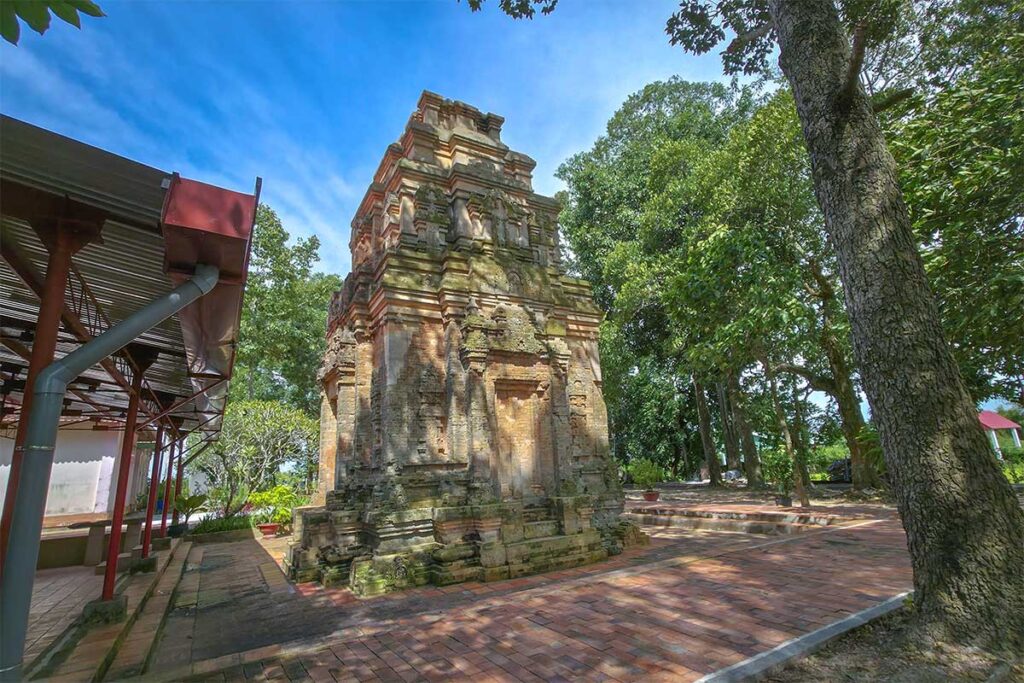
Visit Binh Thanh Tower, a historic Khmer-style tower that reflects Tay Ninh’s ancient cultural influences.
South Vietnam is a large and diverse region with many destinations spread across cities, river provinces, border areas, and rural landscapes. Beyond the best-known places to visit in South Vietnam, there are several destinations that don’t always make top lists but can be interesting if you enjoy slower travel, local life, or off-the-beaten-track experiences.

Binh Phuoc is a largely rural province near the Cambodian border, known for plantations, forested areas, and ethnic minority communities, with Binh Phuoc appealing mainly to travelers interested in less-visited inland regions.
Binh Duong is an industrial province north of Ho Chi Minh City, known for modern urban development and craft villages, with Binh Duong rarely visited for sightseeing but important to the region’s economic growth.
Choosing the best time to visit South Vietnam mainly depends on weather preferences rather than temperature, as the region stays warm year-round. Unlike northern and central Vietnam, seasonal changes are more about rainfall than heat or cold. This section gives a clear overview of South Vietnam’s seasons and a brief breakdown of each month, with links to more detailed monthly guides.
The dry season in South Vietnam runs roughly from December to April and is generally considered the most comfortable period to travel. Rainfall is low, humidity is more manageable, and travel conditions are ideal for city sightseeing, beach destinations, and Mekong Delta trips. These months are especially popular for island travel and outdoor activities.
The rainy season in South Vietnam usually lasts from May to November and is shaped by short, heavy bursts of rain rather than constant downpours. Rain often falls in the afternoon or evening, while mornings and early afternoons remain dry and usable for sightseeing. Compared to central Vietnam, South Vietnam rarely experiences typhoons, making travel during the rainy season far less disruptive than many travelers expect.
Below is a brief overview of what to expect in each month in South Vietnam. Each month in South Vietnam has its own characteristics, which are explained in more detail in the dedicated monthly guides.
January in South Vietnam is part of the dry season, with low rainfall, lower humidity, and comfortable conditions for sightseeing, beach travel, and river excursions.
February in South Vietnam remains dry and warm, with stable weather that suits both urban exploration and outdoor activities across the region.
March in South Vietnam marks a transition toward hotter conditions, with very little rain and increasing daytime temperatures, especially inland.
April in South Vietnam is typically hot and dry, with rising humidity and occasional pre-rain season showers toward the end of the month.
May in South Vietnam signals the beginning of the rainy season, with short afternoon showers becoming more frequent while most days still offer plenty of dry hours.
June in South Vietnam sees regular rainfall, usually in brief but intense bursts, alongside warm temperatures and lush green landscapes.
July in South Vietnam continues the rainy season, with consistent afternoon showers and high humidity, but travel remains largely unaffected.
August in South Vietnam is similar to July, with frequent rain, warm temperatures, and good conditions for slow travel and cultural sightseeing.
September in South Vietnam often has higher rainfall levels, yet rain remains intermittent rather than constant, allowing flexible daily planning.
October in South Vietnam stays within the rainy season, with heavy but short-lived rainfall and quieter travel conditions in many destinations.
November in South Vietnam marks the gradual end of the rainy season, with fewer showers and improving weather toward the end of the month.
December in South Vietnam begins the dry season again, bringing lower humidity, minimal rainfall, and excellent travel conditions across the region.
Getting around South Vietnam is relatively easy, with good infrastructure connecting most places in South Vietnam by road, air, and rail. The region is largely flat, travel distances are manageable, and transport services are frequent and affordable. Ho Chi Minh City acts as the main transport hub of the south, with the country’s busiest airport, major highways, train connections, and domestic routes reaching nearly all major destinations.
South Vietnam has several domestic airports, making flying a convenient option for covering longer distances or reaching offshore islands. Domestic flights are especially useful for island destinations and for connecting South Vietnam with central and northern Vietnam. Ho Chi Minh City’s airport serves as the main gateway, with frequent connections across the country.
Main airports in South Vietnam include:
Train travel in South Vietnam is limited and mainly follows the coastal route of the North–South railway. Trains depart from Ho Chi Minh City and run north through central Vietnam, making rail a convenient option for traveling toward destinations like Nha Trang, Da Nang, and Hue. However, trains are not practical for moving between destinations within South Vietnam itself, especially in the Mekong Delta or inland provinces.
Bus travel is the most common and flexible way to reach places in South Vietnam, thanks to an extensive road network of highways and expressways. From Ho Chi Minh City, buses reach almost every corner of the region, making it the easiest base for overland travel. Buses are affordable, frequent, and available in many comfort levels, from basic local buses to modern sleeper and limousine services.
Traveling between smaller destinations can sometimes be less direct, especially in the Mekong Delta, where routes often require returning to a larger hub rather than traveling town-to-town.
Popular bus connections in South Vietnam include:
Traveling by car with a driver is more expensive than buses but still affordable for small groups, especially when costs are shared. This option offers the highest level of flexibility, allowing you to travel beyond simple point-to-point transfers. A car with driver can be used for short excursions, such as a day trip from Ho Chi Minh City to the Cu Chi Tunnels, or for multi-day journeys through the Mekong Delta with sightseeing stops along the way.
Motorbike travel in South Vietnam can be very rewarding, but it depends heavily on location and experience level. Riding within Ho Chi Minh City is generally not recommended for most travelers due to heavy traffic and fast-paced driving conditions. In contrast, the Mekong Delta is well suited for motorbike travel, with flat terrain, quieter roads, and scenic countryside routes.
You can rent a scooter at a homestay or guesthouse to explore nearby villages and canals for a day, or, if you’re an experienced rider, plan a longer motorbike road trip through different parts of the Mekong Delta, visiting a new place each day. In all cases, a valid motorbike license with an International Driving Permit is required, and prior riding experience is strongly recommended.
Before you start exploring the best places in South Vietnam, it helps to understand a few regional travel realities that can shape your experience. South Vietnam is generally easy to travel in, but factors like weather patterns, local tourism habits, and rural infrastructure work a bit differently than in other parts of the country. These travel tips will help you plan more realistically and avoid common surprises on the road.
Traveling during the rainy season in South Vietnam is usually absolutely fine, especially for city sightseeing and Mekong Delta travel. Rain rarely lasts all day and often comes as short, heavy bursts in the afternoon or evening, leaving much of the day dry and usable. However, the rainy season can be less ideal if your trip is focused mainly on a dedicated beach holiday, where sea conditions and sunshine matter more.
South Vietnam offers several beach areas, but they serve different travel styles. Vung Tau is the closest beach destination to Ho Chi Minh City and works well for short trips, though the beaches themselves are not the most scenic. Mui Ne has long, open beaches and fits easily into coastal itineraries that continue north. Phu Quoc and Con Dao offer the best beach experiences in the south, but both require flights and more planning.
Many places in South Vietnam are significantly busier on weekends due to domestic tourism from Ho Chi Minh City. Destinations like Vung Tau, parts of the Mekong Delta, and popular beaches can feel quiet during the week and crowded from Friday to Sunday. If your schedule is flexible, visiting these places on weekdays offers a much calmer experience.
Several key attractions in South Vietnam are living religious sites rather than static landmarks. Places like the Cao Dai Temple in Tay Ninh or pilgrimage areas around Sam Mountain follow daily schedules, ceremonies, and dress expectations. Visiting during prayer times can be a meaningful experience, but it also requires respectful clothing and behavior.
English is widely spoken in Ho Chi Minh City, Phu Quoc, and major hotels, but drops sharply outside these areas. In the Mekong Delta, smaller towns, and inland provinces, communication often relies on basic English, gestures, or translation apps. This isn’t a problem, but it helps to adjust expectations and plan a bit more independently.
While cards and digital payments are common in cities and tourist centers, cash is still essential in rural South Vietnam. In the Mekong Delta, small boat operators, local markets, homestays, and family-run restaurants often accept cash only. ATMs can be limited or far apart, so carrying enough cash before heading into rural areas is important.
South Vietnam’s heat is made more intense by constant humidity rather than extreme temperatures. Lightweight, breathable clothing works best for daily travel, especially in cities and river areas where air circulation is limited. Quick-drying fabrics are far more practical than heavy cotton, and light long sleeves can actually feel more comfortable under the sun.
The time you need for South Vietnam depends on how much variety you want. With 4–5 days, you can combine Ho Chi Minh City with a short Mekong Delta trip. With 7–10 days, it’s realistic to add a beach destination like Mui Ne or Phu Quoc. Trips of two weeks or more allow for a deeper Mekong Delta experience, island travel, and a slower pace without constant transit.
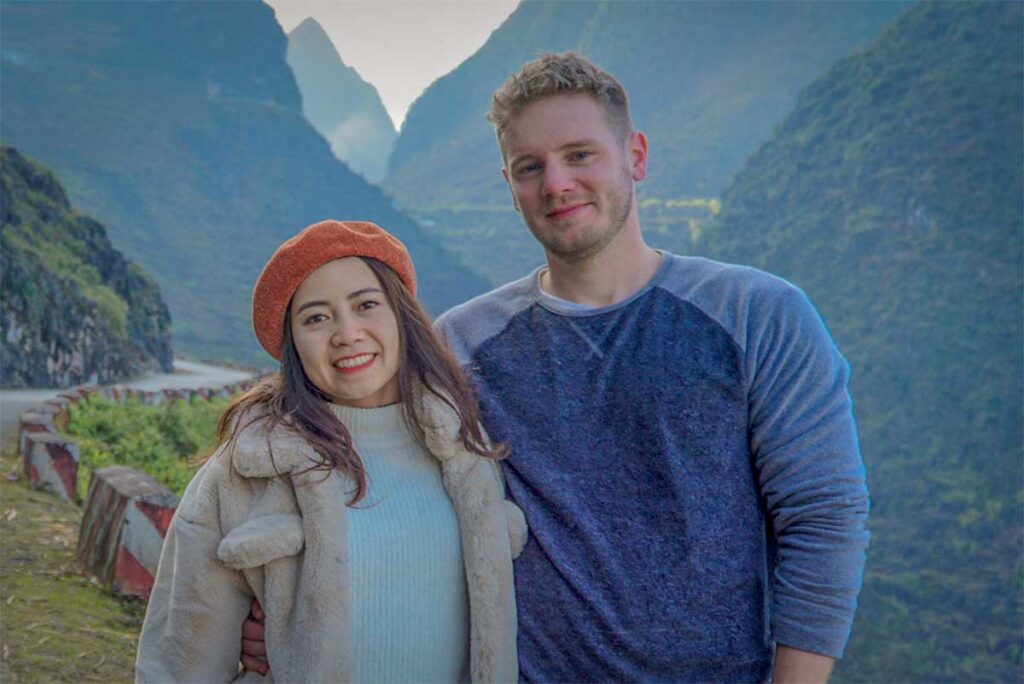
Local Vietnam is a Vietnam-based travel company founded by Dutch traveler Marnick Schoonderwoerd and his Vietnamese wife Nhung. Marnick lived in Ho Chi Minh City for four years, where Local Vietnam was originally established and registered, before later moving to Central Vietnam. Nhung lived in the south of Vietnam for more than ten years.
Together, they have explored much of South Vietnam themselves, from cities like Ho Chi Minh City to the Mekong Delta, coastal areas, and islands such as Phu Quoc and Con Dao. With this local knowledge and years of travel experience, we have created this in-depth guide to traveling in South Vietnam.
Local Vietnam is truly based on the ground and has been helping travelers plan routes through South Vietnam for years. Whether you want to spend a few days in the Mekong Delta, are looking for a beach destination, or want to combine South Vietnam with other regions as part of a longer trip, we’re here to help you plan it.