
Dragon Dance vs Lion Dance – What is the difference?
Many travelers think the lion dance and dragon dance are the same thing. That’s understandable, because they often appear at similar festivals and are performed with the same loud drums and cymbals. In Vietnam, however, they are two clearly different performances.
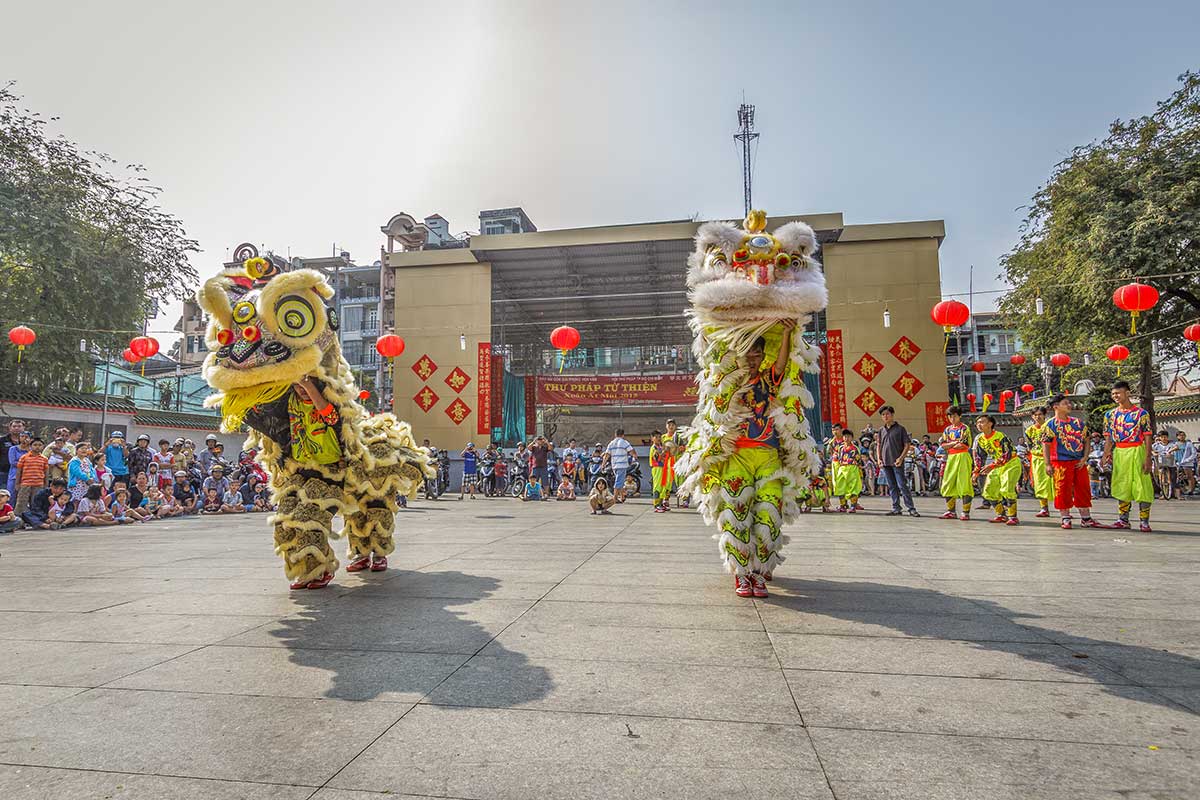
Lion dance (múa lân) is the one you will see most often. The costume represents a lion-like creature, operated by two performers—one controlling the head, the other the body. The movements are playful and expressive, with blinking eyes, shaking heads, and sometimes acrobatics. Lion dances are common at shop openings, neighborhood celebrations, and festivals like Tết and Mid-Autumn Festival.
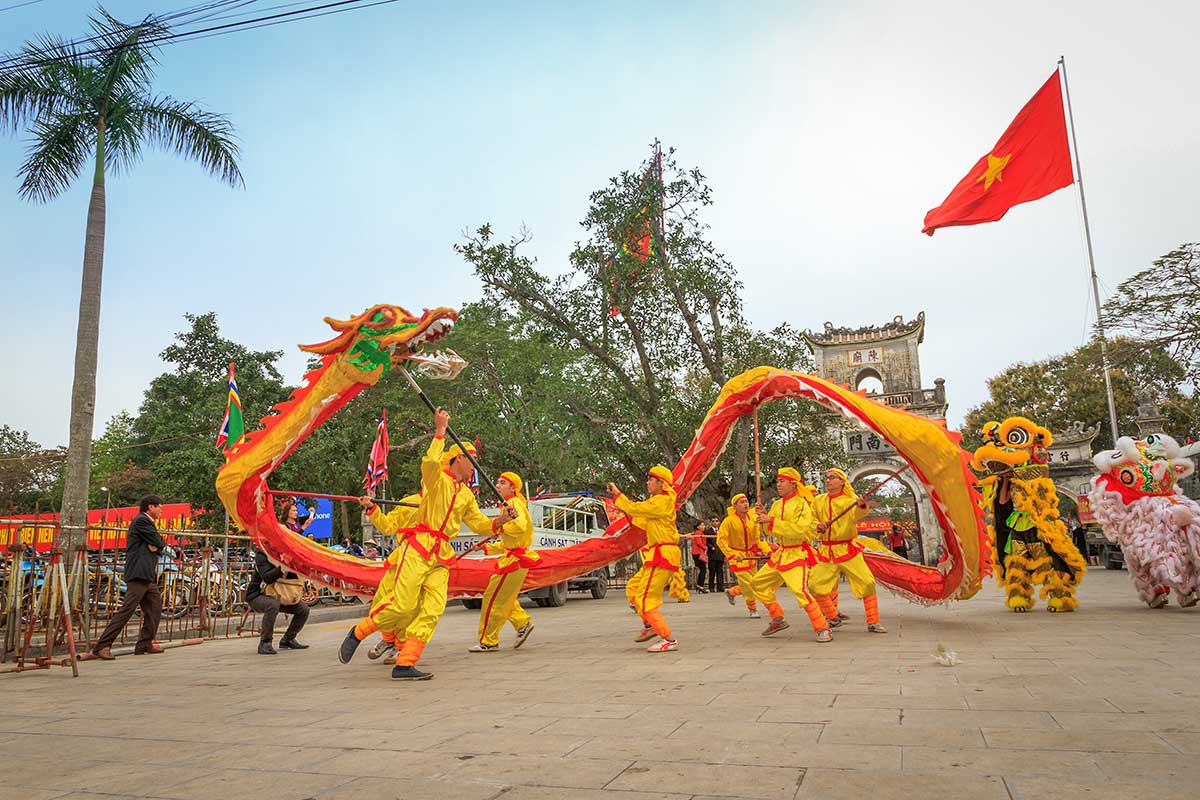
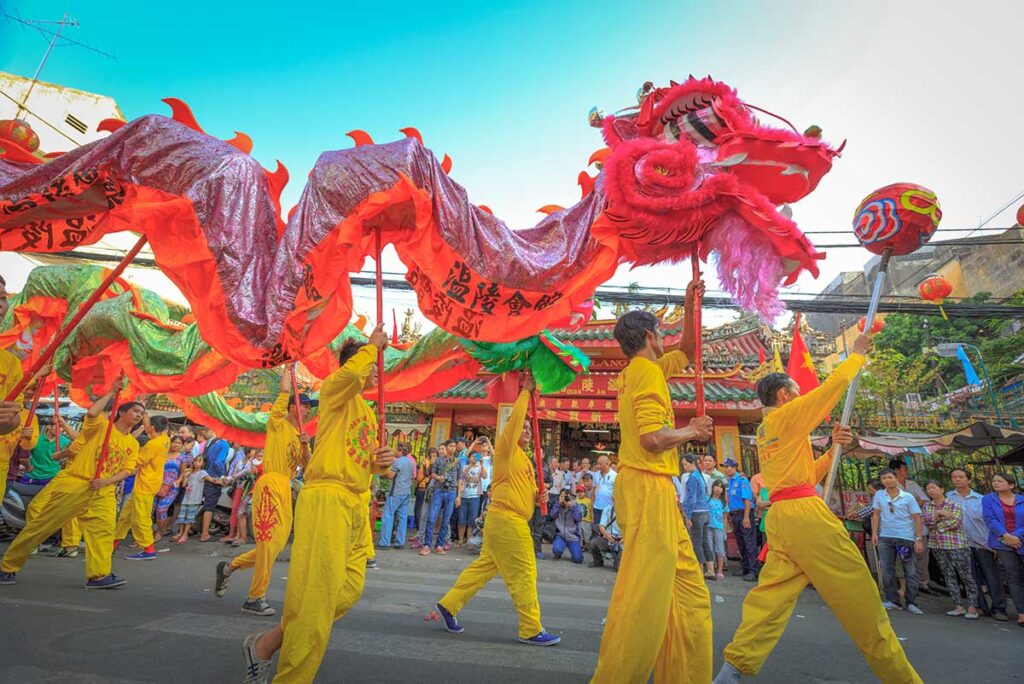
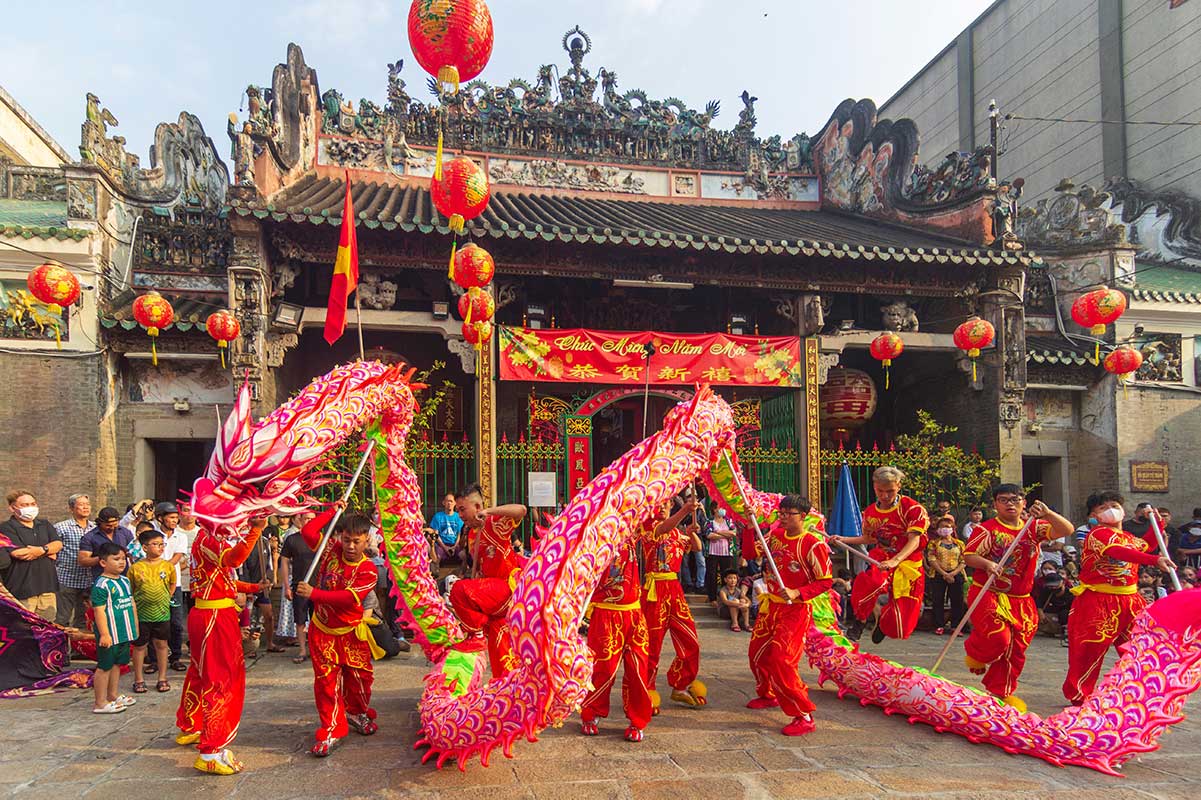
Dragon dance (múa rồng) uses a long dragon costume carried by a group of performers holding poles underneath the body. Instead of acting like an animal, the dragon “flows” through the street in waves and spirals, often chasing a symbolic pearl. Because it needs space and many performers, it usually appears only at large events.
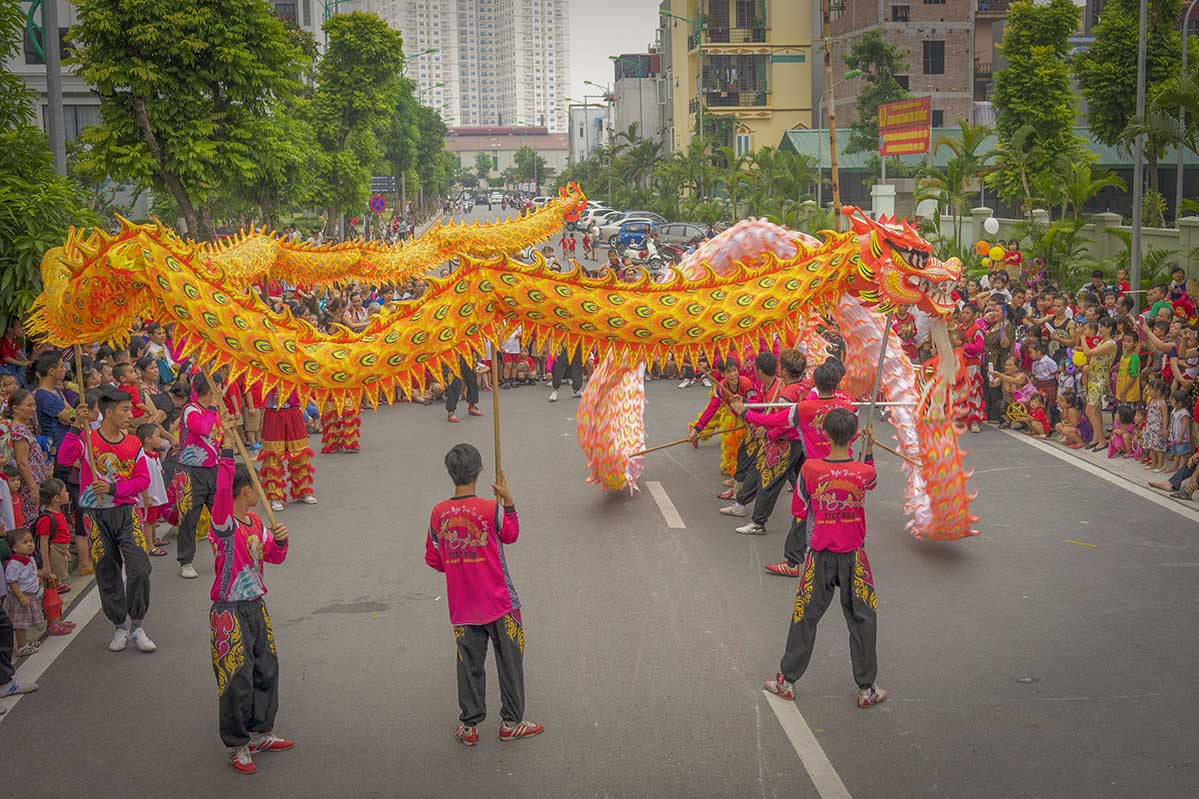
In short, lion dance is far more common in Vietnam, especially at local and neighborhood level. Dragon dance is more spectacular in scale, but also much rarer, and mostly reserved for big festivals, parades, or city-organized events.
Cultural background of the Vietnamese Dragon Dance
The Vietnamese dragon has a very special meaning in Vietnamese culture. Unlike Western dragons, which are often seen as dangerous creatures, the Vietnamese dragon represents power, prosperity, rain, and good fortune. It is closely linked to agriculture, especially rice farming, where rain has always been essential for survival.
The dragon dance in Vietnam developed through centuries of cultural exchange, particularly with southern China, but it took on its own local character over time. In Vietnam, the dragon is strongly associated with imperial power and national identity. Even the name of Hanoi’s ancient citadel, Thăng Long, means “Rising Dragon,” showing how deeply the symbol is rooted in history.
Traditionally, dragon dances are performed during moments that mark new beginnings or collective celebration. These include major lunar festivals, important anniversaries, and large public events. The performance is believed to bring luck, harmony, and positive energy to the community, rather than serving as pure entertainment.
Key elements of the Vietnamese Dragon Dance
This is where the dragon dance becomes interesting to watch, even if you don’t know much about the tradition. It’s not just a costume moving through the street — it’s a coordinated performance where music, movement, and symbolism all work together.
The dragon costume
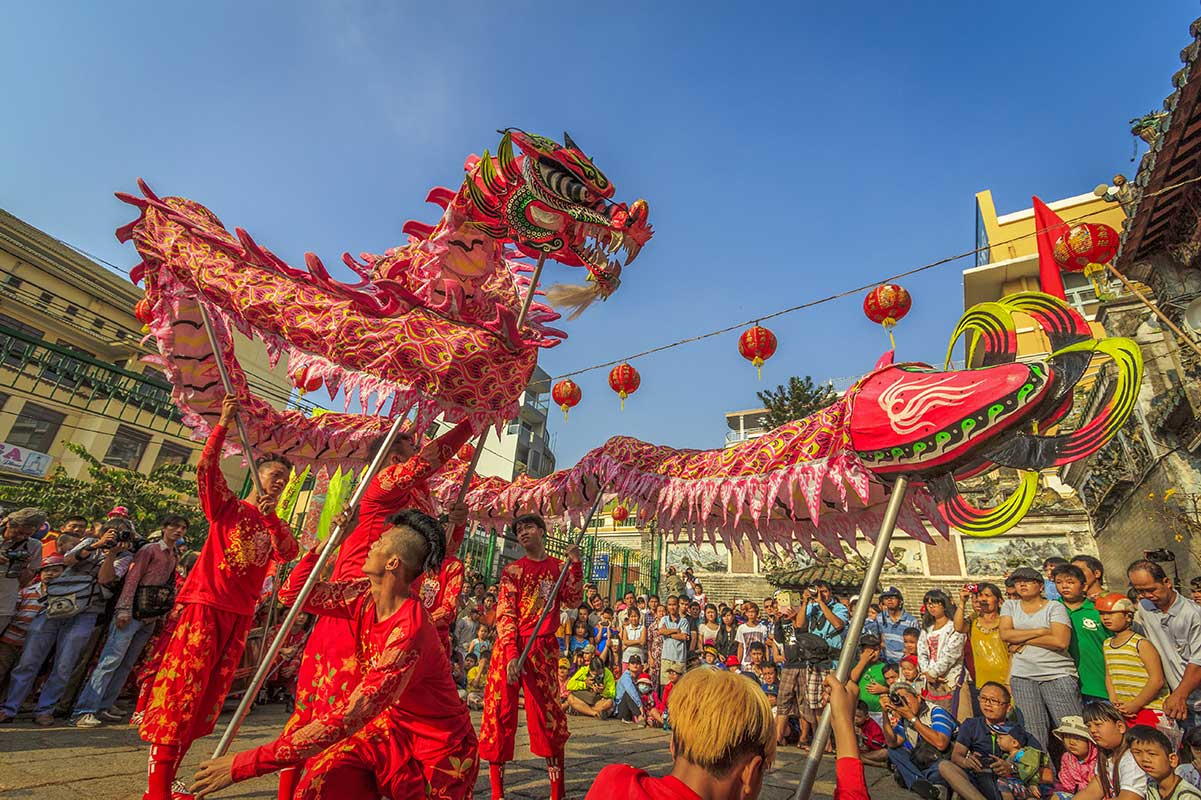
The dragon used in Vietnamese dragon dance is long, flexible, and lightweight, usually made from fabric stretched over a series of frames. Each section is supported by a pole, held by one performer. A single dragon can require anywhere from 8 to more than 20 people, depending on its length.
Colors matter. Red, gold, and yellow are common, as they symbolize luck, wealth, and prosperity. The dragon’s head is expressive but less “playful” than a lion’s head — it’s designed to look powerful and majestic rather than cute or funny.
The performers and movement
Unlike lion dance, where the focus is on character and expression, dragon dance is all about flow and rhythm. The performers move as one unit, creating wave-like motions that travel from the head to the tail.
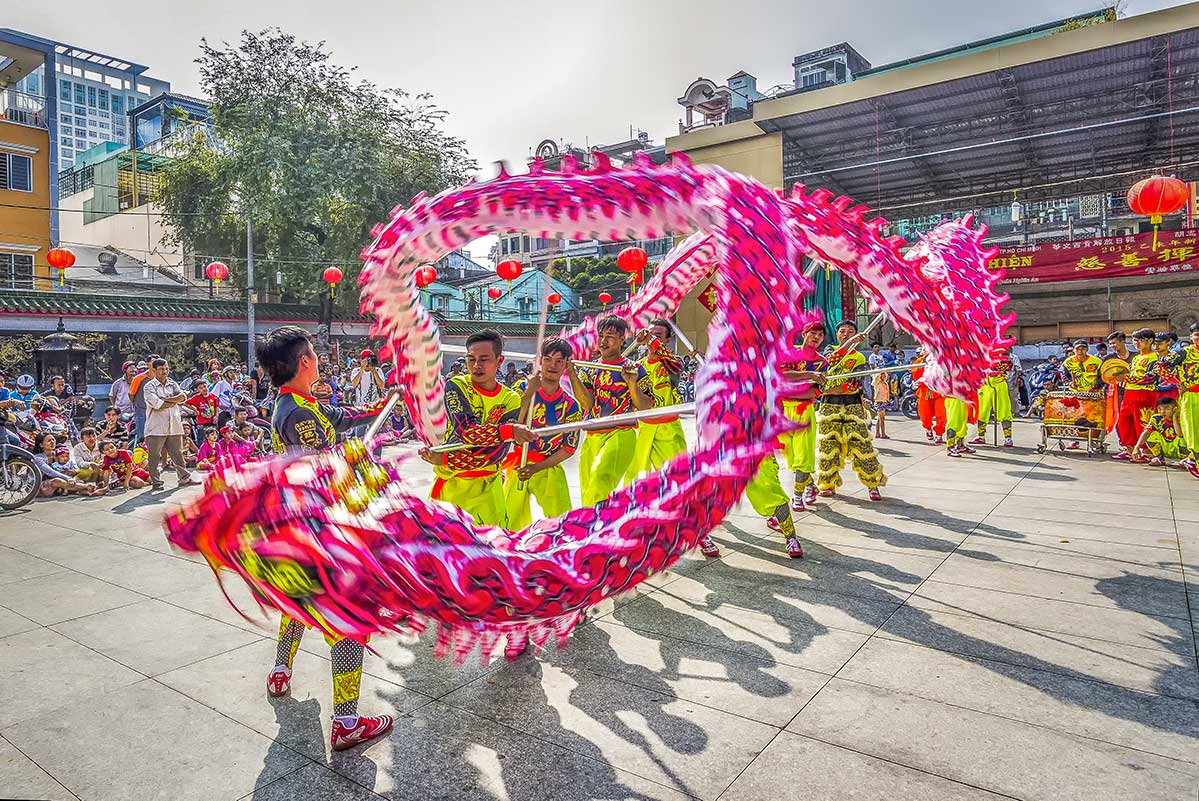
You’ll often see:
- Rolling waves through the body
- Circles and spirals
- Sudden rises and dips
These movements are meant to show the dragon flying through clouds or water. When performed well, it feels smooth and energetic rather than chaotic — though from the outside it may look exhausting for the team.
The “Pearl” and symbolism
In many performances, the dragon follows a performer holding a ball on a pole, often called the pearl. This pearl represents wisdom, knowledge, or the sun. The dragon chasing it symbolizes the pursuit of harmony and prosperity.
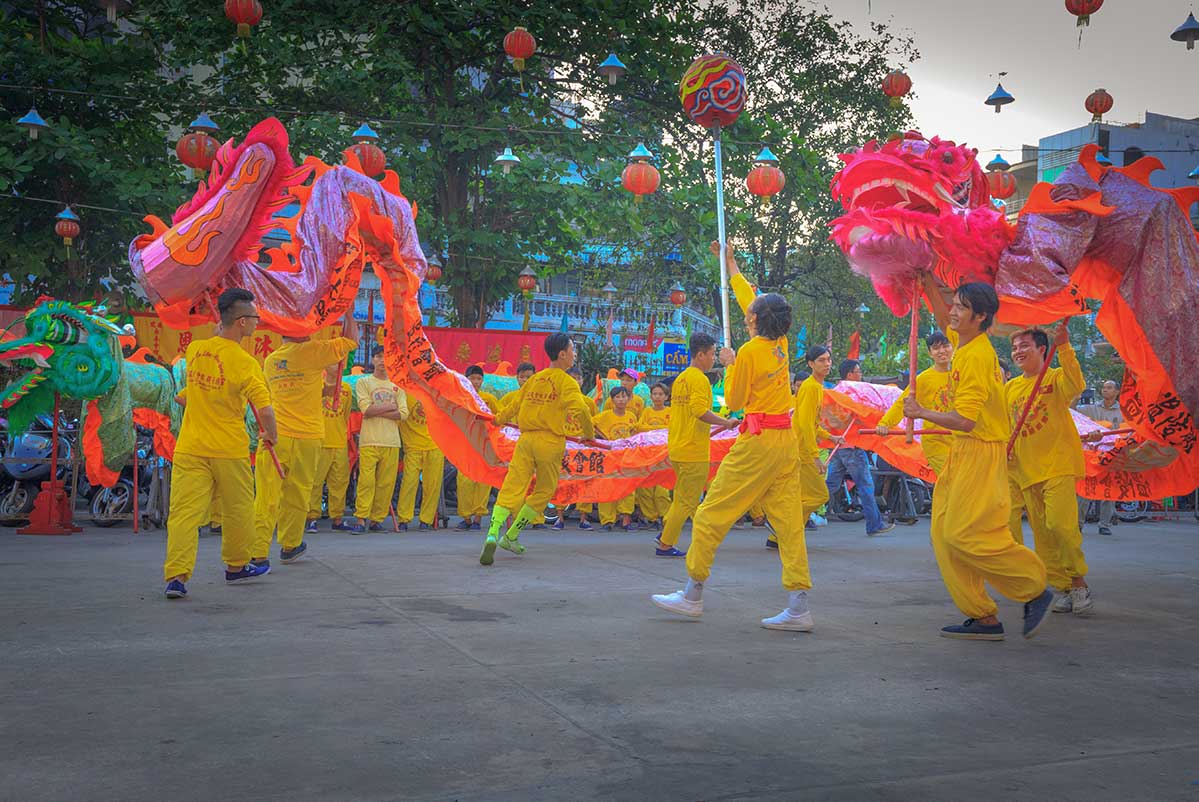
For travelers, this detail is easy to miss, but once you notice it, the performance makes much more sense. The dragon isn’t moving randomly — it’s reacting to the pearl’s direction.
Music and Atmosphere
Dragon dance is inseparable from its music. The performance is driven by large drums, cymbals, and gongs, played loudly and rhythmically. The drum sets the pace, while cymbals and gongs accent the dragon’s movements.
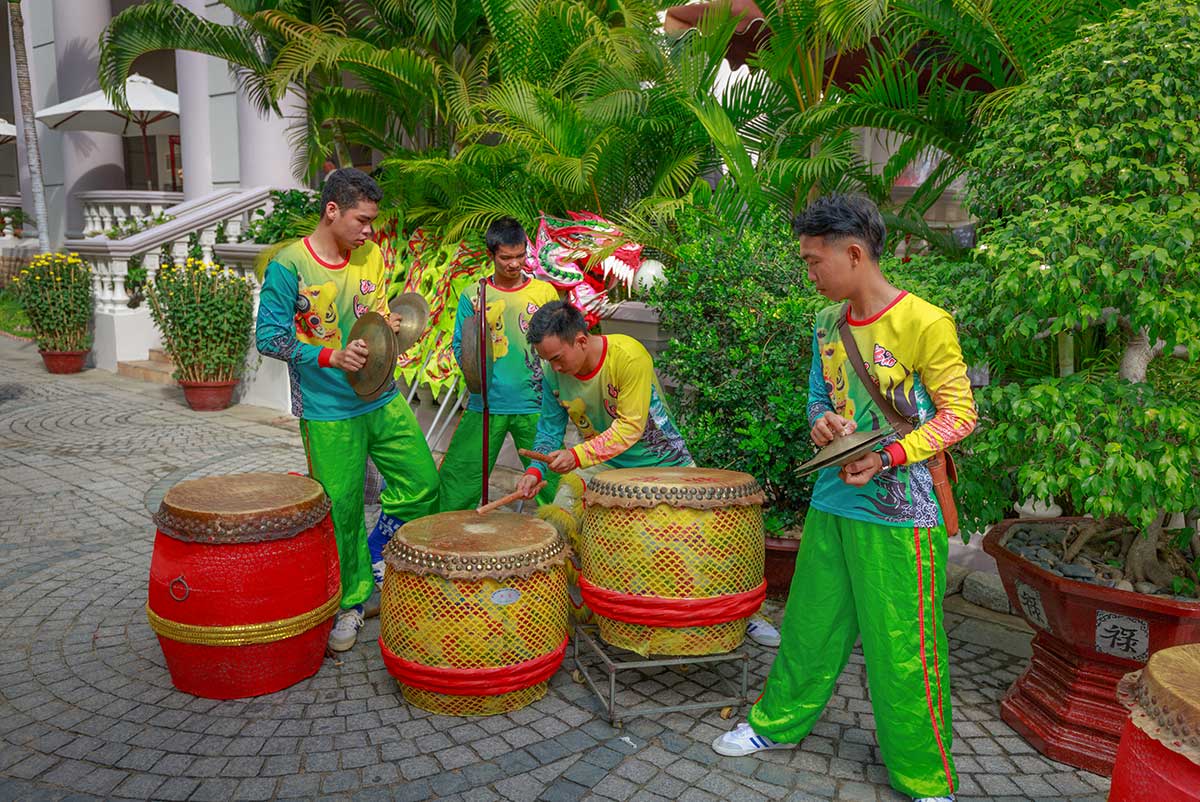
It’s loud — very loud — especially at close range. But that intensity is intentional. The sound is believed to scare away bad luck and negative spirits, while energizing both performers and audience.
When and Where to see Vietnamese Dragon Dance performances
If you’re hoping to see a Vietnamese dragon dance while traveling, it helps to have realistic expectations. Dragon dance is impressive, but it is not something you casually stumble upon very often.
1. Major Lunar Festivals
The best chance of seeing a dragon dance is during major lunar festivals, especially Tết (Lunar New Year). Even then, dragon dance usually appears only at large, organized events such as city celebrations, official parades, or performances in central public areas.
During Mid-Autumn Festival, you will see a lot of lion dances in neighborhoods and family areas, but dragon dance is far less common. Most smaller streets simply don’t have the space for it.
2. Big cities and Large public events
Dragon dance performances are most likely in big cities, where space, funding, and professional troupes are available.
Places like Ho Chi Minh City and Hanoi sometimes include dragon dance in:
- City-run festivals
- Cultural parades
- Major public celebrations
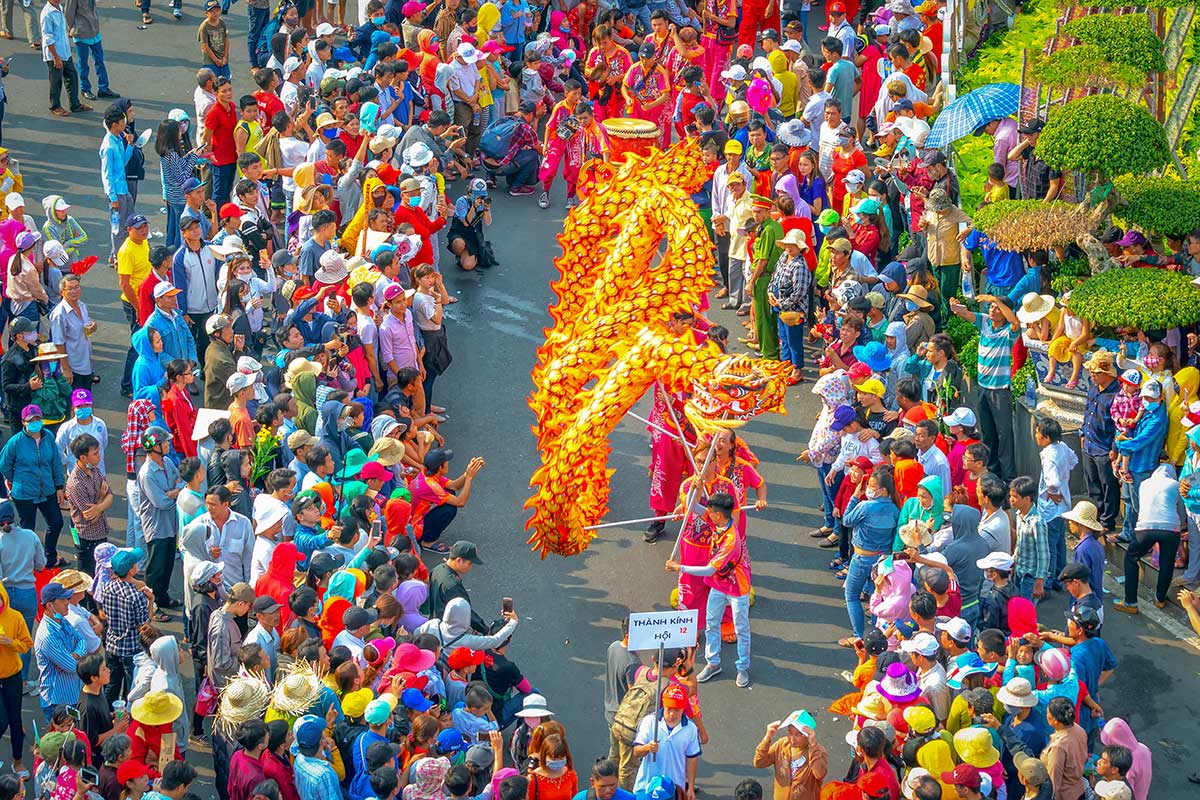
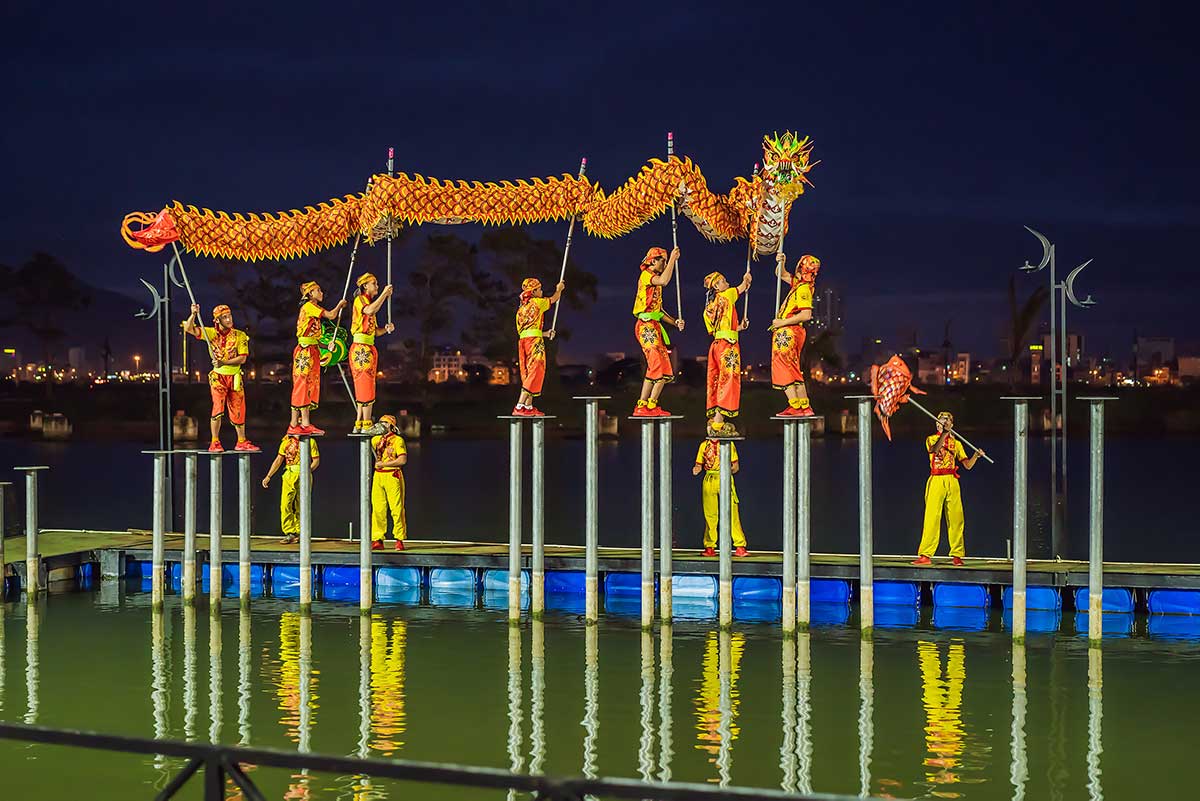
In Ho Chi Minh City, areas with a strong Chinese-Vietnamese community (such as Chinatown in District 5) have a higher chance of hosting dragon dance performances during important dates.
Tips for experiencing Vietnamese Dragon Dance (and Lion Dance)
Follow the drums
Dragon and lion dances are always announced by sound before you see them. Loud drums and cymbals usually mean a performance is about to start or is already moving through nearby streets.
Don’t expect fixed show times
These performances are not scheduled like museum shows. Even during festivals, start times can change or depend on weather, crowds, or local decisions. If you see one, consider it a lucky moment rather than something you planned exactly.
Keep enough distance
Dragon dance needs space. The performers move backward, sideways, and in wide curves. Standing too close for photos often means you’ll be asked to move — or gently pushed back.
Prepare for noise
The music is intentionally loud. Drums, gongs, and cymbals are meant to scare away bad luck. If you’re sensitive to noise or traveling with children, standing a bit farther away makes the experience more comfortable.
Understand what you’re watching
If you see a ball on a pole leading the dragon, that’s the “pearl.” The dragon follows it on purpose. Knowing this makes the movements easier to understand and more interesting to watch.
Don’t be disappointed if it’s Lion Dance
For most travelers, lion dance is what they will actually see — and that’s normal. It’s more common, more interactive, and happens in everyday neighborhoods. Dragon dance is rarer and mostly appears at large events.
Photography: Wide is better than close
Dragon dance looks best in wide shots where you can see the full length and movement. Close-up photos often miss the scale and flow that make the performance impressive.
Treat it as a cultural moment, Not an attraction
This isn’t done for tourists. People around you are there to celebrate, pray for luck, or support a local business. Watching respectfully, without blocking or interrupting, goes a long way.