

What is Vietnamese fish sauce?
What is it?
Vietnamese fish sauce is made from just two ingredients: anchovies and salt. The fish are layered with salt and left to ferment in large wooden barrels for anywhere from nine months to over a year. The result is a dark amber liquid with a deep, concentrated flavor that is unlike anything else in cooking.
One thing worth knowing before you arrive: nuoc mam (pure fish sauce) and nuoc cham are not the same thing. Nuoc cham is a prepared dipping sauce made by mixing fish sauce with water, lime juice, sugar, and sometimes garlic and chili. It is what you will find in a small bowl on the table at most Vietnamese restaurants. The pure bottled product is nuoc mam. Both are called “fish sauce” in English, which causes a lot of confusion.
How does it taste?
The honest answer is that fish sauce smells stronger than it tastes. Opened straight from the bottle, the smell can catch you off guard — pungent, salty, and distinctly fermented. But once it is mixed into a dish or diluted into a dipping sauce, that sharpness transforms into something much more pleasant: salty, savory, and slightly sweet with a deep umami backbone.
Most people who dislike fish have no problem with fish sauce. The flavor it adds to food is not really “fishy” — it is more like a seasoning that makes everything taste more complete. Think of it the way soy sauce works in Japanese or Chinese cooking.
Quality makes a noticeable difference. Cheap fish sauce tends to be sharp and one-dimensional. A good bottle from Phu Quoc or Phan Thiet has a rounder, more complex flavor — sometimes with a faint natural sweetness and a long finish. If your only experience with fish sauce has been a generic supermarket brand, trying the real thing in Vietnam is worth it.
How important is fish sauce in Vietnamese cuisine?
It is hard to overstate. Fish sauce is used at almost every stage of cooking — as a marinade, a seasoning during cooking, and a finishing condiment at the table. It goes into soups, stir-fries, braised dishes, salad dressings, and dipping sauces. Removing it from Vietnamese cooking would not just change the flavor — it would change the identity of the cuisine entirely.
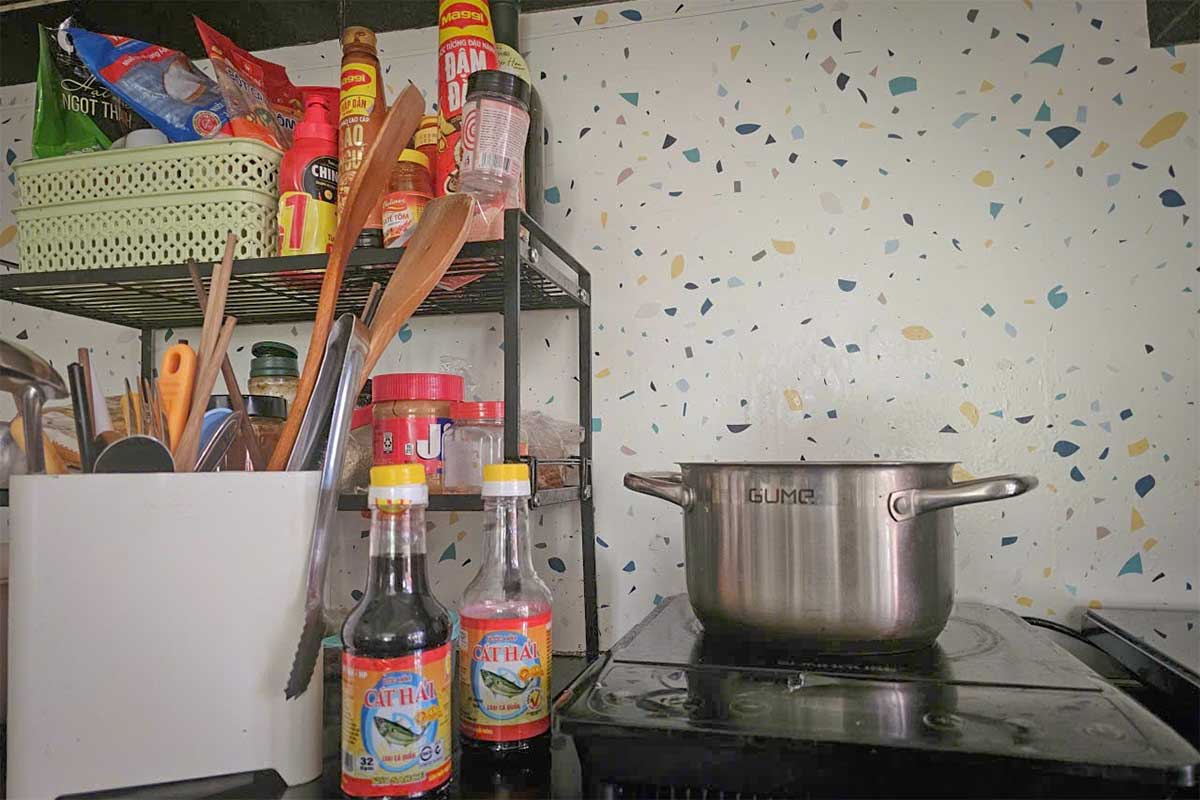
There are regional differences worth knowing. In the north, fish sauce tends to be used in its saltier, more concentrated form. In the south, especially around the Mekong Delta, people prefer it sweeter, often adding sugar to dipping sauces. In Hue, in central Vietnam, the dipping sauce culture is particularly refined — small bowls of carefully balanced nuoc cham are considered an art form and vary from dish to dish.
Beyond flavor, fish sauce carries real cultural weight in Vietnam. It has been produced here for centuries and is woven into the way Vietnamese people talk about food, home, and identity. Sharing a bowl of dipping sauce at the table is a normal, everyday act — but it is also a deeply familiar one.
How is Vietnamese fish sauce made?
The process looks simple on paper — fish, salt, time — but the details at every stage are what separate a remarkable bottle from a forgettable one. This is why there is such a noticeable gap between cheap fish sauce and a premium bottle from Phu Quoc or Phan Thiet.
Step 1: The fish and salt
Everything starts with black anchovies, known locally as ca com. These small fish are caught in the waters around Phu Quoc and along the central coast, and freshness is critical. On a good fishing boat, the anchovies are salted within minutes of being pulled from the water. Waiting too long degrades the quality of the final product.
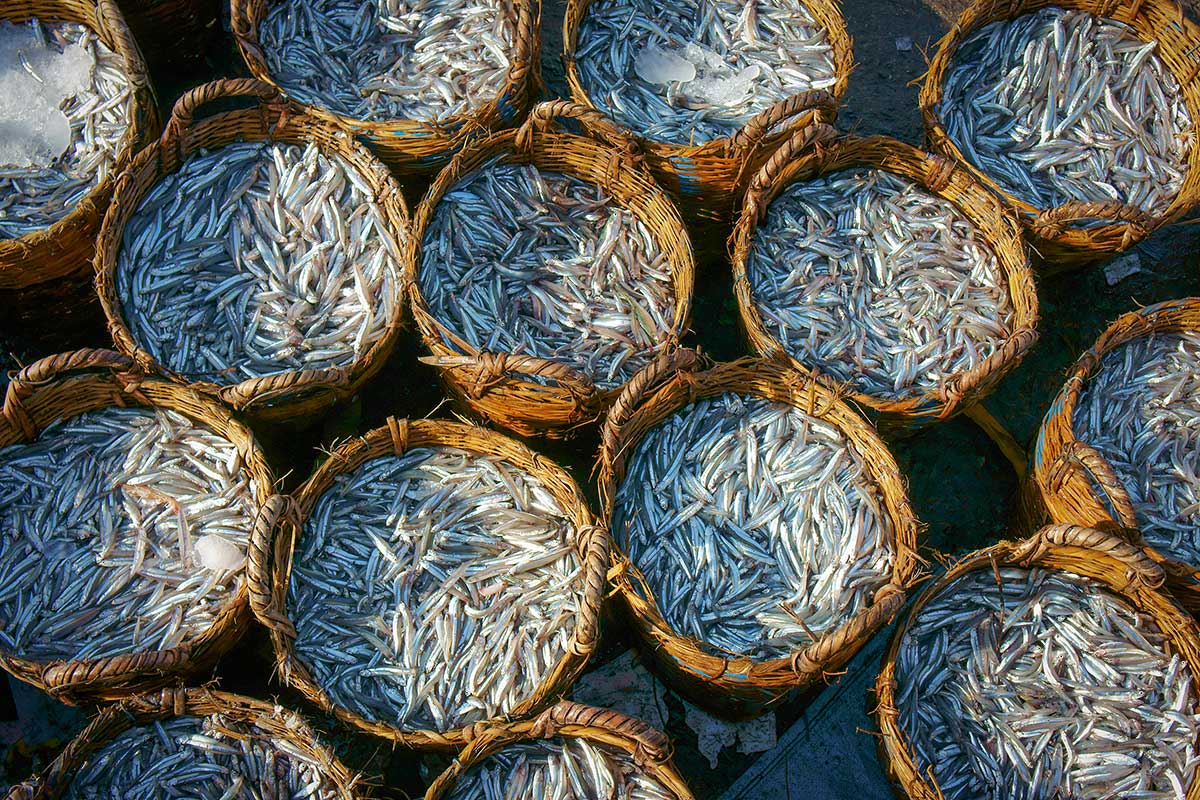
The ratio used by traditional producers is roughly three parts fish to one part salt. The salt itself matters more than most people realize — impurities in low-quality salt can affect both the flavor and the fermentation process. Serious producers source their salt carefully and often store it for months before use to reduce bitterness.
Step 2: Fermentation
Back on land, the salted fish is transferred into large wooden barrels where the slow fermentation begins. The liquid that eventually becomes fish sauce develops over nine to fifteen months, and premium batches are sometimes left even longer.
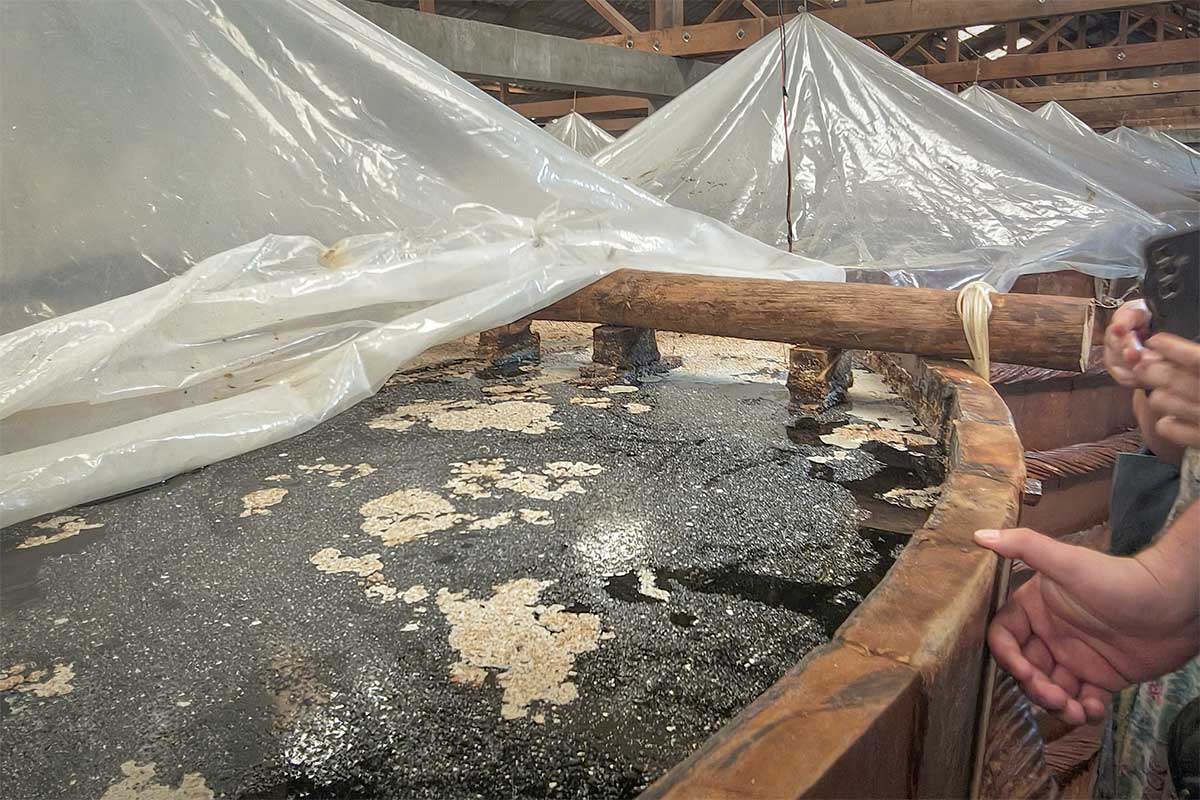
The type of barrel is not just a tradition — it actively shapes the flavor. Wood absorbs and releases compounds during fermentation in a way that industrial concrete or plastic vats simply cannot replicate. Fish sauce aged in traditional wooden barrels has a deeper, more rounded umami flavor. It is one of the clearest reasons why artisan producers in Phu Quoc taste different from mass-market brands made in factories elsewhere.
Step 3: The pressing
Once fermentation is complete, the liquid is drained from the barrels. What comes out first — without any added pressure or dilution — is the first press. This is the best of it: dark amber in color, rich in flavor, and high in protein content.

Protein content is measured in nitrogen degrees, shown on the label as a number followed by °N. A 40°N sauce is a solid, high-quality product. A 60°N sauce is premium and noticeably more intense. After the first press, producers can extract more liquid by adding water and pressing again, but each subsequent press is weaker and less complex. Much of the cheap fish sauce sold in bulk is a blend of later presses, sometimes with additives to compensate for the lack of natural flavor.
When buying fish sauce in Vietnam — or choosing one to bring home — the °N number and the ingredient list are the two things worth checking. If it only says anchovies and salt, you are holding a good bottle.
The two capitals of Vietnamese fish sauce
Vietnam has a long coastline and fish sauce is made in many places, but two names come up above all others: Phu Quoc and Phan Thiet. They represent different traditions, different flavor profiles, and between them, most of the country’s finest fish sauce.
Phu Quoc
Phu Quoc is the name most travelers will recognize, and for good reason. The island sits in the Gulf of Thailand in the far south of Vietnam, and the black anchovies caught in its surrounding waters are widely considered the best available for fish sauce production. The combination of the local fish, the traditional wooden barrel method, and generations of producer knowledge has built a reputation that now extends well beyond Vietnam.
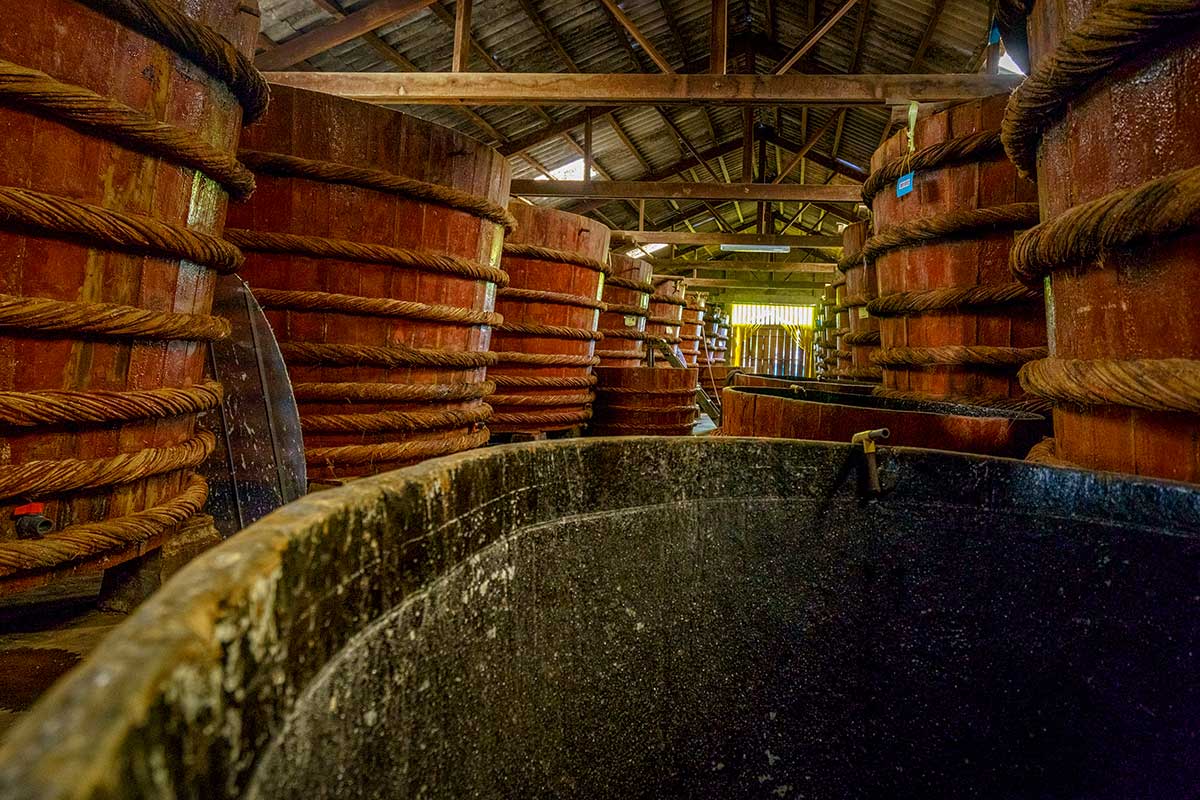
Phu Quoc fish sauce holds a protected geographical indication — similar in principle to champagne or Parma ham — meaning that only sauce produced on the island using the traditional method can officially carry the Phu Quoc name. That said, counterfeits and mislabeled products exist, so buying directly from a factory or a reputable shop on the island is always the safer option.
Most of the premium Vietnamese fish sauce brands found in international markets originate here.
Phan Thiet
Phan Thiet does not have the same international profile as Phu Quoc, but its claim to fish sauce history is arguably just as strong. The coastal city in Binh Thuan province, a few hours northeast of Ho Chi Minh City, has over 300 years of documented fish sauce production, and many food historians consider it the true birthplace of Vietnamese fish sauce. The early 20th century brand Lien Thanh, founded in Phan Thiet, was one of the first to bring Vietnamese fish sauce to wider attention across the region.
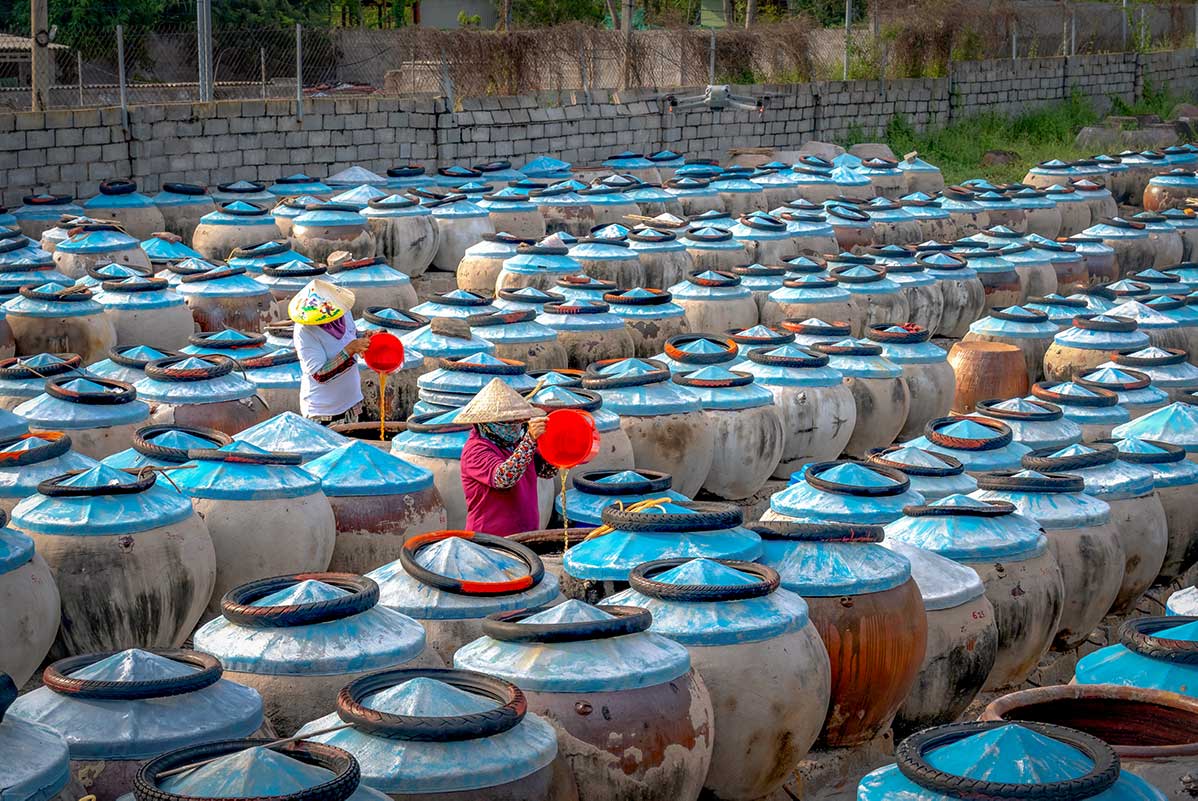
The sauce from Phan Thiet has a slightly different character to Phu Quoc — more reddish-brown in color with a saltier edge and a sweeter aftertaste. Neither is better in an absolute sense; they are simply different expressions of the same craft.
Phan Thiet tends to be overlooked on the typical tourist route, but for anyone with a genuine interest in fish sauce, it deserves a place on the itinerary. As the next section covers, it is also home to Vietnam’s only fish sauce museum.
Famous dishes that use Vietnamese fish sauce
Fish sauce works in two very different ways in Vietnamese cooking: as an ingredient that disappears into a dish during cooking, and as a dipping sauce that sits on the table and ties everything together. Most travelers encounter the second version far more often — and that starts with nuoc cham.
Nuoc cham — the universal dipping sauce
Nuoc cham is what you will find in a small bowl next to almost every Vietnamese meal. It is made by diluting fish sauce with water and balancing it with lime juice, sugar, and often minced garlic and fresh chili. The result is light, bright, and a little addictive — salty, sour, sweet, and just spicy enough.
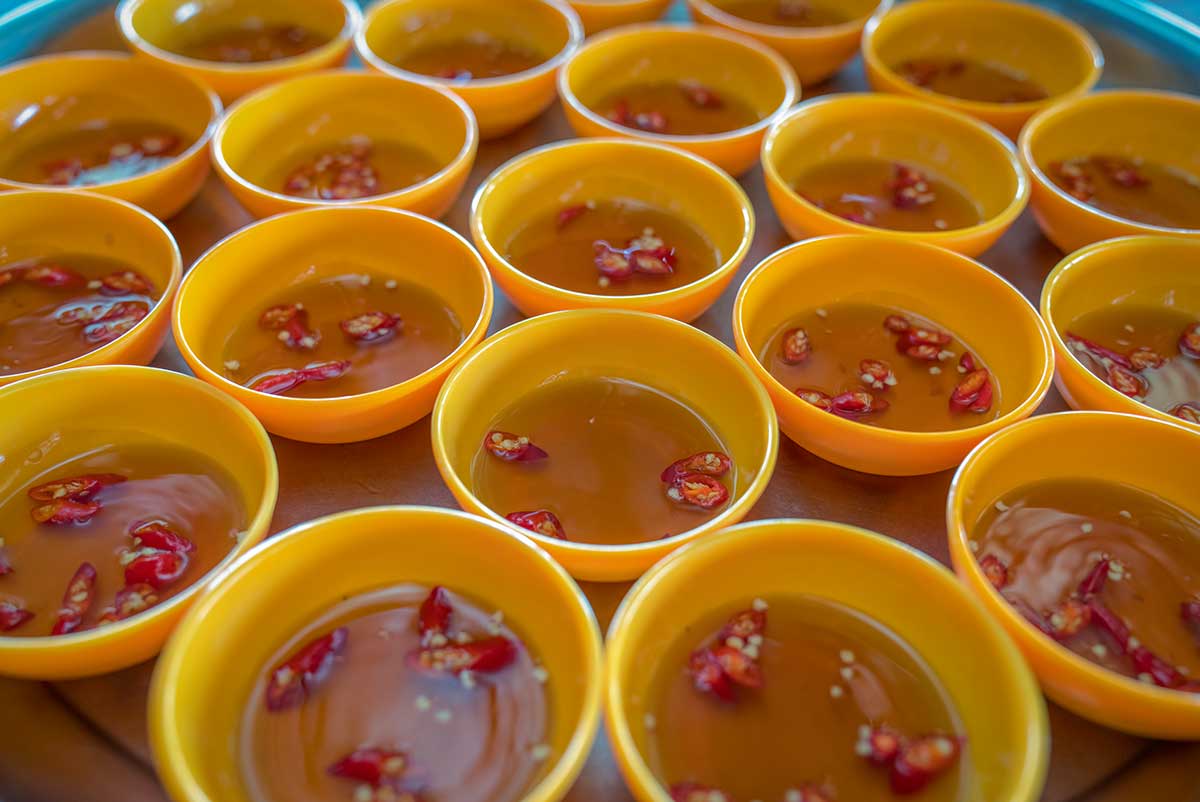
This is the version of fish sauce most foreign travelers interact with daily, whether they realize it or not. It comes with spring rolls, banh xeo (Vietnamese savory crepes), bun thit nuong (grilled pork vermicelli bowls), and many other dishes. The exact balance varies by region and by cook — in the south it tends to be sweeter, in the north saltier and more pungent.
Ca kho to — braised fish in fish sauce
Ca kho to is one of the most satisfying ways fish sauce is used in actual cooking. A thick cut of fish — often catfish — is slowly braised in a clay pot with fish sauce, caramel, and black pepper until the sauce reduces into something sticky and deeply savory. The fish sauce does not just season the dish here; it is the foundation of the entire flavor.
It is a humble, home-style dish, but it is one of the best examples of what fish sauce can do when it is cooked rather than served fresh.
Bun cha and bun thit nuong
Both dishes are built around grilled pork and a bowl of dipping sauce, and in both cases the sauce is the soul of the meal. Bun cha, most closely associated with Hanoi, pairs grilled pork patties and sliced belly with a warm, slightly sweet dipping broth based on fish sauce. Bun thit nuong, more common in the south, is a cold vermicelli bowl where the nuoc cham is poured directly over the ingredients.
In both cases, getting the fish sauce balance right is what makes or breaks the dish.
Banh cuon — steamed rice rolls
Banh cuon are thin, silky rice sheets filled with seasoned pork — sometimes shrimp — and mushroom, served with a light fish sauce dip that is more delicate than standard nuoc cham. It is a good example of fish sauce used with restraint — present enough to add depth, but not so assertive that it overwhelms the texture of the rolls.
Banh cuon is a popular breakfast dish in the north, particularly in Hanoi, and worth trying if you come across it.
Fish sauce experiences in Vietnam worth seeking out
1. Try nuoc cham with iconic local dishes
In one sense, you do not need to seek this out — nuoc cham will find you. But there is a difference between absent-mindedly dipping a spring roll and actually paying attention to what is in the bowl. Knowing that the sauce has been balanced by hand, that the fish sauce base likely came from Phu Quoc or Phan Thiet, and that the recipe varies from kitchen to kitchen makes the experience more interesting.
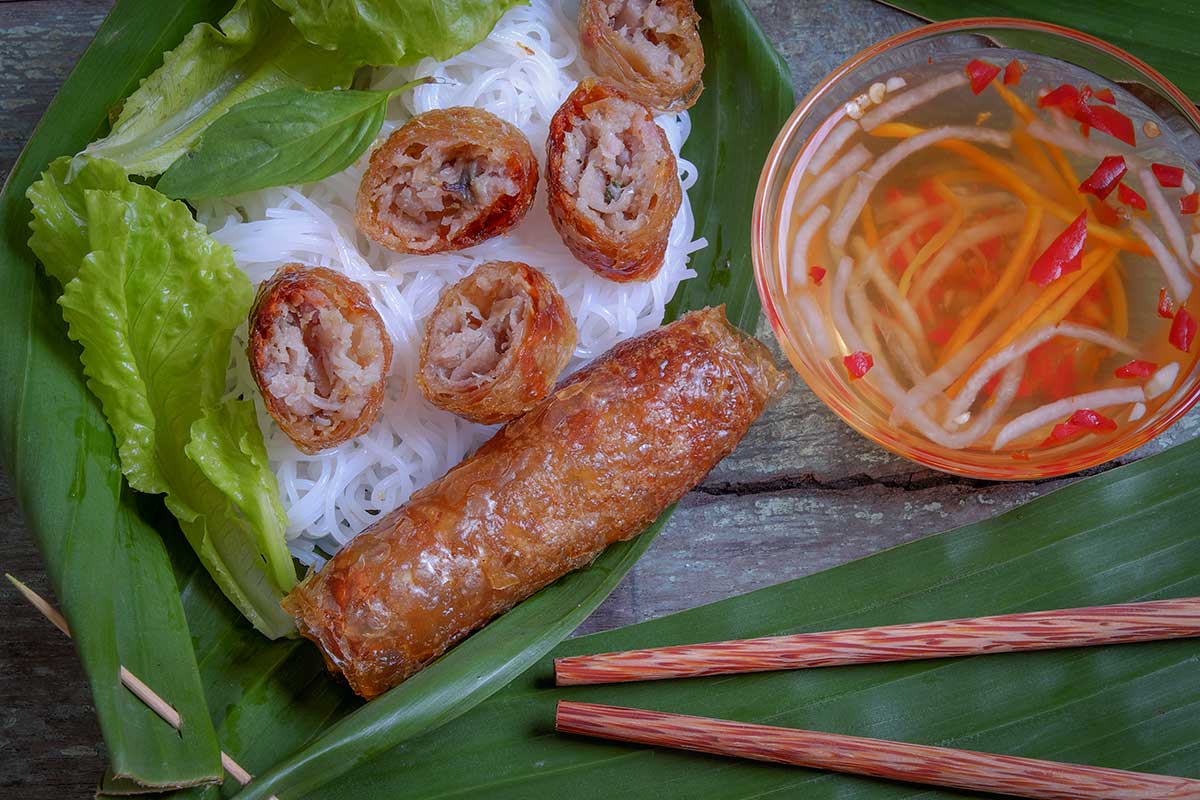
Make a point of tasting it properly at least once — not just as a dip, but as a flavor in its own right. A well-made nuoc cham at a good local restaurant is genuinely one of the small pleasures of eating in Vietnam.
2. Visit a fish sauce factory in Phu Quoc
Several fish sauce factories on Phu Quoc are open to visitors, and it is one of the more memorable things you can do on the island beyond beaches and sunsets. Walking into a barrel house for the first time is a full sensory experience — rows of enormous wooden barrels stacked under a roof, the sharp smell of fermentation in the air, and a quiet industrial hum that feels nothing like a tourist attraction.
Most factory visits include a look at the production process, an explanation of the different quality grades, and a tasting directly from the vat. Trying first-press fish sauce before it is bottled is something most people outside Vietnam never get the chance to do, and the difference in flavor compared to a supermarket bottle is immediately clear.
For a full overview of which factories are worth visiting and what to expect at each, see the separate guide to the best fish sauce factories in Phu Quoc to visit.
3. Visit the fish sauce museum in Phan Thiet
Lang Chai Xua — which translates roughly as Ancient Fishing Village — is Vietnam’s only fish sauce museum, and it is a more engaging experience than the word “museum” might suggest. Spread across 14 themed exhibition rooms, it traces 300 years of fish sauce history in Phan Thiet through life-sized recreations of fishing village life, traditional fermentation displays, and historical artifacts from the Cham period through to the 20th century.
There is a short documentary — around seven minutes — that covers the production process clearly and is worth watching before you walk through the rest of the exhibits. Visitors can also take part in role-playing activities, dressing as fishermen or salt farmers, which makes it genuinely entertaining for families. The highlight for most people is the tasting session, where you can try nuoc mam tin — a traditional fish sauce made from a 300-year-old recipe, extracted directly from fermentation vats using the old method.
It is not the most polished museum in Vietnam, but it is unique, and for anyone curious about where their dipping sauce actually comes from, it is well worth the stop.
Practical information: Address: 360 Nguyen Thong, Phu Hai Ward, Phan Thiet Open daily: 9am – 6pm Admission: 100,000 VND per adult, free for children under 1 meter tall
For more detail on what to expect, see the full guide to the Phan Thiet fish sauce museum.
Traveling with a fish sauce allergy or sensitivity
A fish sauce allergy in Vietnam is a real challenge — not impossible to manage, but genuinely difficult. This section is not meant to discourage anyone from visiting. It is meant to give an honest picture so you can prepare properly rather than be caught off guard.
It is harder than you think
Fish sauce is not just a condiment in Vietnam — it is a base ingredient that goes into marinades, braising liquids, soups, stir-fries, and dipping sauces. Many dishes that look completely safe on the surface have been seasoned with fish sauce during cooking, and you would never know from the taste alone.
Vegetarian dishes are not automatically safe either. At general restaurants, “vegetarian” often means no meat — fish sauce may still be used for flavor. Only dedicated vegetarian and vegan restaurants can be trusted to leave it out entirely.
It is also worth knowing that fish sauce is not the only fermented fish product used in Vietnamese cooking. Mam tom — a pungent shrimp paste — is common in certain dishes, particularly in the north, and can cause the same reactions in people with shellfish or seafood sensitivities. Bun rieu and bun dau mam tom are two dishes where it appears prominently, but it shows up in other places too.
How to communicate your allergy
The most reliable thing you can do is write your allergy down in Vietnamese and show it to restaurant staff rather than trying to explain it verbally. A useful phrase to have on your phone or a card:
“Toi bi di ung voi nuoc mam” — I am allergic to fish sauce.
If shrimp paste is also a concern, add: “Va mam tom” — and shrimp paste.
Even with a written note, results at street food stalls and local casual restaurants can be inconsistent. Staff may not fully understand cross-contamination, or the dish may already be pre-seasoned. Dedicated vegetarian and vegan restaurants — which are easy to find in most Vietnamese cities — are by far the safest and most stress-free option.
Safe options
Some dishes are generally lower risk, though you should always verify at the specific restaurant:
- Pho — the broth is traditionally made from bone and spices, not fish sauce, though some cooks add a small amount for seasoning. Worth asking.
- Banh mi — a simple banh mi with basic fillings like egg or plain grilled meat is usually fine. Avoid versions with heavy sauces or pate without checking first.
- Plain rice with grilled meat — straightforward dishes with minimal saucing are easier to control.
- Dishes cooked to order — the more a dish is assembled fresh in front of you, the easier it is to request modifications.
Higher-end restaurants and places used to serving international travelers tend to handle allergy requests more reliably than street stalls. That is not a reason to avoid local food entirely, but it is a practical consideration when the stakes are high.
Book through a tour operator
For travelers with a serious allergy, the most effective solution is to have someone manage it on your behalf. A good local tour operator can brief guides and restaurants in advance, choose suitable places to eat, and make sure your needs are communicated correctly at every stop — not just translated, but actually understood.
If you are planning a trip to Vietnam and a fish sauce allergy is a concern, Local Vietnam can help make sure your itinerary works around it properly.
Bringing Vietnamese fish sauce home
Fish sauce is one of the most practical souvenirs you can buy in Vietnam — useful, authentic, and genuinely different from what most people have at home. A few things are worth knowing before you buy.
Where to buy it
The best places to buy fish sauce are directly from a factory in Phu Quoc or Phan Thiet, or from a reputable supermarket chain such as Co.opmart, Vinmart, or Lotte Mart. Factories often sell their full range on-site, including grades that are not widely distributed elsewhere, and buying direct means you know exactly what you are getting.
Avoid tourist markets. Counterfeit and mislabeled fish sauce is a known problem in Vietnam — some bottles claim to be from Phu Quoc but contain sauce produced elsewhere, sometimes diluted or mixed with additives. The packaging can look convincing. Sticking to supermarkets or factory shops removes that risk entirely.
The simplest quality check is the ingredient list. A good bottle contains anchovies and salt — nothing else. If you see flavor enhancers, preservatives, or added sugar in the ingredients, it is a lower-quality product regardless of what the label claims on the front.
Recommended brands
There are many fish sauce producers in Vietnam, but these are reliable names worth looking for:
From Phu Quoc: Khai Hoan, Ong Ky, Hung Thinh, and Thinh Phat are all well-regarded traditional producers on the island. Thanh Quoc is worth noting as the first Vietnamese fish sauce brand to meet Japanese food safety standards — a useful indicator of consistency and quality.
From Phan Thiet: Nuoc Mam Tin is the traditional sauce you can taste and buy at the Lang Chai Xua museum, made from a recipe that is said to be 300 years old. Lien Thanh is one of the oldest fish sauce brands in Vietnam, with roots going back to the early 20th century, and remains a trusted name.
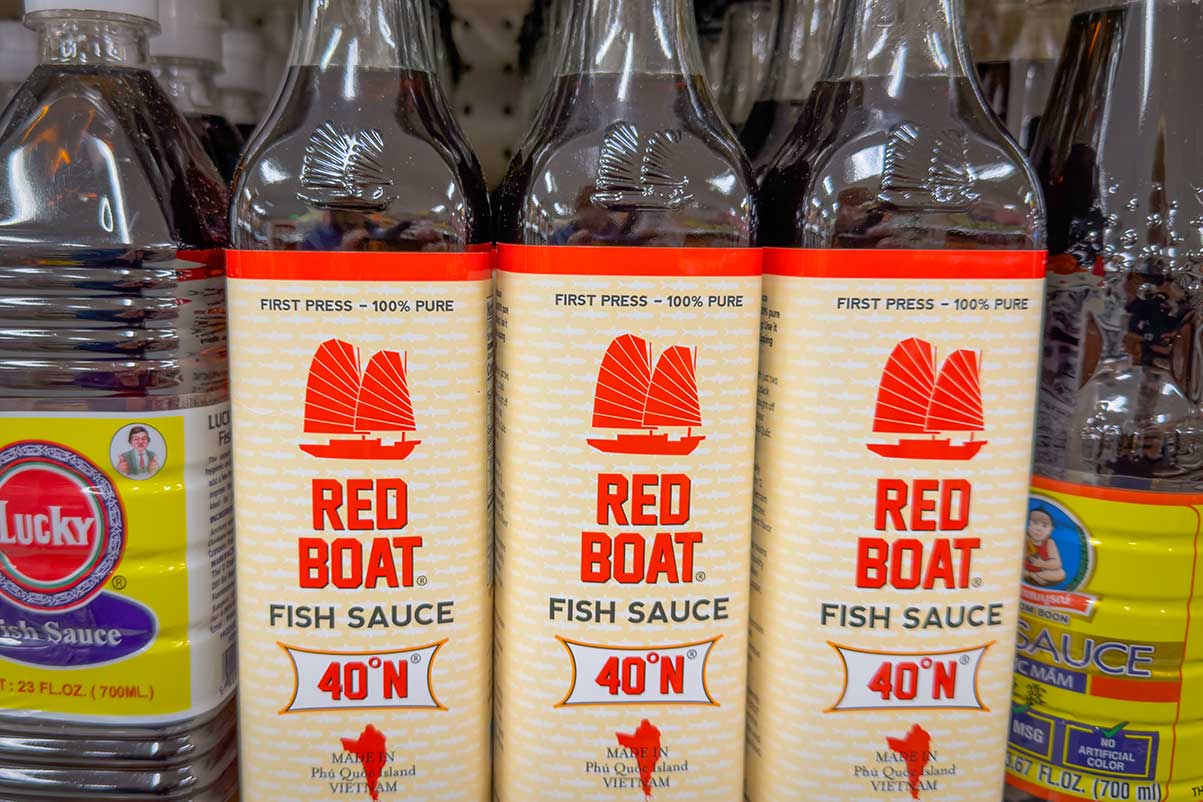
Red Boat: Produced in Phu Quoc using only anchovies and salt, Red Boat has become the most internationally distributed premium Vietnamese fish sauce. If you want to continue using good Vietnamese fish sauce after your trip and cannot easily find local brands abroad, Red Boat is widely available in specialty food shops and online across Europe and North America.
Understanding the label
The number followed by °N on a fish sauce label refers to the protein — or nitrogen — content of the sauce. It is the clearest indicator of quality and intensity on the bottle.
A 40°N sauce is a solid all-purpose choice that works well for both cooking and dipping. A 60°N sauce is noticeably richer and more complex — better suited to dipping sauces and finishing dishes than to cooking, where the nuance tends to be lost in heat. As a general rule, save the higher-grade bottles for the table and use lower grades in the kitchen.
Traveling with fish sauce — what to know
Fish sauce is a liquid, so it cannot go in your carry-on bag. It must go in checked luggage. That part is straightforward — but it does not end there.
For flights within Vietnam, most airlines allow fish sauce in checked baggage, but rules on quantity and packaging vary. Vietnam Airlines generally allows up to 3 liters packed in plastic bottles inside sealed foam containers. Budget carriers like VietJet can be stricter. Always check before you buy.
For international flights, the situation is more complicated. Some airlines allow fish sauce in checked baggage with proper packaging. Others ban it entirely due to the risk of leaks and the difficulty of removing the smell from an aircraft hold. Do not rely on advice from shop or factory staff about what your airline permits — travelers have had bottles confiscated at the airport after being told they would be fine. Check your airline’s website directly before buying.
If you are buying at a factory, ask whether they can vacuum-pack or foam-pack your bottles. The better ones will do this on request, which helps with leaks — but it does not override airline rules. Some factories can also arrange shipping directly to your home country, which removes the problem entirely.
One final note: if you run out after your trip or simply want to stock up without waiting for your next visit, Vietnamese fish sauce is more accessible abroad than many people realize. Most Asian grocery stores carry at least a few Vietnamese brands, and specialty food shops in larger cities across Europe and North America increasingly stock premium options. You do not have to wait until you are back in Vietnam to keep using it. And if you want to bring something else special home from your trip instead, the guide to best souvenirs in Vietnam has plenty of ideas.