
Su Muon Pagoda – A small hillside temple near Duong Dong
Su Muon Pagoda, also known as Hung Long Tu, is a small Buddhist temple located just outside Duong Dong, slightly uphill and surrounded by trees. It was originally built in the 1930s by a monk named Gia Minh, using simple materials like wood and leaves. The pagoda was later destroyed during the war and rebuilt in the 1950s, with further renovations in more recent years.
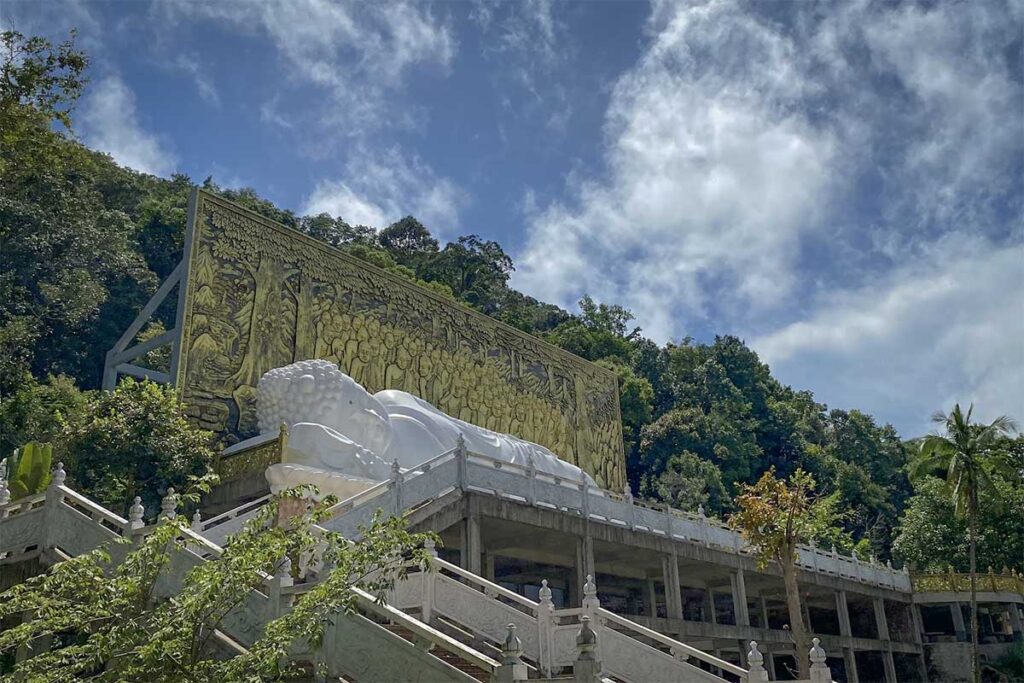
Today, it remains a quiet and mostly local place, far less visited than temples like Ho Quoc Pagoda or Dinh Cau. The setting is one of its main appeals. It sits on a gentle hillside with a mix of jungle greenery, shaded paths, and scattered temple structures, giving it a calm and slightly hidden feel.
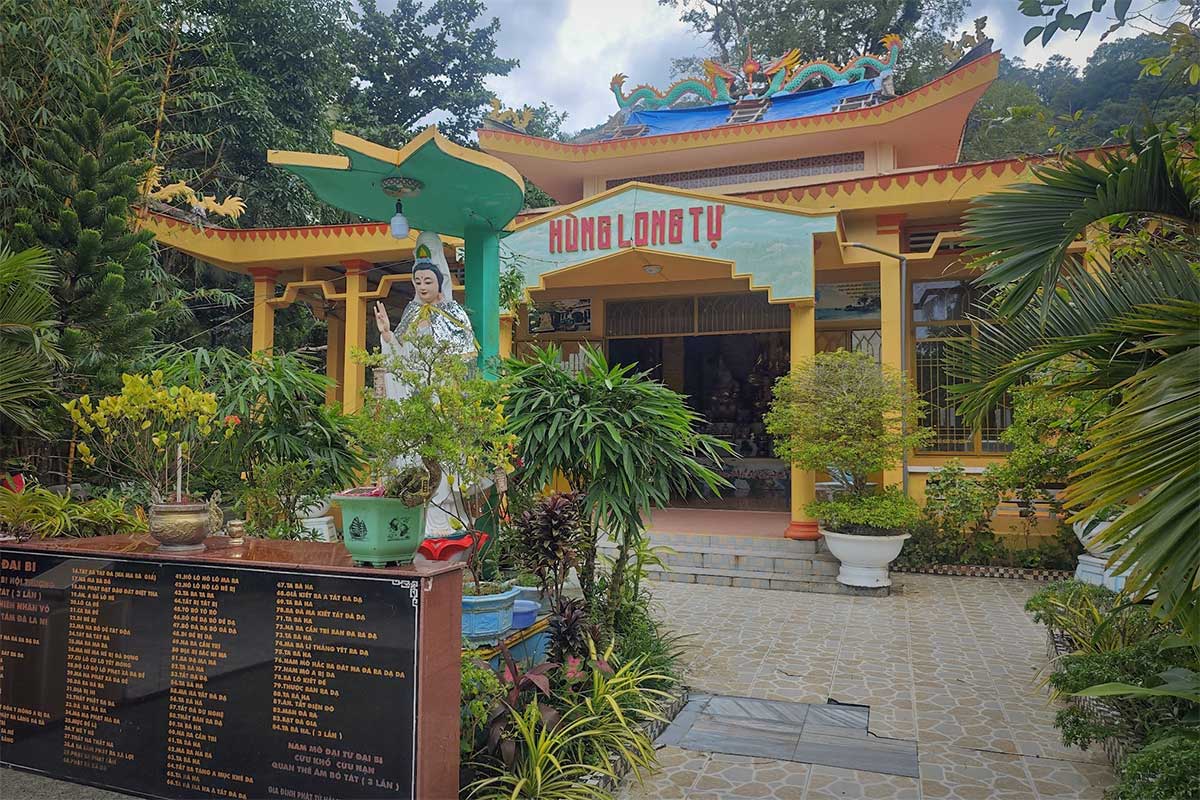
In terms of architecture, this is not a grand or highly impressive pagoda. It feels more like a collection of different elements added over time rather than one cohesive design. That said, this mix is also part of its character. As you walk around, you will come across colorful statues, small shrines, stone staircases, a dragon-decorated entrance, and the large white reclining Buddha tucked further inside the complex. Combined with the trees and natural surroundings, it creates a place that is simple, a bit unusual in style, but still interesting to explore for a short visit.
Highlights of visiting Su Muon Pagoda
1. Reclining Buddha statue
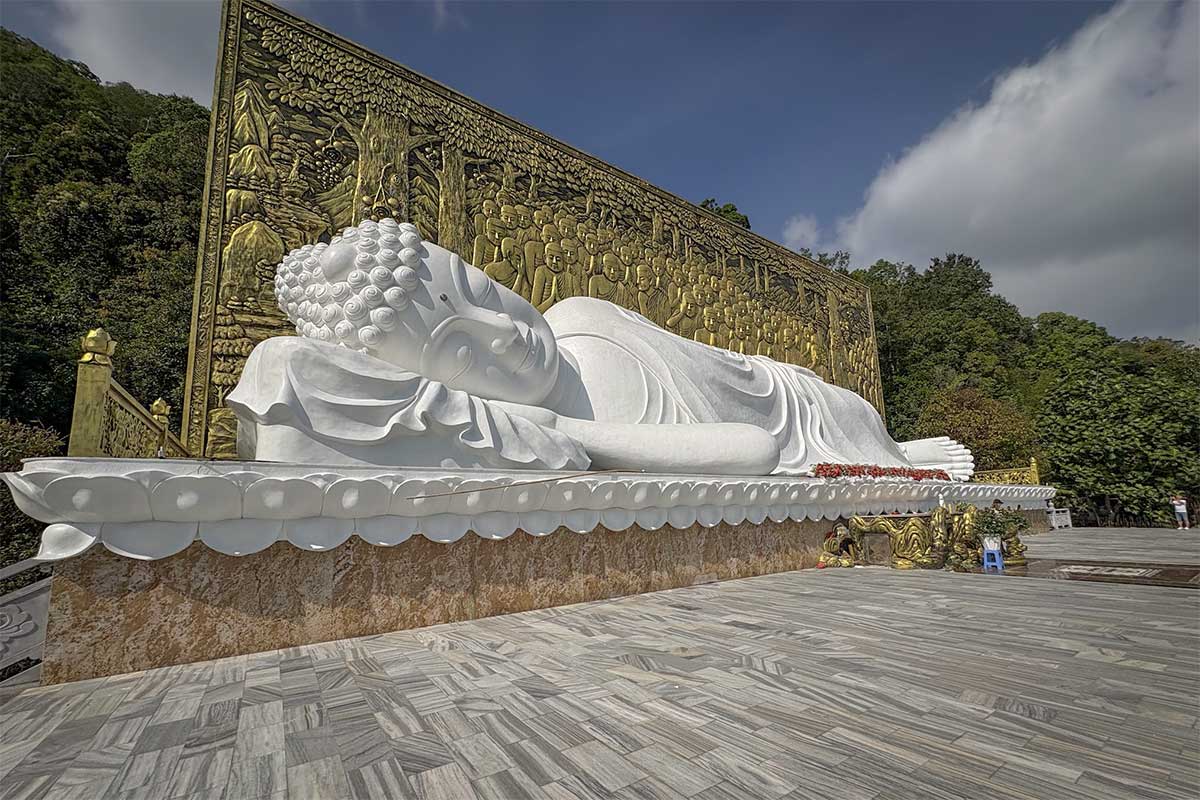
One of the most noticeable features is the large white reclining Buddha hidden further inside the temple grounds. You don’t immediately see it from the entrance, which makes it a bit of a surprise when you find it. The statue is quite big and stands out against the green surroundings, making it one of the most photographed spots in the pagoda. Several visitors mention this as the highlight of their visit.
2. Dragon staircase and temple entrance
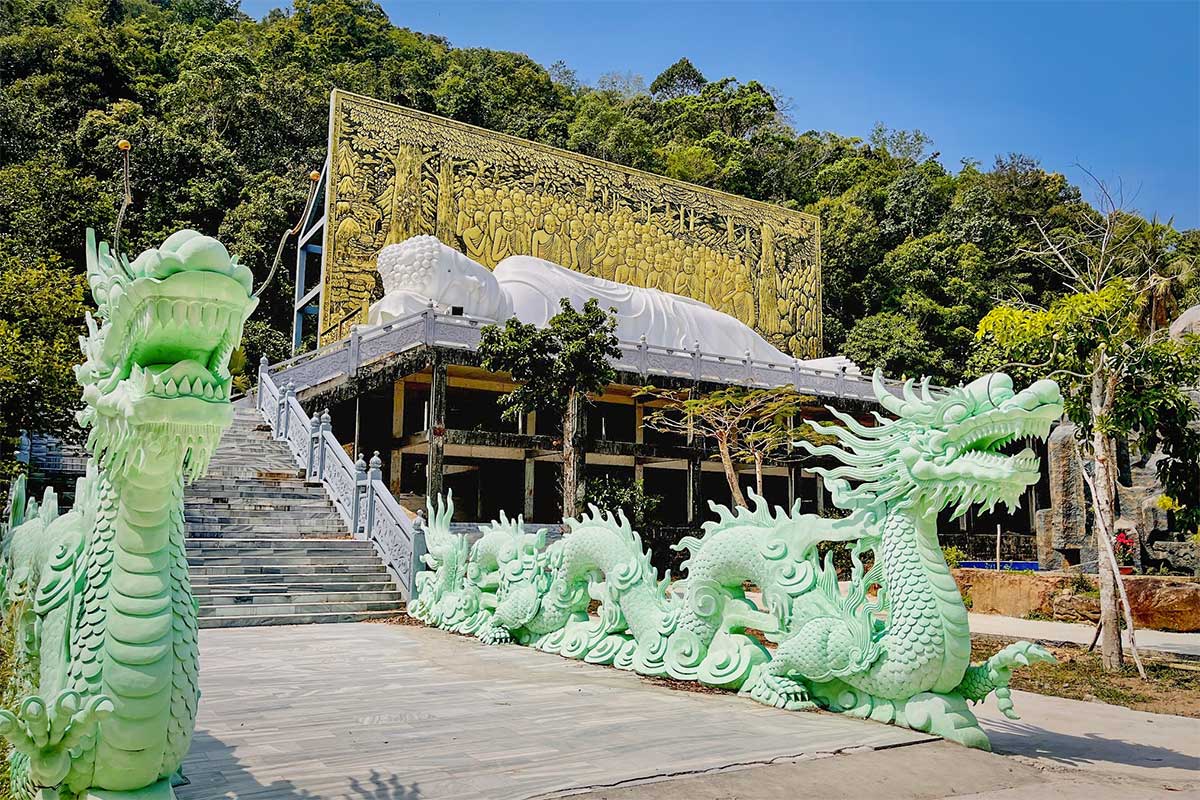
The entrance and staircases are decorated with green dragon sculptures that guide you up toward the temple. These details are quite bold and colorful, and while some might find them a bit kitschy, they do give the place a unique look. It is a good example of how different styles and elements are mixed together here rather than following one consistent design.
3. Elevated location and hidden viewpoints
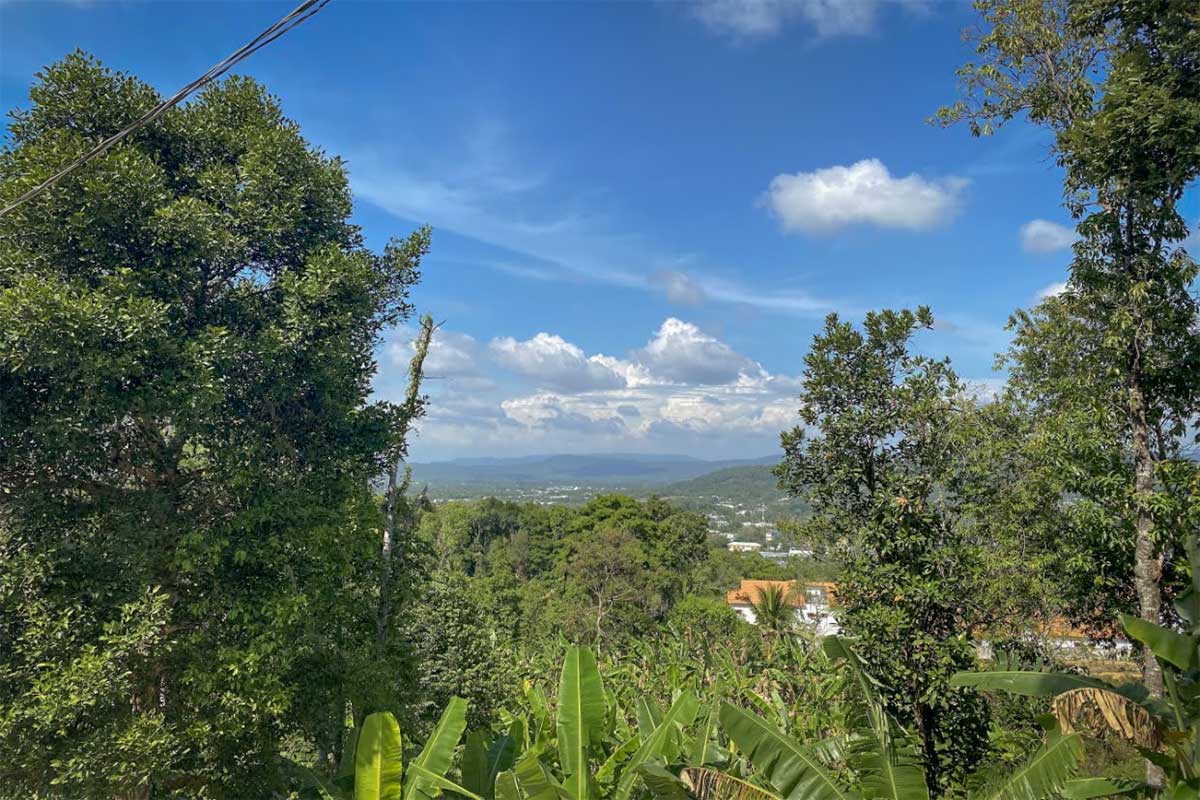
The pagoda sits on a hillside, and there are a few higher points you can reach by following the paths and stairs. The views are not wide open like at some other viewpoints on the island, as trees block much of the scenery, but you still get a sense of being above the surrounding area. Some visitors mention that the better spots are not obvious at first, so it is worth walking around a bit and exploring.
4. Old trees and natural surroundings
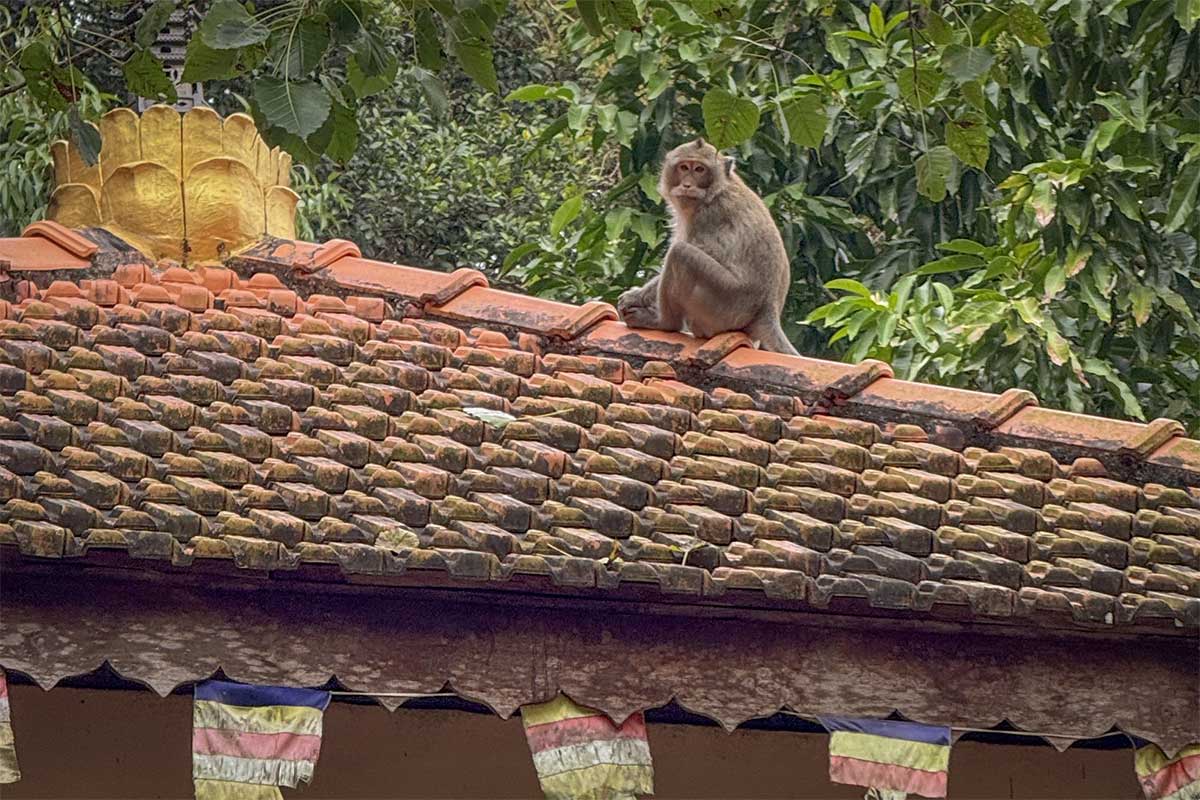
The temple grounds are shaded by large, old trees, including one that is often described as several hundred years old. The exact age is unclear, but it does add to the atmosphere of the place. The setting feels slightly jungle-like, with birds, insects, and sometimes even monkeys reported in the area, although sightings are not guaranteed.
5. Small temple complex and statues
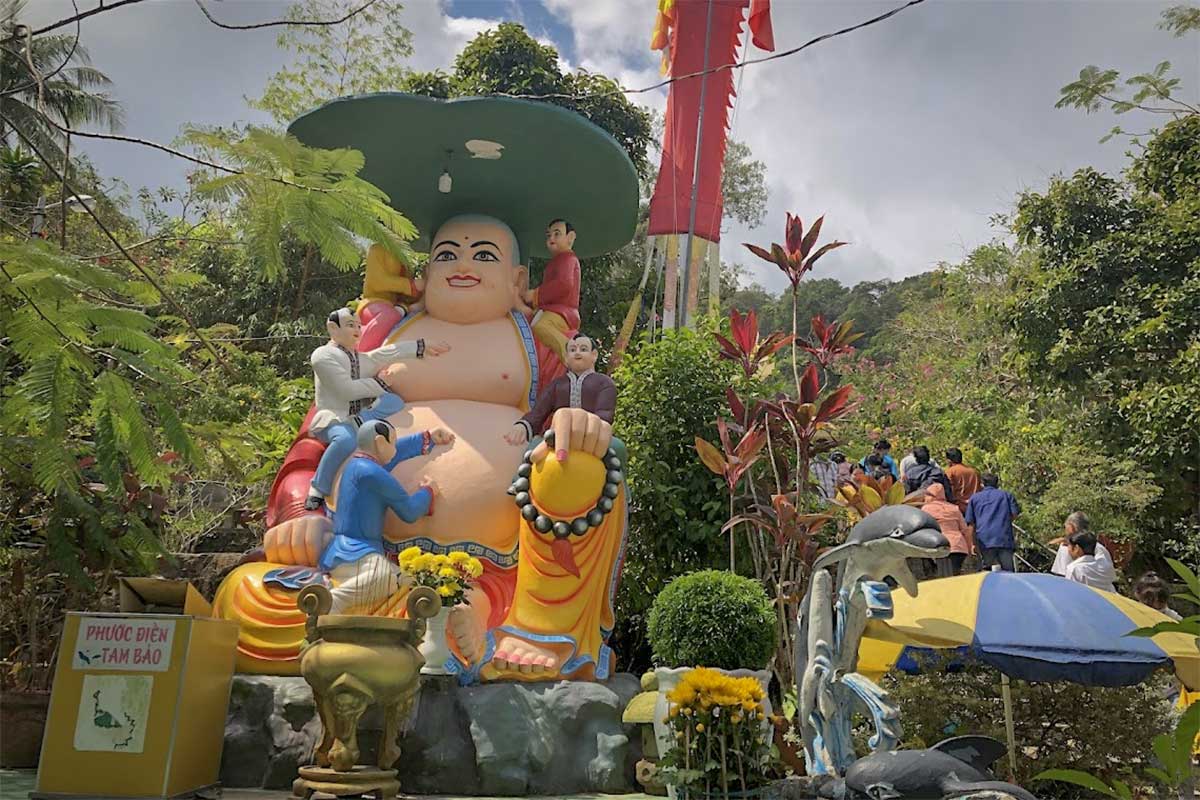
Rather than one large temple building, Su Muon Pagoda is made up of smaller structures and scattered features. You will see a mix of colorful Buddha statues, small altars, and even a cave-style shrine with figures placed inside.
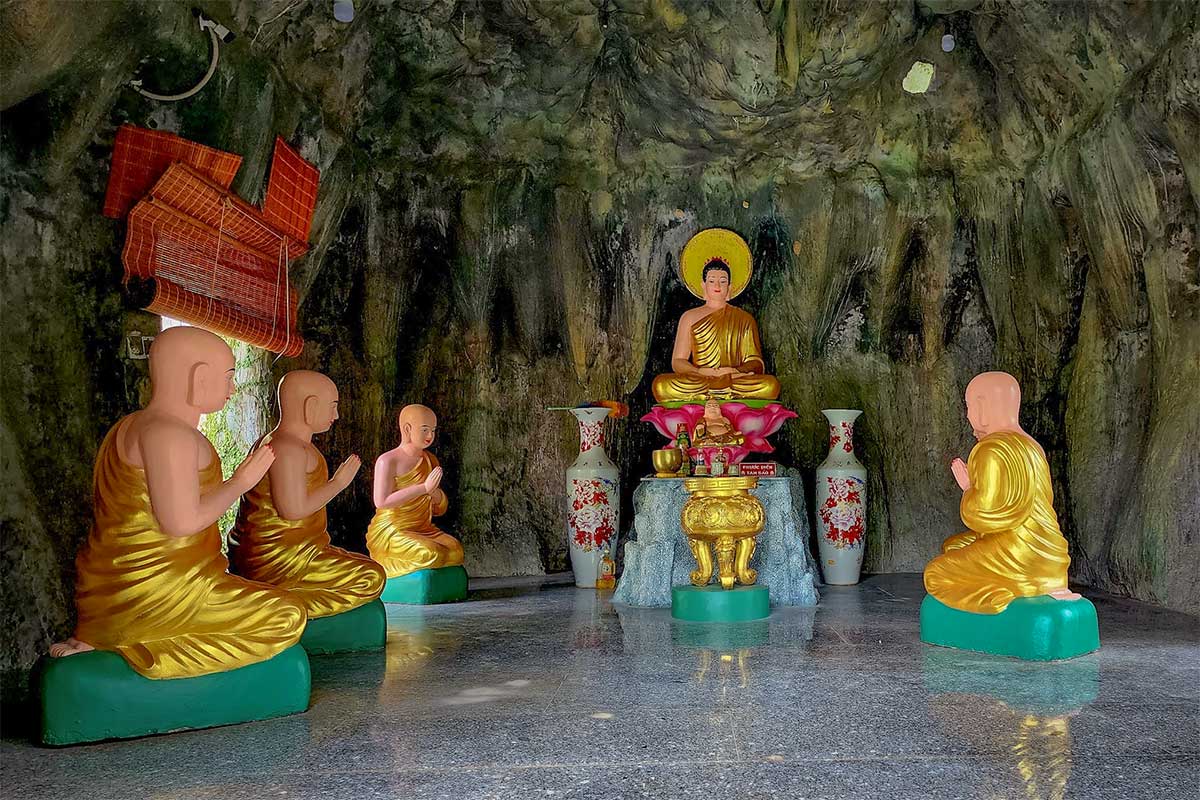
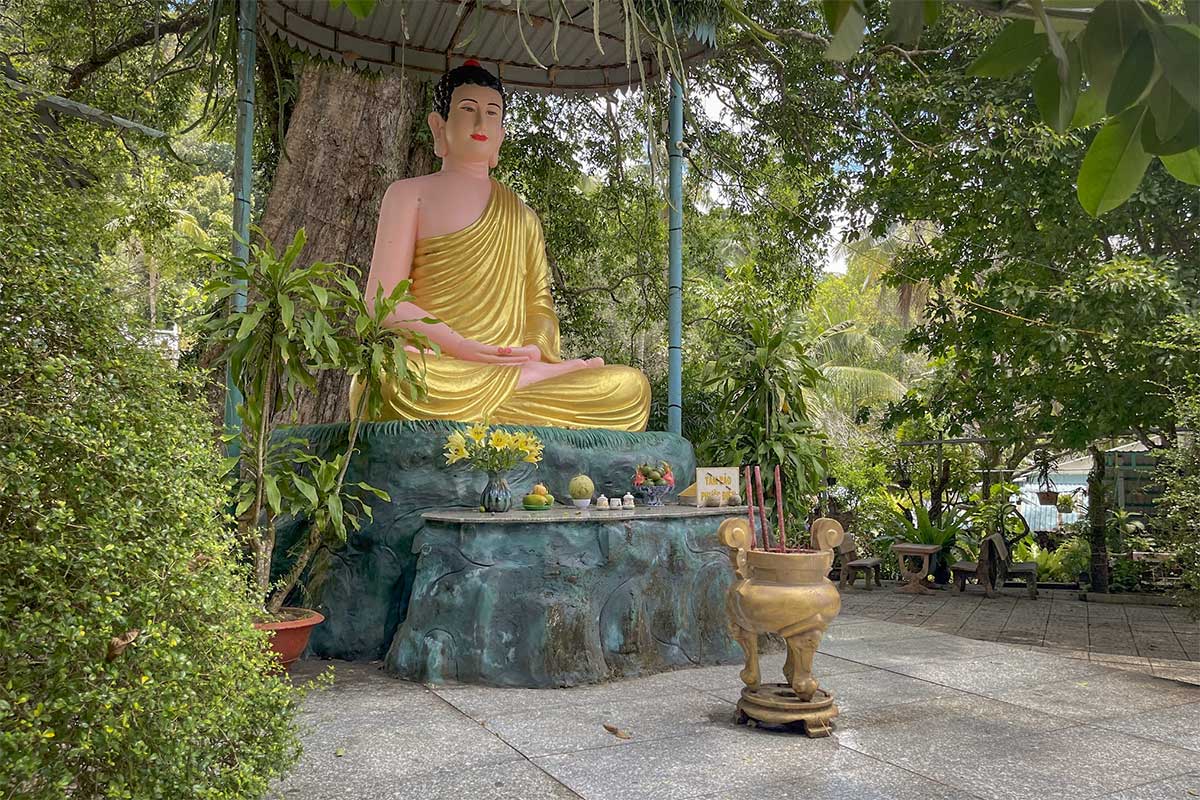
The overall layout can feel a bit random, as different elements seem to have been added over time. It is not the most architecturally refined temple, but it does make walking around a bit more interesting, as there is always something new to notice.
Location and how to get there
Su Muon Pagoda is located just outside Duong Dong, about 5 km from the center. It sits slightly uphill along the road heading towards Ham Ninh, making it easy to reach if you are exploring the eastern side of the island.
To get there, follow the main road out of Duong Dong in the direction of Ham Ninh. After a few kilometers, you will see a decorative gate on the right side marking the entrance to the pagoda. From here, a smaller road leads uphill to the parking area near the temple.
The most practical way to visit is by motorbike, especially if you are already exploring the island. A taxi or Grab is also very easy and affordable due to the short distance. There is a small parking area near the entrance, so you do not need to walk far from where you arrive.
From the parking area, it is a short walk with some steps leading up into the pagoda grounds. The road already brings you most of the way up, so the climb is minimal and manageable for most visitors.
In terms of planning, this is best seen as a quick stop along the way rather than a main destination. It works well if you are driving across the island or heading towards the east coast, but it is not worth making a long detour just to visit the pagoda.
Practical visiting information & tips
Entrance fee and opening hours
Entry to Su Muon Pagoda is free. The temple is open during daylight hours, from early morning until late afternoon. There are no strict ticket gates or controlled entry times.
Time needed
Most visitors spend around 20 to 40 minutes here. It is a relatively small area, so you can see everything without rushing.
What to expect
The pagoda is usually very quiet, and at times you may have the whole place almost to yourself. It feels more local than touristy. During major holidays like Tet, it can get busier with Vietnamese visitors coming to pray, but outside of those times it remains calm.
Dress code and behavior
Dress modestly, with shoulders and knees covered. Remove your shoes before entering temple buildings. Keep noise low and be respectful around people who are praying.
Facilities and conditions
Facilities are basic. There are toilets on site, but they are not always well maintained. Paths and stairs can be uneven in places, so wear suitable footwear and watch your step.
When to visit
The best way to visit is as part of a route across the island, rather than as a standalone trip. Try to go during the day, as it can feel more isolated and less practical to explore once it gets dark due to limited lighting.
Is Su Muon Pagoda worth visiting?
Su Muon Pagoda is not a major highlight of Phu Quoc, and you won’t miss much if you decide to skip it. Compared to other temples on the island or especially on mainland Vietnam, it is smaller, less impressive, and not a must-see attraction.
That said, it can still be worth a short visit in the right situation. If you are already nearby, exploring the island by motorbike, or simply enjoy visiting temples, it makes for a quiet and easy stop. The mix of statues, the hillside setting, and the reclining Buddha give it enough character to spend 20–30 minutes walking around without feeling like a waste of time.
It is less ideal if you have a short itinerary or are looking for something truly memorable. Travelers expecting large temples, strong viewpoints, or standout architecture will likely find it underwhelming. There are better places on the island for that.
If you are interested in visiting more temples during your trip, it is worth looking into larger and more impressive options around the island. For a better overview, check out our guide to the best temples in Phu Quoc, where you can choose which ones fit your travel style.