
History of Phu Quoc Prison
Understanding the history of this place before arriving makes the visit significantly more meaningful. What you walk through today was not a single prison but a site that evolved over nearly three decades, used by two different regimes, and witnessed the suffering of tens of thousands of people.
The French colonial period (1949–1954)
The origins of Phu Quoc Prison trace back to 1949, when French colonial forces took over existing structures in the south of the island that had been left behind by Nationalist Chinese troops. The site was developed into a detention camp known as Coconut Tree Prison — Trai Cay Dua in Vietnamese — covering around 40 hectares and divided into four sections: A, B, C, and D.
At its peak during the Indochina War, the camp held close to 14,000 prisoners, the majority of them Vietnamese communist fighters captured from battlefields across the north, center, and south of the country. Conditions were harsh, and 99 prisoners died during this period. Around 200 managed to escape.
Following the Geneva Agreements in 1954, France handed the prison and its remaining prisoners back to the Vietnamese side, effectively ending the first chapter of the site’s history.
The Vietnam War period (1955–1975)
The second and far more devastating chapter began in the late 1950s and escalated sharply through the 1960s. As the Vietnam War intensified and the number of prisoners of war grew rapidly, the South Vietnamese government — backed by the United States — rebuilt and massively expanded the site. By 1966, a new camp covering more than 400 hectares had been constructed in the An Thoi valley, about 2 kilometers from the original Coconut Tree Prison location.
The expanded facility consisted of 12 main zones, each divided into four sub-sections, with over 400 buildings in total. Each sub-section could hold up to 950 prisoners. Security was intensive: four military police battalions guarded the camp around the clock, supported by watchtowers, patrol vehicles, searchlights, and US military advisors overseeing operations.
At its peak in 1972, the camp held around 36,000 prisoners. Over the entire period, more than 32,000 prisoners of war passed through, with the total rising to 40,000 when political prisoners across all periods are included. The prisoner population included regular soldiers, local militia, political cadres, and senior officers — the highest-ranking prisoner held was a lieutenant colonel.
Torture during this period was systematic and extensively documented. The methods used were numerous and severe, ranging from tiger cage confinement and nail-driving to electric shock, tooth extraction, and submersion in boiling water. The International Red Cross visited the prison in 1969 and again in 1972, and observers confirmed that abuse was ongoing and widespread. Despite findings from both the Red Cross and internal US military investigations, conditions did not meaningfully improve. More than 4,000 prisoners died during the Vietnam War period alone.
Resistance among prisoners was consistent throughout. The most notable example came in May 1969, when a group of prisoners in Zone B2 successfully dug an escape tunnel using basic tools — spoons, metal containers, and whatever they could find — and broke out of the camp. It remains one of the most remarkable acts of defiance in the prison’s history.
The camp was closed following Vietnam’s reunification in 1975, after the fall of Saigon ended the war.
Recognition as a national relic
In 1995, the Vietnamese Ministry of Culture and Information officially designated Phu Quoc Prison a National Historical Relic. The site was subsequently reconstructed and developed into the open-air museum it is today, with restored buildings, exhibits, memorial monuments, and bilingual signage. It now serves as both a war memorial and an educational site visited by tens of thousands of people each year.
What to see at Phu Quoc Prison today
The prison grounds are large and can feel overwhelming without a sense of what to prioritize. The highlights below cover the most significant areas of the site — the things that make this visit genuinely different from a standard museum experience.
1. The prison compound
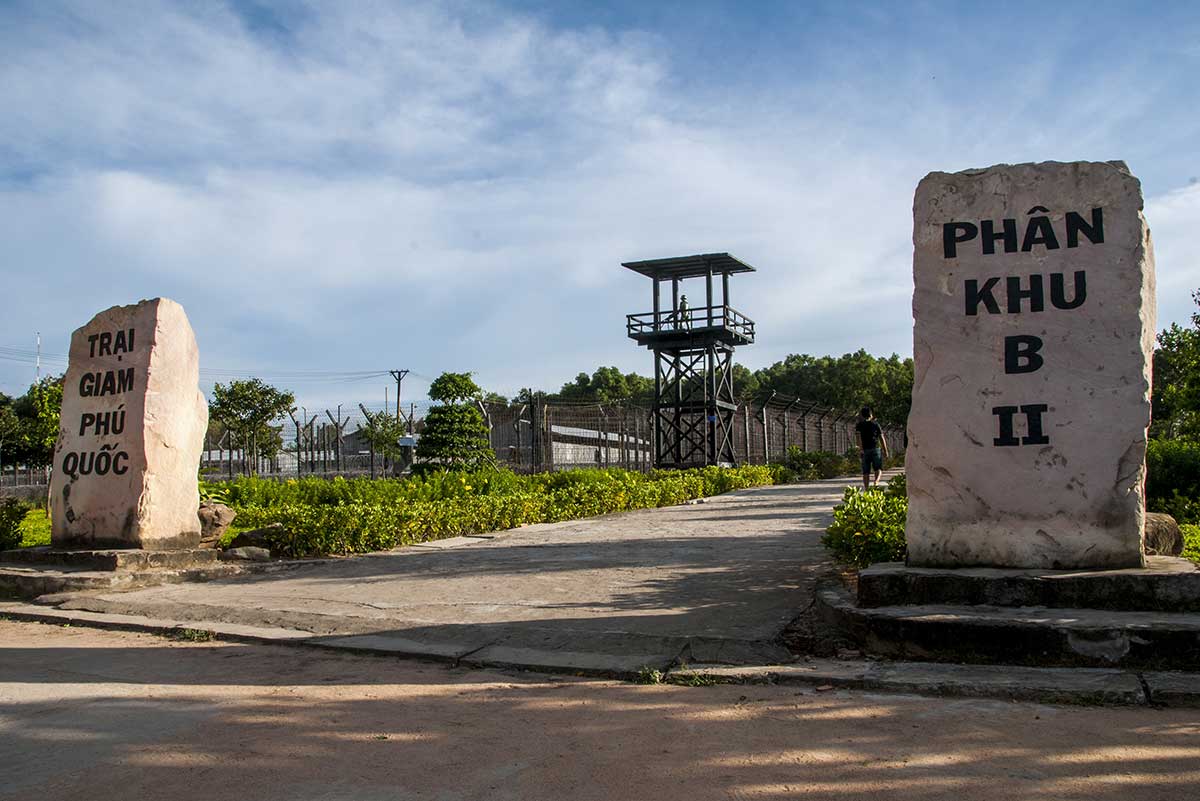
Before reaching any of the exhibits, the scale and layout of the site itself makes an immediate impression. Rows of rusted corrugated iron barracks stretch out behind multiple layers of barbed wire fencing, with watchtowers rising above the perimeter. Between the fence lines, coils of razor wire fill the gaps — and wax figures of guard dogs are positioned along the corridors between them, a detail that makes the security feel viscerally real rather than merely described.
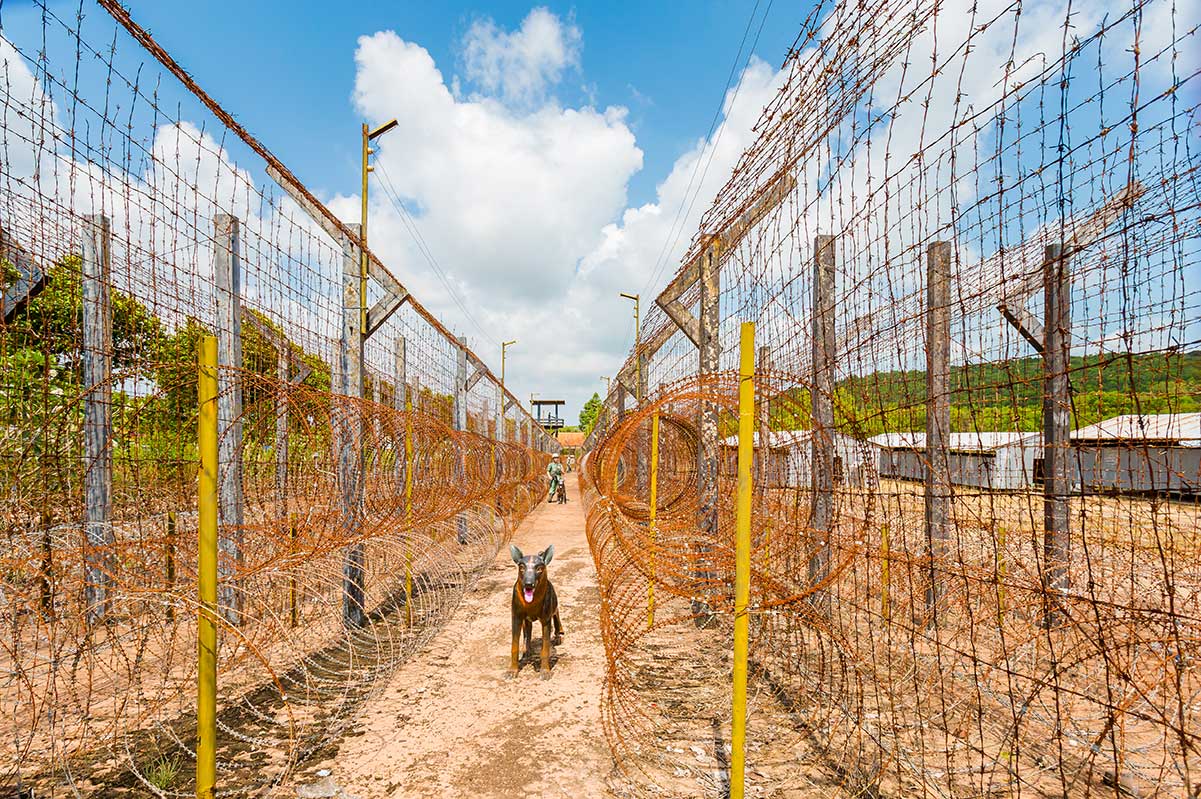
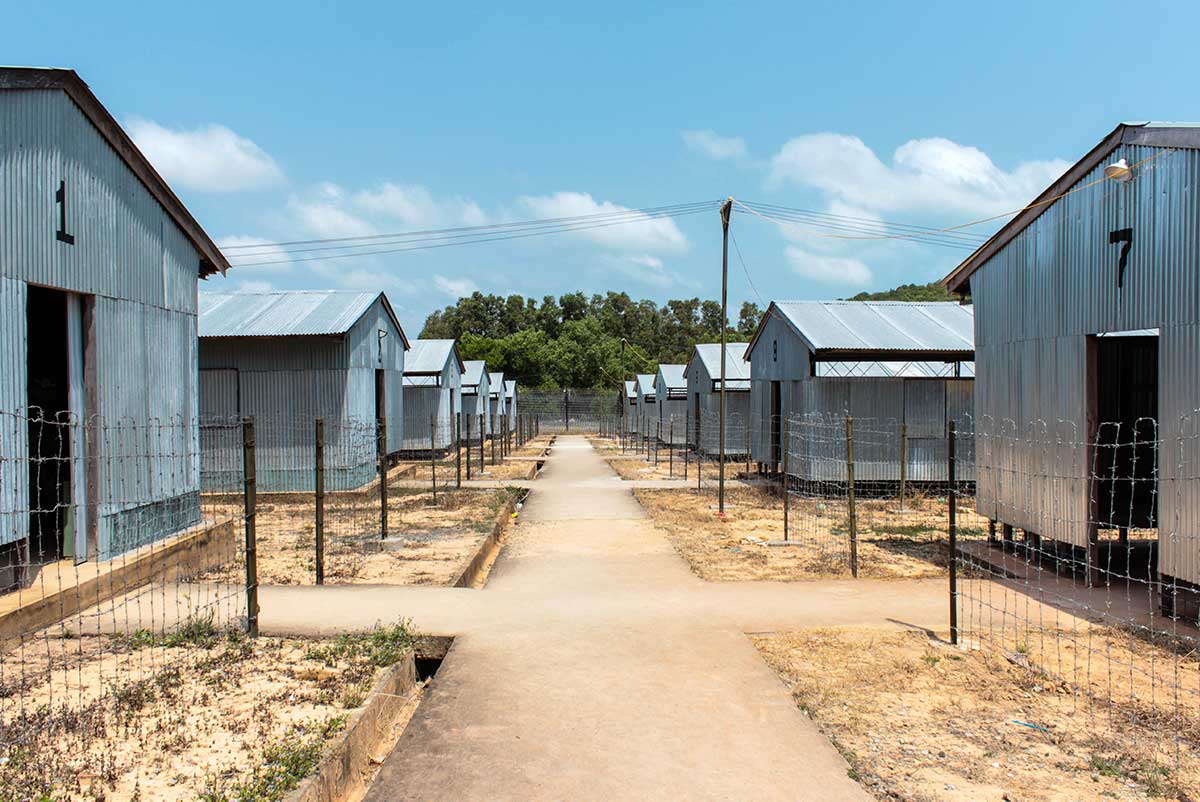
The gates leading into each section are heavy iron and wire constructions, still standing largely as they were. Walking through them into the open sandy compounds, with the barracks lined up ahead and the fencing closing in on both sides, gives a sense of confinement that no exhibit inside a building can quite replicate. This is what tens of thousands of people lived inside — and simply being in the space, before reading a single information board, communicates that more effectively than anything else on the site.
2. The tiger cages
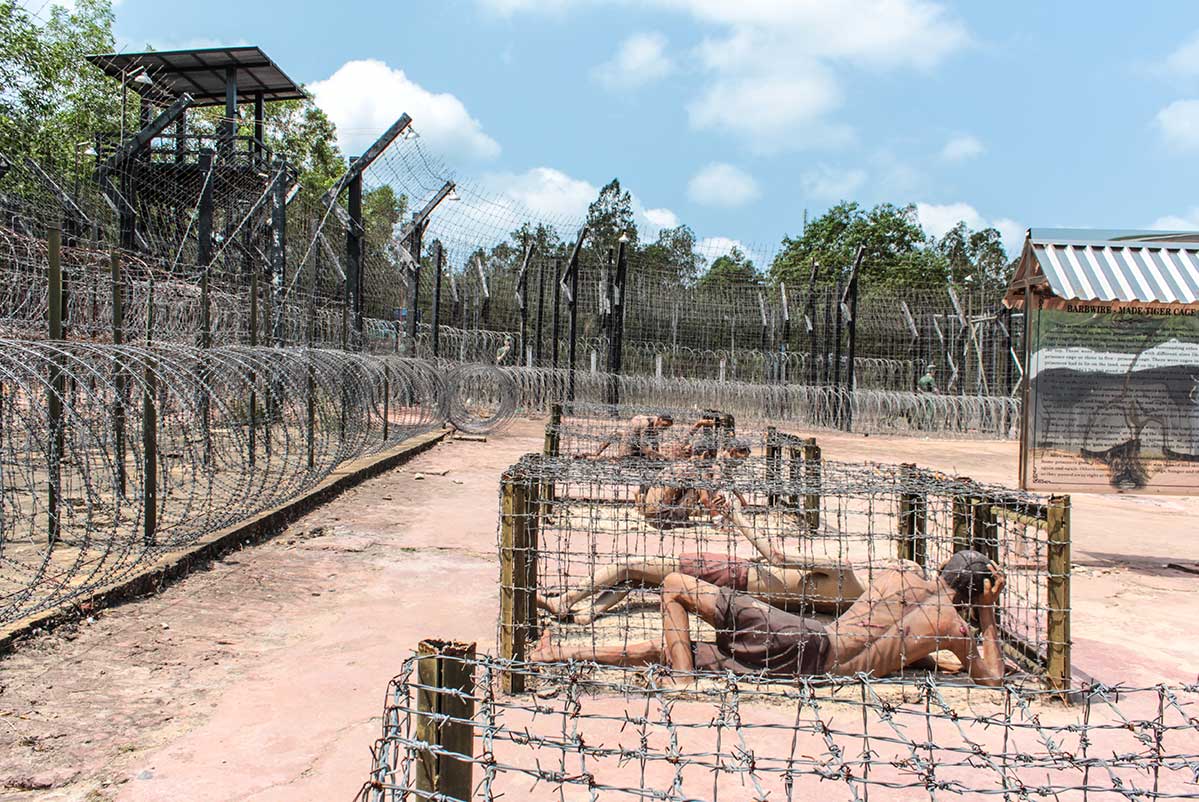
The tiger cages are among the most striking and disturbing things to see at Phu Quoc Prison. These were outdoor enclosures made entirely of barbed wire, including the floor, walls, and roof. Prisoners kept inside could not stand upright without being cut by the wire above them, but if they tried to lie down on the sand beneath, the intense heat from the sun would burn their skin. They were left exposed to full sun during the day and cold air at night, often for extended periods.
Today the area features realistic scale models that recreate the cages and the conditions inside them. It is one of the most viscerally affecting parts of the visit.
3. Torture exhibits and wax figures (Zone B2)
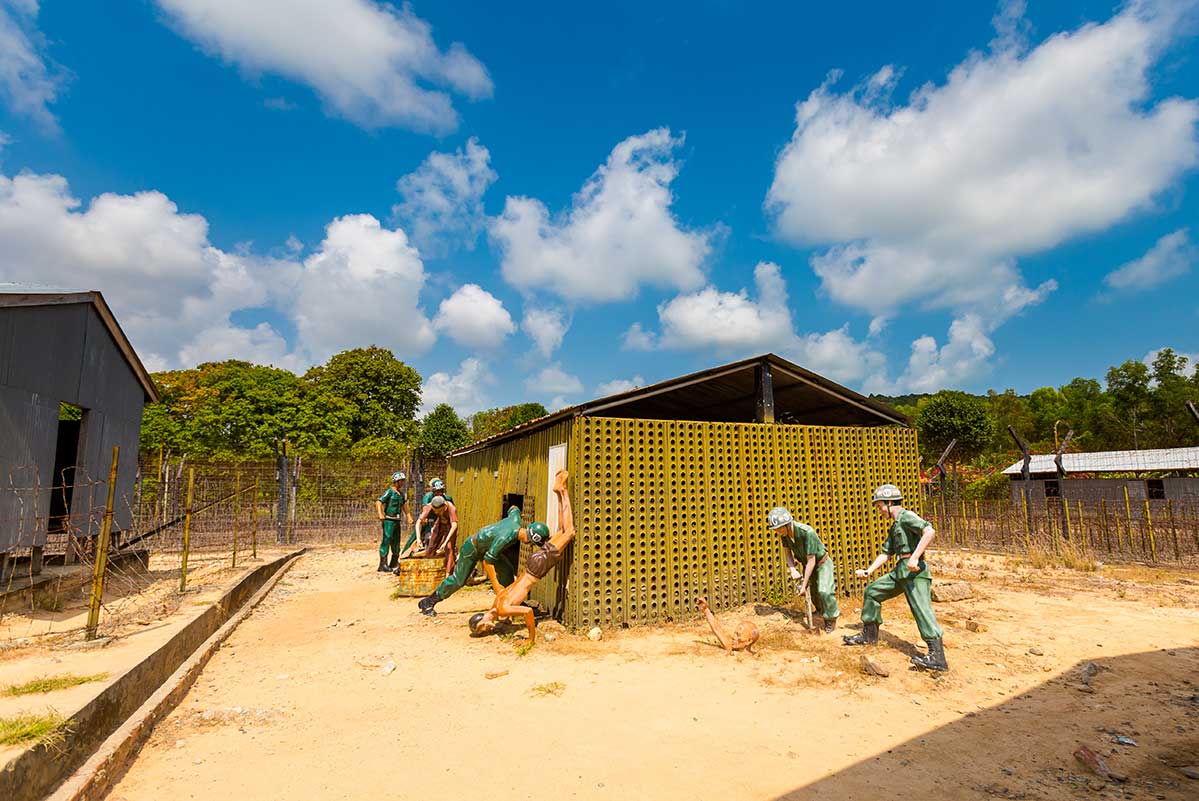
Zone B2 contains the most detailed and confronting section of the entire site. Life-sized wax figures depict over 40 documented torture methods used on prisoners, including nail-driving, tooth extraction, electric shock, and confinement in barrels. The figures are realistic in posture and expression, and the scenes are graphic.
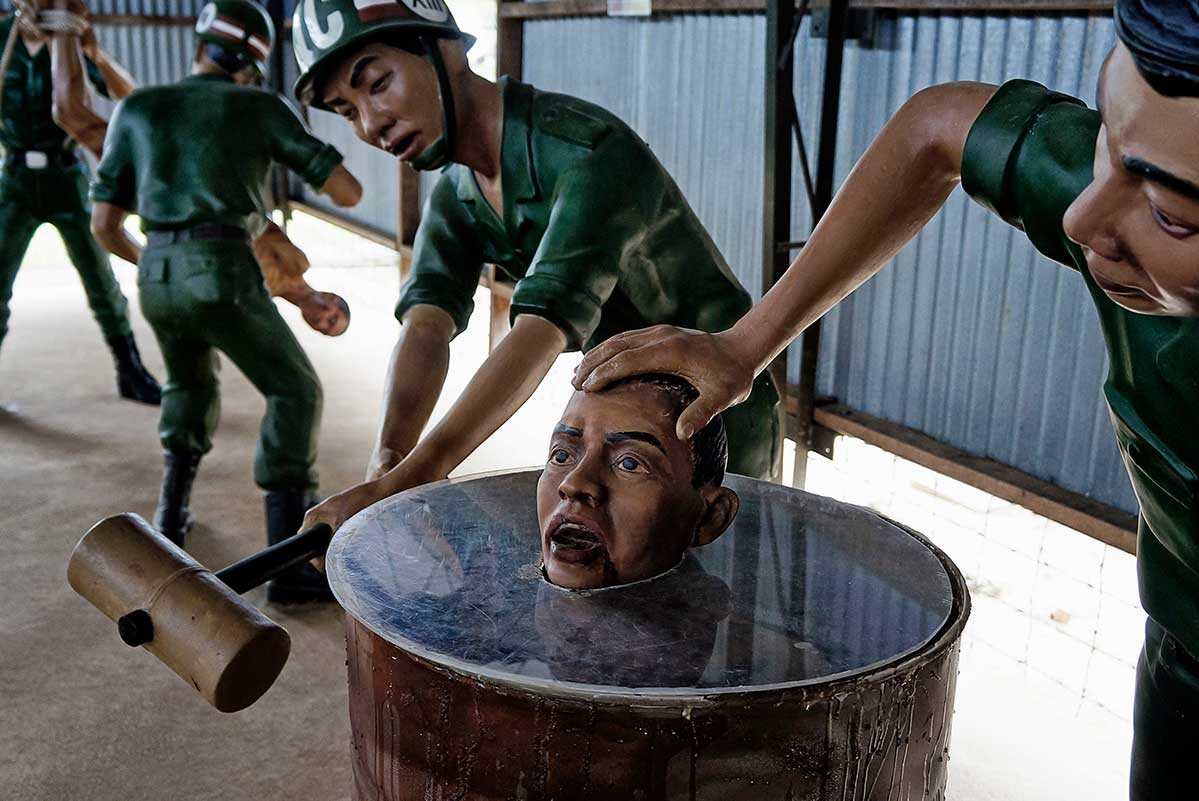
This is not an area to rush through if you want to understand what happened here. It is also not suitable for young children — the scenes are graphic enough that it is worth thinking carefully before bringing kids under the age of around 12 or 13.
4. The escape tunnels
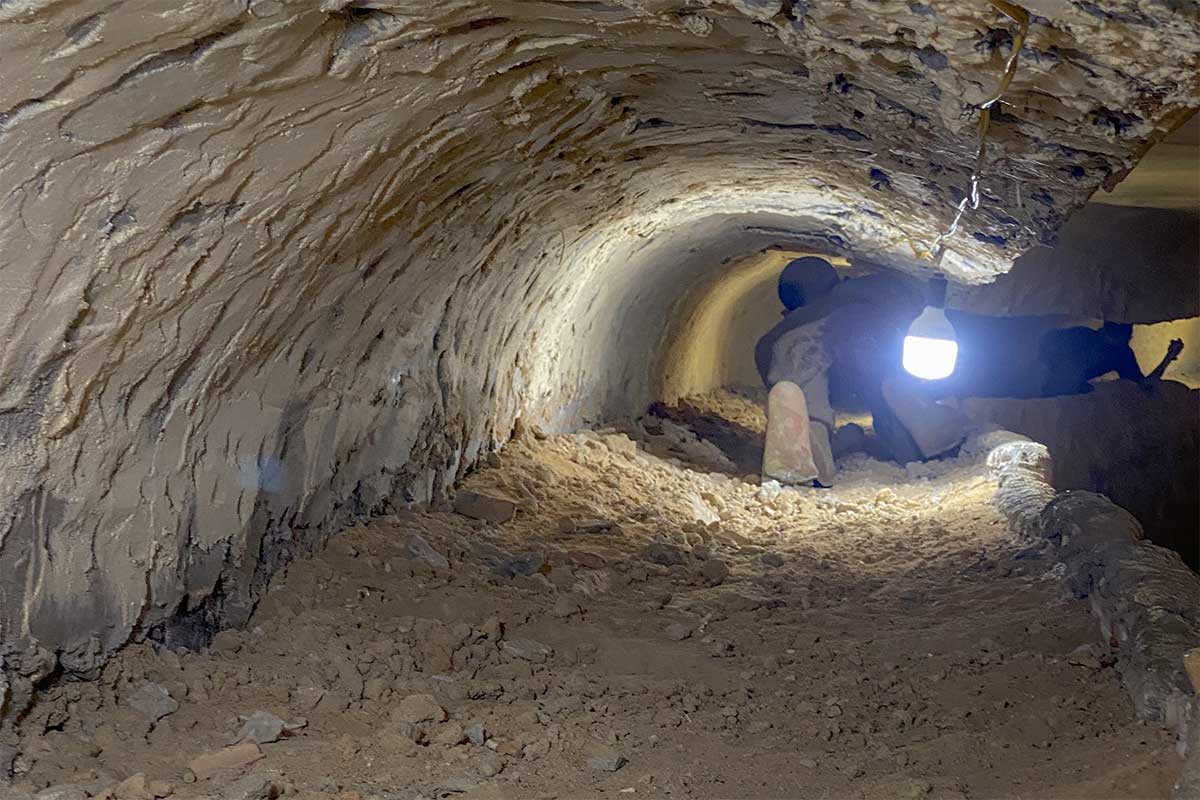
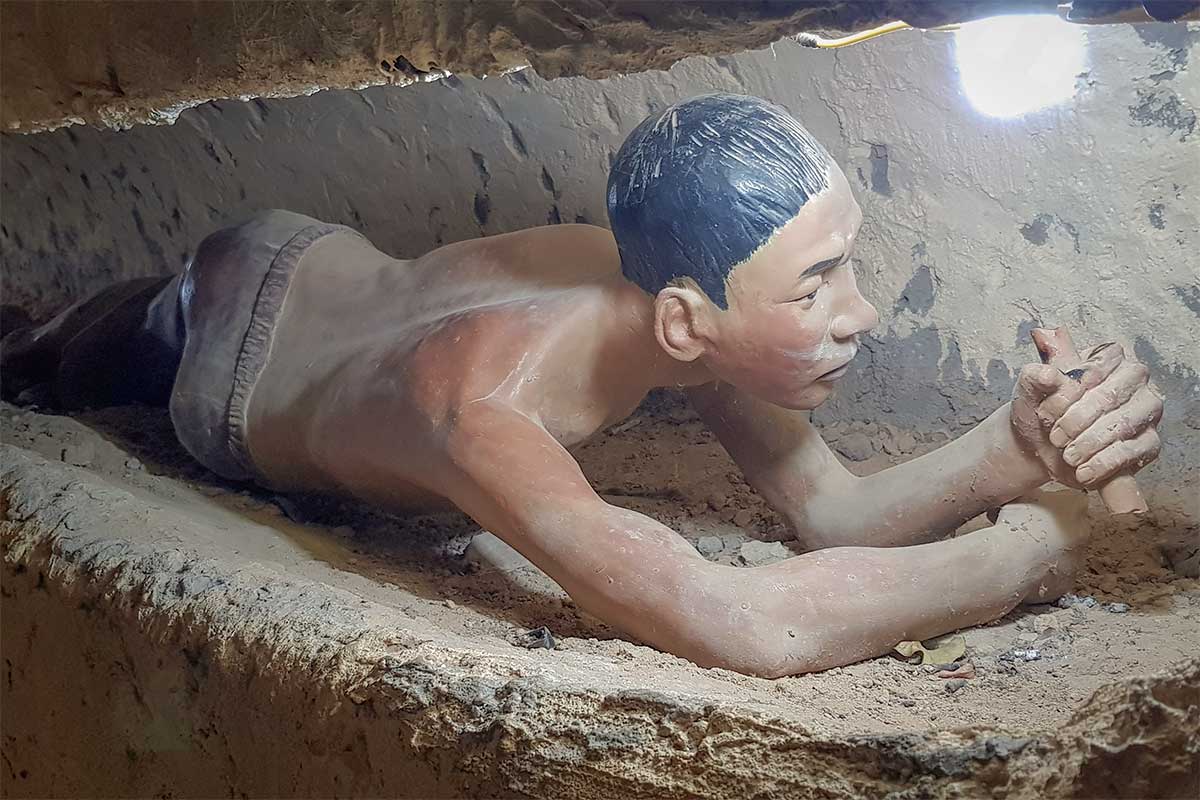
One of the more unexpectedly powerful parts of the visit is the reconstructed escape tunnel. Prisoners dug these tunnels using whatever they had — metal spoons, containers, their hands — working in secret over long periods to break out of what was described by those imprisoned there as hell on earth. Visitors can walk through a reconstructed tunnel, which gives a tangible sense of both the desperation and the determination involved.
5. Exhibition house
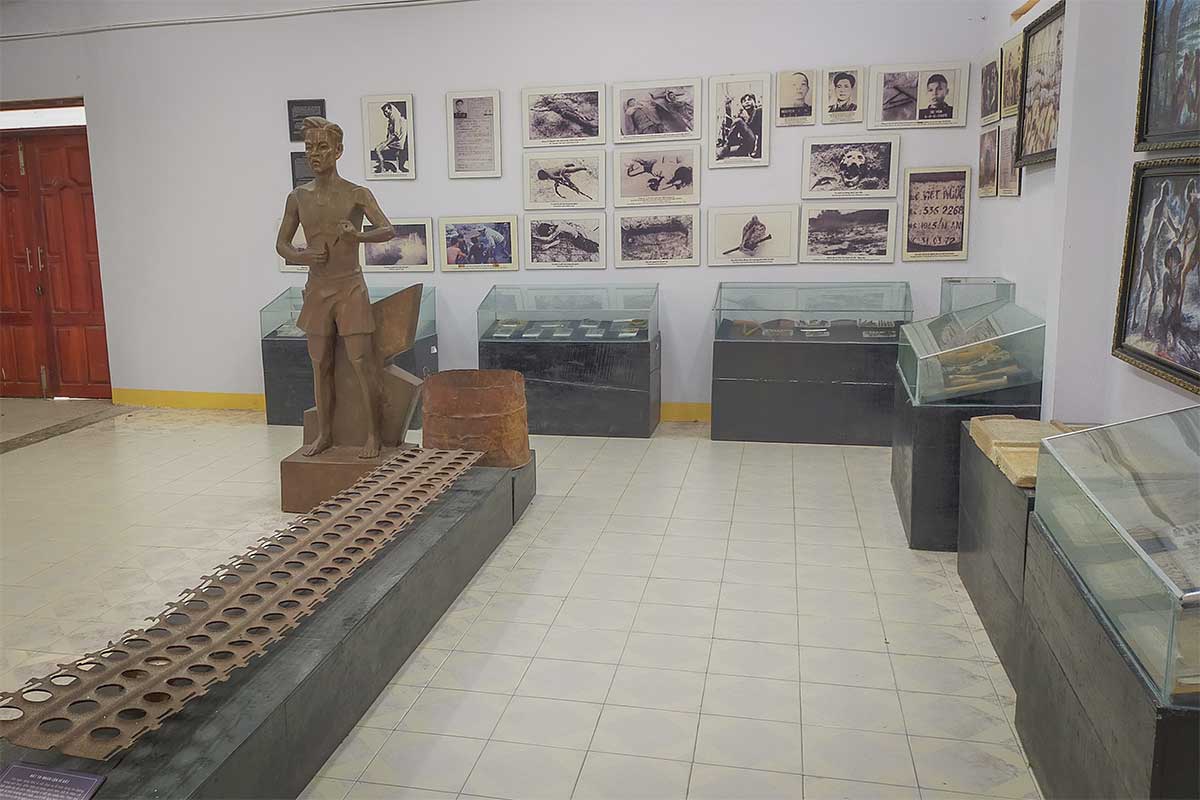
The exhibition house consists of two rooms and is one of the few fully indoor, air-conditioned spaces on the site — a welcome break if you are visiting in the heat. One room covers the history and development of the prison with original and reconstructed artifacts, including leg shackles and torture instruments. The second room contains over 100 photographs and documents showing the treatment of prisoners across both periods of the camp’s history.
Signage throughout is in both Vietnamese and English, and the level of detail is solid. No guide is strictly necessary to follow the story, though having one adds considerably more context.
5. Doi Sim martyrs memorial and prisoner graveyard
Outside the main prison compound, two separate memorial sites are worth visiting if you have the time.
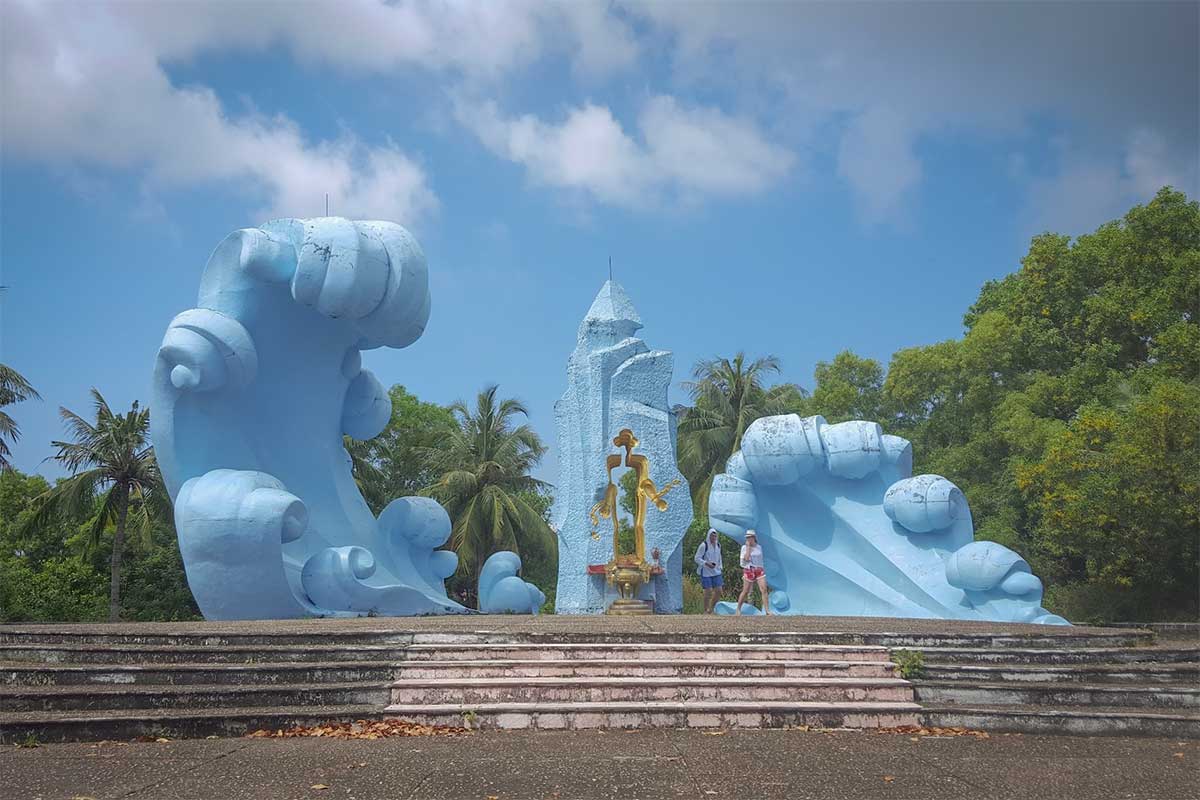
The Doi Sim martyrs memorial is the more visually striking of the two — a large sculptural monument featuring two blue wave shapes, each around 5 meters high, with a central pointed pillar bearing a hollowed-out human figure. The figure symbolizes “people who left that place.” Built in 2013, it sits on a 12,000 square meter site and serves as the main commemorative landmark for those who died at the prison.
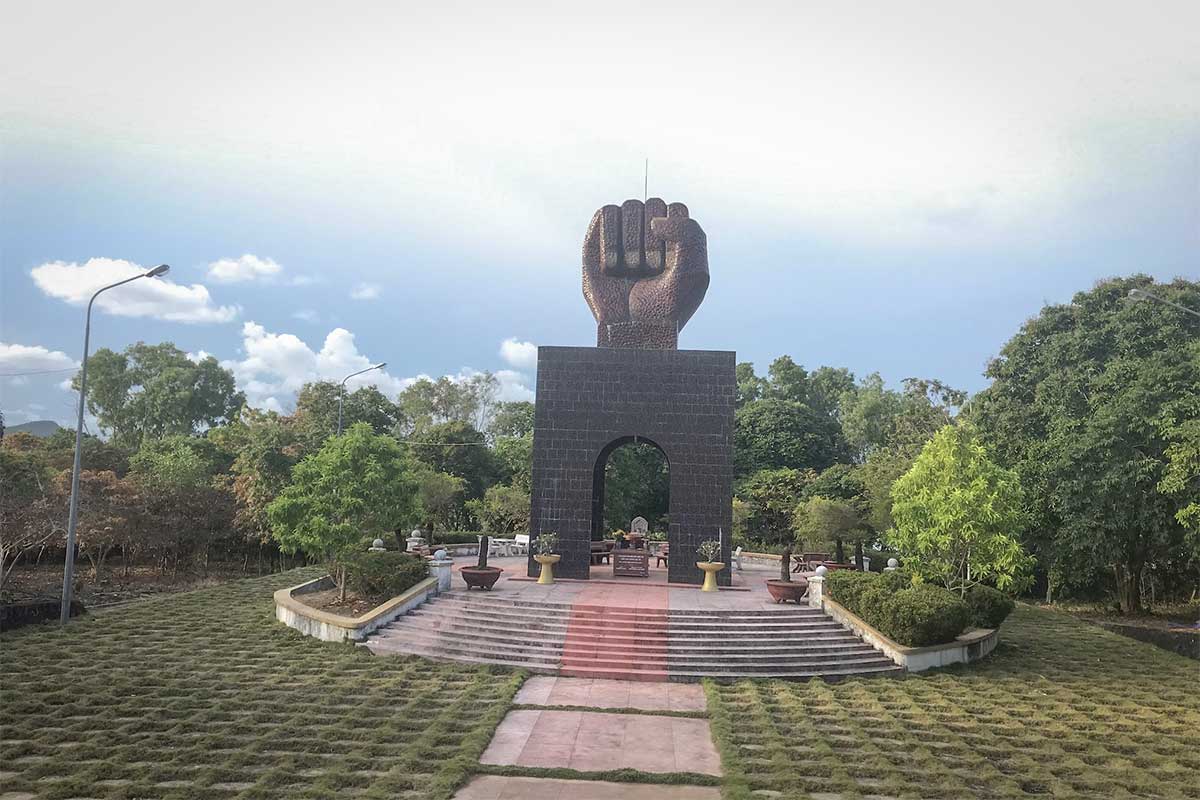
About 1 kilometer from the B2 section of the main camp lies the prisoner graveyard, covering 20,000 square meters and laid out in a circular design. At its center stands a large raised fist monument — a symbol of resistance and defiance — built on a dark stone base with an arched entrance. Inside you will find an altar and plaques bearing the names of those buried here. It is a quieter and more contemplative stop than the exhibits inside the prison itself.
Entrance fees and opening hours
Admission to Phu Quoc Prison is free for all visitors, regardless of nationality. There is no need to book in advance — simply arrive and walk in.
The site is open daily in two sessions: 7:30 AM to 11:00 AM and 1:30 PM to 5:00 PM. Hours may occasionally change on public holidays or special commemoration days, so it is worth checking locally if visiting around those dates.
A tour guide can be hired on site for a more in-depth experience, and audio guides are also available. Expect to pay around 100,000 to 200,000 VND (roughly 4 to 8 USD) for these optional services. Given how large the site is and how much context helps here, a guide is worth considering — especially for visitors with a strong interest in the history.
How to get there
Location
Phu Quoc Prison is located at 350 Nguyen Van Cu Street, An Thoi Ward, in the south of Phu Quoc Island. The surrounding area is quiet and relatively undeveloped compared to the north of the island. Plug the address into Google Maps and it will take you straight there without any complications.
Travel times from key areas
- Phu Quoc International Airport: 20 minutes
- South of Phu Quoc (An Thoi, Sunset Town): 5 to 10 minutes
- Center of Phu Quoc (Duong Dong, Long Beach): 35 to 40 minutes
- North of Phu Quoc (Bai Dai, Cang Cau): 55 to 70 minutes
Transport options
A scooter or motorbike is the most flexible way to get there, and the roads in the south are easy to navigate with minimal traffic. Note that technically a valid driving license is required to ride a motorbike in Vietnam — an international driving permit that covers motorbikes is the safest option.
Taxi and Grab are both straightforward alternatives if you prefer not to ride. The site has a large free parking area at the entrance, so arriving by any vehicle is simple. Some visitors combine the prison with other southern Phu Quoc attractions as part of a shared day tour, which is a practical option if you want everything arranged in advance.
Practical tips for visiting
Sun protection and what to bring
A significant portion of the prison grounds is outdoors and fully exposed to the sun. A hat, sunscreen, and a bottle of water are essential, particularly during the dry season between December and April when temperatures and UV levels are at their highest. There are limited food options in the immediate area, so bringing a snack is also a good idea if you plan to spend more than an hour on site.
How much time to allow
An hour to an hour and a half is enough to see everything properly. It is possible to walk through in 30 minutes, but at that pace you will miss most of the detail and context that makes the visit worthwhile.
Navigation and language
The site is well laid out with bilingual Vietnamese and English signage throughout. It is easy to follow without a guide, but hiring one adds a level of depth and personal storytelling that the signs alone cannot provide. There is no permanent audio guide system, so if you want guided commentary, arrange it on arrival or book through a tour operator in advance.
Photography
Photography is permitted throughout most of the site. Near the memorial monument and altar areas, keep it respectful — this is an active place of remembrance, not just a museum exhibit.
Dress code and behavior
There are no strict dress rules enforced at the entrance, but this is a war memorial and the atmosphere calls for some basic consideration. A T-shirt and shorts are perfectly fine. Beachwear is not appropriate. Keep noise levels low, particularly around the memorial areas, and do not touch the wax figures or artifacts.
Suitability for children
Older teenagers will likely find the visit genuinely interesting and educational. The torture exhibits in Zone B2 and the tiger cage area are graphic, and for younger children — roughly under 12 — it is worth thinking carefully about whether the content is appropriate for them.
Facilities
The site has public toilets, shaded rest areas, and free parking. The exhibition house is air-conditioned, which makes it a good place to pause if the heat becomes uncomfortable. One thing worth knowing: there is a pearl jewelry gift shop at the exit, which feels jarringly out of place given the nature of the site.
Maintenance
Phu Quoc Prison is not a polished, heavily curated museum. Some areas are better maintained than others, and the open-air sections in particular can feel worn. This is part of its character — it is a raw, preserved historical site rather than a sanitized visitor attraction — but it is worth setting expectations accordingly before arriving.
What to combine with a visit
The prison is located in the south of Phu Quoc, which is one of the less crowded and more rewarding parts of the island to explore. It is easy to build a half-day or full-day itinerary around a visit here without much extra planning.
Nearby beaches
Some of Phu Quoc’s best beaches are within easy reach of the prison. Khem Beach is the closest and consistently ranks among the finest on the island — long, relatively quiet, and with clear water. Sao Beach is a short drive further and is better known but also busier, with white sand and a more developed stretch of restaurants and sunbeds. The southern end of Long Beach is also nearby for those staying in that area.
Nearby attractions and sights
Sunset Town is a short drive from the prison and worth a visit, particularly in the late afternoon. The area is built around a colorful European-inspired townscape and is home to the Kiss Bridge, one of the most photographed spots on the island. From Sunset Town, the Phu Quoc Cable Car departs across the sea to Hon Thom Island, where there is a large waterpark alongside beaches and open space — a good option if visiting with older children or teenagers.
The An Thoi Islands
The An Thoi archipelago sits just off the southern tip of Phu Quoc and is not reachable on foot or by scooter. Access is by boat tour only, typically departing from An Thoi port. The tours usually combine snorkeling, island hopping, and lunch on the water. If the prison is part of a broader southern Phu Quoc day, adding an An Thoi boat tour makes for a full and varied itinerary.
Is Phu Quoc Prison worth visiting?
Phu Quoc Prison is not a comfortable visit. The exhibits are graphic, the subject matter is heavy, and unlike most things to do on the island, you will not leave feeling relaxed. That is exactly the point — and for the right visitor, it is one of the most worthwhile stops on Phu Quoc.
The site does something that very few attractions in Vietnam manage: it makes history feel real. Not through polished museum curation or carefully worded panels, but through scale, rawness, and confronting detail. Walking through the actual compound — the barracks, the fencing, the tiger cages, the wax figures depicting what happened inside — creates an impression that stays with you. For anyone with an interest in the Vietnam War, colonial history, or simply in understanding the place they are visiting beyond its beaches and resorts, this is genuinely valuable.
It is free, well signposted in English, easy to reach from the south of the island, and takes no more than an hour and a half. There is no real reason not to go, provided you are prepared for what you will see.
That said, it is not for everyone. If history does not interest you, the visit will feel long and difficult without much reward. And as mentioned in the practical tips, the torture exhibits are not appropriate for younger children — the depictions are realistic enough that they require some maturity to process.
For adults and older teenagers visiting Phu Quoc, the answer is yes — go. Pair it with Khem Beach or a stop at Sunset Town afterward, and it becomes part of a full and genuinely memorable day in the south of the island.