



Quy Nhon Tours
Quy Nhon tours take you to quiet fishing villages, hidden beaches, and scenic coastal roads. You can go beach hopping, explore by boat, or trek to nearby waterfalls like K50.
View tours >>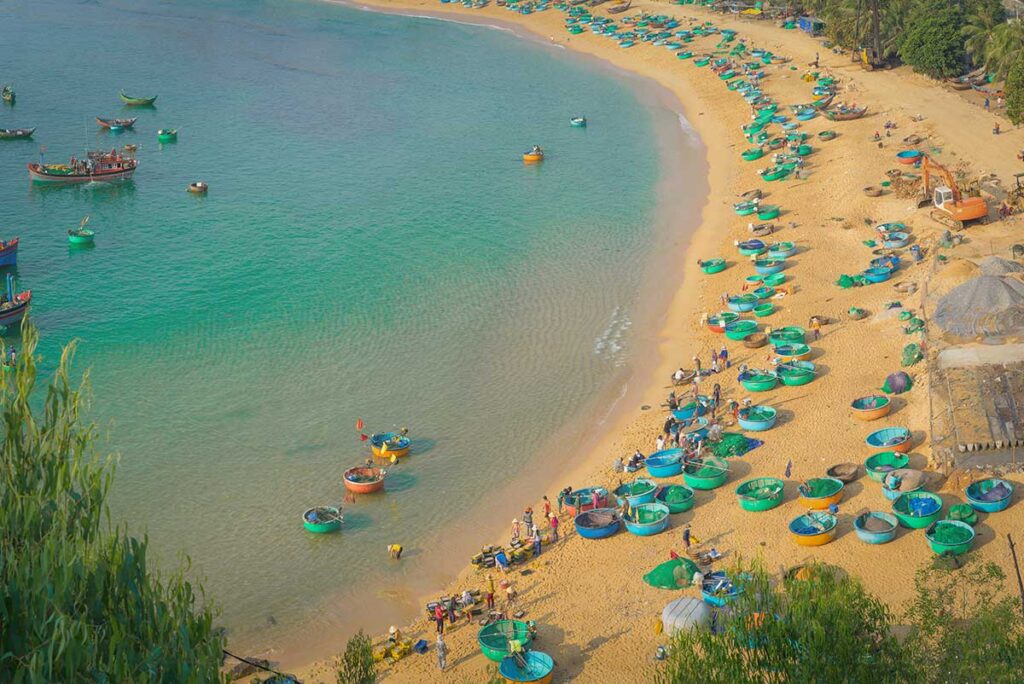
The Best Quy Nhon Tours & Local Experiences
Tailor-Made
Not sure what Quy Nhon tour to choose?
Whether you’re looking for the best group tour, private experience, a custom made tour or just a private driver to bring you around, we’re here to help. Our local team knows Quy Nhon inside out and can give you honest, expert advice—no pressure, just good suggestions.
Quy Nhon Tours by Sight
About Quy Nhon
Quy Nhon is a coastal city in central Vietnam known for its relaxed vibe, long sandy beaches, and quiet fishing villages. It’s less developed than other beach destinations, making it a good choice if you’re looking to avoid crowds. The area offers a mix of nature and culture, with boat trips to nearby islands, beach hopping along the coast, and visits to local Cham towers or Buddhist pagodas. You can also explore nearby countryside or take a day trip to the stunning K50 Waterfall. While the town itself is fairly modern, its surroundings are still largely untouched—ideal for travelers who enjoy low-key, scenic destinations with a local feel.
Frequently Asked Questions About Sapa tours
When is the best time to visit Quy Nhon?
The best time to visit Quy Nhon is from January to August, when the weather is generally dry and sunny. March to May offers pleasant temperatures and calm seas—ideal for beach hopping and boat tours. The rainy season starts around September and peaks in October and November, which can affect outdoor activities.
Is Quy Nhon worth visiting during the rainy season?
Rainy season (September to November) can bring heavy downpours and rough seas, which may limit beach and boat activities. However, you can still explore cultural sites, temples, and countryside areas. It’s less ideal for island trips or long hikes like the K50 waterfall trek, which can become slippery or inaccessible.
How many days should I stay in Quy Nhon?
A 2- to 4-day stay is ideal for Quy Nhon. Two days give you time for local beaches and Cham towers, while three to four days allow you to explore nearby islands, fishing villages, or take a day trip to K50 Waterfall. If you enjoy a slower pace, you can easily stretch your stay longer.
Do I need a tour to explore Quy Nhon?
No, you don’t need a tour for basic sightseeing. The city is easy to explore on your own by taxi or motorbike. However, boat trips, K50 waterfall hikes, or visits to more remote beaches and villages are best done with a guide or organized tour for convenience and local access.
What are the best day trips from Quy Nhon?
Popular day trips include boat tours to Ky Co and Hon Seo islands, exploring the fishing village at Nhon Hai, hiking to the K50 Waterfall, or visiting the Cham towers like Banh It and Duong Long. Each offers a different mix of nature, culture, and scenic views.
How do I get to Quy Nhon from Hanoi or Ho Chi Minh City?
The fastest way is by flight to Phu Cat Airport, located about 35 km from Quy Nhon city. There are daily direct flights from both Hanoi and Ho Chi Minh City. From the airport, it’s about a 45-minute drive to the city center by taxi or shuttle bus.
Who operates the tours in Quy Nhon?
All Quy Nhon tours by Local Vietnam are organized and led by local guides who know the area inside out. Our team personally travels through each region to design authentic experiences together with local communities.
Why book Quy Nhon tours with Local Vietnam?
Because we focus on personal, authentic travel — not mass tourism. All Quy Nhon tours by Local Vietnam are organized and led by local guides who know the area inside out. Our team personally travels through each region to design authentic experiences together with local communities.
10 Highlights in Quy Nhon Tours
1. Stay in Bai Xep
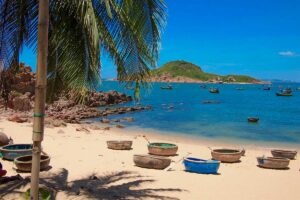
Experience life in a quiet fishing village just outside Quy Nhon. With beachfront guesthouses and local charm, it’s perfect for slow travel and peaceful seaside views.
2. Beach Hopping
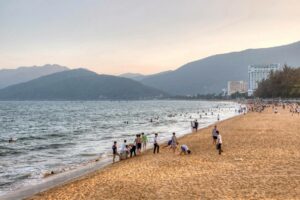
Drive along the scenic coast and stop at tranquil beaches like Ky Co and Bai Xep. Many spots are undeveloped, offering clear water, soft sand, and few crowds.

3. Island Boat Trips
Explore remote islands such as Ky Co and Hon Kho by boat. These trips often include swimming, snorkeling, and beach time in crystal-clear waters.

4. Sunset at Eo Gio
Watch the sun dip into the sea from Eo Gio’s rocky cliffs. The rugged coastal landscape makes it one of the most photogenic spots around Quy Nhon.

5. Slide Down Sand Dunes
Visit the Phuong Mai dunes near Nhon Ly for sandboarding and sweeping desert-like scenery. Easy to combine with a stop at a nearby fishing village.
6. Cham Tower Visits
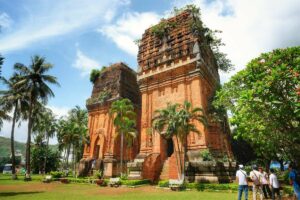
Climb the hills to see ancient Cham towers like Thap Doi and Banh It. These historic sites offer cultural insight and great panoramic views.
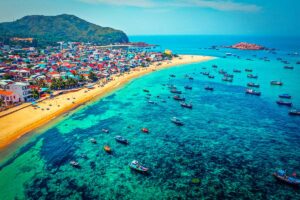
7. Explore Fishing Villages
Visit local villages to see daily fishing life. Watch basket boats, see nets being mended, and observe the real working rhythm of the coastal communities.

8. Go Snorkeling
Join a boat tour and snorkel over coral reefs around Hon Seo and Ky Co. The water here is calm and clear—ideal for spotting marine life.

9. Drive the Countryside
Head inland for a quiet escape through rice fields, sleepy villages, and winding rural roads. Best explored by motorbike or with a local driver.
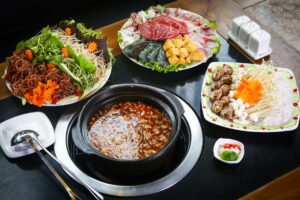
10. Try Local Food
Quy Nhon is known for its seafood and regional dishes. Don’t miss local bánh xèo, fresh spring rolls (cuốn), and grilled pork noodles (bún thịt nướng).
Why Choose Local Vietnam for Your Quy Nhon Tours
Local, authentic, and personal experiences designed to show you the real Quy Nhon.
Local Vietnam has strong ties in Pleiku, where part of our team has lived and explored the surrounding highlands for years.
We work directly with local families, coffee growers, and ethnic communities to create tours rooted in real local life. Our Pleiku tours focus on small-scale experiences — visiting farms, lakes, and remote villages — all designed from firsthand experience.

Why Travelers Love Booking With Local Vietnam
Cindy M — Germany
Perfectly Organized Trip
Local Vietnam arranged our entire journey flawlessly. Everything was well coordinated, communication was fast, and the local guides were excellent. We always felt supported and could fully enjoy our trip.
Roberto — Netherlands
Great Local Experience
Wonderful travel experience with flexible planning and very attentive support. Thanks to local guides and drivers, we saw authentic daily life and enjoyed carefully selected homestays and hotels.
Tanja V — Belgium
Worry-Free & Authentic Travel
A beautifully arranged trip with smooth communication, reliable drivers, and warm local guides. Everything was organized perfectly, allowing us to relax and enjoy culture, nature, and authentic experiences.
Lisa K — Germany
Highly Recommended Service
From planning to on-the-ground support, everything was handled professionally. Quick responses, helpful suggestions, and great organization made our trip completely stress-free. We would book with Local Vietnam again.