


Nha Trang: Vietnam’s beach capital
Nha Trang is often called the beach capital of Vietnam, and that’s the honest summary of it — a busy, built-up resort city strung along a six-kilometre beach, packed with hotels, seafood restaurants and bars. It’s set in a fine natural bay, ringed by mountains and scattered with islands, and the sea is clear and warm for much of the year.
What it isn’t is an old, atmospheric town: Nha Trang is modern and tourist-driven, long popular with Russian and Chinese visitors, and lighter on traditional culture than places like Hoi An or Hue. For a beach city it makes up for that with what’s around it — diving, islands, waterfalls, mountains and a couple of genuine cultural sights. Two or three days is enough for most people, more if you came mainly to dive or to slow down by the sea. In mid-2025 the neighbouring province of Ninh Thuan was merged into Khanh Hoa, with Nha Trang staying its capital; for travelers nothing really changes on the ground.
Best things to do in Nha Trang
The list below runs from the beaches and the water out to the towers, the markets and the mountains, with honest notes on what’s worth your time and what to skip. Most sit in or near the city; a couple of the bigger trips are further out.
1. Relax on the beaches
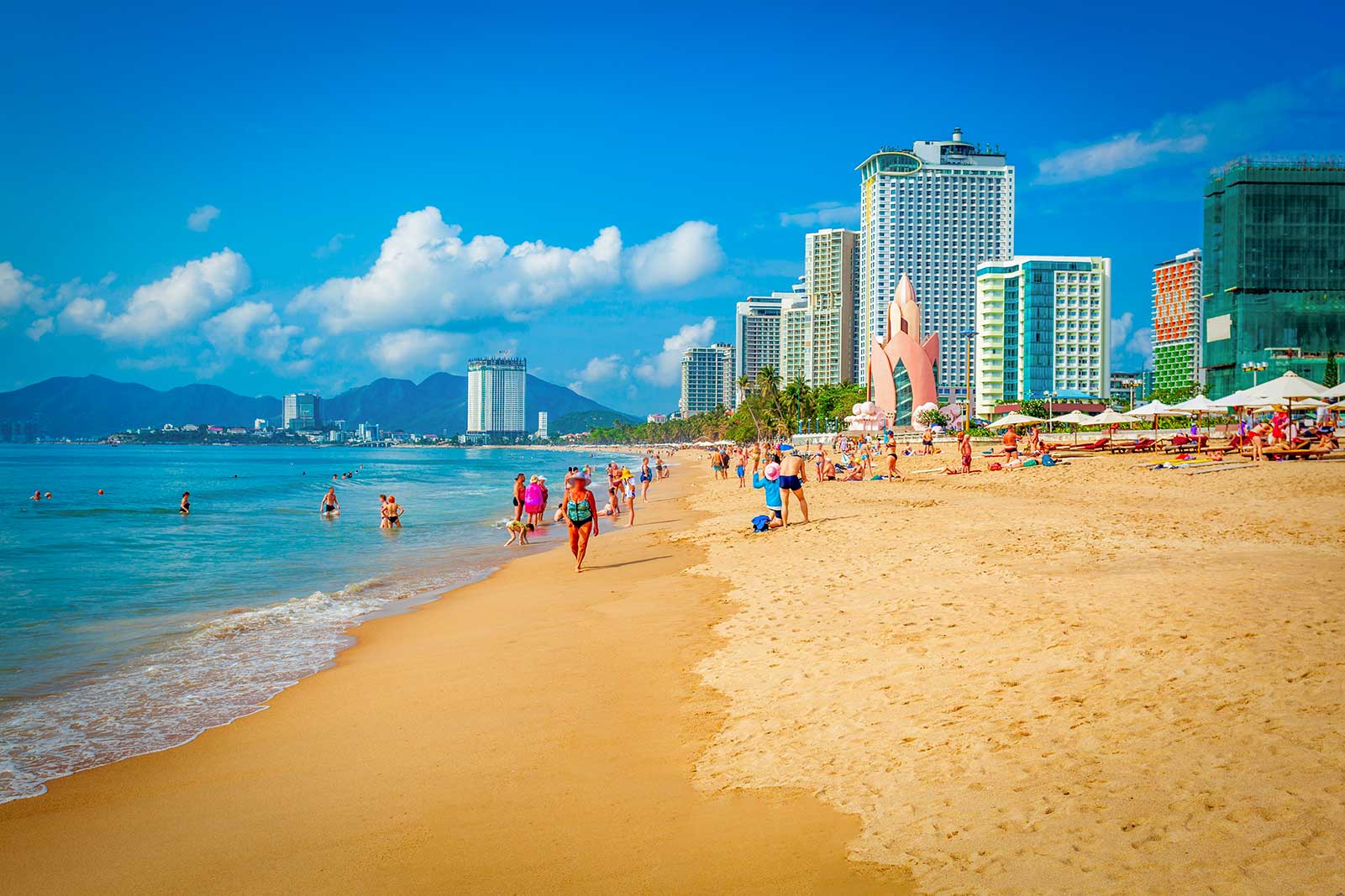
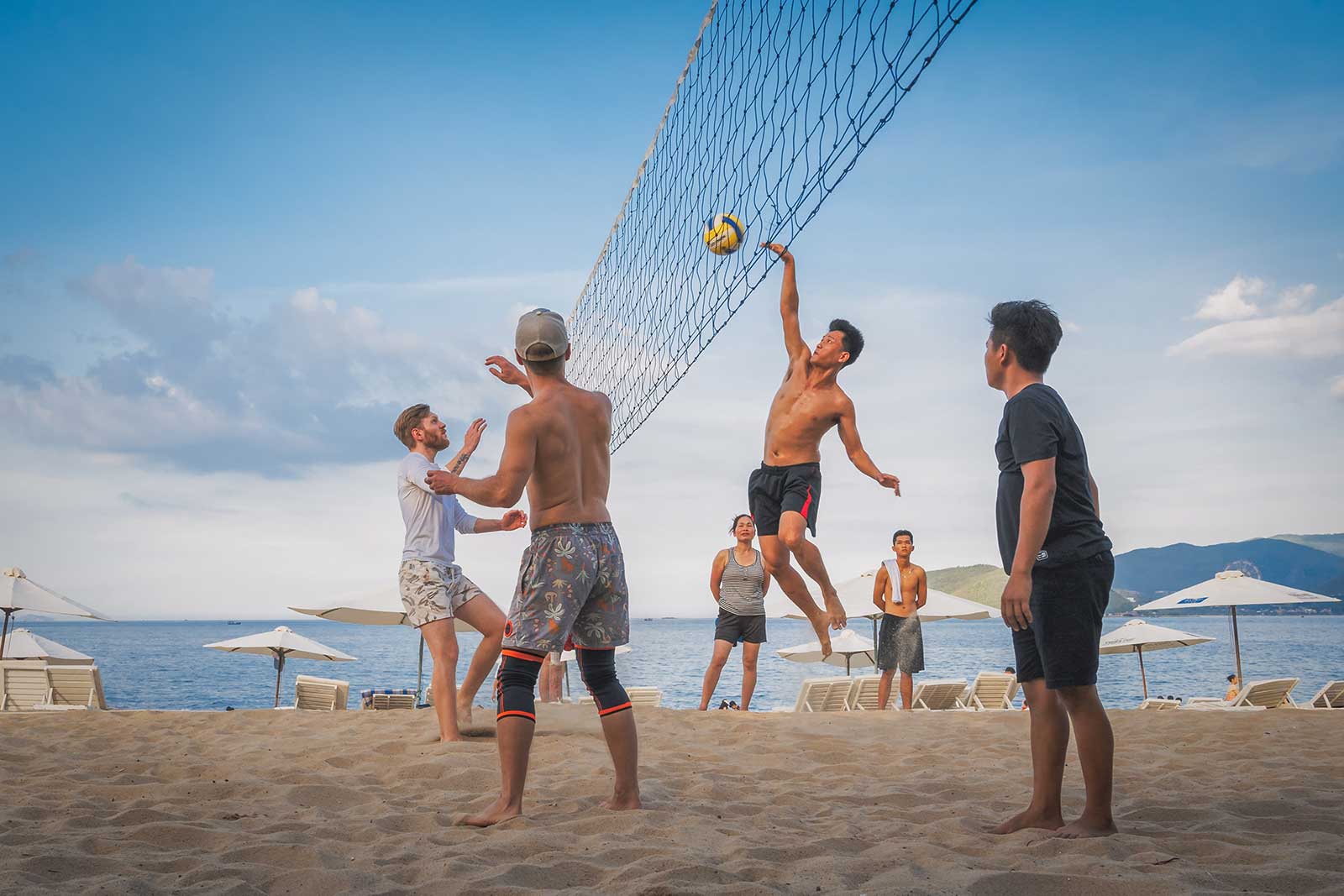
The city beach is the obvious starting point and still the main reason most people come — a long, palm-lined stretch of sand running the length of the seafront, with a tidy promenade, sun loungers and easy access from almost any hotel. Tran Phu Beach is the central section, busy and convenient, fine for a swim and a sunbathe though never quiet. The water is clear and calm for much of the year, but turns rough and murky in the rainy season, so check conditions before swimming.
Other beaches around Nha Trang
The best beaches are out of the city, so it’s worth heading further for cleaner sand and fewer crowds:
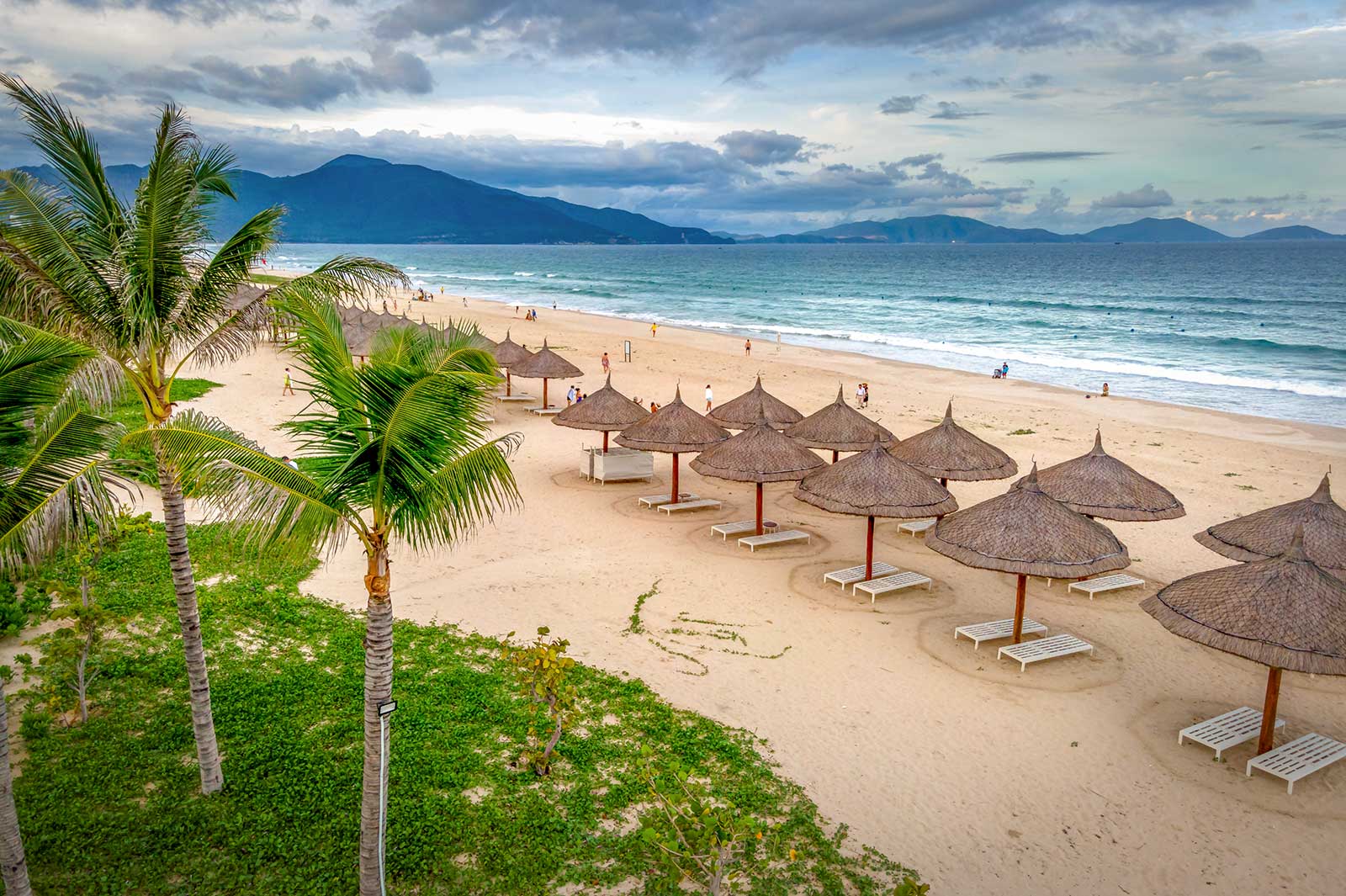
- Bai Dai (Long Beach) — a long, undeveloped stretch south toward the airport, calmer and more natural than the city beach.
- Doc Let — pale soft sand and shallow water about an hour north, a good quieter day out.
- Jungle Beach — a remote, laid-back spot further north, popular for a get-away-from-it-all night or two.
For the full rundown and how to reach each, see our guide to the best beaches in Nha Trang.
2. Go diving
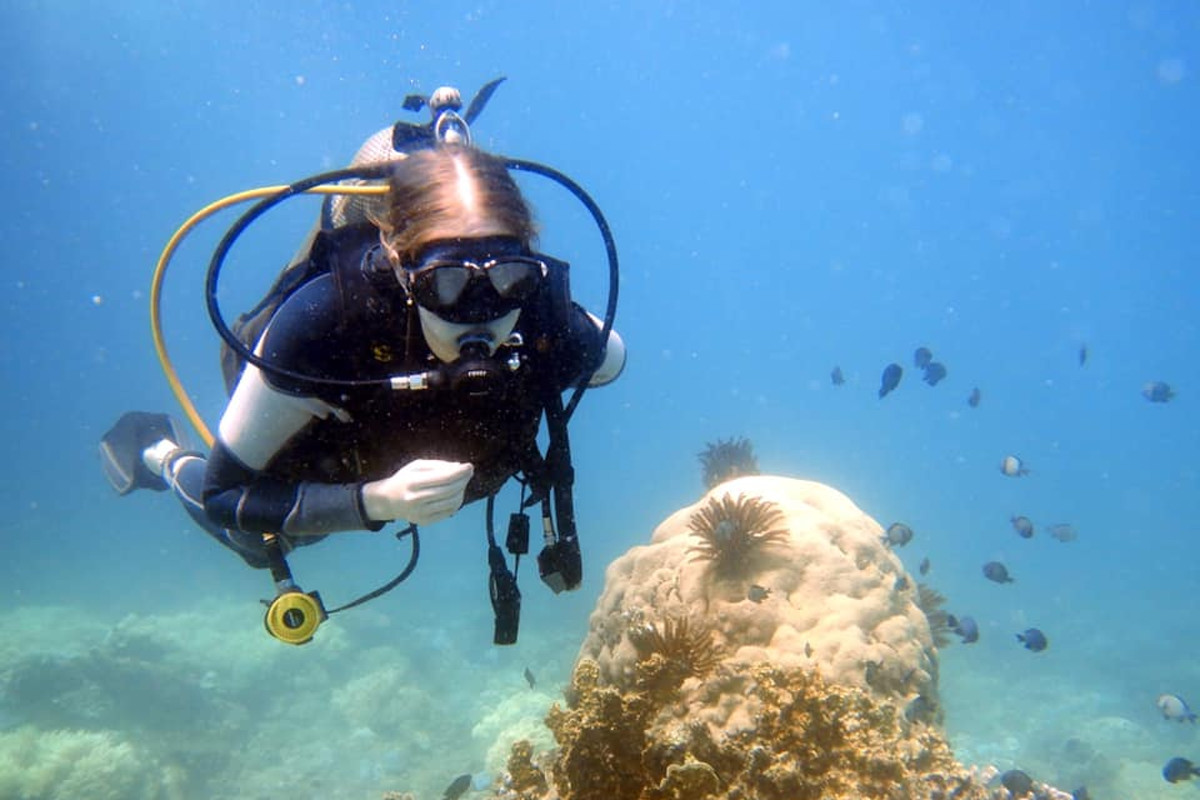
Nha Trang is the most popular place to dive in Vietnam, and one of the easiest places to learn — there are around 25 dive sites, most around the nearby islands, and plenty of schools running boats out daily. It’s honest to say it isn’t world-class: the reefs have suffered over the years and visibility varies, so set expectations to “fun and accessible” rather than spectacular. That said, it’s affordable, the water is warm, and it’s a great place for a first try-dive or an open-water course. For the best conditions, come between roughly April and August. Further out, Whale Island to the north has clearer water and a quieter dive scene — where Jacques Cousteau is said to have fallen for diving. There’s more detail in our guide to diving in Nha Trang.
3. Take an island-hopping boat trip
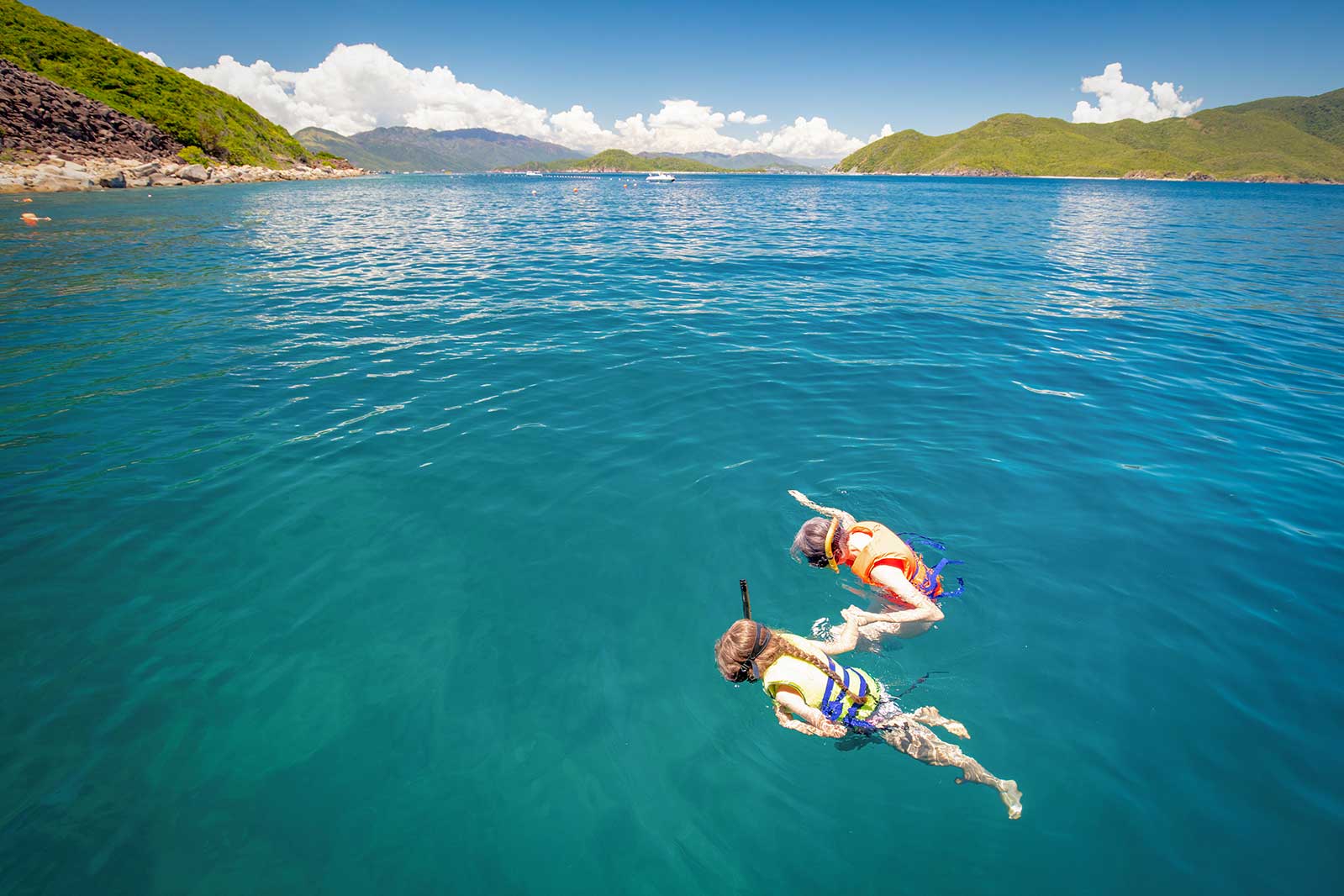
With a whole bay of islands offshore, an island-hopping boat trip is one of the classic things to do in Nha Trang — a day on the water stopping to swim, snorkel and relax on different islands. Tours vary a lot in style, so pick carefully: some are loud booze-cruise party boats, others are calmer trips built around snorkelling, seafood and beaches, and a few focus on fishing. The usual stops include Hon Mun, the marine-park island with the best snorkelling, Hon Tam and Hon Mot for swimming, and Monkey Island to the north. Check what kind of trip you’re booking before you pay, and for the full picture see our guide to the best islands in Nha Trang.
4. Visit Long Son Pagoda and the white Buddha
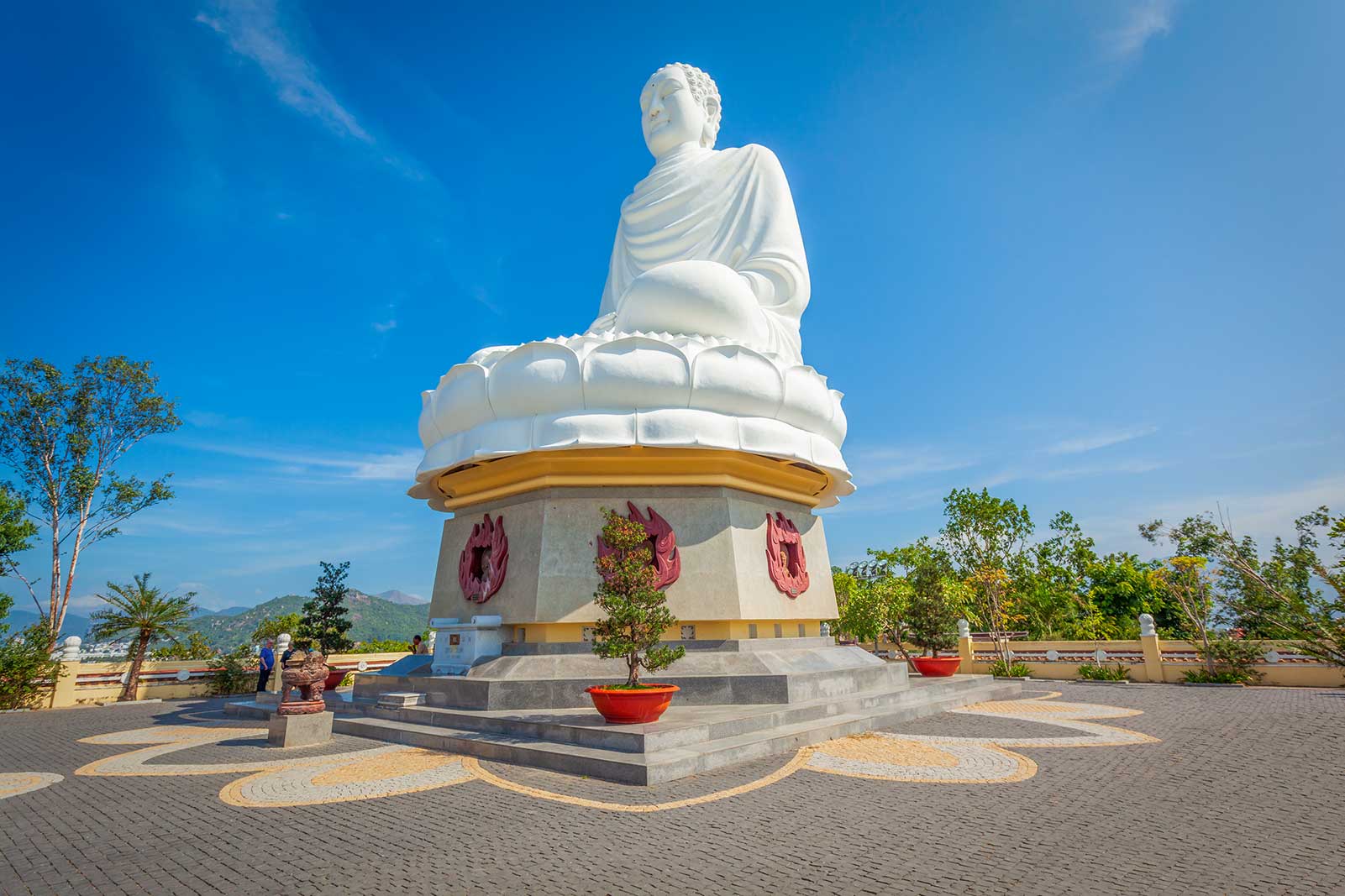
Long Son Pagoda is the most important Buddhist temple in the city, set at the foot of a hill near the centre, its gates and roofs decorated with mosaic dragons made from glass and ceramic tiles. Behind the temple, a flight of steps climbs past a large reclining Buddha to the huge white seated Buddha at the top, a city landmark visible from far around, with good views over Nha Trang from its base.
It’s free to enter and worth an hour; dress respectfully with shoulders and knees covered, and ignore anyone at the gate claiming you need to pay or buy incense, which is a long-running scam here.
Tip: Of all the traditional Vietnamese temples in the city, this is the one to prioritise, but it isn’t the only one. For the others worth visiting, see our roundup of the best temples in Nha Trang.
5. Explore the Po Nagar Cham Towers
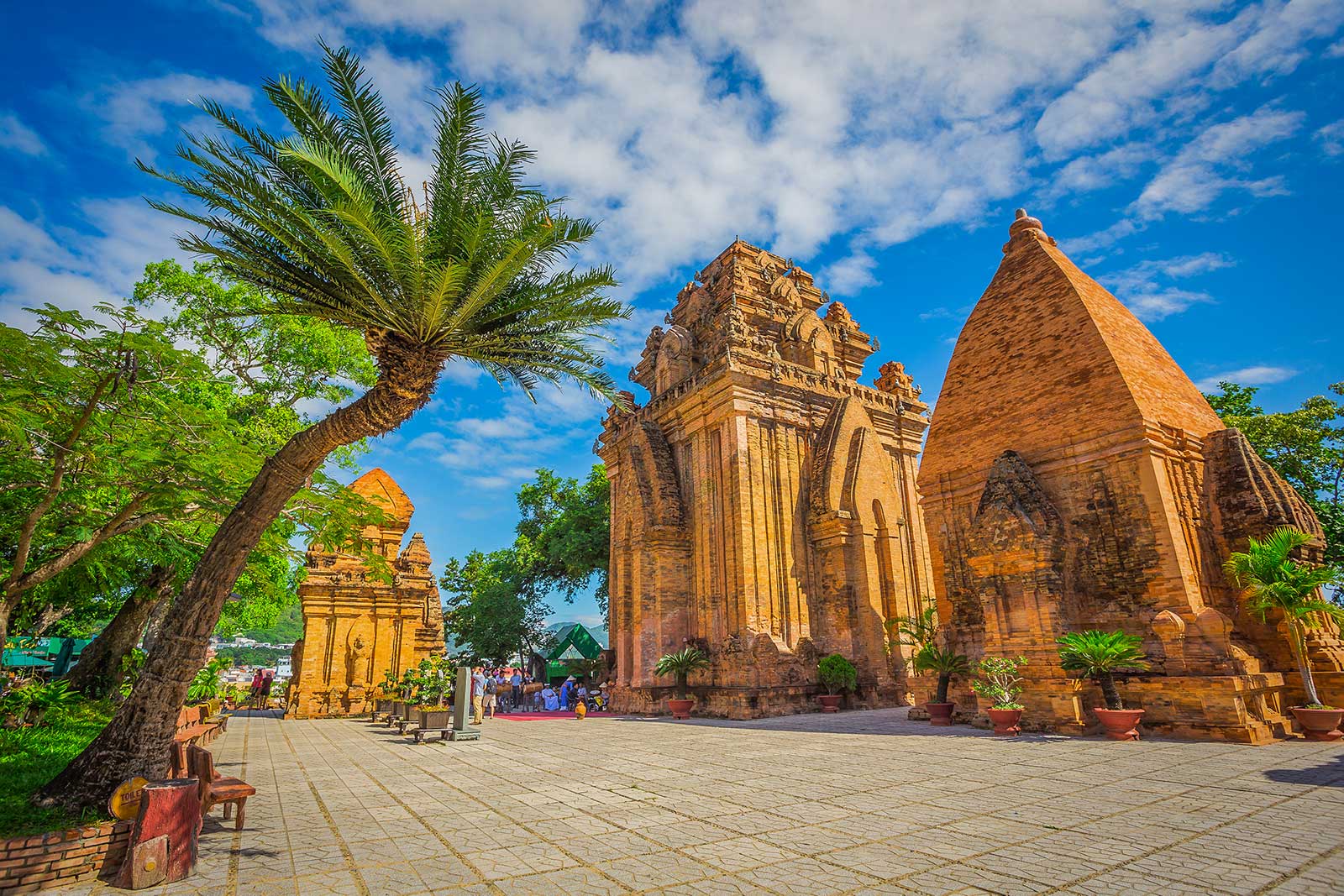
The Po Nagar Cham Towers are the cultural highlight of Nha Trang — a group of brick Hindu towers built by the Cham between the 7th and 12th centuries, standing on a low hill above the Cai River just north of the centre. They’re related to the temples at My Son near Hoi An, but easier to reach and still in active worship, with incense, offerings and the odd Cham dance performance. It’s a compact, atmospheric site you can see in under an hour, open from 8am to 6pm with a small entry fee. Go early or late to avoid the tour-bus crush, and cover your shoulders and knees as robes are handed out at the entrance otherwise.
6. See Nha Trang Cathedral
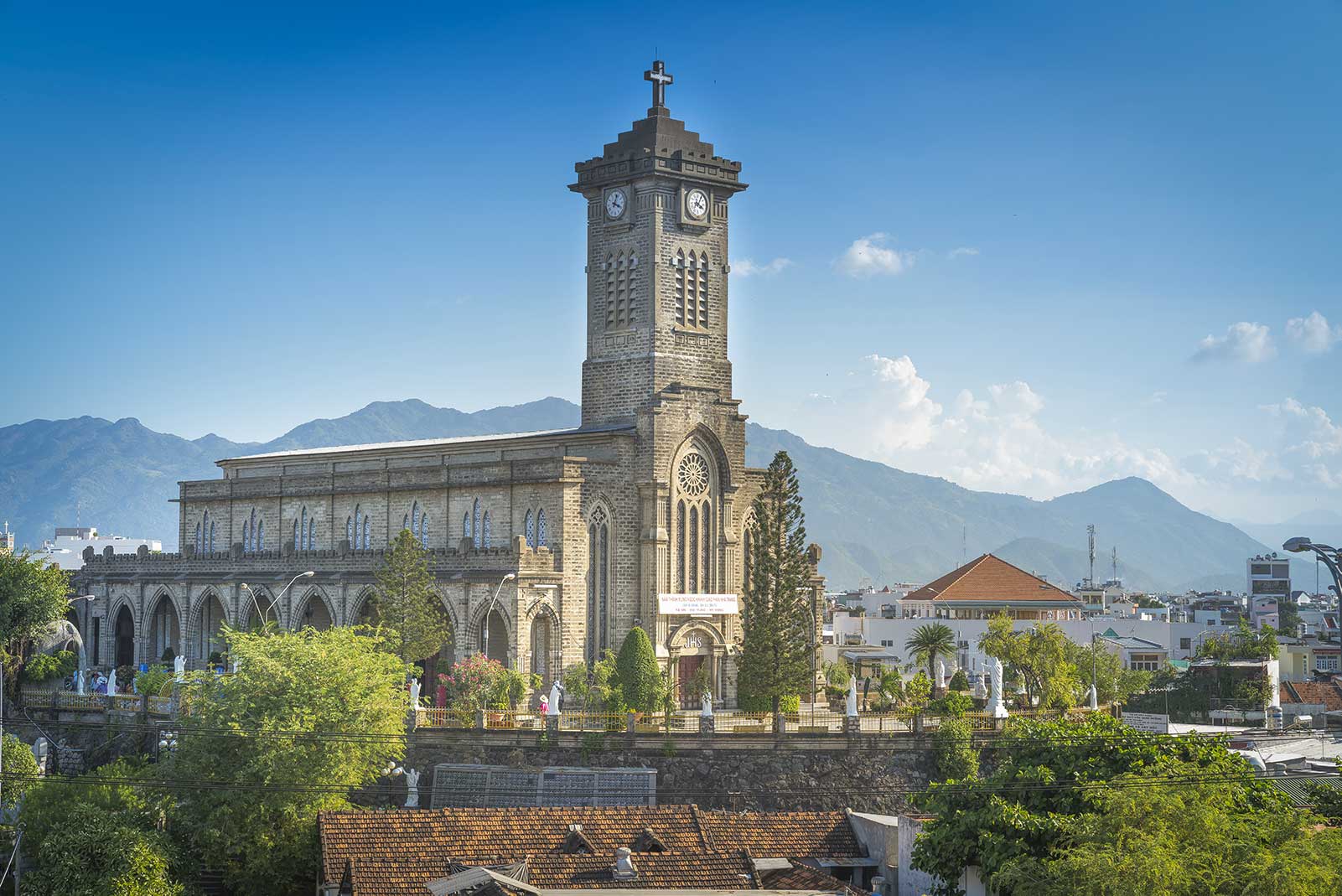
Nha Trang Cathedral is the city’s main Catholic church, a grey, French-built Gothic building standing on a rocky rise above the train station. Built in the 1930s from simple cement blocks, it’s plainer than Vietnam’s pink-and-pastel colonial churches, but the stained glass and the hilltop setting make it worth a quick look. It’s still an active church, so it’s only fully open around mass times; entry is free, and it sits handily close to the train station and Dam Market.
7. Visit Hon Chong promontory
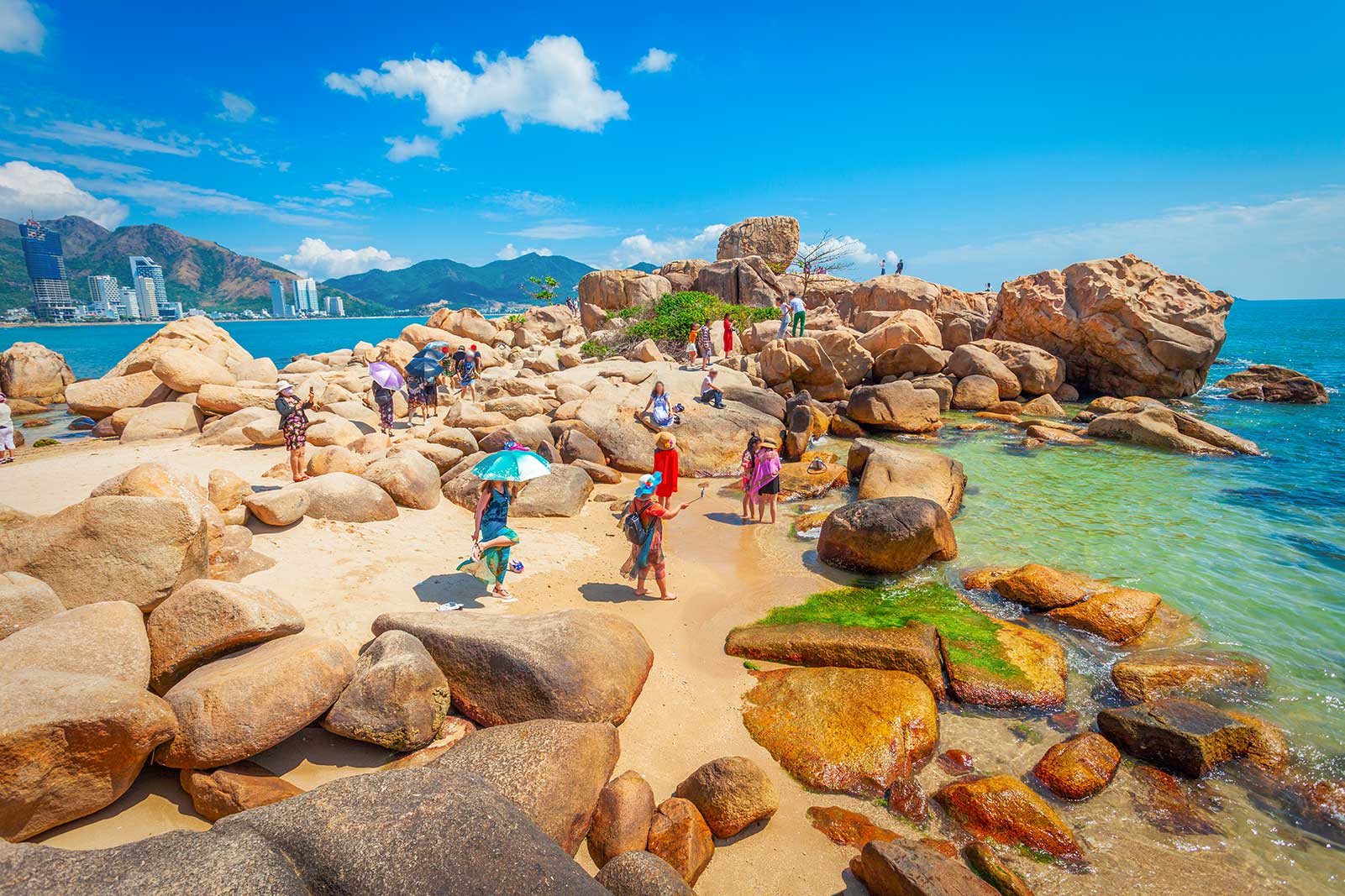
Hon Chong is a cluster of large boulders piled at the sea’s edge on the northern side of the city, with a famous “handprint” rock and views back across the bay to the mountains. It’s a small, low-key sight rather than a major attraction, but the rocky coast is photogenic, the sea breeze is pleasant, and there’s a small fee to enter. Easy to combine with the Po Nagar towers, which are nearby, on a half-day around the north of the city.
8. Browse Dam Market
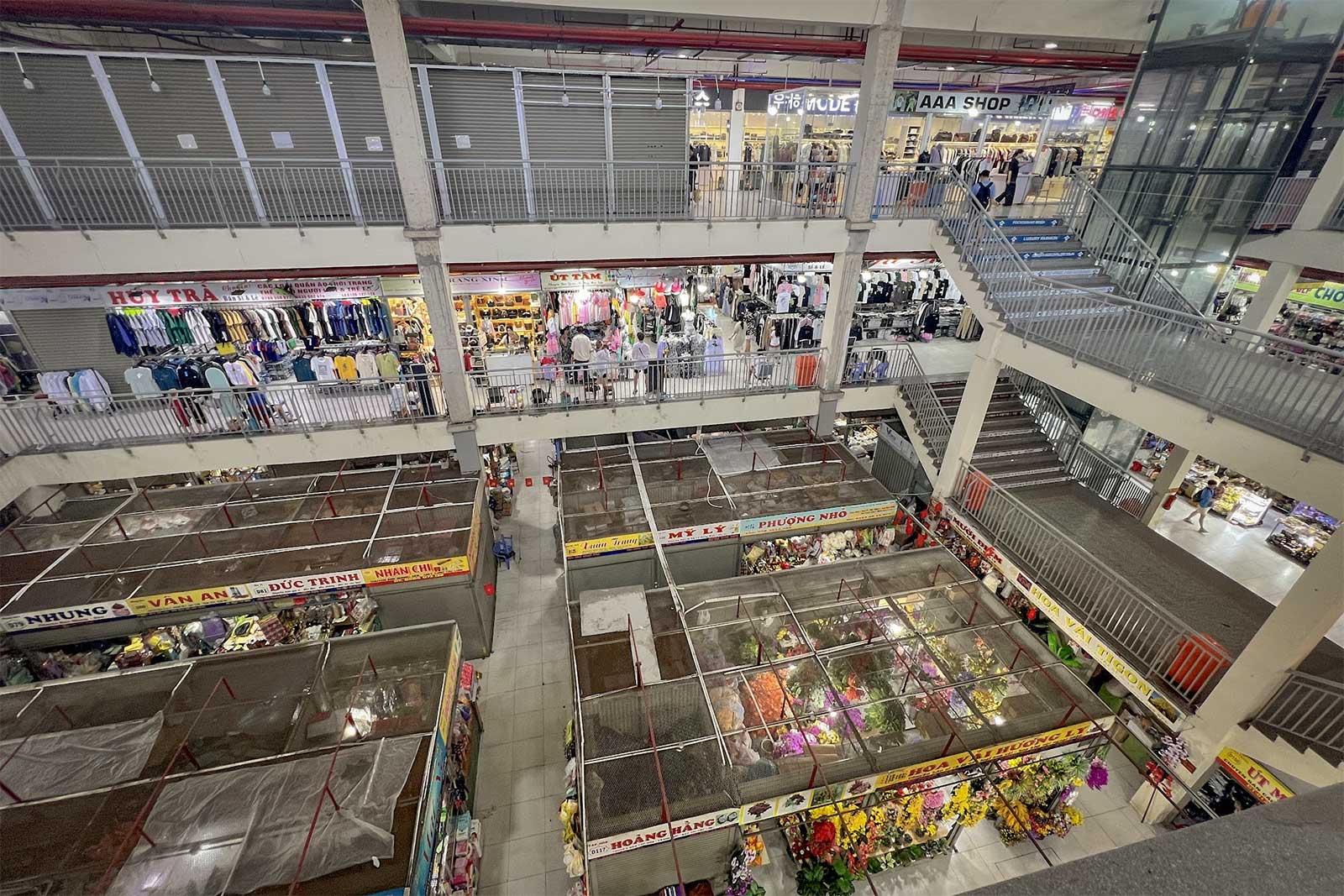
Dam Market (Cho Dam) is the biggest market in Nha Trang, set in a distinctive round building near the river. It’s a working local market more than a tourist one: the covered hall sells clothes, electronics and gold, while the stalls around it spill over with fruit, vegetables, fish and dried seafood. It’s a good place to get a feel for everyday life and pick up dried snacks or coffee, though it’s busy, hot and not aimed at visitors, so go for the atmosphere rather than the shopping.
Tip: For an even more local experience with almost no tourists, Xom Moi Market a little to the south is a busy produce-and-food market that’s great for street eats and seeing how the city actually shops.
9. Ride the cable car to VinWonders
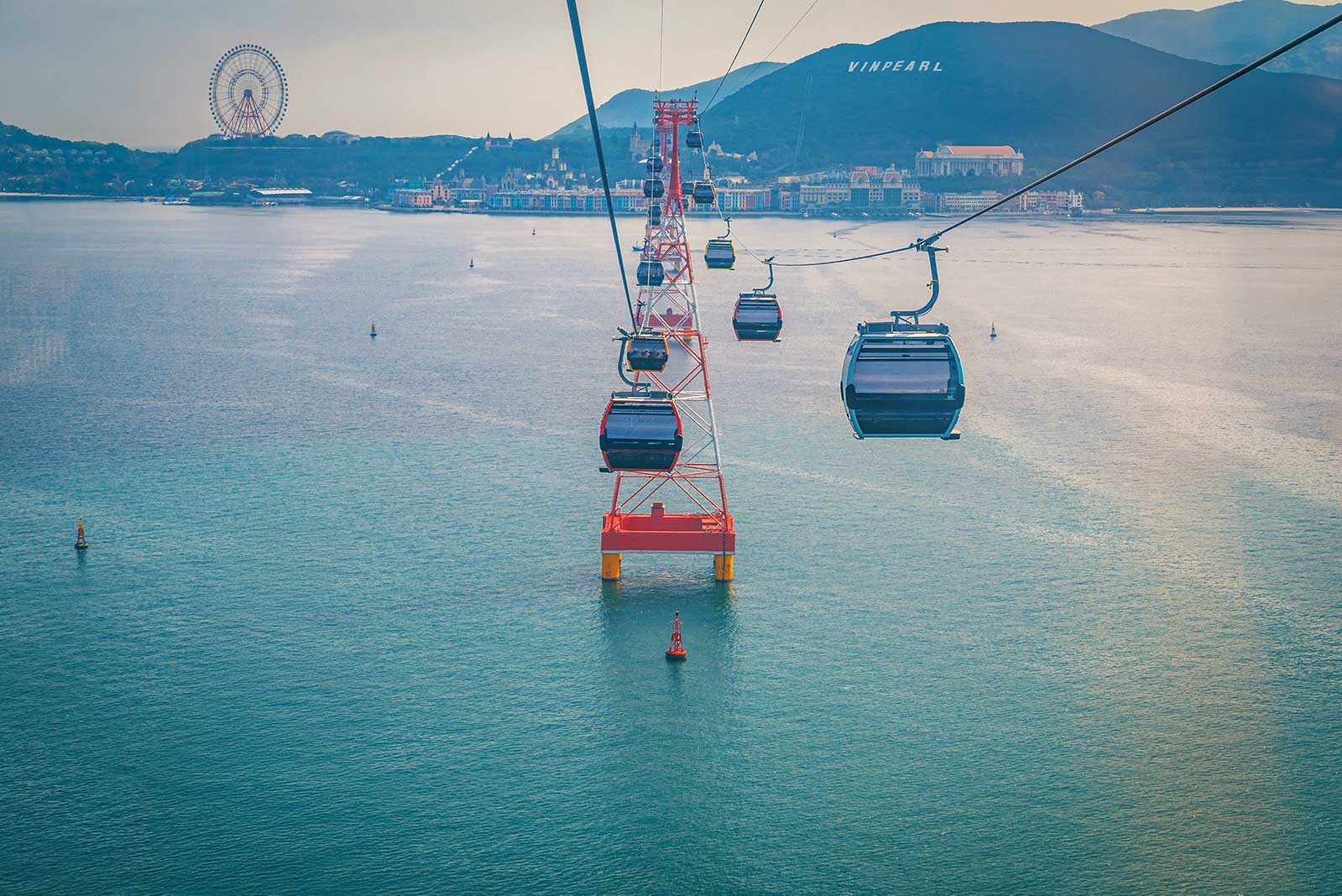
For a day of rides and water park, the Nha Trang cable car runs out to Hon Tre island on one of the longest over-sea cable cars in the world, with good views over the bay on the way. It lands at VinWonders, a large theme park with roller coasters, a water park, an aquarium and gardens. It’s commercial, busy and not cheap, and it’s a world away from “local” Nha Trang — but it’s genuinely good fun for families, and the single ticket covers the cable car and all the rides. Give it most of a day if you go, and bring swimwear for the water park.
10. Swim at Ba Ho waterfall
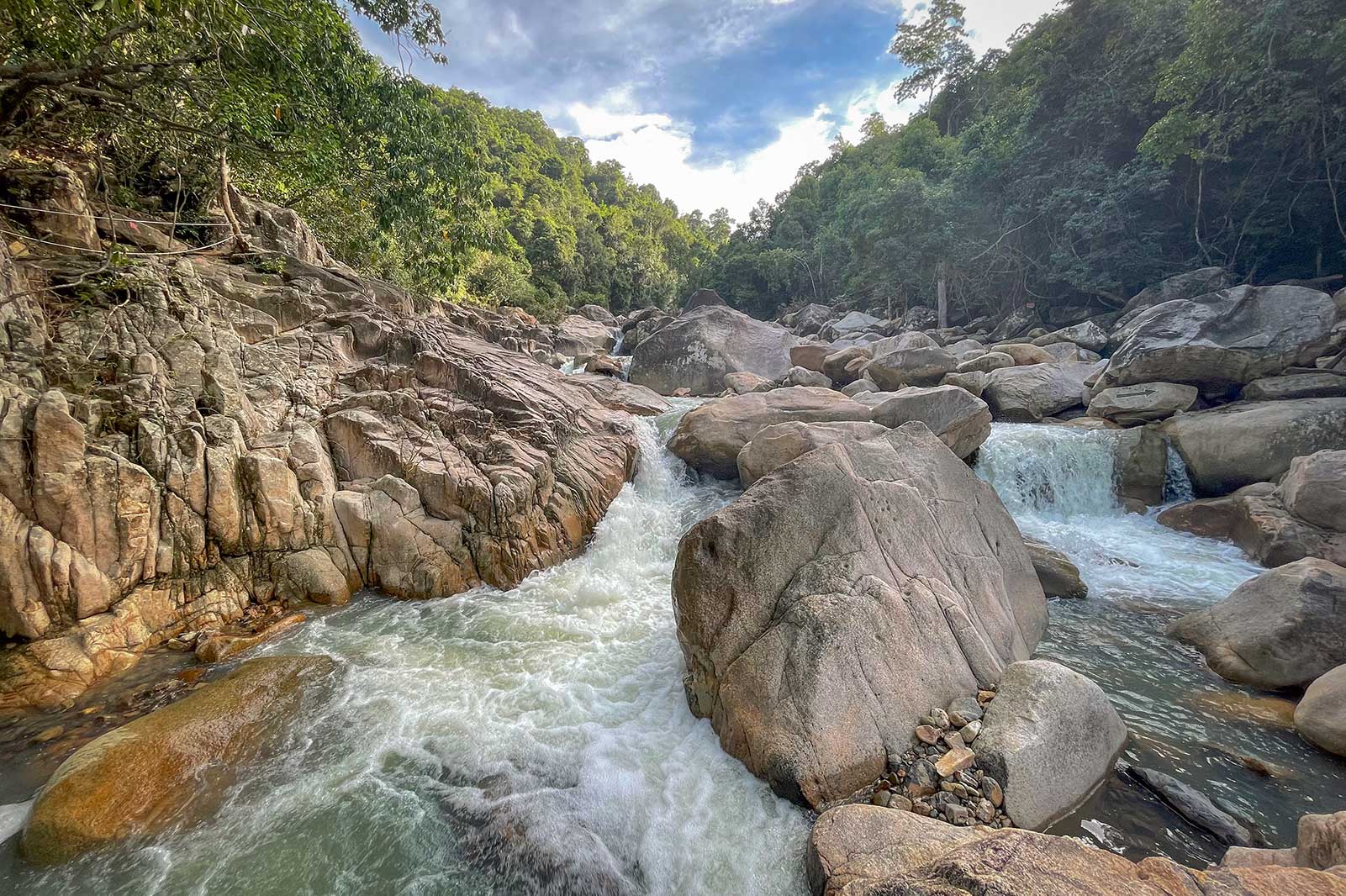
Ba Ho waterfall is a set of three falls and natural pools in the forest about 20 km north of the city, a good half-day escape from the beach. You scramble up over rocks between the pools, swimming in the cool water as you go, and the higher pools are quieter than the first. It’s a fun, active trip, but the rocks are slippery and the scramble is real, so wear proper shoes with grip, watch your footing, and take care with the cliff-jumping that some people do here. Quieter on weekdays.
11. Escape to the hidden bays
North of Nha Trang the coast opens up into bigger, quieter bays that see a fraction of the city’s crowds — worth the trip if you want space and calm rather than resort buzz.
Van Phong Bay
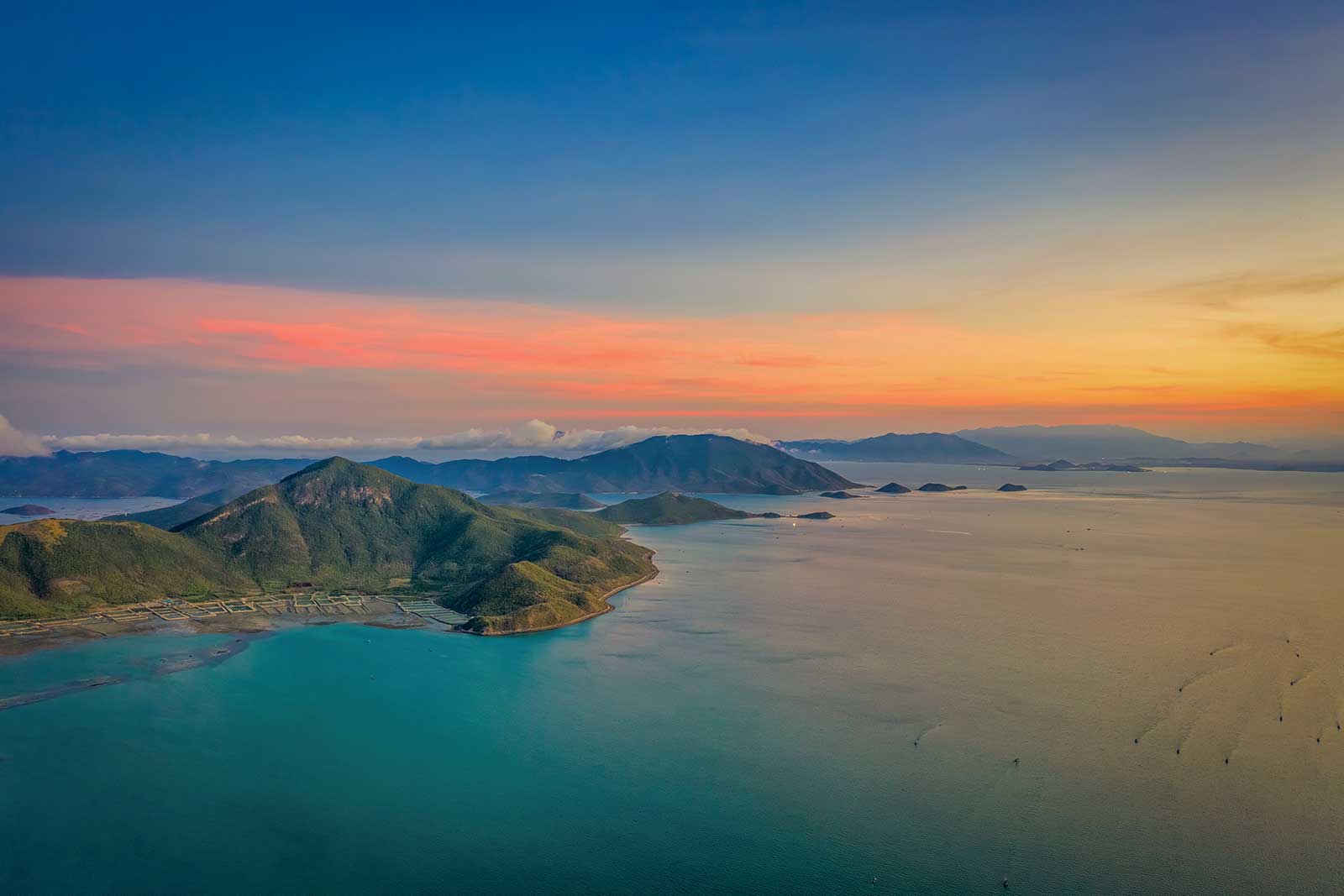
Van Phong Bay is a long, beautiful bay about 60 km north, with kilometres of empty white-sand beach and dunes where you can usually find a stretch to yourself. It’s also the gateway to Doc Let, with its pale shallow water, and to Diep Son, the island known for the sandbar you can walk across the sea on at low tide. Beyond the beaches there isn’t much to do, which is rather the point.
Ninh Van Bay
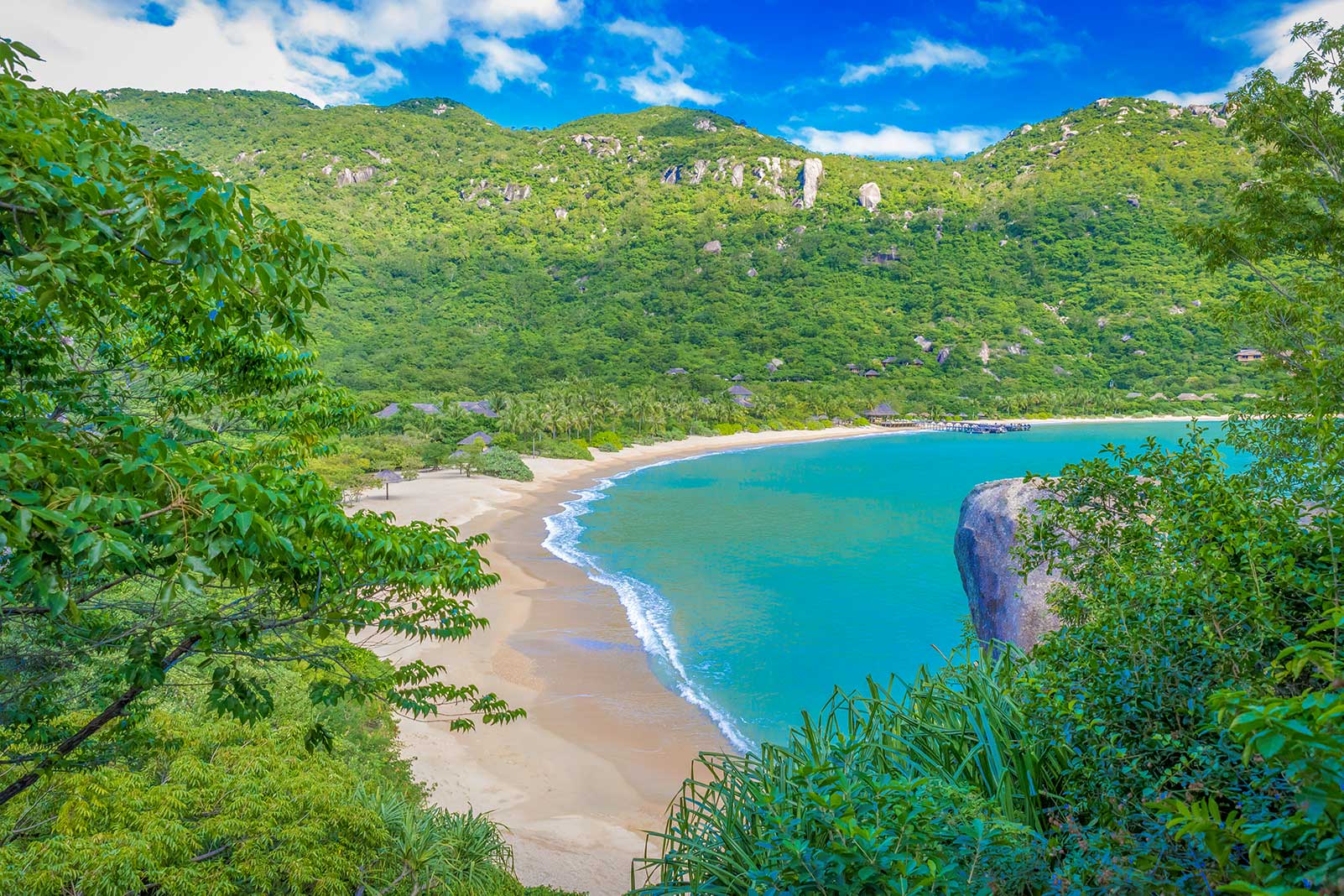
Ninh Van Bay is a secluded bay reachable mainly by boat, known for its handful of high-end hideaway resorts tucked between the rocks and the forest. It’s not somewhere to drop in for the day — it’s a place to splurge on a quiet luxury stay away from the city. Worth knowing about if that’s the trip you’re after.
12. Visit the Museum of Oceanography
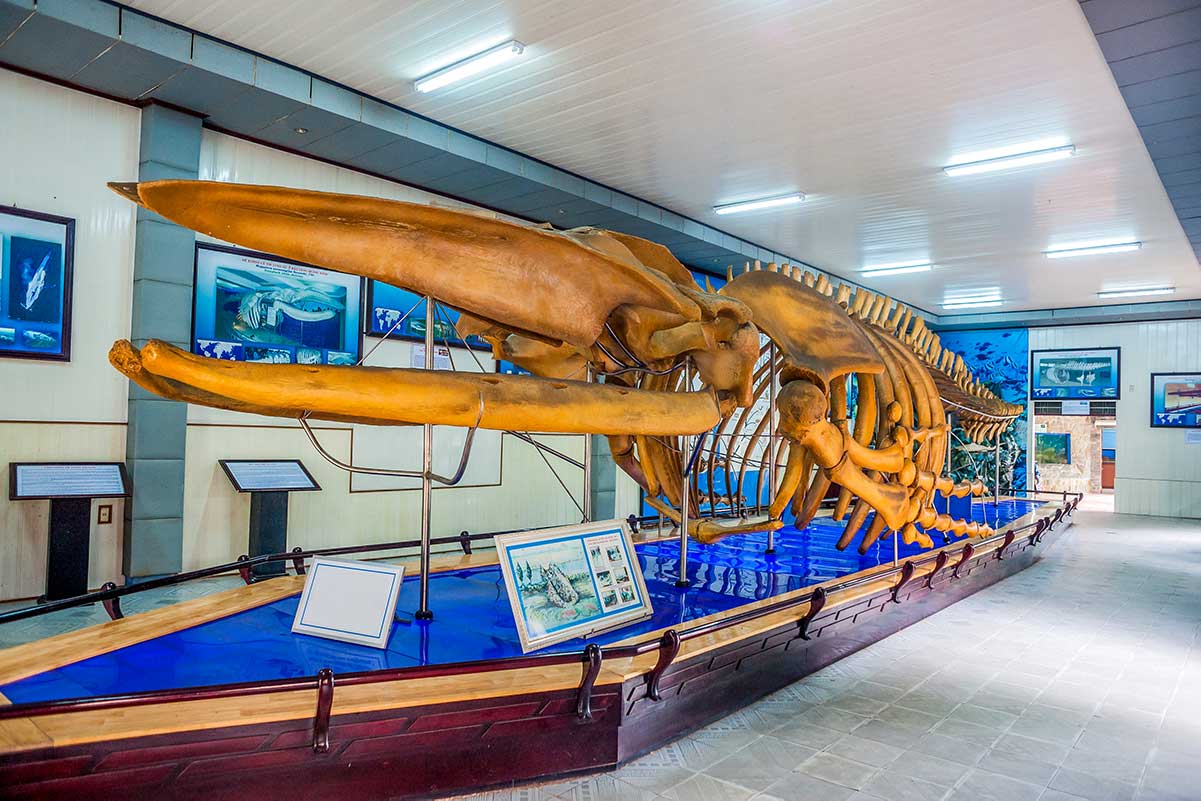
The Museum of Oceanography, at the southern end of the city, is one of the oldest marine research institutes in Vietnam and an easy, interesting stop, especially with kids. It mixes a large aquarium of live reef fish, sharks and turtles with halls of preserved specimens, including a huge whale skeleton. It’s a little old-fashioned and worn in places, but cheap and genuinely educational, and a good rainy-day option. Allow an hour or so.
13. Soak in a mud bath
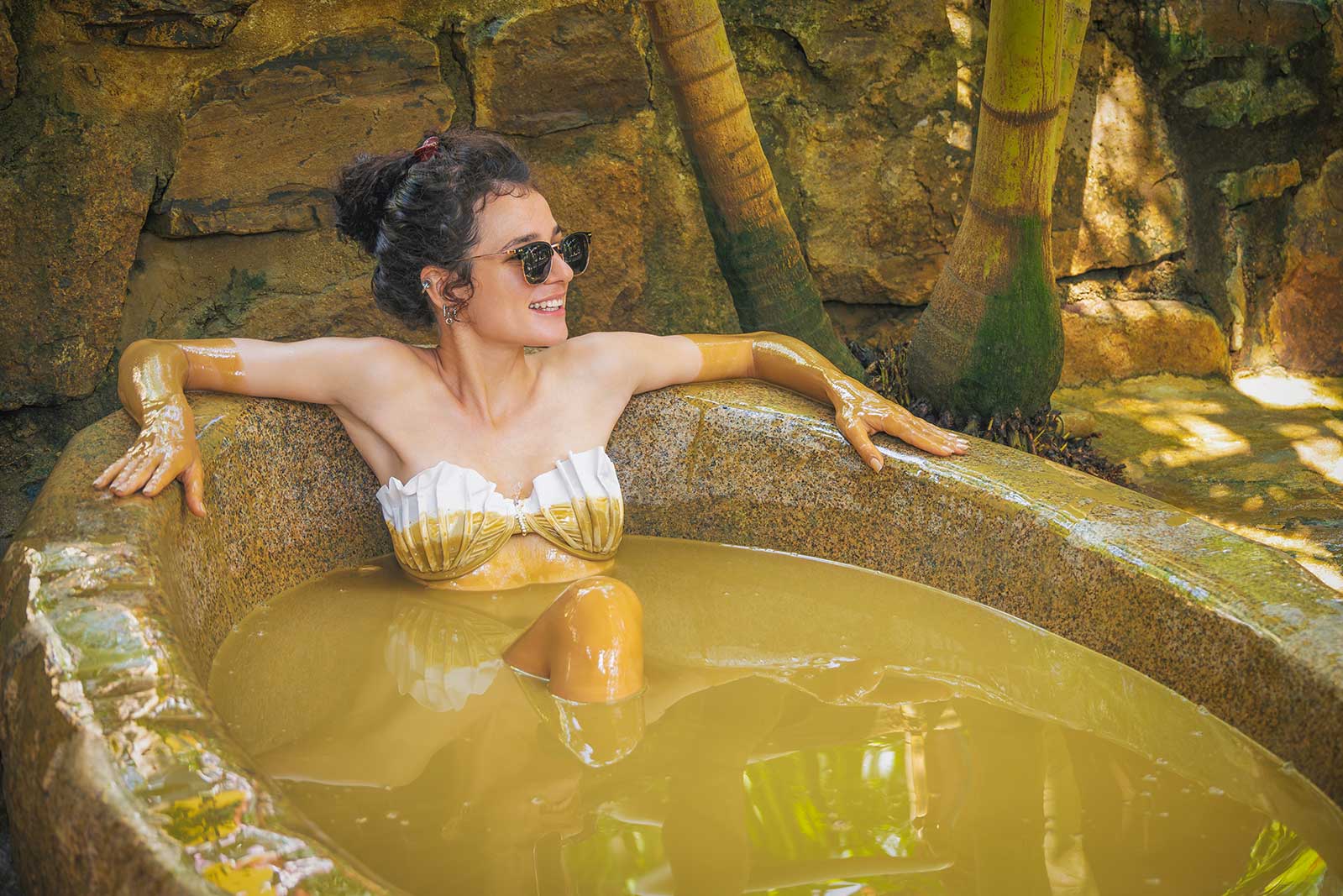
A hot mineral mud bath is one of the things Nha Trang is known for, and it’s a relaxing half-day — you soak in warm, mineral-rich mud, rinse off in hydrotherapy pools, and usually have the run of swimming pools and jacuzzis afterwards. There are several centres on the edge of the city, from big, busy complexes to smaller, calmer ones, with mud baths booked per person or per shared tub. It’s touristy but good fun, and easy on families. For where to go and what they cost, see our guide to the best mud baths in Nha Trang.
14. Visit the salt fields
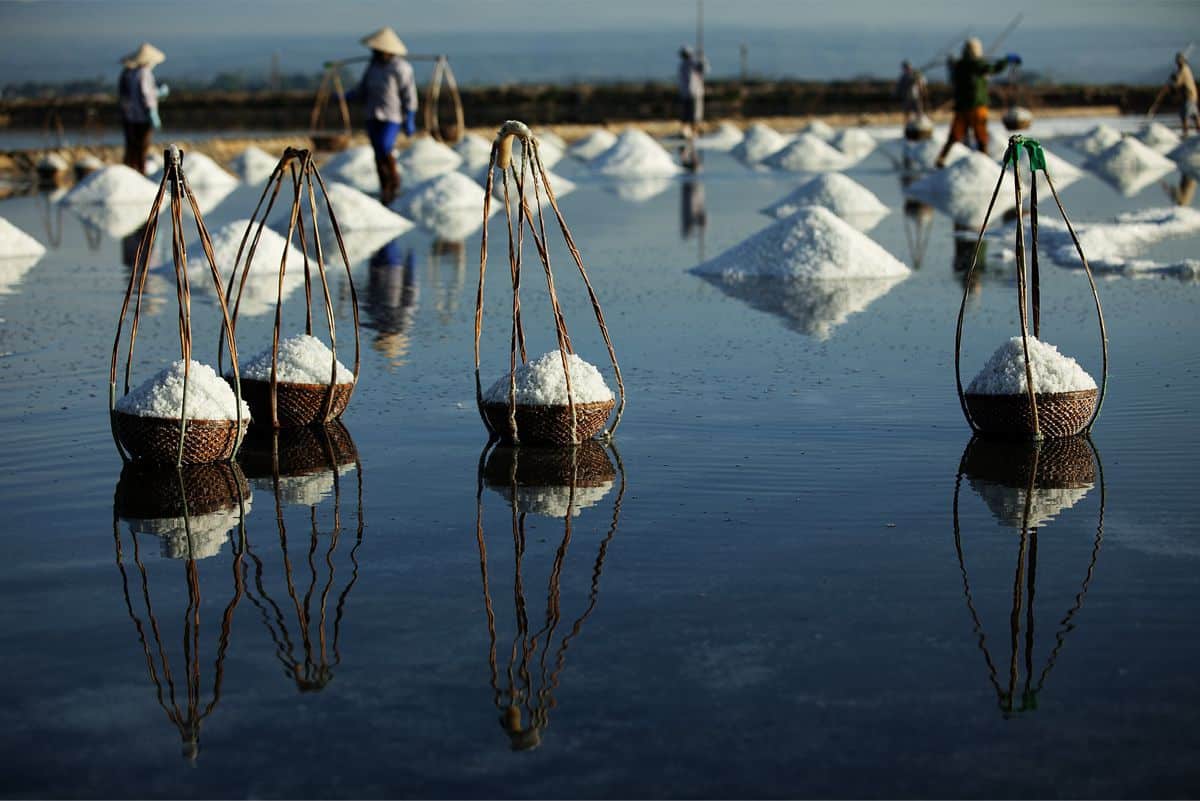
Driving the coast north of Nha Trang, you’ll pass salt fields lining the road — shallow pans where seawater is left to evaporate and the salt is raked and carried off by hand, mostly by women in conical hats. The best-known are the Hon Khoi salt fields near Doc Let, about 45 km north, one of the largest in the country and a striking sight when the white mounds catch the early light. They’re a working industry, not a tourist site, so there’s a season to it — the salt is harvested roughly January to June, and there’s little to see outside those months. Go at sunrise to watch the workers and avoid the fierce midday heat, and combine it with Doc Let beach nearby.
15. Stop by the Yersin and Khanh Hoa museums
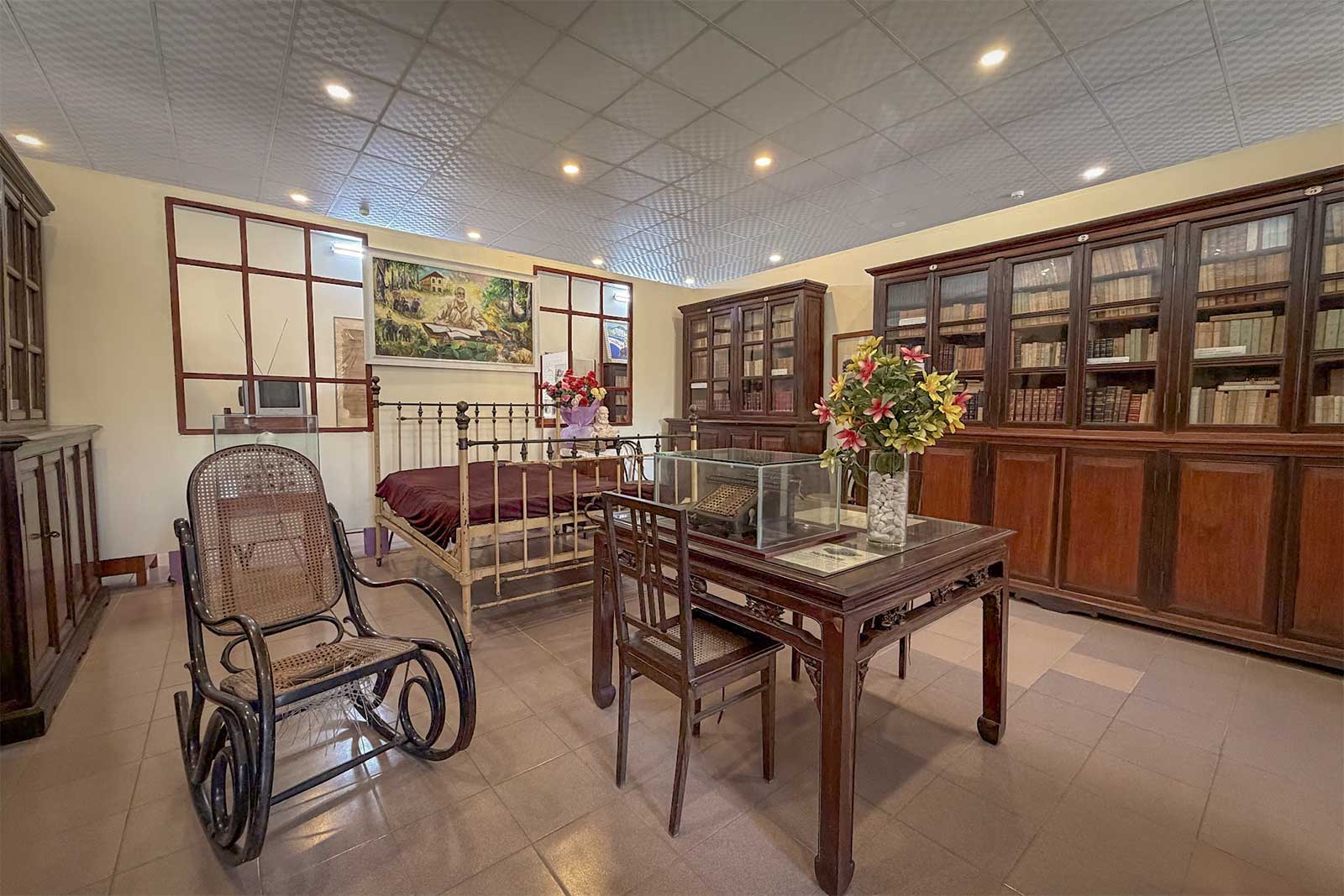
Two small museums in the centre are worth a quick combined visit if you’re passing. The Alexandre Yersin Museum honours the Swiss-French doctor who made Nha Trang his home, founded its Pasteur Institute and is still fondly remembered across the city, with his instruments, library and personal effects on show. Next door, the Khanh Hoa Museum covers local history and Cham artefacts. Both are small and free, so neither is a destination in itself, but together they make a pleasant half-hour, especially before a trip up to Yersin’s mountain retreat at Hon Ba.
16. Drive up to Hon Ba Nature Reserve
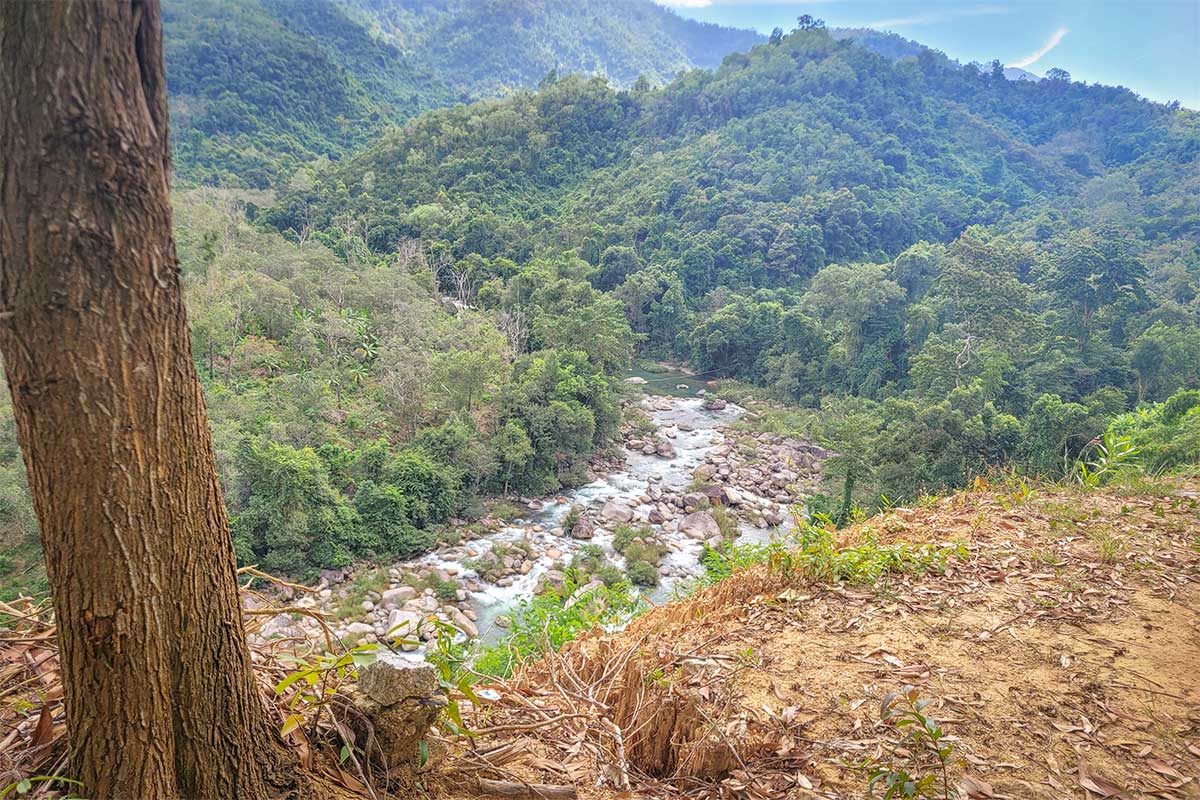
Hon Ba Nature Reserve is a forested mountain about 60 km southwest of the city, where the appeal is as much the journey as the destination. A winding 37 km road climbs from the coast up through jungle to a cool, often misty summit, passing the Suoi Nguon waterfall and a lake on the way — a brilliant ride for confident drivers, or an easy run by car or tour. At the top is a reconstruction of Dr Yersin’s old wooden research house and a small herb garden; it’s modest, and honestly it’s the drive and the cool forest air that make the trip, not the house.

Partway up, around the 19 km mark, Kong Forest is an adventure park built into the hillside, with a long zipline canopy course over platforms and suspension bridges, off-road ATV trails through the jungle and stream rafting. It’s usually done as a half-day with hotel pickup from Nha Trang, and it’s the main draw for most people heading this way, so it pairs naturally with the drive up the mountain. Bring a warm layer for the top, fill up on fuel before you start, and check the weather, as the summit can close and the road gets slippery in the rain.
Best time to visit Nha Trang
Nha Trang has its own weather pattern, drier and sunnier than much of the coast for most of the year. The best time to visit is roughly February to May, when it’s warm, sunny and dry, with calm seas — ideal for the beach and the islands. June to August are hot and busy but still good for the water; this is also the best window for diving, with the clearest visibility from around April to August.
The rainy season runs from September to December, with October and November the wettest, when storms can churn up the sea, cancel boat trips and make the city beach rough and murky. It’s quieter and cheaper then, and the odd clear day is lovely, but it’s a gamble for a beach trip. For a month-by-month breakdown, see our guide to the best time to visit Nha Trang.
The Nha Trang Sea Festival
If you’re around in early summer, the Nha Trang Sea Festival is worth knowing about. Held every two years, usually for about a week around June, it fills the city and seafront with concerts, street performances, markets and water sports. It’s lively and free to enjoy, but rooms fill up, so book ahead if your trip lines up with it.
Where to stay in Nha Trang
Where you stay comes down to whether you want the beachfront, the cheaper city centre, or a quiet island resort.
Along the beach
The seafront strip along Tran Phu and Pham Van Dong is the obvious base — a long line of hotels and resorts at every price, from budget rooms to big beachfront names, all within walking distance of the sand, the promenade and plenty of restaurants and bars. It’s the most convenient choice for a beach holiday, if also the busiest and most touristy.
In the city centre
A few streets back from the beach, the city centre has cheaper hotels and guesthouses within walking distance of the beach, the markets and the nightlife. You trade a sea view for better value and a slightly more local feel, and you’re still only a short walk from the sand.
Island and bay resorts
For a quieter, more upmarket stay, the islands and bays around Nha Trang hold a number of resorts — from Hon Tre close to the city to the secluded hideaways out at Ninh Van Bay. These are a short boat ride from the mainland and suit travelers who want seclusion and a pool over walkable streets and nightlife. For the full picture, see our guide to the best islands in Nha Trang.
How to get to Nha Trang
Nha Trang is well connected by air, rail and road, on the main north-south routes down the coast.
By plane
Cam Ranh airport is about 30 km south of the city, with frequent domestic flights from Hanoi, Ho Chi Minh City and Da Nang, plus a good number of international routes. From the airport it’s a 45-minute taxi or shuttle bus into town; the shuttle bus is cheap and runs along the seafront.
By train
Nha Trang railway station is right in the city centre on the main north-south line, with connections both ways — roughly eight hours to either Da Nang or Ho Chi Minh City. The overnight sleeper trains are a comfortable, scenic way to arrive.
By bus
Frequent sleeper buses and limousine vans link Nha Trang with the rest of the country: Dalat is a scenic four to five hours inland, Mui Ne and Ho Chi Minh City lie south, and Da Nang and Hoi An are a long ride north.
How to get around Nha Trang
On foot and by bike
The city is flat and fairly compact, so the beach, the markets and the centre are easy to cover on foot or by bicycle, with many hotels renting bikes cheaply.
Taxi and Grab
Grab is the easiest way to cover longer distances, with fixed, fair fares for both cars and motorbike taxis. If you take a metered taxi instead, stick to known firms like Mai Linh to avoid being overcharged.
Motorbike
Renting a motorbike (around 100,000 to 150,000 VND a day) is the best way to reach the waterfalls, the quieter beaches and the countryside under your own steam. Stick to a bicycle or Grab if you only need to get around town.
Itinerary: 2 days in Nha Trang
Two days covers the best things to do in Nha Trang, mixing the city sights with a day out on the water.
Day 1 — the city and the culture
- Start with an early swim and breakfast on the beach.
- Head north to the Po Nagar Cham Towers and Hon Chong.
- Visit Long Son Pagoda and the white Buddha, then Dam Market.
- Relax with a mud bath in the afternoon, and a seafront dinner in the evening.
Day 2 — the islands or the sea
- Take an island-hopping boat trip, swimming and snorkelling between the islands.
- Or spend the day diving, or riding the cable car over to VinWonders with kids.
- Finish with sunset drinks at a beach or rooftop bar.
Tips for traveling to Nha Trang
Watch the weather for the sea
The islands, diving and boat trips depend on calm seas, so if you’re coming for the water, aim for the dry months and keep plans flexible in the rainy season, when trips are often cancelled at short notice.
Avoid the pagoda scams
At Long Son Pagoda in particular, ignore anyone who approaches at the gate claiming an entrance fee, demanding money for incense, or offering to “guide” you — the temple is free, and this is a long-running hustle.
Pick the right boat trip
Island tours range from quiet snorkelling trips to full-on party boats, so ask exactly what kind you’re booking. The cheapest tours are usually the loudest.
Traveling with kids
Nha Trang is one of the easier beach cities for families — the beach, VinWonders, the Museum of Oceanography and the mud baths all work well with children. There’s more in our notes on Nha Trang with kids.
When it rains
If the weather turns, there’s still plenty to do indoors — the mud baths, the oceanography museum, VinWonders’ indoor sections and the markets. See our roundup of what to do in Nha Trang when it rains.
What to expect from Nha Trang: an honest verdict
Nha Trang is a place worth being realistic about before you book. The setting is genuinely good — a long beach, a fine bay, clear water and islands offshore — and there’s plenty to fill a couple of days, from diving and island-hopping to the Cham towers and the mountains inland. As a beach city, it does its job.
What it lacks is atmosphere and local character. Nha Trang is a built-up, package-holiday resort city, long dominated by Russian and Chinese tour groups, with menus, signs and shops geared to them rather than to independent travelers. It feels more like an international beach resort that happens to be in Vietnam than a Vietnamese town, and visitors who come looking for the culture, charm and street life they found in Hoi An, Hanoi or the smaller coastal towns often leave a little flat.
So it comes down to what you want. For a straightforward beach stop, some diving or a family few days by the sea, Nha Trang delivers, and two or three days is about right — longer tends to drag. But for travelers chasing atmosphere and a real sense of place, it’s one of the easier destinations on the coast to skip, or to trade for somewhere quieter like the bays to the north. Treat it as a beach break rather than a cultural one and you’ll enjoy it for what it is.