

Pepper in Phu Quoc: Why this island is famous
Pepper has been grown on Phu Quoc for centuries, long before tourism became the island’s main industry. The northern and central parts of the island — with their mineral-rich, quartz-heavy soil and a climate that balances humidity with plenty of sunshine — turned out to be ideal conditions for growing pepper. Farmers here still use traditional methods: organic fertilizers, personal care of each vine, and handpicking every cluster.
That process is slower and more labor-intensive than industrial farming, but it preserves the natural oils and flavor that make Phu Quoc pepper stand out. Vietnam is the world’s largest pepper exporter, and Phu Quoc has long been considered one of its finest sources.
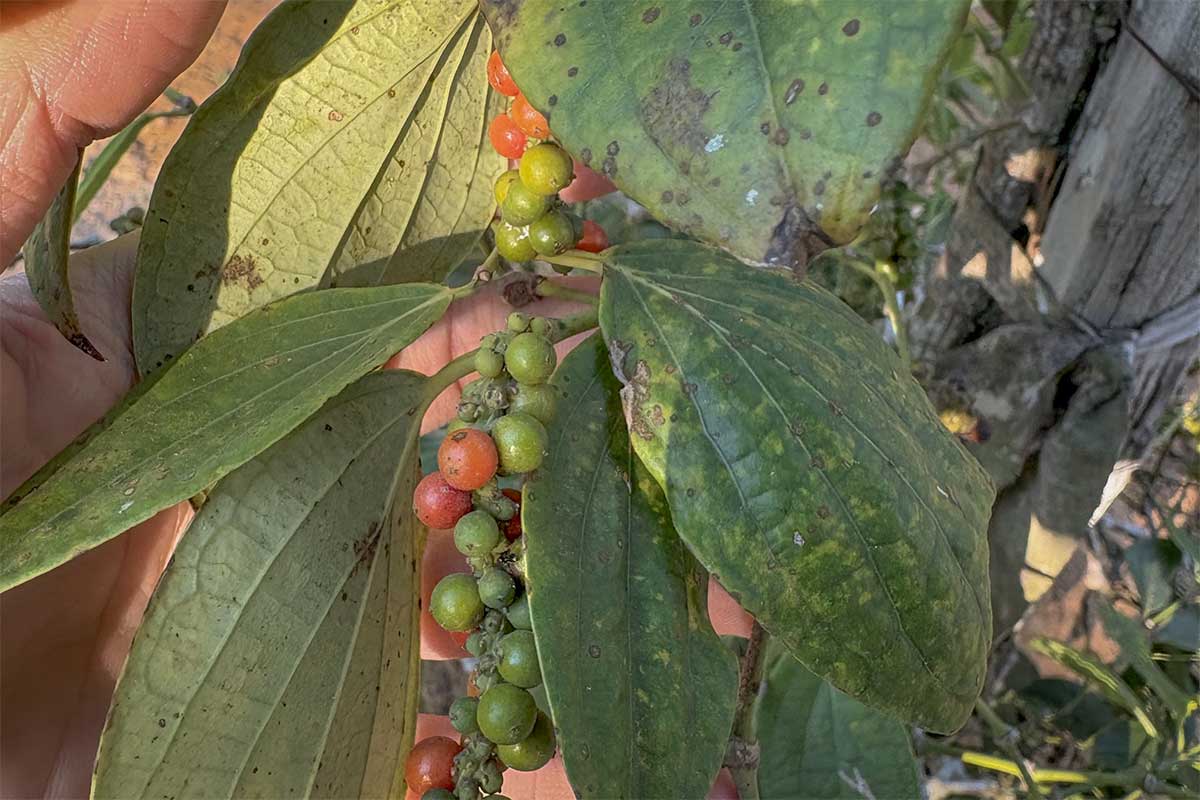
All three types of pepper — black, white, and red — come from the same plant. The difference is in when and how they are processed. Black pepper is made from unripe green peppercorns that are dried in the sun. White pepper comes from fully ripe berries with the outer skin removed, giving it a milder, cleaner flavor. Red pepper is simply ripe peppercorns left on the vine longer, with a slightly sweeter taste. The highest quality peppercorns are exported or sold directly on the island. If you want the best Phu Quoc pepper, buying it at the farm or at Duong Dong Market will get you closer to the real thing than most packaged products in shops.
How pepper farms in Phu Quoc work
Visiting a pepper farm is more interesting when you understand what you are actually looking at. Here is how the process works from vine to finished product.
1. Growing the vines
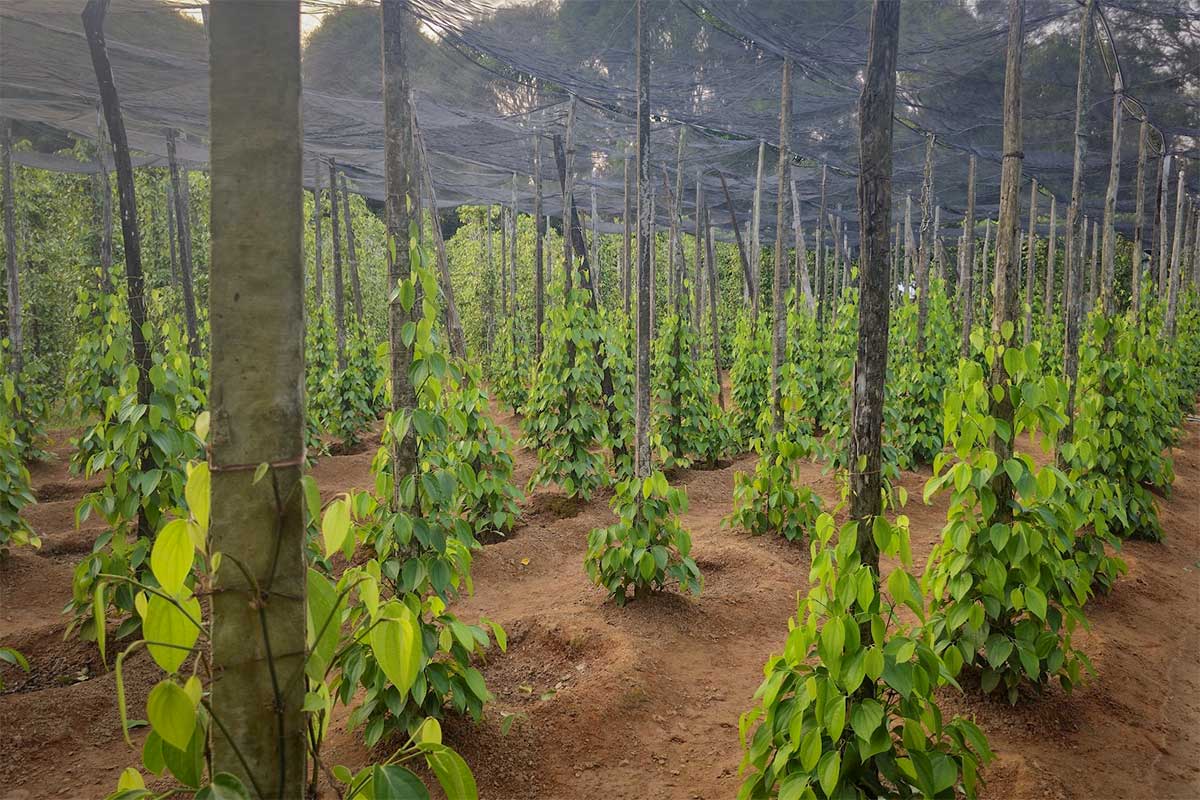
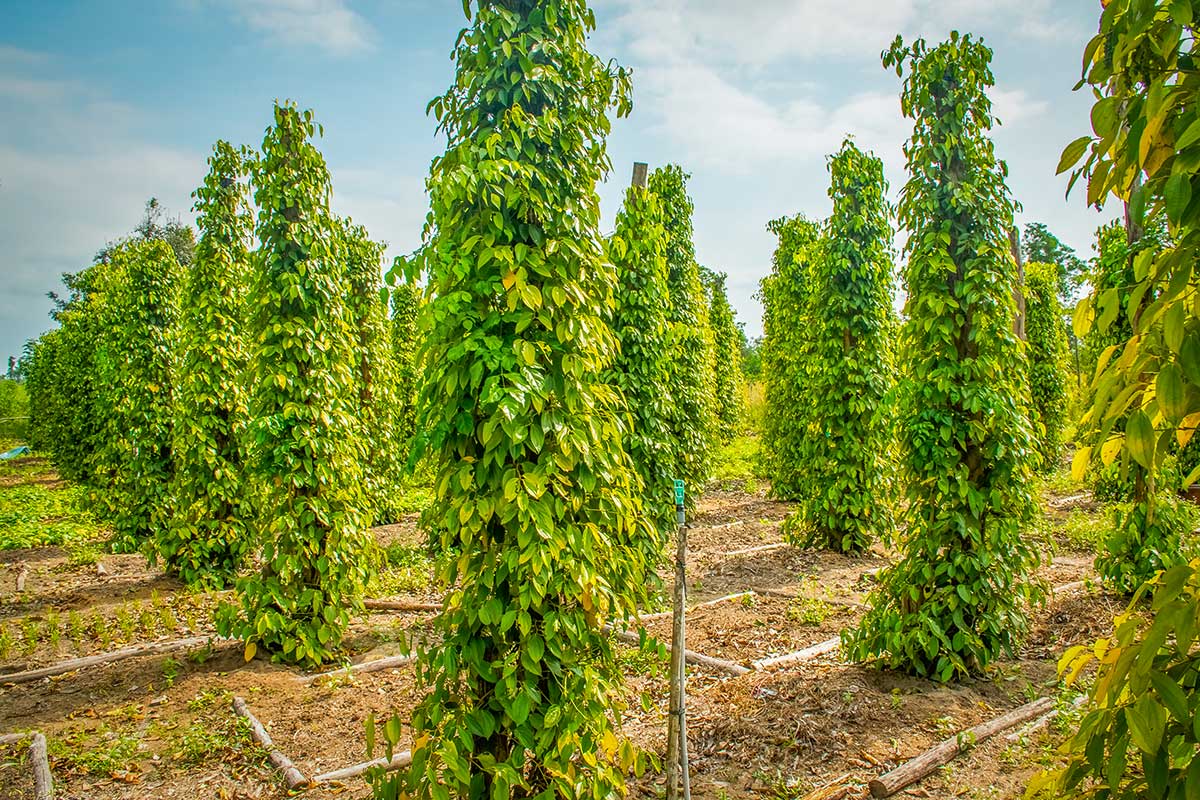
Pepper plants are climbing vines that need something to grow against. On Phu Quoc, farmers use tall wooden poles or living trees as support, which gives the farms their distinctive look — rows of tall posts with dense green vines wrapped around them. The plants take around three years before they produce their first harvest and can continue producing for up to 20 years. Farmers on Phu Quoc avoid chemical fertilizers, using organic matter instead to keep the soil healthy. Each vine is tended individually, which is part of what makes the farming here different from large-scale industrial production.
2. Harvesting the peppercorns
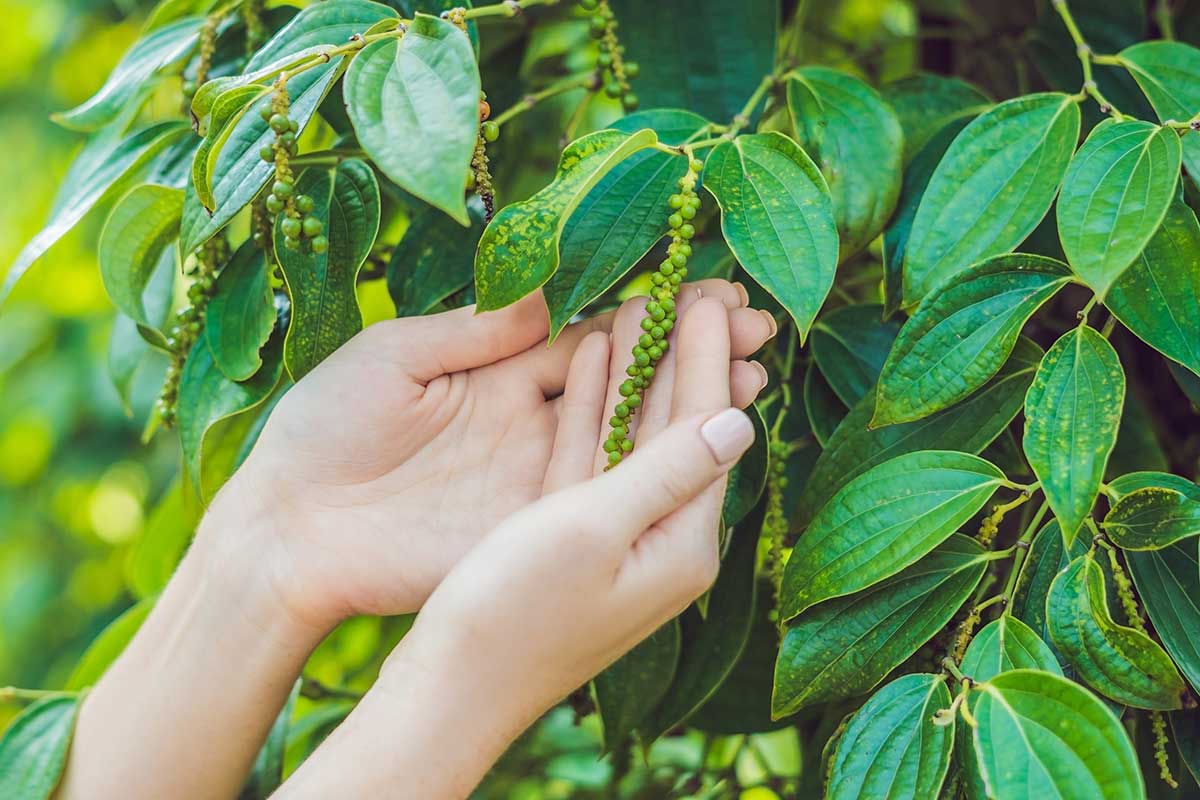
Harvest happens during the dry season, roughly between January and April. A single pepper cluster will have berries at different stages of ripeness at the same time — some still green, some turning red. Farmers handpick each cluster rather than stripping the vine mechanically, which protects the plant and allows for better quality control. On farms like Phu Quoc Countryside, typically around 30 to 50 percent of berries on a cluster are ripe at harvest time, with the rest still green.
3. Sorting and processing
Once harvested, the peppercorns are sorted by quality using a simple but effective method: they are submerged in water. Good peppercorns sink. Empty or low-quality ones float and are skimmed off. The floaters are not wasted — they go back into the garden as compost or natural fertilizer. What remains after this process gets sorted further by size using a sieve. The smallest fragments are ground into pepper salt or used in spice blends. The largest, heaviest peppercorns are packaged and sold as the premium product.
4. Drying and finishing
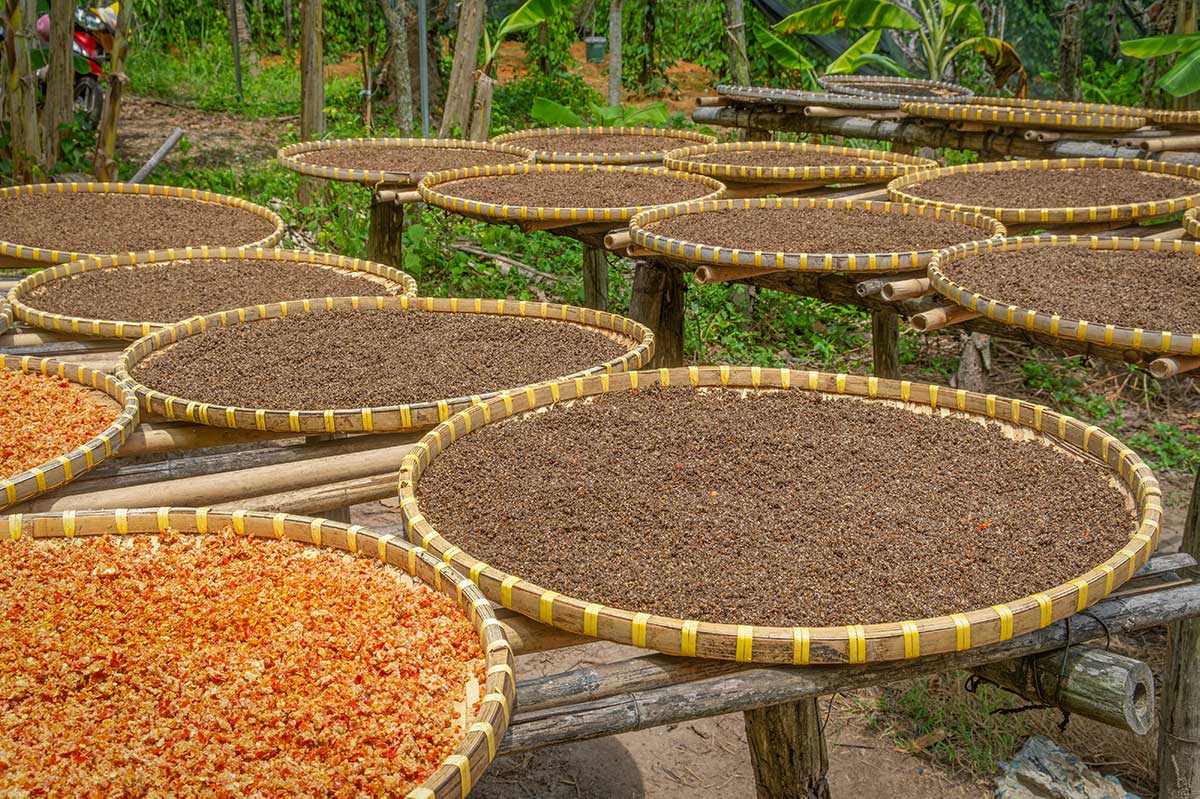
After sorting, the peppercorns are spread out and dried in the sun — this is the stage that determines the final product. Green unripe berries dried as-is become black pepper, the most common variety. Fully ripe red berries that have their outer skin removed through soaking become white pepper, which has a smoother, less sharp flavor. Red pepper is simply ripe berries that are dried without removing the skin, giving them a slightly sweeter profile. The same harvest, handled three different ways, produces three distinct spices.
What to expect when visiting a pepper farm in Phu Quoc
Not all pepper farms on Phu Quoc offer the same kind of visit. Some are simple plantation stops — you walk around, see the vines, maybe buy some pepper, and leave. Others are set up as a proper experience with guided tours, tastings, and cooking classes. Which type suits you depends on what you are looking for. If you want more than just a photo, it is worth choosing one of the farms built around the experience. The sections below cover what that experience actually looks like.
1. Walking the farm
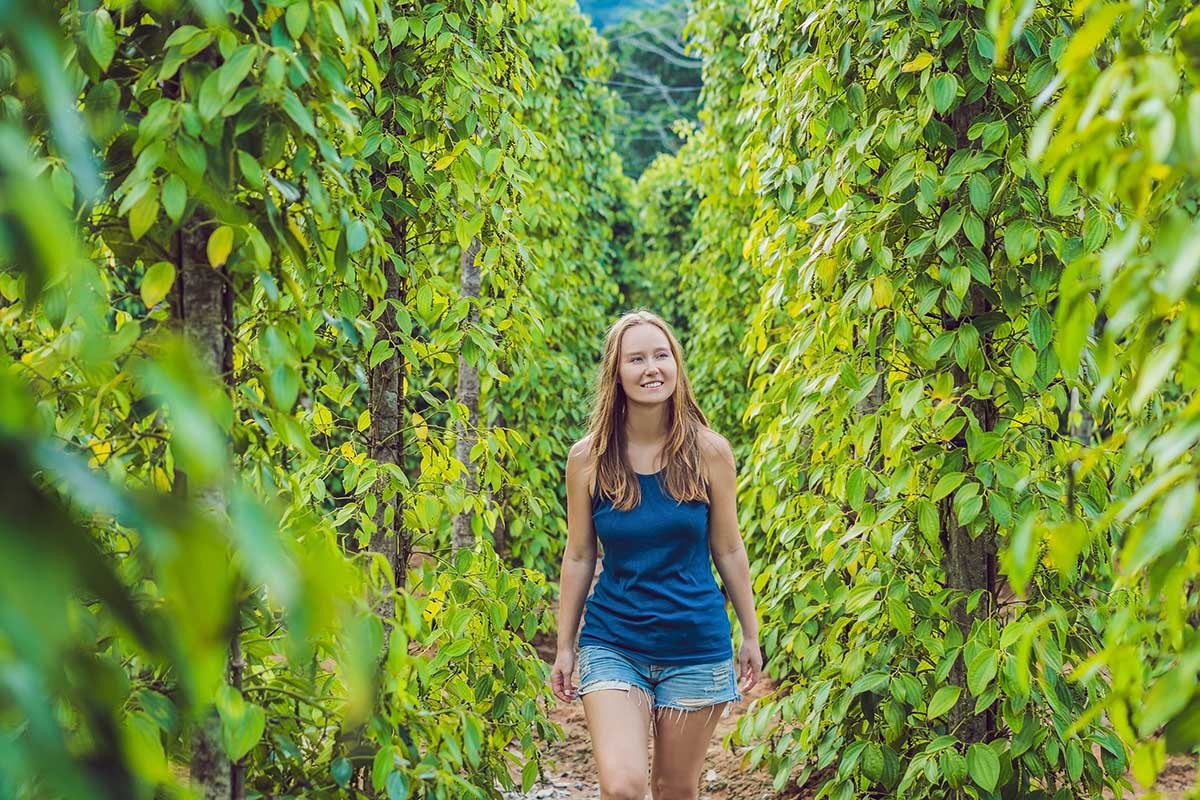
The pepper vines are the main attraction, but most experience-driven farms grow much more than pepper. Fruit trees, herbs, and vegetables fill the grounds alongside the pepper rows. A good farm visit includes all of it — tasting a papaya picked straight from the tree, handling a cashew fruit, or chewing on a cinnamon leaf. Several visitors specifically mention being surprised by how much there is to see beyond the pepper itself. It turns a short walk into something genuinely interesting.
2. Tasting
Tasting is one of the highlights of a farm visit. Most farms offer fresh peppercorns at different stages — green, dried, and processed into blends — often served with fresh fruit like mango or guava to balance the heat. Pepper tea served at the end of the tour comes up repeatedly in reviews as an unexpected highlight, with several visitors mentioning they bought some to take home. Welcome drinks on arrival are standard at the better farms.
3. Guided tours
The quality of a guided tour depends entirely on the guide. At the top farms on Phu Quoc, the guides speak good English, explain the full process from cultivation to finished product, and cover the other plants on the farm as well. Reviews consistently mention that a knowledgeable and engaging guide makes a significant difference — turning what could be a 15-minute walk into an hour that goes by quickly. Humor comes up more than once too, which says something about the atmosphere at the best farms.
4. Cooking classes
Several farms offer cooking classes that combine the farm tour with a hands-on meal. The format is typically a welcome drink, farm tour, harvesting ingredients directly from the garden, cooking two to four dishes, and then eating together. The menu usually includes Vietnamese classics like papaya salad, fresh spring rolls, and caramelized pork with pepper. Vegan and vegetarian options are available at the better farms. Cooking classes require advance booking and are not available as walk-ins. If this is something you want to do, arrange it before you arrive on the island.
The 2 best pepper farms in Phu Quoc
For a quick look at a pepper plantation, most farms on the island will do the job. But if you want a visit that is actually worth the trip, these two stand out. Both are family-run, well-reviewed by foreign visitors, and offer something beyond just walking past some vines.
1. Phu Quoc Countryside Pepper Farm
This is the best pepper farm experience on the island. It is run by Jenny and her family, who have been farming this land since 1998 and opened it to visitors in 2008.
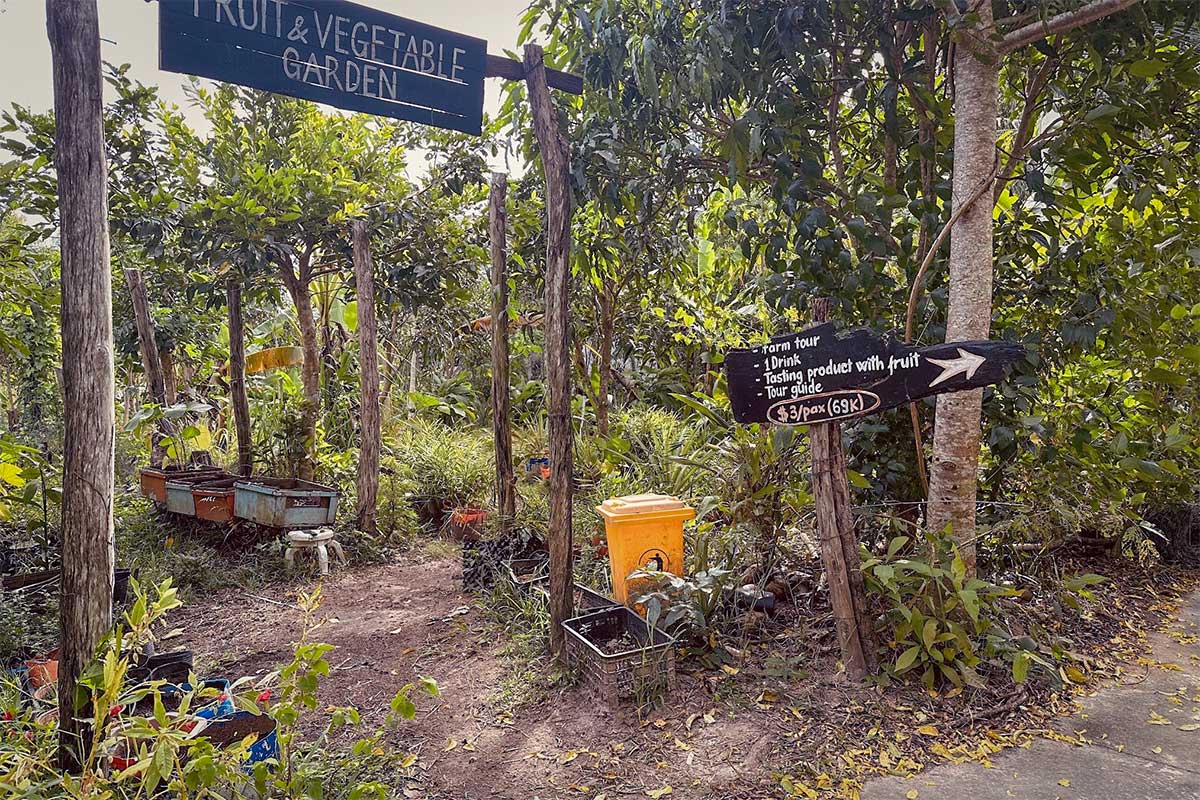
The farm covers a large plot in the rural northeast of the island and grows far more than pepper — fruit trees, vegetables, herbs, and a small collection of farm animals make it feel like a proper working farm rather than a tourist setup.
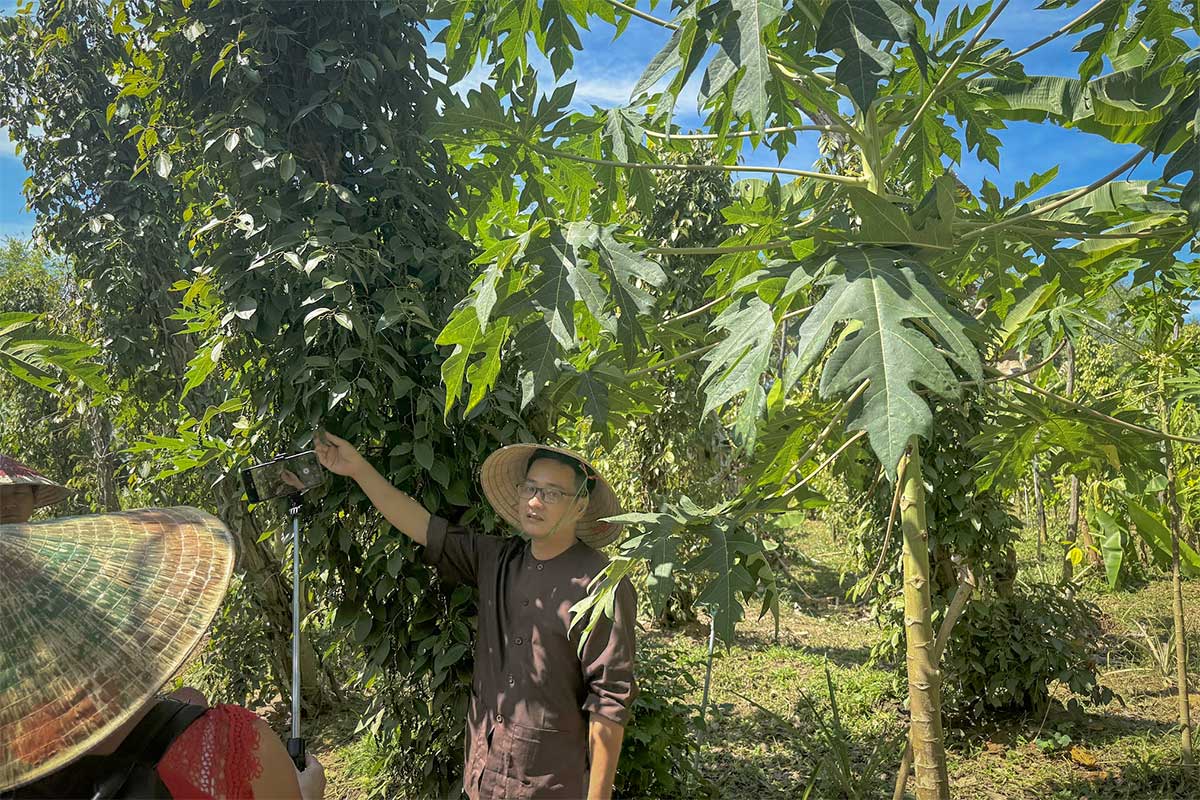
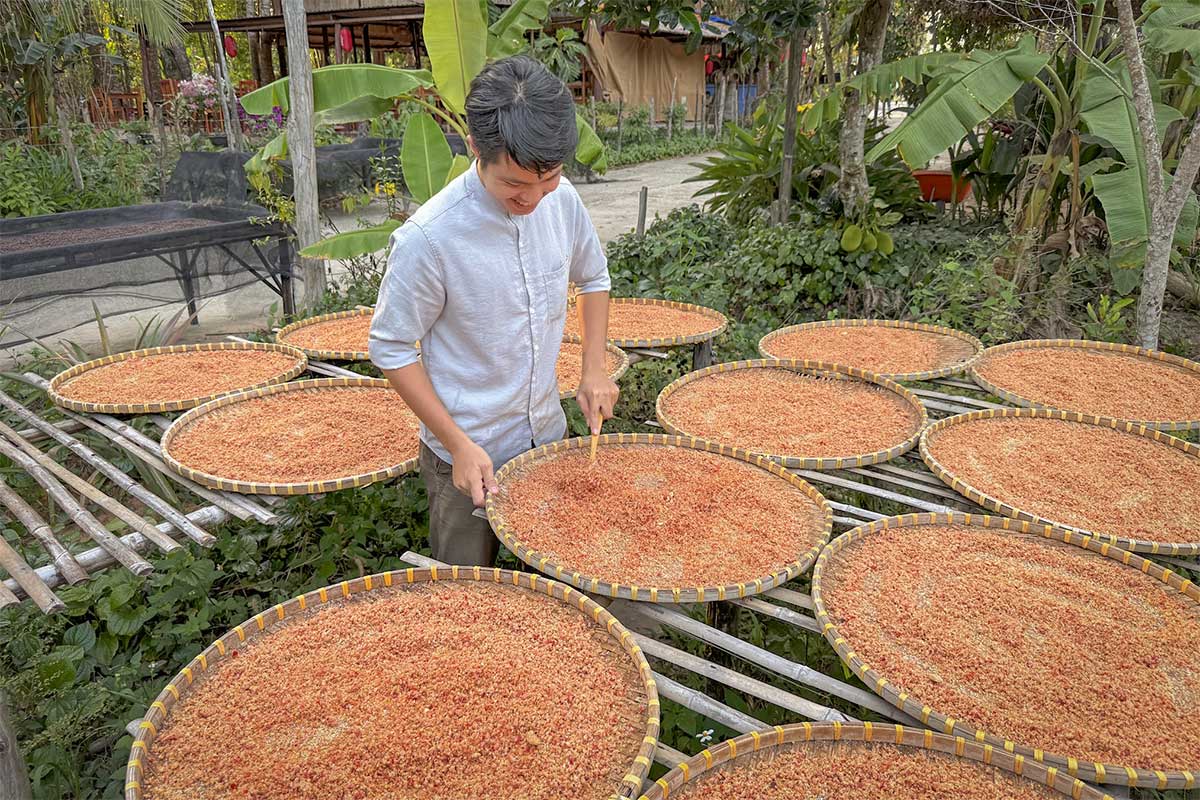
The guided tours are the main reason to come here. Guides speak good English, cover the full cultivation and processing story, and keep things genuinely engaging. The atmosphere is relaxed and good-humored — this is not a rushed group tour. The tasting experience — fresh peppercorns with fruit, different pepper blends, and pepper tea at the end — is a step above what other farms on the island offer.
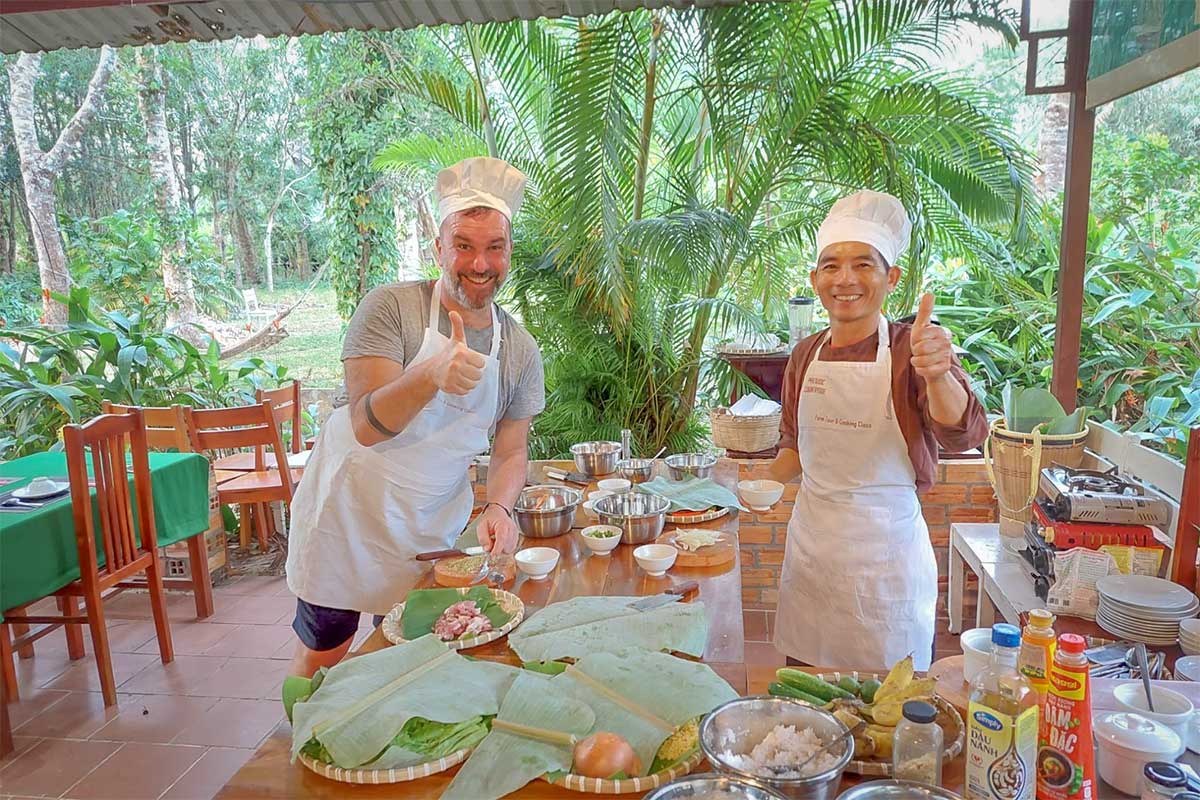
For those with more time, the cooking class is worth booking. The format runs from farm tour to harvesting to cooking two or four dishes together, with recipes sent afterward. Vegan and vegetarian menus are available. Classes need to be booked in advance.
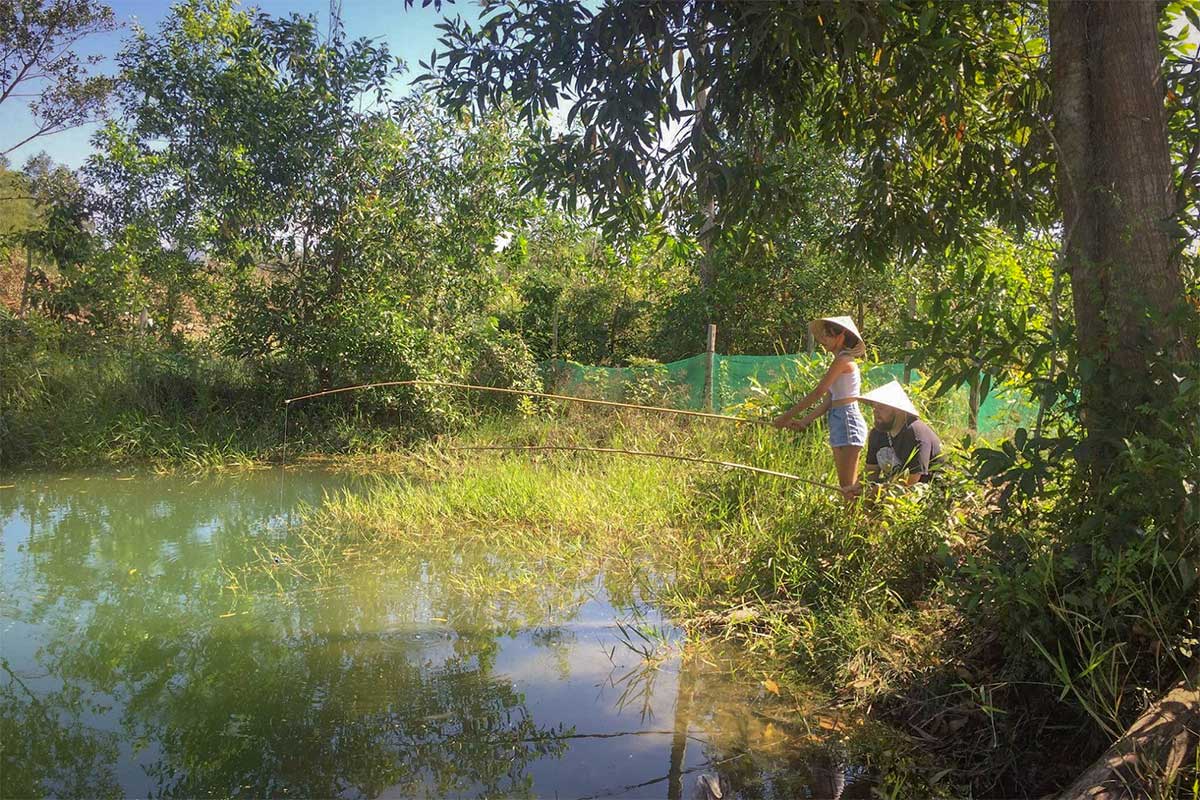
Practical details: open daily except Wednesdays, 9:00 to 17:00. Farm tour is 4 USD per person. Cooking packages start at around 35 USD. Book cooking classes directly via WhatsApp or email to get the best price.
Location: Google Maps
2. Vuon Tieu Hai Duong Pepper Farm
A smaller and less structured visit than Phu Quoc Countryside, but one that has its own appeal. This is a genuine family farm in the northwest of the island, and the experience reflects that. The owners do not speak much English but manage with a translator app, and the warmth and hospitality more than make up for it. Visitors consistently describe it as one of the more authentic stops on the island — not set up for tour groups, not trying to sell you anything aggressively, just a family proud of what they grow.
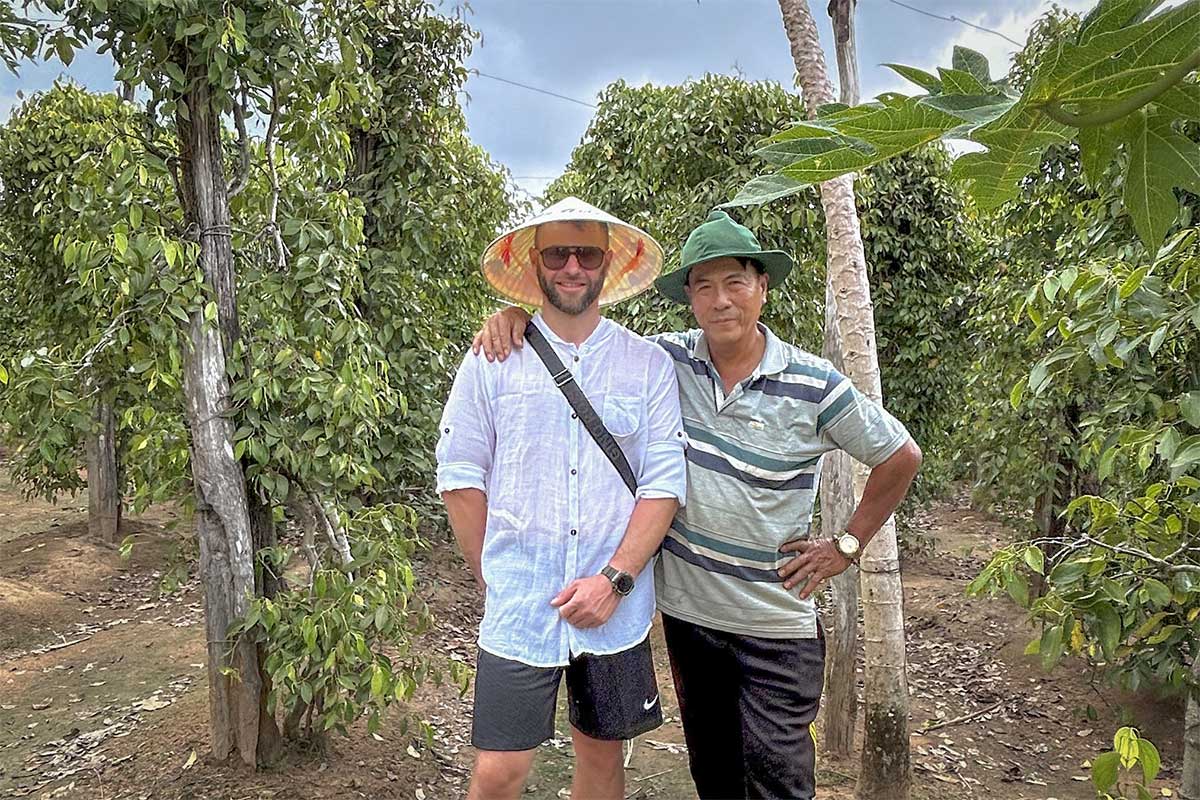
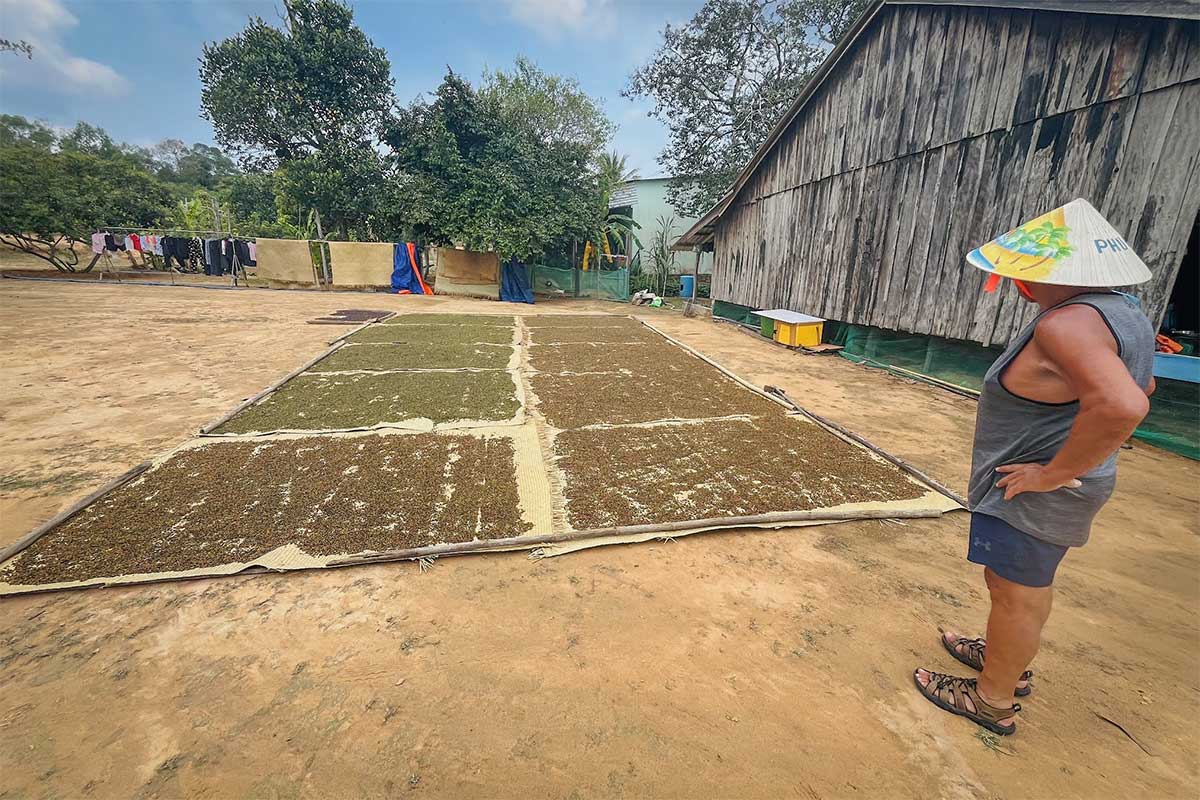
The tour covers pepper at different stages, cashew nuts, tropical fruit trees, and other plants. Tasting is included, and the farm sells pepper and cashews at fair prices. This is one of the more authentic stops on the island — not set up for tour groups, not pushing hard sells, just a family proud of what they grow.
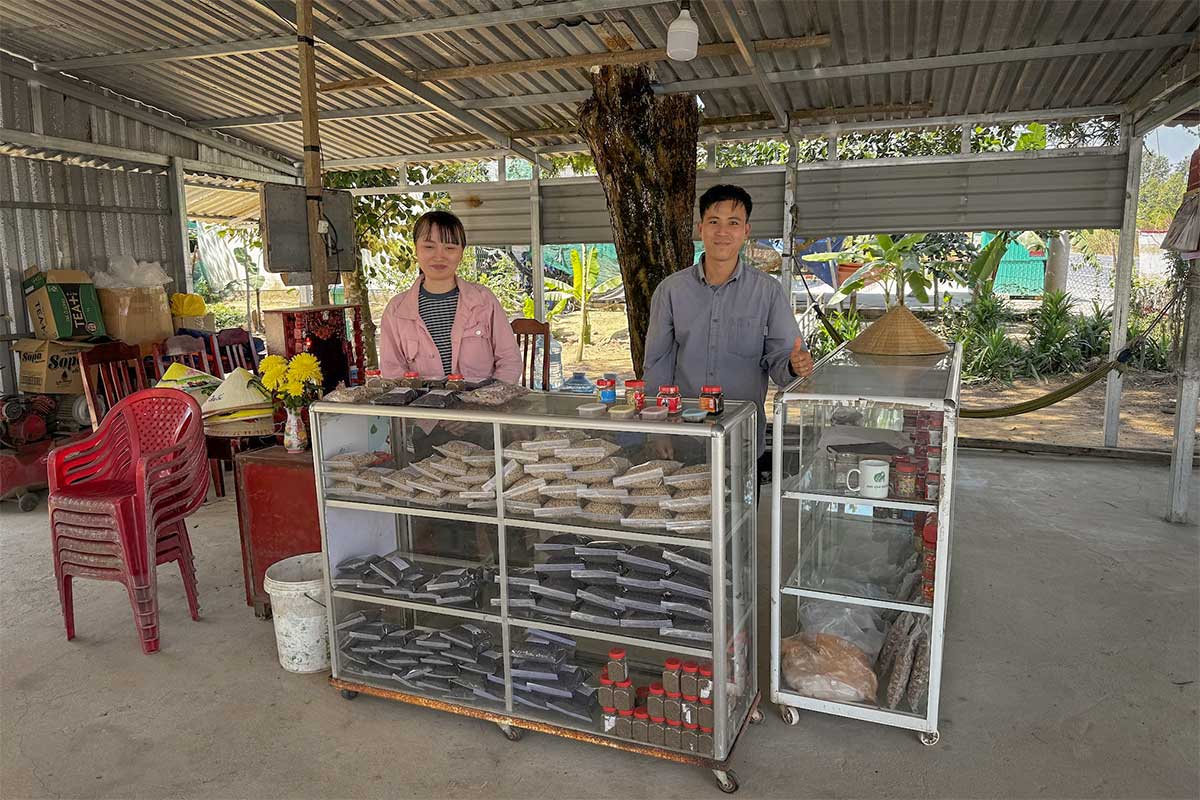
It is a good fit for travelers who want an authentic local experience without a full program around it, and for those already heading to the northwest of the island.
Location: Google Maps
How to get there — and what to combine
Both farms are remote. A scooter or a pre-arranged Grab is the most practical way to get there. Avoid asking taxi drivers for recommendations — many will steer you toward farms that pay commission rather than the best options.
Phu Quoc Countryside is in the northeast, roughly 20 km from Duong Dong and about a 30-minute ride. It sits naturally on the route to Rach Tram and Starfish Beach, making it easy to combine both into a half or full day on the northeast side of the island.
Vuon Tieu Hai Duong is further northwest, which puts it on the route toward Ganh Dau Cape, Vinpearl Safari, and the beaches along the west coast — Bai Dai and Vung Bau. If you are already planning a day in that direction, it fits in well without adding much extra travel.
Other pepper farms in Phu Quoc
If you are staying in or near Duong Dong, Long Beach, or the southern part of the island, the two farms above involve a decent ride. For a quick look at a pepper plantation without committing to a half-day trip, there are closer options.
Tuan Viet Pepper Farm sits on the outskirts of Duong Dong and is the easiest pepper farm to reach from most hotels in the area. Vuon Tieu Huynh Thy is another option in the south of the island. Both are fine for what they are — a 15-minute stop, a walk among the vines, a photo, and maybe a bag of pepper to take home. But that is roughly where it ends. There are no guided tours, no real personal interaction, and no sense of being welcomed into something. The experience gap between these and the two farms in mentioned in the earlier section is significant.
If a quick visit is all you need, simply searching “pepper farm Phu Quoc” on Google Maps will show you what is closest to wherever you are on the island.
Practical tips for visiting a pepper farm in Phu Quoc
- Farm tours at the better farms are walk-in friendly. Cooking classes are not — book at least a day in advance, ideally more during busy periods.
- Avoid asking taxi drivers to recommend a farm. Many will take you to farms that pay them commission rather than the best options. Arrange your own transport.
- Morning visits are more comfortable. It gets hot on the island quickly, and walking an open farm in the midday sun is not ideal.
- Bring cash in Vietnamese dong. These are small family farms — card payment is unlikely to be available, and change for large notes can be an issue. Smaller bills make things easier for everyone.
- Peppercorns in their whole form hold quality and flavor far better than pre-ground pepper. If you are buying to take home, go for intact peppercorns.
- Pepper tea and pepper salt make practical and lightweight souvenirs. Several visitors end up buying more than planned once they taste them on the tour.
Is visiting a pepper farm in Phu Quoc worth it?
It depends entirely on which farm you visit and what you expect from it.
If you pick one of the two recommended farms and commit to the full experience — guided tour, tasting, and ideally a cooking class — it is one of the better things to do on Phu Quoc. The island has no shortage of beaches and resorts, but genuinely local experiences are harder to find. A well-run pepper farm visit delivers exactly that: something personal, educational, and rooted in what the island actually is beyond the tourism layer.
If you are expecting a quick tick-the-box attraction, it is less compelling. The better farms are not close to the main tourist areas, and the drive alone takes 30 minutes each way. Going all that way for a 15-minute walk would not be worth it.
The honest recommendation: if you have a free half-day and any interest in local culture, food, or how things are grown and made, go to Phu Quoc Countryside Pepper Farm and book the tour in advance. It is the kind of stop that ends up being a highlight of the trip for people who were not expecting much from it. If you just want a look at a pepper plantation without the commitment, one of the farms closer to Duong Dong will do the job — but do not expect to leave feeling like you experienced something.